Butorphanol Sedation in Cats: What Owners Should Know
By Dr. Zubair Khalid, DVM, MS, PhD ·
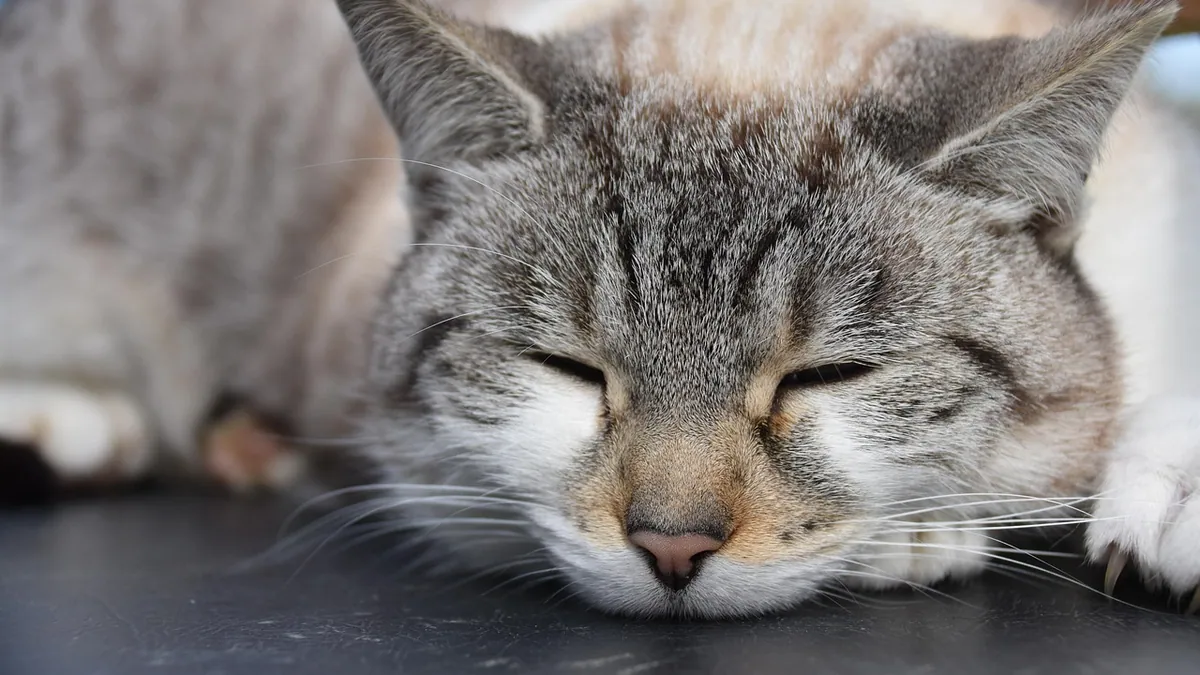
Butorphanol is an opioid medication that veterinarians use in cats to provide pain relief and mild to moderate sedation, often before procedures or as part of an anesthesia plan. It is given by a veterinarian, not at home, and most cats recover smoothly within hours. This article is educational and is not a substitute for veterinary diagnosis or treatment.
Quick Answer
- Butorphanol is a short-acting opioid that vets use for pain control and sedation in cats, usually as part of a procedure.
- It is typically injected (often intramuscularly) in a clinic setting, and your veterinarian calculates the dose based on your cat's weight and health [1][2].
- Common effects you may see after a procedure include sleepiness, wobbliness, and reduced activity for several hours.
- Serious side effects are uncommon but can include slow heart rate and low blood pressure, especially at higher doses or in cats with heart problems [3].
- Call your veterinarian if your cat stays very sedated longer than expected, breathes slowly, or will not eat or drink after the sedation wears off.
What Is Butorphanol and Why Do Veterinarians Use It in Cats?
Butorphanol is an opioid analgesic. In veterinary medicine, it is used to relieve pain and to produce sedation, particularly for short procedures or as part of a broader anesthesia protocol. It is one of several opioid options available for cats.
Veterinarians use butorphanol for a few main reasons:
- Pain relief. It helps manage visceral pain and perioperative or postoperative pain [4].
- Sedation. It is combined with other drugs to calm cats for diagnostic procedures, imaging, or minor surgeries [1][2].
- Antiemetic support. It may help reduce nausea and vomiting triggered by other sedatives like dexmedetomidine [5].
In one study of hyperthyroid cats undergoing assessment for radioiodine treatment, butorphanol was combined with midazolam and alfaxalone to achieve sedation for diagnostic investigations [1]. In another study, butorphanol was given with dexmedetomidine before ovariohysterectomy in healthy female cats [5]. These are typical clinical scenarios where a veterinarian might choose butorphanol.
Butorphanol is not a take-home medication for cats in most cases. It is administered in the clinic, and its effects are monitored by veterinary staff.
If your cat has anxiety or stress issues outside of a procedure, your veterinarian may discuss other options. You can read more about cat anxiety medication and gabapentin for cat anxiety for context on how vets approach sedation and calming in different situations.
How Does Butorphanol Work in Cats?
Butorphanol works on opioid receptors in the brain and spinal cord. It is classified as a mixed agonist-antagonist opioid, which means it activates some opioid receptors and blocks others. This gives it a ceiling effect on certain side effects, particularly those related to breathing depression, compared to pure mu-opioid agonists like morphine.
The sedation and pain relief it provides are dose-dependent. Higher plasma concentrations produce more sedation and more pain control, but also more cardiovascular effects. In a study of isoflurane-anesthetized cats, butorphanol significantly reduced heart rate and caused severe bradycardia and hypotension in some cats at higher target plasma concentrations [3]. This is why your veterinarian monitors heart rate and blood pressure closely when butorphanol is used.
Butorphanol also has antiemetic properties. In cats receiving dexmedetomidine before surgery, the addition of butorphanol resulted in a very low incidence of emesis (0 out of 10 cats), compared to 1 out of 10 in the maropitant group [5]. This makes it useful when nausea is a concern.
The drug is short-acting. Its effects typically last a few hours, depending on the dose and how it was given. Your veterinarian will factor this into the discharge plan.
Butorphanol Dose in Cats: Who Decides and How It Is Given
Your veterinarian decides the butorphanol dose for your cat. There is no standard at-home dose for owners to give. The dose depends on your cat's weight, age, health status, and what other medications are being used.
In clinical studies, butorphanol has been given at 0.3 mg/kg intramuscularly in hyperthyroid cats [1], 0.2 mg/kg intravenously in cats undergoing ovariohysterectomy [5], and 0.3 mg/kg intramuscularly in cats with chronic kidney disease undergoing abdominal sonography [2]. These are examples from specific research settings. Your veterinarian will choose the dose and route that fit your cat's situation.
Butorphanol is usually given by injection in the clinic. It may be combined with other drugs such as midazolam, alfaxalone, dexmedetomidine, or gabapentin to achieve the right level of sedation and pain control [1][5][2].
Because butorphanol is not typically sent home with owners, missed dose instructions do not usually apply. If your veterinarian does prescribe an oral form for at-home use, follow the exact instructions on the label. Do not give a double dose if you miss one. Call your vet for guidance.
Oral sedation options for cats are an active area of research. A scoping review of oral anxiolytic, sedative, and anesthetic medications in cats found that many agents show potential for reducing fear-based behaviors or achieving sedation when given orally, though palatability and absorption vary [6]. Butorphanol is not commonly used orally in cats, and your veterinarian will decide if an oral option is appropriate.
Butorphanol Sedation Side Effects in Cats
Most side effects are mild and resolve as the drug wears off. Some are more serious and require immediate attention.
| Side effect | How common or serious | What to do |
|---|---|---|
| Sleepiness and wobbliness | Common, mild | Keep your cat in a quiet, safe space away from stairs and furniture. Let them sleep it off. |
| Reduced activity | Common, mild | Offer food and water when they wake up. Do not force them to move. |
| Slow heart rate | Can be serious, especially at higher doses | Your vet monitors this in the clinic. At home, call your vet if your cat seems weak or collapses [3]. |
| Low blood pressure | Can be serious, especially at higher doses | This is monitored during the procedure. At home, watch for weakness, pale gums, or collapse [3]. |
| Nausea or vomiting | Uncommon with butorphanol | Butorphanol may actually reduce vomiting caused by other sedatives [5]. If vomiting occurs at home, call your vet. |
| Slow breathing | Uncommon but serious | If your cat's breathing looks slow or shallow, seek emergency care. |
| Excitement or vocalization | Possible | Some cats vocalize more after butorphanol. Keep them calm and call your vet if it does not settle [4]. |
Butorphanol has been shown to reduce heart rate and cause hypotension in anesthetized cats, particularly at higher plasma concentrations [3]. In one study, severe bradycardia and hypotension were observed in cats at higher target plasma concentrations without atropine, and those treatments were not continued in subsequent cats [3]. This does not mean your cat will have these problems, but it does mean your veterinary team will watch for them.
After the procedure, your cat may be sent home while still mildly sedated. This is normal. Most cats are fully awake and back to themselves within a few hours, though some may take longer.
Who Should Not Take Butorphanol and What Interacts With It
Butorphanol is not right for every cat. Your veterinarian will consider your cat's full health picture before using it.
Cats with certain heart conditions may be at higher risk for slow heart rate and low blood pressure from butorphanol [3]. If your cat has a known heart murmur, arrhythmia, or heart disease, tell your veterinarian before any sedation.
Cats with liver or kidney disease need careful evaluation. One study looked at sedation in cats with chronic kidney disease and found that kidney function markers (SDMA and creatinine) did not change significantly at the point of maximum sedation or two hours after sedation [2]. This is reassuring, but it does not mean butorphanol is safe for every cat with kidney disease. Your veterinarian will decide based on your cat's specific lab work and stage of disease.
Butorphanol can interact with other sedatives and anesthetics. It is often combined with drugs like dexmedetomidine, alfaxalone, midazolam, and gabapentin [1][5][7][2]. These combinations are planned by your veterinarian to achieve specific effects. Do not mix butorphanol with any other medication unless your veterinarian has instructed you to do so.
If your cat is on any other medications, including supplements, tell your veterinarian. This includes anxiety medications, pain medications, and anything you might not think of as a drug.
Overdose and When to Call a Veterinarian or Poison Control
Butorphanol overdose in cats can cause excessive sedation, slow heart rate, low blood pressure, and slow breathing. Because butorphanol is usually given in a clinic, overdose at home is unlikely unless your cat accidentally gets into a medication that was not prescribed for them.
If you think your cat has received too much butorphanol or any other medication, call your veterinarian immediately. If your regular vet is closed, call an emergency veterinary hospital.
You can also contact poison control:
- ASPCA Animal Poison Control Center: (888) 426-4435
- Pet Poison Helpline: (855) 764-7661
These services may charge a consultation fee. Have your cat's weight, the medication name, the amount given, and the time it was given ready when you call.
Do not wait for symptoms to appear. Early intervention is safer.
Limitations and When to Contact a Veterinarian
This article gives general information. Your cat's individual situation needs a veterinarian who can examine them, review their history, and make specific recommendations.
Call your veterinarian the same day if:
- Your cat is still very sedated more than 6 to 8 hours after the procedure.
- Your cat will not eat or drink after waking up.
- Your cat vomits more than once.
- Your cat seems painful or uncomfortable despite the sedation.
- You have any question about what you are seeing at home.
Go to an emergency veterinary hospital now if:
- Your cat is breathing slowly or struggling to breathe.
- Your cat collapses or cannot stand.
- Your cat's gums look pale, white, or blue.
- Your cat has a seizure.
- Your cat's heart rate feels very slow or very fast.
Schedule a routine visit if:
- Your cat seems more tired than usual for more than a day after sedation.
- Your cat has changes in appetite or behavior that last more than 24 hours.
- You want to discuss pain management or sedation options for a future procedure.
If your cat has been exposed to a toxin, such as antifreeze, seek emergency care right away. You can learn more about antifreeze poisoning in dogs and cats to understand the signs and urgency.
For procedures involving regional pain control, your veterinarian may discuss options like an epidural. You can read about epidural anesthesia in dogs and cats for more context.
Frequently Asked Questions
How long does butorphanol sedation last in cats?
Butorphanol is a short-acting opioid, and its sedative effects typically last a few hours. The exact duration depends on the dose, the route it was given, and what other medications were used. Most cats are fully awake and behaving normally within 4 to 8 hours after the procedure.
Can I give butorphanol to my cat at home?
No, butorphanol is not typically prescribed for at-home use in cats. It is given by injection in a veterinary clinic, where your cat's heart rate, blood pressure, and breathing can be monitored. If your veterinarian sends your cat home with any medication, follow the label exactly and do not share it with other pets.
What should I watch for after my cat gets butorphanol?
Watch for sleepiness, wobbliness, and reduced activity, which are normal. Call your veterinarian if your cat stays very sedated longer than expected, breathes slowly, vomits, or will not eat or drink after waking up. Pale gums, collapse, or seizures require emergency care.
Is butorphanol safe for cats with kidney disease?
One study found that kidney function markers did not change significantly during or shortly after sedation in cats with chronic kidney disease [2]. However, this does not mean butorphanol is safe for every cat with kidney disease. Your veterinarian will evaluate your cat's lab work and overall health before deciding.
What is the difference between butorphanol and gabapentin for cats?
Butorphanol is an injectable opioid used for pain relief and sedation in a clinic setting. Gabapentin is an oral medication often used for anxiety, stress, and chronic pain, and it can be given at home. Your veterinarian will choose the right option based on what your cat needs and the procedure involved.
Related Articles
- Cat Anxiety Medication: What You Need to Know
- Antifreeze Poisoning in Dogs and Cats: What Owners Should Know
- Epidural Anesthesia in Dogs and Cats: Technique, Drugs, and Complications
- Gabapentin for Cat Anxiety: How It Works and What to Expect
- Benadryl Diphenhydramine Cat Dose: Feline Allergy and Sedation Guide
- Monitoring Sedation and Anesthesia Recovery in Veterinary Patients
- Is There a Safe Sedative for Cats? Vet-Approved Options
- Cat Sedation Side Effects: What's Normal and Not
- Sedation for Cat Grooming and Nail Trims
References
- Randomised clinical trial comparing intramuscular alfaxalone and butorphanol sedation with or without midazolam in hyperthyroid cats. Journal of feline medicine and surgery, 2025.
- Short-term effect of sedation on kidney function markers in cats with chronic kidney disease. American journal of veterinary research, 2026.
- Target-controlled infusions of butorphanol worsen hemodynamics in isoflurane-anesthetized cats. Frontiers in veterinary science, 2025.
- Effect of butorphanol in combination with xylazine during castration of calves: A randomised trial under field conditions. The Veterinary record, 2026.
- Evaluation of the antiemetic, sedative and analgesic effects of butorphanol and maropitant in combination with dexmedetomidine in cats undergoing ovariohysterectomy. The Veterinary record, 2025.
- Oral use of anxiolytic, sedative, and anaesthetic medications in domestic cats (Felis catus): A scoping review. Veterinary journal (London, England : 1997), 2026.
- Influence of prior administration of gabapentin and integrative practices on sedation scores, physiological parameters, and propofol requirement in cats sedated with dexmedetomidine. Topics in companion animal medicine, 2026.