Why Is My Parrot Nibbling Me or Regurgitating on Me?
By Dr. Zubair Khalid, DVM, MS, PhD ·
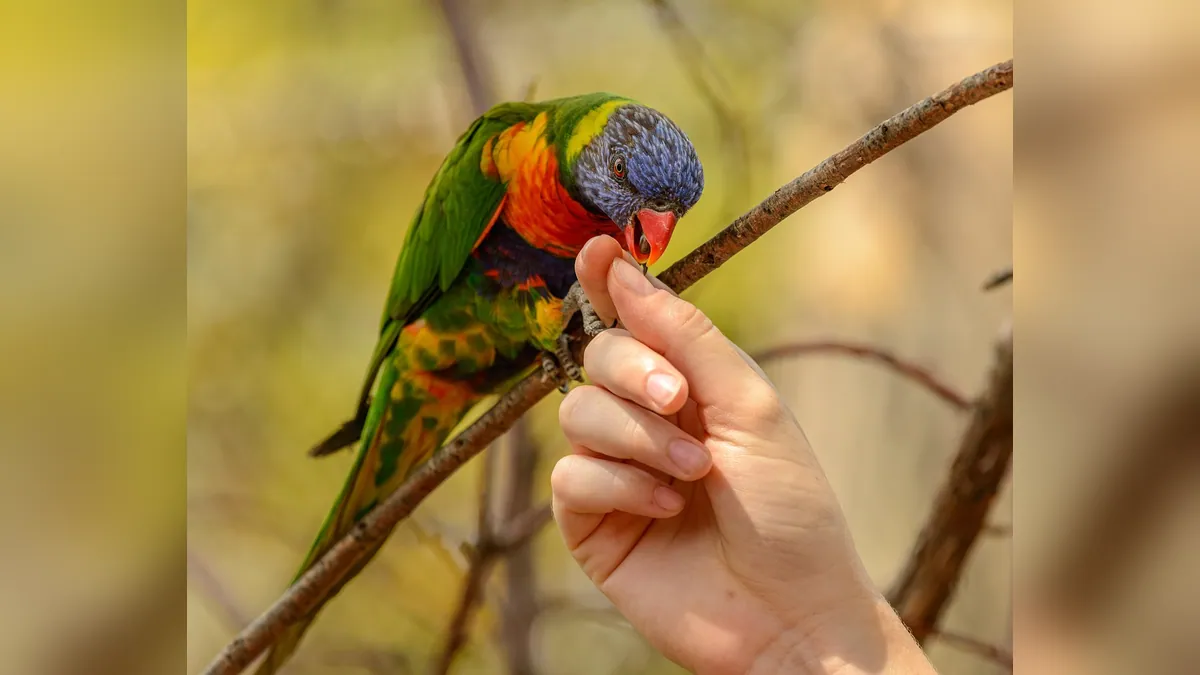
Parrots nibble and regurgitate on their owners most often as a form of bonding, affection, or hormonal courtship. A gentle, quick nibble usually means your bird is exploring, grooming you, or asking for attention. Regurgitating food onto you is a stronger signal, usually courtship or pair bonding, and it can become a problem if it turns into obsessive or hormonal behavior.
This article is educational and is not a substitute for veterinary diagnosis or treatment.
Quick Answer
- Gentle nibbling on your fingers, hair, or clothing is usually social grooming or a request for attention, not aggression.
- Regurgitating on you is a courtship or pair-bonding behavior, and it means your bird sees you as a mate.
- Both behaviors can be normal, but they can also be triggered or worsened by hormones, petting on the body, and too much close contact.
- Rule out medical causes like regurgitation from crop or stomach disease before assuming the behavior is purely behavioral.
- Set boundaries by limiting body petting, redirecting to toys, and keeping a predictable sleep schedule.
Why Is My Parrot Nibbling Me?
Nibbling is one of the most common behaviors parrot owners ask about. The answer depends on how it looks, when it happens, and what your bird does right before and after.
Social grooming and affection
Parrots are highly social. In the wild, they spend hours preening each other. This is called allopreening, and it helps maintain pair bonds and social ties. Research shows that allopreening between breeding partners is more common in species where both parents cooperate to raise young, and it is linked to pairs staying together across breeding seasons [1]. When your parrot nibbles your fingers, ears, or hair, it may be treating you like a flock mate or partner. The nibbles are usually gentle, quick, and not painful.
Exploration and curiosity
Parrots use their beaks like hands. A young bird or a bird in a new environment may nibble to test textures, check if something is food, or explore a new toy or piece of clothing. This is normal. It often stops once the bird is familiar with the object.
Attention seeking
If your parrot nibbles you and you laugh, talk, or pull away, the bird learns that nibbling gets a reaction. Parrots are smart and will repeat behaviors that work. A cockatiel nibbling at your fingers may be asking you to keep petting or to pick it up.
Hormonal and courtship nibbling
During breeding season, nibbling can become more intense. Your bird may nibble at your hand, then try to regurgitate. It may also nip at your partner or other family members. This is hormonal. It is more common in spring and summer, and in birds that are fed warm, soft foods or given long daylight hours.
Why Is My Parrot Regurgitating on Me?
Regurgitation is different from vomiting. Vomiting is forceful, often involves undigested food, and can be a sign of illness. Regurgitation is a controlled movement where the bird brings food up from the crop into its mouth. It is usually a courtship or bonding behavior.
Courtship and pair bonding
In many parrot species, the male regurgitates food to feed the female during courtship. If your parrot regurgitates on you, it is treating you as a mate. This is common in cockatiels, budgies, lovebirds, and other small parrots. It can also happen with single birds that are strongly bonded to one person.
Normal but unwanted
Regurgitating on you is not dangerous by itself. But it can lead to problems. A bird that sees you as a mate may become aggressive toward other people. It may also start laying eggs, which can lead to egg binding and nutritional problems in females. Chronic regurgitation can also cause weight loss and crop irritation.
When regurgitation is medical
Not all regurgitation is behavioral. Avian bornaviruses, which cause proventricular dilatation disease, can cause regurgitation in pet parrots. In one survey of 112 pet psittacines with signs compatible with this disease, 28.6% tested positive for bornaviruses, and 18.8% of the positive birds showed regurgitation [2]. Another report described an umbrella cockatoo with myenteric ganglioneuritis and encephalomyelitis that showed regurgitation, anorexia, muscle wasting, and changes in fecal consistency [3]. If your bird regurgitates often, loses weight, or has other signs like undigested seeds in the droppings, see a veterinarian.
Medical Causes to Rule Out
Before you treat nibbling or regurgitating as a behavior problem, rule out medical issues. A bird that feels sick may nibble less, or it may regurgitate more.
Signs that point to illness
- Frequent regurgitation, especially after every meal
- Weight loss or a sharp keel bone
- Undigested seeds in the droppings
- Diarrhea or changes in fecal consistency
- Fluffed feathers, sitting on the cage floor, or tail bobbing
- Decreased appetite or refusal to eat
Tail bobbing is a common sign of breathing difficulty in birds. If you see it, read Why Is My Bird Tail Bobbing? Breathing Warning Signs and contact your veterinarian.
Diseases that can cause regurgitation
Proventricular dilatation disease is a serious condition in parrots. It affects the nerves that control the digestive tract. Birds with this disease may regurgitate, lose weight, and pass undigested food. Avian bornaviruses are the suspected cause, and they have been found in pet psittacines in multiple countries [2]. Other causes include crop infections, foreign bodies, and toxins.
What your veterinarian will do
Your veterinarian will ask about diet, weight, droppings, and when the behavior started. They may do a physical exam, weigh your bird, and run tests like a fecal exam, blood work, or imaging. If they suspect an infectious cause, they may recommend specific testing. Treatment depends on the diagnosis. Never give your bird any medication without veterinary guidance. Your veterinarian will calculate any dose based on your bird's weight and health.
When Nibbling and Regurgitating Become a Problem
A little nibbling is normal. Regurgitating once in a while is also normal. The behavior becomes a problem when it affects your bird's health or your household.
Signs it is becoming a problem
- The nibbling turns into hard bites that break skin
- Your bird regurgitates every time you handle it
- Your bird becomes aggressive toward other people or pets
- Your bird starts laying eggs or shows nesting behavior
- Your bird loses weight or stops eating normal food
- You feel you cannot handle your bird without being bitten or slimed
If your bird is biting hard, read Why Does My Bird Bite, and How to Stop It for step by step help.
Hormonal triggers
Hormones drive a lot of this behavior. Long daylight hours, warm soft foods, and petting on the back, wings, or under the wings can all trigger hormonal behavior. A bird that is hormonal may nibble more, regurgitate more, and become more territorial. It may also become mad at you when you do not respond the way it wants. If your parrot seems mad at you, it is often frustrated or hormonal, not truly angry.
Why boundaries matter
You can love your bird and still set limits. Boundaries protect your bird from health problems and protect your relationship from bites and frustration. The goal is not to punish your bird. The goal is to redirect the behavior into something safe and appropriate.
What to Do Step by Step
1. Rule out medical causes first
Make an appointment with an avian veterinarian. Describe the nibbling and regurgitating in detail. Mention any weight changes, droppings changes, or breathing changes. If your bird is sick, behavior training will not fix the problem.
2. Limit body petting
Pet your bird only on the head and neck. These are the areas a parrot would preen on a flock mate. Avoid petting the back, wings, chest, or under the wings. Those areas are sexually stimulating for many parrots and can trigger hormonal behavior.
3. Redirect nibbling to toys
When your bird starts nibbling your fingers, offer a toy instead. Keep small foot toys, shreddable paper, or safe wooden blocks nearby. Praise your bird when it chews the toy. Ignore the nibbling. Do not yell or pull away quickly, because that can be a reward.
4. Manage regurgitation
If your bird regurgitates on you, stay calm. Do not punish it. Gently set the bird down and walk away for a minute. Do not offer warm, soft foods by hand during hormonal periods. Feed a balanced diet with plenty of vegetables and a high quality pellet. Your veterinarian can help you choose a diet.
5. Adjust the environment
- Keep a consistent sleep schedule. Most parrots need 10 to 12 hours of dark, quiet sleep.
- Avoid warm, mushy foods during hormonal periods.
- Remove mirrors, dark cavities, and nest boxes if your bird is hormonal.
- Provide foraging toys and chew toys to keep the beak busy.
- Rotate toys every week to prevent boredom.
6. Train calm behaviors
Teach your bird to step up, target, and station. These behaviors give you a way to redirect your bird without conflict. Use positive reinforcement. Reward your bird with a favorite treat or praise when it does the behavior you want. Keep training sessions short, about 5 to 10 minutes.
7. Keep a behavior log
Write down when the nibbling and regurgitating happen. Note the time of day, what you were doing, and what happened right before. This helps you spot triggers. It also gives your veterinarian useful information.
What Not to Do
Do not punish your bird
Never hit, flick, yell at, or spray your bird. Punishment does not teach your bird what to do instead. It damages trust and can make biting worse. It can also cause fear and stress, which can lead to feather plucking and other behavior problems. If your bird is plucking feathers, read Parrot Feather Plucking Causes.
Do not ignore medical signs
Do not assume every regurgitation is hormonal. A bird that regurgitates often, loses weight, or has changed droppings needs a veterinary exam. Waiting can make a treatable condition worse.
Do not encourage mating behavior
Do not pet your bird on the body, do not let your bird regurgitate on your hand or mouth, and do not treat your bird like a mate. These actions can strengthen the hormonal bond and make the behavior harder to change.
Do not use myths to guide you
A common myth is that a parrot nibbling you is always trying to dominate you. Parrots do not think in terms of dominance the way some other animals do. Nibbling is usually social, exploratory, or hormonal. Another myth is that regurgitating is always a sign of illness. It can be a normal courtship behavior, but it should still be checked if it is frequent or comes with other signs.
When to Involve a Veterinarian or Behavior Professional
Contact a veterinarian same day if:
- Your bird regurgitates repeatedly and cannot keep food down
- Your bird is fluffed, weak, or sitting on the cage floor
- Your bird has trouble breathing or is tail bobbing
- Your bird has not eaten in 24 hours
- Your bird's droppings are black, bloody, or contain undigested seeds
Emergency now if:
- Your bird is open mouth breathing, gasping, or collapsing
- Your bird has a seizure or cannot perch
- Your bird has been bitten by another animal
- Your bird is bleeding and will not stop
Routine visit if:
- The nibbling has become painful or frequent
- Your bird regurgitates on you most days
- Your bird shows hormonal behavior like nesting or egg laying
- You are not sure if the behavior is normal
A certified avian behavior consultant or a veterinarian with behavior experience can help you build a plan. They can watch your bird's body language and help you adjust your training. If you are struggling with biting, a behavior professional can help you stay safe and keep your bond.
Limitations and When to Contact a Veterinarian
This article gives general information. It cannot tell you what is happening with your specific bird. Every bird is different. Diet, age, species, hormones, and environment all matter. Only a veterinarian who examines your bird can diagnose a medical problem or recommend treatment.
Use the red flags above to decide how soon to call. If you are unsure, call your veterinarian and ask. It is better to check early than to wait.
Frequently Asked Questions
Why is my cockatiel nibbling me?
A cockatiel nibbling you is usually grooming you or asking for attention. Cockatiels are social and often nibble gently on fingers, hair, and clothing. If the nibbling is paired with regurgitating, it may be hormonal courtship behavior.
Why is my parrot regurgitating on me?
Your parrot is likely treating you as a mate. Regurgitating food is a courtship behavior in many parrot species. It is usually not dangerous, but frequent regurgitation can lead to weight loss and should be checked by a veterinarian.
Why is my parrot mad at me?
Your parrot may not be mad in the human sense. It may be frustrated, hormonal, or reacting to a change in routine. If your bird is biting or lunging, read Why Does My Bird Bite, and How to Stop It and look for triggers like petting on the body or too little sleep.
Can I stop my parrot from regurgitating on me?
Yes, you can reduce it. Limit body petting, avoid warm soft foods during hormonal periods, and set your bird down calmly when it starts. Keep a consistent sleep schedule and provide foraging toys. If it continues, see your veterinarian.
Is nibbling a sign of aggression?
Usually no. Gentle nibbling is social or exploratory. Aggression looks different. It includes hard bites, lunging, hissing, and pinned eyes. If your bird is biting hard, that is a separate behavior problem that needs a training plan.
Related Articles
- Parrot Feather Plucking Causes
- Why Does My Bird Bite, and How to Stop It
- Why Is My Bird Tail Bobbing? Breathing Warning Signs
- Parrot Feather Plucking
- Why Is My Parrot Regurgitating? Normal or a Warning Sign
- Why Is My Parrot Throwing Up? Regurgitation vs Vomiting
- Why Does My Parrot Hate Me? Aggression and Bonding Explained
References
- Allopreening in birds is associated with parental cooperation over offspring care and stable pair bonds across years. Behavioral ecology : official journal of the International Society for Behavioral Ecology, 2017.
- Survey of bornaviruses in pet psittacines in Brazil reveals a novel parrot bornavirus. Veterinary microbiology, 2014.
- Encephalitis, proventricular and ventricular myositis, and myenteric ganglioneuritis in an umbrella cockatoo. Avian diseases, 1989.