Do Parrots Understand What They Say? What Science Says
By Dr. Zubair Khalid, DVM, MS, PhD ·
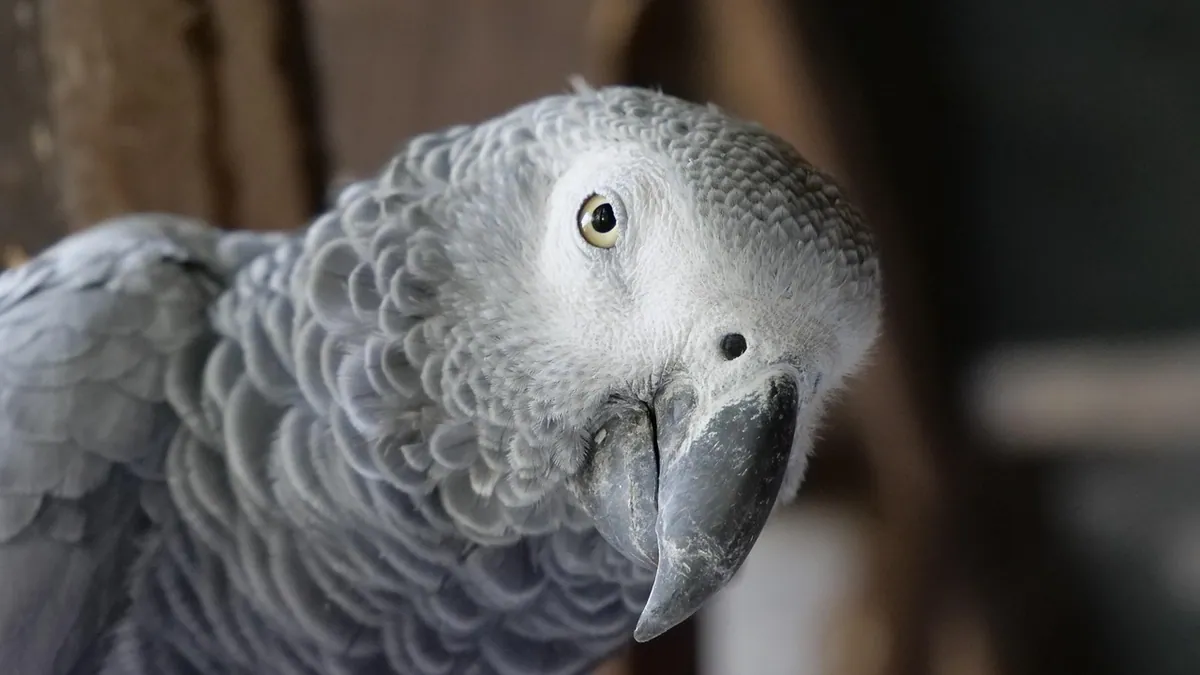
Do parrots understand what they say? For most pet parrots, the honest answer is partly. They learn sounds by copying, and many use those sounds in the right situations, but this is not the same as human-style language. This article is educational and is not a substitute for veterinary diagnosis or treatment.
Quick Answer
- Parrots are among the few animals that learn sounds throughout life, and species differ a lot in how much they mimic [1].
- Many companion parrots improvise (rearrange words) and use mimicry in appropriate human contexts, which suggests some contextual understanding [1].
- A few birds, especially African grey parrots, can attach meaning to specific words and use them to ask for things or label objects.
- Repeating a word does not prove comprehension. Watch what your bird does, not only what it says.
- If your parrot suddenly changes its vocal behavior, gets quieter, or seems distressed, treat it as a possible health or welfare issue and call your veterinarian.
Do Parrots Understand What They Say or Just Copy Sounds?
Parrots are vocal learners. That means they pick up sounds from their environment and reproduce them, and they can keep learning new sounds as adults [1]. This ability is rare in the animal world. Only a few bird groups, including parrots, hummingbirds, and songbirds, are known to learn their vocalizations this way [2][3].
Copying a sound is not the same as understanding it. A parrot can learn the sound of a microwave beep, a dog barking, or your laugh without any idea what those sounds mean. The same is true for words. Your bird may say "hello" because it predicts attention, not because it grasps the concept of greeting.
That said, parrots are not simple tape recorders. In a survey of companion parrot owners, most birds were capable of improvisation, such as rearranging words into new combinations, and used mimicry in appropriate human contexts [1]. A bird that says "night night" only at bedtime, or "want some" only near the food bowl, is showing that the sound is tied to a situation.
Do Parrots Comprehend What They Say?
Comprehension exists on a spectrum. At one end is pure imitation with no meaning. At the other end is a bird that uses a specific word to request a specific object or action. Most pet parrots sit somewhere in the middle.
African grey parrots stand out. In the same survey, grey parrots had the largest mimicry repertoires of any species studied [1]. That does not mean every grey parrot understands every word, but it does mean this species is especially worth watching closely for meaningful use of speech.
Do Parrots Mean What They Say?
Sometimes yes, often no. Context is your best clue. If your bird says "step up" while lifting a foot toward your hand, that is meaningful use. If it says "step up" while alone in its cage at noon, it may just be practicing a sound it likes.
Owners also tend to overread their birds. The survey found a human bias to assume that talking parrots are male, even though sex did not have an overarching effect on mimicry repertoires across all birds [1]. That bias shows how easily we project expectations onto parrot speech.
Why Parrots Talk at All
Social Learning and Flock Life
Parrots are social animals. In the wild, they live in groups where recognizing individuals matters. Research on wild sulphur-crested cockatoos found that these birds use a twofold social strategy, relying on memory of past interactions with familiar birds and on status signals for strangers [4]. Complex social lives create pressure for complex communication.
In your home, you are the flock. Your parrot learns your sounds because you are its social world. Speech is one way it participates in that world.
Vocal Learning Is Lifelong
Unlike songbirds that often learn their songs in a fixed early window, parrots can add new sounds throughout life [1][3]. This is why an older parrot can suddenly pick up a new phrase. It also means your bird's vocal repertoire can keep changing for years.
Improvisation and Word Play
Parrots mix and match. The survey data showed that most companion parrots improvised by rearranging words [1]. This kind of play with sound is normal and often increases when a bird is relaxed and socially engaged.
Medical Causes to Rule Out
Speech changes are usually behavioral, but health problems can change vocal behavior too. Any sudden drop in talking, hoarse voice, or breathing noise deserves a veterinary look.
Watch for these signs:
- Open-mouth breathing, tail bobbing, or wheezing
- Nasal discharge, sneezing, or swelling around the eyes or nares
- Weight loss, fluffed feathers, or sitting low on the perch
- A sudden change in appetite or droppings
- Loss of voice or a raspy, weak call
Respiratory disease, sinus problems, and other illnesses can affect a bird's ability to vocalize normally. Your veterinarian can examine the airway, check for infection, and run tests as needed. Do not assume a quiet parrot is just being stubborn.
Nutrition matters here too. A poor diet weakens a bird over time and can affect overall health and behavior. For guidance, see Parrot Nutrition: Building a Balanced Diet for Pet Parrots.
When Parrot Speech Becomes a Problem
Talking is usually welcome. It becomes a problem in a few situations.
Excessive Noise
Some parrots scream or repeat loud sounds for hours. This often traces back to boredom, lack of sleep, or a reinforced pattern. If you respond to screaming with attention, you may accidentally teach your bird that screaming works.
Aggression Paired With Speech
A parrot that says "step up" and then bites is not being sneaky. It may be overstimulated, fearful, or communicating a boundary. Bites are a welfare signal, not a personality flaw.
Distress Calls and Repetitive Sounds
Repetitive sounds, pacing, or feather damage alongside vocal changes can point to stress or an unsuitable environment. These signs need a full look at housing, sleep, diet, and social contact.
What to Do: Step by Step
1. Observe Before You Interpret
Keep a simple log for two weeks. Write down what your bird says, the time, and what is happening around it. Patterns will show up fast. You may find that a phrase always appears near feeding, bedtime, or your arrival home.
2. Reward Meaningful Use
When your bird uses a word in the right context, respond right away. If it says "apple" near the fruit bowl, offer a small piece. This teaches that words get results. For structured help, see Parrot Speech Training.
3. Teach With Clear, Consistent Cues
Pick short phrases and use them the same way every time. Say "step up" only when you want your bird to step onto your hand. Say "night night" only at bedtime. Consistency helps your bird link the sound to the event. More tips are in How to Teach Your Bird to Talk.
4. Build a Rich Environment
Boredom drives a lot of problem vocalizing. Offer foraging toys, chewable items, perches of different textures, and time out of the cage when it is safe. Rotate toys so the setup stays interesting.
5. Protect Sleep
Parrots need a consistent dark, quiet period each night. A tired bird is more likely to scream and less likely to learn. Aim for a predictable bedtime routine.
6. Use Music and Movement
Cockatoos show dance behavior in response to music, and researchers have described many distinct dance movements across species [5]. Music may support a positive welfare state and can be used as enrichment [5]. Try calm music during quiet time and upbeat music during play.
7. Check the Basics
Fresh water, a balanced diet, clean housing, and safe social contact come first. A bird that feels well learns and communicates better. Lifespan varies widely by species, so plan for a long relationship. See How Long Do Parrots Live? Lifespan by Species.
What Not to Do
Do Not Punish Speech or Noise
Yelling, spraying, or covering the cage for talking teaches fear, not quiet. Punishment can increase screaming and damage your bond.
Do Not Assume Every Word Has Meaning
It is easy to hear human intent in a parrot's voice. The evidence says most mimicry is imitation, with contextual use in many birds [1]. Enjoy the talking without overinterpreting it.
Do Not Believe These Myths
- Myth: Only male parrots talk. Sex did not have an overarching effect on mimicry repertoires across all birds, though some species showed differences [1].
- Myth: Older birds cannot learn new words. Repertoire size did not increase during adulthood in grey parrots, but parrots can still add sounds throughout life [1].
- Myth: A talking bird is always a happy bird. Vocal behavior can change with illness or stress.
Do Not Skip Veterinary Care
If your bird's voice or behavior changes suddenly, do not wait weeks to see if it passes. Birds hide illness well.
When to Involve a Veterinarian or Behavior Professional
Call your avian veterinarian if your parrot stops talking after a period of normal speech, develops a hoarse or raspy voice, or shows any breathing change. These can be early signs of respiratory or systemic illness.
Bring in a certified behavior professional if your bird shows repetitive screaming, biting that breaks skin, feather destruction, or distress that does not improve with basic changes. A behavior consultant can assess triggers and build a plan.
If you are unsure whether a change is medical or behavioral, start with your veterinarian. A physical exam and basic testing can rule out health problems before you invest in training.
Limitations and When to Contact a Veterinarian
This article covers general patterns. Every bird is an individual, and individual cases need a veterinarian who can examine your pet.
Contact your veterinarian the same day if you notice:
- Labored breathing, tail bobbing, or open-mouth breathing at rest
- A sudden loss of voice or a new raspy sound
- Nasal or eye discharge
- Vomiting, regurgitation that is new, or a drop in appetite
Seek emergency care now if your bird:
- Cannot perch and sits on the cage floor
- Breathes with obvious effort or makes clicking sounds
- Has a seizure, falls repeatedly, or becomes suddenly weak
- Bleeds from the beak, vent, or any wound
Schedule a routine visit if your bird has a slow change in vocal behavior, mild weight loss, or a gradual decline in activity. Early care is easier than late care.
Frequently Asked Questions
Do parrots know what they are saying?
Some do, in a limited way. Many companion parrots use mimicry in appropriate human contexts and improvise with words, which suggests contextual understanding [1]. Full human-style comprehension is rare.
Do parrots understand what we say?
Parrots can learn to respond to specific words and tones, especially when you use them consistently. They read your body language and routine closely. This is more about learned associations than grammar.
Do parrots actually understand what they're saying when they ask for food?
Often they do link the word to the outcome. If your bird says a food word and then eats when you offer it, that is meaningful use. Reward it to strengthen the connection.
Can a parrot learn new words as an adult?
Yes. Parrots are lifelong vocal learners, so they can pick up new sounds at any age [1][3]. Repertoire size did not increase during adulthood in grey parrots, but new learning still happens [1].
Why does my parrot talk more when I am on the phone?
Parrots often talk to get social attention. Your phone voice may sound like a cue that you are available. Try giving your bird a short training session before you take a call.
Related Articles
- Talking Parrots: How Parrots Learn to Mimic Speech
- Parrot Speech Training
- How to Teach Your Bird to Talk
- Parrot Nutrition: Building a Balanced Diet for Pet Parrots
- How Long Do Parrots Live? Lifespan by Species
- Do Parrots Dance? The Science of Bird Rhythm
- Do Parrots Like Music? Dancing and Sound Responses
- Can Cockatiels Talk? What to Expect and How to Encourage Speech
- Crow Talking: Can Crows Mimic Human Speech?
References
- A survey of vocal mimicry in companion parrots. Scientific reports, 2022.
- Analysis of vocal communication in the genus Falco. Scientific reports, 2023.
- Re-evaluating vocal production learning in non-oscine birds. Philosophical transactions of the Royal Society of London. Series B, Biological sciences, 2021.
- Parrot politics: social decision-making in wild parrots relies on both individual recognition and intrinsic markers. Royal Society open science, 2025.
- Dance behaviour in cockatoos: Implications for cognitive processes and welfare. PloS one, 2025.