Do Cockatiels Poop Everywhere? Dropping Habits and Training
By Dr. Zubair Khalid, DVM, MS, PhD ·
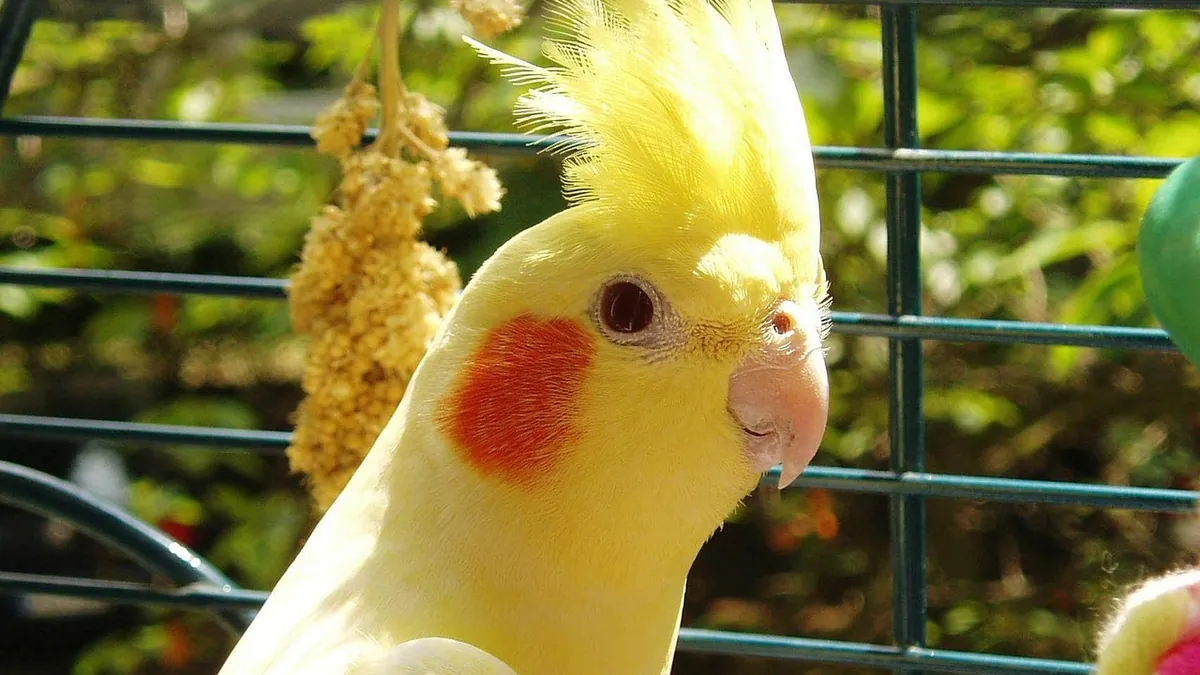
Do cockatiels poop everywhere? In a practical sense, yes. A healthy cockatiel produces droppings frequently throughout the day, and most birds have no built-in instinct to hold waste until they reach a specific spot. That means droppings land on perches, cage bars, floors, shoulders, and sometimes your shirt.
This article is educational and is not a substitute for veterinary diagnosis or treatment.
Quick Answer
- Cockatiels poop often, typically many times per hour, and they cannot control it the way a house-trained dog can.
- Most droppings are normal and reflect a fast digestive tract, not bad behavior or spite.
- Potty training is possible in a limited way, but it should never involve punishment or forcing a bird to hold waste for long periods.
- Sudden changes in color, consistency, or frequency can signal illness and need veterinary attention.
- Managing mess works best through cage setup, perch placement, routine, and realistic expectations.
Why Cockatiels Poop So Often
A Fast Digestive Tract
Birds have a short, efficient digestive system built for flight. Food moves through quickly, and waste leaves the body frequently to keep weight low. A cockatiel may produce droppings every 10 to 30 minutes depending on diet, activity, and how much it just ate. This is normal anatomy, not a flaw in your bird.
Droppings have three parts. You may see a coiled or tubular solid portion (feces), a white or cream portion (urates), and a small amount of clear urine. All three together are called a dropping. Learning what normal looks like for your bird helps you spot problems early.
No Natural Urge to "Hold It"
Wild cockatiels drop waste wherever they happen to be. There is no survival advantage to holding it, and no den or nest area that stays clean by design. Your pet inherited that same pattern. When your cockatiel poops on your shoulder, it is not being defiant. It simply had to go.
Stress and Excitement Can Increase Output
New surroundings, loud noises, visitors, or being handled can trigger more frequent droppings. Some birds also drop when they are nervous or when they are picked up. This is a stress response, not a training failure.
Medical Causes to Rule Out
When Loose or Frequent Droppings Mean Illness
A change in droppings is one of the earliest signs of illness in birds. A Major Mitchell's cockatoo with a serious blood parasite infection was presented for weakness, diarrhea with undigested seeds in the droppings, and weight loss [1]. That case involved a different species, but it shows how droppings can reflect internal disease.
Watch for droppings that are consistently watery, greasy, bloody, bright green, or filled with whole undigested seeds. A bird that suddenly produces far more droppings than usual, or far fewer, needs a veterinary exam.
Infections and Gut Problems
Some gut organisms can be detected directly in droppings. A study verifying a laboratory method found that testing droppings with a molecular technique detected Macrorhabdus ornithogaster in 54 samples, while microscopy found it in only 34 [2]. That means a fecal test can be a reliable way for your veterinarian to check for certain infections while your bird is still alive [2].
Toxins and Foreign Objects
Cages and materials matter. In one study, cockatiels given zinc at 32 mg per week became severely ill and died or were euthanized within 2 weeks, and a lower dose of 2 mg per week caused chronic illness with dullness, weight loss, and intermittent greenish droppings [3]. The authors warned that galvanized coatings on cages and flights must be carefully wirebrushed and examined before housing psittacine birds [3].
Birds also swallow things they should not. An Amazon parrot that regurgitated, drooled, and had blood in its droppings was found to have a string of 25 beads in its digestive tract, which were removed under anesthesia [4]. If your cockatiel has access to small objects, beads, or loose metal, that is a real risk.
When Pooping Everywhere Becomes a Problem
Mess alone is not a medical problem. It becomes a problem when it affects your bird's health or your ability to care for it well.
Signs it is time to act:
- Droppings land on food, water, or perches constantly, raising hygiene concerns.
- Your bird seems unable to control droppings at all, with no normal formed ones.
- You notice straining, tail bobbing, or a swollen abdomen.
- The droppings smell strongly or change color for more than a day.
- You feel frustrated enough to consider punishment or rehoming.
If any of these apply, start with a veterinary visit to rule out disease. Behavior plans work poorly when a bird is sick.
What to Do Step by Step
Step 1: Set Up the Cage to Catch Waste
Place perches so droppings fall onto a tray or paper, not onto food dishes. Use cage liners you can replace daily. A grate above the tray keeps your bird off the waste. Clean food and water dishes twice a day, and never place them directly under a favorite perch.
Step 2: Learn Your Bird's Rhythm
Most cockatiels drop soon after waking, after eating, after a bath, and after being picked up. Keep a simple log for a few days. You will likely see a pattern. That pattern is the foundation for any training.
Step 3: Use Gentle, Reward-Based Training
Potty training a bird means teaching it to associate a cue or location with dropping, then rewarding that. It does not mean teaching a bird to hold waste for hours.
How to start:
- Pick one word or sound, such as "go."
- Watch for the slight squat or tail lift that comes before a dropping.
- Say your cue just before it happens.
- The moment it drops, give praise or a small favorite treat.
- Repeat in the same spot, such as over a trash can or a paper towel.
Over weeks, many birds learn to drop on cue. Some learn to wait briefly when asked. Expect accidents. A cockatiel is not a dog, and its body does not work like a dog's.
Step 4: Offer Enrichment and Out-of-Cage Time
A bored bird may drop more in one spot simply because it stays there. Rotate toys, offer foraging opportunities, and provide safe out-of-cage time. Exercise supports normal digestion. For a full care routine, see the Complete Cockatiel Care Guide.
Step 5: Protect Your Shoulders and Furniture
Use a designated "bird shirt" or towel over your shoulder. Keep a pack of pet-safe wipes nearby. Cover furniture your bird uses most. These small steps reduce daily friction and make training easier to stick with.
Step 6: Support Overall Health
Diet, weight, and hormones all affect droppings. Chronic egg laying can change behavior and body condition, so review the Cockatiel Care: Chronic egg laying and hormonal management guide if your bird is female and laying. Shell and feather health also matter over the long term, covered in Cockatiel Care: Pyramiding & Shell Health Management.
What Not to Do
Do Not Punish Your Bird
Never yell at, hit, or startle a bird for a dropping. Birds do not connect punishment to a past act. They connect it to you. Punishment creates fear, feather damage, and biting. It does not reduce mess.
Do Not Force a Bird to Hold It
Some owners try to stretch the time between droppings. This can cause discomfort and, in some birds, health problems. A cockatiel should be allowed to eliminate when its body needs to.
Do Not Believe These Myths
- Myth: A cockatiel poops everywhere on purpose to annoy you. Birds do not plan revenge.
- Myth: Any loose dropping means your bird is dying. Diet, water intake, and stress can all change droppings for a short time.
- Myth: Potty training means zero accidents. Even well-trained birds have accidents.
- Myth: A seed-only diet is fine because droppings look normal. Diet quality affects long-term health, not just what you see in the tray.
Do Not Ignore Cage Materials
If your cage has galvanized wire, inspect it. The study on zinc toxicity found that the galvanized coating on cages and flights must be carefully wirebrushed and examined before housing psittacine birds [3]. White rust, an oxidation product, was also toxic in that study [3].
When to Involve a Veterinarian or Behavior Professional
Call an avian veterinarian if droppings change and stay changed, if your bird loses weight, or if you see blood. A veterinarian can run fecal tests, which can reliably detect certain gut organisms while your bird is alive [2].
Seek help from a certified behavior professional if your bird shows fear, aggression, or feather destruction, or if training attempts are making things worse. Behavior work and medical work often go together.
Limitations and When to Contact a Veterinarian
No article can diagnose your bird. Individual cases need a veterinarian who can examine your cockatiel and test its droppings.
Contact a veterinarian the same day if you see:
- Blood in the droppings
- Droppings that are consistently black or tarry
- Repeated vomiting or regurgitation with droppings changes
- A sudden drop in droppings or no droppings for many hours
- Straining to pass droppings
- Undigested seeds in the droppings along with weakness or weight loss [1]
Go to an emergency clinic now if your bird:
- Is fluffed, weak, or unable to perch
- Breathes with its tail bobbing or its beak open
- Collapses or has a seizure
- May have eaten metal, beads, or another foreign object[4]
Schedule a routine visit if:
- Droppings are looser than normal for more than a day or two
- You notice a slow change in color or consistency
- Your bird's weight or appetite is drifting
- You want a fecal test for gut organisms [2]
Frequently Asked Questions
Can cockatiels be potty trained?
Yes, to a limited degree. You can teach a cockatiel to drop on a cue or in a chosen spot using rewards. The bird still cannot hold waste for long periods, so accidents will happen.
How often do cockatiels poop?
Most healthy cockatiels drop waste many times per hour, often every 10 to 30 minutes. Frequency rises after eating, drinking, bathing, or stress. A sudden change from your bird's normal pattern is worth a vet call.
Is it normal for droppings to change color after eating?
Yes, diet can shift color for a short time. Darker or greener droppings after certain foods are common. Color changes that last more than a day, or that come with weakness or weight loss, are not normal.
Do male and female cockatiels differ in droppings?
No, droppings are similar between sexes. Hormonal changes such as egg laying can affect a female's behavior and body condition, but the basic dropping pattern is the same.
Can a dirty cage make my cockatiel sick?
Yes. Waste buildup raises the risk of bacterial and fungal problems, and it can hide early signs of illness. Clean trays and dishes daily, and replace liners often. Also check cage materials, since galvanized coatings can be toxic if they are not properly prepared [3].
Related Articles
- Cockatiel Care: Chronic egg laying and hormonal management guide
- Cockatiel Care: Pyramiding & Shell Health Management
- Complete Cockatiel Care Guide
- Cockatiel Lifespan
- Sick Cockatiel Poop: Green, Watery and Runny Droppings
- Why Is My Cockatiel Pooping Water and Drinking More?
- Do Cockatiels and Budgies Sleep and Poop at Night? Sleep Facts
References
- Visceral Haemoproteus minutus Infection in a Major Mitchell's Cockatoo (Lophochroa leadbeateri). Journal of avian medicine and surgery, 2023.
- Verification of accuracy of qPCR method for intravital diagnostics of Macrorhabdus ornithogaster in avian droppings. Veterinarni medicina, 2023.
- Health risks of housing small psittacines in galvanized wire mesh cages. Journal of the American Veterinary Medical Association, 1992.
- Alimentary foreign body in an Amazon parrot. Modern veterinary practice, 1984.