Do Cockatiels and Budgies Sleep and Poop at Night? Sleep Facts
By Dr. Zubair Khalid, DVM, MS, PhD ·
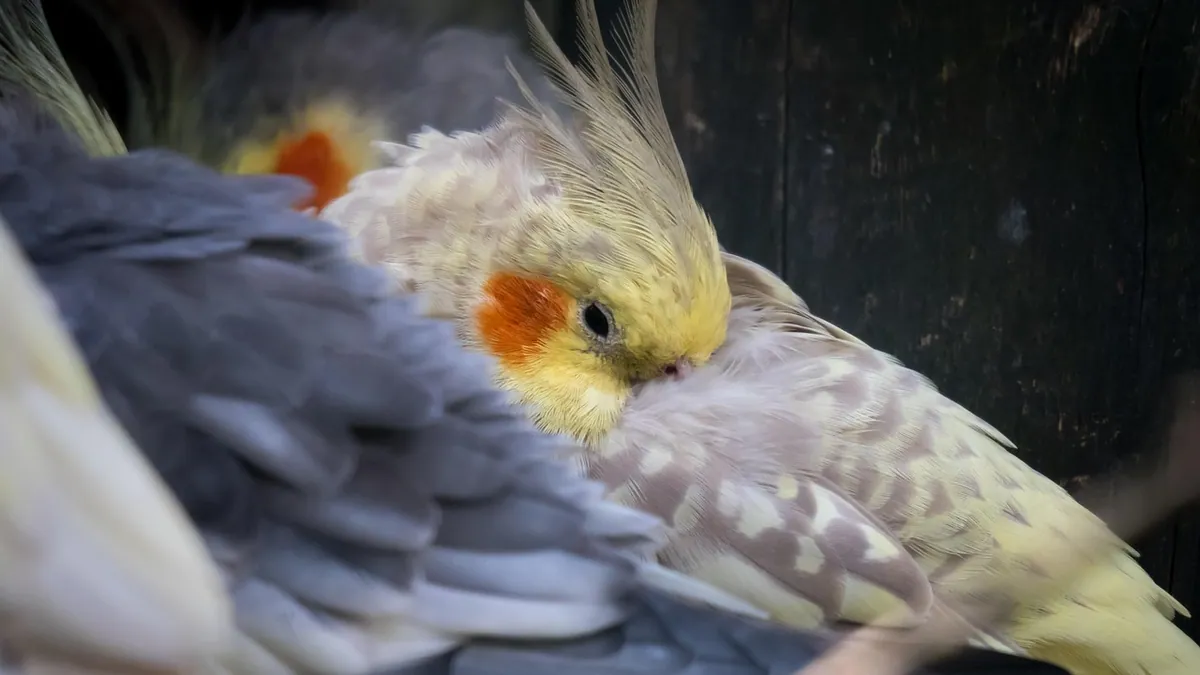
Do cockatiels sleep at night? Yes. Cockatiels and budgies are diurnal parrots that rest in long, quiet blocks overnight and wake with the sun. They also poop around the clock, including during sleep, so a few overnight droppings are normal. This article is educational and is not a substitute for veterinary diagnosis or treatment.
Quick Answer
- Both cockatiels and budgies need a dark, quiet sleep block of roughly 10 to 12 hours each night.
- Droppings produced overnight are normal. They are often larger and wetter than daytime droppings because they sit in the cloaca for hours.
- Soft chirps, beak grinding, and fluffed feathers during sleep are usually normal and not a sign of illness.
- A sudden change in sleep position, constant night screaming, or a drop in overnight droppings can signal a problem.
- Cover the cage, keep the room dark and quiet, and remove hazards before bedtime.
Why Cockatiels and Budgies Sleep at Night
Normal sleep behavior in cockatiels and budgies
Cockatiels and budgies are active during daylight and rest at night. This pattern is deeply rooted in bird biology. A broad analysis of light-sensing genes across bird lineages found that day and night activity patterns have stayed fairly stable since birds' common ancestor, which helps explain why most parrots keep a daytime schedule [1].
In the wild, parrots rise early, forage, rest during the hottest part of the day, and settle into roosts before dark. Pet cockatiels and budgies follow a similar rhythm. They often take a quiet nap in the early afternoon, then sleep through the night.
Most healthy pet cockatiels and budgies sleep 10 to 12 hours. Some need closer to 12 during short winter days or when they are molting. If your bird is awake late into the night because the room is bright or noisy, that lost sleep adds up. Chronic sleep loss is a real stressor for parrots, and stress hormones can be measured in their droppings, which is one reason sleep matters for welfare [2].
Do cockatiels poop in their sleep?
Yes, cockatiels and budgies can pass droppings while they sleep. Birds do not have the same conscious control over droppings that mammals have over urine and stool. The digestive tract keeps moving overnight.
Overnight droppings often look different from daytime ones. They tend to be larger, wetter, and sometimes more pungent because they have been held in the cloaca for several hours. That is normal.
What matters is the pattern. A bird that normally leaves two or three overnight droppings and suddenly leaves none may not be eating enough, may be dehydrated, or may be sick. A bird that suddenly produces a large volume of watery droppings every night needs a veterinary check.
Do budgies poop in their sleep?
Yes, budgies do too. The same digestive biology applies. Budgies are small, so their overnight droppings are smaller than a cockatiel's, but the pattern is similar.
Because budgies have fast metabolisms, they eat frequently during the day and digest through the night. If you cover the cage at a consistent time, you will learn your bird's normal overnight output. That baseline is useful. It helps you spot the first sign of illness.
Do cockatiels chirp in their sleep?
Many cockatiels make soft sounds while sleeping. You may hear quiet peeps, mumbles, or a low chatter. This is usually normal. Some birds seem to be dreaming or talking in their sleep.
Beak grinding is another common sleep sound. It is a rhythmic grinding or clicking that usually means your bird is relaxed and settling in. It is not a sign of pain or dental disease in a healthy bird.
What is not normal is loud, repeated screaming at night. A bird that wakes screaming, thrashes, or falls off the perch may be having night frights. Cockatiels are prone to these. A sudden light, a noise, or a shadow can trigger panic. Check for hazards and consider a small night light.
Do cockatiels fluff up when they sleep?
Yes, fluffing up at bedtime is normal. Birds raise their feathers to trap air and stay warm while resting. A sleeping cockatiel often looks round, with its head tucked back or turned toward its shoulder.
Fluffing becomes a concern when it happens during the day, when your bird is puffed up for hours, sits low on the perch, and seems weak. That combination points to illness, not sleep.
Medical Causes to Rule Out
When sleep changes point to illness
A change in sleep behavior is often the first sign a bird is sick. Birds hide illness well because showing weakness in the wild attracts predators. By the time you notice something, the problem may be advanced.
Watch for these patterns:
- Sleeping far more than usual during the day
- Sleeping on the cage floor instead of a perch
- Waking repeatedly and unable to settle
- No overnight droppings, or a sharp drop in droppings
- Droppings that are consistently watery, discolored, or contain undigested seeds
Digestive and respiratory disease can change both sleep and droppings. In one case report, a young cockatoo with a blood parasite infection showed weakness, diarrhea with undigested seeds, and weight loss, and imaging revealed airsacculitis, pneumonia, and gastrointestinal motility problems [3]. That is an extreme example, but it shows how digestive and breathing issues can show up together.
Stress, hormones, and behavior
Parrots are sensitive to chronic stress and can develop behavioral disorders when their environment does not meet their needs [4]. Poor sleep is one common stressor. So is a cage in a busy room that stays lit late.
Hormonal birds may also sleep less and pace more at night. If your hen cockatiel is laying eggs or showing nesting behavior, sleep disruption can be part of the picture. For more on that, see Cockatiel Care: Chronic egg laying and hormonal management guide.
Pain and night frights
A bird in pain may shift, fidget, or sit in an odd position at night. Arthritis, an injured leg, or a foot problem can make perching uncomfortable. Night frights are different. They are sudden panic episodes, often triggered by a noise or flash of light. Cockatiels with night frights may thrash and break blood feathers.
If your bird has repeated night frights, look at the sleep environment first. Then talk to your veterinarian about whether pain or another medical issue could be involved.
When Sleep Behavior Becomes a Problem
Occasional soft sounds or a few overnight droppings are not a problem. The problem starts when the pattern changes and stays changed.
Call your veterinarian if you see:
- Your bird sleeping on the cage floor for more than a day
- A steady drop in overnight droppings over two or three days
- Constant screaming or thrashing at night
- Daytime puffing, tail bobbing, or open-mouth breathing
- Weight loss, which you can track with a kitchen scale
A single odd night is rarely an emergency. A pattern that lasts more than 24 to 48 hours deserves a call.
What to Do Step by Step
Set a real sleep schedule
Pick a bedtime and a wake time and keep them consistent. Cover the cage with a breathable cloth. Keep the room dark. If your household is noisy at night, move the cage to a quieter room.
Aim for 10 to 12 hours of uninterrupted dark. If your bird is hormonal or stressed, some owners extend this to 12 hours. For more detail on how much rest different pet birds need, see Pet Bird Sleep Requirements.
Check the sleep environment
Before you cover the cage, check for:
- Drafts from windows or air vents
- Night lights that flicker or cast moving shadows
- Other pets that can reach the cage
- Loud appliances or TVs left on
- Perches that are too smooth or too small
A small, dim night light can help a cockatiel with night frights. Keep it steady, not flickering.
Use enrichment during the day
A bored bird often sleeps poorly at night. Give your cockatiel or budgie foraging toys, shreddable paper, and safe wood to chew. Rotate toys every few days so they stay interesting.
Offer fresh vegetables and a balanced diet. A bird that eats well during the day is more likely to settle at night.
Track overnight droppings
Put fresh paper or a liner in the cage tray each night. In the morning, look at what is there. Learn your bird's normal number, size, and color. This takes a week or two.
If something changes, you have a clear record to show your veterinarian. Photos help.
Handle hormonal triggers
Long daylight hours can push a parrot into breeding mode. That can disrupt sleep. Keep the light schedule steady and avoid touching your bird along the back and under the wings.
What Not to Do
Do not punish your bird for night noise
Never yell at, tap, or spray a bird that chirps or moves at night. Punishment increases stress and can make the behavior worse. It also damages trust.
Do not ignore a real change
It is easy to assume a quiet bird is just tired. A bird that stops producing overnight droppings, sits fluffed on the floor, or breathes with its tail bobbing needs a veterinarian, not more rest.
Do not rely on myths
A common myth is that birds do not poop while sleeping. They do. Another myth is that a fluffed bird is always cold. Fluffing at bedtime is normal, but daytime fluffing with weakness is not.
Do not use human sleep aids or supplements
Never give your bird melatonin, sedatives, or any human sleep product. Doses for birds are not established that applies to every pet, and the wrong product can be toxic. If your bird needs medication, your veterinarian will calculate the dose from your bird's weight and health.
When to Involve a Veterinarian or Behavior Professional
Call an avian veterinarian if sleep changes last more than 48 hours, if droppings change, or if your bird shows any sign of breathing trouble. A certified behavior consultant can help if the problem is behavioral, such as persistent night frights or screaming that does not improve with environment changes.
Your veterinarian will ask about diet, light schedule, droppings, and weight. Bring a fresh dropping sample if you can. A physical exam and baseline testing often answer the question quickly.
Limitations and When to Contact a Veterinarian
This article covers general patterns. Your bird is an individual, and individual cases need a veterinarian who can examine the bird.
Contact a veterinarian the same day if you see:
- No droppings for 12 hours or more
- Droppings that are black, tarry, or bloody
- Straining to pass droppings
- Sitting on the cage floor and unwilling to perch
- A sudden change in voice or breathing
Go to an emergency clinic now if your bird:
- Breathes with its mouth open while resting
- Has a seizure or falls off the perch repeatedly
- Cannot stand or is limp
- Has heavy bleeding from a broken blood feather
Schedule a routine visit if sleep changes are mild but last more than a few days, or if you want help with diet, weight, and husbandry.
Frequently Asked Questions
Do cockatiels sleep through the night without waking?
Most healthy cockatiels sleep in long blocks but do wake briefly to shift position, eat, or pass droppings. Brief waking is normal. Constant waking and restlessness are not.
Is it normal for a budgie to be active at night?
No, budgies are daytime birds and should be quiet and still at night. A budgie that is active, pacing, or chirping loudly after dark may be stressed, hormonal, or not getting a dark enough sleep block.
Why are my bird's morning droppings so large?
Overnight droppings are larger because they collect in the cloaca for hours while your bird sleeps. This is normal. A sudden change in size, color, or number is what matters.
Can a night light stop my cockatiel's night frights?
A small, steady night light can help some cockatiels settle. It should be dim and should not flicker or cast moving shadows. If frights continue, talk to your veterinarian.
How long do cockatiels live with good care?
Cockatiels commonly live into their teens and sometimes longer with good nutrition, sleep, and veterinary care. For a full breakdown, see Cockatiel Lifespan.
Related Articles
- Cockatiel Lifespan
- Pet Bird Sleep Requirements
- Cockatiel Care: Chronic egg laying and hormonal management guide
- Cockatiel Egg Laying Problems
- Do Cockatiels Dream? Sleep and Night Behavior
- Do Budgies Dream? Bird Sleep and REM Explained
- Do Cockatiels Poop Everywhere? Dropping Habits and Training
References
- Widespread nocturnality of living birds stemming from their common ancestor. BMC evolutionary biology, 2019.
- Assessment of Commercially Available Immunoassays to Measure Glucocorticoid Metabolites in African Grey Parrot (Psittacus Erithacus) Droppings: A Ready Tool for Non-Invasive Monitoring of Stress. Animals : an open access journal from MDPI, 2018.
- Visceral Haemoproteus minutus Infection in a Major Mitchell's Cockatoo (Lophochroa leadbeateri). Journal of avian medicine and surgery, 2023.
- ACTH Stimulation Induced Self-Mutilation Behavior in the Golden Conure (Guaruba guarouba). Animals : an open access journal from MDPI, 2020.