Where Do Bed Bugs Come From? Sources and Spread
By Dr. Zubair Khalid, DVM, MS, PhD ·
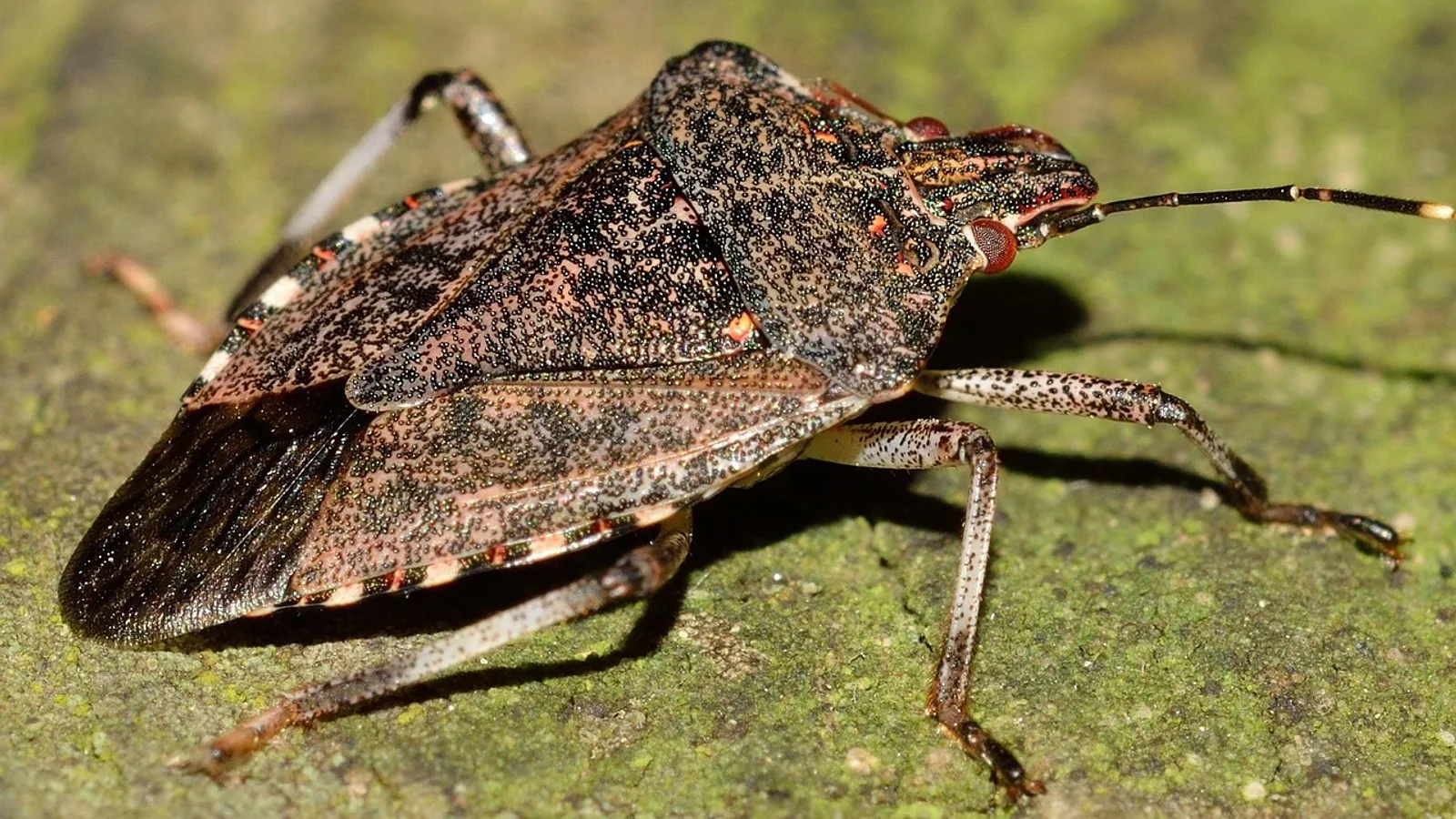
Bed bugs come from other infested places. They do not grow out of dirt, dust, or neglect. A new infestation almost always begins when a live bed bug, a nymph, or a viable egg arrives on luggage, secondhand furniture, clothing, or the body of someone moving between rooms, buildings, or cities [1][2].
Two species account for nearly all bites on humans and the animals that share their homes: Cimex lectularius, the common or temperate bed bug, and Cimex hemipterus, the tropical bed bug [3][4]. Both are obligate blood feeders at every mobile life stage, which means they must find a host to grow and reproduce [3][5]. Understanding where they originate, how they travel, and where they hide turns a frightening problem into a manageable inspection task.
This article is educational and is not a substitute for veterinary diagnosis or treatment.
The Two Bed Bug Species That Bite
Cimex lectularius, the Common Bed Bug
Cimex lectularius dominates temperate regions, including most of the United States, Canada, and Europe. It feeds efficiently on mammal and bird blood. In a controlled comparison of feeding performance, C. lectularius extracted blood from mice and pigeons more efficiently than C. hemipterus, and this advantage may explain why the common species reaches higher infestation levels in the areas where both are found [3]. Its saliva carries more hemeproteins and stronger anti-clotting activity, which supports rapid, repeated feeding [3].
The common bed bug is the species most often recovered from apartments, hotels, dormitories, and single-family homes in North America.
Cimex hemipterus, the Tropical Bed Bug
Cimex hemipterus is the tropical counterpart. It has emerged as a major public health pest in tropical and subtropical climates, including parts of Southeast Asia [4]. Genetic surveys of tropical bed bug populations in Malaysia and Singapore found high genetic diversity and evidence of multiple introductions, which fits a pattern of repeated long-distance transport rather than a single local outbreak [4].
Where the two species overlap, C. lectularius tends to build denser infestations because of its feeding efficiency [3]. Both species behave similarly in a home: they hide near sleeping areas, feed at night, and spread by the same hitchhiking routes.
Related Cimicids on Bats and Poultry
The bed bug family includes close relatives that feed on other warm-blooded hosts. Bats and poultry can carry related cimicids, and the common bed bug itself can feed on bats, poultry, rabbits, and other warm-blooded animals [6][7]. Genetic and morphological work on C. lectularius showed that bat-feeding and human-feeding populations are largely isolated and differ in body form, with limited gene flow between them [7]. That finding matters for one practical reason: a bat roost or a poultry house near a home is a separate reservoir, not the usual source of a human infestation. When bats or birds leave a structure, their parasites may move indoors looking for a new host, but the everyday human bed bug problem traces back to other human sleeping areas.
Bed Bugs Are Not Caused by Poor Hygiene
This is the single most damaging myth about bed bugs. Cleanliness has almost nothing to do with whether they arrive. A spotless hotel suite, a newly built apartment, and a hospital room can all be infested. What bed bugs need is a sleeping host, dark cracks to hide in, and a way in.
Infestation surveys support this. In a study of a 223-unit high-rise apartment building, 45 percent of units became infested within 41 months of the first confirmed introduction, and 50 percent of residents who had bed bugs did not know they were there [2]. These were ordinary apartments, not neglected ones. The insects spread through doorways, shared walls, and common areas regardless of how the residents cleaned.
A separate survey in Ahvaz, Iran, found that the most common harborage sites were cracks and crevices and that bedrooms and sitting rooms were the main hiding places, with infestation more common in single houses than apartments [8]. None of those findings relate to housekeeping quality.
The practical takeaway: if you find bed bugs, do not assume anyone in the home did something wrong. Focus on inspection and removal.
How Bed Bugs Travel
Bed bugs cannot fly and cannot jump. They move by walking and by being carried. Both routes matter.
Active Dispersal
Bed bugs walk from one hiding place to another, and they walk between rooms. In the high-rise apartment study, an average of six bed bugs were caught moving through apartment entry doors every four weeks, and adult bed bugs were nine times more likely to disperse than nymphs [2]. Fifty-three percent of apartments next to an infested unit also became infested [2]. This is why a problem in one unit is a building-wide concern.
Passive Dispersal on Belongings
Most new infestations start with passive transport. The high-rise study documented several routes: bringing infested furniture into the building, travel, resident turnover, resident visits, and shared equipment such as a wheelchair used in common areas [2]. Each of these is a hitchhiking event.
Soiled laundry is a particularly efficient vehicle. Bed bugs are attracted to the odor of sleeping humans, and worn clothing carries a similar attractive cue. In arena experiments, soiled clothing was significantly more attractive than clean clothing to moving bed bugs, and elevated carbon dioxide levels that simulate human occupancy triggered search behavior [1]. A traveler who leaves worn clothing exposed in a hotel room can carry bed bugs home in a suitcase without ever seeing one.
Genetic studies confirm that infestations usually begin small. Analysis of 21 infestations in the eastern United States found low genetic diversity within each infestation, consistent with a founding propagule as small as a single mated female and her offspring [9]. A handful of insects, or even one, is enough to start a household problem.
Repeated Introductions in Group Housing
In lower-income housing, new introductions happen again and again. Genetic analysis of 123 bed bugs from 23 units in one building found that 16 of 21 infestations were genetically similar, suggesting either failed treatments or reintroductions from within the building or a common external source. Up to five infestations were new genotypes, meaning five separate introductions arrived in a single year [10]. Chronic infestation in shared housing is usually a cycle of introduction, partial control, and reintroduction, not one stubborn bug family.
Where Bed Bugs Hide
Bed bugs prefer tight, dark spaces close to where people sleep. They are thigmotactic, meaning they seek contact with surfaces on all sides, which is why seams, folds, and cracks are prime real estate.
Sizes You Can Actually See
- Adult bed bugs: 5 to 7 mm long, roughly the size and shape of an apple seed.
- Nymphs: as small as 1.5 mm, about the size of a pinhead, and nearly transparent when unfed.
- Eggs: about 1 mm long, white to cream colored, cemented into cracks and fabric folds.
Nymphs dominate real infestations. In the high-rise apartment study, 78 percent of trapped bed bugs were nymphs [2]. That number explains why early infestations are so easy to miss. Most of the population is tiny, pale, and hidden.
Hiding Spots Versus Telltale Signs
| Hiding spot | What to look for |
|---|---|
| Mattress seams and piping | Live bugs, shed skins, dark fecal spots along the seam |
| Box spring and bed frame joints | Nymphs, eggs, fecal spotting in corners and screw holes |
| Headboard and bed legs | Live adults, shed skins, fecal streaks on the back face |
| Baseboards and wall-floor junctions | Fecal spots, shed skins, live bugs in the gap |
| Electrical outlets and switch plates | Live bugs behind the plate, fecal spotting on the wall |
| Cracks and crevices in walls | Fecal spots, shed skins, live bugs [8] |
| Nightstands and dresser drawers | Fecal spotting, shed skins along drawer runners |
| Sofas and upholstered chairs | Live bugs, shed skins, fecal spots in seams and under cushions |
| Curtain folds and wallpaper edges | Live bugs, fecal spotting [8] |
| Luggage and laundry bags | Live bugs, nymphs, eggs in folds and zippers [1] |
| Pet bedding near human sleeping areas | Live bugs, shed skins, fecal spotting |
Fecal spots are the most reliable sign. They look like dark ink dots or small smears, and they stain fabric. Shed skins are translucent and amber colored. Live bugs confirm the infestation.
Where They Do Not Usually Come From
Companion animals are rarely the source. A study of 228 bed bugs collected from 12 apartments with pets found human DNA in 69.3 percent of the insects, canine DNA in 3.1 percent, and feline DNA in 0.4 percent [6]. Bed bugs overwhelmingly feed on people even when dogs and cats share the home. Treating the family pet is not the answer to a household infestation.
Inspection Steps
A structured inspection finds infestations earlier and limits spread. Work slowly and carry a flashlight and a small tool for prying seams.
- Start with the bed. Pull the sheets and inspect the mattress top, sides, and especially the seams and piping. Check the underside and the box spring.
- Inspect the bed frame. Look at joints, screw holes, and the back of the headboard. Remove the headboard if it is mounted to the wall.
- Check the perimeter of the room. Inspect baseboards, wall-floor junctions, and any cracks in plaster or trim [8].
- Remove outlet and switch plates. Look behind them with a flashlight for live bugs and fecal spotting.
- Inspect furniture near the bed. Open drawers, check runners, and look under cushions and in seams.
- Check curtains and wall coverings. Look in folds and along wallpaper edges [8].
- Examine luggage and laundry. Look inside seams, zippers, and pockets, especially after travel [1].
- Repeat in every sleeping room. Bed bugs move between rooms, so a single-room inspection can miss the source [2].
If you find live bugs, shed skins, or fresh fecal spots, act on the whole sleeping area rather than the single spot where you looked.
How an Infestation Builds
The flowchart below shows the usual path from introduction to a confirmed household infestation.
flowchart TD
    A[Infested source] --> B[Hitchhikes on luggage or furniture]
    B --> C[Arrives in a sleeping room]
    C --> D[Hides in seams and cracks]
    D --> E[Feeds on sleeping host]
    E --> F[Lays eggs nearby]
    F --> G[Nymphs hatch and feed]
    G --> H[Population grows]
    H --> I[Bugs walk to nearby rooms]
    I --> J[Neighboring units infested]
    J --> K[Multiple introductions over time]
    K --> L[Chronic building infestation]
Why Bed Bugs Came Back
Bed bugs were nearly absent from the United States and most developed nations for decades after World War II. The current global resurgence began almost synchronously in the late 1990s in Europe, the United States, and Australia [11]. Insecticide resistance is a major driver. Pyrethroids became the mainstay chemistry for bed bug control, and rising tolerance to pyrethroids has led to control failures [11]. Bed bugs in the United States often carry point mutations in the voltage-gated sodium channel that confer target-site resistance to pyrethroids [10].
Resistance does not create bed bugs. It allows small introduced populations to survive treatment and spread, which is why the same building can stay infested for years [10]. In New York City, bed bug complaints fell by roughly half between 2014 and 2020, but areas with high infestation tended to remain infested, showing how persistent these pests are once established [12].
Practical Implications for Pet Owners
Bed bugs are a household problem, not a pet problem, but pets live in the same space and owners need a plan.
- Inspect before you bring anything home. Secondhand furniture, mattresses, and upholstered items are common introduction routes [2]. Check seams, joints, and undersides before the item enters the house.
- Protect your travel laundry. Bed bugs are drawn to worn clothing, so keep dirty clothes sealed in a bag while traveling and inspect luggage on return [1].
- Check pet bedding if it sits near your bed. It is a plausible harborage even though pets are rarely the blood source [6].
- Coordinate with neighbors in shared buildings. Adjacent units become infested at high rates, so a single-unit treatment often fails without building-wide attention [2].
- Do not rely on a single method. Resistance is widespread, and repeated introductions are common in group housing [11][10]. A veterinarian does not manage bed bugs, but your veterinarian can help you rule out other causes of skin lesions on pets and can advise on flea and tick control so that two problems are not confused.
If a pet develops itching, hair loss, or skin lesions, a veterinarian should examine the animal. Bed bugs feed on people far more often than on pets, so skin problems in a dog or cat usually have another cause [6].
What Is Still Uncertain
Several questions remain open. The exact role of bat roosts in human infestations is debated. Genetic evidence shows bat-feeding and human-feeding C. lectularius populations are largely isolated, which argues against bat roosts as a routine source of urban resurgence [7]. At the same time, related cimicids do live on bats and poultry, and those hosts can serve as separate reservoirs [6][7].
The size of the founding propagule is also not fully settled. Genetic data point to very small founding groups, often a single mated female, but the exact minimum number of insects needed to establish a lasting infestation in a given home is not known [9]. Tropical bed bug population genetics are less studied than those of the common bed bug, though recent work shows high diversity and multiple introductions in tropical cities [4].
Limitations and When to Contact a Veterinarian
This article covers where bed bugs come from and how they spread. It does not cover pesticide selection, application, or human skin treatment. Individual situations vary, and a veterinarian should evaluate any pet with skin lesions, itching, or unexplained blood loss.
Contact a veterinarian promptly if:
- A pet has open sores, crusting, or a skin infection that is not improving.
- A pet is scratching intensely, losing hair, or appears uncomfortable for more than a few days.
- A pet is lethargic, pale, or weak. Chronic, heavy bed bug infestations have been linked to severe iron deficiency anemia in a person with limited mobility, and the same principle of chronic blood loss applies to any heavily infested living situation [13].
- You are unsure whether skin lesions on a pet come from insects, allergies, or another medical condition.
- A pet shares a bed with a person in a home with a confirmed infestation and you want advice on protecting the animal.
For the home itself, contact a licensed pest management professional. Bed bug control is a structural and entomological problem, and resistance makes do-it-yourself approaches unreliable [11][10].
Frequently Asked Questions
Do bed bugs come from dirty homes?
No. Bed bugs are not caused by poor hygiene. They arrive on luggage, furniture, clothing, and shared items, and they infest clean and dirty homes alike [1][2].
Can bed bugs come from my dog or cat?
Rarely. In apartments with pets, bed bugs fed on humans in about 69 percent of cases and on dogs or cats in under 4 percent [6]. Pets are not the usual source.
How do bed bugs get into an apartment building?
They walk between units and hitchhike on furniture, luggage, and shared equipment. In one building, 53 percent of units adjacent to an infested apartment also became infested [2].
How small are bed bugs?
Adults are 5 to 7 mm long. Nymphs can be as small as 1.5 mm, and eggs are about 1 mm. Most of the population in a real infestation is nymphs, which are easy to overlook [2].
Can bed bugs live on bats or poultry?
Related cimicids do feed on bats and poultry, and the common bed bug can feed on bats and birds. Bat-feeding and human-feeding populations are largely isolated, so bat roosts are not the usual source of a home infestation [6][7].
What is the first sign of bed bugs?
Dark fecal spots along mattress seams, baseboards, and furniture joints are the most reliable early sign. Shed skins and live bugs confirm it.
Do bed bugs spread disease?
Bed bugs are not known to transmit infectious diseases. Their main health effects are bites, allergic reactions, and, in rare chronic cases, anemia from repeated blood loss [13].
Why are bed bugs so hard to get rid of now?
Widespread resistance to pyrethroid insecticides allows small populations to survive treatment, and repeated introductions keep reinfesting treated buildings [11][10].
Related Articles
- Dog Bed
- Dog Kennel Cough Symptoms Come And Go
- What Is An Orthopedic Dog Bed
- Orthopedic Bed For Dog
- Hamster Adoption: Where and How to Adopt a Hamster
- Cat Gagging But Nothing Comes Out
- Seed Bug vs Conifer Seed Bug: Identification
- Can Dogs Get Stomach Viruses? Signs and Care
- Smooth Muscle Tissue: Location and Microscopy
Sources
- Bed bug aggregation on dirty laundry: a mechanism for passive dispersal.
- Characteristics of Cimex lectularius (Hemiptera: Cimicidae), infestation and dispersal in a high-rise apartment building.
- The feeding process of Cimex lectularius (Linnaeus 1758) and Cimex hemipterus (Fabricius 1803) on different bloodmeal sources.
- Infestation Pattern and Population Dynamics of the Tropical Bed Bug, Cimex hemipterus (F.) (Hemiptera: Cimicidae) Based on Novel Microsatellites and mtDNA Markers.
- The Role of Antennae in Heat Detection and Feeding Behavior in the Bed Bug (Hemiptera: Cimicidae).
- The Common Bed Bug (Hemiptera: Cimicidae) Does Not Commonly Use Canines and Felines as a Host in Low-Income, High-Rise Apartments.
- Mitochondrial DNA and morphology show independent evolutionary histories of bedbug Cimex lectularius (Heteroptera: Cimicidae) on bats and humans.
- Prevalence and Spatial Distribution of Bed Bug, Cimex lectularius, Infestation in Southwest of Iran: GIS Approach.
- Genetic analysis of bed bug populations reveals small propagule size within individual infestations but high genetic diversity across infestations from the eastern United States.
- New Introductions, Spread of Existing Matrilines, and High Rates of Pyrethroid Resistance Result in Chronic Infestations of Bed Bugs (Cimex lectularius L.) in Lower-Income Housing.
- The re-emergence of the bed bug as a nuisance pest: implications of resistance to the pyrethroid insecticides.
- Spatiotemporal trends in bed bug metrics: New York City.
- Severe Iron Deficiency Anaemia Caused by bed bug Parasitisation without a Rash.