Salmon Oil for Dogs: Benefits, Dose, Risks
By Dr. Zubair Khalid, DVM, MS, PhD ·
Salmon oil is one of the most popular supplements for dogs, and the research supports several of its uses. It is a concentrated source of omega-3 fatty acids, mainly eicosapentaenoic acid (EPA) and docosahexaenoic acid (DHA). Clinical studies in dogs show benefits for itchy skin, coat quality, arthritic joints, heart rhythm, and even sperm quality. The right dose depends on your dog's weight and the EPA and DHA content of the product. Side effects are possible, especially in dogs taking aspirin or living with heart disease. This guide explains what the research actually shows, how to dose salmon oil, and when to call your veterinarian.
At a Glance: Salmon Oil for Dogs
| Topic | What you need to know |
|---|---|
| , - | , - |
| What it is | A liquid or capsule supplement made from salmon fat. Rich in EPA and DHA. |
| Main benefits | Skin and coat, joint comfort, heart rhythm in some dogs, sperm quality |
| Study-based dose | Varies by product and body weight. Calculate the EPA and DHA dose with your veterinarian. |
| Time to effect | Skin and coat changes usually appear within several weeks of daily use |
| Main risks | Bleeding when combined with aspirin, possible arrhythmia in some heart patients |
| Action step | Ask your veterinarian to calculate the EPA and DHA dose before starting |
What Is Salmon Oil and Why Do Dogs Need It?
Salmon oil is the fat extracted from salmon tissue. It belongs to the larger family of fish oils, and its active ingredients are the omega-3 fatty acids EPA and DHA. Dogs can convert other fats into small amounts of EPA and DHA, but the conversion is limited. When the body faces inflammation, skin repair, or high energy demands, dietary omega-3s become important.
Feeding fish oil changes the fatty acid profile of the blood. In a series of controlled feeding studies, dogs fed fish oil-enriched food had higher plasma concentrations of total omega-3 fatty acids, EPA, and DHA, and lower concentrations of arachidonic acid, an omega-6 fatty acid that drives inflammation [1]. The dose of omega-3 mattered more than the ratio of omega-6 to omega-3 in the food [1]. The same studies showed that blood levels only stay elevated while the supplement is given consistently. Once supplementation stops, plasma EPA and DHA fall [1].
At the cellular level, omega-3 fatty acids insert into the lipid bilayer of cell membranes. There they influence ion channels, membrane fluidity, and the production of inflammatory signaling molecules [2]. These mechanisms explain why omega-3s have been studied for conditions as different as skin allergy, arthritis, heart arrhythmia, and epilepsy [2].
Proven Benefits of Salmon Oil for Dogs
Skin and Coat Health
The best evidence for salmon oil in dogs is for pruritic skin disease. In a double-blinded crossover study, 16 dogs with itching from atopy, flea allergy, or idiopathic pruritus received marine oil at a dose of 1 ml per 4.55 kg of body weight daily for 6 weeks. Compared with a corn oil control, marine oil significantly improved pruritus, self-trauma, and coat character [3].
Newer trials show that omega-3s can reduce the amount of medication needed for allergic skin disease. In a 2024 placebo-controlled study, 22 atopic dogs receiving oclacitinib were given a fish oil product or a placebo for 16 weeks. The mean daily oclacitinib dose in the fish oil group fell from 0.51 mg/kg to 0.19 mg/kg, while the placebo group showed no significant change. Pruritus scores were also lower in the fish oil group at day 112, and coat quality improved only in that group [4].
A similar drug-sparing effect exists for cyclosporine. In a randomized, double-blinded, placebo-controlled trial of 36 dogs with atopic dermatitis, a mainly omega-3 product reduced the median daily cyclosporine dose from 4.1 mg/kg to 2.6 mg/kg over 12 weeks. The difference between the active and placebo groups was significant, and pruritus improved more in the active group [5].
Older studies support the same pattern. A commercial diet with an omega-6 to omega-3 ratio of 5.5 to 1 controlled pruritus in 8 of 18 atopic dogs (44.4%) within 7 to 21 days. The itching returned within 3 to 14 days after the diet was withdrawn and improved again when it was reinstated [6]. In another study, a concentrated essential fatty acid supplement reduced the prednisolone dose needed for satisfactory control in 8 of 11 atopic dogs [7].
One important caveat comes from a controlled feeding trial in pruritic dogs. Total clinical scores decreased in all four diet groups after 8 weeks, with no significant difference between groups. The authors concluded that n-3 supplementation did not appear to add benefit over thorough clinical management [8]. In practice, this means salmon oil works best as part of a complete plan that includes flea control, allergy testing, and veterinary treatment, not as a standalone remedy.
Joint Health and Osteoarthritis
Omega-3 fatty acids are a recognized part of osteoarthritis management in dogs. In a randomized, double-blinded, controlled trial of 127 dogs with osteoarthritis, dogs were fed a food with high fish oil omega-3 content or a control food for 6 months. Dogs on the test food had significantly higher serum omega-3 and lower arachidonic acid. Owners reported that these dogs had a significantly improved ability to rise from a resting position and to play at 6 weeks, and improved ability to walk at 12 and 24 weeks [9].
A second randomized, placebo-controlled trial in 30 dogs with naturally occurring osteoarthritis found that dogs fed a veterinary therapeutic diet rich in fish-source omega-3 had significantly higher peak vertical force, a force-plate measure of weight bearing, at weeks 7 and 13 compared with baseline [10].
Fish oil can also reduce pain medication needs. In a multicenter trial of 131 dogs with chronic osteoarthritis receiving carprofen, dogs fed a diet supplemented with fish oil omega-3 had a significantly faster reduction in carprofen dosage over 12 weeks than dogs on a control diet [11]. This drug-sparing effect matters because long-term nonsteroidal anti-inflammatory use carries risks for the stomach, kidneys, and liver.
Heart Health
The cardiac evidence is more complex. In 24 Boxer dogs with arrhythmogenic right ventricular cardiomyopathy (ARVC), a breed-associated heart condition, fish oil at 2 g daily for 6 weeks reduced the median number of ventricular premature contractions from 397 to 162 per 24 hours. Flax oil and sunflower oil did not produce the same effect [12].
In dogs with healed myocardial infarctions, omega-3 supplementation for 3 months did not change ventricular function measured by echocardiography, even at a dose of 4 g daily [13]. Another study in the same model found that omega-3s lowered resting heart rate and increased heart rate variability, but did not change the heart's response to exercise or coronary artery occlusion [14].
The caution comes from a 2012 study of 76 dogs with healed myocardial infarctions. Omega-3 treatment failed to prevent arrhythmias in dogs already susceptible to ventricular fibrillation. More concerning, it induced ventricular tachycardia or fibrillation in 33% of previously resistant dogs, compared with 0% in the placebo group [15]. This is why dogs with known heart disease should not start salmon oil without a veterinary cardiology assessment.
Brain, Behavior, and Nervous System
A pilot study tested a supplement containing omega-3 fatty acids, magnesium, and zinc in 48 dogs with behavioral disorders including excessive activity, inappropriate elimination, fearfulness, destructiveness, and aggression. The published abstract reports no significant changes in the control group [16]. This study does not provide evidence that omega-3s treat behavioral disorders, and the supplement should not replace behavioral treatment or training.
For epilepsy, the picture is different. Animal models, including canine models, provide a rationale for omega-3 fatty acids in reducing seizure activity through effects on ion channels and membrane excitability [2]. However, randomized controlled trials in humans are still at an early stage, and the authors call for larger multicenter trials [2]. Owners should never stop or change seizure medication without a veterinarian.
Reproductive Health
Two recent studies used salmon oil specifically in stud dogs. In one study, nine healthy male dogs received salmon oil at 180 mg DHA per 7 kg of body weight daily for 90 days. Post-thaw sperm motility increased from 56.67% to 71.67%, with similar improvements in membrane integrity and viability. These effects disappeared 90 days after stopping the supplement [17].
A related Doppler study in the same population found that salmon oil supplementation increased peak systolic velocity and end diastolic velocity in the testicular arteries, and these changes persisted 60 days after supplementation ended [18]. These findings are relevant for breeding dogs, but they are early evidence from small studies.
Salmon Oil vs Fish Oil: What Is the Difference?
Salmon oil is one specific type of fish oil. Other fish oils come from anchovies, sardines, herring, mackerel, or mixed fish. The active ingredients are the same: EPA and DHA. Most clinical trials in dogs used a general fish oil or marine oil product [16][19][3][4], while others used salmon oil directly [17][18].
A 2024 study compared a control diet containing shrimp hydrolysate and salmon oil with an experimental diet containing fish hydrolysate and oil from fish waste. The replacement did not affect first diet approach, taste, or intake ratio, and digestibility was generally unaffected [20]. This suggests that dogs accept fish oils well in food, and that the source of the oil matters less than the dose of EPA and DHA.
For an owner, the practical question is not whether to choose salmon oil or fish oil, but how much EPA and DHA each dose provides. Read the label and compare the combined EPA and DHA content per teaspoon or per capsule. A salmon oil product and a mixed fish oil product with the same EPA and DHA content should produce similar effects.
Salmon Oil Dosage for Dogs
There is no single universal dose for salmon oil in dogs. Published studies used different protocols, and the right dose for your dog depends on body weight, the product's fatty acid concentration, and the condition being treated.
| Study | Product | Dose | Duration |
|---|---|---|---|
| , - | , - | , - | , - |
| [3] | Marine oil, 180 mg EPA + 120 mg DHA per ml | 1 ml per 4.55 kg body weight daily | 6 weeks |
| [17] | Salmon oil | 180 mg DHA per 7 kg body weight daily | 90 days |
| [12] | Fish oil | 2 g total fish oil daily | 6 weeks |
| [16] | Fish oil capsules | 330 mg EPA + 480 mg DHA daily | 12 weeks |
A practical way to compare products is to calculate the combined EPA plus DHA dose. For example, a 10 kg dog following the [3] protocol would receive about 2.2 ml of marine oil daily, which provides roughly 396 mg of EPA and 264 mg of DHA. A 10 kg dog following the [17] protocol would receive about 257 mg of DHA daily. These are study doses, not a prescription for your dog.
The dose-response evidence supports consistency. In controlled feeding studies, the dose of omega-3, independent of the omega-6 to omega-3 ratio, determined the plasma fatty acid profile. Higher doses produced higher plasma EPA and DHA and lower arachidonic acid, and constant daily dosing was needed to maintain those levels [1].
Salmon oil is sold as a nutritional supplement rather than a prescription medication, so quality and concentration vary between brands. Look for a product that states the EPA and DHA content on the label, because the dose of these fatty acids is what determines the blood levels [1]. Start with a low dose and increase gradually over 5 to 7 days. Give the oil with a meal to reduce digestive upset. If your dog is already eating a therapeutic diet with added omega-3s, ask your veterinarian to adjust the supplement dose so the combined intake does not become excessive [1].
How to Give Salmon Oil to Dogs
Liquid salmon oil is the most common form. Measure the dose with the syringe or pump that comes with the bottle, then drizzle it over the dog's food. Capsules can be pierced with a pin and squeezed onto food, or hidden in a pill pocket for dogs that take capsules whole.
Give the oil with a meal. Food slows absorption and reduces the chance of stomach upset. Start at half the target dose for the first 5 to 7 days, then increase to the full dose. If the dog refuses food with oil, try mixing it into canned food or freezing small portions as treats.
Store liquid oil in the refrigerator after opening and check the expiration date. Fish oils can become rancid over time, and rancid oil has an unpleasant smell and taste. If the oil smells off, discard it and open a fresh bottle. Palatability studies show that dogs generally accept fish oils in food, with no difference in first approach or intake ratio between salmon oil and other fish oils [20].
Side Effects and Risks of Salmon Oil for Dogs
Digestive Upset
Digestive upset is possible with any fat supplement. Watch for loose stool, diarrhea, vomiting, or a sudden change in appetite during the first week. The clinical trials in this review recorded adverse events but did not report a high rate of serious digestive problems [4]. If vomiting or diarrhea persists beyond 24 to 48 hours, stop the supplement and call your veterinarian.
Bleeding and Platelet Function
Fish oil can change how platelets clump together. In a randomized trial of 16 healthy dogs, fish oil alone did not significantly affect any hemostatic test. However, the combination of aspirin plus fish oil caused significantly greater inhibition of platelet aggregation than aspirin alone [19]. This interaction matters for any dog on aspirin, clopidogrel, or another medication that affects bleeding. Watch for bleeding gums, blood in the stool, bruising, or prolonged bleeding from a small wound.
Heart Rhythm Effects
Omega-3s reduced arrhythmias in Boxer dogs with ARVC [12], but a different study found a proarrhythmic effect in dogs that had never shown ventricular fibrillation [15]. Dogs with heart disease, a history of collapse, or an irregular heartbeat should not receive salmon oil without a veterinary cardiology assessment.
Weight Gain and Calorie Load
Salmon oil is pure fat, and fat is calorie-dense. If you add salmon oil without reducing the main meals, weight gain is likely. This is especially important for dogs with arthritis, where extra weight worsens joint pain [9][10]. Ask your veterinarian how many calories to remove from the daily ration when you start the supplement.
Blood Fatty Acid Changes
High doses of omega-3 lower arachidonic acid in the blood [1]. Lowering arachidonic acid is usually the goal, because it reduces inflammatory signaling. However, the same shift changes the balance of fatty acids in cell membranes, and the effect depends on both the dose of omega-3 and the omega-6 content of the diet [1]. A veterinarian can help you choose a dose that fits your dog's regular diet.
What the Research Says: A Balanced View
The evidence for salmon oil is strongest for skin disease and osteoarthritis. The evidence for heart disease is mixed, with one study showing benefit and another showing possible harm. The evidence for behavior is negative in a pilot study [16]. The evidence for epilepsy is promising in animal models but not confirmed in clinical trials [2].
A controlled study in pruritic dogs found no added benefit of n-3 supplementation over thorough clinical management [8]. This is an important reminder that salmon oil is an adjunct, not a replacement for diagnosis, flea control, allergy treatment, or pain management.
This balanced view matters when reading salmon oil for dogs reviews. Many reviews are positive because the supplement genuinely helps many dogs with itchy skin and stiff joints. But individual results vary. Some dogs do not respond, and some cannot take it because of drug interactions or heart disease. A review from another owner cannot replace a veterinary assessment of your dog.
Limitations and When to Contact a Veterinarian
This article is educational and is not a substitute for veterinary diagnosis or treatment.
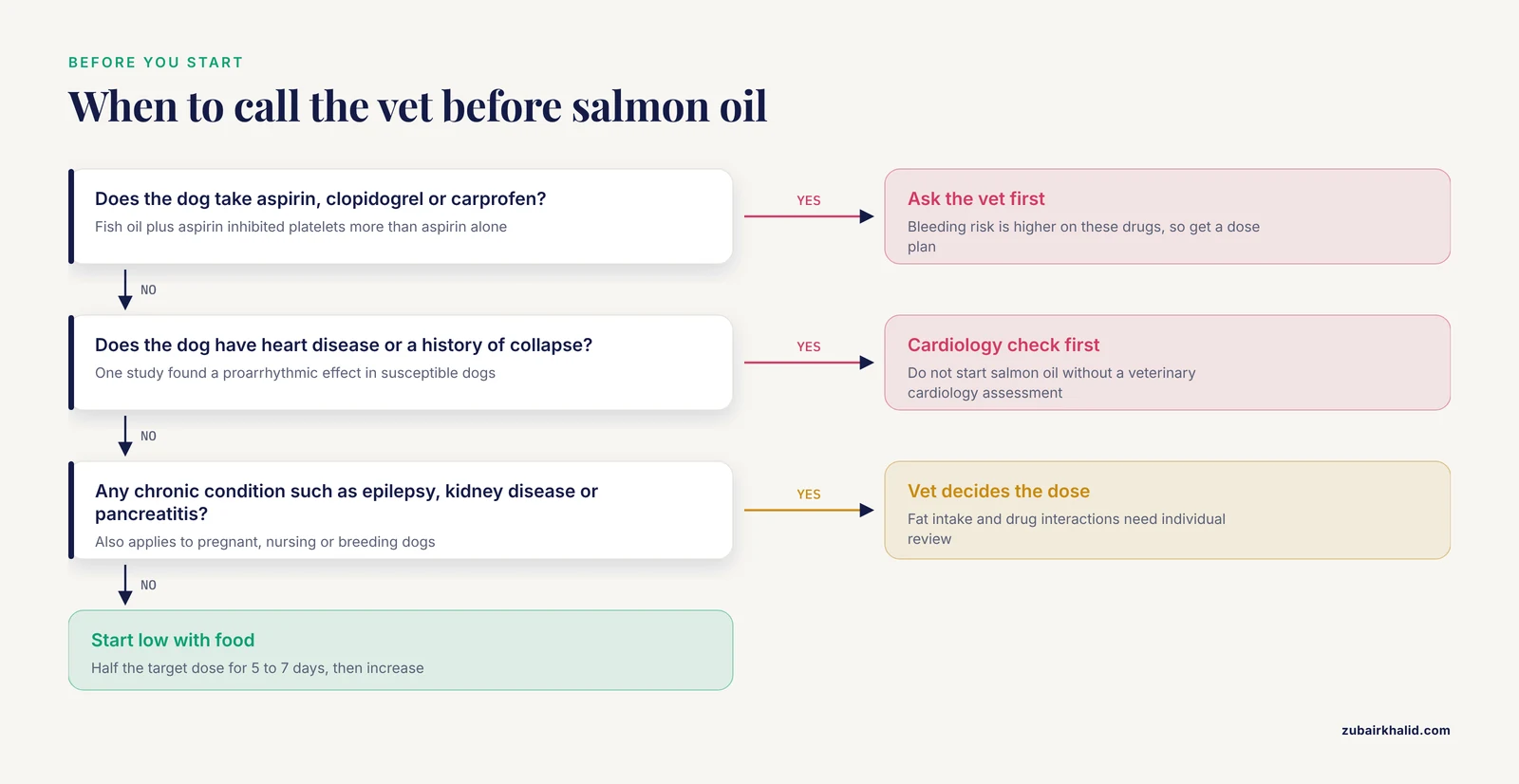
Contact a veterinarian before starting salmon oil if your dog:
- Takes aspirin, clopidogrel, carprofen, or any other medication that affects bleeding or inflammation [19]
- Has known heart disease, arrhythmia, or a history of collapse [12][15]
- Has a chronic condition such as epilepsy, kidney disease, or pancreatitis
- Is pregnant, nursing, or used for breeding
- Is already eating a therapeutic diet with added omega-3s, because the combined dose may be too high [1]
Contact a veterinarian promptly if your dog develops:
- Persistent vomiting or diarrhea after starting the supplement
- Bleeding gums, blood in the stool, bruising, or prolonged bleeding from a wound
- Collapse, weakness, or an irregular heartbeat
- Worsening of skin lesions or itching despite supplementation
- Weight gain that does not respond to portion adjustment
A single missed dose is not an emergency. Resume the normal schedule the next day and do not double the dose.
Can Salmon Oil Help Dogs with Kidney Disease?
Chronic kidney disease (CKD) is progressive and irreversible in dogs. The rationale for omega-3 supplementation rests on two mechanisms. First, omega-3 fatty acids lower arachidonic acid and shift inflammatory signaling toward less damaging eicosanoids [1][2]. Second, omega-3s may reduce intraglomerular pressure and slow the hyperfiltration that drives further nephron loss. These effects are why renal therapeutic diets commonly include fish-source omega-3s.
The clinical evidence in dogs is limited. No large randomized trial has tested salmon oil alone against placebo in dogs with naturally occurring CKD. What exists comes mostly from dietary studies in which omega-3s were part of a complete renal food, making it impossible to separate the effect of the oil from protein restriction, phosphate control, and other dietary changes. In those diets, omega-3s are associated with lower proteinuria and slower progression, but the evidence is not strong enough to claim that salmon oil alone slows CKD.
Proteinuria matters because it predicts faster progression. Omega-3s may reduce proteinuria through their anti-inflammatory effects on the glomerulus, but dogs with protein-losing kidney disease are usually treated with ACE inhibitors such as enalapril or benazepril. Salmon oil is an adjunct, not a replacement for those drugs.
Any dog with CKD should start salmon oil only under veterinary supervision. The veterinarian must account for the omega-3 content of the dog's renal diet, adjust the supplement dose to avoid excessive fat intake, and monitor kidney values and proteinuria. Dogs with CKD often have concurrent conditions that change the risk profile, so supplementation decisions must be individualized.
How to Choose a High-Quality Salmon Oil Supplement
Read the EPA and DHA numbers
The front label names the fish. The back label tells you whether the product is worth buying. Look for milligrams of EPA and milligrams of DHA per teaspoon or per capsule. A total "omega-3" figure includes other fatty acids and is less useful. Compare two 500 mg capsules, one listing 180 mg EPA plus 120 mg DHA and another listing 90 mg plus 60 mg. They look identical, but the second delivers half the active fatty acids. Because the EPA and DHA dose drives plasma levels, that difference changes how much you feed [1].
Check purity and third-party testing
Fish can carry heavy metals, polychlorinated biphenyls, and dioxins, and oil concentrates what was in the raw material. Choose a brand that publishes third-party batch testing for contaminants and supplies a certificate of analysis. Molecular distillation and similar refining steps reduce these compounds. A named manufacturer, a lot number, and a full ingredient list are minimum standards. A label that says only "marine oil" with no fatty acid numbers is a reason to walk away.
Avoid rancid oil
Oxidized oil smells sharp and fishy, and dogs may refuse it or vomit after eating it. Buy dark glass or opaque bottles, check the pressing or harvest date, and prefer nitrogen-flushed packaging. Mixed tocopherols or vitamin E on the ingredient list slow oxidation. A small bottle you finish within weeks beats a large bargain container.
Liquid versus capsules
| Form | Strengths | Weaknesses |
|---|---|---|
| , - | , - | , - |
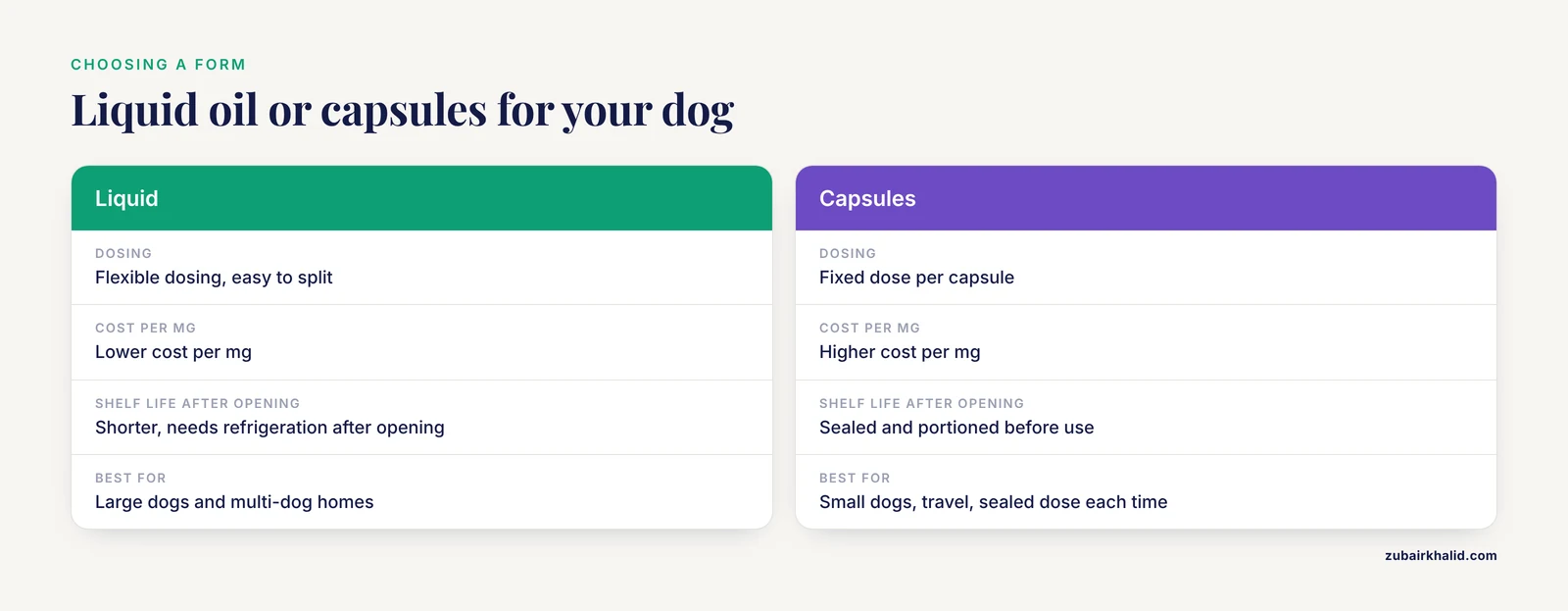
| Liquid | Flexible dosing, lower cost per mg, easy to split | Exposed to air after opening, needs refrigeration, shorter shelf life |
| Capsules | Sealed and portioned, less oxidation before use, travel-friendly | Fixed dose per capsule, higher cost per mg |
Liquid suits large dogs and multi-dog homes where a bottle empties quickly. Capsules suit small dogs, travel, and owners who want a sealed dose every time.
Salmon Oil for Puppies and Senior Dogs
Puppies: Dosing and Development
DHA is a structural fat in the brain and retina, and the most rapid neural development occurs during the puppy period. Salmon oil supplies DHA directly, bypassing the puppy's limited ability to convert other fats into DHA.
Weight-based dosing is the safest approach. Two published protocols in this article give reference points: 1 ml of marine oil per 4.55 kg of body weight daily [3], and 180 mg DHA per 7 kg of body weight daily [17]. For a 5 kg puppy, these work out to roughly 1.1 ml daily or about 129 mg DHA daily. These are study doses, not a prescription. Have your veterinarian calculate the dose for your puppy's current weight and your specific product.
Start at half the calculated dose for the first 5 to 7 days and give it with food. Recalculate the dose every 2 to 4 weeks as the puppy grows.
Senior Dogs: Joints and Medications
The osteoarthritis trials in this article were run in adult dogs, and the benefits apply to seniors. Fish oil omega-3s improved the ability to rise, walk, and play [9][10], and reduced the carprofen dose needed for pain control in one multicenter trial [11].
The main concern in seniors is polypharmacy. Fish oil combined with aspirin caused significantly greater inhibition of platelet aggregation than aspirin alone [19]. Senior dogs are also more likely to have heart disease, and one study found a proarrhythmic effect of omega-3s in dogs with healed myocardial infarctions [15]. A veterinary assessment before starting the supplement is the rule for older dogs.
When to Consult a Veterinarian First
- Puppies with a known growth problem, or any puppy before the first vaccination visit, to confirm the dose
- Senior dogs taking any daily medication, especially NSAIDs, aspirin, or clopidogrel [19]
- Senior dogs with heart disease, arrhythmia, or a history of collapse [15]
- Any dog with kidney or liver disease, because fat metabolism may be altered
Related Guides
- Can Dogs Eat Salmon Skin? Safety, Risks and How Much Is Safe: Salmon skin safety is a common question when feeding salmon products
- Omega-3 Fish Oil for Cats: Dose for Skin Kidney and Joints: For cat owners, omega-3 fish oil dosing for cats is covered here
- Can Dogs Eat Fish? Safe Types, Benefits, and Risks: Explains which fish types are safe for dogs to eat
- Can Dogs Eat Salmon? Salmon Poisoning Disease Risks: Details salmon poisoning disease risks from feeding raw salmon
- Fish Oil for Itchy Cats and Fish Oil Allergy Signs: Fish oil for itchy cats and fish oil allergy signs may be useful
- Neorickettsia helminthoeca: Salmon Poisoning Disease in Dogs, Pacific Northwest Ecology and Diagnosis: In-depth ecology and diagnosis of salmon poisoning disease in dogs
Frequently Asked Questions
Is salmon oil good for dogs every day?
Yes, daily dosing is what the studies used, and blood levels of EPA and DHA fall when supplementation stops [17][1]. Give the same dose at the same time each day, preferably with a meal.
How long does it take for salmon oil to work for a dog's skin and coat?
Most dogs show visible changes in itching and coat condition within several weeks of daily use. If there is no improvement after a full trial period, talk to your veterinarian about other options.
What is the right salmon oil dosage for dogs?
The right dose depends on body weight and the EPA and DHA content of the product. Published protocols vary, so have your veterinarian calculate the dose for your specific dog.
Can salmon oil cause side effects in dogs?
Yes. Digestive upset is possible, and fish oil combined with aspirin can increase bleeding risk [19]. Dogs with certain heart conditions may face arrhythmia risk [15]. Start with a low dose and monitor closely.
What is the difference between salmon oil and fish oil for dogs?
Salmon oil is one type of fish oil. Both provide EPA and DHA, and the clinical evidence for dogs uses both general fish oil and salmon oil [3][4][17]. The product label concentration of EPA and DHA matters more than the fish species.
How should I give salmon oil to my dog?
Give the measured dose with food. Liquid can be drizzled over a meal, and capsules can be pierced and squeezed onto food. Refrigerate liquid oil after opening and check the expiration date.
Can salmon oil help dogs with arthritis?
Yes. Clinical trials in dogs with osteoarthritis show improvements in weight bearing, walking, and play, and a reduced need for pain medication [9][10][11].
Can salmon oil help with itching and allergies?
Yes, for many dogs. Studies show improvements in itching, self-trauma, and coat condition, and a reduced need for allergy medications [3][4][5]. It works best alongside flea control and veterinary allergy treatment.
Sources
- The (n-3) fatty acid dose, independent of the (n-6) to (n-3) fatty acid ratio, affects the plasma fatty acid profile of normal dogs.
- Omega-3 fatty acids (ῳ-3 fatty acids) in epilepsy: animal models and human clinical trials.
- Double-blinded Crossover Study with Marine Oil Supplementation Containing High-dose icosapentaenoic Acid for the Treatment of Canine Pruritic Skin Disease.
- A placebo-controlled, double-blind study evaluating the effect of orally administered polyunsaturated fatty acids on the oclacitinib dose for atopic dogs.
- Evaluation of cyclosporine-sparing effects of polyunsaturated fatty acids in the treatment of canine atopic dermatitis.
- Effect of an omega-3/omega-6 fatty acid-containing commercial lamb and rice diet on pruritus in atopic dogs: results of a single-blinded study.
- Combined treatment with concentrated essential fatty acids and prednisolone in the management of canine atopy.
- Effect of n-3 fatty acid ratio and dose on clinical manifestations, plasma fatty acids and inflammatory mediators in dogs with pruritus.
- Multicenter veterinary practice assessment of the effects of omega-3 fatty acids on osteoarthritis in dogs.
- Effects of feeding a high omega-3 fatty acids diet in dogs with naturally occurring osteoarthritis.
- A multicenter study of the effect of dietary supplementation with fish oil omega-3 fatty acids on carprofen dosage in dogs with osteoarthritis.
- Omega-3 fatty acids in Boxer dogs with arrhythmogenic right ventricular cardiomyopathy.
- Effects of dietary omega-3 fatty acids on ventricular function in dogs with healed myocardial infarctions: in vivo and in vitro studies.
- Effect of dietary omega-3 fatty acids on the heart rate and the heart rate variability responses to myocardial ischemia or submaximal exercise.
- Dietary omega-3 fatty acids and susceptibility to ventricular fibrillation: lack of protection and a proarrhythmic effect.
- Effect of Supplementation With Omega-3 Fatty Acids, Magnesium, and Zinc on Canine Behavioral Disorders: Results of a Pilot Study.
- Effect of Dietary Supplementation with Salmon Oil on Canine Frozen-Thawed Semen.
- Salmon oil supplementation in dogs affects the blood flow of testicular arteries.
- Effects of omega-3 polyunsaturated fatty acids and aspirin, alone and combined, on canine platelet function.
- Protein hydrolysate and oil from fish waste reveal potential as dog food ingredients.