Is Olive Oil Good for Dogs? Benefits and Doses
By Dr. Zubair Khalid, DVM, MS, PhD ·
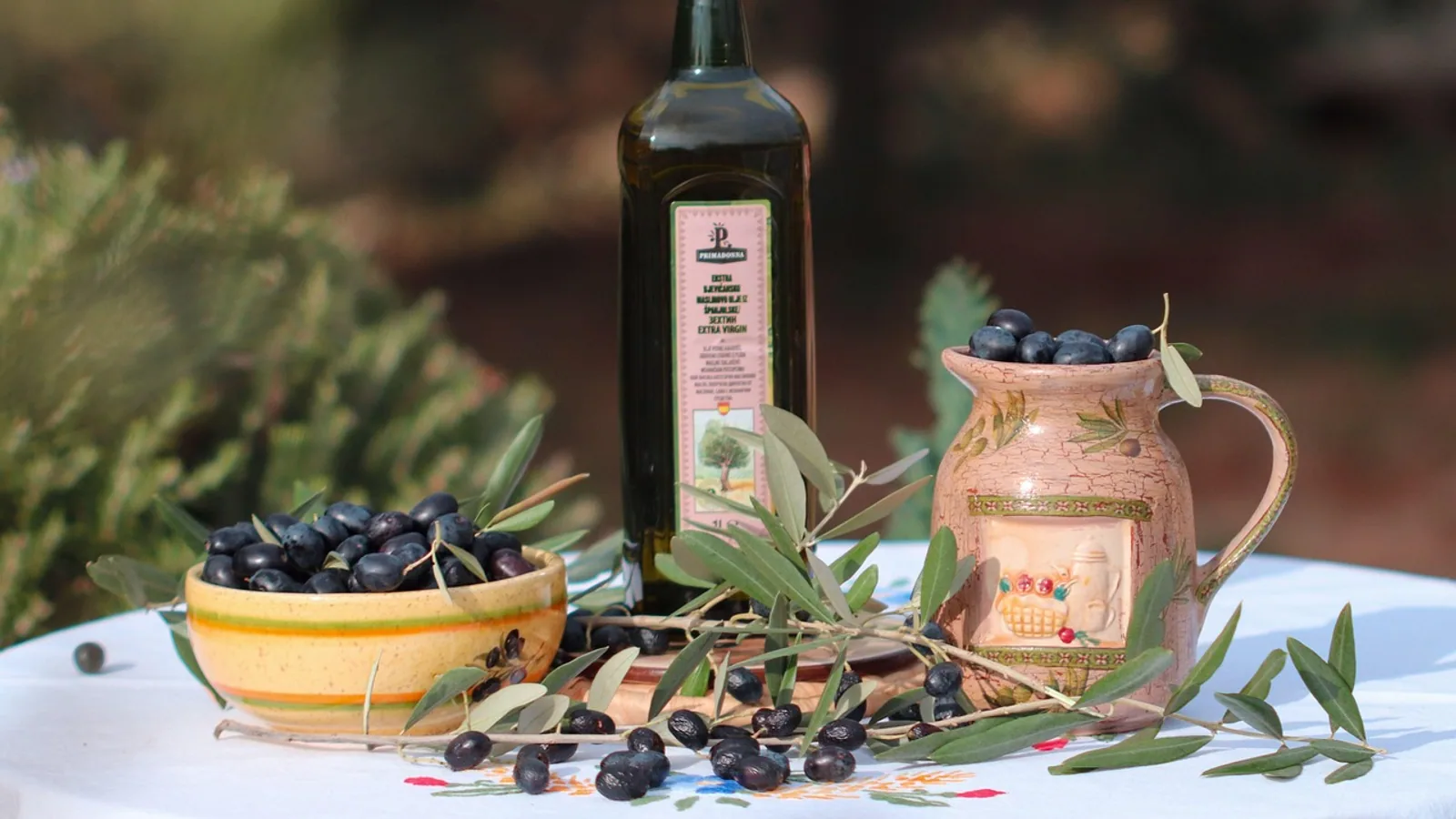
Olive oil is generally safe for healthy dogs when it is given in small amounts, and it can be a reasonable source of monounsaturated fat and vitamin E for skin and coat support. The practical answer is yes, with conditions. The dose matters more than the oil itself. A useful starting point is about 0.5 mL per 5 kg (11 lb) of body weight per day, capped at roughly 1 teaspoon (5 mL) for a 20 kg (44 lb) dog, and always kept under about 10 percent of the dog's daily calories. Dogs with a history of pancreatitis, overweight dogs, and dogs on a prescription or elimination diet should not receive olive oil without veterinary guidance.
This article is educational and is not a substitute for veterinary diagnosis or treatment.
At a Glance: Olive Oil for Dogs
| Item | Practical guidance |
|---|---|
| Safe for most healthy dogs | Yes, in small amounts |
| Typical daily dose | About 0.5 mL per 5 kg (11 lb) body weight |
| Practical cap | About 1 tsp (5 mL) for a 20 kg (44 lb) dog |
| Calorie ceiling | Keep added oil under about 10% of daily calories |
| Main nutritional value | Monounsaturated fat (oleic acid) and vitamin E |
| Best-known use | Skin and coat support, palatability |
| Do not use as | A treatment for allergies, seizures, or heart disease |
| Stop and call a vet if | Vomiting, diarrhea, abdominal pain, lethargy, or refusal to eat |
What Olive Oil Actually Contains
Olive oil is mostly fat, and the dominant fatty acid is oleic acid, a monounsaturated omega-9 fat. A controlled feeding study in Beagle puppies showed that when olive oil was added to a standard diet for 12 weeks, serum and skin levels of oleic acid (18:1n9) rose significantly, while several other fatty acids, including arachidonic acid (20:4n6), fell [1]. That study is the clearest evidence that dietary olive oil changes the fatty acid profile of a dog's skin and blood. It does not prove that those changes produce a visible cosmetic benefit, but it does confirm that the fat is absorbed and incorporated into tissue.
Olive oil also carries vitamin E in the form of tocopherols, along with polyphenol compounds. Polyphenols are the plant chemicals that give extra-virgin olive oil its bitterness and its antioxidant activity. A 2024 study in dogs found that an oil-free olive pulp flour, which is rich in polyphenols, lowered a blood marker of oxidative stress (d-ROMs) when fed at 11.5 mg per kg of body weight per day [2]. That study used olive flour rather than olive oil, so it does not prove the same effect for the oil. It does show that olive-derived polyphenols can influence oxidative status in dogs.
What olive oil does not contain in meaningful amounts is the long-chain omega-3 fat found in fish oil. It is not a substitute for EPA and DHA. Owners who want to address inflammation, joint disease, or specific skin conditions should understand that olive oil is a different tool.
Skin and Coat Benefits: What the Evidence Supports
The most common reason owners ask about olive oil is coat shine and skin comfort. The logic is reasonable. Fat is required for a healthy skin barrier, and monounsaturated fat plus vitamin E can support that barrier. The evidence, however, is mixed and needs to be read carefully.
The case for modest skin and coat support
Olive oil supplies fat and vitamin E, both of which contribute to skin health. The Beagle puppy study confirmed that olive oil supplementation raises oleic acid in the skin [1]. Oleic acid is a normal component of skin lipids. In practical terms, a small amount of added fat can help a dog that is eating a very low-fat diet or that has a dull coat from poor fat intake.
The case against using olive oil for allergies
A 1992 double-blind study compared olive oil with a combination of evening primrose oil and fish oil in atopic dogs whose symptoms were already well controlled on the combination. Eight of ten dogs switched to olive oil got worse, while nine of eleven dogs that stayed on the combination were unchanged [3]. The olive oil group also had a significant drop in a precursor of anti-inflammatory mediators. The authors concluded that olive oil is not an effective treatment for canine atopy.
A 2025 study added a caution. In a survey of 459 dogs, dogs with adverse food reactions were significantly more likely to be receiving vegetable oil supplements than dogs with other skin conditions, and extra-virgin olive oil was the most common oil used [4]. The study was preliminary and cannot prove that oil caused the reactions. It does raise the possibility that high vegetable oil intake, particularly oils rich in omega-6 fats, could be associated with allergic skin disease. Olive oil is not high in omega-6, but the finding is a reminder that adding oil to an allergic dog's diet is not automatically helpful.
The practical takeaway is that olive oil may support a normal coat in a healthy dog, but it is not a treatment for allergies, itching, or diagnosed skin disease. If a dog has chronic itching, recurrent ear infections, or hair loss, that is a medical problem, not a cosmetic one.
Doses by Body Weight
The dose that appears in the veterinary literature is not a fixed number. In one canine study, extra-virgin olive oil was given at 1 mL per 3 kg of body weight per day [5]. In another, an olive oil derivative was given at 0.7 mL per 5 kg per day [6]. These are research doses, not necessarily the right dose for a pet at home. For general skin and coat support, a conservative approach is better.
A practical starting dose is about 0.5 mL per 5 kg (11 lb) of body weight per day. That works out to roughly 0.1 mL per kg. For a 20 kg dog, that is 2 mL, which is less than half a teaspoon. The cap of about 1 teaspoon (5 mL) for a 20 kg dog keeps the dose modest even for larger animals. Very large dogs should not receive unlimited oil just because they are large.
| Body weight | Daily starting dose | Practical maximum |
|---|---|---|
| 5 kg (11 lb) | 0.5 mL | 1 mL |
| 10 kg (22 lb) | 1 mL | 2 mL |
| 15 kg (33 lb) | 1.5 mL | 3 mL |
| 20 kg (44 lb) | 2 mL | 5 mL (1 tsp) |
| 30 kg (66 lb) | 3 mL | 5 mL (1 tsp) |
| 40 kg (88 lb) | 4 mL | 5 mL (1 tsp) |
Use a measuring spoon or a syringe, not a kitchen spoon. Start at the low end and hold that dose for two to three weeks before considering any increase. If the coat improves and the stool stays normal, the dose is adequate. If the stool softens, reduce the dose or stop.
The 10 percent calorie rule
Fat is calorie-dense. One milliliter of olive oil contains roughly 8 to 9 calories. A 10 kg dog eating a typical maintenance diet may take in around 400 to 500 calories per day. Two milliliters of olive oil adds about 16 to 18 calories, which is roughly 4 percent of daily intake. That is a sensible range. Pushing added oil toward 10 percent of daily calories is the outer limit, and most dogs do better well below it. Dogs that are overweight, prone to weight gain, or on a calorie-restricted diet should receive little or no added oil.
How to Give Olive Oil Safely
- Choose a plain extra-virgin olive oil. There is no need for flavored, infused, or blended products. Store it away from heat and light.
- Measure the dose with a syringe or measuring spoon.
- Add the oil to the dog's regular food at mealtime. Do not give it on an empty stomach.
- Start at the low end of the dose range for the dog's weight.
- Watch the stool for the first week. Soft stool is the most common early sign that the dose is too high.
- Hold the dose steady for two to three weeks before judging the effect on the coat.
- Keep a simple log of the dose, the dog's weight, and any changes in stool, appetite, or scratching.
- Do not add olive oil on top of another oil supplement without veterinary advice. Total fat intake is what matters.
Risks and Side Effects
Olive oil is not risk-free. The most important concern is fat load.
Pancreatitis
Pancreatitis is inflammation of the pancreas, and it is one of the most serious complications of a high-fat meal or a high-fat diet in dogs. A study of healthy adult dogs fed diets ranging from 32 percent to 47 percent fat on a dry matter basis found that higher fat levels improved digestibility and reduced fecal output, and did not raise pancreatic lipase immunoreactivity in that short trial [7]. That study looked at healthy dogs eating a complete diet, not at dogs receiving a sudden bolus of oil. Dogs with a history of pancreatitis, dogs that have had a single episode, and breeds known to be at higher risk should not receive added oil without veterinary approval. A sudden large dose of any fat can trigger a flare.
Diarrhea and loose stool
Fat that is not fully digested can pull water into the gut and cause loose stool. This is the most common side effect of olive oil in dogs. It usually appears within a day or two of starting or increasing the dose. Reducing the dose or stopping the oil resolves it in most cases. Persistent diarrhea, vomiting, or abdominal pain is a reason to call a veterinarian.
Weight gain
Olive oil is calorie-dense. A dog that receives a daily teaspoon of oil on top of a full meal is taking in extra calories every day. Over months, that adds up. Obesity is a common problem in dogs, and it is a risk factor for other diseases. A 2025 study of obese dogs found that an olive oil derivative reduced some markers of inflammation and oxidative stress, but that study used a specific compound, not kitchen olive oil, and the dogs were monitored by veterinarians [6]. Adding oil to an overweight dog's diet without adjusting calories is more likely to worsen the problem than to help it.
Interference with nutrient absorption
A large amount of oil in the gut can affect how other nutrients are absorbed. Fat slows stomach emptying and can change the way the gut handles other fats and fat-soluble compounds. The clinical significance in a healthy dog receiving a small dose is low. In a dog with gastrointestinal disease, exocrine pancreatic insufficiency, or a history of malabsorption, added fat can worsen signs. Any dog with a chronic GI condition should have the oil cleared by a veterinarian first.
Interaction with medical conditions
Dogs with diabetes, Cushing's disease, or other endocrine disorders may be more sensitive to dietary fat changes. Dogs on a prescription diet for kidney, liver, heart, or urinary disease should not have oil added unless the prescribing veterinarian approves it. The diet was formulated for a reason, and adding fat changes the balance.
When to Avoid Olive Oil
| Situation | Why to avoid or delay |
|---|---|
| History of pancreatitis | Fat can trigger a flare |
| Current vomiting or diarrhea | Added fat can worsen GI signs |
| Overweight or obese | Extra calories promote weight gain |
| Prescription or elimination diet | Oil can interfere with the diet's purpose |
| Diagnosed food allergy or atopic dermatitis | Oil is not a treatment and may not help [4][3] |
| Chronic GI disease or malabsorption | Fat may worsen signs |
| Diabetes or other endocrine disease | Fat tolerance may be altered |
| Very small dogs | Even small volumes are a large calorie load |
| Puppies on a complete growth diet | The diet is already balanced for growth |
| Dogs on multiple supplements | Total fat and calorie load can add up |
If a dog falls into any of these categories, ask a veterinarian before giving olive oil.
Common Mistakes Owners Make
The first mistake is treating olive oil as a medicine. It is a food. It will not cure allergies, stop seizures, or treat heart disease. A 2012 trial that used olive oil as a placebo in dogs with idiopathic epilepsy found no reduction in seizure frequency or severity from essential fatty acid supplementation, and the olive oil itself was the control [8]. Olive oil has no role in seizure management.
The second mistake is dosing by eye. A "drizzle" can easily be a tablespoon, which is far more than a small dog needs. Use a measuring device.
The third mistake is continuing the oil when the dog's stool is soft. Soft stool is the body's signal that the fat load is too high. Reduce or stop.
The fourth mistake is adding olive oil to an already high-fat diet. Many commercial dog foods are energy-dense. Adding oil on top pushes total fat higher than the label suggests.
The fifth mistake is assuming that because olive oil is good for people, it is good for dogs in the same way. The human cardiovascular claims for olive oil do not transfer directly to dogs, and they are not the reason to use it. The relevant canine uses are fat and vitamin E supply for skin and coat, and palatability.
The sixth mistake is using olive oil as a substitute for a proper omega-3 supplement. Olive oil does not contain EPA or DHA. If a veterinarian has recommended omega-3 fatty acids for a specific condition, olive oil will not fill that role.
Olive Oil Compared with Other Oils
Owners often ask how olive oil compares with fish oil, sunflower oil, or coconut oil. The honest answer is that they do different things.
Fish oil is rich in EPA and DHA, the long-chain omega-3 fats. Those fats have been studied in dogs for a range of conditions, and they behave very differently from olive oil. A study of dogs with osteoarthritis found that fish oil supplementation reduced a marker of oxidative stress over 16 weeks, while corn oil did not [9]. A study of aged Beagles found that a DHA-rich algal oil improved performance on some learning tasks [10]. These are not olive oil effects.
Sunflower oil is high in linoleic acid, an omega-6 fat. A controlled study in Beagle puppies found that sunflower oil raised serum and skin linoleic acid, while olive oil raised oleic acid [1]. The two oils change the fatty acid profile in different directions.
The practical point is that olive oil is a monounsaturated fat source with some vitamin E. It is not an omega-3 supplement. If a dog needs omega-3 fats, olive oil is the wrong choice.
Olive Oil and the Dog's Microbiome
Diet shapes the gut microbiome in dogs, and fat is part of that picture. A study of dogs fed different diets found that protein and fiber content drove most of the measurable microbiome changes, and that each dog's baseline microbiome influenced how much it changed [11]. Olive oil is not a prebiotic or a probiotic. It does not have a documented microbiome-targeting role in dogs. Owners who are interested in gut health should focus on the overall diet and on veterinary guidance rather than on adding oil.
Special Populations
Puppies
Puppies on a complete growth diet do not need added oil. Their diet is formulated to meet their energy and fatty acid needs. The Beagle puppy study used olive oil as an experimental treatment, not as a recommended practice [1]. Adding oil to a puppy's diet can unbalance calories and displace other nutrients.
Senior dogs
Older dogs may have reduced fat tolerance, slower gut transit, or concurrent disease. A small dose may be fine for a healthy senior dog, but the dose should be lower and the response should be watched closely. Senior dogs with any chronic condition should have the oil approved by a veterinarian.
Small breeds
Small dogs need very small doses. A 5 kg dog should start at about 0.5 mL per day, which is less than an eighth of a teaspoon. Measuring that accurately matters. A kitchen spoon is not precise enough.
Large breeds
Large dogs can receive more oil, but the cap still applies. A 40 kg dog does not need 8 mL of oil per day. The practical maximum of about 1 teaspoon (5 mL) for a 20 kg dog is a reasonable ceiling for most large dogs as well.
How Long Before You See a Change
Coat changes take time. Hair grows slowly, and the skin barrier turns over over weeks. A reasonable expectation is four to eight weeks before a visible change in coat shine or softness. If there is no change after eight weeks at an appropriate dose, the oil is probably not helping. Stop it and discuss the coat problem with a veterinarian. A dull coat can reflect poor nutrition, parasites, hormonal disease, or a skin infection, and those need diagnosis, not more oil.
Welfare and Safety Points
- Never force a dog to eat oil. If the dog refuses food with oil added, stop.
- Do not use olive oil as a reward or treat in large amounts.
- Keep the oil bottle out of reach. A dog that eats a large amount of oil can develop vomiting and diarrhea.
- Do not give oil to a dog that is already vomiting or has diarrhea.
- Do not use oil to "flush" a dog or to treat constipation without veterinary advice.
- Store oil properly. Rancid oil smells off and should be discarded.
- Tell your veterinarian about every supplement, including olive oil, at each visit. Supplement use is common in dogs, and veterinarians need the full picture to give good advice [12].
Limitations and When to Contact a Veterinarian
This article gives general guidance for healthy adult dogs. Individual dogs differ, and a dose that suits one dog may not suit another. Your veterinarian can assess your dog's weight, body condition, diet, and medical history and give a specific recommendation.
Contact a veterinarian promptly if any of the following occur after starting olive oil:
- Vomiting, especially repeated vomiting
- Diarrhea that lasts more than 24 hours or contains blood
- Abdominal pain, pacing, or a hunched posture
- Refusal to eat or drink
- Lethargy or weakness
- Yellowing of the gums, eyes, or skin
- Any sign of an allergic reaction, such as facial swelling or hives
Contact a veterinarian before starting olive oil if the dog has a history of pancreatitis, is overweight, is on a prescription or elimination diet, has diabetes or another endocrine disease, has chronic gastrointestinal disease, or is receiving other fat supplements.
Frequently Asked Questions
Is olive oil good for dogs?
Yes, in small amounts for most healthy dogs. It supplies monounsaturated fat and vitamin E and may support skin and coat condition. It is not a treatment for allergies, seizures, or heart disease.
How much olive oil can I give my dog?
A practical starting dose is about 0.5 mL per 5 kg (11 lb) of body weight per day, capped at roughly 1 teaspoon (5 mL) for a 20 kg (44 lb) dog. Keep added oil under about 10 percent of daily calories.
Can olive oil help my dog's itchy skin?
No. A double-blind study found that atopic dogs switched to olive oil got worse, and the authors concluded it is not an effective treatment for canine atopy [3]. Itching needs a veterinary diagnosis.
Will olive oil make my dog's coat shiny?
It may help a dog that is eating a low-fat diet, because fat supports the skin barrier. The effect is modest and takes four to eight weeks. A dull coat can also signal a medical problem.
Can olive oil cause pancreatitis in dogs?
A large fat load can trigger pancreatitis in a susceptible dog. Dogs with a history of pancreatitis should not receive added oil without veterinary approval.
Can I give my dog olive oil every day?
Yes, for most healthy dogs, if the dose is small and the stool stays normal. Stop if diarrhea, vomiting, or weight gain occurs.
Is olive oil a substitute for fish oil?
No. Olive oil does not contain meaningful EPA or DHA. If a veterinarian recommends omega-3 fats, olive oil will not replace them.
What should I do if my dog has diarrhea after olive oil?
Stop the oil and offer plain water. If the diarrhea lasts more than 24 hours, contains blood, or is accompanied by vomiting or lethargy, contact a veterinarian.
Related Articles
- Can Cats Eat Tuna Packed In Olive Oil
- CBD Oil for Dogs: Dose Safety and Drug Interaction Warnings
- Omega-3 Fish Oil for Cats: Dose for Skin Kidney and Joints
- Omega-3 Fish Oil for Dogs: EPA DHA Dose Anti-Inflammatory Protocol
- Vegetables Good For Dogs
- Can Cats Eat Tuna In Oil
- Olive Leaf: Benefits and Safety for Pets
- Can Dogs Eat Fish? Safe Types, Benefits, and Risks
- Can Dogs Eat Coconut? Benefits and Safety Limits
Sources
- Effects of oral sunflower oil and olive oil on serum and cutaneous fatty acid concentrations in dogs.
- A Diet Supplemented with Oil-Free Olive Pulp Flour (MOP-ManniOlivePowder(®)) Improves the Oxidative Status of Dogs.
- A double-blind comparison of olive oil and a combination of evening primrose oil and fish oil in the management of canine atopy.
- Exploring the potential link between vegetable oil supplementation and adverse food reactions in dogs: a preliminary study.
- Effects of the supplementation with an high-polyphenols extra-virgin olive oil on kinetic sperm features and seminal plasma oxidative status in healthy dogs.
- An olive oil-derived NAE mixture (Olaliamid(®)) improves liver and cardiovascular health, and decreases meta-inflammation in naturally obese dogs: a double-blind, randomized, placebo-controlled study.
- Apparent total tract digestibility, fecal characteristics, and blood parameters of healthy adult dogs fed high-fat diets.
- Effects of essential fatty acid supplementation in dogs with idiopathic epilepsy: a clinical trial.
- Evaluating oxidative stress, serological- and haematological status of dogs suffering from osteoarthritis, after supplementing their diet with fish or corn oil.
- The oil-rich alga Schizochytrium sp. as a dietary source of docosahexaenoic acid improves shape discrimination learning associated with visual processing in a canine model of senescence.
- Effect of sequentially fed high protein, hydrolyzed protein, and high fiber diets on the fecal microbiota of healthy dogs: a cross-over study.
- Supplement use is common in Dog Aging Project participants, especially among dogs with orthopedic conditions, and varies by life stage.