Can Chickens Eat Apples? Safe Feeding Guide
By Dr. Zubair Khalid, DVM, MS, PhD ·
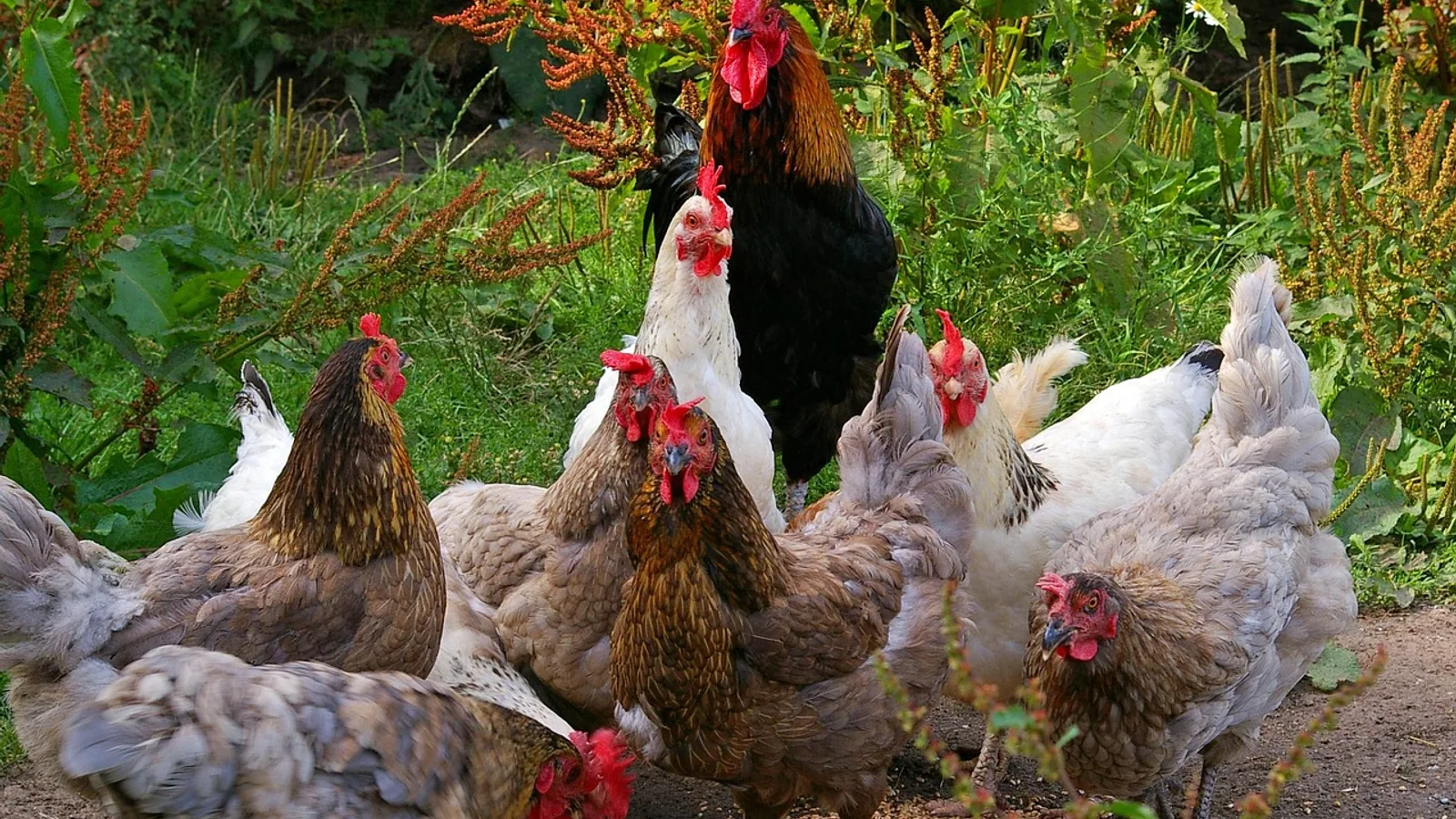
Yes, chickens can eat apples. The flesh and skin are safe for backyard flocks and are readily accepted by most birds. The seeds and the core are the parts that require attention. Apple seeds contain amygdalin, a cyanogenic compound that releases cyanide when the seed is crushed or chewed. A few swallowed whole seeds rarely cause harm to a large hen, but the seeds should be removed as a routine practice because the margin for error is small and the fix is simple. Treats like apple should stay under roughly 10 percent of a chicken's daily dry-matter intake so that a balanced layer ration continues to supply the protein, calcium, and micronutrients the bird needs. A golf-ball-sized portion per bird per day is a defensible upper guide for most adult laying hens.
This article covers which parts of the apple are safe, which are not, how much to feed, how to prepare the fruit, what to do about moldy or fermented fruit, and when a bird that ate too much apple needs veterinary attention.
This article is educational and is not a substitute for veterinary diagnosis or treatment.
At a Glance: Apple Safety for Chickens
| Part of the apple | Safe or unsafe | Reason | Prep |
|---|---|---|---|
| Flesh (pulp) | Safe | Moist, low-toxicity fruit tissue, mostly water and sugars | Wash, cut into small pieces |
| Skin | Safe | Edible fiber and pigments, no cyanogenic tissue | Wash to remove pesticide residue and surface mold |
| Seeds | Unsafe in quantity | Contain amygdalin, which releases cyanide when chewed or crushed | Remove and discard before feeding |
| Core | Unsafe in quantity | Concentrates seeds and tough fibrous tissue | Cut away with the seeds |
| Leaves | Not established as a feed | Not part of the fruit and not evaluated as poultry feed here | Do not feed |
| Stems | Not established as a feed | Not part of the fruit and not evaluated as poultry feed here | Do not feed |
| Cooked or baked apple | Safe only if plain | Added sugar, butter, spices, and artificial sweeteners are not appropriate for poultry | Feed plain, unsweetened, cooled |
| Applesauce | Safe only if plain and unsweetened | Commercial versions often contain added sugar or preservatives | Use plain, unsweetened, in small amounts |
| Moldy apple | Unsafe | Rotting fruit can harbor Clostridium botulinum and mycotoxins | Discard the whole fruit |
| Fermented apple | Unsafe | Fermentation byproducts and possible botulinum toxin | Discard the whole fruit |
| Apple cider vinegar in water | Not covered here | This article addresses the fruit, not vinegar products | Discuss with a veterinarian |
Why Apples Are a Reasonable Treat for Backyard Chickens
Apples are a low-cost, widely available fruit that most flocks accept eagerly. The flesh is high in water and provides a small amount of sugar, some soluble fiber, and modest vitamin C. None of that replaces a formulated layer ration, but it does make apple a useful enrichment item and a way to add variety to a bird's day.
Fruit by-products more broadly have attracted attention in poultry nutrition because they contain dietary fiber, phenolic compounds, and other bioactive molecules that may support gut health and general performance [1]. Apple pomace, the material left after juice pressing, is one of the fruit by-products that has been studied in this context. That research is about processed pomace used as a feed ingredient, not about handing a hen a slice of raw apple. The distinction matters. A raw apple wedge is a treat. Apple pomace is a formulated ingredient evaluated for inclusion rates in complete diets. Owners should not read pomace research as a green light to feed unlimited fresh fruit.
Apples also contain phytosterols, plant-derived compounds found in seeds, fruits, grains, vegetables, and legumes. Phytosterols have been reviewed for their biological roles and potential applications in poultry and livestock nutrition [2]. Again, this is a research direction about isolated or concentrated compounds, not a reason to feed a hen an entire apple every day. The practical takeaway is that fruit can be part of a varied diet without being a primary energy source.
The core principle in backyard poultry feeding is simple. A complete layer ration is built to deliver the right balance of energy, amino acids, calcium, phosphorus, and vitamins for egg production and long-term health. Every treat displaces some of that ration. The larger the treat, the larger the displacement. Apples are safe in the sense that they do not contain a toxin in the flesh, but they are not nutritionally complete, and they should not be treated as a staple.
The Real Risk: Apple Seeds and Amygdalin
The most important safety fact about apples and chickens is that the seeds contain amygdalin. Amygdalin is a cyanogenic glycoside. When plant tissue containing amygdalin is damaged, an enzyme called beta-glucosidase converts amygdalin into a compound that releases hydrogen cyanide. Chewing or crushing the seed is what triggers the reaction. A seed swallowed whole may pass through the gut without releasing much cyanide because the intact seed coat protects the amygdalin from the enzyme.
This is why the practical advice is not "never let a seed touch your chicken" but rather "remove the seeds and core before feeding." A large adult hen that accidentally pecks one or two seeds while cleaning up a dropped apple core is unlikely to show signs of poisoning. A small bird, a chick, or a bird that consumes a large quantity of crushed seeds is at higher risk. The dose matters, the bird's size matters, and the form of the seed matters.
Cyanide poisoning interferes with cellular oxygen use. Signs in poultry can include rapid or labored breathing, weakness, incoordination, tremors, and sudden collapse. These signs can progress quickly. If you suspect cyanide exposure, contact a veterinarian immediately. Do not wait to see whether the bird recovers on its own.
The reason to remove the core along with the seeds is that the core is where the seeds cluster. Cutting the apple into wedges and flicking out the seed pocket with a paring knife takes a few seconds. For a flock of six hens, that is under a minute of prep for a safe treat.
How Many Seeds Are Dangerous?
There is no single number that applies to every chicken. Body weight, the amount of seed material actually chewed, whether the bird had a full crop, and individual variation all affect the outcome. Published veterinary toxicology references describe cyanogenic glycoside poisoning in poultry as dose-dependent, with small exposures often tolerated and larger exposures causing acute signs. Because the threshold is not a fixed figure that owners can count against, the safe approach is to treat any meaningful quantity of crushed seeds as a problem and to remove seeds entirely as a habit.
Do not rely on the idea that "a few seeds are fine" as a reason to skip prep. The habit of removing seeds costs almost nothing. The habit of feeding whole cores because a hen seemed fine last time builds a false sense of safety.
Portion Guidance: How Much Apple Is Too Much
Treats should stay under roughly 10 percent of a chicken's daily dry-matter intake. The other 90 percent or more should come from a complete layer ration. This is the same principle that applies to scratch grains, bread, kitchen scraps, and other popular backyard treats. The 10 percent ceiling is a working guide, not a precise measurement that owners need to calculate to the gram.
For a typical adult laying hen eating about 100 to 120 grams of feed dry matter per day, 10 percent is roughly 10 to 12 grams of treat dry matter. Fresh apple is mostly water, so a fresh apple portion that supplies about 10 grams of dry matter is larger than 10 grams by weight. A golf-ball-sized piece of fresh apple per bird per day is a reasonable and defensible upper guide. It is small enough to leave the ration in charge and large enough to be a meaningful treat.
| Bird | Suggested maximum fresh apple per day |
|---|---|
| Adult laying hen | About one golf-ball-sized piece |
| Large breed hen | About one golf-ball-sized piece, occasionally slightly more |
| Bantam hen | A smaller piece, roughly half a golf ball |
| Growing pullet | A small piece, treated as a minor fraction of total intake |
| Chick | Not recommended as a routine treat |
These are guides, not prescriptions. A hen that gets a slightly larger piece on one day is not in danger. A hen that gets a large bowl of apple every day is being set up for nutritional gaps, reduced protein intake, and potentially loose droppings.
Why the 10 Percent Rule Matters
Layer rations are formulated to deliver calcium for eggshell formation, amino acids for feather and muscle maintenance, and a balance of vitamins and trace minerals. When treats crowd out the ration, the bird eats less of what it needs. Over weeks, that can show up as thinner shells, reduced laying, poor feather condition, or weight loss. The problem is not that apple is toxic. The problem is that apple is not complete.
Fruit by-products can be valuable feed ingredients when they are incorporated into a formulated diet at controlled inclusion rates [1]. That is a different situation from free-feeding fruit at the coop door. Owners who want to use fruit more seriously should talk with a poultry nutritionist or veterinarian about how to do it without unbalancing the ration.
Step-by-Step: How to Prepare Apples for Your Flock
- Choose a firm, fresh apple. Discard any fruit with soft brown spots, mold, or a fermented smell.
- Wash the apple under running water. Rub the skin with your hands or a produce brush to remove surface residue, pesticide film, and mold spores.
- Cut the apple into wedges or quarters on a clean cutting board.
- Remove the seed pocket from each wedge with a paring knife. Flick the seeds into the trash, not onto the ground where birds can peck them.
- Cut away the tough core tissue. The core is not toxic by itself, but it holds the seeds and is harder for birds to break down.
- Cut the remaining flesh and skin into pieces small enough for your smallest bird. A bantam needs smaller pieces than a large breed hen.
- Scatter the pieces in a clean feeder or on clean ground. Do not toss them into bedding where they will sit and spoil.
- Remove any uneaten apple within a few hours. Fruit left in a warm coop attracts flies and can grow mold.
- Wash your hands and the cutting board after handling raw fruit, especially if you also keep other animals.
Equipment and Supplies
You do not need special equipment. A sharp paring knife, a cutting board, and a bowl are enough. A produce brush helps with washing. A small lidded bucket for discarded cores and seeds keeps the waste out of reach of the flock. If you feed apples often, a dedicated cutting board for produce reduces cross-contamination risk in the kitchen.
Washing: Why It Matters
Apples can carry pesticide residue on the skin, along with soil, dust, and mold spores. Washing under running water removes most of the surface contamination that matters for a backyard flock. You do not need soap or commercial produce wash for fruit that will be fed to chickens. Plain running water and friction are sufficient. If the apple came from a tree that may have been sprayed, washing is not optional.
Mold is the bigger concern than pesticide residue in most backyard settings. A moldy apple can carry mycotoxins and, if it is rotting and anaerobic conditions develop, can harbor Clostridium botulinum. Botulism in poultry is a serious and often fatal disease. Never feed a moldy, soft, or fermented apple to your flock, even if you cut away the visibly bad part. The toxins can diffuse into tissue that looks normal.
Moldy and Fermented Apples: A Hard No
Rotting fruit is one of the classic risk foods for botulism. Clostridium botulinum spores are widespread in soil and can germinate in low-oxygen, moist, decaying plant material. A fermenting apple in a warm coop is exactly that kind of environment. The same applies to windfall apples that have been sitting on wet ground for days.
Do not feed windfall apples that have been on the ground long enough to soften and ferment. Do not feed applesauce or apple scraps that have been sitting out. Do not feed silage-style fermented fruit to chickens. If you are unsure whether an apple is too far gone, throw it away. The cost of one apple is nothing compared to the cost of losing birds.
Clostridial disease in poultry is a recognized concern in flock health, and research continues into ways to reduce Clostridium perfringens and related infections in broiler production [3]. Botulism is caused by a different Clostridium species, but the underlying principle is the same. Decaying organic material in a warm, wet, low-oxygen environment is a risk, and prevention is about keeping that material out of the feed.
What About Apple Cider Vinegar?
Apple cider vinegar is a common topic in backyard chicken circles. It is a different product from fresh apple and is not addressed by the fruit-feeding guidance in this article. Vinegar is acidic, and its effects on drinking water palatability, gut pH, and bird health depend on concentration and context. If you are considering adding vinegar to drinking water, discuss it with a veterinarian who knows your flock. Do not assume that because apple flesh is safe, any apple-derived product is safe in any amount.
Nutritional Value of Apple for Chickens
Fresh apple is mostly water. It provides a small amount of carbohydrate in the form of sugars, some soluble fiber, and a modest amount of vitamin C and potassium. It is not a significant source of protein, fat, calcium, or the fat-soluble vitamins that layer hens need. Compared with a complete layer ration, apple is nutritionally thin.
That is not a reason to avoid it. It is a reason to keep it in the treat category. Fruit by-products studied in poultry nutrition, such as pomaces, contain dietary fiber and phenolic compounds that may support gut health and general performance when used as formulated ingredients [1]. Phytosterols found in fruits and seeds have also been reviewed for their potential roles in poultry nutrition [2]. These findings support the idea that plant-based feed components can contribute to bird health. They do not support the idea that a hen should eat apples instead of layer pellets.
Fiber and Gut Health
Apple flesh contains soluble fiber, particularly pectin. Soluble fiber can be fermented by gut bacteria and may support a healthy gut environment. Research on fruit-derived fiber and prebiotic compounds in poultry feed continues to develop, including work on fiber fractions from other fruit by-products that support beneficial bacteria in laboratory models [4]. This is an active area of study. For a backyard owner, the practical point is that a modest amount of fresh apple fits within a varied diet, while a large amount can cause loose droppings because of the sugar and fiber load.
Sugar Content
Apples contain natural sugars. A small piece is not a problem for a healthy adult hen. A large amount of apple, especially combined with other sugary treats like scratch grains, bread, or sweet fruit, can contribute to excess energy intake and loose droppings. Over time, excess energy intake in a backyard flock can contribute to obesity, which is a welfare problem in its own right. Keep the total treat load modest.
Common Mistakes Owners Make
Feeding whole apples or whole cores. This is the most common mistake. The seeds go with the core. Cut the apple and remove the seed pocket every time.
Assuming "a few seeds are fine" means no prep is needed. A few seeds may indeed be tolerated by a large hen, but the habit of skipping prep is what causes problems. Build the safe habit.
Feeding moldy or fermented fruit. Rotting apples are a botulism risk. Throw them out.
Feeding apple every day in large amounts. Treats should stay under roughly 10 percent of daily dry-matter intake. A golf-ball-sized piece per bird per day is a reasonable upper guide, not a target to hit every day.
Feeding apple to chicks as a routine treat. Chicks need a complete starter ration. Fruit displaces that ration and offers little in return.
Leaving uneaten fruit in the coop. Fruit spoils quickly in warm weather. Remove leftovers within a few hours.
Using apple as a substitute for a balanced ration. Apple is not a layer feed. It does not supply the calcium, protein, and micronutrients a laying hen needs.
Feeding apple with added sugar, spices, or artificial sweeteners. Baked apples, apple pie filling, and sweetened applesauce are not appropriate for poultry.
Forgetting to wash the fruit. Pesticide residue and mold spores come off with washing. Wash every apple before it goes to the flock.
Troubleshooting: What to Do If Something Goes Wrong
My chicken ate a whole apple core with seeds
Remove any remaining apple from the area. Observe the bird for signs of distress, including rapid breathing, weakness, incoordination, or collapse. A large healthy hen that ate one core is often fine, but you should monitor closely for several hours. If any concerning signs appear, contact a veterinarian immediately.
My chicken ate a moldy apple
Moldy fruit is a botulism risk. Watch for signs of progressive weakness, flaccid paralysis, difficulty swallowing, or labored breathing. These signs can take hours to days to appear. Contact a veterinarian if you see any of them. Do not wait.
My chickens have loose droppings after eating apple
Loose droppings after a large fruit treat are common and usually resolve within a day once the treat is reduced. Offer fresh water and the normal ration. If droppings remain abnormal for more than a day or two, or if birds appear lethargic or stop eating, contact a veterinarian.
My chicken seems to have a piece of apple stuck in the crop
A large piece of apple can sit in the crop and cause a sour or impacted crop. Signs include a swollen crop, head shaking, and reduced appetite. If the crop does not empty overnight, contact a veterinarian. Do not try to force the bird to vomit.
My chickens are not interested in apple
Some birds simply do not like apple. That is fine. Apple is an optional treat, not a required food. Do not force it.
Welfare and Safety Points
Treats are enrichment. They give birds something to peck at, something to investigate, and something to look forward to. Used well, they support natural foraging behavior and add variety to the day. Used poorly, they unbalance the diet and create health problems.
Feed treats at a consistent time and place so that all birds get a fair share. In a flock with a dominant hen, treats scattered in a wide area give subordinate birds a chance to eat without being chased off. Scatter apple pieces across a clean area rather than dropping them in one pile.
Keep the treat area clean. Fruit left on the ground attracts pests and can grow mold. A quick sweep after treat time prevents problems.
Store apples properly. Fresh apples keep well in a cool, dry place or in the refrigerator. Do not store apples next to moldy fruit. Check your supply regularly and discard anything that is softening or developing spots.
When a Veterinarian Is Needed
Contact a veterinarian if a bird shows any of the following after eating apple or any other treat:
- Rapid or labored breathing
- Weakness, incoordination, or inability to stand
- Tremors, twitching, or seizures
- Sudden collapse
- Flaccid paralysis or difficulty swallowing
- A crop that does not empty overnight
- Bloody or persistently abnormal droppings
- Lethargy, ruffled feathers, or refusal to eat for more than a day
- Any sign that worsens rather than improves
If you suspect cyanide poisoning from crushed seeds or botulism from moldy fruit, treat it as an emergency. Call your veterinarian or an emergency animal clinic right away. Do not wait for signs to become severe.
Limitations and When to Contact a Veterinarian
This article provides general guidance for feeding apples to backyard chickens. It does not replace an examination of your specific birds, your flock's health history, or your feeding program. Individual birds vary in size, age, production status, and underlying health, and a treat that is fine for one hen may be too much for another.
Contact a veterinarian if you are unsure whether a bird is sick, if a bird has a chronic health condition, if you are managing a flock with a history of botulism or other clostridial disease, or if you want to make a significant change to your feeding program. A veterinarian who works with poultry can help you balance treats against the ration and can examine a bird that is not doing well.
Frequently Asked Questions
Can chickens eat apples?
Yes. Apple flesh and skin are safe for chickens. Remove the seeds and core before feeding, wash the fruit, and keep the portion small.
Can chickens eat apple seeds?
Apple seeds contain amygdalin, which releases cyanide when chewed or crushed. A few seeds are rarely harmful to a large hen, but seeds should be removed as a routine practice because the risk is dose-dependent and the fix is easy.
How much apple can a chicken eat per day?
A golf-ball-sized piece per bird per day is a reasonable upper guide. Treats should stay under roughly 10 percent of daily dry-matter intake so the layer ration remains the foundation of the diet.
Can chickens eat apple cores?
Apple cores hold the seeds and tough fibrous tissue. Cut the core away with the seeds and feed only the flesh and skin.
Can chickens eat moldy apples?
No. Moldy and fermented apples can harbor Clostridium botulinum and mycotoxins. Discard the whole fruit and do not feed it to your flock.
Can chickens eat applesauce?
Plain, unsweetened applesauce in small amounts is generally acceptable, but commercial applesauce often contains added sugar or preservatives. Fresh apple pieces are a better choice.
Can chicks eat apples?
Chicks should eat a complete starter ration. Apple is not recommended as a routine treat for chicks because it displaces the nutrition they need for growth.
What should I do if my chicken ate a whole apple core?
Remove any remaining apple, watch the bird closely for signs of distress such as rapid breathing, weakness, or collapse, and contact a veterinarian if any concerning signs appear.
Related Articles
- Can Dogs Eat Strawberries And Apples
- Can Dogs Eat Apples? Seed Cyanide Risks & Portions
- Can Dogs Eat apples? Vet Safety, Benefits & Hazards
- Dog Licking Paws Apple Cider Vinegar: Safe Soak Recipe, Yeast Relief & When to Avoid
- Safe Veggies For Dogs To Eat
- Can Dogs Eat Mulberries? Safe Portions Guide
- Can Chickens Eat Strawberries? Safe Feeding Guide
- Can Chickens Eat Carrots? Safe Feeding Guide
- Can Dogs Eat Black Beans? Safe Feeding Guide
Further Reading
- Exploring the modulatory effects of spotted pumpkin (Lagenaria breviflora) fruit aqueous extract on growth performance, behaviour and blood profile of broiler chickens.
- Adherence to Mediterranean Diet During Pregnancy, Breastfeeding, and Development of Food Allergy in the Offspring: Results From the MEDALLION Cohort Study.
Sources
- Fruit pomaces-their nutrient and bioactive components, effects on growth and health of poultry species, and possible optimization techniques.
- Phytosterol: nutritional significance, health benefits, and its uses in poultry and livestock nutrition.
- Combined effect of black cumin seeds and bacteriophage in mitigating necrotic enteritis in broiler chickens.
- Enzyme Treated Sapota Seed Dietary Fibre Is a Novel Prebiotic Feed Additive: In Vitro Studies.