Mustang Horse: Wild Origins, BLM Adoption, Training, and Care
By Dr. Zubair Khalid, DVM, MS, PhD ·
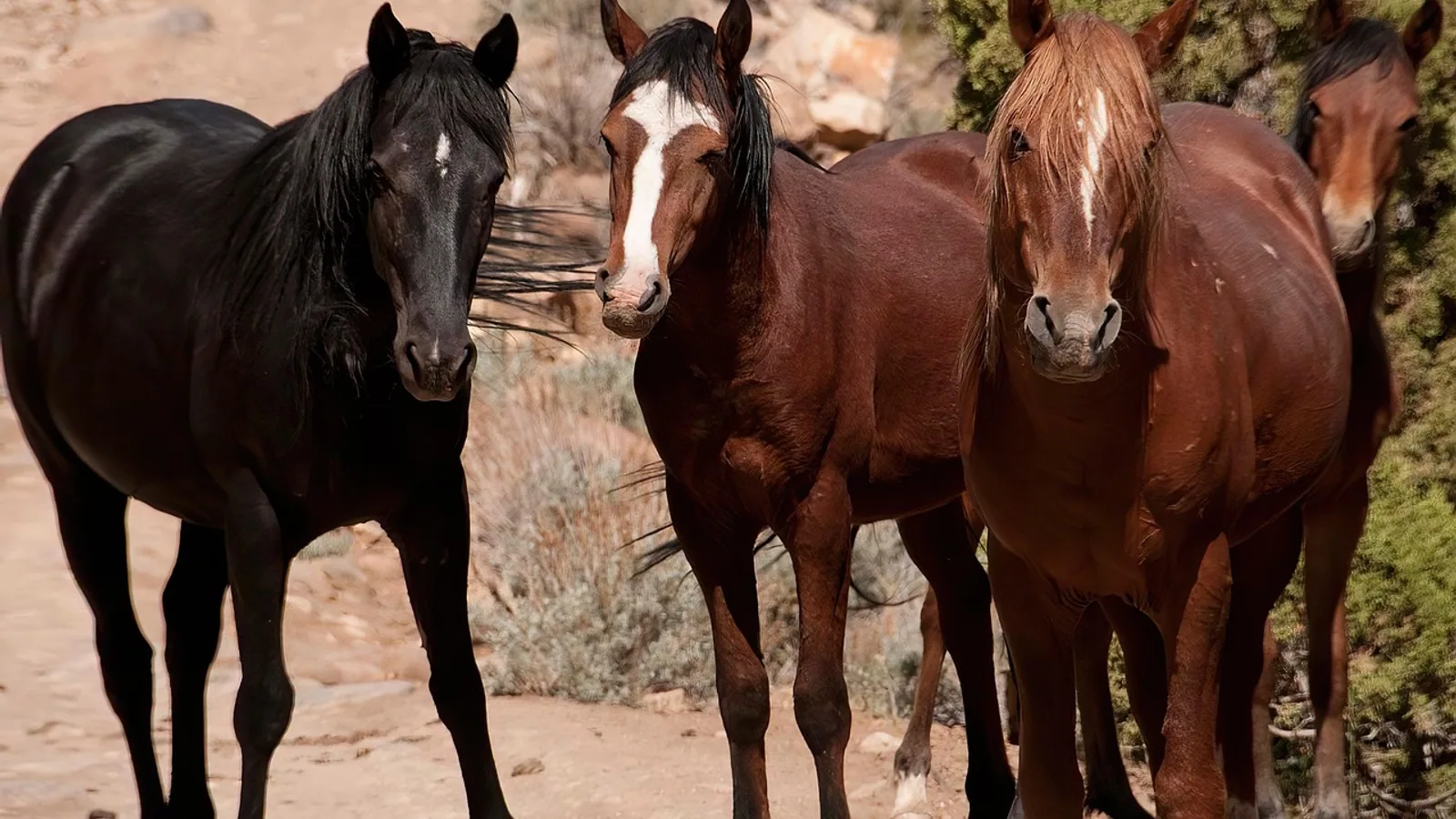
The Mustang is a feral horse of the American West, descended largely from horses brought to North America by Spanish explorers and later shaped by centuries of natural selection on open rangeland. Mustangs are not a breed in the closed-studbook sense. They are a landrace population managed by the federal government, and they vary widely in size, color, and build depending on the herd management area they come from. Most stand between 13 and 15 hands and weigh roughly 700 to 1,000 pounds, though individuals from desert herds tend to be smaller and more compact than horses from wetter, more productive ranges [1][2]. The defining traits of the Mustang are toughness, strong hooves, efficient feed conversion, and a highly alert, survival-driven temperament. They suit experienced handlers who want a hardy, low-input horse and who are willing to invest months of patient, structured training. They are a poor fit for first-time owners looking for a finished, child-safe riding horse delivered ready to ride.
This article covers the Spanish origins of the Mustang, the legal framework that protects free-roaming herds, the Bureau of Land Management adoption process, gentling and training, nutrition and hoof care, fertility control, and the veterinary work a newly adopted Mustang needs in its first weeks off the range.
This article is educational and is not a substitute for veterinary diagnosis or treatment.
At a Glance
| Attribute | Detail |
|---|---|
| Origin | North America, descendants of horses introduced by Spanish explorers, later feral populations managed by the BLM [1] |
| Legal status | Protected under the Wild Free-Roaming Horses and Burros Act of 1971, managed by the BLM [1] |
| Height | Commonly about 13 to 15 hands [2] |
| Weight | Roughly 700 to 1,000 pounds, varies by herd [2] |
| Coat colors | All common colors, including bay, black, chestnut, grullo, dun, roan, and pinto patterns [2] |
| Lifespan | Often into the late teens and twenties with good care, and longer in some managed populations under fertility control [3] |
| Energy level | Moderate to high, with strong flight response and alertness |
| Grooming | Low maintenance, hardy hooves, often needs less trimming than domestic breeds |
| Trainability | Highly trainable with correct, gradual methods, but not a beginner project |
| Good with children | Generally not suitable as a first mount for children until fully gentled and trained |
| Good with other animals | Yes, horses are herd animals and Mustangs bond strongly to a herd |
What Is a Mustang Horse?
A Mustang is a free-roaming or formerly free-roaming horse of the western United States, managed under federal law as part of the wild horse and burro program [1]. The word describes a population and a management category more than a single standardized breed. Mustang horses from different herd management areas can look quite different from one another because each herd has been shaped by its own terrain, climate, and forage base.
The key point for owners is that a Mustang is a domesticated horse living in a feral state, not a truly wild species. Free-roaming horses are the same species as the domestic horse, Equus caballus, and they retain the full behavioral repertoire of domestic horses, including herd bonding, hierarchical social structure, and strong flight responses. Studies of free-roaming stallions describe a complex social life in which stallions form and defend harems, protect mares from rivals, and use kin recognition to avoid inbreeding [4]. This social depth is part of why Mustangs bond so strongly once they accept a handler, and part of why abrupt separation from a herd is stressful for them.
Spanish Origins and the History of the Mustang
The ancestors of the Mustang arrived with Spanish exploration and colonization of North America. Over generations, horses escaped, were released, or were captured and lost, and they spread across the continent. Natural selection then did the breeding work. Horses that could not survive harsh winters, limited water, and poor forage did not reproduce. The survivors passed on efficient metabolisms, tough hooves, and strong survival instincts.
This is why the Mustang is best understood as a landrace shaped by environment rather than a breed shaped by human selection for a specific job. Domestic breeds were developed for pulling, racing, jumping, or ranch work. Mustangs were developed by the range itself, and the traits that survived are the traits of a horse that can stay sound and fed on marginal land.
From Open Range to Federal Protection
By the mid-twentieth century, free-roaming horse numbers had fallen sharply and the remaining herds faced pressure from land use, capture, and slaughter. Public concern led to federal protection. The Wild Free-Roaming Horses and Burros Act of 1971 declared these animals to be living symbols of the historic and pioneer spirit of the West and placed them under federal management [1].
That law set up the framework that still governs Mustangs today. The Bureau of Land Management manages wild horses and burros on designated herd management areas, sets appropriate management levels for each area, and removes excess animals when populations exceed what the range can support [1]. Removed animals enter the adoption and sale program, which is how most private owners acquire a Mustang.
Why "Feral" Is the Correct Term
A wild mustang is feral, meaning a domesticated species living without human management. This distinction matters for care. A truly wild species has evolved separately from humans for a very long time. A feral horse is a domestic horse that has simply not been handled. That means a Mustang can be gentled, trained, ridden, and kept exactly like any other horse. It also means a Mustang carries the same veterinary needs as any domestic horse, including vaccination, deworming, dental care, and hoof care.
BLM Mustang Adoption: How the Process Works
BLM mustang adoption is the primary route by which private owners acquire a free-roaming horse. The BLM removes horses from herd management areas when populations exceed the appropriate management level, then offers them for adoption or sale [1]. Adopters take on a real commitment. A newly adopted Mustang is an unhandled horse, and it will need time, facilities, and training before it becomes a usable riding animal.
Eligibility and Facility Requirements
The BLM sets requirements for adopters that are designed to protect the horse. Applicants must be at least 18 years old, must have no prior animal abuse convictions, and must provide facilities that meet the agency's standards for containment, shelter, feed, and water [1]. Adoption is not a casual purchase. The BLM reviews the application and the facility before approving a placement.
The practical implication for owners is that you need secure fencing, safe shelter, and a plan for feed and water before you bring a Mustang home. A horse that has never been confined will test fencing, gates, and handlers. Weak fencing is a serious risk in the first weeks.
Title, Fees, and the Adoption Period
Adopted Mustangs remain under BLM title for a defined period, during which the agency retains an interest in the animal's welfare. The BLM conducts compliance checks to confirm the horse is being cared for and that the terms of the adoption agreement are being met [1]. Once the adoption period is completed and the requirements are satisfied, the adopter receives title and full ownership.
Owners should read the adoption agreement carefully. The terms cover care standards, facility standards, and the conditions under which title transfers. Failing to meet those terms can result in the horse being removed.
What to Expect on Arrival
A newly adopted Mustang arrives unhandled, often straight off a gather, and sometimes still in the company of other horses from the same herd. The first priority is not training. It is safety, hydration, and calm. Give the horse a quiet pen with good fencing, free-choice forage, clean water, and, where possible, a calm companion horse. Avoid crowding, loud noise, and unnecessary handling in the first days.
Expect a period of watchful adjustment. A feral horse reads the environment constantly for threats. Sudden movements, direct eye contact, and fast approaches all trigger flight. The handler's job in the first weeks is to become boring and predictable.
Mustang Horse Temperament
Mustang horse temperament is best described as alert, intelligent, and intensely bonded to herdmates. These are survival traits. A horse that survived on open range had to notice threats early, react quickly, and stay close to a group. That same alertness makes Mustangs quick learners and, in the right hands, highly responsive partners.
The temperament is not a single fixed personality. It varies with the herd, the individual, and the amount of handling the horse has had. Some Mustangs gentle quickly and seem almost relieved to have a handler. Others take months of consistent, low-pressure work before they accept touch.
What Makes Mustangs Different
Two features stand out. First, the flight response is strong and fast. A Mustang that has never been handled does not have a brake installed yet. It will run first and evaluate later. Second, the herd bond is powerful. Separating a newly adopted Mustang from its companions can cause real distress, and this is a welfare consideration, not just a training inconvenience. Free-roaming horses are social animals with complex group dynamics, and the same social needs carry over into domestic life [4].
Are Mustangs Good Horses?
Yes, Mustangs are good horses for the right owner. They are hardy, sound, efficient with feed, and often remarkably athletic. Many become excellent trail, ranch, and endurance horses. The catch is that they are not finished horses. A Mustang is a project, and the quality of the outcome depends almost entirely on the quality of the training and the patience of the handler.
Owners who want a horse they can ride the week after purchase should look elsewhere. Owners who enjoy the training process and want a horse with genuine durability will often find the Mustang rewarding.
Gentling and Training a Newly Adopted Mustang
Gentling is the process of teaching an unhandled horse to accept human presence, touch, and handling. It is the foundation for everything that follows. Rushing gentling creates a dangerous horse. Doing it slowly and correctly creates a horse that trusts the handler.
Start With Pressure and Release
The core principle is pressure and release. Apply a mild stimulus, such as a hand moving toward the horse or a rope touching the neck, and remove it the instant the horse stops moving away. Over many repetitions, the horse learns that standing still makes the pressure stop. This is the same principle used in all horse training, and it works on Mustangs because it speaks their language.
Keep sessions short, end on a success, and never escalate into a fight. A frightened horse that learns it can escape pressure by pulling away learns exactly the wrong lesson.
Build Touch and Haltering
Once the horse tolerates approach and proximity, introduce touch on the neck and shoulder, then work toward the head. Haltering is a major milestone. Use a soft, well-fitted halter and take the time to let the horse accept it before you ask for anything else. Do not tie a newly haltered Mustang to a solid object until it has learned to give to pressure. A horse that pulls back against a fixed tie can injure its neck or poll.
Move to Leading and Groundwork
After haltering, teach leading, yielding the hindquarters and forequarters, and standing quietly. Groundwork builds the communication system you will rely on under saddle. It also reveals the horse's temperament and where it needs more work.
When to Introduce Riding
There is no fixed timeline. Some Mustangs are ready for saddle introduction in a few months. Others need a year or more. The horse sets the pace. Saddle introduction should follow solid groundwork, acceptance of the pad and saddle, and comfort with the girth. Mounting comes last. A trainer experienced with feral horses is a valuable resource, and many owners use a professional for the first rides.
Nutrition and Feeding Considerations
Mustangs are efficient feed converters. Generations of surviving on sparse range forage selected for horses that maintain condition on less feed than many domestic breeds. In domestic management, this efficiency becomes a risk. A Mustang on rich pasture or unlimited high-energy feed can gain weight quickly and develop the metabolic problems that come with obesity.
Forage First
The foundation of a Mustang diet is forage. Grass hay or pasture should make up the bulk of the ration, with the amount adjusted to the horse's body condition and workload. Owners should monitor body condition regularly and adjust feed before the horse becomes overweight. Free-roaming horses show seasonal body condition changes, with mares without foals recovering condition faster in summer than mares with foals [5]. That pattern is a useful reminder that body condition is dynamic and should be assessed over time, not at a single point.
Concentrates and Supplements
Many Mustangs in light work need little or no concentrate. When a horse is in harder work or needs to gain weight, a balanced concentrate can be added. Any significant change in diet should be discussed with a veterinarian or an equine nutritionist. Rapid introduction of grain increases the risk of digestive upset.
Water and Salt
Clean water at all times is non-negotiable. Salt should be available free choice. Horses on pasture or hay diets benefit from a balanced mineral source, and the specific product should match the forage in your region.
Hoof Care and the Hardy Mustang Foot
Mustang hooves are one of the breed's signature strengths. Horses that survived on rocky, dry range developed dense, hard hooves that often self-trim to some degree. That does not mean Mustang hooves never need attention. It means they often need less frequent trimming than hooves of many domestic breeds.
Trimming Schedule
A newly adopted Mustang should have its hooves evaluated soon after arrival, ideally by a farrier experienced with feral horses. Some Mustangs arrive with overgrown or chipped hooves from range conditions. Others arrive with remarkably good feet. The trimming interval depends on the individual horse, the footing it lives on, and how fast the hoof grows.
Self-Trimming and Its Limits
Free-roaming horses move constantly over varied terrain, which wears hooves naturally. Domestic horses often move far less. A Mustang kept in a small paddock may lose the self-trimming benefit and need more frequent farrier work. Conversely, a Mustang on hard, rocky ground may wear hooves faster than they grow. Welfare reviews of free-roaming horses note that lameness during self-trimming is a real risk in some conditions, which is a reminder that natural wear is not always ideal wear [6].
Common Hoof Problems
Abscesses, thrush, and white line disease can affect any horse, including Mustangs, especially when hooves are not trimmed on schedule or when the horse stands in wet, dirty footing. Regular farrier visits and clean, dry living areas prevent most of these problems.
Common Health Problems and Screening
Mustangs are generally hardy, but they are not immune to the health problems that affect domestic horses. The most important issues for a newly adopted horse are parasites, dental disease, and infectious disease exposure.
Parasites
Gastrointestinal parasites are common in free-roaming horses. Studies of free-roaming Przewalski's horses found strongylids to be the most prevalent helminth, with seasonal and group-size effects on fecal egg counts [7]. Feral horses in Australia have also been studied as carriers of Clostridioides difficile, a bacterium that causes diarrhea and colitis, with a prevalence lower than in domesticated horses but still present [8]. These findings support a practical rule for adopters. Assume a newly adopted Mustang has parasite exposure and needs a deworming plan designed by a veterinarian, ideally guided by a fecal egg count rather than a fixed calendar.
Dental Care
Dental disease is common in horses of all backgrounds. Sharp points, wave mouth, and loose or fractured teeth can cause weight loss, quidding, and poor performance. A newly adopted Mustang should have a full oral examination, and the examining veterinarian should float or otherwise treat the teeth as needed. Dental care is a routine part of equine preventive medicine.
Infectious Disease and Coggins Testing
A Coggins test screens for equine infectious anemia, a viral disease with no treatment and serious regulatory consequences. Most states require a negative Coggins test for movement, sale, and sometimes for boarding. A newly adopted Mustang should be tested as part of its intake workup. Vaccination against core equine diseases, including tetanus, Eastern and Western equine encephalomyelitis, West Nile virus, and rabies, should be planned with a veterinarian based on the horse's age, location, and risk.
Body Condition and Metabolic Monitoring
Mustangs are easy keepers, and easy keepers are prone to obesity and the conditions that follow from it. Owners should learn to body condition score their horse and track it over time. A horse that gains weight on a diet that would starve a Thoroughbred is showing exactly the efficiency the breed was selected for, and the ration should be adjusted accordingly.
Fertility Control and Herd Management
Fertility control is a central tool in modern Mustang management. The most studied method is porcine zona pellucida, or PZP, immunocontraception, which works by stimulating antibodies that block sperm from binding to the egg. It does not alter normal hormone patterns, so treated mares continue to cycle and behave normally [9].
How PZP Works
PZP vaccine is delivered by injection or by remote dart. A two-injection protocol in the first year, followed by annual boosters, provides high contraceptive efficacy. A single-injection controlled-release formulation has also been developed and tested in the field [10]. Field studies of free-roaming wild mares found PZP provided up to 94 percent infertility, with a return to normal fertility within about a year after treatment ended [10].
Population Effects
The largest free-roaming wild horse fertility control program in North America operates in Nevada's Virginia Range, covering more than 3,500 horses across roughly 300,000 acres. Within four years, population coverage surpassed 70 percent and was associated with a 58 percent reduction in foaling [11]. On Assateague Island, management-level PZP treatment produced zero population growth within one year, with contraceptive efficacy of 90 percent for mares treated twice in the first year and annually thereafter [3].
Safety and Reversibility
The safety record of PZP is well documented. Seven consecutive years of treatment in wild mares produced no detectable debilitating side effects, and reversibility has been documented in mares treated for up to four consecutive years [12]. Longer treatment, five to seven years, is associated with some ovulation failure and depressed urinary estrogen concentrations [12][13]. Studies have found no significant effects of PZP on mare body condition apart from its contraceptive effect, and foal mortality rates remain low [5]. PZP treatment does not appear to change social organization or behavior in treated horses [13].
Effects on Foaling Season
PZP treatment can shift the timing of births. On Shackleford Banks, foaling occurred over a significantly broader range after contraception management began, and mares receiving more consecutive PZP applications gave birth later in the season [14]. A separate study at Assateague found no significant effect of PZP on season of birth or foal survival, and no difference in survival between foals born in or out of season [15]. The practical takeaway for owners is that PZP is a well-studied, reversible option for population management, and it is managed by wildlife agencies rather than by private owners.
Finding a Mustang: Adoption, Rescue, and Responsible Sources
The BLM adoption program is the main source of Mustangs for private owners [1]. The agency holds adoption events and maintains facilities where horses are available. Adopters should expect a screening process and should be prepared to demonstrate adequate facilities and care.
What to Look For
A healthy Mustang at a gather or adoption event should have clear eyes, a normal coat, sound feet, and a body condition appropriate to the season. Ask about the herd management area the horse came from, its age, and any health records available. Younger horses are often easier to gentle, but mature horses can also become excellent partners with patient handling.
What to Avoid
Avoid any source that cannot provide documentation of legal acquisition. Wild horses and burros are protected by federal law, and acquiring one outside the BLM process is illegal [1]. Avoid sellers who pressure you to take a horse without seeing it move, and avoid any situation where the horse's health or temperament history is unclear.
Who Should Not Get a Mustang
A Mustang is not a good choice for a first-time horse owner, for a family looking for a child-safe mount, or for anyone without secure facilities and time for daily handling. The horse is not dangerous by nature, but an unhandled horse of any breed is a serious safety risk to an inexperienced handler. Owners who want a finished horse should adopt a trained domestic horse instead.
Lifespan and Long-Term Care
Mustangs are long-lived horses. With good nutrition, regular dental and hoof care, appropriate vaccination, and parasite control, many live well into their twenties. Fertility control programs have been associated with increased longevity in managed wild populations, with new age classes appearing among treated animals [3].
Long-term care for a Mustang is the same as for any horse. Annual veterinary examinations, vaccination updates, dental checks, farrier visits on schedule, and body condition monitoring form the backbone of preventive care. Owners should also plan for the costs of emergencies, which can be substantial for any horse.
Limitations and When to Contact a Veterinarian
This article provides general information and cannot replace an examination by a veterinarian who knows your horse. Contact a veterinarian promptly if a newly adopted Mustang shows any of the following.
- Refusal to eat or drink for more than 12 to 24 hours
- Diarrhea, colic signs such as pawing, rolling, or looking at the flank, or any sign of abdominal pain
- Nasal discharge, cough, fever, or lethargy
- Lameness that does not improve with rest
- Weight loss or difficulty chewing
- Swelling, wounds, or signs of injury
- Any neurologic sign, including stumbling, head tilt, or unusual behavior
- Difficulty breathing
For routine intake care, schedule a veterinary visit within the first days to weeks after adoption. The visit should include a physical examination, a fecal egg count to guide deworming, a Coggins test, vaccination planning, and a dental examination. Your veterinarian can also help you build a feeding plan that matches the horse's body condition and workload.
Frequently Asked Questions
Are Mustangs good horses for beginners?
No, Mustangs are generally not good horses for beginners. A newly adopted Mustang is unhandled and needs months of patient gentling and training before it is safe to ride. Beginners should look for a trained domestic horse and gain experience before considering a Mustang.
What is a Mustang horse's temperament like?
Mustang horse temperament is alert, intelligent, and strongly herd-oriented. These are survival traits from generations on open range. Mustangs bond deeply with herdmates and can be highly responsive to a handler once trust is established.
Is a Mustang a wild horse or a feral horse?
A Mustang is a feral horse, not a truly wild species. Mustangs are domesticated horses, Equus caballus, living without human handling. They can be gentled and trained exactly like any other domestic horse.
How does BLM mustang adoption work?
BLM mustang adoption places removed wild horses with approved private owners. Applicants must be at least 18, pass a background check, and provide facilities that meet BLM standards. The horse remains under BLM title for a defined period, and the agency conducts compliance checks before title transfers [1].
What veterinary care does a newly adopted Mustang need?
A newly adopted Mustang needs a physical examination, a fecal egg count to guide deworming, a Coggins test for equine infectious anemia, core vaccinations, and a dental examination. Your veterinarian will tailor the plan to the horse's age, condition, and location.
How long does it take to gentle a Mustang?
Gentling time varies widely. Some Mustangs accept handling within weeks, while others need many months. The horse sets the pace. Rushing gentling creates a dangerous horse, so consistent, low-pressure sessions are the right approach.
Do Mustangs need special hoof care?
Mustangs often have hardy, dense hooves that need less frequent trimming than many domestic breeds. They still need regular farrier evaluation. Hooves should be checked soon after adoption and trimmed on a schedule that matches the individual horse and its footing.
Can Mustangs be used for riding and competition?
Yes, gentled and trained Mustangs can be ridden and used in many disciplines, including trail riding, ranch work, and endurance. Their athleticism, stamina, and soundness make them capable partners once they are properly started under saddle.
Related Articles
- Miniature Horse Care Guide
- Horse Blanketing: When and How
- Senior Horse Care Guide
- How To Groom A Sensitive Horse
- Horse Trailering Stress
- Horse Choke Signs
- Norwegian Fjord Horse: Size, Temperament, Color, and Care
- Morgan Horse: History, Temperament, Uses, and Health
- Haflinger Horse: Size, Temperament, Care, and Health
Sources
- My American Mustang: Owning a Piece of the American West (blm.gov)
- Mustang Horse Breed Guide: Characteristics, Health & ... (madbarn.com)
- Effects of immunocontraception on population, longevity and body condition in wild mares (Equus caballus).
- The Social and Reproductive Challenges Faced by Free-Roaming Horse (Equus caballus) Stallions.
- Effects of Porcine Zona Pellucida Immunocontraception on Mare Body Condition and Foaling Season Length in Two Western Wild Horse Populations.
- Welfare of Free-Roaming Horses: 70 Years of Experience with Konik Polski Breeding in Poland.
- The Effects of Seasonality and Group Size on Fecal Egg Counts in Wild Przewalski's Horses (Equus Ferus Przewalskii, Poljakov, 1881) in The Chernobyl Exclusion Zone, Ukraine During 2014 - 2018.
- Clostridioides difficile in feral horse populations in Australia.
- Preliminary evaluation of porcine zona pellucida (PZP) immunocontraception for behavioral effects in feral horses (Equus caballus).
- Porcine zona pellucida (PZP) immunocontraception of wild horses (Equus caballus) in Nevada: a 10 year study.
- Immunocontraceptive Efficacy of Native Porcine Zona Pellucida (pZP) Treatment of Nevada's Virginia Range Free-Roaming Horse Population.
- Applications of pig zona pellucida immunocontraception to wildlife fertility control.
- Case studies in wildlife immunocontraception: wild and feral equids and white-tailed deer.
- Immunocontraception in wild horses (Equus caballus) extends reproductive cycling beyond the normal breeding season.
- Absence of effects from immunocontraception on seasonal birth patterns and foal survival among barrier island wild horses.