Norwegian Fjord Horse: Size, Temperament, Color, and Care
By Dr. Zubair Khalid, DVM, MS, PhD ·
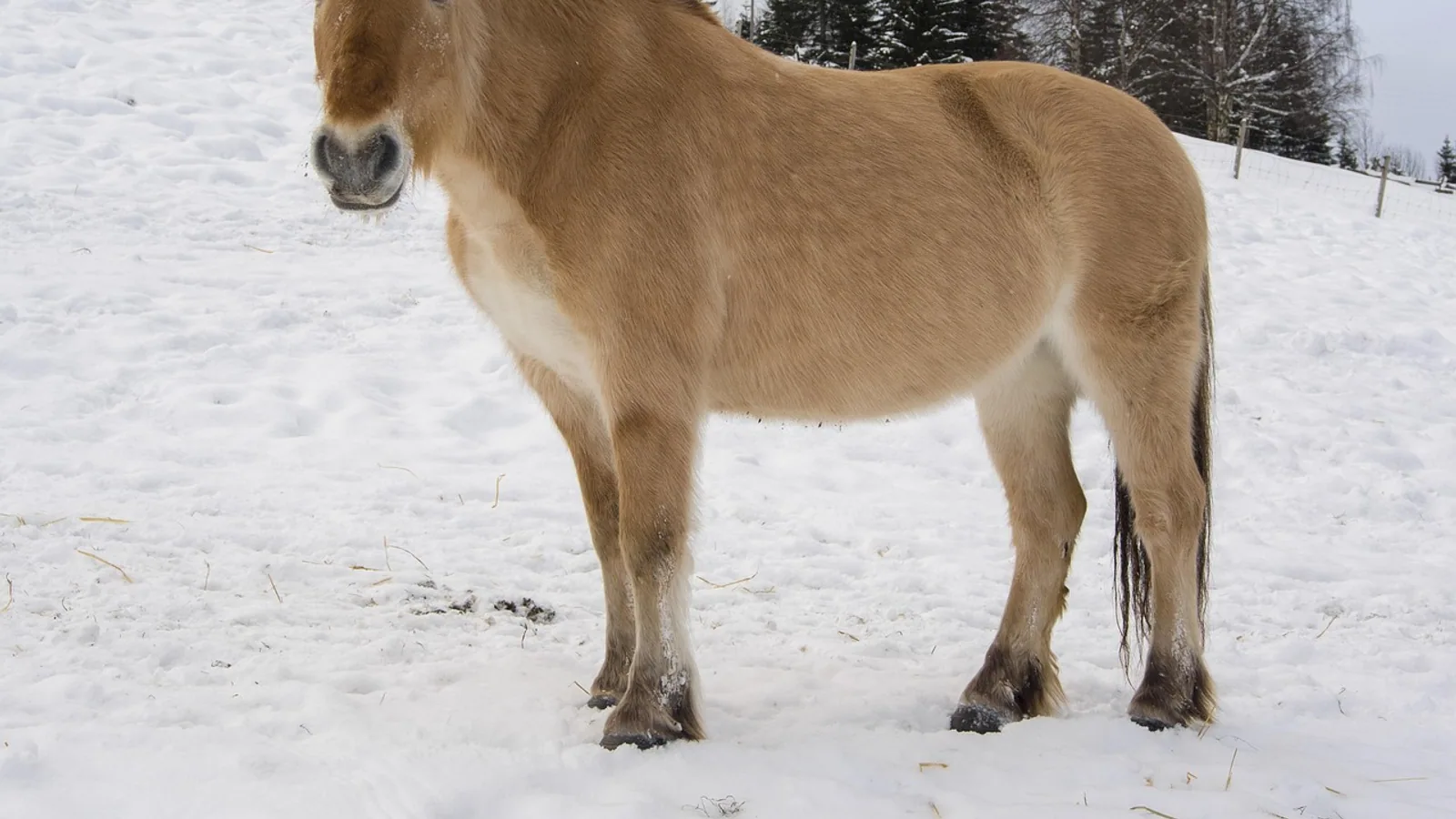
The Norwegian Fjord horse is one of the oldest and most recognizable equine breeds in the world. It is a small, powerfully built draft-type pony that has been shaped by centuries of work on steep Norwegian farms, and it still carries the physical and behavioral traits that made that work possible. Fjord horses stand roughly 13.2 to 14.2 hands and weigh around 900 to 1,200 pounds, with a compact body and dense bone that make them stronger than their height suggests. The breed is almost always dun, and the classic Fjord horse colors run from light cream to dark brown, each with a dark dorsal stripe, zebra stripes on the legs, and a two-tone mane that is roached so the dark center hair stands above the lighter outer hair.
The Norwegian Fjord horse temperament is the trait owners mention first. These horses are calm, people-oriented, and steady under pressure, which is why they appear in driving, therapeutic riding, and family settings as often as they do in light farm work. That same easy-keeping metabolism that lets a Fjord hold weight on modest forage also makes the breed prone to obesity and laminitis when grazing is not managed. This guide covers Fjord horse size, color genetics, temperament, exercise, grooming, feeding, and the health problems a veterinarian is most likely to see in the breed.
This article is educational and is not a substitute for veterinary diagnosis or treatment.
At a Glance
| Trait | Typical Fjord Horse |
|---|---|
| Origin | Norway |
| Height | About 13.2 to 14.2 hands |
| Weight | About 900 to 1,200 pounds |
| Build | Compact, muscular, draft-type pony |
| Coat color | Dun, ranging from cream to dark brown |
| Markings | Dorsal stripe, leg zebra stripes, two-tone roached mane |
| Temperament | Calm, willing, people-oriented |
| Primary uses | Driving, riding, therapeutic programs, light farm work |
| Grooming | Low-maintenance coat, regular mane upkeep |
| Trainability | High, steady and willing |
| Good with children | Often yes, with supervision and a suitable mount |
| Feeding | Easy keeper, restricted grazing often needed |
| Main health risks | Obesity, laminitis, equine metabolic syndrome |
History and Purpose of the Norwegian Fjord Horse
The Fjord horse has been bred in Norway for a very long time, and its body reflects the terrain it worked. Norwegian farms were often steep, small, and isolated, so farmers needed a horse that could pull loads, plow, carry packs, and do it on limited feed. A large draft horse would have been expensive to keep and awkward on narrow paths. A Fjord horse hit the middle ground, strong enough for real work and small enough to be practical.
That working history produced a horse with a deep chest, short back, and heavy bone. The breed was used for agriculture, transport, and hauling, and it remained a working animal long after many other European breeds shifted toward sport. The Norwegian Fjord Horse Registry, which maintains the breed standard and registration records in the United States, describes the breed as a small draft horse with a distinct dun coat and a calm, cooperative nature [1].
The breed also carries a place in veterinary literature beyond its working role. A case report documented a 12-year-old Norwegian Fjord gelding that developed chronic paranasal sinusitis after a tooth repulsion procedure. The infection persisted despite sinus trephination, lavage, and systemic antimicrobial therapy, and it resolved only after a gelatin and penicillin mixture was infused into the affected sinuses [2]. That case is a reminder that Fjord horses are not immune to serious dental and sinus disease, and that post-surgical complications in the head need close follow-up.
Fjord horses were also used as a research population in a study comparing the blood supply to the articular-epiphyseal growth complex in horse versus pony foals. Eleven Norwegian Fjord foals were included in the pony group, and the study found significantly fewer vessels and thinner cartilage at the distal lateral trochlear ridge of the talus in the pony group compared with Standardbred foals [3]. That finding helps explain why ponies like the Fjord tend to have a lower prevalence of clinical osteochondrosis than larger horses, though it does not mean the breed is free of joint problems.
Fjord Horse Size and Build
Fjord horse size is one of the breed's defining features. Most Fjords stand about 13.2 to 14.2 hands, which places them in pony height but draft-horse build. They weigh roughly 900 to 1,200 pounds, and a fit Fjord can carry an adult rider comfortably because the breed's bone and muscling are dense. The body is compact with a short, strong back, a deep heart girth, and a well-muscled hindquarter.
The neck is thick and set on a sturdy shoulder. The head is usually well proportioned with a straight or slightly concave profile and a broad forehead. The legs are short, clean, and heavily boned, with strong hooves. The overall impression is of a horse built for pulling and carrying rather than for speed, and that build is exactly what the breed was selected for.
Because Fjords are small but powerful, owners sometimes underestimate their feed needs. A Fjord that weighs 1,000 pounds is not a small horse metabolically. It is a full-sized equine that happens to be short, and it should be fed and managed as such. The breed's strength for size is a genuine advantage for driving and for riders who want a steady, compact mount, but it also means the horse can gain weight quickly when calories exceed what the body uses.
Coat Color and Primitive Markings
Fjord horse colors are almost entirely within the dun family, and the breed is one of the few in which dun is the standard rather than an exception. The base coat ranges from very light cream to dark brown, and every accepted shade carries the same set of primitive markings. These markings include a dark dorsal stripe running from the withers to the tail, dark horizontal zebra stripes on the legs, and often a dark bar across the withers. The mane and tail have a dark center strand bordered by lighter outer hair.
The two-tone mane is managed by roaching. The mane is cut short and trained to stand upright, which exposes the dark central hair against the lighter surrounding hair and produces the distinctive Fjord look. The forelock is usually left longer and falls forward between the ears. This roached mane is practical as well as traditional, because it keeps the neck clean and makes grooming straightforward.
Coat color genetics in horses are well studied, and dun is a dilution pattern rather than a single gene in the way some owners assume. A large genetic survey of 11,281 horses across 28 breeds examined 29 variants in 14 genes related to base coat color, dilution, and white patterning [4]. The study identified breed-specific allele frequencies and confirmed that some dilution and white patterning variants behave differently across populations. For Fjord owners, the practical takeaway is that the breed's dun coat and primitive markings are inherited in a predictable pattern, and that genetic testing is available if a breeder wants to confirm color inheritance or screen for variants that affect coat and eye health.
The all-dun appearance of the breed is not a cosmetic accident. It is a breed characteristic that has been maintained for centuries, and it is one of the reasons Fjords are easy to identify at a distance. The primitive markings also serve a practical purpose in identification, since the dorsal stripe and leg stripes are unique to each horse in their exact shape and extent.
Fjord Horse Temperament
Fjord horse temperament is calm, willing, and steady. The breed is known for being people-oriented without being needy, and for staying level-headed in unfamiliar situations. Owners frequently describe Fjords as sensible rather than reactive, and that trait is a major reason the breed is used in therapeutic riding programs and driving.
The breed's work history helps explain this temperament. A farm horse that panicked on a narrow mountain path or refused to stand while being harnessed was not useful. Fjords were selected for cooperation and reliability over generations, and the result is a horse that tends to think before it reacts. That does not mean every Fjord is bombproof. Individual temperament varies with breeding, handling, and training, and a young or poorly handled Fjord can still be spooky or pushy.
Fjords are also intelligent and learn quickly, which cuts both ways. A Fjord that is handled inconsistently will learn the wrong lessons just as fast as the right ones. Consistent, calm training suits the breed, and harsh handling tends to produce a horse that shuts down or tests the handler. For riders and drivers who want a partner rather than a project, the Fjord temperament is one of the breed's strongest selling points.
Exercise and Training Needs
Fjord horses are versatile. They drive, ride, pack, and work in hand, and they are equally at home in a pleasure ring and on a trail. Their compact build and strong hindquarters make them capable pullers, which is why driving is such a natural fit. Many Fjords also do well in therapeutic riding programs because of their size, steadiness, and tolerance of handling.
Training should start with groundwork. Fjords respond well to clear, consistent cues and benefit from short, frequent sessions rather than long, exhausting ones. The breed learns quickly, so sessions can be kept brief and productive. Ground driving and long-lining are useful for teaching steering and voice commands before a horse is put to a cart, and they build the fitness a driving horse needs.
Exercise also matters for weight control. A Fjord that stands in a stall or small paddock and eats unrestricted hay will gain weight, and the breed's easy-keeper metabolism makes that gain fast. Daily movement, whether through turnout on a dry lot, hand walking, riding, or driving, helps burn calories and supports hoof and joint health. The amount and intensity of exercise should match the horse's age, fitness, and any lameness issues, and a veterinarian can help set a realistic program for a horse that is overweight or recovering from laminitis.
Grooming and Mane Care
Fjord horses are low-maintenance in the coat department. Their dense, weather-resistant coat sheds dirt well, and many owners find that regular currying and brushing is enough to keep them looking tidy. Bathing is usually reserved for shows or when a horse is genuinely dirty, because over-bathing strips natural oils from the coat.
The roached mane is the main grooming task unique to the breed. The mane is kept short and upright, and it needs to be trimmed or maintained regularly to hold its shape. Some owners use a mane band or a light braid to train the hair to stand, and others simply trim it to a consistent length. The forelock is left longer and should be kept clean and free of tangles.
Hooves need routine care on a schedule set by a farrier, typically every six to eight weeks depending on growth and work. Fjords have strong hooves, but they are still susceptible to thrush, abscesses, and laminitis, so daily hoof picking and prompt attention to any heat, swelling, or lameness are important. Teeth should be checked at least annually, and more often for older horses, because dental disease can lead to sinus and tooth root problems like the case documented in a Fjord gelding [2].
Feeding the Easy Keeper
The Fjord is an easy keeper, which means it maintains body condition on relatively little feed. That trait was valuable on a Norwegian farm with limited pasture. In a modern setting with rich grass and unlimited hay, it becomes a health risk. Fjords gain weight easily, and obesity is the most common nutritional problem in the breed.
The core of Fjord feeding is forage management. A mature Fjord usually does well on a diet based on moderate-quality hay or a controlled amount of pasture, with a vitamin and mineral balancer to cover gaps. Concentrates and grain are rarely needed for a horse in light work, and they should be added only when a veterinarian or equine nutritionist confirms a genuine need. The Kentucky Equine Research nutrition resources are a useful reference for calculating forage intake and choosing a ration balancer, and they emphasize that easy keepers often need their calories restricted rather than supplemented.
Pasture is the biggest variable. Lush grass, especially in spring and after rain, is high in nonstructural carbohydrates and can trigger weight gain and laminitis in a susceptible horse. A Fjord that is overweight or has a history of laminitis may need to be kept on a dry lot, muzzled, or turned out only during low-sugar periods. A veterinarian can help design a grazing plan based on the horse's body condition score, metabolic status, and hoof history.
Body condition scoring is the practical tool for monitoring a Fjord. Owners should learn to assess fat cover over the ribs, behind the shoulder, and along the crest of the neck. A Fjord that feels soft over the ribs or has a hard, cresty neck is carrying too much condition, and the diet and grazing plan need to change before laminitis develops.
Inherited and Common Health Problems
Fjord horses are generally hardy, but the breed has a few health patterns that owners and veterinarians should watch.
Obesity and Equine Metabolic Syndrome
Equine metabolic syndrome is a common concern in easy-keeping breeds, including the Fjord. The Merck Veterinary Manual describes equine metabolic syndrome as a condition involving insulin dysregulation, often accompanied by obesity and a tendency toward laminitis [5]. Horses with the condition may have regional fat deposits, a cresty neck, and abnormal insulin responses to feeding. The syndrome is managed through diet, exercise, and weight control, and it requires veterinary diagnosis because the signs overlap with other conditions.
Laminitis
Laminitis is inflammation of the sensitive laminae inside the hoof, and it is one of the most serious consequences of equine metabolic syndrome in easy keepers. The Merck Veterinary Manual notes that laminitis can be triggered by a range of factors, including endocrine disease, and that affected horses need prompt veterinary care because the condition can progress to structural failure of the hoof [6]. For a Fjord, the most common pathway to laminitis is uncontrolled grazing or overfeeding in a horse with insulin dysregulation. Prevention centers on weight management, restricted access to high-sugar forage, and regular hoof monitoring.
Osteochondrosis
Osteochondrosis is a developmental joint condition, and the Fjord appears to be relatively protected compared with larger breeds. A study comparing horse and pony foals found that the pony group, which included Norwegian Fjord foals, had fewer vessels and thinner cartilage at the distal lateral trochlear ridge of the talus [3]. That anatomical difference is one explanation for the lower prevalence of clinical osteochondrosis in ponies. It does not eliminate the risk, and a young Fjord with joint swelling or lameness should still be evaluated.
Dental and Sinus Disease
Fjord horses can develop tooth root and sinus problems, particularly as they age. The documented case of chronic sinusitis in a Fjord gelding followed tooth repulsion surgery and required intra-sinus antimicrobial infusion to resolve [2]. Regular dental examinations and prompt attention to nasal discharge, facial swelling, or difficulty chewing are important, because sinus infections in horses can be stubborn and may need advanced treatment.
Gastrointestinal Tumors
A case report described a gastrointestinal stromal tumor in a Fjord pony that was associated with severe recurrent hypoglycemia [7]. This is a rare presentation, and the mechanism was not established, but it is a reminder that unexplained weight loss, recurrent low blood sugar signs, or chronic colic-like episodes in a Fjord warrant a full veterinary workup.
Recommended Screening
For a breed with these risks, a sensible screening plan includes regular body condition scoring, annual or twice-yearly veterinary examinations, dental checks at least once a year, and metabolic testing for horses with obesity, a cresty neck, or a laminitis history. Hoof care on a consistent farrier schedule and prompt evaluation of any lameness round out the plan. A veterinarian can recommend the specific tests and intervals that fit an individual horse.
Lifespan and Long-Term Care
Fjord horses are long-lived. Many remain sound and active into their twenties, and some work well into their late twenties with good management. The breed's hardiness and easy-keeping nature support longevity, but the same metabolism that keeps them thrifty can shorten a working life if obesity and laminitis are allowed to develop.
Long-term care for a Fjord centers on three things: weight management, hoof health, and dental care. A horse that stays lean, moves daily, and has its teeth and hooves maintained on schedule is far more likely to stay comfortable into old age. Older Fjords may need more frequent dental checks, adjusted forage, and joint support, and a veterinarian should be involved as the horse ages.
Finding a Responsible Breeder or Rescue
The Norwegian Fjord Horse Registry is the primary breed registry in the United States, and it maintains registration records, breed standards, and breeder information [1]. A responsible breeder will provide registration paperwork, health and temperament information about the dam and sire, and honest answers about any known problems in the lines. Buyers should ask about the horse's body condition, feeding program, and hoof history, because these details predict how much management the horse will need.
Rescue is a realistic option for Fjords. Because the breed is long-lived and easy to keep, some Fjords end up in rescue when owners can no longer care for them. A rescue placement can be a good fit for an experienced owner who is prepared to manage an easy keeper. Adopters should ask for a full veterinary history, including any laminitis episodes, and should have a veterinarian examine the horse before committing.
Who Should Not Get a Fjord Horse
A Fjord is not the right horse for every owner. The breed's easy-keeping metabolism means it needs strict feeding and grazing management, and an owner who wants to turn a horse out on rich pasture year-round without monitoring will run into obesity and laminitis. A Fjord also needs regular handling and training to stay well mannered, and an owner who cannot commit to consistent work may end up with a pushy or under-stimulated horse.
The breed is also not a good fit for a rider who wants a large, long-strided horse for high-level sport. Fjords are compact and short-strided by design, and while they are capable and willing, they are not built for the same disciplines as a warmblood or Thoroughbred. Owners who want a low-maintenance companion or a driving and trail partner will find the Fjord a strong match. Owners who want a big sport horse should look elsewhere.
Limitations and When to Contact a Veterinarian
This article is educational and is not a substitute for veterinary diagnosis or treatment. Individual horses vary, and a veterinarian who has examined your Fjord is the only person who can give specific advice for that horse.
Contact a veterinarian promptly if your Fjord shows any of the following:
- Lameness, hoof heat, a bounding digital pulse, or reluctance to move, which can indicate laminitis
- A cresty neck, rapid weight gain, or fat deposits that suggest equine metabolic syndrome
- Nasal discharge, facial swelling, difficulty chewing, or dropping feed, which can indicate dental or sinus disease
- Unexplained weight loss, recurrent colic-like signs, or episodes of weakness that could relate to a gastrointestinal or metabolic problem
- Any sudden change in behavior, appetite, or attitude
Routine care, including dental examinations, metabolic screening, and hoof maintenance, should be scheduled with a veterinarian and farrier on a regular basis.
Frequently Asked Questions
How big does a Norwegian Fjord horse get?
Most Fjords stand about 13.2 to 14.2 hands and weigh roughly 900 to 1,200 pounds. They are pony-sized in height but built like a small draft horse.
What is the temperament of a Fjord horse?
Fjord horses are typically calm, willing, and people-oriented. The breed was selected for cooperation and steady work, which makes it a good fit for driving, therapeutic riding, and family settings.
What colors do Fjord horses come in?
Fjord horses are dun, ranging from light cream to dark brown. All accepted shades carry primitive markings, including a dark dorsal stripe, leg zebra stripes, and a two-tone mane.
Why do Fjord horses have a roached mane?
The mane is roached to expose the dark center hair against the lighter outer hair, which is the breed's traditional look. It also keeps the neck clean and makes grooming easier.
Are Fjord horses easy keepers?
Yes. Fjords maintain weight on relatively little feed, which is why they are prone to obesity and laminitis when grazing is not managed. Restricted pasture and monitored forage intake are usually necessary.
What health problems are common in Fjord horses?
The main concerns are obesity, equine metabolic syndrome, and laminitis. Dental and sinus disease can also occur, and rare gastrointestinal tumors have been reported in the breed.
Can a Fjord horse be used for therapeutic riding?
Yes. The breed's calm temperament, compact size, and tolerance of handling make it a common choice for therapeutic riding and driving programs.
How long do Fjord horses live?
Fjord horses are long-lived and often remain active into their twenties. Lifespan depends heavily on weight management, hoof care, and dental care throughout the horse's life.
Related Articles
- Palomino Horse: Genetics, Color, and Health Considerations
- Miniature Horse Care Guide
- Horse Blanketing: When and How
- Senior Horse Care Guide
- How To Groom A Sensitive Horse
- Horse Trailering Stress
- Haflinger Horse: Size, Temperament, Care, and Health
- Roan Horse: Red, Blue, and Bay Roan Color and Genetics
- Morgan Horse: History, Temperament, Uses, and Health
Sources
- Norwegian Fjord Horse Registry (nfhr.com)
- Treatment of chronic sinusitis in a horse with systemic and intra-sinus antimicrobials.
- Comparison of the blood supply to the articular-epiphyseal growth complex in horse vs. pony foals.
- Breed Distribution and Allele Frequencies of Base Coat Color, Dilution, and White Patterning Variants across 28 Horse Breeds.
- Equine Metabolic Syndrome (Merck Veterinary Manual)
- Laminitis in Horses (Merck Veterinary Manual)
- Gastrointestinal stromal tumour and hypoglycemia in a Fjord pony: case report.