Haflinger Horse: Size, Temperament, Care, and Health
By Dr. Zubair Khalid, DVM, MS, PhD ·
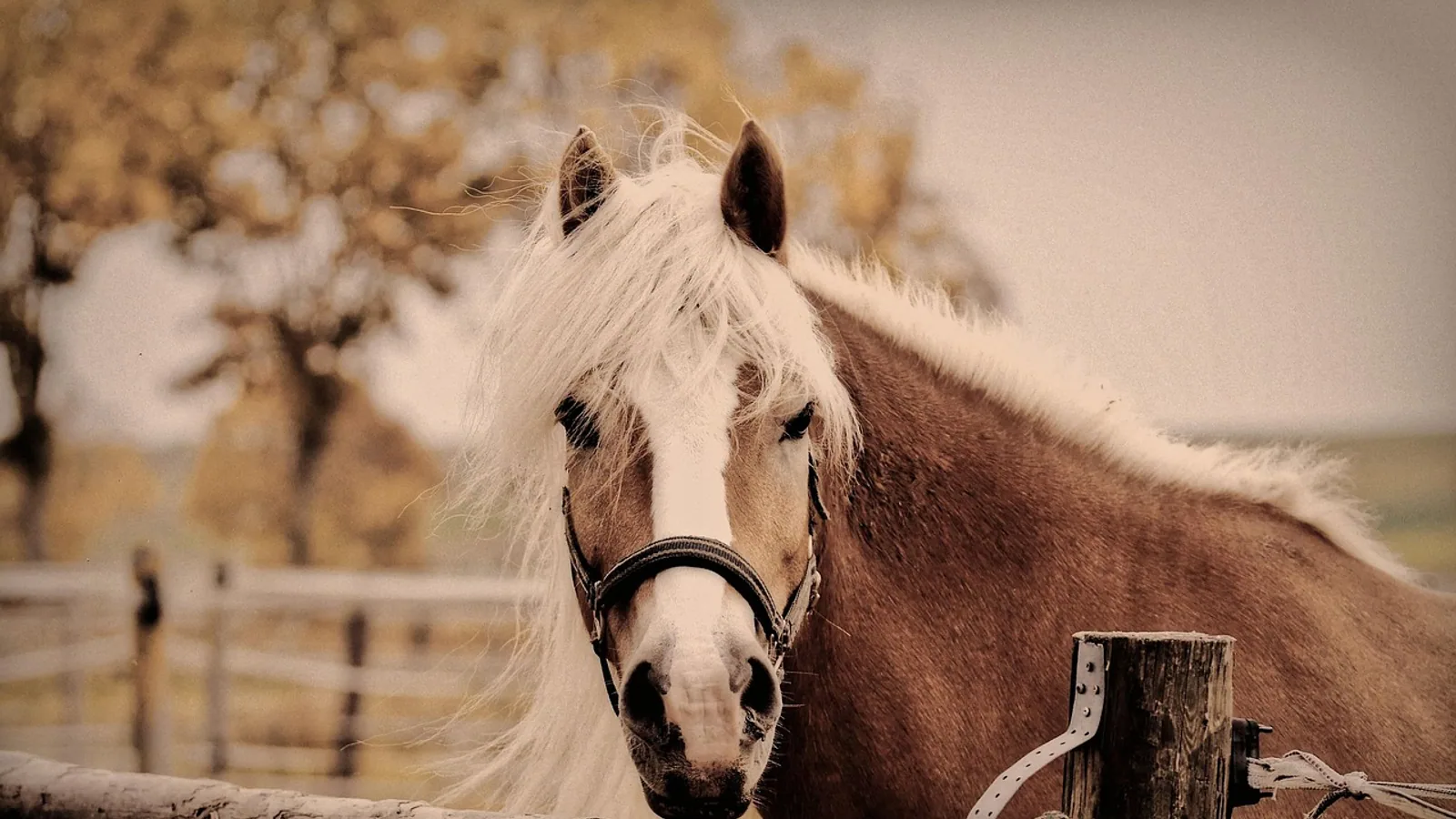
The Haflinger horse is a small, sturdy mountain breed from the Austrian Tyrol, instantly recognizable by its chestnut coat and flaxen mane and tail. Most Haflingers stand roughly 13.2 to 15 hands and weigh around 800 to 1,300 pounds, which places them between a large pony and a small horse. The breed's temperament is famously willing, clever, and people-oriented, which is why Haflingers work as family riding horses, driving horses, trail mounts, and light draft animals. That same efficiency of metabolism that lets them thrive on mountain pasture makes them easy keepers prone to obesity and laminitis. Haflingers also carry a well-documented genetic risk for ocular squamous cell carcinoma linked to a variant in the DDB2 gene, and type 1 polysaccharide storage myopathy occurs in the breed as well. This article covers Haflinger size, colors, temperament, care, feeding, and the health screening that owners should discuss with their veterinarian.
This article is educational and is not a substitute for veterinary diagnosis or treatment.
At a Glance
| Trait | Typical Haflinger |
|---|---|
| Origin | Austrian Tyrol (South Tyrol and North Tyrol), alpine mountain breed |
| Height | About 13.2 to 15 hands |
| Weight | About 800 to 1,300 pounds |
| Coat color | Chestnut with flaxen mane and tail |
| Lifespan | Commonly into the twenties, with some individuals living considerably longer |
| Energy level | Moderate, athletic, and forward without being hot |
| Grooming | Low to moderate, thick mane and tail need regular attention |
| Trainability | High, clever, quick to learn, sometimes opinionated |
| Good with children | Often yes, given correct size match and supervision |
| Best suited to | Family riding, driving, trail work, small adult riders, light draft tasks |
History and Origin of the Haflinger Horse
The Haflinger is a native alpine breed, and its breeding history is tied to the mountain valleys of the Austrian Tyrol and northern Italy. Genetic studies of the breed trace its ancestry through Arabian, Noriker, Bosnian Mountain Horse, Gidran, and Shagya Arabian populations that contributed to the modern Haflinger [1]. That mixed foundation helps explain why the breed combines pony hardiness with a refined, riding-horse quality.
Modern population genetics show the Haflinger is not a single uniform gene pool. A study of 531 horses across seven founder populations found clear substructure within the Haflinger breed that reflected geographic origin, meaning Austrian and Italian Haflingers form distinguishable groups even though they share breed registry ancestry [1]. A separate analysis of 443 Haflingers bred in the Czech Republic but originating from Austria, Germany, the Czech Republic, Italy, and Slovakia found low overall differentiation between subpopulations, with the closest genetic distances between Czech, Austrian, and German animals and more distinct Italian and Slovak groups [2]. Observed heterozygosity in that study ranged from 0.69 to 0.71, which indicates the breed still carries meaningful genetic variation despite a century of structured breeding [2].
That structure matters to owners because it reflects how the breed was shaped. Haflingers were selected for mountain work, packing, and light agricultural draft, and those demands produced a compact, sure-footed horse with strong hooves and a calm work ethic. Inbreeding has risen in some lines. A study of five Italian native breeds placed the Haflinger among the highest for genomic inbreeding, with a coefficient based on runs of homozygosity between 0.15 and 0.23, attributed to selective breeding [3]. A separate analysis found Austrian Haflingers had relatively low runs-of-homozygosity coverage compared with several other breeds, which suggests that inbreeding pressure is not uniform across all national populations [1]. The practical takeaway is that line choice and registry transparency matter when you are evaluating a prospective purchase.
Appearance and Haflinger Horse Colors
The Haflinger horse colors are one of the breed's defining features. The classic Haflinger is chestnut with a flaxen or near-white mane and tail, and this combination is what most people picture when they hear the breed name [4][5]. The body coat ranges from light gold to deep liver chestnut, and the mane and tail can run from pale cream to almost white. Darker legs and a darker face are common and acceptable.
Coat color is not only cosmetic in this breed. Retrospective work on squamous cell carcinoma has suggested that chestnut coat color may predispose horses to the development of this cancer, and the Haflinger is a uniformly chestnut breed with a documented excess of ocular squamous cell carcinoma cases [6]. That does not mean every chestnut horse will develop cancer. It means the breed's color and its cancer risk have been studied together, and owners should treat sun exposure and ocular monitoring as part of routine care.
Beyond color, the Haflinger build is distinctive. The head is expressive with a straight or slightly dished profile. The neck is muscular and well set. The chest is deep, the back is short and strong, and the hindquarters are powerful, which is what allows the breed to pull and carry on steep terrain. The legs are clean and the hooves are famously hard. Breeders describe the Haflinger as a small horse rather than a pony in type, and the gait is free and ground-covering for the breed's size.
Haflinger Size
Haflinger size is one of the most common questions from prospective owners, and the honest answer is that the breed spans a meaningful range. Most Haflingers stand approximately 13.2 to 15 hands and weigh roughly 800 to 1,300 pounds [4][5]. There is no single fixed height, and registries permit a range that accommodates both smaller, pony-like individuals and taller, more horse-like animals.
The variation is partly genetic and partly geographic. Because Austrian and Italian Haflinger populations are genetically distinguishable, size averages can differ between breeding regions [1]. Within a single registry you will find Haflingers that suit a small child on a lead line and Haflingers that comfortably carry a small adult on a full-day trail ride. Weight-carrying capacity should be judged by the individual horse's build, conditioning, and soundness rather than by breed label alone, and a veterinarian or experienced instructor can help match rider size to a specific animal.
For families, the practical advantage of Haflinger size is that the breed often fits riders who have outgrown ponies but are not ready for a full-size warmblood. For adult riders, the breed's compact frame and strong loin make it a capable trail and driving partner. Height alone does not determine suitability, and a taller Haflinger is not automatically a better riding horse than a shorter one.
Haflinger Temperament
Haflinger temperament is the trait that wins the breed most of its fans. Haflingers are typically willing, intelligent, and highly bonded to their handlers. They learn quickly, which cuts both ways. A Haflinger that is taught a correct response will repeat it reliably. A Haflinger that is allowed to test a handler will remember the shortcut just as well.
Owners and trainers commonly describe the breed as having a pony-like cleverness inside a horse-sized body. Haflingers are often described as "people horses" that want to be involved in whatever is happening around the barn. They tend to be sensible on trails and in traffic, and many tolerate the noise and bustle of driving work without becoming reactive. That combination of calm and curiosity is why the breed has been used for family riding programs, therapeutic riding, and carriage work.
The breed is not, however, a passive pushbutton. Haflingers can be strong-willed, and they are capable of figuring out which requests they can ignore. Consistent, fair handling from the start produces a cooperative partner. Inconsistent handling produces a horse that negotiates. Prospective owners should look for a Haflinger that respects personal space, stands quietly for the farrier, and yields to pressure on the ground, because those behaviors predict how the horse will behave under saddle or in harness.
Haflingers also tend to be good with children when the match is appropriate. Their size makes them less intimidating than a large warmblood, and their temperament is generally patient. Supervision and correct instruction remain essential for any child riding any horse.
Exercise and Training Needs
The Haflinger is an athletic breed that was developed to work, and it does best with a job. A Haflinger kept in a stall with no structured exercise is at higher risk of weight gain and metabolic problems than one in regular work. The breed's natural aptitude covers several disciplines.
Under saddle, Haflingers are used for trail riding, pleasure riding, dressage, western pleasure, and low-level jumping. In harness, they are popular for pleasure driving, carriage work, and light farm tasks. Their compact build and powerful hindquarters make them well suited to pulling, and their calm temperament makes them reliable in harness. Many Haflingers cross-train between riding and driving, which keeps them mentally engaged and physically fit.
Training should be progressive and consistent. Because Haflingers are quick learners, short, frequent sessions tend to work better than long, repetitive ones. Groundwork, lunging, and long-lining build the foundation for both riding and driving. Owners who plan to drive should seek instruction from a qualified driving trainer, because harness work carries specific safety requirements that differ from ridden work.
Exercise is also a management tool for the breed's metabolic tendencies. Regular work helps control body condition, supports hoof health, and reduces the risk of the obesity-related problems discussed below. A veterinarian can help design an exercise plan that matches the horse's age, fitness, and any diagnosed condition.
Grooming and Routine Care
Haflinger grooming is straightforward but not zero-effort. The breed's thick flaxen mane and tail are the main grooming challenge. They tangle easily, especially in mud and wind, and they benefit from regular detangling and cleaning. A wide-tooth comb and a detangler used sparingly will keep the mane and tail manageable without pulling out hair.
The chestnut coat is generally easy to keep clean because it does not show light dust as obviously as gray or palomino coats. Regular currying and brushing removes dirt and stimulates the skin. Hoof care is important for every horse, and the Haflinger's hard hooves still need routine trimming and shoeing decisions made with a farrier. Hard hooves are not the same as self-maintaining hooves.
Fly control is a seasonal concern for all horses, and there is evidence that lighter-colored horses experience fewer fly attacks than darker ones [7]. A study of icaridin-impregnated horsecloths found that the impregnated cloth significantly reduced horsefly numbers and avoidance behaviors compared with no cloth, and that combining a chemical repellent with a physical barrier was more effective than a physical barrier alone [7]. For Haflingers, which are light to medium chestnut, a well-fitted fly sheet plus an appropriate repellent is a reasonable summer strategy. Owners should discuss specific repellent products with their veterinarian.
Vaccination, deworming, dental care, and farrier schedules should follow the plan set by the attending veterinarian. The American Association of Equine Practitioners (AAEP) publishes vaccination and wellness guidance that veterinarians use to build individual schedules based on age, use, and geographic risk. Routine wellness examinations are also the right time to check the eyes, which matters for this breed.
Feeding Considerations for the Easy-Keeper Haflinger
The Haflinger is an easy keeper. The breed evolved on alpine pasture where forage quality varied and food was not always abundant, and that history produced a horse that extracts nutrition efficiently from relatively little feed. In a modern barn with unlimited hay and grain, that efficiency becomes a liability.
Obesity is the central nutritional problem in the breed. An overweight Haflinger carries excess fat along the neck, over the ribs, and at the tailhead, and that fat tissue is metabolically active. Excess body condition is closely linked to insulin dysregulation and to laminitis, the painful inflammation of the hoof laminae that can permanently damage the foot. Owners should learn to body condition score their horse regularly and adjust hay, pasture, and concentrate feeding before the horse gains weight rather than after.
Practical management for an easy keeper includes limiting pasture access during high-sugar periods, using slow-feed hay nets, weighing hay rather than eyeballing it, and avoiding unnecessary grain. A ration balancer or a vitamin and mineral supplement is often a better choice than a full grain ration for a horse in light work. Kentucky Equine Research publishes equine nutrition resources that veterinarians use to build these plans, and a veterinarian or equine nutritionist should set the actual ration for any Haflinger with a diagnosed metabolic problem.
Exercise is part of the feeding plan. A Haflinger in regular work can tolerate more forage and less restriction than an idle one. Owners should not crash-diet a horse, because rapid weight loss carries its own risks. Gradual, monitored reduction in body condition is the goal.
Inherited and Common Health Problems
Ocular Squamous Cell Carcinoma and the DDB2 Risk Variant
Squamous cell carcinoma is the most common cancer of the equine eye, and the Haflinger is one of the breeds with a documented excess of cases [8][9][10]. Research into the breed's cancer risk identified a missense variant in the gene damage specific DNA binding protein 2, written as DDB2 c.1013C>T, p.Thr338Met, on equine chromosome 12 [10]. The DDB2 protein normally binds to ultraviolet-damaged DNA and recruits other proteins to carry out nucleotide excision repair. Computational modeling predicts that the Thr338Met change is deleterious because it alters the conformation of a loop involved in recognizing photolesions [10].
The inheritance pattern is recessive, meaning a horse generally needs two copies of the risk allele to be at substantially increased risk. Pedigree analysis in the Haflinger breed supported a simple recessive mode of inheritance, and a genome-wide association study identified a locus on ECA12 significantly associated with limbal squamous cell carcinoma [10]. Subsequent work confirmed the same genetic risk applies to squamous cell carcinoma of the nictitating membrane, the third eyelid, not just the limbus [8]. In that study, 88 percent of nictitating membrane cases were homozygous for the DDB2 variant, and no other polymorphism was more strongly associated [8].
Clinical reports describe how this cancer behaves in the breed. A case series from the Institut Suisse de Médecine Equine described eight Haflingers with histologically confirmed squamous cell carcinoma, five ocular and three non-ocular, and highlighted a high recurrence rate and a tendency to metastasize [11]. Recurrences were observed between three weeks and sixteen years after initial therapy, and metastases occurred in the scapula, liver, and lungs [11]. An earlier pedigree study found the average age at diagnosis of limbal squamous cell carcinoma in Haflingers was 8.7 years, with 11 males and 8 females affected, and 13 of 15 horses with pedigrees shared a common ancestor within five generations [9]. All 15 shared a common ancestor from the A stallion line in the breed pedigree [9]. That study also noted that Haflingers may be diagnosed at a younger age than other breeds [9].
The DDB2 variant is not unique to Haflingers. It has been identified as a risk factor in Belgian Draft horses and Rocky Mountain Horses, and it has been found in Connemara Ponies, Norikers, and some warmblood populations at lower frequencies [6][12][13][14]. One study confirmed a significantly higher risk for ocular squamous cell carcinoma in DDB2-TT Haflingers and also suggested an increased risk in heterozygous DDB2-CT Haflingers [14]. That same study found the DDB2-T allele in Norikers with ocular squamous cell carcinoma but not in Warmbloods, and it found no evidence that the risk allele affects the development of equine sarcoid or squamous cell carcinoma at locations other than the eye [14].
Genotyping is available. A Swiss and Austrian study of Haflingers recruited from clinics, private homes, and a Tyrolean stud farm determined individual DDB2 genotype from hair follicle or whole blood samples using a PCR test [15]. Among 113 clinically normal animals, 7 were homozygous (6 percent) and 42 were heterozygous (37 percent), giving an allele frequency of 24.8 percent in the control cohort [15]. The authors framed genotyping as a risk-minimization tool for breeders and owners [15]. A separate study of 56 Haflingers confirmed the elevated risk in DDB2-TT animals and suggested increased risk in heterozygotes [14].
Owners should discuss DDB2 genotyping with their veterinarian, particularly before breeding or when purchasing a Haflinger with an unknown genotype. Genotyping does not prevent cancer. It identifies horses that warrant closer ocular monitoring and earlier veterinary evaluation of any eye mass.
Treatment of ocular squamous cell carcinoma depends on the location and extent of the tumor. Options described in the veterinary literature include surgical removal such as keratectomy, cryotherapy, enucleation when the eye cannot be saved, and adjunctive therapies [16][11]. A recent case report described electrochemotherapy with bleomycin as a first-line treatment for bilateral ocular surface squamous neoplasia in a 5-year-old Haflinger gelding [17]. The treatment produced a complete tumor response with no recurrence during follow-up, and tumor toxicity was mild with no adverse effect to normal tissue [17]. The authors suggested electrochemotherapy as a possible treatment for ocular tumors and recommended further research [17]. Any treatment decision for an individual horse belongs with a veterinary ophthalmologist.
Type 1 Polysaccharide Storage Myopathy
Type 1 polysaccharide storage myopathy is caused by a genetic mutation in the glycogen synthase 1 gene, and the mutation is present in several breeds including the Noriker and the Haflinger [18]. A study comparing gluteus medius muscle activity in Haflinger and Noriker horses with known GYS1 mutation status found that genetically affected horses showed significantly less density of muscle activity at both walk and trot, even when they had no overt clinical signs of myopathy [18]. The relative muscle activity did not show a consistent difference between affected and non-affected horses, but the density finding suggests the mutation has measurable effects on muscle function before obvious symptoms appear [18].
Polysaccharide storage myopathy in horses typically presents with exercise intolerance, muscle stiffness, reluctance to move forward, or episodes of tying-up. Owners of Haflingers with a known GYS1 mutation should discuss exercise and feeding management with a veterinarian, because diet and work schedule are central to managing this condition. Genetic testing for GYS1 is available and is often included in breed health panels.
Other Health Considerations
Haflingers are intact males that may be used for natural cover, and contagious equine metritis caused by Taylorella equigenitalis is a venereal disease relevant to breeding management. A cross-sectional study comparing Icelandic, draught, and Haflinger intact males found the overall prevalence of T. equigenitalis in included intact males was 16.7 percent, and the odds of a positive test were significantly higher in Icelandic than in draught and Haflinger intact males [19]. Breeding stallions should be managed under a veterinarian's infectious disease protocol, and testing requirements vary by registry and destination.
Individual case reports also describe rare tumors in the breed, including a sinonasal angiofibroma in a 34-year-old Haflinger gelding and a vulvar squamous cell carcinoma associated with Equus caballus papillomavirus type 2 in a 13-year-old Haflinger mare [20][21]. These are single-case reports and do not establish breed-wide risk. They are mentioned here only to show that Haflingers can develop a range of conditions that require veterinary workup.
Recommended Screening and Preventive Care
Haflinger owners should build a preventive plan with their veterinarian. The core elements are routine physical examination, vaccination according to AAEP guidance, deworming based on fecal egg counts and regional risk, dental examination, and farrier care on a regular schedule.
Breed-specific screening worth discussing includes DDB2 genotyping for ocular squamous cell carcinoma risk and GYS1 genotyping for type 1 polysaccharide storage myopathy [14][15][18]. Both are simple genetic tests that can be run from hair or blood. Owners purchasing a Haflinger should ask whether these tests have been performed and request documentation.
Ocular monitoring is a practical preventive measure for every Haflinger. Owners should examine the eyes regularly for new masses, redness, discharge, or asymmetry. Any raised pink or fleshy mass on the limbus, conjunctiva, or third eyelid should be examined by a veterinarian promptly, because early squamous cell carcinoma is easier to treat than advanced disease [9][16].
Body condition scoring and metabolic monitoring belong in the routine examination for this breed. A veterinarian can assess body condition, check for signs of insulin dysregulation, and set a weight management plan before laminitis develops.
Lifespan and Long-Term Care
Haflingers commonly live into their twenties, and some individuals live considerably longer. One case report in the veterinary literature described a 34-year-old Haflinger gelding, which shows the upper end of what the breed can reach with good care [20]. Longevity in this breed depends heavily on managing body condition and hoof health across the horse's life.
Older Haflingers need the same attention to dental health, joint comfort, and metabolic status as any aging horse. Because the breed is an easy keeper, an older Haflinger that becomes less active can gain weight quickly, which increases laminitis risk. Owners should adjust forage and exercise as the horse ages rather than waiting for a crisis.
Finding a Responsible Breeder or Rescue
A responsible Haflinger breeder will provide registry documentation, health records, and genetic test results for DDB2 and GYS1 on request. Ask about the dam and sire, and ask whether the breeder has had any ocular squamous cell carcinoma in the lines. Because the DDB2 risk is recessive and the breed has a measurable allele frequency, a breeder who understands the genetics can make informed mating decisions [15][14].
Prospective buyers should meet the horse in person, watch it handled on the ground, and if possible watch it ridden or driven. Ask about the horse's living situation, feed, and work history. A Haflinger that has been kept on restricted forage and in regular work will need a similar management plan in a new home.
Rescue and rehoming organizations also place Haflingers. Older horses and horses with managed conditions can make excellent companions and light-riding partners when their limitations are respected. Any horse with a history of ocular squamous cell carcinoma needs a full veterinary evaluation before purchase, because recurrence is documented in this breed [11].
Who Should Not Get a Haflinger
A Haflinger is not the right choice for every owner. People who want a horse that can be fed free-choice hay and left largely idle should not choose this breed, because the easy-keeper metabolism makes obesity and laminitis a real risk. Owners who dislike strong-willed, clever horses will find the breed frustrating. Haflingers test boundaries, and they need consistent handling.
Riders who need a large, long-striding horse for upper-level sport should look elsewhere. The Haflinger is a compact, athletic breed, but it is not built for the demands of advanced dressage or jumping. Owners who cannot commit to regular farrier care, dental care, and veterinary wellness visits should also reconsider, because this breed's cancer and metabolic risks reward attentive management.
Finally, anyone unwilling to monitor the eyes regularly should think carefully before choosing a Haflinger. The breed's documented ocular squamous cell carcinoma risk means that eye checks are part of responsible ownership [8][9][10].
Limitations and When to Contact a Veterinarian
This article is educational and is not a substitute for veterinary diagnosis or treatment. Individual horses vary, and only a veterinarian who has examined your horse can make a diagnosis or recommend treatment.
Contact a veterinarian promptly if you notice any of the following:
- A new mass, raised pink tissue, or fleshy growth on the eye, eyelid, third eyelid, or limbus
- Redness, cloudiness, discharge, squinting, or swelling of the eye
- A change in the appearance of an eye that has previously been treated for squamous cell carcinoma
- Lameness, reluctance to move, heat in the hooves, a bounding digital pulse, or a stance that shifts weight off the front feet, which can indicate laminitis
- Weight gain that continues despite reduced feed, or a neck and tailhead that feel unusually firm or cresty
- Exercise intolerance, muscle stiffness, reluctance to move forward under saddle, or episodes of tying-up
- Any wound, swelling, or mass on the vulva, penis, or sheath
- Fever, nasal discharge, or a facial swelling that changes the shape of the head
If your Haflinger has a known DDB2 or GYS1 genotype, share that information with your veterinarian. It changes what they monitor and how they plan preventive care.
Frequently Asked Questions
How big does a Haflinger horse get?
Most Haflingers stand about 13.2 to 15 hands and weigh roughly 800 to 1,300 pounds [4][5]. Individual size varies with bloodline and breeding region, so judge a specific horse by its own build rather than the breed average.
What colors do Haflinger horses come in?
The breed is chestnut with a flaxen or near-white mane and tail [4][5]. Body shade ranges from light gold to deep liver chestnut, and the mane and tail can run from cream to almost white.
What is a Haflinger's temperament like?
Haflingers are typically willing, intelligent, and people-oriented, with a pony-like cleverness. They learn quickly and can be strong-willed, so consistent handling matters. Most are calm enough for family riding and driving work with proper training.
Are Haflingers easy keepers?
Yes. The breed is an easy keeper, meaning it maintains weight on relatively little feed. That efficiency makes obesity and laminitis a real risk in a modern barn setting, so hay should be weighed and pasture access managed.
What health problems are Haflingers prone to?
The breed's best-documented risks are ocular squamous cell carcinoma linked to the DDB2 gene and type 1 polysaccharide storage myopathy linked to the GYS1 gene [14][10][18]. Obesity, insulin dysregulation, and laminitis are also common management concerns in easy keepers.
Should I have my Haflinger tested for the DDB2 gene?
Discuss DDB2 genotyping with your veterinarian, especially before breeding or when buying a horse with unknown genotype. The test identifies horses at higher risk for ocular squamous cell carcinoma so they can be monitored more closely [15][14].
Can Haflingers be used for driving?
Yes. Haflingers are popular driving horses and are well suited to pleasure driving and carriage work because of their compact build, powerful hindquarters, and calm temperament. Driving requires instruction from a qualified trainer because harness work has its own safety rules.
Do Haflingers make good horses for children?
Many do, given their size and generally patient temperament. A child should always be matched to a specific horse and supervised by an experienced adult. Temperament varies between individuals, so meet the horse before deciding.
Related Articles
- Palomino Horse: Genetics, Color, and Health Considerations
- Miniature Horse Care Guide
- Horse Blanketing: When and How
- Senior Horse Care Guide
- How To Groom A Sensitive Horse
- Horse Trailering Stress
- Norwegian Fjord Horse: Size, Temperament, Color, and Care
- Roan Horse: Red, Blue, and Bay Roan Color and Genetics
- Morgan Horse: History, Temperament, Uses, and Health
Sources
- Population Networks Associated with Runs of Homozygosity Reveal New Insights into the Breeding History of the Haflinger Horse.
- The genetic diversity and structure of the Haflinger horse population in the Czech Republic.
- Selection signatures and inbreeding: exploring genetic diversity in five native horse breeds.
- Haflinger Horse Breed Guide: Characteristics, Health & ... (madbarn.com)
- Haflinger (petmd.com)
- A missense mutation in damage-specific DNA binding protein 2 is a genetic risk factor for ocular squamous cell carcinoma in Belgian horses.
- Repellent activity of icaridin-impregnated horsecloth against horse flies.
- Genetic risk for squamous cell carcinoma of the nictitating membrane parallels that of the limbus in Haflinger horses.
- Limbal squamous cell carcinoma in Haflinger horses.
- A missense mutation in damage-specific DNA binding protein 2 is a genetic risk factor for limbal squamous cell carcinoma in horses.
- [[Ocular and non-ocular squamous cell carcinomas in the Haflinger: Eight cases at the Institut Suisse de Médecine Equine (2015-2022)].](https://pubmed.ncbi.nlm.nih.gov/37822247/)
- Limbal squamous cell carcinoma in a Rocky Mountain Horse: Case report and investigation of genetic contribution.
- DDB2 Genetic Risk Factor for Ocular Squamous Cell Carcinoma Identified in Three Additional Horse Breeds.
- Studying the Impact of the DDB2 T338M Missense Mutation on the Development of Equine Squamous Cell Carcinoma and Sarcoid.
- [[DDB2-associated incidence of squamous cell carcinoma in Haflingers: risk minimization by genotyping].](https://pubmed.ncbi.nlm.nih.gov/37905572/)
- Primary invasive ocular squamous cell carcinoma in a horse.
- Electrochemotherapy with bleomycin for bilateral ocular squamous cell carcinoma in a horse.
- Comparison of gluteus medius muscle activity in Haflinger and Noriker horses with polysaccharide storage myopathy.
- Taylorella equigenitalis in Icelandic intact males compared with other horse breeds using natural cover.
- Sinonasal angiofibroma in a horse.
- Epithelial-mesenchymal transition in an EcPV2-positive vulvar squamous cell carcinoma of a mare.