Horse Coat Colors: Bay, Chestnut, Dun, Roan, and the Genetics
By Dr. Zubair Khalid, DVM, MS, PhD ·
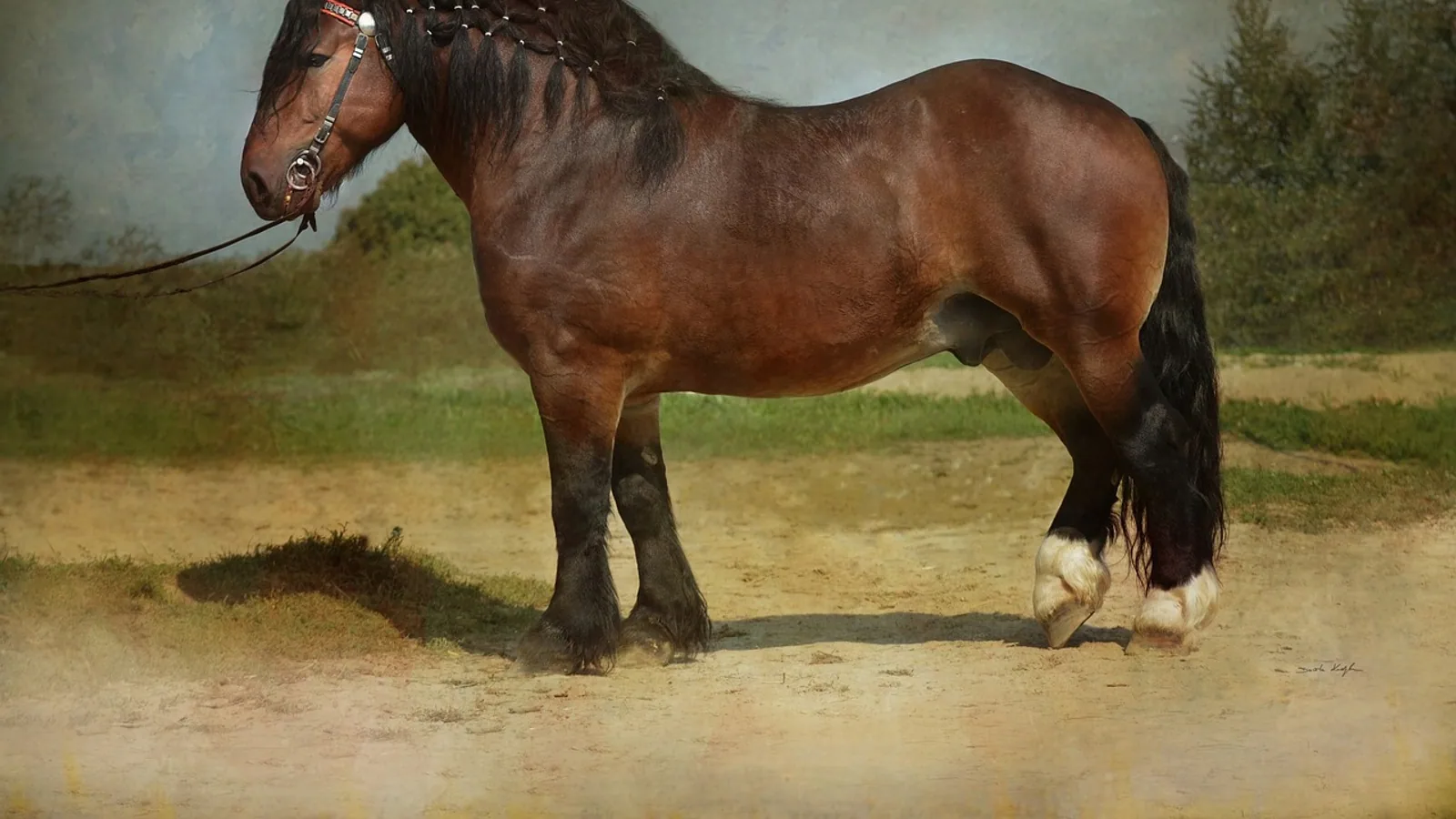
Every horse color you can name is built from two decisions made by two genes, and then modified by everything layered on top. The Extension gene decides whether a horse can make black pigment at all, and the Agouti gene decides where that black pigment is allowed to sit on the body. Everything else, the creams, the duns, the champagnes, the silvers, the grays, the roans, and the white patches, is a modification applied to that base.
This guide walks through the whole system in order. It covers the four base colors, the dilution genes that lighten them, the progressive graying gene, the roan white-hair pattern, and the white spotting families that produce pinto and leopard horses. It also covers the four color-linked health conditions every owner should know about, because two of them are lethal and two are manageable with monitoring.
This article is educational and is not a substitute for veterinary diagnosis or treatment.
The Two Genes That Set Every Base Color
Pigment in the horse comes in two chemical forms. Eumelanin is black or brown-black. Pheomelanin is red or yellow. Every hair on a horse is one, the other, or a blend, and the ratio is controlled by a small number of genes acting in sequence [1].
Extension (MC1R): The On/Off Switch for Black
The Extension locus is the gene MC1R. It works like a switch.
The dominant form, written E, turns the black-pigment pathway on. A horse with at least one E can produce black eumelanin.
The recessive form, written e, is broken. A horse with two copies (e/e) cannot produce black pigment anywhere on the body. The result is a chestnut horse, also called sorrel in many Western and stock-horse registries.
Chestnut and sorrel describe the same genetic animal. The words are breed and regional conventions, not separate colors. A chestnut horse has a red or reddish-brown body with a mane and tail that range from the same shade to several shades lighter or darker. There is no black hair anywhere, including the points.
Chestnut is recessive, which means two chestnut parents always produce a chestnut foal. It is also the single most common color in several breeds. In a study of 1,410 living Mountain Pleasure Horses, chestnut was the most frequent color assignment at 31.4 percent [2]. In the Sarcidano Horse, genetic testing found 58 chestnuts out of 90 horses, the largest single group [3].
Agouti (ASIP): Where Black Is Allowed to Go
The Agouti locus is the gene ASIP. It only matters if the horse can make black pigment in the first place. On a chestnut base, Agouti has nothing to act on and is invisible.
Agouti restricts black pigment to specific areas. The dominant form, written A, pushes black to the points: the mane, tail, and lower legs. The body becomes red-brown. That is a bay horse.
A bay horse has a reddish-brown body, a black mane, a black tail, and black lower legs. The black on the legs typically ends at the knees and hocks or just above. Bay is the second major base color and one of the most recognizable horse colors worldwide.
The recessive form, written a, does not restrict black at all. A horse with at least one E and two copies of a (E/- a/a) is black. The entire body, mane, and tail are black.
So the base color system reduces to three outcomes:
| Genotype | Base color |
|---|---|
| e/e (any Agouti) | Chestnut or sorrel |
| E/- A/- | Bay |
| E/- a/a | Black |
Why Visual Identification Fails So Often
Owners and even registries misidentify base colors regularly. A study of the Sarcidano Horse compared genetic testing against the phenotype recorded on each horse's individual form and found substantial disagreement. Genetically, the breed had 58 chestnuts, 28 blacks, and 4 bays. Visually, the same horses were recorded as 38 chestnuts, 40 bays, 2 blacks, and 10 grays [3]. Many horses visually called bay were genetically black.
The authors attributed the mismatch to age, season, living conditions, and diet, all of which change how a coat looks on any given day [3]. A black horse sun-bleached in summer can look bay-brown on the body while keeping a dark mane. A black foal with a foal coat can look almost anything.
This matters for breeding decisions. If you are planning a mating around color, genotype testing on MC1R and ASIP is more reliable than looking at the horse.
Dilution Genes: Cream, Dun, Champagne, and Silver
Dilution genes lighten the base color without removing pigment entirely. There are four that matter most in the United States, and they behave differently.
Cream and the Golden Colors
The cream dilution is the most common dilution in American breeds. One copy lightens red pigment to gold and black pigment to a brown or chocolate shade. Two copies lighten much further, producing a pale horse with blue eyes and pinkish skin.
A single cream copy on a bay base produces a buckskin: gold body, black points, dark mane and tail. A single cream copy on a chestnut base produces a palomino: gold body with a white or flaxen mane and tail. Two cream copies on a chestnut base produce a cremello, which is nearly white with blue eyes.
The cream allele is widespread in some populations. A pedigree analysis of the Golden American Saddlebred found that 36.1 percent of traced horses carried the cream dilution allele, and another 0.9 percent were obligate carriers based on conflicting color records [4]. The same study found 43 percent carried the champagne allele [4].
Cream dilution is not restricted to horses. A mutation in the same gene family, SLC45A2, is strongly associated with the cream coat in Baroque donkeys, inherited in an autosomal recessive pattern [5]. That is a useful reminder that these pigment pathways are shared across equids.
For a full breakdown of the gold-on-chestnut phenotype, see our dedicated palomino guide. For the gold-on-bay version, see the buckskin guide.
Dun
Dun is a separate dilution with a distinctive signature. A dun horse has a diluted body color plus at least one of the primitive markings: a dark dorsal stripe down the spine, horizontal zebra stripes on the legs, a transverse stripe over the shoulders, or dark ear tips and borders.
The dun allele acts on whatever base color is underneath. A black base gives a blue dun, also called grullo. A bay base gives a bay dun. A chestnut base gives a red dun.
The genetics of dun are more complicated than the simple story suggests. The variant is a 1.6 kilobase insertion in the TBX3 gene, and research on the Polish Konik found that the dominant action of the dun mutation is not fully penetrant [6]. In plain terms, having the allele does not guarantee the same amount of dilution every time.
That same Konik study found something practical and surprising. The breed standard permits only blue dun, meaning dun on a black base. Genetic testing showed that 35 percent of the population was actually bay dun, meaning dun on a bay base, but officially recorded as blue dun [6]. The two phenotypes are genuinely hard to tell apart by eye. The authors proposed that visual distinction between them is unreliable.
The Konik population carried no champagne, silver, or cream dilution variants at all [6], which shows how breed-isolated some of these alleles can be.
Champagne
Champagne is a dilution that lightens both red and black pigment and produces a characteristic set of secondary effects: amber, hazel, or greenish eyes at birth that darken with age, pinkish or lavender skin that freckles over time, and a coat that shines with a metallic or satin quality.
Champagne acts on the base color the same way other dilutions do. On black it gives classic champagne, a taupe or lilac shade. On bay it gives amber champagne. On chestnut it gives gold champagne.
Champagne was present in a substantial share of the Golden American Saddlebred population, at 43 percent of traced pedigrees [4]. It is inherited as a dominant trait, so a single copy produces the visible phenotype.
Silver
Silver, sometimes called silver dapple, dilutes black pigment only. Red pigment is unaffected. That means silver is dramatic on a black or bay base and invisible on a chestnut.
A silver black horse has a black body with a mane and tail that range from chocolate to near-white, often with a flaxen or silvery quality. A silver bay has a bay body with a lightened mane and tail and often lightened lower legs.
Silver is the one dilution with a documented health association, covered in detail below.
Gray: The Progressive Color
Gray is not a dilution. It is a progressive loss of pigment that happens over the horse's lifetime.
A gray foal is usually born dark, often black or bay, and may show goggles, meaning pale rings around the eyes, as a newborn. Over months and years, white hairs spread through the coat. Most grays are fully white by middle age. The skin stays dark, which is why a white gray horse usually has dark skin around the muzzle and eyes, unlike a true white horse.
Gray is dominant. One copy produces the phenotype. Two grays bred together can produce a gray foal, and the gene is present in many breeds.
The gene responsible is STX17. Genotyping for it is available and is used to confirm whether a horse carries the gray factor. That test has clinical value, because gray is the color most strongly linked to melanoma in horses.
Roan: White Hairs Mixed Into a Solid Coat
Roan is the even intermingling of white hairs through a solid-colored coat. The body carries the mix. The head, mane, tail, and lower legs stay dark with few or no white hairs [7]. That head-and-legs pattern is the practical way to tell roan from a gray that is still lightening, and from a horse with a white spotting pattern.
Roan is not progressive the way gray is. A roan horse generally stays the same shade through adulthood, though seasonal coat changes can make it look different in summer and winter.
The Genetics Are More Complex Than Once Thought
Roan was originally mapped to the KIT gene region, and early work identified linked variants in a small number of breeds. Those markers did not work well across breeds [7].
Recent work has identified multiple independent roan haplotypes. The first two, RN1 and RN2, account for roughly 38 percent and 36 percent of roan horses respectively, or about 74 percent combined in one sample of 257 roan horses [7]. A third haplotype, RN3, was identified in American Quarter Horses and accounts for an additional 30 percent of Quarter Horses that are negative for RN1 and RN2 but still show roan [8].
Together, these three haplotypes explain more than 95 percent of the Quarter Horse population studied and about 50 to 60 percent of roan horses in other breeds [8]. That means a meaningful share of roan horses still cannot be explained by any known allele, and further variants remain to be found [7].
One practical caution from the research: RN1 and RN2 turned up in the non-roan population at less than 1 percent, and only in horses that also carried light coat color or dilution alleles, which can hide the roan phenotype [7]. A horse can carry a roan allele and not look roan if a dilution is masking it.
For a deeper look at this pattern and how it differs from gray and pinto, see our roan guide.
White Spotting Patterns: Pinto, Piebald, and the Overos
White spotting is a different mechanism from dilution and roan. These are patches of skin and hair with no pigment at all. More than 50 genetic variations have been identified that cause white patterning in horses, compared with only two markers needed to set the base color [9].
The umbrella term for a horse with large white patches plus a base color is pinto. In the United States, pinto is a color description, not a breed. A piebald horse is a pinto with black and white patches. A skewbald is a pinto with any other color plus white. Piebald and skewbald are still common terms in the United Kingdom and in some US registries, though many American breed associations now describe the pattern directly.
Tobiano
Tobiano is the most recognizable pattern. White crosses the topline somewhere between the ears and the tail, all four legs are usually white below the knees and hocks, and the white patches have smooth, rounded edges. The face is usually solid with normal markings. The head is often dark.
Tobiano is one of the patterns with a low association with the lethal white mutation. In a genotyping study of 945 white-patterned horses, tobiano bloodlines had the lowest incidence of heterozygotes for the EDNRB mutation, under 21 percent [10].
Tobiano genotype testing is routine. In a validation study of preimplantation genetic testing on equine embryos, tobiano genotypes were correctly identified in over 90 percent of biopsies from embryos of heterozygous or homozygous horses [11].
Frame Overo
Frame overo produces white patches that appear framed by color, usually along the sides, neck, and head. The back is typically dark. The face often has a wide white blaze or bald face. The white patches have jagged, irregular edges rather than the smooth borders of tobiano.
Frame overo carries the lethal white risk, and this is the most important health fact in the entire color system. More on that below.
Sabino
Sabino produces irregular white markings that often include high white stockings, a wide blaze, white patches on the belly, and roaning at the edges of the white. The amount of white varies enormously, from a horse with only socks and a blaze to a nearly all-white horse.
Sabino bloodlines had a low incidence of the lethal white mutation, under 21 percent in the same 945-horse study [10].
Splashed White
Splashed white looks like the horse walked through a bucket of paint from below. White rises up from the legs and belly, the head is often extensively white, and the edges are crisp. Splashed white horses frequently have blue eyes.
Splashed white also had a low mutation incidence in the genotyping study [10].
Leopard Complex and Appaloosa Patterns
The leopard complex is a separate genetic system that produces the spotted patterns associated with Appaloosa horses. It includes several distinct phenotypes: blanket, where white covers the hindquarters with dark spots inside it; leopard, where the whole body is white with dark spots; few-spot, where the horse is nearly white; and varnish roan, a progressive lightening similar in appearance to roan.
The leopard complex gene is also linked to a specific health condition, covered below.
Newly Identified White Variants
The list of white-causing mutations keeps growing. Three novel KIT variants, designated W37, W38, and W39, were identified in Anglo-Arabian, Warmblood, and stock-type horses with previously unexplained white markings. All three were predicted to alter or remove the active domain of the KIT protein, which would severely disrupt normal pigment regulation and could explain the extensive white these horses showed [12].
This is why a horse can have a white pattern that does not match any of the classic descriptions. The genetics of white spotting is still being mapped.
The Four Health Conditions Tied to Color
Color is not only cosmetic. Four conditions are directly linked to specific color genetics, and two of them are fatal.
Lethal White Overo Syndrome
Lethal white overo syndrome is a congenital defect caused by inheriting two copies of a mutation in the EDNRB gene, the endothelin-B receptor gene [13][14].
A foal with two copies is born all white or nearly all white and has aganglionosis of the bowel, meaning the nerves that drive intestinal movement are missing from the distal small intestine through the large intestine [14]. The result is severe intestinal blockage. These foals do not survive.
A foal with one copy is a frame overo horse. The mutation is heterozygous in the frame pattern and homozygous in the lethal white foal [13][14].
The critical practical point is that frame overo is not always obvious. The frame pattern can be combined with other white patterns, which makes accurate estimation of EDNRB genotype by visual inspection difficult [10]. A horse can carry the lethal white allele and look like a tobiano, a sabino, or a minimally marked horse.
In the 945-horse genotyping study, the patterns with the highest incidence of heterozygotes, over 94 percent, were frame overo, highly white calico overo, and frame blend overo. The lowest incidence, under 21 percent, was in tobiano, sabino, minimally white calico overo, splashed white overo, nonframe blend overo, and breeding-stock solid horses. The mutation was not detected at all in solid-colored horses from breeds without white patterning [10].
The takeaway for breeders is straightforward. Any horse with frame overo ancestry or an ambiguous white pattern should be tested before breeding. Two carriers bred together have a one in four chance of producing a lethal white foal.
Gray Horse Melanoma
Gray horses are predisposed to melanoma, and the risk rises with age. Melanomas in horses are most often associated with gray horses over 16 years of age on average [15].
Recent molecular work has confirmed that gray horse melanoma is a genuine malignant tumor, not a benign curiosity. Transcriptome analysis of melanoma tissue from gray horses showed overrepresentation of the same signaling pathways that are activated in human melanoma, including RAS/RAF/MAPK, IRS/IGF1R, and PI3K/AKT. The data also suggested that RAC1, RAS, and BRAF, all frequently mutated in human melanoma, may carry activating mutations in gray horse melanoma, while PTEN may carry loss-of-function mutations [16].
A second study found that matrix metalloproteinase 1 was upregulated 125-fold in gray horse melanoma tissue compared with intact skin. MMP1 expression was confirmed in all lesions and in the cytoplasm of 100 percent of cultured tumor cells, suggesting it plays an active role in tumor cell detachment and migration [17].
Melanomas in gray horses can remain dormant for years, then progress. Some become malignant and metastasize. This is why regular veterinary examination of gray horses, particularly as they age, matters. The AAEP and equine practitioners generally recommend that owners have lumps and nodules evaluated rather than assuming they are harmless.
Melanoma is not exclusive to gray horses, though it is far more common in them. A 27-year-old bay Anglo-Arabian gelding with no gray factor developed a primary sinonasal malignant melanoma that metastasized to lymph nodes, spleen, liver, kidney, and adrenal glands [18]. A 16-year-old Wielkopolski gelding developed an anaplastic malignant melanoma in the hoof after an initial keratoma diagnosis [15]. These are rare presentations, but they show that a non-gray horse with an unexplained mass still needs veterinary assessment.
Silver and Ocular Anomalies
The silver dilution is associated with ocular anomalies in horses, most notably multiple congenital ocular anomalies, sometimes called anterior segment dysgenesis. These are developmental abnormalities of the eye that can affect vision.
Silver acts only on black pigment. That is why the condition is seen in silver black and silver bay horses and not in chestnuts, which have no black pigment for the gene to act on. The association is well established in breeds where silver is common, including Rocky Mountain Horses, Kentucky Mountain Saddle Horses, and Icelandic Horses.
Any horse with silver in the pedigree should have a veterinary ophthalmic examination. Owners of silver horses should watch for signs of vision difficulty, including hesitation in low light, reluctance to move in unfamiliar areas, and changes in behavior around obstacles.
Leopard Complex and Night Blindness
The leopard complex gene that produces Appaloosa spotting is also linked to congenital stationary night blindness. Affected horses have normal vision in daylight but impaired vision in dim light.
The practical consequence is that a horse with leopard complex patterning may be genuinely unable to see well at dusk, at night, or inside a dark barn. This is a welfare issue, not a training issue. A horse that spooks in the evening or refuses to load in low light may be struggling to see, not being difficult.
Owners of Appaloosas and other horses with leopard complex patterns should discuss the condition with their veterinarian and manage the horse's environment accordingly, including adequate lighting around stalls, arenas, and trailers.
What Color Genetics Means for Owners and Breeders
Test Before You Breed
If you are planning a mating and color matters, genetic testing is more reliable than visual assessment. The Sarcidano study showed how far phenotype records can drift from genotype [3], and the Konik study showed that even a breed with a strict single-color standard had 35 percent of horses misclassified [6].
For lethal white overo specifically, testing is not optional. Any horse with frame overo lineage or an ambiguous white pattern should be genotyped for the EDNRB mutation before breeding [10].
Color Selection Has Genetic Consequences
Selecting hard for a single color reduces genetic diversity. A study of the Peruano de Paso breed examined what happened when breeders increased the frequency of chestnut horses, a recessive trait. The main measurable effect was a reduction in genetic variability and an increase in inbreeding and relatedness. Morphology was largely unaffected, but the loss of diversity was real [19].
That is a useful caution. Color is a legitimate breeding goal, but it should not be the only one.
Color Does Not Change Care
A horse's coat color does not change its nutritional needs, exercise requirements, hoof care, or vaccination schedule. The AAEP recommends a wellness plan based on the individual horse's age, use, and risk factors, not its color.
The exceptions are the four health conditions above. Gray horses need melanoma monitoring. Silver horses need eye exams. Leopard complex horses need low-light management. Frame overo carriers need genotype testing before breeding.
Registration and Identification
Coat color and markings are recorded on equine identification documents. The USDA's National Veterinary Accreditation Program reference guide on equine identification covers how horses are described for regulatory purposes, including color and markings [20]. Accurate color description matters for identification in the event of theft, loss, or interstate movement.
Common Myths About Horse Colors
Myth: A chestnut horse can produce a black foal. A chestnut horse has no black pigment gene function. Two chestnuts always produce a chestnut. If a chestnut mare produces a black foal, the foal's sire must be able to contribute a functional Extension allele, and the mare's chestnut status should be confirmed by testing.
Myth: Gray horses are white horses. Gray is a progressive loss of pigment. The skin stays dark. A true white horse has pink skin. The two look similar in photographs and very different in person.
Myth: Roan and gray are the same thing. Roan horses keep dark heads and legs and stay relatively stable in color. Gray horses lighten progressively and lose the dark points over time [7].
Myth: A pinto is a breed. Pinto is a color description. Piebald means black and white. Skewbald means any other color plus white.
Myth: You can tell a horse's color genetics by looking. The Sarcidano and Konik studies both showed this fails regularly [3][6]. Testing is the only reliable method.
Myth: White markings are always harmless. Some are. The frame overo pattern carries the lethal white allele, and two copies are fatal [13][14].
What Is Still Uncertain
The genetics of white spotting are far from fully mapped. More than 50 variations cause white patterning, and new ones are still being identified, including the W37, W38, and W39 variants reported in 2025 [9][12].
Roan genetics are also incomplete. The three known haplotypes explain more than 95 percent of Quarter Horses studied but only 50 to 60 percent of roan horses in other breeds [8]. A meaningful share of roan horses have no identified allele.
The dun dilution is not fully penetrant, and additional alleles at the TBX3 locus appear to influence how much dilution a horse shows [6]. Two horses with the same dun genotype can look different.
Gray horse melanoma remains poorly understood compared with human melanoma. The phenomenon of dormancy, where a tumor stays quiet for years before progressing, is not explained [16].
Limitations and When to Contact a Veterinarian
This article describes population-level genetics. It cannot tell you what your individual horse carries or what any individual mating will produce. Genetic testing on the specific horse is the only way to answer those questions.
Contact a veterinarian promptly if you observe any of the following:
- A newborn foal that is all white or nearly all white, especially with signs of colic, failure to pass meconium, or abdominal distension. This is a medical emergency consistent with lethal white overo syndrome [14].
- Any new lump, nodule, or mass on a gray horse, particularly one that is growing, changing texture, or located near the eye, mouth, or tail base [16][15].
- Any mass on a non-gray horse that is growing or changing. Melanoma can occur in non-gray horses, though it is rare [18][15].
- Signs of vision difficulty in a silver horse or a horse with leopard complex patterning, including hesitation in dim light, spooking at dusk, or reluctance to move in unfamiliar or dark spaces.
- Any change in behavior, appetite, or movement in a horse with a known color-linked condition.
Your veterinarian can perform a physical examination, recommend genetic testing where appropriate, and refer to an equine ophthalmologist or oncologist if needed.
Frequently Asked Questions
What is the difference between a chestnut horse and a sorrel horse?
Chestnut and sorrel describe the same genetic color. Both are horses with two copies of the recessive Extension allele, meaning they cannot produce black pigment. The word choice is a breed and regional convention. Western and stock-horse registries tend to use sorrel, while many English and sport-horse registries use chestnut.
What makes a horse bay?
A bay horse has at least one dominant Extension allele, which allows black pigment production, plus at least one dominant Agouti allele, which restricts that black to the points. The body is red-brown and the mane, tail, and lower legs are black.
Can two bay horses produce a chestnut foal?
Yes. If both parents carry one recessive Extension allele, each can pass it on, and the foal will be chestnut. This is why a chestnut foal can appear from two bay parents.
What is a dun horse and how is it different from a buckskin?
A dun horse has the dun dilution, which produces a diluted body color plus primitive markings such as a dorsal stripe, leg barring, or dark ear tips. A buckskin has the cream dilution on a bay base, producing a gold body with black points but no primitive markings. The two can look similar, and the Konik study showed that even experienced observers misclassify dun variants [6].
What is a piebald horse?
A piebald horse is a pinto with black and white patches. The term is more common in the United Kingdom than in the United States, where many registries describe the pattern directly as tobiano, overo, or another named type.
Is roan the same as gray?
No. Roan is a fixed pattern of white hairs mixed into a solid coat, with the head and legs staying dark [7]. Gray is a progressive loss of pigment over the horse's lifetime, and gray horses eventually lose their dark points entirely.
Can a gray horse be tested for the gray gene?
Yes. Genotyping for the STX17 gene confirms whether a horse carries the gray factor. This is clinically useful because gray horses are predisposed to melanoma, and knowing the genotype helps with monitoring decisions [16].
What is lethal white overo syndrome?
Lethal white overo syndrome is a fatal congenital condition caused by inheriting two copies of a mutation in the EDNRB gene. Affected foals are born all white or nearly all white and have aganglionosis of the bowel, meaning the intestinal nerves are missing, which causes severe blockage. Foals do not survive [13][14]. Horses with one copy are frame overo and can be tested before breeding [10].
Related Articles
- Palomino Horse: Genetics, Color, and Health Considerations
- Miniature Horse Care Guide
- Horse Blanketing: When and How
- Senior Horse Care Guide
- How To Groom A Sensitive Horse
- Horse Trailering Stress
- Roan Horse: Red, Blue, and Bay Roan Color and Genetics
- Buckskin Horse: Color Genetics, Buckskin vs Dun, and Breeds
- Norwegian Fjord Horse: Size, Temperament, Color, and Care
Sources
- Coloration in Equine: Overview of Candidate Genes Associated with Coat Color Phenotypes.
- Phenotypic characterization through identification of gait and coat color phenotype of the mountain pleasure horse.
- Discrepancies between Genetic and Visual Coat Color Assignment in Sarcidano Horse.
- Pedigree tracing to determine the origin of the golden coat phenotype within the golden American saddlebred horse.
- A SLC45A2 mutation is strongly associated with the cream dilution in Baroque donkeys.
- Genetic Background of the Polish Primitive Horse (Konik) Coat Color Variation-New Insight into Dun Dilution Phenotypic Effect.
- Identification of Two Genetic Haplotypes Associated with the Roan Coat Color in the American Quarter Horse and Other Equine Breeds.
- Identification of a Novel Haplotype Associated with Roan Coat Color in American Quarter Horses.
- Spotting the Pattern: A Review on White Coat Color in the Domestic Horse.
- Incidence of the endothelin receptor B mutation that causes lethal white foal syndrome in white-patterned horses.
- Preimplantation genetic testing in horses: biopsy of Piezo-ICSI embryos for sex, coat color, and disease alleles.
- Three Novel KIT Polymorphisms Found in Horses with White Coat Color Phenotypes.
- A dinucleotide mutation in the endothelin-B receptor gene is associated with lethal white foal syndrome (LWFS); a horse variant of Hirschsprung disease.
- A missense mutation in the endothelin-B receptor gene is associated with Lethal White Foal Syndrome: an equine version of Hirschsprung disease.
- From Keratoma to Anaplastic Malignant Melanoma in a Horse's Hoof.
- Gray-Horse Melanoma-A Wolf in Sheep's Clothing.
- Deregulation of Metalloproteinase Expression in Gray Horse Melanoma Ex Vivo and In Vitro.
- Primary sinonasal malignant melanoma with systemic metastasis in a non-gray horse.
- Exploring the Genetic Link Between Coat Colour and Morphological Traits: The Case of Peruano de Paso Horse.
- NVAP Reference Guide: Equine Identification (aphis.usda.gov)