Akhal-Teke Horse Breed Health and Care
By Dr. Zubair Khalid, DVM, MS, PhD ·
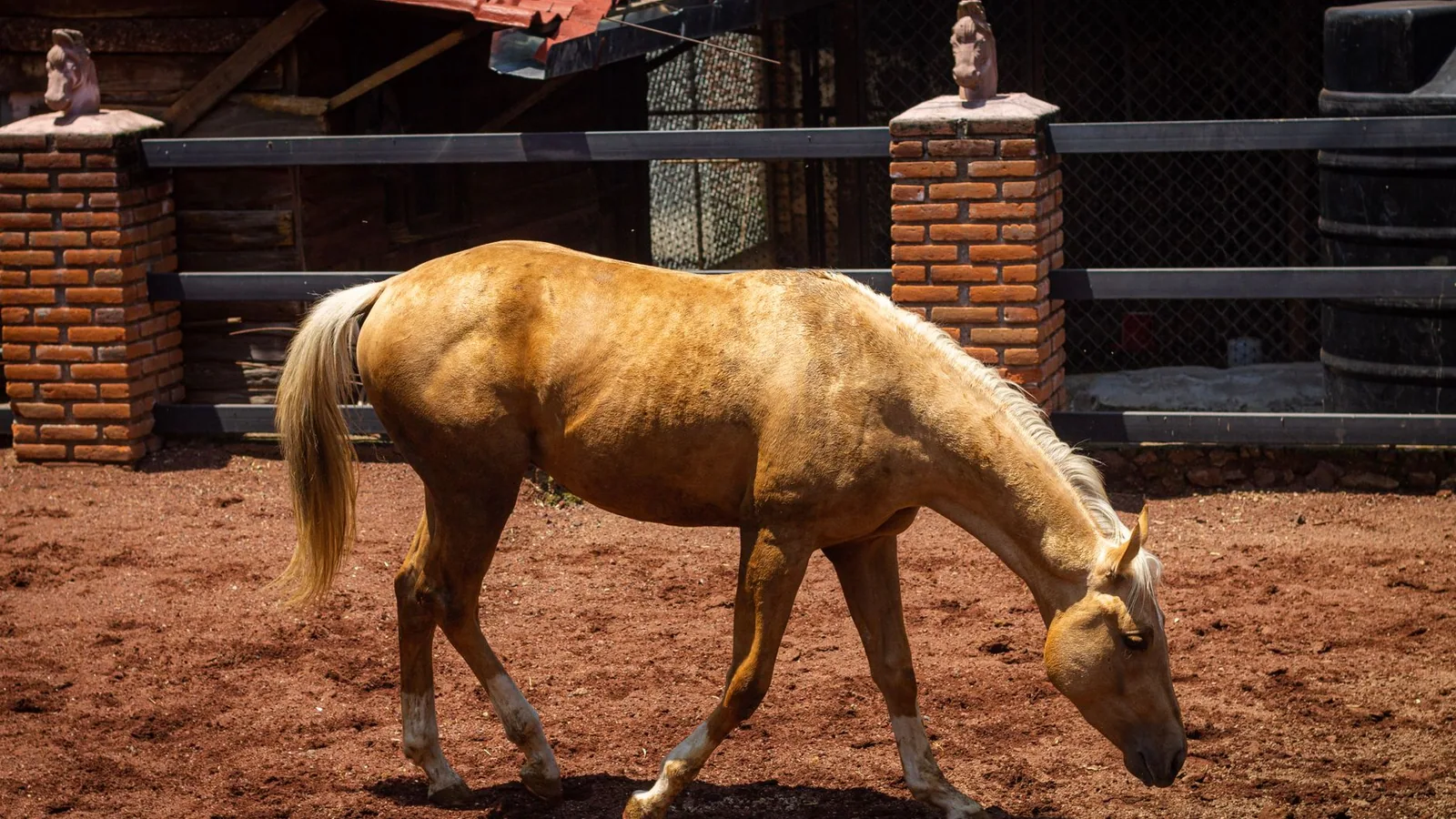
The Akhal-Teke is a horse breed from Turkmenistan, sometimes called the Akhal horse, with a reputation for athleticism and stamina. For owners, the practical question is what this breed needs to stay healthy. Current research points to three priorities: a muscle profile built for both endurance and speed, exposure to tick-borne infections that can be completely silent, and a gut viral community that deserves routine attention. This guide covers each area with source-grounded detail, then gives a practical care checklist, troubleshooting advice, and clear signs that a veterinarian should be called. The goal is to help owners make informed decisions in partnership with their veterinarian.
Akhal-Teke Breed Profile and Athletic Heritage
The Akhal-Teke is a Turkmen horse breed [1] that has attracted research attention for its athletic physiology. A 2011 study of the gluteus medius muscle, the main propulsive muscle of the hindquarters, examined myosin heavy chain (MyHC) isoforms in 15 Akhal-Teke horses divided into three age groups: 1.5 to 4 years, 9 to 13 years, and 18.5 to 23.5 years [2]. The results showed a muscle profile that supports both sustained endurance work and faster bursts of speed [2].
The breed has also been included in recent research on tick-borne infections [1] and gut viral communities [3]. These three research areas form the core of what owners need to know about keeping an Akhal-Teke healthy. Each is covered in detail below.
Understanding these three areas matters because they interact. A horse with a muscle profile built for endurance and speed needs a training program that matches its physiology [2]. A horse exposed to ticks needs screening and prevention [1]. A horse with a distinct gut viral community needs consistent digestive monitoring [3]. Owners who address all three areas give their Akhal-Teke the best chance at a long, healthy athletic life.
Muscle Physiology and Conditioning
What the Muscle Research Shows
The gluteus medius is the largest muscle in the horse's hindquarters and the primary source of forward propulsion. Its fiber type composition tells us a great deal about what a horse is built to do. The 2011 study used SDS-PAGE to separate and quantify the three main MyHC isoforms in the Akhal-Teke [2].
The average content of the slow-twitch MyHC I isoform was 11.72 percent, with individual variation from 7.09 to 20.14 percent [2]. Slow-twitch fibers are fatigue-resistant and support aerobic endurance work. The fast-twitch MyHC IIa isoform averaged 38.20 percent, ranging from 30.73 to 48.78 percent [2]. IIa fibers are fast but relatively fatigue-resistant, supporting sustained effort at a quicker pace. The fastest isoform, MyHC IIx, averaged 50.07 percent, ranging from 43.8 to 56.78 percent [2]. IIx fibers generate high power but fatigue quickly.
The researchers concluded that the Akhal-Teke muscle pattern gives the breed a high capacity for both endurance and speed [2]. That is an unusual combination. Many breeds specialize in one or the other. The Akhal-Teke's balanced profile means it can sustain long efforts and still produce quick acceleration.
What This Means for Training
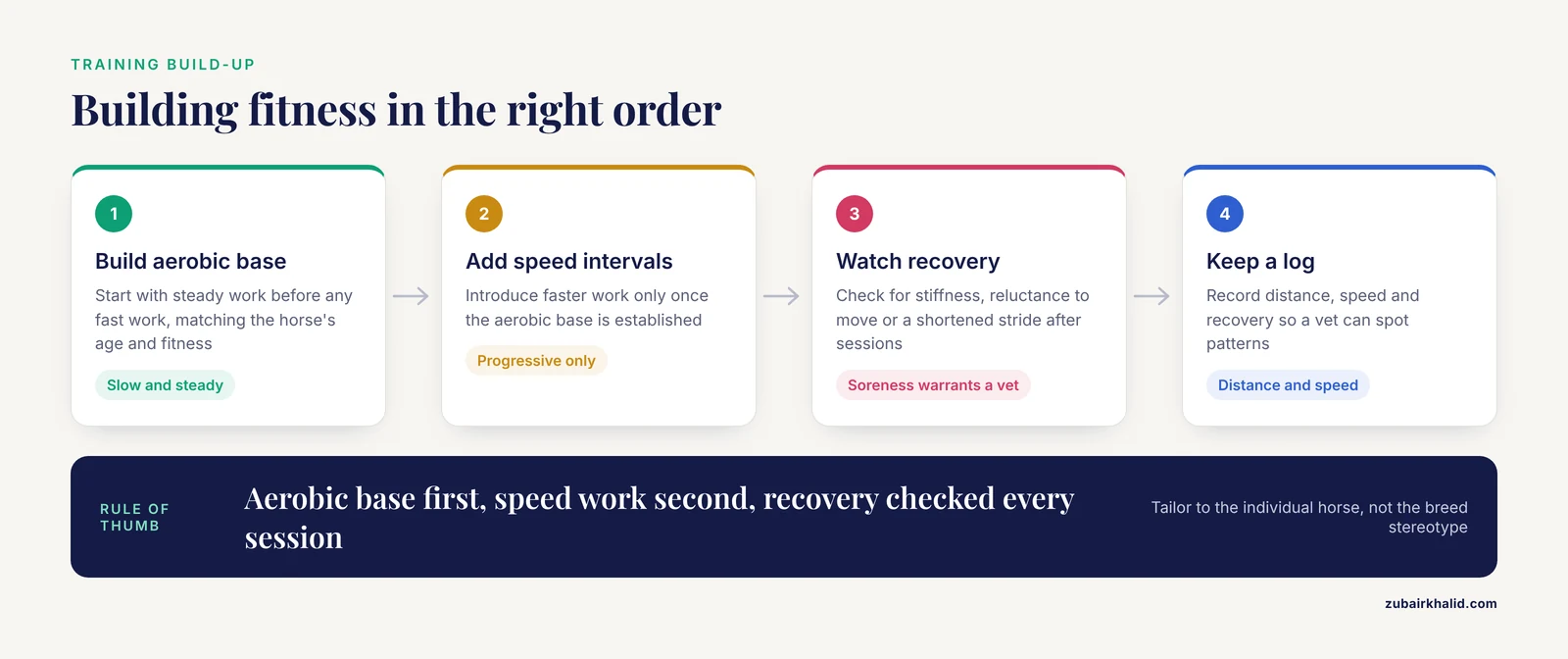
Because the Akhal-Teke carries a substantial proportion of fast-twitch IIx fibers, conditioning must be progressive. Jumping straight into intense speed work before the aerobic base is built risks muscle fatigue and injury. A gradual program that builds aerobic fitness first, then adds speed intervals, matches the breed's physiology.
The wide individual variation in the study is also relevant. One horse in the study had only 7.09 percent slow-twitch fibers, while another had 20.14 percent. That means two Akhal-Teke horses can have very different athletic profiles. Training should be tailored to the individual horse, not to a breed stereotype. A horse with a higher proportion of slow-twitch fibers will favor longer, steadier efforts. A horse with more fast-twitch fibers will respond better to speed work.
Age matters too. The study included horses from 1.5 years up to 23.5 years [2]. A young Akhal-Teke's musculoskeletal system is still developing, and intense training before skeletal maturity can cause lasting damage. Older horses need longer warm-up periods and more recovery time. Owners should work with a veterinarian and an experienced trainer to build a conditioning plan that respects the horse's age and individual fiber profile.
Recovery is part of the plan. After intense exercise, the horse needs time to cool down and rest. Watch for signs of muscle soreness, including stiffness, reluctance to move, or a shortened stride. These signs warrant a veterinary evaluation rather than pushing through the discomfort.
Consistency also matters. Erratic training, with weeks of inactivity followed by intense work, is harder on the musculoskeletal system than a steady, progressive program. The research does not specify exact training durations or distances, so owners should work with a veterinarian and trainer to develop a schedule that fits the horse's age, fitness level, and discipline.
Tracking progress is part of responsible training. Keep a simple log of workouts, including distance, speed, and the horse's recovery after each session. A horse that is consistently slow to recover may need a lighter workload or a veterinary check. This kind of record also helps a veterinarian spot patterns that might otherwise go unnoticed.
Tick-Borne Disease Risks
The Racetrack Environment
Open grassy paddocks at racetracks are ideal habitat for ticks, which means horses exercised or pastured in those areas face regular exposure. A 2026 study screened 200 Turkmen horses of the Akhal-Teke breed at racetracks in Iran for Anaplasmataceae, a family of tick-borne bacteria [1]. Ticks were also collected by dragging in the paddocks and tested [1].
The results are a clear warning for Akhal-Teke owners. Eleven of the 200 horses, or 5.5 percent, tested positive for Anaplasmataceae [1]. Eight horses, or 4 percent, were positive for Ehrlichia canis, and three horses, or 1.5 percent, were positive for Anaplasma ovis [1]. None of the positive horses showed signs of illness [1]. The study found no difference in prevalence by gender or age [1].
The Ticks Involved
All ticks collected at the racetrack paddocks were identified as Hyalomma asiaticum and Haemaphysalis sulcata [1]. These species are known vectors in the region. Of 20 tick pools tested, 7 pools, or 35 percent, were positive for the same pathogens [1]. Four pools, or 20 percent, carried E. canis, and three pools, or 15 percent, carried A. ovis [1].
The close phylogenetic relationship between the pathogens found in the horses and those in the ticks, compared with sequences in GenBank, confirms that these bacteria are circulating in the local tick population and being transmitted to horses [1].
Why Asymptomatic Infection Matters
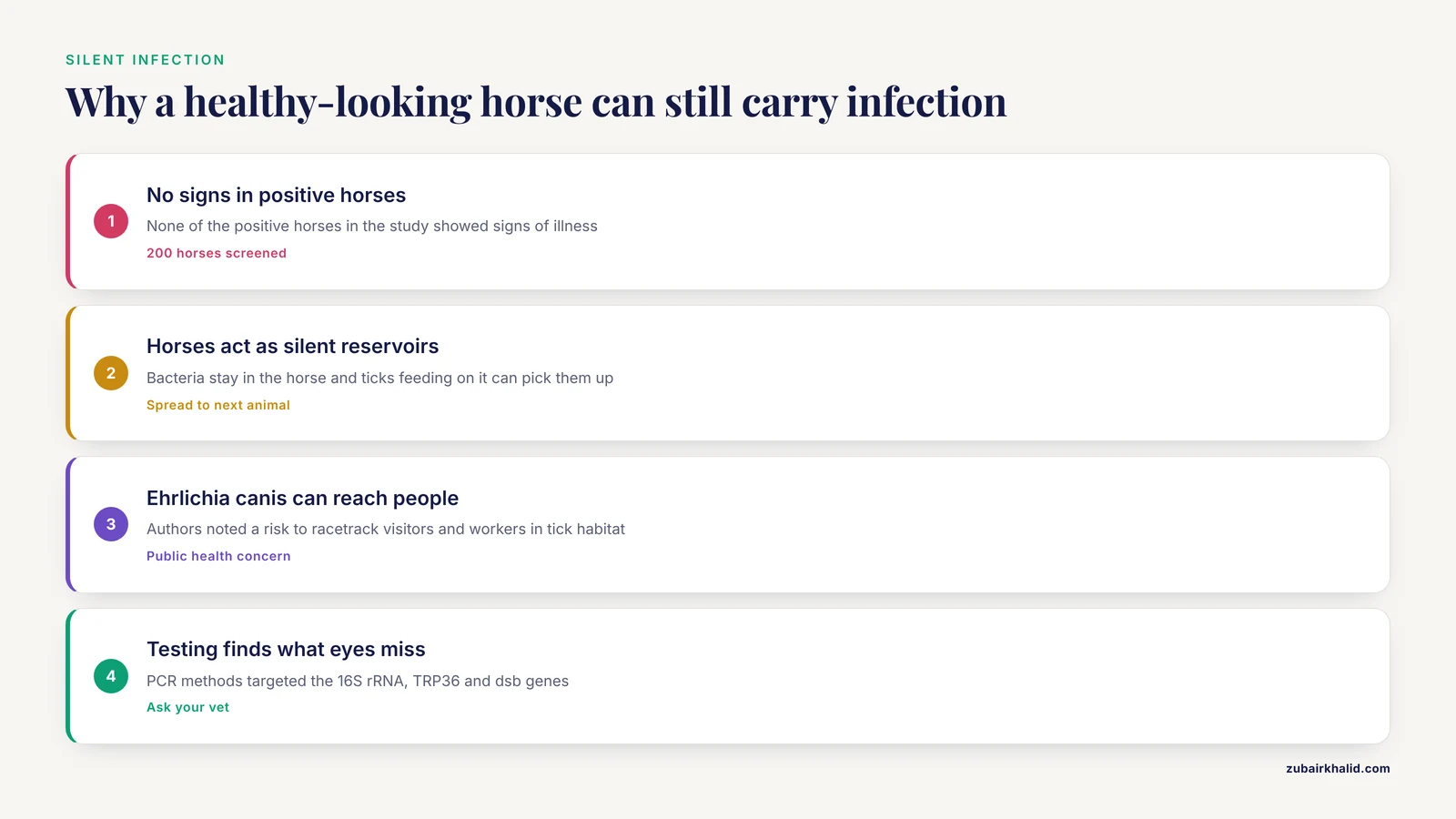
The most important finding for owners is that infected horses showed no clinical signs [1]. An Akhal-Teke can carry Ehrlichia canis or Anaplasma ovis without appearing sick. That makes the horses silent reservoirs of infection [1]. The bacteria remain in the horse, and ticks that feed on the horse can pick up the pathogen and transmit it to the next animal.
The zoonotic potential of Ehrlichia canis adds another layer of concern [1]. Humans can be infected by E. canis, and the study authors specifically noted a risk to racetrack visitors and workers [1]. This is not just a horse health issue. It is a public health consideration for anyone who spends time around horses in tick habitat.
Practical Tick Prevention
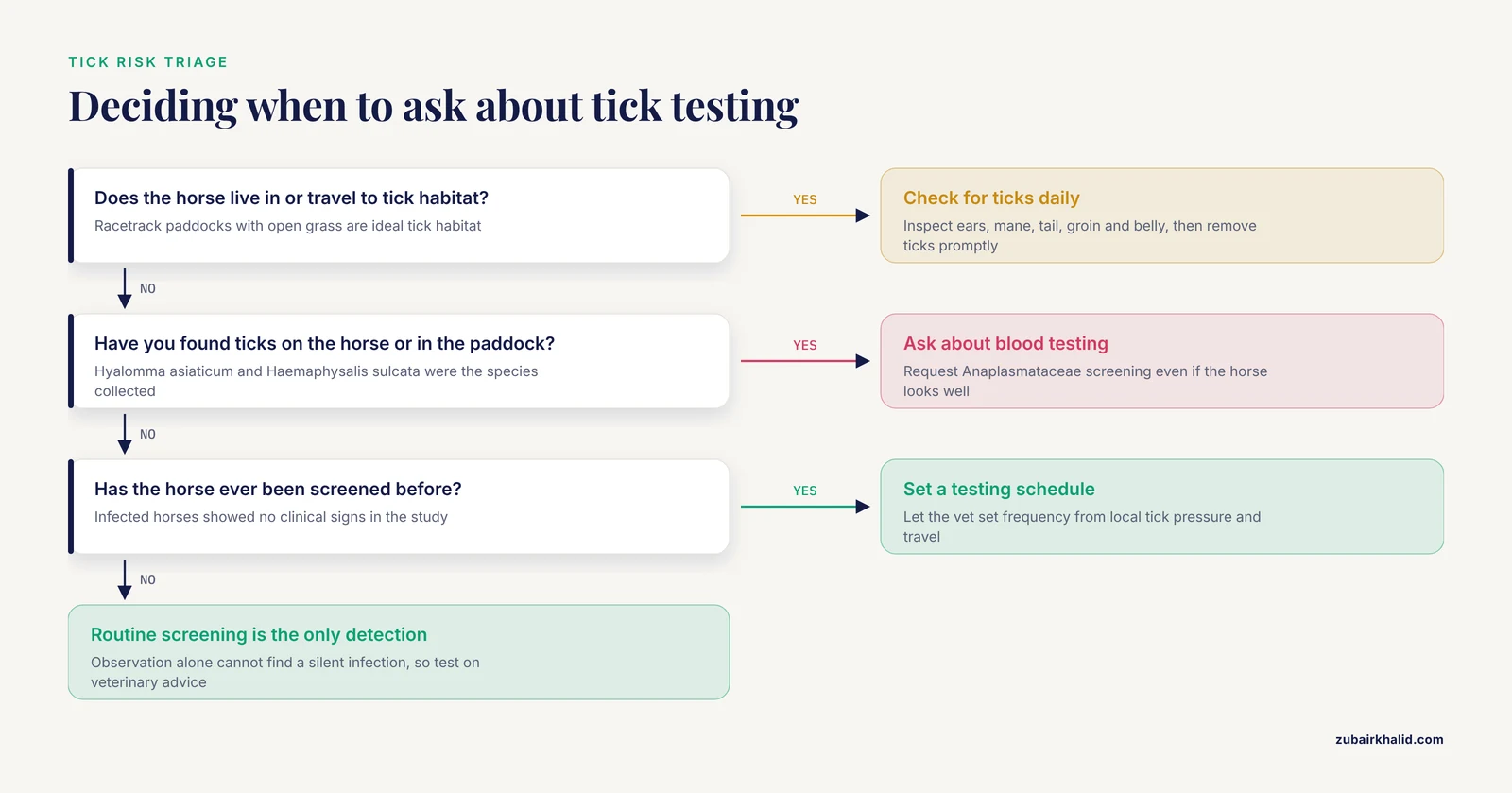
Tick prevention starts with environmental management. Keeping paddock grass short reduces tick habitat. Owners should inspect horses daily for ticks, especially after turnout, with attention to the ears, mane, tail, groin, and under the belly. Remove any ticks promptly. If you are unsure about the correct removal technique, ask your veterinarian to demonstrate it.
Owners should discuss tick control products with their veterinarian. Several classes of acaricides are available for horses, and the right choice depends on local tick pressure, the horse's age and health status, and management style. No single product is right for every situation.
Because infected horses show no signs, routine screening is the only way to detect these infections [1]. Owners in tick areas should ask their veterinarian about blood testing for Anaplasmataceae. The study used PCR-based methods targeting the 16S rRNA, TRP36, and dsb genes [1]. A veterinarian can advise on the appropriate test and frequency based on local risk.
Gut Health and the Equine Virome
The Horse Gut as a Viral Ecosystem
The horse's intestinal tract hosts a vast community of microorganisms, including viruses. A 2026 study used metatranscriptome sequencing to characterize RNA viruses in the gut contents of 16 horses spanning three breeds: Thoroughbred, Akhal-Teke, and Yili horse [3]. The researchers recovered 497 viral genomes from 22 viral families [3]. These included both double-stranded RNA and single-stranded RNA viruses, encompassing positive-sense and negative-sense types commonly found in mammalian hosts [3].
Picobirnaviridae was the most abundant RNA viral family in the horse gut [3]. This family is frequently detected in fecal samples from many animal species, though its role in disease is still debated. Its dominance in horses suggests it is a normal part of the gut viral community.
Breed Differences in the Gut Virome
The study found that RNA viral abundance varied across the three breeds [3]. Differential analysis identified 82 RNA viruses with significant differences between Akhal-Teke and Yili horses [3]. This means the gut viral community is not identical across breeds. The Akhal-Teke's gut virome has its own profile, shaped by genetics, diet, environment, and management.
What does this mean for owners? A healthy gut virome is part of a healthy gut. Sudden changes in diet, prolonged antibiotic use, transport stress, or heavy parasite loads can disrupt the gut ecosystem. Owners should keep diet changes gradual, provide consistent access to clean water, and maintain a regular deworming program under veterinary guidance.
The study's findings also raise questions that researchers are still exploring. It is not yet clear which of the 82 differentially abundant viruses are harmless passengers and which, if any, contribute to disease [3]. For now, the practical approach is to support gut health through good management and to seek veterinary advice when digestive signs appear.
Viral Sharing with Humans and Other Animals
The study compared the coverage scores of horse gut RNA viruses with those from other mammals and found shared viral networks among horses, humans, cows, and sheep [3]. This is a reminder that pathogens can move between species. Good biosecurity matters. Owners should wash hands after handling horses, especially after cleaning stalls or handling manure. Visitors should not move between farms without changing footwear. Feed and water sources should be protected from contamination by wildlife and other livestock.
The study authors noted that monitoring the gut RNA virome in livestock is a crucial component of global health surveillance [3]. For the individual owner, the practical takeaway is that gut health deserves the same attention as muscle health and infectious disease prevention.
Preventive Care Framework
At a Glance: Akhal-Teke Health Priorities
| Priority | What the Research Shows | Owner Action |
|---|---|---|
| Athletic conditioning | Muscle profile supports both endurance and speed, with wide individual variation [2] | Build aerobic base gradually, then add speed work. Tailor to the individual horse |
| Tick-borne infection screening | A portion of tested Akhal-Teke horses carried Anaplasmataceae without symptoms [1] | Ask your veterinarian about blood testing in tick areas |
| Tick control | Hyalomma asiaticum and Haemaphysalis sulcata ticks carried E. canis and A. ovis [1] | Daily tick checks, pasture management, veterinary-approved repellents |
| Gut health | Hundreds of RNA viral genomes from many families found in horse gut. Picobirnaviridae most abundant [3] | Monitor appetite and fecal consistency. Keep diet changes gradual |
| Biosecurity | Gut RNA viruses are shared with humans, cattle, and sheep [3] | Wash hands after handling horses. Limit farm-to-farm movement of equipment |
Step-by-Step Care Routine
The following routine is a starting point. Adjust the frequency and details with your veterinarian based on your horse's age, health status, and local risks.
Daily:
- Check the horse for ticks, focusing on ears, mane, tail, groin, and belly. Tick exposure is a documented risk for Akhal-Teke horses in tick habitat [1].
- Observe appetite, water intake, and fecal output. Changes in any of these warrant attention.
- Evaluate the horse's attitude and willingness to move. A horse that is dull or stiff may be developing a problem.
Weekly:
- Groom thoroughly. This is also a chance to find skin lesions, swellings, or ticks that daily checks missed.
- Assess body condition and discuss any concerns with your veterinarian.
- Check feet and legs for heat, swelling, or lameness.
Monthly:
- Review the training program with a trainer or veterinarian. Adjust intensity based on the horse's response.
- Clean and inspect tack and equipment.
Annually:
- Schedule a full veterinary examination.
- Discuss blood screening for tick-borne pathogens with the veterinarian, especially if the horse lives in or travels to tick areas [1].
- Review deworming, vaccination, and dental care with the veterinarian.
Common Mistakes to Avoid
Skipping tick checks because the horse looks healthy. The research shows that infected Akhal-Teke horses show no clinical signs [1]. A healthy appearance does not rule out infection.
Training without accounting for individual variation. The muscle fiber composition varies widely between individual Akhal-Teke horses [2]. A one-size-fits-all training program ignores that variation.
Ignoring gut health until diarrhea develops. The gut virome is a complex ecosystem, and disruptions can be subtle [3]. Consistent monitoring of appetite and manure is the earliest warning system an owner has.
Assuming tick-borne disease is only a problem in certain regions. Ticks are found wherever there is suitable habitat, and racetrack paddocks are ideal tick environments [1]. Owners should assess local risk with their veterinarian rather than assume their area is safe.
Troubleshooting Common Concerns
My horse tested positive for a tick-borne pathogen but looks fine. This is exactly what the research predicts. Infected horses in the study showed no clinical signs [1]. Your veterinarian will advise on monitoring, treatment, and tick control to prevent spread.
My horse tires quickly during training. The Akhal-Teke has a high capacity for endurance and speed, but individual muscle fiber profiles vary [2]. A horse that tires quickly may need a slower conditioning build-up, or there may be an underlying health issue. A veterinary evaluation can distinguish between the two.
My horse has loose manure after a diet change. The gut virome is a complex ecosystem [3]. Diet changes should be gradual. If loose manure persists, contact your veterinarian.
I found a tick on my horse. Remove it promptly and note the location. Monitor the bite site for swelling or infection. Ask your veterinarian about tick-borne pathogen testing if the horse is in a high-risk area [1].
Welfare and Safety Considerations
The research on Akhal-Teke horses highlights several welfare considerations. Because the breed's muscle profile supports both endurance and speed [2], training programs should be progressive and tailored to the individual horse. Overexertion before the horse is conditioned can lead to injury.
Tick control is a welfare issue as well as a health issue. Horses kept in tick habitat face ongoing exposure to tick-borne pathogens [1]. Regular tick checks and veterinary-approved control measures reduce that burden.
Biosecurity also protects horse welfare. The gut virome study found shared viral networks among horses, humans, cows, and sheep [3]. Simple measures such as washing hands after handling horses and limiting movement of equipment between farms reduce the risk of introducing pathogens to a herd.
Building a Veterinary Relationship
The research on Akhal-Teke health spans muscle physiology [2], infectious disease [1], and gut health [3]. A veterinarian who knows the breed and the local disease risks is the most valuable partner in keeping an Akhal-Teke healthy. Establish a baseline with a full examination, then schedule regular checkups. Bring questions about tick control, screening tests, and training plans to those visits.
Limitations and When to Contact a Veterinarian
This article is educational and is not a substitute for veterinary diagnosis or treatment. Individual cases vary, and only a veterinarian can diagnose and treat a sick horse.
Contact a veterinarian promptly if any of the following occur:
- The horse has a fever, is lethargic, or is off feed.
- The horse shows lameness, stiffness, or reluctance to move.
- The horse has diarrhea, colic signs, or a noticeable change in manure consistency.
- Ticks are found in large numbers, or a tick bite site becomes swollen or infected.
- The horse loses weight despite a normal appetite.
- The horse has difficulty breathing, coughing, or nasal discharge.
- The horse has any unexplained swelling, especially around the legs, joints, or abdomen.
- A blood test for Anaplasmataceae comes back positive, even if the horse shows no signs [1]. The veterinarian will advise on monitoring and treatment.
The research on tick-borne pathogens in Akhal-Teke horses found that infected horses were asymptomatic [1]. That means an owner cannot rely on observation alone. Routine veterinary screening is the only reliable detection method. If you live in or travel to tick areas, ask your veterinarian about testing.
For training questions, involve a veterinarian before starting a new conditioning program, particularly for young horses or horses returning to work after time off. The wide variation in muscle fiber composition between individual Akhal-Teke horses [2] means that what works for one horse may not work for another.
The studies cited here provide useful background, but they have limits. The tick-borne pathogen study was conducted at racetracks in Iran, where local tick species and infection rates will differ from other regions [1]. The muscle and gut virome studies included relatively small numbers of horses [2][3]. Owners should treat breed-level research as background information and rely on their veterinarian for individual advice.
Feeding, Body Condition, and Ulcer Risk in Akhal-Teke Horses
Forage should be the foundation of every Akhal-Teke ration. Provide free-choice pasture or hay, or feed multiple small meals throughout the day. Forage supports normal gut function and satisfies the horse's natural grazing drive. Concentrates should be added only to meet the energy demands of work, and the amount should match the horse's actual workload, not a breed stereotype.
Body condition scoring is a simple, reliable tool. Use the 1 to 9 scale and aim for a score of 5 to 6 for an athletic Akhal-Teke. At this level, the ribs are easily felt but not visible, the neck is not cresty, and no fat pads develop along the withers, tailhead, or behind the shoulder. Score your horse monthly and keep a written record. Weight loss or gain between scores is an early warning sign.
Any diet change must be gradual. Transition over at least 7 to 10 days by mixing increasing amounts of the new feed with the old. Sudden changes in forage or concentrate can disrupt digestion and cause loose manure or colic. The Akhal-Teke's gut viral community is distinct from other breeds, so digestive stability deserves consistent management.
Fresh, clean water must be available at all times. Check water sources daily, especially in winter when buckets can freeze. Provide a salt block or loose salt so the horse can regulate its own intake.
Gastric ulcers are a real risk in performance horses. Watch for a poor appetite, weight loss, dull attitude, teeth grinding, flank watching, or mild colic signs after eating. These signs are nonspecific, so do not assume ulcers without a veterinary examination. Do not start ulcer medication on your own. A veterinarian can confirm the diagnosis and recommend appropriate treatment.
Rations should be individualized. Work with your veterinarian or an equine nutritionist to adjust feed for age, body condition, and training load. If your horse loses weight, shows colic, or goes off feed, call your veterinarian before changing the ration.
Hoof, Joint, and Dental Care for the Athletic Akhal-Teke
Hoof Care
The athletic Akhal-Teke's hooves take repeated impact from training on varied surfaces. Pick out both feet daily. Look for packed debris, heat in the hoof wall or sole, a strong odor, or a loose shoe. Daily inspection catches problems before they become lameness.
Schedule farrier visits every 6 to 8 weeks for most horses in regular work. Some feet grow faster or slower, so adjust the interval with your farrier. Trimming maintains balance and prevents cracks from forming. Shoeing decisions depend on the horse's work, footing, and hoof conformation. Keep the farrier informed of any changes in training surface or intensity.
Joint Load Management
The Akhal-Teke muscle profile supports both endurance and speed [2], but that capacity does not remove the need to manage joint load. Progressive conditioning builds soft tissue and bone strength gradually. Sudden increases in distance, speed, or hill work overload joints. Warm up before fast work and cool down after.
Check legs daily for heat, swelling, or a shortened stride. These are early signs of joint strain. If they appear, reduce work and contact a veterinarian. Do not assume that mild filling will resolve on its own.
Dental Examinations
Athletic horses carry a bit and need comfortable occlusion. Schedule dental examinations at least annually. Young horses up to age five and horses over 15 may need checks every 6 months. A horse that drops feed, tilts its head, resists the bit, or has foul breath needs a dental exam.
A veterinarian performs the oral examination and floats sharp enamel points. Do not attempt dental procedures at home. Chewing problems that persist after a dental visit warrant a veterinary recheck.
For any lameness, joint swelling, or persistent chewing problem, consult a veterinarian or farrier promptly. Early intervention preserves athletic function.
Hydration, Electrolytes, and Recovery Around Exercise
Sweat Loss and Water Access
Horses lose fluid and electrolytes through sweat during exercise. An Akhal-Teke working in hot conditions can lose several liters of sweat per hour. Sweat contains sodium, chloride, and potassium. Replacing water without electrolytes can dilute the remaining body salts and worsen the problem.
Offer fresh water before, during, and after work, and allow drinking during long sessions. After exercise, let the horse cool down briefly, then provide free access to water. A hot horse should not gulp very cold water; offer small amounts at a time.
Electrolyte Use
Electrolytes are not a routine daily supplement. Most horses on a balanced diet with free-choice salt replace normal losses. Supplemental electrolytes are for heavy sweaters, prolonged work, or hot-weather training.
Give electrolytes with water or in feed, never as a dry paste, which can irritate the stomach. If the horse is not drinking well, electrolyte supplementation can be dangerous. Ask a veterinarian about the right product and timing.
Warm-Up and Cool-Down
A 10 to 15 minute warm-up of walking and trotting increases blood flow and reduces strain risk. The Akhal-Teke muscle profile includes many fast-twitch fibers [2], which fatigue quickly, so warming up matters. After work, walk until breathing returns to normal and the skin feels cool to prevent stiffness.
Recovery Monitoring
After exercise, check heart rate, breathing, and attitude. A horse that is slow to recover, reluctant to eat, or stiff the next day may be dehydrated or sore. Skin tenting and mucous membrane moisture are rough hydration checks. If dehydration persists despite water access, or if stiffness, cramping, or dark urine develop, call a veterinarian. These signs can indicate exertional myopathy or severe electrolyte imbalance.
Related Guides
- Weekly Horse Care Checklist: Cleaning, Turnout, and Health: Practical weekly routine for grooming, turnout, and health checks
- Horse Breeds: A Comparative Guide for Veterinary Professionals: Breed comparison context useful when discussing Akhal-Teke health risks
- Complete Horse Care Guide for New Owners: Broad foundational care guide for new Akhal-Teke owners
- Monthly Horse Care Checklist: Helps organize monthly body condition, training, and equipment checks
- Equine Hoof Care: Anatomy, Trimming, and Shoeing: Details hoof anatomy, trimming, and shoeing decisions for athletic horses
- Sore Feet in Horses: Causes, Care, and When to Call the Vet: Explains foot pain causes and when lameness needs veterinary care
- Behavior Notes in Your Horse's Health Record: What to Track: Shows how to track attitude and behavior changes in health records
- Horse Gaits Explained: Walk, Trot, Canter, Gallop, and Gaited Breeds: Helps owners recognize gait changes such as a shortened stride
Frequently Asked Questions
Are Akhal-Teke horses prone to any specific diseases?
Research has identified two areas of concern for the breed. Tick-borne Anaplasmataceae infections, including Ehrlichia canis and Anaplasma ovis, have been detected in Akhal-Teke horses, often without clinical signs [1]. The breed also has a distinct gut RNA viral profile compared with other breeds [3]. Neither finding means every Akhal-Teke will become sick, but both justify routine screening and monitoring.
How do I protect my Akhal-Teke from tick-borne diseases?
Daily tick checks, pasture management, and veterinary-approved tick control products are the foundation. Keep grass short, inspect the ears, mane, tail, groin, and belly, and remove any ticks promptly. Ask your veterinarian about blood screening for Anaplasmataceae, since infected horses can show no signs [1]. The zoonotic potential of Ehrlichia canis also means humans should protect themselves in tick habitat [1].
What makes the Akhal-Teke a good endurance horse?
The gluteus medius muscle of the Akhal-Teke contains a balanced mix of slow-twitch and fast-twitch fibers, including a substantial proportion of fatigue-resistant fibers alongside faster fibers [2]. This profile supports sustained endurance work while retaining capacity for speed. Individual variation is wide, so conditioning should be tailored to each horse.
Does the Akhal-Teke need special gut health monitoring?
The Akhal-Teke has a distinct gut RNA viral community compared with other breeds [3]. Owners should monitor appetite, water intake, and fecal consistency daily. Keep diet changes gradual and maintain a regular veterinary-supervised deworming program. The gut virome is shared with other species, so biosecurity also matters [3].
Can Ehrlichia canis infect humans?
Yes. The study authors noted the zoonotic potential of Ehrlichia canis and identified a risk to racetrack visitors and workers [1]. Humans in tick habitat should use personal protection measures, including repellents and daily tick checks. Anyone who develops fever, headache, or flu-like symptoms after tick exposure should see a doctor and mention the exposure.
How often should my Akhal-Teke be tested for tick-borne pathogens?
There is no universal testing interval. Your veterinarian can recommend a testing schedule based on local tick pressure, the horse's travel history, and management. Horses in high-risk areas may need more frequent screening. The research shows that infected horses can appear completely healthy, so routine testing is the only reliable detection method [1].
What is the typical muscle fiber composition in Akhal-Teke horses?
The gluteus medius muscle of the Akhal-Teke contains a mix of slow-twitch and fast-twitch fibers, with the fastest fibers being the most abundant on average [2]. Individual variation is substantial, which means two Akhal-Teke horses can have very different athletic profiles. This combination gives the breed capacity for both endurance and speed [2].
When should I call a veterinarian for my Akhal-Teke?
Call a veterinarian for fever, lethargy, off-feed behavior, lameness, colic, diarrhea, unexplained swelling, or any sudden change in attitude or performance. Also call if a tick-borne pathogen test comes back positive, even if the horse appears healthy [1]. Early intervention improves outcomes, and routine screening is the only way to detect silent infections.