Can Cats Drown in Pools? Risks and Prevention
By Dr. Zubair Khalid, DVM, MS, PhD ·
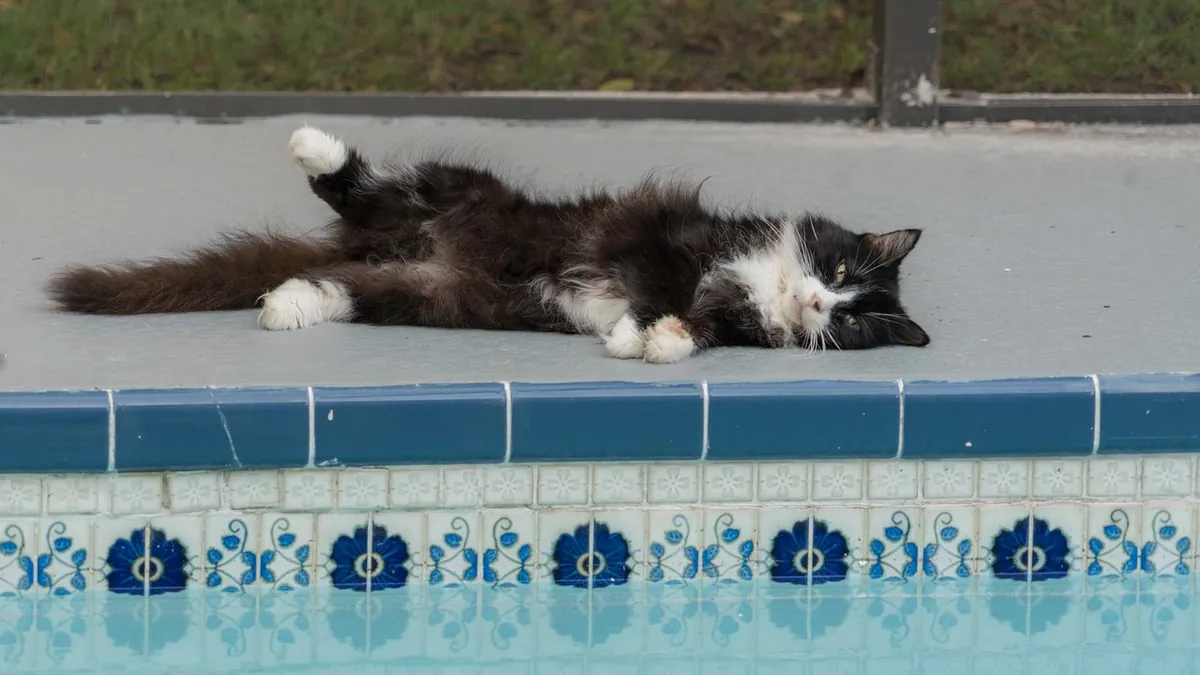
Yes, cats can drown in pools. Most cats can swim for a short time, but they tire quickly, and a cat that falls in without a way out can panic and go under. The drowning risk cats face around backyard pools is real, and it rises for kittens, older cats, and cats with seizures or heart disease. This article is educational and is not a substitute for veterinary diagnosis or treatment.
Quick Answer
- Most cats can paddle, but they are not built for long swims. Fatigue, cold water, and slick pool walls end the struggle fast.
- A cat that falls in usually heads for the wall, not the steps. If the pool has no ramp or ledge, the cat may circle until it sinks.
- Near-drowning is a medical emergency. A cat that inhales even a little water can develop breathing failure hours later [1].
- Never assume your cat will "just get out." Cats with seizures, heart disease, or balance problems are at much higher risk [1].
- Fencing, a pool ramp, and a fitted cover when the pool is closed are the three changes that save the most lives.
Can Cats Swim, and Why Do Cats Drowning in Pools Still Happen?
Cats can swim. Many paddle well for a minute or two, and some enjoy water. The problem is stamina and escape. A cat in a pool is usually in panic mode, paddling with all four legs, which burns energy fast. Cold water speeds that up.
The bigger issue is the exit. A cat in a pool looks for the nearest edge and tries to climb out. Most pool walls are vertical, smooth, and above the waterline. There is nothing to grip. The cat paddles to the edge, slides back, paddles again, and repeats until it is too tired to keep its head up.
Cats with certain health problems are at special risk. In one reported case, a cat with a pre-existing seizure disorder fell into a swimming pool during a seizure and nearly drowned [1]. That cat was obtunded (mentally dull), breathing hard, with a slow heart rate and low body temperature on arrival at the emergency hospital [1]. If your cat has seizures, heart disease, or any condition that can cause sudden collapse, the pool is a serious hazard.
What to Do If Your Cat Fell in the Pool
Act fast, and stay calm. Seconds matter.
- Get the cat out immediately. Use both hands, support the chest and hindquarters, and keep the head above your arm level so water can drain from the nose.
- Wrap the cat in a towel and dry it. Wet cats lose body heat quickly. A cat that nearly drowned may already be hypothermic [1].
- Check breathing. Look for fast, labored, or noisy breathing. Look at the gums. Pale, blue, or gray gums are an emergency.
- Do not hold the cat upside down or swing it. This old trick does not clear water from the lungs and can cause injury.
- Do not try to make the cat vomit or give anything by mouth. The cat may not be able to swallow safely.
- Call your veterinarian or an emergency clinic right away, even if the cat seems fine. Breathing problems after near-drowning can worsen over hours [1].
- Keep the cat warm and quiet on the way in. Do not let it walk around or jump.
If your cat is not breathing, start rescue breathing only if you have been trained, and have someone call the clinic while you work.
Cat Pool Safety: A Setup Checklist
The goal is simple. Your cat should never be able to reach the water alone, and if it does, it should have a way out.
| Safety item | Why it matters | Priority |
|---|---|---|
| Pool fence with a self-closing, self-latching gate | Keeps cats, kittens, and wildlife out of the water | Highest |
| Pool ramp or critter ramp at the edge | Gives a tired cat something to climb onto | Highest |
| Wide, textured steps or a beach entry | Gives a cat a grip and a clear exit | High |
| Solid, fitted safety cover when the pool is closed | Prevents falls onto or into the water | High |
| No pet door leading to the pool area | Removes unsupervised access | High |
| Motion alarm or pool alarm | Alerts you when something enters the water | Medium |
| Supervised outdoor time only | You can intervene in seconds | High |
| Fresh drinking water away from the pool | Reduces the urge to drink pool water | Medium |
A note on covers. A flimsy solar cover is worse than nothing. A cat can walk onto it, fall through, and get trapped underneath. Use a solid cover rated for weight, or fence the pool completely.
A Simple Daily and Seasonal Routine
Every day
- Do a head count of your cats before bed.
- Check that the pool gate latches fully.
- Look at the water surface and the pool steps for any animal in trouble.
Every week
- Test that the pool ramp or steps are secure and reachable from the water.
- Check the fence for gaps, loose boards, or dig-outs underneath.
- Confirm the pool alarm battery works.
Seasonally
- Before swim season, re-check the fence, gate, and ramp.
- When you close the pool, install the solid cover and lock the gate.
- If you move or travel with your cat, scout the new environment for water hazards. Water safety is part of the same planning as Cat Travel Safety.
Signs That Something Is Wrong After a Near-Drowning
A cat that inhaled water may look okay for a while, then decline. Watch closely for the first 24 hours, and call your veterinarian if you see any of these.
- Fast or labored breathing. Open-mouth breathing in a cat is always abnormal. In a study of 258 severely dyspneic cats, respiratory causes accounted for 33 percent of cases [2].
- Noisy breathing, wheezing, or crackles. These suggest fluid or inflammation in the lungs.
- Blue, gray, or pale gums and tongue. This means oxygen levels are low.
- Coughing that does not stop.
- Weakness, wobbling, or collapse.
- Confusion or dull mentation. The cat in the reported near-drowning case was obtunded on arrival [1].
- Cold body temperature. Hypothermia was present in that case [1].
- Slow heart rate. Bradycardia was also noted [1].
- Dark or reddish-brown urine. This can signal hemoglobinuria, which developed about six hours after near-drowning in the reported case [1]. It reflects breakdown of red blood cells and is a serious sign.
Imaging in that case showed severe bilateral pulmonary infiltrates, meaning widespread fluid and inflammation in both lungs [1]. That cat was treated with oxygen, intravenous fluids, active warming, and antibiotics, and still declined [1]. This is why near-drowning is never a "wait and see" situation.
Common Mistakes Owners Make
Assuming the cat will climb out. Cats drown in pools precisely because they cannot get a grip on the wall. A ramp or steps change the outcome.
Waiting to see if symptoms appear. Breathing failure after near-drowning can progress over hours [1]. By the time you notice, the cat may be in serious trouble. Early veterinary care is the safest choice.
Using a solar cover as a safety cover. A cat can slip under it and be trapped. This is a smothering and drowning hazard.
Letting the cat outside unsupervised near water. Even a strong swimmer can panic. A seizure, a stumble, or a chase after a bird can put a cat in the water in seconds [1].
Ignoring a cat that seems "a little off" after a fall in the pool. Dull behavior, heavy breathing, or a slow heart rate are red flags [1].
Forgetting other water hazards. Toilets, buckets, bathtubs, and fountains can also drown a small or weak cat. Empty buckets and close bathroom doors.
Missing other emergencies because you focus only on water. A cat that is choking or struggling to breathe needs the same urgent response. Learn the signs in Cat Choking Causes and Dry Heaving In Cats.
Skipping the vet visit after a rescue. Even a cat that seems normal should be checked. Your veterinarian can listen to the lungs and decide whether oxygen or imaging is needed.
Supplies and Setup Details That Matter
A pool ramp. Choose one designed for small animals, with a textured surface and a low angle. Place it where your cat already tends to walk. Test it yourself by pressing it down and making sure it does not flip.
A fence with no gaps. Cats squeeze. Check the bottom of the fence for gaps wider than a few inches, and check that the gate closes on its own.
A pool alarm. These detect waves or movement in the water. They are not a substitute for a fence, but they add a layer of warning.
A pet first aid kit. Include towels, a blanket, a thermometer, and your veterinarian's phone number. Keep it near the pool.
Identification. A microchip and a collar tag help if your cat gets out and wanders. This matters more if you travel or move.
A safe indoor retreat. Give your cat a screened porch, a window perch, or an indoor play area so it does not spend time trying to get to the pool.
Water bowls placed away from the pool. Cats may drink pool water, which contains chlorine and other chemicals. Fresh water in several spots reduces that urge.
Limitations and When to Contact a Veterinarian
This article covers general pool safety. It cannot tell you how your individual cat will respond to a near-drowning event. Your veterinarian needs to examine your cat and decide on treatment.
Call an emergency clinic right now if your cat:
- Was pulled from the pool and is not breathing normally
- Has blue, gray, or pale gums
- Is coughing repeatedly, wheezing, or breathing with the mouth open
- Is weak, wobbly, or collapsed
- Has a slow heart rate or feels cold to the touch
- Has dark or reddish-brown urine
Call your veterinarian the same day if your cat:
- Fell in the pool but seems fine
- Was briefly submerged
- Has a seizure disorder and had any water exposure [1]
- Is coughing at all, even mildly
- Seems tired or quieter than usual
Schedule a routine visit if:
- You want help cat-proofing your pool area
- Your cat has a chronic condition that raises drowning risk
- You are moving to a home with a pool
If your cat stops eating or drinking after any stressful event, that is its own concern. Cats that go without food for a day can develop serious liver problems, which you can read about in Cat Not Eating for 24 Hours: Why Cats Are at Higher Risk. And if your cat cannot urinate, that is a separate emergency. Learn the signs in Can A Cat Die From Not Peeing.
Frequently Asked Questions
Can all cats swim?
Most cats can paddle for a short time, but they are not endurance swimmers. Kittens, seniors, and cats with heart, lung, or neurologic disease tire very quickly. A cat that cannot find an exit will eventually go under.
How long can a cat survive in a pool?
There is no fixed number. It depends on water temperature, the cat's health, and whether it can reach an exit. Cold water and panic shorten the time a lot. Treat any fall into a pool as an emergency.
What should I do right after my cat falls in the pool?
Get the cat out, dry it, keep it warm, and call your veterinarian. Do not hold it upside down. Watch for fast breathing, coughing, pale gums, or weakness, and go to an emergency clinic if any appear.
Do pool covers make a pool safe for cats?
Only a solid, fitted cover rated to hold weight helps. A thin solar cover is dangerous because a cat can fall through and become trapped underneath. Fencing and a ramp are safer options.
Can a cat drown in very shallow water?
Yes. A cat that is weak, seizing, or trapped can drown in a few inches of water. Buckets, sinks, and bathtubs are real hazards, especially for kittens and cats with seizures. Empty standing water when you are not using it.
Related Articles
- Can A Cat Die From Not Peeing
- Cat Travel Safety
- Cat Choking Causes
- Dry Heaving In Cats
- Cat Not Eating for 24 Hours: Why Cats Are at Higher Risk
- Cat Not Eating for One Day: Why Cats Are at Higher Risk
- Can Cats Drown in Toilets? Real Risks for Owners
- Is Chlorine Toxic to Cats? Pools, Water, and Gas
- Dry Drowning in Cats: Symptoms and Emergency Steps
References
- A case of haemoglobinuria in a cat after near-drowning. Veterinary medicine and science, 2024.
- Emergency Dyspnea in 258 Cats: Insights from the French RAPID CAT Study. Veterinary sciences, 2025.