Dry Drowning in Cats: Symptoms and Emergency Steps
By Dr. Zubair Khalid, DVM, MS, PhD ·
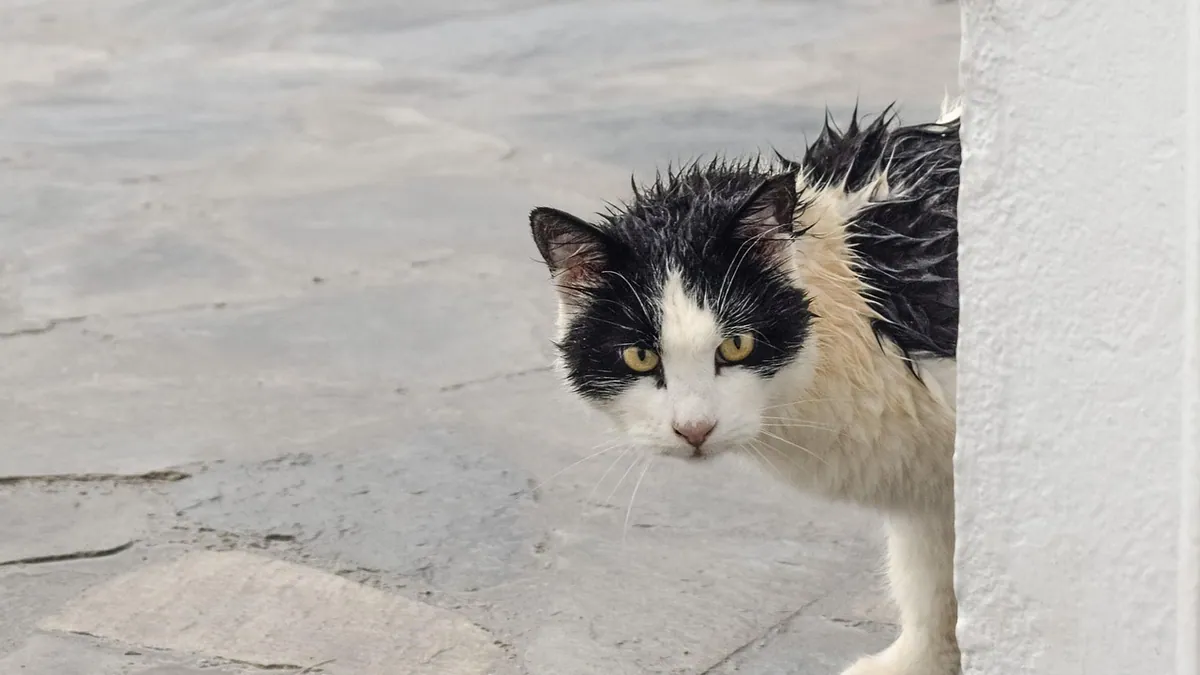
Dry drowning in cats happens when a cat inhales water into the airways during a near drowning, and breathing problems can appear or worsen in the hours that follow. The danger is not the water swallowed into the stomach, it is the water that reaches the lungs. If your cat struggled in water at any point, treat the next 24 hours as a watch period and call your veterinarian right away.
This article is educational and is not a substitute for veterinary diagnosis or treatment.
Quick Answer
- Any cat that went under water, even briefly, needs a veterinary call the same day. Breathing trouble can be delayed.
- Watch for fast or hard breathing, open-mouth breathing, coughing, blue or pale gums, and a crouched or upright posture.
- Do not wait for symptoms to become severe. Cats hide breathing problems until they are serious.
- Keep your cat calm, warm, and confined during transport. Struggling makes breathing harder.
- Call ahead so the clinic can prepare for your arrival and guide you on the phone [1].
What Dry Drowning in Cats Actually Means
The term dry drowning is used in two ways by pet owners. The first is a near drowning where a small amount of water enters the airways and the cat seems fine at first. The second is delayed breathing trouble that shows up hours after the event, which some people call secondary drowning in cats.
In both cases, the problem is water in the lungs, not water in the stomach. When a cat inhales water, it can damage the delicate lining of the airways and air sacs. That damage can trigger inflammation, fluid buildup, and poor oxygen exchange. A cat can look normal for a while and then decline quickly.
Veterinarians do not treat this as a single disease. They treat it as a drowning-related lung injury, and the severity depends on how much water was inhaled, how contaminated the water was, and how long the cat was deprived of oxygen.
Dry Drowning Symptoms in Cats: What Owners Notice
Signs can appear within minutes or be delayed for several hours. Some cats seem completely normal right after being pulled from water, which is why the watch period matters.
Early signs
- Coughing or gagging
- Noisy breathing or wheezing
- Fast breathing at rest
- Restlessness or pacing
- Drooling or vomiting
Signs that mean emergency now
- Open-mouth breathing
- Breathing with the belly and chest working hard
- Sitting or crouching in an upright position with the neck extended
- Blue, gray, or pale gums and tongue
- Weakness, collapse, or unresponsiveness
- A heart rate that feels very fast or very slow
Cats with breathing difficulty often change posture. They may crouch or sit upright instead of lying down comfortably [2]. That posture is a warning sign, not a quirk.
If your cat is coughing or retching and you are not sure whether water is involved, it helps to know the difference between airway irritation and stomach upset. Our guide to Dry Heaving In Cats explains what those motions can mean, and What To Do When Your Cat Is Dry Heaving covers the steps to take while you wait for veterinary advice.
The 24-hour timeline
| Time after the water incident | What you may see | What to do |
|---|---|---|
| First 30 minutes | Coughing, gagging, wet breathing, normal behavior | Call your vet now, keep the cat calm and warm |
| 1 to 6 hours | Fast breathing, restlessness, reduced appetite, quiet behavior | Emergency visit, do not wait for the next day |
| 6 to 24 hours | Hard breathing, open-mouth breathing, blue gums, collapse | Emergency now, this is life threatening |
| After 24 hours with no signs | Normal behavior and normal breathing rate | Still report the incident to your vet and follow their advice |
A published case report describes a cat that nearly drowned during a seizure and arrived at the hospital obtunded, breathing with difficulty, with a slow heart rate and low body temperature. Imaging showed severe bilateral lung infiltrates, and the cat developed blood in the urine about 6 hours later. Breathing problems and poor oxygen levels persisted, and the cat was euthanized about 10 hours after admission [3]. That timeline shows how fast a near drowning can turn serious.
Causes and Risk Factors
Any situation that puts water over your cat's nose and mouth can cause water inhalation.
- Falling into a swimming pool, pond, or bathtub
- Being dropped into water during a bath
- A seizure, fainting episode, or weakness while near water [3]
- Being trapped in a toilet, bucket, or aquarium
- Boating or water accidents
- A cat with a heart condition or airway disease that already struggles to breathe
Cats with a seizure disorder are at higher risk because a seizure can happen near water with no warning [3]. Very young, very old, and weak cats are also less able to pull themselves out.
Water quality matters too. Pool water, pond water, and dirty water can carry bacteria and irritants that worsen lung injury. Chlorine and other chemicals can irritate airways on their own.
How Veterinarians Diagnose the Problem
Your veterinarian will start with the story. Be ready to describe what happened, how long the cat was in the water, what the water was, and what you have seen since [1]. That history guides everything else.
The first exam checks the airway, breathing, and circulation. The vet will look at gum color, listen to the lungs, check the heart rate, and watch how hard your cat is working to breathe [2]. A cat in respiratory distress may not tolerate a full workup at first, so the team may stabilize breathing before doing more tests.
Tests may include:
- Chest X-rays to look for fluid or inflammation in the lungs
- Blood work to check oxygen levels, organ function, and electrolytes
- Pulse oximetry or blood gas testing to measure oxygen in the blood
- Ultrasound if the vet suspects fluid around the lungs
In the published case, imaging revealed severe bilateral pulmonary infiltrates, which means both lungs showed abnormal changes [3]. That finding supports the diagnosis of lung injury after water inhalation.
Treatment Options
Treatment depends on how much trouble your cat is having. Mild cases may need oxygen, rest, and monitoring. Severe cases need intensive care.
Common treatments include:
- Oxygen therapy, which may be delivered by mask, cage, or nasal tube
- Intravenous fluids to support circulation
- Warming if body temperature is low [3]
- Antibiotics if infection is a concern [3]
- Medications to reduce inflammation or open the airways
- Sedation to reduce anxiety and oxygen demand
- Mechanical ventilation in the most severe cases
Your veterinarian calculates every drug dose from your cat's weight and health status. Do not give any medication at home unless your vet tells you to.
If your cat is struggling to breathe for any reason, the emergency team will treat the most life-threatening problem first [2]. That may mean oxygen and stabilization before X-rays or blood tests.
Recovery, Outlook, and Long-Term Management
The outlook depends on how much water was inhaled and how quickly care started. Cats that receive oxygen and supportive care early often improve within a day or two. Cats with severe lung injury may need several days in the hospital.
Some cats develop complications. The case report described a cat that developed hemoglobinuria, which is blood pigment in the urine, about 6 hours after the near drowning [3]. That shows that drowning-related injury can affect more than the lungs.
After discharge, expect a recheck. Your vet may want repeat X-rays or blood work to confirm the lungs are healing. Keep your cat indoors and quiet during recovery. Watch the breathing rate at home, and count breaths while your cat sleeps. A normal sleeping rate is usually under 30 breaths per minute, but ask your vet what number should worry you for your cat.
Long-term management focuses on the underlying cause. If a seizure disorder contributed to the event, seizure control becomes part of the plan. If heart disease is present, that needs its own treatment. Cats with heart disease can develop fluid in or around the lungs, and one study found that cats with pleural effusion had a shorter median survival time than cats with pulmonary edema (155 days versus 234 days) [4]. That is a different condition from drowning, but it shows why lung fluid in cats always deserves a full workup.
Prevention
Most near drownings are preventable with a few changes at home.
- Keep toilet lids closed and buckets empty
- Cover pools, ponds, and hot tubs when not in use
- Never leave a cat unattended near water, even for a moment
- Use a secure carrier for car travel near lakes or rivers
- Supervise baths closely and keep the water shallow
- If your cat has seizures, keep water sources blocked and follow your vet's seizure plan
If your cat has a seizure disorder, ask your vet how to reduce water risk during and after episodes. A seizure near water is one of the most dangerous combinations for a cat [3].
Limitations and When to Contact a Veterinarian
No article can tell you how your individual cat is doing. Only a veterinarian who examines your cat can do that. When in doubt, call.
Call your veterinarian the same day if:
- Your cat was in water and inhaled any amount
- Your cat coughed or gagged after water exposure but now seems normal
- Your cat is quieter than usual or eating less after a water incident
Go to an emergency clinic now if:
- Your cat is breathing with an open mouth
- Your cat is crouched or sitting upright and will not lie down
- Gums or tongue look blue, gray, or pale
- Your cat collapses, seems weak, or will not respond
- Breathing is fast and hard, or the belly is working to breathe
Call ahead so the clinic can prepare for your arrival and give you instructions for safe transport [1]. Keep your cat calm and warm on the way. Do not try to make your cat vomit or give food or water.
If your cat is having breathing trouble from another cause, such as an allergic reaction or a painful ear problem, the same rule applies. Our article on Cat Allergy Medication Overdose: Signs and Emergency Steps covers one such emergency, and Cat Ear Infection with Pain: Signs and Emergency Steps explains when ear pain needs urgent care.
Frequently Asked Questions
Can dry drowning in cats happen hours after the water incident?
Yes, delayed breathing trouble is the main reason near drowning is so dangerous. A cat can seem fine right after being pulled from water and then develop fast or hard breathing later. That is why the 24 hours after the event matter so much.
What is secondary drowning in cats?
Secondary drowning is a term owners use for breathing problems that start after a near drowning, once the cat seemed to recover. The underlying issue is lung injury and fluid buildup from inhaled water. It is treated the same way as any drowning-related breathing emergency.
How do I know if my cat has water in its lungs?
You cannot know for sure at home. Signs that suggest it include fast breathing at rest, coughing, noisy breathing, and a crouched or upright posture. A veterinarian needs an exam and usually imaging to confirm it.
Should I make my cat cough up the water?
No. Do not hold your cat upside down, press on the belly, or try to force water out. Those actions can make breathing worse and cause injury. Keep your cat calm and get veterinary help.
Can a cat fully recover after a near drowning?
Yes, some cats recover fully with early oxygen and supportive care. The outcome depends on how much water was inhaled, how long the cat was without oxygen, and how quickly treatment started. Early veterinary care gives the best chance.
What should I watch for in the first 24 hours?
Watch the breathing rate, gum color, energy level, and appetite. Count breaths while your cat sleeps and note any coughing or restlessness. If anything changes or you are unsure, call your veterinarian or an emergency clinic right away.
Related Articles
- Dry Heaving In Cats
- What To Do When Your Cat Is Dry Heaving
- Cat Allergy Medication Overdose: Signs and Emergency Steps
- Cat Dry Heaving In Car
- Cat Ear Infection with Pain: Signs and Emergency Steps
- Dry Heaving Cough In Cats
- Can Cats Drown in Pools? Risks and Prevention
- Kitten Not Breathing or Unresponsive: Emergency Steps
- Shallow Breathing in Cats: Causes and When It's an Emergency
References
- What to Do in a Dog or Cat Emergency - Special Pet Topics. Merck Veterinary Manual.
- Evaluation and Initial Treatment of Dog and Cat Emergencies - Special Pet Topics. Merck Veterinary Manual.
- A case of haemoglobinuria in a cat after near-drowning. Veterinary medicine and science, 2024.
- Time to refractory congestive heart failure in cats presenting with pleural effusion vs. pulmonary edema. Journal of veterinary cardiology : the official journal of the European Society of Veterinary Cardiology, 2025.