Dog Throwing Up Undigested Kibble: Why and What to Do
By Dr. Zubair Khalid, DVM, MS, PhD ·
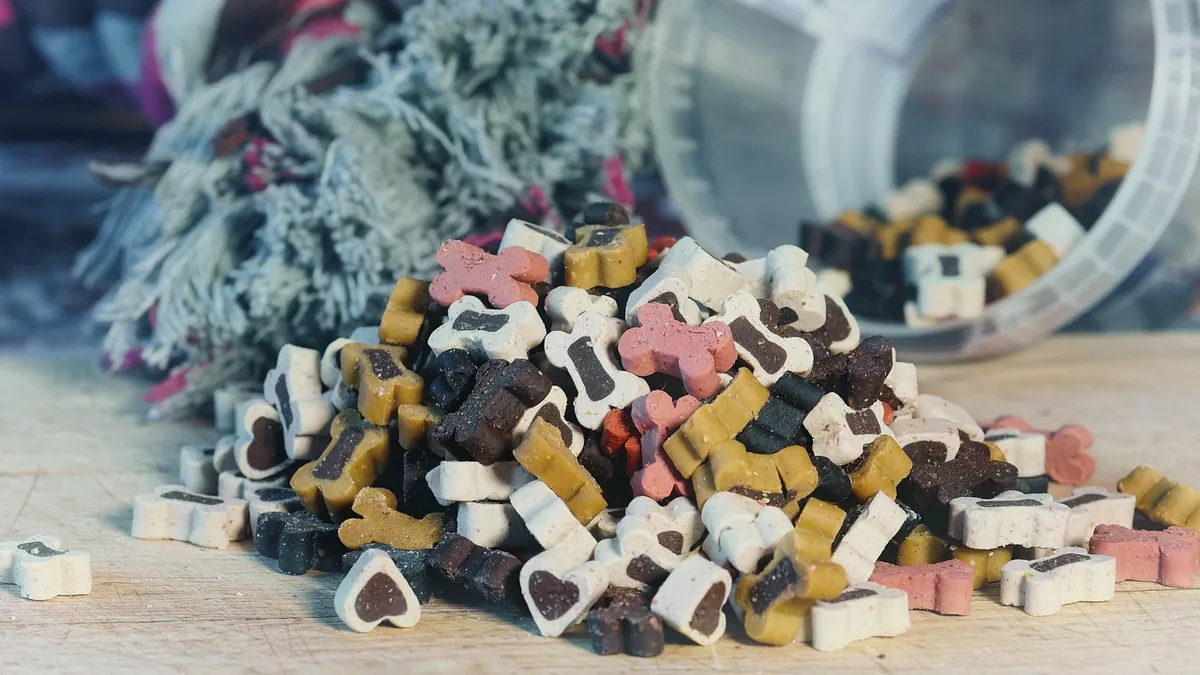
Dog throwing up kibble whole is common, and in many dogs it happens because they eat too fast, their food does not agree with them, or the stomach and esophagus are not moving food along normally. The good news is that most single episodes in a dog who still acts normal are not emergencies. This article is educational and is not a substitute for veterinary diagnosis or treatment.
Quick Answer
- Whole, tube-shaped kibble that comes up with little effort is often regurgitation, not true vomiting, and it usually points to a problem in the esophagus [1].
- If your dog threw up kibble once and is acting normal, offer water, withhold food for about 12 hours, then feed small bland meals of plain white rice and boiled chicken for two days [2].
- Slow feeding (a muffin tin, a snuffle mat, or a puzzle bowl) is the first fix when your dog bolts food and brings it right back up.
- Vomiting once a week or more is not normal and should be checked by a veterinarian [2].
- Blood in the vomit, coffee-ground material, lethargy, a painful belly, or vomiting lasting more than 24 hours means call your vet right away [2].
What It Looks Like and What Is Normal
Owners often describe the same scene. The dog eats breakfast, seems fine, then a few minutes or a few hours later brings up a pile of food that still looks like food. The pieces may be whole, swollen, or shaped like little tubes. Sometimes there is yellow fluid or foam mixed in.
Veterinarians separate two events that look similar to owners. Vomiting is an active, forceful process. The dog drools, retches, heaves, and contracts the belly muscles to push contents out of the stomach and upper small intestine [1]. Regurgitation is passive. Food and fluid slide back out of the esophagus with little or no effort, and the material tends to be undigested and may hold the cylindrical shape of the esophagus [1]. Coughing or trouble breathing are more often tied to regurgitation than to vomiting [1].
Why does the distinction matter? It changes the list of likely causes. A dog throwing up kibble whole, especially with no retching, is often regurgitating. A dog who heaves hard and brings up digested food, bile, or foam is more likely vomiting.
A single episode in a bright, playful, hungry dog is usually not a crisis. Vomiting after eating grass is often an isolated event [2]. The pattern matters more than one bad morning.
Why Is My Dog Throwing Up Kibble Whole?
Fast eating
This is the most common and most fixable cause. A dog who inhales a bowl of kibble swallows air and large, dry pieces. The stomach fills fast, stretches, and sends food back up before it can be broken down. You may notice the whole event happens within minutes of the meal, and the dog wants to eat the pile again.
Food intolerance or a diet that does not suit your dog
Some dogs do not tolerate a particular protein, fat level, or formula. The gut responds with nausea, loose stool, gas, or vomiting. Diet format may also play a role in gut function. In a randomized crossover study, researchers compared an extruded kibble diet with a mildly cooked, minimally processed diet in healthy dogs and found that how food is processed can influence digestion, nutrient uptake, and the gut microbiome [3]. A separate six-month study in Labrador Retrievers found that fecal consistency improved in dogs fed a fresh-frozen diet compared with an extruded kibble diet [4]. These findings do not prove that kibble causes vomiting, but they do support the idea that some dogs digest certain diets better than others.
If your dog throws up kibble but not wet food, that pattern is worth telling your veterinarian. It may point to how fast dry food is eaten, how much water the dog drinks with it, or how the food sits in the stomach.
Motility problems in the stomach or esophagus
Motility means the coordinated squeezing that moves food from the mouth to the stomach and then onward. When that movement is sluggish or disorganized, food can sit and come back up. One recent case report described a 9-year-old Toy Poodle with a rare condition called gastrogastric intussusception, where part of the stomach folded into itself. The dog presented with vomiting, bloody stool, and decreased activity, and imaging showed thickening of the stomach wall [5]. This is uncommon, but it shows that structural and motility problems can hide behind something as simple as bringing up food.
Eating too much at once
A large meal stretches the stomach. Some dogs handle that fine. Others bring part of it back up. Splitting the daily ration into three or four smaller meals often solves this.
Other causes to keep on the list
Vomiting has many possible causes beyond the stomach itself, including digestive disease, kidney or liver failure, pancreatitis, nervous system disorders, and eating irritating substances or poisons [1]. That is why a pattern of repeated vomiting deserves a real workup instead of guesswork.
| Cause | Typical clues | How urgent |
|---|---|---|
| Fast eating | Brings food up within minutes of eating, then wants to eat it again | Low, try slow feeders |
| Food intolerance | Vomiting plus gas, loose stool, or itching, often on a new diet | Routine visit |
| Motility or stomach problem | Repeated episodes, weight loss, reduced appetite, sometimes blood | Same-day to urgent |
| Overfeeding or one large meal | Happens after big meals, dog otherwise normal | Low, split meals |
| Toxin or foreign object | Drooling, restlessness, vomiting that will not stop | Emergency now |
When It Is an Emergency
Call your veterinarian right away, or go to an emergency clinic, if you see any of these:
- Blood in the vomit, or material that looks like coffee grounds (digested blood) [2]
- Lethargy, a painful belly, or a fever [2]
- Vomiting that continues for more than 24 hours [2]
- A dog who cannot keep water down
- A dog who swallowed a toy, bone, sock, medication, or anything toxic
- A dog who is retching with nothing coming up, or whose belly looks bloated and hard
- Known or suspected exposure to chocolate, grapes, raisins, xylitol, or another poison
If you are dealing with a toxin, do not wait for symptoms to worsen. You can read more about what to do in What To Do If My Dog Ate Chocolate And Is Vomiting. Never try to make your dog vomit on your own unless a veterinarian or poison control tells you to, because some substances cause more damage coming back up. If you have been told to induce vomiting, the steps are covered in How Do I Make My Dog Throw Up and How To Make Dog Throw Up.
What You Can Do at Home While You Wait
Withhold food, not water
For an isolated episode in an otherwise bright dog, you can withhold food for 12 hours but keep water available [2]. Then feed plain white rice and boiled chicken for two days [2]. If your dog keeps vomiting on that plan, stop and call your vet.
Slow the meal down
If your dog throws up kibble right after eating, change how the food is delivered before you change the food itself. Scatter kibble on a baking sheet. Use a muffin tin with a few pieces in each cup. Try a puzzle feeder or a snuffle mat. Feed three or four small meals instead of one or two large ones.
Add water or soften the kibble
Some dogs do better when kibble is slightly moistened. A little warm water can slow eating and make the pieces easier to break down. Do not leave wet kibble sitting out for hours, because it spoils quickly.
Keep a simple log
Write down the time of the meal, what you fed, how fast it was eaten, when the food came up, and what it looked like. Note stool quality and appetite too. This log is one of the most useful things you can bring to an appointment.
Do not reach for human medications
Do not give your dog over-the-counter nausea drugs, antacids, or pain relievers on your own. Some are toxic to dogs, and the right choice depends on the cause. If your veterinarian decides medication is appropriate, options may include famotidine (Pepcid AC), maropitant (Cerenia), or ondansetron (Zofran), and your vet will calculate the dose from your dog's weight and health [2].
What Your Veterinarian Will Check
Your vet starts with the history you provide, then a full physical exam. They will check hydration, gum color, belly comfort, temperature, and weight. They will ask about diet, treats, table food, garbage raids, and any possible toxin exposure.
Depending on what they find, testing may include:
- Blood work to look at organ function, electrolytes, and signs of inflammation
- A stool check for parasites
- Abdominal X-rays or ultrasound to look for foreign objects, masses, or abnormal stomach structure
- A barium study or endoscopy if the esophagus or stomach is the suspected source
- A diet trial, which means switching foods in a controlled way for several weeks
Vomiting that goes unresolved can shift electrolyte balance and lead to serious dehydration, so veterinarians take repeated episodes seriously [2]. If your dog is vomiting bile along with undigested food, that pattern has its own set of causes worth reviewing in Dog Vomiting Bile And Undigested Food. For a broader look at food coming back up, see Dog Vomiting Undigested Food: Causes and What to Do.
Prevention and Monitoring
Most cases of a dog throwing up kibble whole can be reduced with a few changes.
- Feed smaller, more frequent meals.
- Use a slow feeder or scatter feed.
- Keep the meal calm. Separate dogs in a multi-dog home so no one gulps to defend their bowl.
- Transition to any new food slowly over seven to ten days.
- Keep treats simple and count them in the daily calorie total.
- Store kibble properly and check for stale or spoiled food.
- Watch for a pattern. One episode is one episode. Weekly vomiting suggests disease [2].
If you have tried slow feeding and smaller meals and your dog still brings up food, that is your signal to book an exam. Do not keep switching foods on your own for weeks. A veterinarian can sort out whether this is behavior, diet, or a medical problem.
Limitations and When to Contact a Veterinarian
This article cannot tell you what is wrong with your individual dog. Only a veterinarian who examines your dog can do that.
Contact your veterinarian the same day if your dog vomits more than once, seems uncomfortable, has a change in appetite or energy, or has loose stool along with the vomiting.
Go to an emergency clinic now if you see blood or coffee-ground material in the vomit, a painful or swollen belly, repeated unproductive retching, collapse, or vomiting that has lasted more than 24 hours [2]. These are the signs that separate a messy morning from a true emergency.
Book a routine visit if your dog vomits even once a week, is losing weight, or has a pattern you cannot explain with fast eating or a recent diet change [2].
Frequently Asked Questions
Should I be worried if my dog threw up kibble once and is acting normal?
Usually no. A single episode in a bright, playful dog often resolves with a short fast and a bland diet. Watch for a repeat within the next day, and call your vet if it happens again.
Why does my dog throw up kibble hours after eating?
Food that sits in the stomach for hours before coming back up can point to slow stomach emptying or a motility issue. It can also happen when a large meal is eaten and the stomach simply cannot move it along. This pattern deserves a veterinary exam.
Why does my dog throw up kibble but not wet food?
Dry kibble is eaten faster, holds less water, and takes more work for the stomach to break down. Some dogs handle wet food better for those reasons. Tell your vet about the difference, because it helps narrow down the cause.
Can a food allergy cause my dog to vomit whole kibble?
Food allergies in dogs more often show up as itchy skin, ear infections, or chronic loose stool, but vomiting can happen too. A true diagnosis usually requires a controlled diet trial guided by your veterinarian.
How long should I wait before calling the vet?
Call the same day if your dog vomits more than once, seems painful or tired, or refuses water. Call immediately if you see blood, coffee-ground material, or unproductive retching. Do not wait more than 24 hours of ongoing vomiting before seeking care [2].
Related Articles
- Dog Vomiting Undigested Food: Causes and What to Do
- Dog Vomiting Bile And Undigested Food
- What To Do If My Dog Ate Chocolate And Is Vomiting
- How Do I Make My Dog Throw Up
- How To Make Dog Throw Up
- Dog Vomiting Bile Empty Stomach
- Why Is My Dog Throwing Up? Causes and When to Worry
- Why Is My Puppy Throwing Up After Eating? Causes and Next Steps
- Dog Throwing Up Nothing: Why Dry Heaving Happens
References
- Vomiting in Dogs - Dog Owners. Merck Veterinary Manual.
- Vomiting. Cornell University College of Veterinary Medicine.
- Diet-induced metabolic and faecal microbiome responses in pet dogs fed a minimally processed versus extruded kibble diet. Frontiers in veterinary science, 2026.
- Impacts of a fresh-frozen dog food on fecal consistency and microbiome in colony dogs. Journal of animal science, 2026.
- Endoscopic reduction of true gastrogastric intussusception in a dog. Journal of veterinary internal medicine, 2026.