Why Is My Cat's Pee Red? Blood in Urine Causes
By Dr. Zubair Khalid, DVM, MS, PhD ·
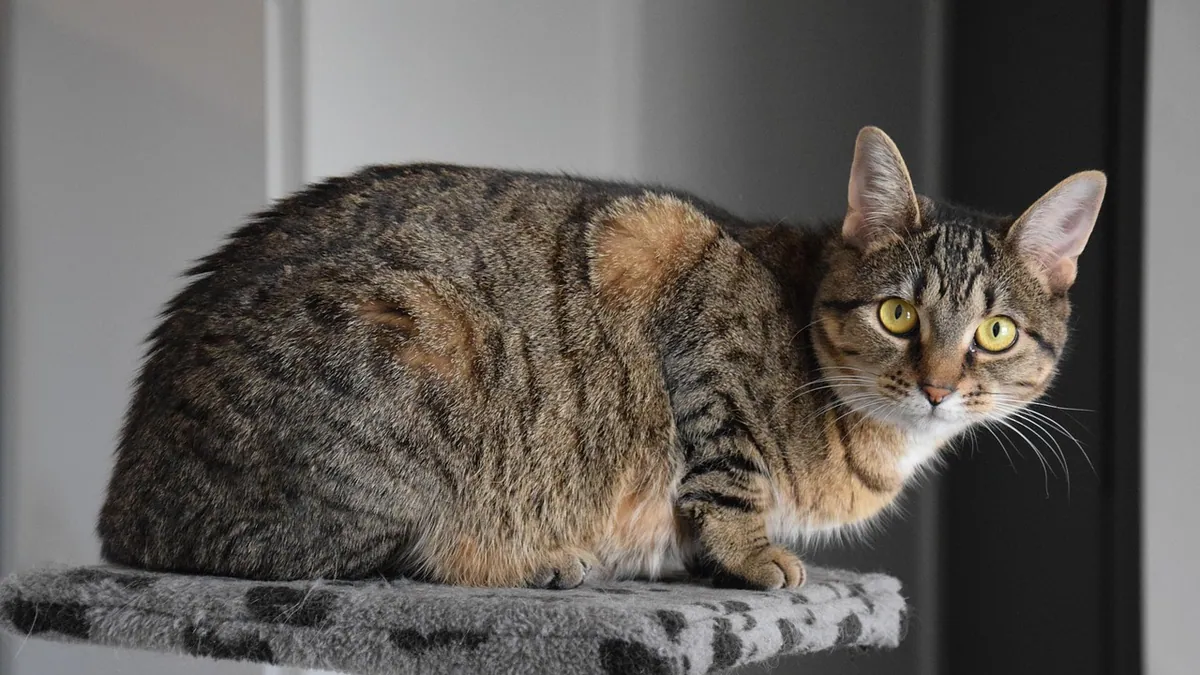
Red or pink urine in a cat almost always means blood is mixed in, a sign called hematuria. The most common trigger in young and middle-aged cats is bladder inflammation, while infections and stones become more likely with age or other health problems. This article is educational and is not a substitute for veterinary diagnosis or treatment.
Quick Answer
- Red, pink, or brown-tinged urine means blood until proven otherwise. A single drop of blood can tint a whole puddle.
- The most common cause in cats under 10 is feline idiopathic cystitis, which accounts for 55 to 65 percent of lower urinary tract disease cases [1].
- A cat that strains, cries, or produces no urine at all needs emergency care right away, because a blocked urethra is fatal within a day or two.
- Do not give human pain relievers. Many are toxic to cats, and your veterinarian will calculate any dose from your cat's weight and health.
- Bring a fresh urine sample if you can, but never delay a vet visit to collect one.
What Red Cat Pee Looks Like and What Is Normal
Normal cat urine is clear to pale yellow. It may darken slightly if it sits in the litter box, but it should never look pink, red, or rusty.
When owners say "cat pee is red," they usually mean one of a few things. Some see a pink tint in the clump or puddle. Some find small red spots on white litter or on a white floor. Others notice a red or irritated-looking pee hole (the opening of the urethra), which is often just inflammation of the surrounding skin from licking, not the urine itself.
Blood may show up only at the end of the stream, which is a pattern seen with bladder infections [2]. Sometimes the blood is invisible to the eye and only a urine test finds it.
Frequency matters too. A cat that visits the box many times a day and passes only drops is showing pollakiuria, one of the classic signs of bladder disease [1].
Main Causes of Blood in Cat Urine
Several conditions can turn cat pee red. They can look nearly identical from the outside, which is why testing matters.
| Cause | Typical clues | How urgent |
|---|---|---|
| Feline idiopathic cystitis (FIC) | Young to middle-aged cat, straining, frequent small pees, blood, often linked to stress or changes at home | Urgent if straining hard or not passing urine, otherwise see a vet within a day |
| Bladder stones (urolithiasis) | Blood, pain, small frequent urinations, sometimes sand-like grit in the box | Urgent, stones can block the urethra |
| Urinary tract infection | Frequent urination, painful or difficult urination, peeing outside the box, blood often worse at the end of the stream [2] | See a vet within a day |
| Kidney infection (pyelonephritis) | Blood plus fever, poor appetite, weight loss, drinking more | Same-day visit |
| Ureteral stricture or blockage | Blood, reduced urine output, kidney changes seen on imaging [3] | Emergency |
| Foreign object in the bladder | Long-standing painful urination and blood, object seen on x-ray or ultrasound [4] | Urgent |
| Trauma or toxins | Blood after a fall, fight, or exposure to a toxin | Emergency |
Feline Idiopathic Cystitis
FIC is the single most common cause of lower urinary tract signs in cats, making up 55 to 65 percent of feline lower urinary tract disease [1]. It results from complex interactions between the bladder, the nervous system, the adrenal glands, and the cat's environment [5]. Stress, such as a new pet, a move, or a dirty box, often precedes an episode.
Blood is one of the four common signs, along with frequent urination, urinating outside the box, and painful urination [1]. Many cats with FIC improve within a week, but episodes can repeat.
Stones and Grit
Urolithiasis is the second most common cause of feline lower urinary tract disease after FIC, and its signs often mimic those of obstructive cystitis [5]. Stones can scrape the bladder lining and cause bleeding. In male cats, even a small stone can lodge in the narrow urethra and block urine flow completely.
Infections
Most urinary infections are caused by bacteria that enter through the urethra and travel up to the bladder [2]. Healthy adult cats are fairly resistant to these infections, so a confirmed infection in a young cat often prompts a search for an underlying problem. Risk factors include incomplete bladder emptying, dilute urine, sugar in the urine (often a sign of diabetes), older age, a weakened immune system, and diseases such as long-term kidney disease or hyperthyroidism [2].
Some cats with bladder infections show no signs at all, and the infection turns up on a routine urinalysis [2].
Less Common Causes
Kidney infections can follow a bladder infection that travels upward [2]. Ureteral strictures, which are narrowings of the tube between the kidney and bladder, can cause blood and backup of urine into the kidney [3]. Foreign objects in the bladder, including pellets, have caused chronic painful urination and blood in cats [4]. These are uncommon but treatable once identified.
If your cat has blood in the urine but seems completely normal otherwise, see Cat Blood in Urine but Acting Normal: Causes and Next Steps. For a broader look at causes and testing, read Why Is My Cat having blood in urine? UTI and Bladder Stones Diagnosis.
Red Flags That Make It an Emergency
Some situations cannot wait. Go to an emergency clinic now if you see any of these.
- Your cat is straining in the box with little or no urine coming out.
- Your cat cries, howls, or paces while trying to urinate.
- Your cat has not peed in 12 hours or more.
- Your cat is vomiting, hiding, or lying flat and will not eat.
- Your cat's belly feels hard or painful when touched.
- Your cat is a male cat with any of the above signs. Male cats block more easily because of their narrow urethra.
A complete urethral blockage is a life-threatening emergency. Toxins build up in the blood within hours, and the cat can die within a day or two without treatment. Do not wait to see if it passes.
Blood alone, with normal urination and normal behavior, is less urgent but still needs a vet visit within a day or two.
What You Can Safely Do at Home While Waiting
You cannot treat bloody urine at home, but you can keep your cat stable and make the vet visit easier.
- Offer fresh water in several spots and consider a water fountain. Dilute urine is less irritating to the bladder.
- Keep the litter box clean and scoop at least twice a day. A dirty box adds stress and can make a cat hold urine.
- Reduce stress. Keep the routine steady, give your cat quiet hiding spots, and separate it from other pets if there is tension.
- Collect a urine sample if you can do it without stress. Use a clean, empty litter box or non-absorbent litter beads, then refrigerate the sample in a sealed container and bring it within a few hours.
- Do not give any human medication. Acetaminophen and ibuprofen are toxic to cats, and dosing is not something you can guess.
- Do not withhold food or water unless your vet tells you to.
If your cat is straining and nothing is coming out, skip all of this and go to the vet now.
What Your Veterinarian Will Check and Test
Your vet will start with a history and physical exam. Expect questions about how much your cat drinks, how often it urinates, how much urine it produces, what the urine looks like, and how your cat behaves [6]. Bring notes if you can.
The physical exam includes feeling the kidneys and bladder, checking the genitalia, and sometimes checking the rectum. If urination is difficult, your vet may also do a neurologic exam [6].
Testing often includes:
- Urinalysis, which checks for blood, bacteria, crystals, and urine concentration.
- Blood tests, including a complete blood count and chemistry panel. One study found that the neutrophil-to-lymphocyte ratio, a value calculated from a standard blood count, distinguished healthy cats from cats with idiopathic cystitis with high accuracy [1].
- Imaging. X-rays and ultrasound are used to find stones, foreign objects, and kidney changes. In one reported case, ultrasound and CT identified ureteral strictures causing blood in the urine [3].
- Contrast x-rays or cystoscopy, which uses a tube with a small camera to look inside the urethra and bladder [6].
Treatment depends on the cause. FIC is managed with stress reduction, pain control, and sometimes diet changes. Infections need antibiotics chosen by your vet. Stones may need surgery or a special diet. Blockages need immediate catheterization.
For more on what different results mean, see Why Is My Cat Peeing blood? Cystitis, Infection & Stones and Cat Peeing Blood: What Should You Do?.
Prevention and Monitoring
You cannot prevent every cause of bloody urine, but you can lower the odds.
- Feed a complete, balanced diet. If your cat has chronic kidney disease, your vet may adjust calcium and phosphorus levels, since these are managed with prescription renal diets.
- Encourage drinking. More water means more dilute urine, which helps with several urinary conditions.
- Keep the box clean and plentiful. One box per cat plus one is a common rule.
- Watch for early signs. Frequent trips to the box, licking the genital area, or peeing outside the box often come before visible blood.
- Keep routine vet visits. Cats with a history of urinary problems need regular urine checks, even when they seem fine.
If your cat has had one episode of bloody urine, note what was happening at home at the time. Stressors, diet changes, and box habits are useful clues for your vet.
Limitations and When to Contact a Veterinarian
This article covers common patterns, not your individual cat. Only a veterinarian who examines your cat can tell you what is causing the blood and how to treat it.
Contact a veterinarian the same day if you see red or pink urine with normal behavior, if your cat is peeing more often than usual, or if it is peeing outside the box.
Go to an emergency clinic now if your cat is straining with little or no urine, crying while urinating, vomiting, hiding, or has not peed in 12 hours.
Schedule a routine visit if you have seen blood once and it has resolved, or if your cat has a history of urinary issues and you want a monitoring check.
Frequently Asked Questions
Is red cat pee always a sign of infection?
No. Blood in the urine has several causes, and infection is only one of them. In cats, bladder inflammation without infection is the most common cause, and stones are the next most common.
Can stress cause blood in my cat's urine?
Yes. Stress is a known trigger for feline idiopathic cystitis, which commonly causes blood in the urine. Changes like a move, a new pet, or a disrupted routine can set off an episode.
Will bloody urine go away on its own?
Sometimes mild episodes improve within a few days, but you cannot tell from the outside whether a stone or blockage is forming. Any cat with blood in the urine should be checked, and a cat that is straining needs care immediately.
Should I collect a urine sample before my vet visit?
Yes, if you can do it without stressing your cat. A fresh sample helps your vet run a urinalysis faster, but never delay an urgent visit to collect one.
Can I give my cat medicine for the pain?
No. Human pain relievers are toxic to cats, and prescription pain medication must be dosed by a veterinarian based on your cat's weight and health. Call your vet if your cat seems uncomfortable.
Related Articles
- Why Is My Cat having blood in urine? UTI and Bladder Stones Diagnosis
- Why Is My Cat Peeing blood? Cystitis, Infection & Stones
- Cat Blood in Urine but Acting Normal: Causes and Next Steps
- Cat Blood in Urine: Causes and When to Rush to the Vet
- Cat Peeing Blood: What Should You Do?
- What Can Cause A Urinary Tract Infection In A Cat
- Why Is My Cat's Pee Pink? Causes and When to Call the Vet
- Jelly-Like Blood in Cat Pee: Causes and Next Steps
- Red in Cat Poop or Pee: Blood, Mucus, and Next Steps
References
- Neutrophil-to-Lymphocyte Ratio as a Promising Non-Invasive Biomarker for Diagnosis of Feline Idiopathic Cystitis in Cats. Animals : an open access journal from MDPI, 2025.
- Infectious Diseases of the Urinary System of Cats - Cat Owners. Merck Veterinary Manual.
- Medical management of ureteral stricture-induced hydronephrosis in a cat. The Canadian veterinary journal = La revue veterinaire canadienne, 2026.
- Successful video-assisted removal of bullet foreign body from the urinary bladder in 2 cats. The Canadian veterinary journal = La revue veterinaire canadienne, 2025.
- Serum and Urine Nerve Growth Factor and Glycosaminoglycan Levels in Obstructive and Non-Obstructive Feline Urolithiasis and Interstitial Cystitis. Veterinary medicine and science, 2026.
- Detecting Disorders of the Kidneys and Urinary Tract of Cats - Cat Owners. Merck Veterinary Manual.