Cat Can't Keep Water Down: Causes and When to Worry
By Dr. Zubair Khalid, DVM, MS, PhD ·
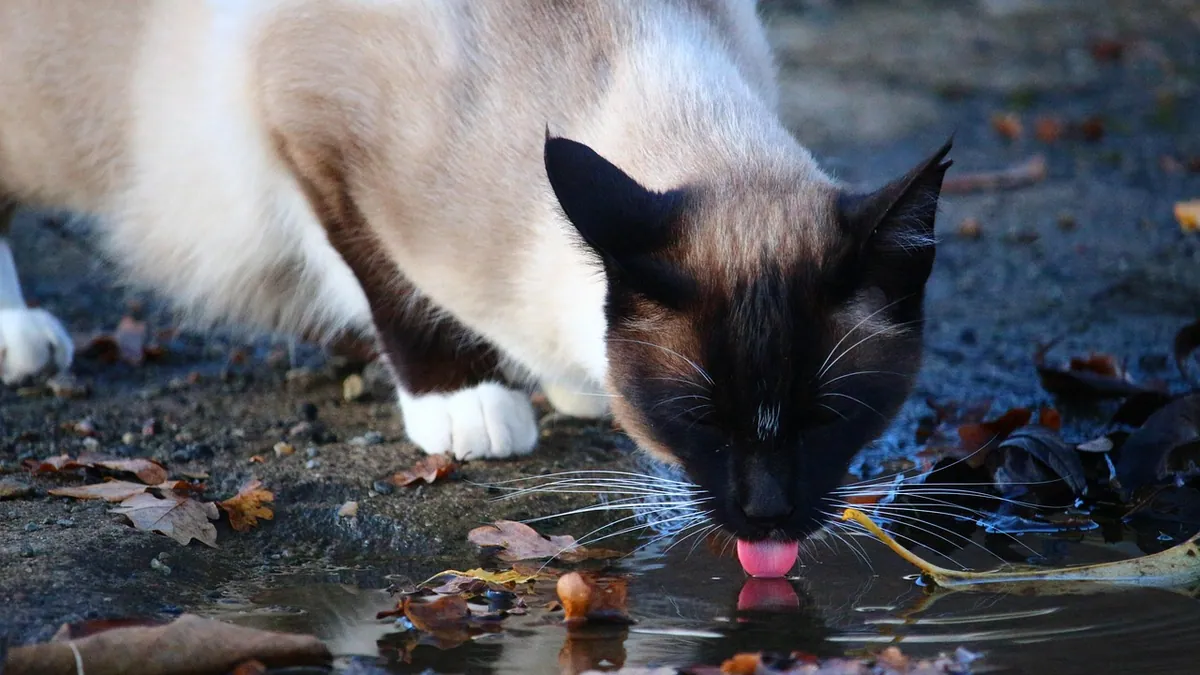
If your cat not able to keep water down, that usually means the water comes right back up within minutes of drinking, or your cat is avoiding the bowl altogether. Both problems can lead to dehydration fast, because cats have a low thirst drive to begin with and often run a mild fluid deficit on dry food [1][2]. The cause can be as minor as drinking too fast or as serious as a blockage or kidney disease.
This article is educational and is not a substitute for veterinary diagnosis or treatment.
Quick Answer
- Vomiting water right after drinking is different from refusing water. Vomiting points to stomach or throat irritation, while refusal often points to nausea, pain, fever, or a blocked nose.
- A cat that vomits every time it drinks, or that cannot hold water down for more than a few hours, needs to be seen the same day.
- Check hydration at home by lifting the skin between the shoulder blades. If it stays tented instead of snapping back, call your vet.
- Never force water into your cat's mouth. It can cause choking and aspiration.
- Healthy cats on canned food drink far less from the bowl than cats on dry food, and that is normal [1][2].
What Vomiting Water Looks Like and What Is Normal
Vomiting water looks like clear or slightly foamy liquid coming up, often with little or no food in it. It may happen right after your cat visits the water bowl, or it may happen on an empty stomach hours after the last meal. Some cats bring up a small amount of clear fluid once, act completely normal, and never do it again. That single episode is usually not a crisis.
Normal drinking varies a lot from cat to cat. In one review of healthy domestic cats, total daily water intake (from food plus the bowl) ranged from about 23 to 51 mL per kilogram of body weight per day [2]. Other reports in the same review put free water intake at roughly 70 to 293 mL per day [2]. The wide range exists because diet moisture matters so much. Cats eating only dry food drink much more from the bowl than cats eating only wet food, and cats on a mixed diet fall in between [1].
So a cat that suddenly starts gulping water, or suddenly stops, is showing you a change worth noticing. If your cat is drinking far more than usual, see Cat Drinking a Lot of Water: Is It a Sign of Illness? or Why Is My Cat Drinking So Much Water?.
Why Your Cat Is Not Keeping Water Down
There is no single cause. The pattern of vomiting, the timing, and what else you see at home all help narrow it down. The table below groups the most common reasons.
| Cause | Typical clues | How urgent |
|---|---|---|
| Drinking too fast or too much at once | Clear fluid comes up right after a big drink, cat acts fine afterward | Usually mild, watch closely |
| Hairballs or swallowed fur | Vomiting after grooming, fur in the vomit, occasional retching | Routine visit if repeated |
| Gastritis or stomach irritation | Vomiting water and food, lip smacking, eating grass, mild nausea | Same day if it keeps happening |
| Foreign body or blockage | Vomiting everything, no appetite, no stool, belly pain, hiding | Emergency now |
| Toxin exposure | Sudden vomiting, drooling, tremors, weakness, known exposure | Emergency now |
| Kidney disease | Drinking a lot, vomiting, weight loss, poor coat, bad breath | Same day to urgent |
| Diabetes mellitus | Heavy drinking and urination, weight loss despite good appetite | Same day to urgent |
| Hyperthyroidism | Ravenous appetite, weight loss, vomiting, restless behavior | Routine to same day |
| Pancreatitis | Vomiting, belly pain, hunched posture, refusing food | Same day |
| Intestinal parasites | Vomiting, diarrhea, potbelly, poor growth in kittens | Routine visit |
| Urinary blockage (male cats) | Straining to urinate, crying, no urine, vomiting | Emergency now |
| Medication or food reaction | Vomiting started after a new drug or diet change | Call your vet same day |
A few of these deserve extra attention. Urinary blockage in a male cat is a true emergency and often shows up as vomiting plus straining in the litter box. If you see that combination, go to an emergency clinic right away. You can read more about urinary patterns in Cat Urinating Frequently: Causes and When to Worry.
Diet also plays a role in long-term urinary health. Urinary tract disease is a leading reason cats see a veterinarian, and diet is one of the few risk factors owners can actually control [3]. That does not mean diet caused today's vomiting, but it does mean hydration and urinary health are linked over time.
Red Flags That Make It an Emergency
Call an emergency clinic now if you see any of these:
- Your cat vomits every time it drinks, or cannot keep water down for more than 12 hours.
- There is blood in the vomit, or the vomit looks like coffee grounds.
- Your cat is straining to urinate, crying in the litter box, or has not urinated in 12 hours or more.
- Your cat is collapsed, weak, wobbling, or having trouble breathing.
- You suspect your cat ate a toxin, human medication, string, toy, or bone.
- Your cat is a kitten, senior, or has a known chronic disease and is vomiting repeatedly.
- Your cat is also having severe diarrhea, which speeds up fluid loss. See Cat Diarrhea with Mucus: Causes and When to Worry.
Lethargy is another warning sign that should push you to call sooner. A cat that is quiet, hiding, and not interested in food or water is telling you something is wrong. Cat Lethargy: When to Worry and What to Do walks through how to judge that.
How to Check Hydration at Home
You can get useful information in about a minute.
Skin tent test. Gently lift the loose skin between your cat's shoulder blades and let go. It should snap back into place almost instantly. If it stays up in a tent or moves back slowly, your cat may be dehydrated.
Gum check. Lift your cat's lip and look at the gums. They should be pink and moist. Dry, tacky, or pale gums are a concern. Press a fingertip on the gum until it turns white, then release. The color should return within about two seconds.
Eye check. Sunken-looking eyes, especially with a dull coat, suggest fluid loss.
Litter box check. Count urine clumps. Fewer clumps than usual, or very small ones, can mean your cat is not drinking enough or cannot urinate.
Behavior check. A dehydrated cat is often quiet, hides, and stops grooming.
None of these tests replace a veterinary exam, but they help you decide how fast to act.
Safe Things You Can Do at Home While You Wait
These steps are for a stable cat that is not showing emergency signs.
Offer small amounts often. Put out a shallow bowl with a small amount of water instead of a full bowl. Some cats do better with a few laps at a time.
Try a wide, shallow dish. Whisker fatigue is real for some cats. A saucer or low bowl can encourage drinking.
Add moisture to food. Canned food is roughly 75 to 80 percent water, and cats on wet diets drink far less from the bowl because they get fluid from meals [1]. If your cat is vomiting, ask your vet before changing the diet.
Use a water fountain. Moving water appeals to many cats. In one study, water fountains were used to continuously record drinking volume, duration, and frequency, which shows how useful they are for tracking intake at home [1].
Keep water away from the litter box and food. Many cats prefer separate locations.
Do not force fluids. Never syringe water into your cat's mouth unless your veterinarian specifically instructs you to and shows you how.
Do not give human anti-nausea drugs. Some are toxic to cats. Your veterinarian will calculate any medication dose from your cat's weight and health status.
If your cat is vomiting but still playful and drinking small amounts, you can monitor for a few hours. If nothing stays down, stop waiting and call.
What Your Veterinarian Will Check and Test
Your vet will start with a full physical exam, including weight, temperature, hydration assessment, and a careful feel of the abdomen. They will ask about diet, water sources, litter box habits, and any possible exposure to toxins or foreign objects.
Common tests include:
- Blood work. A chemistry panel checks kidney values, liver values, blood sugar, and electrolytes. A complete blood count looks for infection or inflammation.
- Urine testing. Urine specific gravity is the most commonly reported marker used to assess hydration status and helps diagnose conditions such as diabetes insipidus, glomerulonephritis, pyelonephritis, adrenal insufficiency, and liver disease [2].
- Imaging. X-rays or ultrasound can find foreign bodies, masses, or fluid in the abdomen.
- Fecal testing. This checks for intestinal parasites.
- Thyroid testing. Especially in cats over eight years old.
Treatment depends on the cause. A cat that is dehydrated may need intravenous or subcutaneous fluids. A cat with a blockage may need surgery. A cat with kidney disease may need a prescription diet and ongoing monitoring.
Prevention and Monitoring
You cannot prevent every cause of vomiting, but you can lower the odds and catch problems earlier.
Feed a moisture-appropriate diet. Dietary moisture is a key factor in how well cats stay hydrated [1]. Cats on dry food drink more from the bowl, but total water intake can still fall short. Many owners feed a mix of wet and dry.
Track water intake loosely. You do not need to measure every milliliter. Just notice if the bowl level drops much faster or slower than usual.
Watch the litter box. Urine clumps are one of the best at-home hydration signals you have.
Keep up with wellness visits. Annual exams catch kidney disease, diabetes, and thyroid problems before they become crises.
Manage the environment. For cats with urinary or stress-related conditions, veterinarians commonly give advice on diet, water intake, litter box setup, private space, and social interaction, and owners report high compliance with these changes [4]. A calm, well-resourced home supports overall health.
Know your cat's normal. The single best tool you have is a clear picture of what your cat usually does. A change you notice early is often the most useful information your vet gets.
Limitations and When to Contact a Veterinarian
This article cannot tell you what is wrong with your specific cat. Vomiting water has dozens of possible causes, and some are life-threatening within hours. Individual cases need a veterinarian who can examine your cat, run tests, and treat the actual problem.
Contact an emergency clinic now if: your cat is straining to urinate or has not urinated, is collapsing or struggling to breathe, has blood in the vomit, has a known toxin exposure, or cannot keep anything down for more than 12 hours.
Contact your veterinarian the same day if: your cat vomits water more than twice, refuses food, seems painful, hides, or is a kitten or senior.
Schedule a routine visit if: your cat vomits occasionally but is otherwise normal, or you have noticed a slow change in drinking or urinating habits.
When in doubt, call. A phone call costs nothing and can save your cat's life.
Frequently Asked Questions
Should I be worried if my cat throws up water once?
A single episode in an otherwise bright, playful cat is usually not an emergency. Watch for repeat vomiting, refusal to eat, or changes in urination. If it happens again within a few hours, call your vet.
Can I give my cat water with a syringe?
No, not unless your veterinarian tells you to and shows you the technique. Forcing water can cause choking and fluid to enter the lungs. Offer small amounts in a shallow bowl instead.
Is it normal for a cat on wet food to drink very little?
Yes, this is expected. Cats eating canned food get most of their moisture from meals and drink much less from the bowl. If your cat is on wet food and suddenly starts gulping water, that change matters more than the low intake itself.
How long can a cat go without water?
Cats can become dehydrated faster than many owners expect, especially if they are vomiting. If your cat has not kept water down for more than 12 hours, or is not drinking at all for a full day, call your veterinarian right away.
Does drinking too fast cause vomiting in cats?
Yes, it can. Some cats gulp a large volume quickly and bring it right back up. Try a shallow bowl, offer smaller amounts, and separate water from food. If it keeps happening, have your cat checked for underlying stomach problems.
Related Articles
- Cat Urinating Frequently: Causes and When to Worry
- Cat Drinking a Lot of Water: Is It a Sign of Illness?
- Cat Lethargy: When to Worry and What to Do
- Cat Diarrhea with Mucus: Causes and When to Worry
- Why Is My Cat Drinking So Much Water?
- Cat Constipation: When to Worry and How to Help
- Cat Can't Keep Food Down: Causes and What to Do
- Cat Not Keeping Food or Water Down: What to Do
- Senior Cat Drinking a Lot of Water: When to Worry
References
- Water intake and consumption behavior of colony and privately-owned healthy domestic cats fed 100% dry, 50% dry and 50% wet, and 100% wet diets: a comparison of research and home environments. Journal of animal science, 2026.
- Diet format, protein, amino acids, salt, and osmolytes, as well as water viscosity, affect water consumption in domestic cats: a scoping review of 32 publications (published from 1975 to 2025) on water intake, hydration status, and related health outcomes. Journal of animal science, 2026.
- Revisiting feline urinary tract health: the role of diet and acidifying agents in urolith prevention and long-term cat health. Journal of animal science, 2026.
- Cat owners' perceptions of multimodal environmental modification advice for obstructive feline idiopathic cystitis. Journal of feline medicine and surgery, 2025.