Anal Sac Disease in Dogs: Impaction, Abscess and Treatment
By Dr. Zubair Khalid, DVM, MS, PhD ·
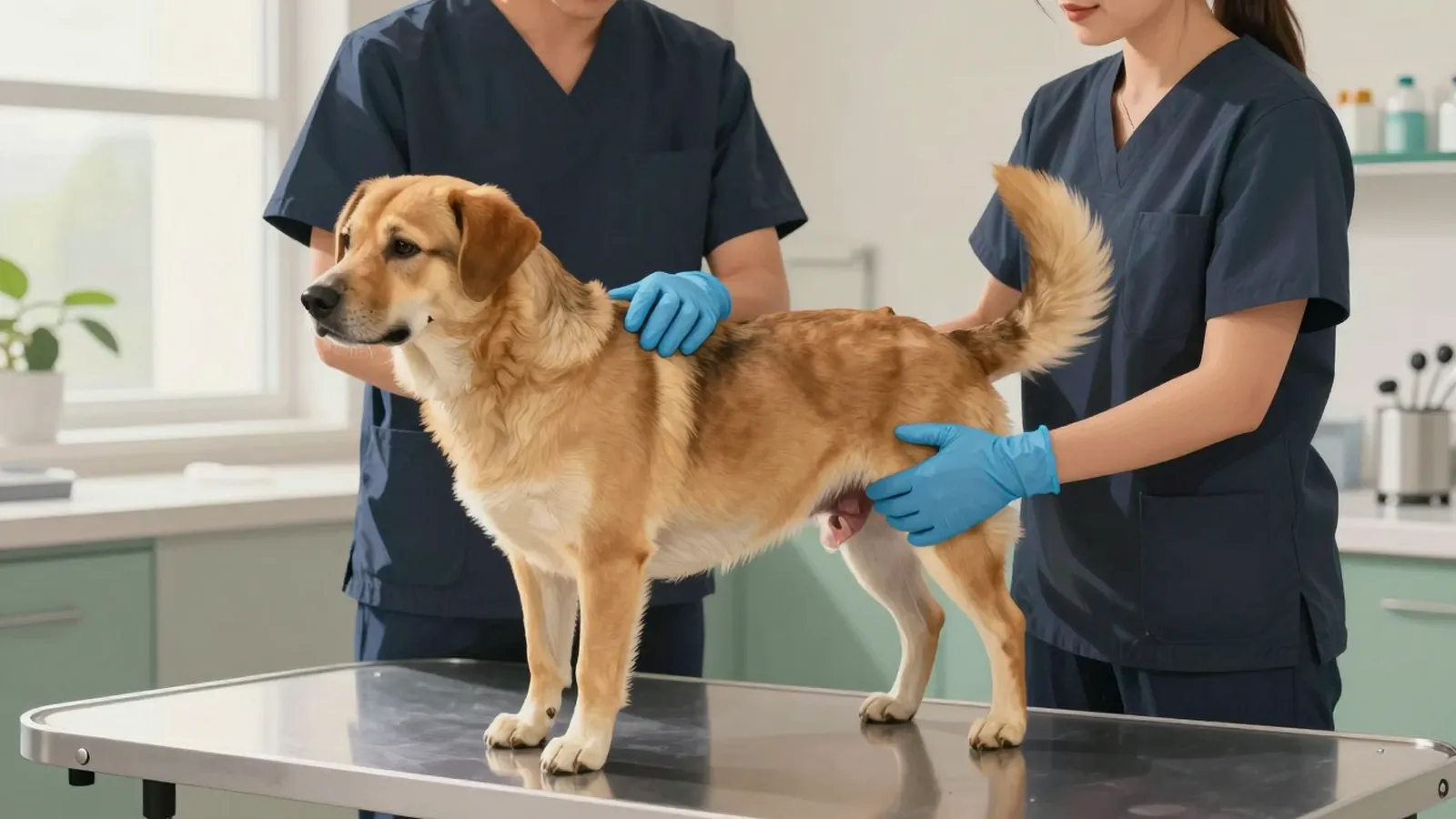
Anal sac disease in dogs is a group of conditions affecting the two small pouches beside the anus, including impaction, sacculitis, abscess and neoplasia (Anal Sac Disease in Dogs and Cats). The sacs normally release a foul-smelling fluid during defecation; when that fluid is retained, it can thicken, become infected, and form a painful abscess (Anal Sac Disease in Dogs; Anal sac diseases).
Common signs include scooting, licking or biting the anal area, tail held down, straining or reluctance to defecate, and a fishy odor or discharge (Anal sac diseases). Diagnosis is typically made by physical examination and digital rectal exam, and treatment may include manual expression, antimicrobials or anti-inflammatory medications, drainage, or surgery (Anal Sac Disease in Dogs and Cats).
Key Points
- Anal sacs are two small pouches at approximately the 4 o'clock and 8 o'clock positions beside the anus; both male and female dogs have them, and their gland-lined walls produce a foul-smelling fluid that drains through a small duct inside the anus (Anal Sac Disease in Dogs).
- Impaction means the sacs do not empty adequately; the contents thicken, the sacs enlarge and become uncomfortable, and the process can progress to sacculitis, abscess, or rupture (Anal sac diseases).
- An anal sac abscess appears as a painful, red, hot swelling on one or both sides of the anus; a burst abscess releases greenish-yellow or bloody pus through an opening in the skin beside the anus.
- Small-breed dogs are predisposed to impaction and sacculitis, while large or giant breeds are less commonly affected (Anal Sac Disease in Dogs and Cats); one study found Chihuahuas most commonly affected among small breeds and German Shepherd Dogs possibly over-represented among large breeds.
- Risk factors include diarrhea, skin problems, obesity, chronic diarrhea, constipation, low-fiber diet, food allergy dermatitis, atopic dermatitis, and anatomic abnormalities of the anal sacs (Anal sac diseases; A Cross-Sectional Study on Canine and Feline Anal Sac ...).
- Manual expression and treatment of underlying disease are the most important treatments; anal sacculectomy is used for frequent recurrence, and surgical outcome improves when surgery follows medical management (A Cross-Sectional Study on Canine and Feline Anal Sac ...).
At a Glance
| Condition | Typical signs | First steps |
|---|---|---|
| Impaction | Scooting, straining to defecate, thick or fishy odor, firm sacs | Manual expression, fiber review, examination for underlying triggers (Anal Sac Disease in Dogs; Anal Sac Disease in Dogs and Cats) |
| Infection | Redness, pain, licking the rear, discharge | Veterinary exam, gentle cleaning, prescribed treatment (Anal sac diseases; Anal Sac Disease in Dogs and Cats) |
| Abscess | Swelling beside the anus, marked pain, difficulty sitting, discoloration | Drainage, antibiotics, pain control (Anal Sac Disease in Dogs and Cats; Anal Glands and Anal Gland Abscess in Dogs and Cats) |
| Rupture | Draining tract, blood or pus, open sore near the anus | Urgent care, wound management, follow-up (Anal Sac Disease in Dogs; Anal Glands and Anal Gland Abscess in Dogs and Cats) |
Anal sac disease includes impaction, infection, abscess, and rupture. Early examination separates these conditions and guides expression, drainage, or medical treatment (Anal Sac Disease in Dogs; Anal Sac Disease in Dogs and Cats).
What Are Anal Sacs and What Do They Do?
Anal sacs are two small pouches beside the anus. Owners often call them anal glands. They are part of normal canine anatomy, and disease in these sacs is common (Anal Sac Disease in Dogs; Anal sac diseases).
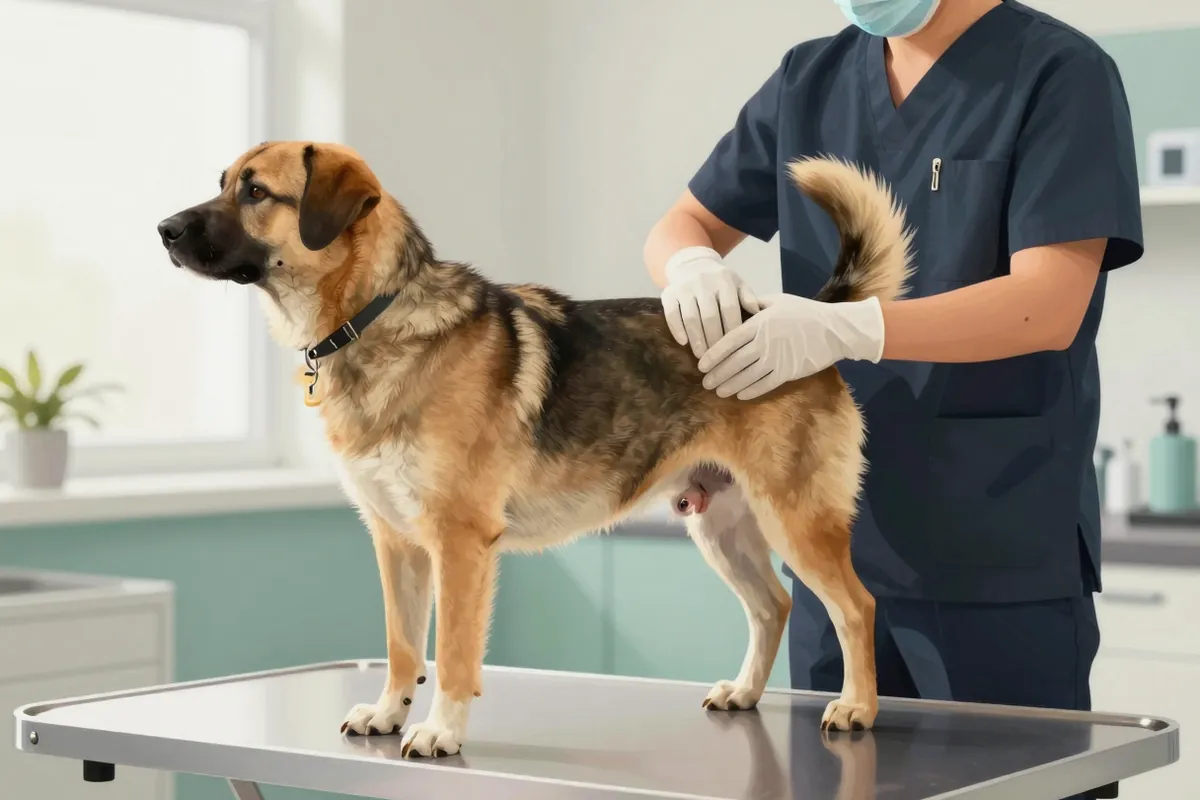
Location and structure
The sacs sit under the skin, one on each side of the anus, at about the four o'clock and eight o'clock positions (Anal Sac Disease in Dogs; Anal sac diseases). Each sac connects to the anal canal by a narrow duct that opens just inside the anus (Anal Sac Disease in Dogs; Anal Sac Disease in Dogs and Cats). The sac wall is lined with many glands that produce a foul-smelling fluid (Anal Sac Disease in Dogs). The sacs are present in male and female dogs.
Normal function
The fluid acts as a territorial marker or scent signature (Anal Sac Disease in Dogs). Cornell describes the purpose as likely territorial scent marking (Anal sac diseases). The material has a strong, unpleasant odor and can vary in color and consistency. During defecation, pressure against the sacs and muscular contractions move fluid through the ducts (Anal Sac Disease in Dogs; Anal sac diseases). Some dogs also release fluid when nervous or excited. The sacs store this secretion, not feces (Anal Sac Disease in Dogs; Anal Sac Disease in Dogs and Cats). Dogs investigate feces and anal areas closely because of these scent signals.
Why problems develop
Normal emptying depends on a duct that stays open and a secretion that flows. Disease begins when one or more steps fail:
- Secretion thickens and becomes pasty, so the sac does not empty well (Anal Sac Disease in Dogs; Anal Sac Disease in Dogs and Cats).
- The duct becomes inflamed or blocked, and the sac swells (Anal Sac Disease in Dogs; Anal sac diseases).
- Retained material allows bacteria to multiply (Anal Sac Disease in Dogs; Anal Sac Disease in Dogs and Cats).
- Infection turns the contents bloody and then purulent, setting up an abscess (Anal Sac Disease in Dogs).
- In some cases, inflammation or infection occurs without obvious impaction.
| Feature | Normal sac | Diseased sac |
|---|---|---|
| Contents | Secretion with a foul odor (Anal Sac Disease in Dogs; Anal sac diseases) | Pasty material, pus, or bloody fluid (Anal Sac Disease in Dogs; Anal Sac Disease in Dogs and Cats) |
| Emptying | During defecation or with excitement (Anal Sac Disease in Dogs; Anal sac diseases) | Incomplete, painful, or blocked (Anal Sac Disease in Dogs; Anal Sac Disease in Dogs and Cats) |
| Signs | Scent marking, no discomfort | Scooting, licking, straining, swelling (Anal Sac Disease in Dogs; Anal sac diseases) |
A useful way to view the process is a sequence: retention, thickening, swelling, bacterial growth, then infection or abscess (Anal Sac Disease in Dogs; Anal sac diseases; Anal Sac Disease in Dogs and Cats). The sac is a small closed pouch with a narrow outlet. When outflow fails, pressure and pain increase. This anatomy explains why a simple impaction can progress to a painful abscess if it is not checked (Anal Sac Disease in Dogs; Anal Sac Disease in Dogs and Cats). The sacs are not the rectum, and they do not control bowel movements. They sit outside the anal canal and drain into it. A dog with anal sac pain may strain or sit oddly, but the underlying problem is in the sacs and ducts (Anal Sac Disease in Dogs; Anal Sac Disease in Dogs and Cats).
What Causes Anal Sac Disease in Dogs?
Anal sac disease in dogs is common, and several factors can set it up (Anal Sac Disease in Dogs; A Cross-Sectional Study on Canine and Feline Anal Sac ...). The central problem is usually retained secretion, inflamed ducts, or bacterial growth inside the sac (Anal Sac Disease in Dogs; Anal sac diseases).
Retention and duct blockage
The duct from each sac is narrow. Inflammation can narrow it further, and thick secretion can plug it (Anal Sac Disease in Dogs; Anal Sac Disease in Dogs and Cats). When the sac cannot empty, material accumulates and the sac distends (Anal Sac Disease in Dogs; Anal sac diseases). This is impaction. The retained material is an ideal medium for bacteria, so infection can follow (Anal Sac Disease in Dogs; Anal Sac Disease in Dogs and Cats). Obstruction of the duct during infection can then lead to abscess formation (Anal Sac Disease in Dogs and Cats).
Stool consistency and body condition
Normal emptying depends on pressure against the sacs during defecation (Anal sac diseases). Chronic diarrhea is a risk factor in practice surveys (A Cross-Sectional Study on Canine and Feline Anal Sac ...). Soft or infrequent stools may fail to provide the usual pressure, and constipation is listed among risk factors. Obesity appears repeatedly as a risk factor (Anal sac diseases; A Cross-Sectional Study on Canine and Feline Anal Sac ...; Anal Sac Disease in Dogs and Cats). Poor muscle tone in obese dogs can reduce emptying (Anal Sac Disease in Dogs and Cats). A low-fiber diet is also listed as a risk factor. These factors do not act alone; a dog may have several at once.
Infection, allergy, and skin disease
Bacteria normally present in feces can travel up the ducts (Anal Sac Disease in Dogs). Normal flushing during defecation helps clear them, but retained secretion allows overgrowth. Food allergy dermatitis and atopic dermatitis may contribute to anal sac disease (Anal sac diseases). Skin problems increase risk in survey data (A Cross-Sectional Study on Canine and Feline Anal Sac ...). Generalized seborrhea can cause glandular hypersecretion, which adds to retention (Anal Sac Disease in Dogs and Cats). Inflammation from skin or allergic disease can therefore worsen sac emptying and infection risk (Anal sac diseases; Anal Sac Disease in Dogs and Cats).
Risk factors and recurrence
Small-breed dogs are predisposed to impaction and sacculitis, and large or giant breeds are less commonly affected (Anal Sac Disease in Dogs and Cats). Among small breeds, one study found Chihuahuas most commonly affected; German Shepherd Dogs may be overrepresented among large breeds (Anal sac diseases). Sex does not appear to be a predisposition, and cases are typically seen in dogs over 1 year of age. Anatomic abnormalities of the anal sacs are another risk factor. Some dogs have repeated episodes, and frequent recurrence may prompt discussion of surgical removal (A Cross-Sectional Study on Canine and Feline Anal Sac ...). In many cases, no single cause is found, so treatment includes expression and review of underlying disease (A Cross-Sectional Study on Canine and Feline Anal Sac ...; Anal Sac Disease in Dogs and Cats).
Signs of Anal Sac Disease in Dogs
Signs of anal sac disease are usually tied to pain, irritation, and poor emptying (Anal Sac Disease in Dogs; Anal Sac Disease in Dogs and Cats). Some dogs show subtle changes; others develop obvious swelling and drainage (Anal sac diseases; Anal Sac Disease in Dogs and Cats).
Early signs
- Scooting the rear end along the floor, lawn, or carpet (Anal Sac Disease in Dogs; Anal sac diseases).
- Licking or biting at the anal area (Anal Sac Disease in Dogs; Anal sac diseases).
- A fishy odor or traces of discharge on surfaces (Anal sac diseases).
- Tail held down or sensitivity around the hind end.
- Reluctance to defecate or straining during defecation (Anal sac diseases; Anal Sac Disease in Dogs and Cats).
Scooting is one of the most frequent signs (Anal sac diseases). It can occur with impaction, sacculitis, or abscess (Anal Sac Disease in Dogs; Anal sac diseases). Licking and biting suggest irritation or pain in the area.
Pain and posture
Dogs with anal sac pain may sit awkwardly or show discomfort when sitting (Anal Sac Disease in Dogs and Cats). Defecation can be painful, with dyschezia and tenesmus, and constipation may follow. Some dogs hold the tail down or resist handling near the rear (Anal sac diseases). Pain can be severe when the sacs are infected or abscessed. A dog that normally jumps onto furniture may hesitate, but this sign is nonspecific; the anal area exam is more informative.
Swelling, infection, and abscess
Impaction produces firm, palpable sacs packed with thick pasty material (Anal Sac Disease in Dogs and Cats). Infection adds redness, pain, and sometimes discharge (Anal sac diseases; Anal Sac Disease in Dogs and Cats). An abscess appears as a painful, red, hot swelling on one or both sides of the anus (Anal Sac Disease in Dogs). The area may be discolored. If the abscess bursts, greenish-yellow or bloody pus can drain through an opening in the skin beside the anus. A fistulous tract can form from an abscessed sac and rupture through skin. Such tracts must be distinguished from perianal fistulas.
| Owner observation | What it may indicate |
|---|---|
| Scooting, licking | Impaction or irritation (Anal Sac Disease in Dogs; Anal sac diseases) |
| Straining, constipation | Painful defecation or mass effect (Anal sac diseases; Anal Sac Disease in Dogs and Cats) |
| Red, hot swelling | Abscess (Anal Sac Disease in Dogs; Anal Sac Disease in Dogs and Cats) |
| Draining tract | Ruptured abscess (Anal Sac Disease in Dogs; Anal Sac Disease in Dogs and Cats) |
Signs that need urgent care
A draining sore, blood or pus near the anus, or a rapidly swelling painful area warrants prompt examination (Anal Sac Disease in Dogs; Anal Sac Disease in Dogs and Cats). A dog that cannot defecate, cries when sitting, or has marked swelling should be seen without delay (Anal sac diseases; Anal Sac Disease in Dogs and Cats). Abscesses are painful infections with pus buildup in the sac (Anal Glands and Anal Gland Abscess in Dogs and Cats). Rupture can release pus and blood, and untreated infection can damage the anal area (Anal Sac Disease in Dogs; Anal sac diseases).
Anal Sac Impaction
Anal sac impaction is the retention of anal sac secretion. The sacs are paired pouches beside the anus, and each has a small duct that opens near the anal opening (Anal Sac Disease in Dogs; Anal sac diseases). When the sacs do not empty adequately, the contents thicken and the sacs enlarge (Anal sac diseases). The result is a swollen, uncomfortable pouch that can make defecation painful (Anal Sac Disease in Dogs).
What Impaction Means
Impaction means the sacs are plugged or poorly emptied. Inflammation of the ducts can narrow the opening, and the secretion inside becomes thick and pasty (Anal Sac Disease in Dogs). In affected dogs, hard masses may be palpable in the anal sac area, and the sacs may be packed with a thick brown secretion that expresses as a thin ribbon only with firm pressure (Anal Sac Disease in Dogs and Cats). Several factors can contribute:
- Decreased expression of the sacs during defecation (Anal Sac Disease in Dogs and Cats)
- Poor muscle tone in obese dogs
- Generalized seborrhea, which can increase glandular secretion
- Chronic diarrhea or constipation (Anal sac diseases)
- Low-fiber diet and obesity
- Small-breed conformation
Impaction can progress to inflammation or infection if retained material remains in the sac (Anal sac diseases). That is why a simple impaction is best assessed and treated before the tissue becomes more painful and swollen.
Signs Owners Notice
The first sign is often scooting, which means dragging the rear end along the ground or another surface (Anal sac diseases). Other signs include:
- Licking or biting at the anal area (Anal sac diseases)
- A fishy odor or traces of discharge on surfaces
- Holding the tail down
- Reluctance to defecate, straining, or sensitivity around the hind end
- Tense or painful bowel movements (Anal Sac Disease in Dogs)
Some dogs with impaction show only mild discomfort. Others become distressed when the sacs are distended and painful during defecation (Anal Sac Disease in Dogs). A dog that scoots after bowel movements, licks the area often, or seems sore when sitting should have the anal sacs examined.
Diagnosis and Manual Expression
Diagnosis relies on history, visual inspection, and gentle palpation (Anal Sac Disease in Dogs; Anal sac diseases). A veterinarian will inspect the area around the anus and perform a digital rectal examination to assess both sacs (Anal sac diseases). Some dogs benefit from sedation for a comfortable and safe examination.
Manual expression may relieve a simple impaction (Anal Sac Disease in Dogs; Anal Glands and Anal Gland Abscess in Dogs and Cats). The veterinarian judges whether expression is appropriate after palpation and checks the character of the expressed material (Anal Sac Disease in Dogs; Anal Sac Disease in Dogs and Cats). Expression is not a task to repeat roughly at home. Repeated squeezing can bruise the tissue, and it does not address an infected or abscessed sac.
Recurrence and Prevention
Fiber, weight control, and monitoring may reduce recurrence (Anal Sac Disease in Dogs; Anal Sac Disease in Dogs and Cats). Treating underlying diarrhea, constipation, or skin disease also matters because these problems are associated with anal sac disease (Anal sac diseases; A Cross-Sectional Study on Canine and Feline Anal Sac ...). Repeated impaction warrants a planned management review (Anal sac diseases; Anal Glands and Anal Gland Abscess in Dogs and Cats). The review may include diet, stool consistency, body weight, and the frequency of scooting or discomfort. If impaction returns soon after expression, the sacs and ducts need another examination instead of repeated home squeezing.
Anal Sac Infection and Abscess
Anal sac infection begins when bacteria multiply in retained secretion. Feces contain bacteria that can travel up the anal sac ducts, and normal emptying flushes them out (Anal Sac Disease in Dogs). When the sacs are impacted, the fluid does not empty normally, and infection can develop. The fluid may become bloody, and the sac can eventually fill with pus.
From Infection to Abscess
An abscess is a walled pocket of pus that forms in the sac (Anal Sac Disease in Dogs and Cats; Anal Glands and Anal Gland Abscess in Dogs and Cats). Obstruction of the anal sac duct during an infection can lead to abscess formation (Anal Sac Disease in Dogs and Cats). The abscess appears as a painful, red, hot swelling on one or both sides of the anus (Anal Sac Disease in Dogs). Occasionally, infection occurs without obvious impaction, and sac contents may drain through the duct and be seen at the anus.
Infection and abscess are not the same stage. Anal sacculitis means inflammation or infection of the sac (Anal sac diseases). An abscess means a contained pocket of pus with more severe swelling and pain (Anal Sac Disease in Dogs and Cats; Anal Glands and Anal Gland Abscess in Dogs and Cats). A simple impaction can be uncomfortable, but an abscess often makes the dog much more painful and systemically unwell.
Signs of Infection and Abscess
Signs can include:
- Pain when sitting or defecating (Anal Sac Disease in Dogs and Cats)
- Swelling, redness, and heat beside the anus (Anal Sac Disease in Dogs)
- Discoloration of the area
- Pus or bloody discharge from the duct or a draining tract (Anal Sac Disease in Dogs; Anal Sac Disease in Dogs and Cats)
- Fever, lethargy, and reluctance to sit (Anal Sac Disease in Dogs and Cats; Anal Glands and Anal Gland Abscess in Dogs and Cats)
- Scooting, licking, biting, or straining
Severe pain and discoloration are common when the sacs are infected or abscessed (Anal Sac Disease in Dogs and Cats). Fistulous tracts can form from abscessed sacs and rupture through the skin. These tracts must be distinguished from perianal fistulas, which are a different condition.
Veterinary Treatment
Abscesses often need drainage and veterinary treatment (Anal Sac Disease in Dogs and Cats; Anal Glands and Anal Gland Abscess in Dogs and Cats). After assessment, antibiotics and pain relief may be prescribed (Anal sac diseases; Anal Glands and Anal Gland Abscess in Dogs and Cats). Warm compresses can help before or after drainage if advised (Anal Glands and Anal Gland Abscess in Dogs and Cats). Do not lance or squeeze an abscess at home. Home squeezing can increase pain and may spread infection into surrounding tissue.
A veterinarian may flush the area, remove pus, and check whether the duct is blocked (Anal Sac Disease in Dogs and Cats; Anal Glands and Anal Gland Abscess in Dogs and Cats). The dog may need a recheck to confirm that drainage is complete and that swelling is resolving. If the dog is feverish, lethargic, or unable to sit comfortably, urgent assessment is appropriate because infection can spread in the anal area (Anal Sac Disease in Dogs; Anal Sac Disease in Dogs and Cats).
What to Watch After Treatment
After drainage, follow the recheck schedule and keep the area clean. Prevent licking if a collar or other barrier is advised (Anal Glands and Anal Gland Abscess in Dogs and Cats). Watch for renewed swelling, discharge, odor, or pain. A draining tract that persists after treatment may need further examination (Anal Sac Disease in Dogs and Cats). Recurrence is possible if the sac and duct remain diseased, so repeated abscesses call for a management review (Anal sac diseases; Anal Sac Disease in Dogs and Cats).
Ruptured Anal Sac Abscess
A ruptured anal sac abscess means the walled pocket of pus has opened through the skin. If the abscess bursts, it releases greenish-yellow or bloody pus through an opening beside the anus (Anal Sac Disease in Dogs). The rupture can look dramatic, but it does not mean the infection is over.
What Rupture Looks Like
A ruptured abscess drains pus, blood, and fluid near the anus (Anal Sac Disease in Dogs and Cats; Anal Glands and Anal Gland Abscess in Dogs and Cats). The opening may look like a small hole or a weeping sore (Anal sac diseases; Anal Glands and Anal Gland Abscess in Dogs and Cats). The surrounding skin may be red, swollen, painful, and stained with discharge. In some dogs, a fistulous tract forms from the abscessed sac and opens through the skin (Anal Sac Disease in Dogs and Cats). This must be distinguished from a perianal fistula, which has a different cause and treatment.
Rupture can reduce pressure inside the sac, and the dog may seem briefly more comfortable (Anal Sac Disease in Dogs and Cats; Anal Glands and Anal Gland Abscess in Dogs and Cats). The relief is temporary. The sac and duct can still contain infected material, and the wound needs cleaning and assessment (Anal Sac Disease in Dogs and Cats; Anal Glands and Anal Gland Abscess in Dogs and Cats).
First Aid at Home
Keep the area clean and prevent licking until the dog is examined (Anal Glands and Anal Gland Abscess in Dogs and Cats). A warm compress may be advised to soften crusted discharge and ease discomfort. Use a clean cloth and gentle pressure. Do not squeeze the sac, probe the opening, or apply human ointments unless a veterinarian recommends them.
| Do | Do not |
|---|---|
| Keep the area clean and dry | Squeeze or lance the swelling |
| Prevent licking with a barrier if advised | Let the dog lick the wound |
| Note the color and amount of discharge | Probe the opening with cotton swabs |
| Call the veterinarian for a recheck | Delay care if swelling or fever develops |
Veterinary Care
Veterinary flushing and wound care are commonly needed (Anal Sac Disease in Dogs and Cats; Anal Glands and Anal Gland Abscess in Dogs and Cats). The veterinarian may clean the opening, remove retained pus, and check whether the duct is blocked (Anal Sac Disease in Dogs and Cats). Antibiotics and pain relief may be prescribed after assessment (Anal sac diseases; Anal Glands and Anal Gland Abscess in Dogs and Cats). A dog with fever, lethargy, or spreading redness needs prompt treatment because infection can damage the anal area (Anal Sac Disease in Dogs; Anal Sac Disease in Dogs and Cats).
The wound may drain for a short time after flushing. A recheck helps confirm that the opening is healing and that the sac is not refilling. If the dog remains painful, develops new swelling, or has a foul discharge, contact the veterinarian again.
Recurrence After Rupture
Recurrence is possible if the sac and duct remain diseased (Anal sac diseases; Anal Sac Disease in Dogs and Cats). A ruptured abscess can leave scar tissue or a narrowed duct, and retained secretion can lead to another infection. Dogs with frequent recurrence may be referred for a discussion of anal sacculectomy (A Cross-Sectional Study on Canine and Feline Anal Sac ...; Anal Sac Disease in Dogs and Cats). Surgery is not an emergency treatment for every rupture, but repeated disease in the same sac warrants a planned review.
How Veterinarians Diagnose Anal Sac Disease
Diagnosis of anal sac disease starts with a focused history and a careful physical examination. Most cases are identified from owner observations, visual inspection, and rectal palpation (Anal Sac Disease in Dogs; Anal sac diseases). Advanced tests are reserved for severe, unusual, or recurrent disease.
History
The history focuses on scooting, licking, straining, and pain (Anal Sac Disease in Dogs; Anal Glands and Anal Gland Abscess in Dogs and Cats). Owners may report a fishy odor, discharge on bedding or floors, tail holding, reluctance to defecate, or sensitivity around the hind end (Anal sac diseases). The veterinarian also asks about diet, body weight, stool consistency, diarrhea, constipation, and skin disease because these factors are associated with anal sac problems (Anal sac diseases; A Cross-Sectional Study on Canine and Feline Anal Sac ...).
A useful history includes:
- When scooting or licking started
- Whether signs occur before or after bowel movements
- Whether the dog strains, cries, or avoids defecation
- Any swelling, discharge, or odor noticed at home
- Previous impaction, expression, infection, or abscess
- Current diet, weight trend, and skin or ear problems
Physical Examination
The physical examination includes rectal palpation of both sacs (Anal Sac Disease in Dogs; Anal sac diseases). The veterinarian inspects the area around the anus and assesses size, firmness, warmth, and discharge (Anal Sac Disease in Dogs and Cats; Anal Glands and Anal Gland Abscess in Dogs and Cats). With impaction, hard masses may be palpable and the sacs may feel packed (Anal Sac Disease in Dogs and Cats). With infection or abscess, severe pain and discoloration are often present. Some dogs benefit from sedation for a complete and safe examination (Anal sac diseases).
The veterinarian also checks for draining tracts, skin damage, and swelling beside the anus (Anal Sac Disease in Dogs and Cats). A rectal examination can help distinguish anal sac disease from other causes of straining or perianal swelling.
Expression and Sample Assessment
Expression yields material for visual assessment (Anal Sac Disease in Dogs; Anal Sac Disease in Dogs and Cats). The veterinarian notes color, consistency, and odor. Impaction material is often thick and pasty (Anal Sac Disease in Dogs and Cats). Infected material may be bloody or purulent (Anal Sac Disease in Dogs). Culture is selective; it is not required for every simple impaction (Anal Sac Disease in Dogs; Anal Sac Disease in Dogs and Cats). If infection recurs or treatment response is poor, culture may help guide care (Anal sac diseases; Anal Sac Disease in Dogs and Cats).
Advanced Tests
Imaging or cultures may be used in severe or recurrent cases (Anal sac diseases; Anal Sac Disease in Dogs and Cats). Ultrasonography can help assess the sac and surrounding tissue when swelling is marked or the diagnosis is unclear (Anal Sac Disease in Dogs and Cats). Biopsy is uncommon but may exclude tumors in atypical cases. Anal sac adenocarcinoma is a serious disease that can cause signs similar to benign anal sac disease, so a nonhealing mass or atypical swelling needs careful evaluation (Anal sac diseases; Anal Sac Disease in Dogs and Cats).
| Finding | What it may suggest |
|---|---|
| Thick pasty secretion, hard sac | Impaction (Anal Sac Disease in Dogs and Cats) |
| Severe pain, redness, heat, pus | Infection or abscess (Anal Sac Disease in Dogs; Anal Sac Disease in Dogs and Cats) |
| Draining tract beside the anus | Ruptured abscess or fistula |
| Recurrent disease in one sac | Duct disease or recurrence (Anal sac diseases; Anal Sac Disease in Dogs and Cats) |
| Firm mass, atypical signs | Need for further testing |
Treatment and Home Management
Treatment depends on whether the anal sacs are impacted, inflamed, infected, or abscessed. A dog with severe pain, swelling, fever, or lethargy needs prompt veterinary care (Anal Sac Disease in Dogs and Cats; Anal Glands and Anal Gland Abscess in Dogs and Cats). Home care supports veterinary treatment and does not replace assessment of a painful or swollen sac (Anal Glands and Anal Gland Abscess in Dogs and Cats).
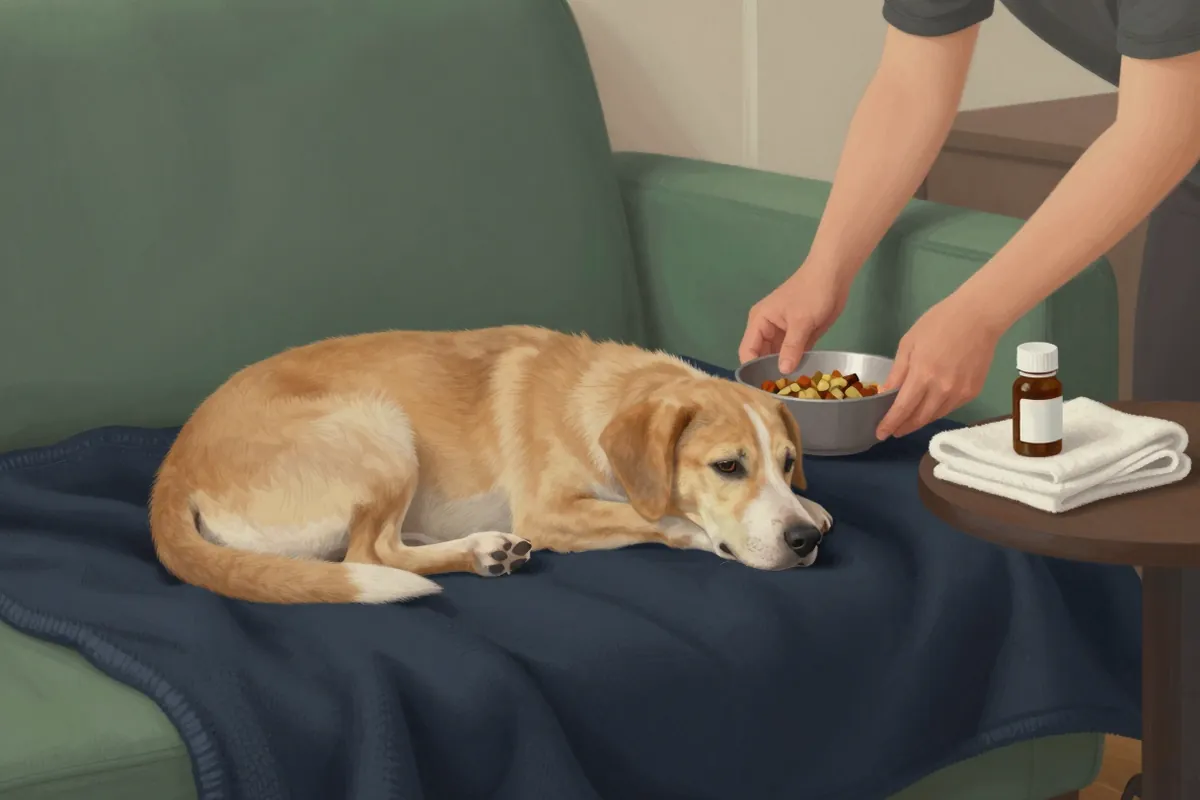
In-Clinic Care
Simple impaction is often treated by gentle manual expression of the sacs (Anal Sac Disease in Dogs; Anal Glands and Anal Gland Abscess in Dogs and Cats). The veterinarian checks the character of the secretion and expresses the sacs with controlled pressure (Anal Sac Disease in Dogs; Anal Sac Disease in Dogs and Cats). Manual expression and treatment of any underlying disease are core treatments for non-neoplastic anal sac disease (A Cross-Sectional Study on Canine and Feline Anal Sac ...). Thick, pasty secretion may require more pressure, but expression is still a veterinary procedure (Anal Sac Disease in Dogs and Cats).
An anal sac abscess is drained under appropriate pain control (Anal Sac Disease in Dogs and Cats; Anal Glands and Anal Gland Abscess in Dogs and Cats). Drainage releases pus and reduces pressure in the sac (Anal Sac Disease in Dogs and Cats; Anal Glands and Anal Gland Abscess in Dogs and Cats). Antibiotics are prescribed when bacterial infection is suspected (Anal sac diseases; Anal Sac Disease in Dogs and Cats). They are used with drainage when an abscess is present (Anal Sac Disease in Dogs and Cats). Pain relief and warm compresses may support comfort (Anal Glands and Anal Gland Abscess in Dogs and Cats). Compresses should be used only as directed because the area is sensitive.
| Problem | Typical veterinary care | Main home focus |
|---|---|---|
| Impaction | Gentle manual expression (Anal Sac Disease in Dogs; Anal Glands and Anal Gland Abscess in Dogs and Cats) | Fiber, weight, and monitoring (Anal Sac Disease in Dogs; Anal Sac Disease in Dogs and Cats) |
| Anal sacculitis | Expression and treatment of underlying disease (A Cross-Sectional Study on Canine and Feline Anal Sac ...; Anal Sac Disease in Dogs and Cats) | Skin and allergy care (Anal sac diseases) |
| Abscess | Drainage with pain control (Anal Sac Disease in Dogs and Cats; Anal Glands and Anal Gland Abscess in Dogs and Cats) | Warm compress as directed and recheck (Anal Glands and Anal Gland Abscess in Dogs and Cats) |
| Ruptured abscess | Drainage, wound care, antibiotics if suspected (Anal Sac Disease in Dogs and Cats; Anal Glands and Anal Gland Abscess in Dogs and Cats) | Prevent licking and watch for spread |
Home Care After Treatment
Owners should watch for scooting, licking, swelling, odor, or discharge after treatment (Anal Sac Disease in Dogs; Anal sac diseases). A protective collar can help if a dog licks the area intensely (Anal Glands and Anal Gland Abscess in Dogs and Cats). Keep the rear end clean and dry, and use warm compresses only as advised. Follow the prescribed medication plan and the recheck schedule (Anal Sac Disease in Dogs and Cats). Report increasing pain, new swelling, or pus to the clinic (Anal Sac Disease in Dogs and Cats; Anal Glands and Anal Gland Abscess in Dogs and Cats).
Fiber and weight management can support normal stool bulk (Anal Sac Disease in Dogs; Anal Sac Disease in Dogs and Cats). A lean body condition and daily activity help maintain muscle tone and regular defecation (Anal Sac Disease in Dogs; Anal Sac Disease in Dogs and Cats). Fiber intake should be adjusted with veterinary guidance when diarrhea or constipation is present (Anal sac diseases; Anal Sac Disease in Dogs and Cats). Regular review helps catch recurrence before rupture (Anal sac diseases; Anal Glands and Anal Gland Abscess in Dogs and Cats). A recheck after drainage allows the veterinarian to confirm healing and decide whether further treatment is needed (Anal Sac Disease in Dogs and Cats; Anal Glands and Anal Gland Abscess in Dogs and Cats). Surgical removal may be considered when impaction or infection recurs frequently (A Cross-Sectional Study on Canine and Feline Anal Sac ...).
Preventing Anal Sac Problems
Prevention centers on normal emptying, healthy stool bulk, and early detection. No single step removes all risk, especially in dogs with repeated impaction, obesity, or skin disease (Anal Sac Disease in Dogs; Anal sac diseases).
Body Condition and Activity
Keep body condition lean (Anal Sac Disease in Dogs; Anal Sac Disease in Dogs and Cats). Obesity is a risk factor for anal sac disease, and poor muscle tone in obese dogs contributes to retention of sac contents (Anal sac diseases; Anal Sac Disease in Dogs and Cats). Daily activity supports muscle tone and regular defecation (Anal Sac Disease in Dogs; Anal Sac Disease in Dogs and Cats). A dog that is overweight can be started on a weight plan with veterinary guidance (Anal Sac Disease in Dogs and Cats).
Diet and Stool Bulk
Feed adequate fiber to promote firm, bulky stools (Anal Sac Disease in Dogs; Anal Glands and Anal Gland Abscess in Dogs and Cats). Firm stool presses against the anal sacs during defecation and helps move secretion out through the ducts (Anal Sac Disease in Dogs; Anal sac diseases). Low-fiber diets and chronic diarrhea are risk factors for anal sac disease (Anal sac diseases). Diet changes should be made with veterinary guidance when diarrhea or constipation is present (Anal sac diseases; Anal Sac Disease in Dogs and Cats).
Skin and Allergy Care
Address allergies and skin disease with veterinary guidance (Anal sac diseases; Anal Sac Disease in Dogs and Cats). Food allergy dermatitis and atopic dermatitis may contribute to anal sac disease (Anal sac diseases). Generalized seborrhea can cause glandular hypersecretion and retention of sac contents (Anal Sac Disease in Dogs and Cats). Good skin control can reduce one source of chronic inflammation near the anal area (Anal sac diseases; Anal Sac Disease in Dogs and Cats).
Rear-End Checks
Groom the rear end and check for swelling or odor (Anal Sac Disease in Dogs; Anal Glands and Anal Gland Abscess in Dogs and Cats). Owners can look for redness, discharge, or a painful swelling beside the anus (Anal Sac Disease in Dogs; Anal Sac Disease in Dogs and Cats). A fishy odor or traces of discharge on surfaces can be an early clue (Anal sac diseases). These checks are simple and can be done during routine grooming or after a bath (Anal Sac Disease in Dogs).
Expression: When It Helps and When It Does Not
Avoid routine expression unless a veterinarian advises it (Anal Sac Disease in Dogs; Anal Glands and Anal Gland Abscess in Dogs and Cats). Manual expression is a treatment for impaction, not a routine preventive for every dog (A Cross-Sectional Study on Canine and Feline Anal Sac ...; Anal Glands and Anal Gland Abscess in Dogs and Cats). Repeated impaction calls for a management plan and a search for underlying causes (Anal sac diseases; Anal Sac Disease in Dogs and Cats). The veterinarian may recommend scheduled expression for a specific dog with poor emptying, but that plan should be individualized (Anal sac diseases; Anal Glands and Anal Gland Abscess in Dogs and Cats).
Track Repeated Signs
Track repeated scooting or licking for earlier assessment (Anal sac diseases; Anal Glands and Anal Gland Abscess in Dogs and Cats). Repeated scooting, licking, or odor warrants examination (Anal Sac Disease in Dogs; Anal Glands and Anal Gland Abscess in Dogs and Cats). Early review can catch recurrence before rupture (Anal sac diseases; Anal Glands and Anal Gland Abscess in Dogs and Cats). Dogs with recurrent impaction or infection may need a long-term management plan (Anal sac diseases; Anal Sac Disease in Dogs and Cats).
When to Contact a Veterinarian
Anal sac disease can move from discomfort to abscess or rupture. Early contact is advised when signs are painful, persistent, or repeated (Anal Sac Disease in Dogs and Cats; Anal Glands and Anal Gland Abscess in Dogs and Cats). Owners do not need to make a diagnosis; the goal is to identify signs that need veterinary assessment (Anal Sac Disease in Dogs).
Urgent Signs
Seek care for swelling, severe pain, fever, or lethargy (Anal Sac Disease in Dogs and Cats; Anal Glands and Anal Gland Abscess in Dogs and Cats). Contact a veterinarian if an abscess drains pus or blood (Anal Sac Disease in Dogs and Cats; Anal Glands and Anal Gland Abscess in Dogs and Cats). Use urgent care for spreading redness, marked weakness, or severe pain (Anal Glands and Anal Gland Abscess in Dogs and Cats). These signs can indicate a spreading infection or a ruptured abscess (Anal Sac Disease in Dogs; Anal Sac Disease in Dogs and Cats). A dog that is dull, stops eating, or has a hot, painful swelling beside the anus should be seen quickly (Anal Sac Disease in Dogs and Cats; Anal Glands and Anal Gland Abscess in Dogs and Cats).
| Sign | Concern |
|---|---|
| Painful swelling beside the anus | Possible abscess (Anal Sac Disease in Dogs and Cats) |
| Fever or lethargy | Systemic infection (Anal Sac Disease in Dogs and Cats; Anal Glands and Anal Gland Abscess in Dogs and Cats) |
| Pus or blood from the area | Ruptured abscess (Anal Sac Disease in Dogs; Anal Sac Disease in Dogs and Cats) |
| Marked weakness | Urgent assessment (Anal Glands and Anal Gland Abscess in Dogs and Cats) |
Defecation Problems
Straining to defecate or inability to pass stool needs review (Anal Sac Disease in Dogs; Anal sac diseases). Painful defecation, tenesmus, and constipation are common signs of anal sac disease (Anal Sac Disease in Dogs and Cats). A dog that cannot pass stool needs prompt assessment (Anal Sac Disease in Dogs). Do not wait for a routine grooming appointment to express a painful sac (Anal Glands and Anal Gland Abscess in Dogs and Cats). Straining can also occur with other problems, so examination is needed to confirm the cause.
Repeated or Recurrent Signs
Repeated scooting, licking, or odor warrants examination (Anal Sac Disease in Dogs; Anal Glands and Anal Gland Abscess in Dogs and Cats). Recurrent impaction or infection may need a management plan (Anal sac diseases; Anal Sac Disease in Dogs and Cats). Frequent recurrence may prompt consideration of anal sacculectomy after medical management (A Cross-Sectional Study on Canine and Feline Anal Sac ...). Surgical removal is considered when recurrence is frequent, not as the first step for every dog (A Cross-Sectional Study on Canine and Feline Anal Sac ...; Anal Sac Disease in Dogs and Cats). A dog with repeated episodes should be checked for diarrhea, constipation, obesity, allergies, and skin disease (Anal sac diseases; Anal Sac Disease in Dogs and Cats).
What to Tell the Clinic
Report the duration of signs, any discharge, changes in stool, diet, and previous anal sac problems (Anal Sac Disease in Dogs; Anal sac diseases). Mention allergies, skin disease, diarrhea, constipation, and weight changes because these are risk factors (Anal sac diseases; Anal Sac Disease in Dogs and Cats). Ask whether the dog should be seen urgently (Anal Glands and Anal Gland Abscess in Dogs and Cats). A clear history helps the veterinarian decide between expression, drainage, medication, and a recheck plan (A Cross-Sectional Study on Canine and Feline Anal Sac ...; Anal Sac Disease in Dogs and Cats).
After Treatment
After drainage or expression, contact the clinic if pain increases, swelling returns, or discharge continues (Anal Sac Disease in Dogs and Cats; Anal Glands and Anal Gland Abscess in Dogs and Cats). Follow-up is part of care because recurrence is possible (Anal sac diseases; Anal Glands and Anal Gland Abscess in Dogs and Cats). A recheck lets the veterinarian check healing and catch recurrence before rupture (Anal sac diseases; Anal Glands and Anal Gland Abscess in Dogs and Cats).
Related Guides
- How Much Does Dog Anal Gland Expression Cost in the UK?: Explains typical UK costs for professional anal gland expression
- How to Express Dog Anal Glands: Step-by-step guide to expressing a dog's anal glands
- How Do You Express Anal Glands on a Dog?: Answers common questions about expressing anal glands on dogs
- Perianal Glands in Dogs: Expression and Problems: Explains perianal gland expression and associated problems in dogs
- How to Treat Dog Diarrhea After Gland Expression at Home: Covers home care for diarrhea after anal gland expression
- What Causes Inflammation in Dogs? Gut, Skin, and Glands: Reviews inflammation causes that may affect glands and skin
- Skin Disease in Dogs: Common Causes and Treatments: Reviews skin conditions that can contribute to anal sac disease
- Dog Scooting and Licking Bottom: When to See the Vet: Helps owners decide when scooting and licking need veterinary care
Frequently Asked Questions
What are the first signs of anal sac disease in dogs?
Scooting across the floor or lawn is often the earliest sign, and it is the one owners notice first (Anal Sac Disease in Dogs). Dogs may also lick or bite at the anal area, hold the tail down, or show a characteristic fishy odor, with traces of discharge on the floor or bedding (Anal sac diseases). Many dogs become reluctant to defecate, strain during a bowel movement, or act sensitive when the hind end is touched. Swelling, redness, or bloody discharge beside the anus points to a more advanced problem such as an abscess.
How do veterinarians treat an anal sac abscess in dogs?
Treatment typically includes manual expression of the affected sac, antimicrobials, and anti-inflammatory medication, with surgical drainage when the sac is distended with pus (Anal Sac Disease in Dogs and Cats). Veterinary surgeons also remove the sac entirely when problems recur (A Cross-Sectional Study on Canine and Feline Anal Sac ...). Because the area is painful, many dogs need sedation before the examination and any drainage procedure (Anal sac diseases). Manual expression combined with treatment of any underlying disease is the mainstay of management for impaction, sacculitis, and abscess. Owners should expect a recheck, since recurrence is common.
Can a dog's anal sac problem resolve without treatment?
Impaction rarely clears on its own. The ducts are inflamed, the secretion has thickened, and the sac stays plugged and distended, so the pressure and discomfort continue (Anal Sac Disease in Dogs). From that point, bacteria that normally live in the feces travel up the ducts, the fluid becomes bloody, and an abscess can form. If the infection is left untreated, it can spread quickly and cause severe damage to the anal area. Some sacculitis cases drain spontaneously through the duct, but veterinary assessment is still needed.
Should I express my dog's anal glands at home?
Manual expression is a veterinary procedure, and having it done by a clinician limits the risk of injury to the delicate duct and rectal lining. A veterinarian will inspect the area and perform a digital rectal exam, sometimes under sedation, to judge whether the sacs are impacted, infected, or abscessed (Anal sac diseases). Squeezing at home can be painful, can rupture an abscess, and can push infection deeper. It may also mask an underlying problem such as diarrhea, obesity, or skin allergy that keeps driving the disease (Anal sac diseases; A Cross-Sectional Study on Canine and Feline Anal Sac ...). Ask the clinic about technique before attempting it.
Why does my dog keep scooting after anal gland expression?
Scooting has several causes, so persistence after expression is a signal to look further. The sacs may not have emptied completely, especially if the secretion was thick and pasty (Anal Sac Disease in Dogs and Cats). Inflammation of the sac lining or a developing abscess will stay painful after a simple expression (Anal Sac Disease in Dogs). Underlying food allergy dermatitis or atopic dermatitis can inflame the area and contribute to anal sac disease (Anal sac diseases). Diarrhea and skin problems also raise risk (A Cross-Sectional Study on Canine and Feline Anal Sac ...). A veterinarian can examine the sacs, check the rectal area, and look for other itchy conditions.
How do you prevent anal sac impaction in dogs?
Much of prevention targets the risk factors that keep sacs from emptying. Obesity, a low-fiber diet, chronic diarrhea, constipation, and food or environmental allergies are all associated with anal sac disease (Anal sac diseases). Keeping the dog lean and feeding an appropriate fiber level supports firm stools, and normal pressure during defecation helps push the secretion out. Treating diarrhea and itchy skin disease addresses two documented predisposing conditions (A Cross-Sectional Study on Canine and Feline Anal Sac ...). Small-breed dogs are affected more often, so routine checks at wellness visits are worthwhile even when signs are mild (Anal Sac Disease in Dogs and Cats).
References and Further Reading
- Anal Sac Disease in Dogs and Cats, merckvetmanual.com
- Anal Sac Disease in Dogs, vcahospitals.com
- Anal sac diseases, vet.cornell.edu
- A Cross-Sectional Study on Canine and Feline Anal Sac ..., pmc.ncbi.nlm.nih.gov
- Anal Glands and Anal Gland Abscess in Dogs and Cats, veterinarypartner.vin.com
This article is educational and is not a substitute for veterinary diagnosis or treatment. Consult a veterinarian about your animal.