Sulfamethoxazole and Trimethoprim for Pets
By Dr. Zubair Khalid, DVM, MS, PhD ·
Sulfamethoxazole and trimethoprim is a fixed-ratio antibiotic combination. Sulfamethoxazole is a sulfonamide and trimethoprim is a folate-pathway inhibitor, and the two are formulated together because they block the same bacterial pathway at two different points. Products built this way are called potentiated sulfonamides.
In pets, the combination is prescribed for bacterial infections caused by organisms that testing shows to be susceptible. The best documented use in companion animal practice is canine superficial bacterial folliculitis, where potentiated sulfonamides were once a predictable first-line choice [1]. It is a prescription antimicrobial in the United States, and it should only be given under the direction of the veterinarian who examined the animal.
This article is educational and is not a substitute for veterinary diagnosis or treatment.
At a Glance
| Feature | Detail |
|---|---|
| Active ingredients | Sulfamethoxazole (a sulfonamide) plus trimethoprim, combined in a fixed ratio |
| Drug class | Potentiated sulfonamide antibiotic |
| Typical ratio | One part trimethoprim to five parts sulfonamide in the veterinary products studied for this purpose [2] |
| Species | Dogs are the best studied companion animal species. Use in any other species is a decision for the prescribing veterinarian |
| Minimum age or weight | Set by the individual product label and the prescribing veterinarian |
| How it is given | Orally for pets, at the interval and for the duration written on the prescription |
| How fast it works | Antibacterial activity begins with the first dose. Visible improvement is judged over several days at a recheck |
| How long it lasts | Each dose is repeated at the labeled interval. The two components leave the body at different rates, and sulfonamide half-lives vary widely between drugs and species [2] |
| Prescription status | Prescription only in the United States |
What Sulfamethoxazole and Trimethoprim Are
The name on the bottle describes two separate molecules that are manufactured and sold as a single combination product. Sulfamethoxazole is a sulfonamide, a class of synthetic antibacterials that has been in veterinary use for decades. Trimethoprim is a synthetic folate antagonist that is rarely used alone in animals. Together they form one of the oldest and most widely used combination antimicrobials in veterinary medicine [3].
The pairing is not arbitrary. Sulfonamides and trimethoprim act on consecutive steps of the bacterial folate synthesis pathway, so the combination shuts down that pathway in two places at once. This is the reason the combination is described as potentiated rather than simply additive.
Veterinary products in this family do not always use sulfamethoxazole. Sulfadiazine and sulfadimethoxine are also paired with trimethoprim in animal medicine, and each pairing produces a different pharmacokinetic and pharmacodynamic profile [2]. That matters for owners because a pet prescribed a trimethoprim-sulfonamide product is not necessarily receiving sulfamethoxazole itself. The label, not the general class name, tells you which sulfonamide is in the product.
How the two drugs work together
Bacteria need folate to build DNA, and they manufacture it themselves because they cannot take it up from the environment. Sulfonamides interfere with dihydropteroate synthase, an early enzyme in that manufacturing line. Trimethoprim interferes with dihydrofolate reductase, the next enzyme downstream. Blocking both enzymes at once drains the bacterial folate supply far more effectively than blocking either one alone.
A 2026 pharmacodynamic study in Staphylococcus pseudintermedius, the most common cause of canine skin infection, quantified this interaction using time-kill curve experiments and semi-mechanistic modeling [3]. The investigators found that the interaction runs mainly in one direction. The sulfonamide does not simply add its own killing power. It raises the potency of trimethoprim, cutting the trimethoprim half-maximal effective concentration by 86 percent to 96 percent once the sulfonamide concentration reaches saturating levels. In practical terms, that corresponds to a maximal possible increase in trimethoprim potency of roughly 7-fold to 26-fold.
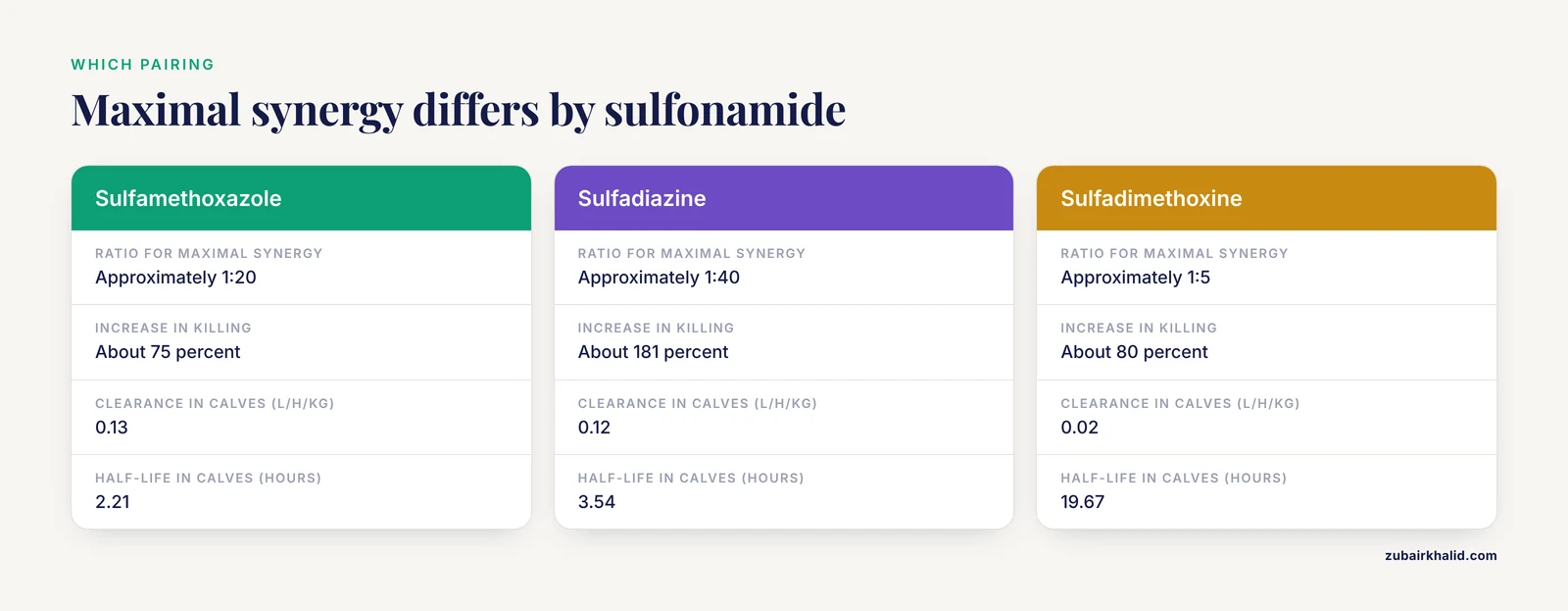
Time-kill testing showed the greatest bacterial killing at trimethoprim to sulfonamide ratios of 1:4 and 1:19, and the combination outperformed either drug given alone [3]. The ratio that produced maximal synergy differed by sulfonamide. It sat at approximately 1:20 for trimethoprim with sulfamethoxazole (about a 75 percent increase in killing), approximately 1:40 for trimethoprim with sulfadiazine (about a 181 percent increase), and approximately 1:5 for trimethoprim with sulfadimethoxine (about a 80 percent increase) [3].
Why the ratio matters more than the dose
The ratio between the two molecules is the core pharmacological idea behind this combination, and the ratio delivered in the bottle is not necessarily the ratio that persists at the site of infection.
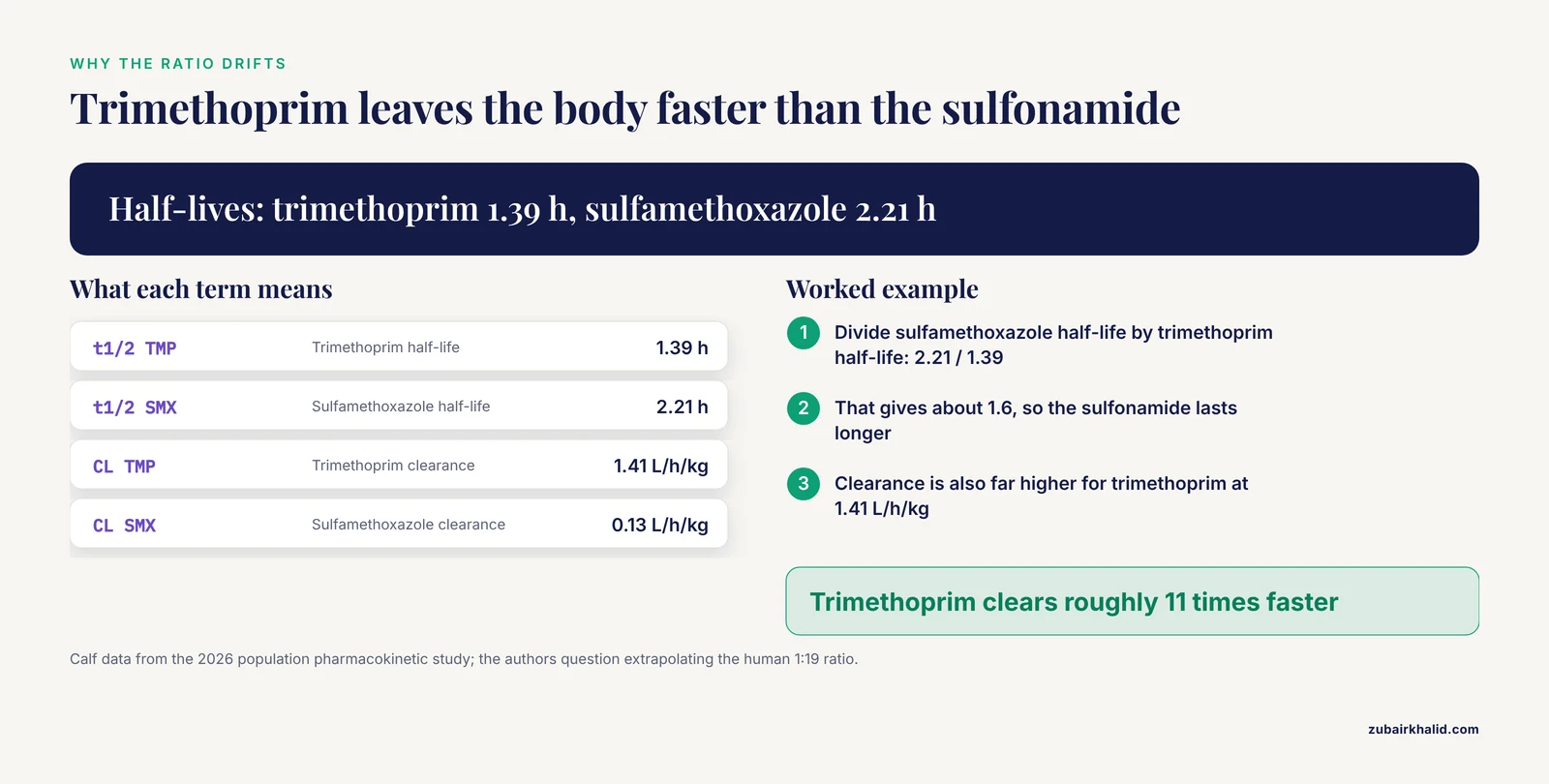
A 2026 population pharmacokinetic study in calves makes the point clearly [2]. The authors note that the widely used veterinary dose ratio of one part trimethoprim to five parts sulfonamide was inherited from human medicine, where the only licensed combination pairs trimethoprim with sulfamethoxazole and targets an in vivo free-drug ratio of about 1:19. Veterinary medicine uses several different sulfonamides, each with its own pharmacokinetics, so importing the human ratio into every veterinary product is a questionable assumption.
The data from that study show how differently the components behave. Sulfadiazine, sulfamethoxazole, and trimethoprim were best described by two-compartment models, while sulfadimethoxine required a third compartment. Sulfadimethoxine had the lowest clearance at 0.02 L/h/kg, sulfamethoxazole and sulfadiazine were similar at 0.13 and 0.12 L/h/kg, and trimethoprim had by far the highest clearance at 1.41 L/h/kg. Elimination half-lives followed the same pattern, at 19.67 hours for sulfadimethoxine, 3.54 hours for sulfadiazine, 2.21 hours for sulfamethoxazole, and 1.39 hours for trimethoprim [2].
The practical consequence is that trimethoprim disappears from the body far faster than any of the sulfonamides tested, so the ratio built into the tablet drifts as each dose is cleared. The investigators ran Monte Carlo simulations to model free-drug ratios at herd level and to test how well the standard ratio holds up across sulfonamides [2]. The study was conducted in calves, and the authors explicitly question whether a ratio developed for one sulfonamide in one species should be extrapolated to others. The same caution applies to dogs.
What It Treats in Pets
Trimethoprim-sulfonamide combinations are broad-spectrum antibacterials, meaning they act against a wide range of organisms rather than a narrow target. That breadth is why they were historically useful in general practice and why they are still prescribed when a veterinarian has reason to expect susceptibility.
The label on any veterinary product names the species and the conditions it is approved for, and that label is the authoritative statement of what the product is intended to treat in your pet. Outside the labeled indications, veterinarians sometimes prescribe the combination for other susceptible infections based on culture results. That is a clinical judgment, and it depends on what the laboratory reports.
Canine skin infections
Superficial bacterial folliculitis is more common in dogs than in other domesticated mammals, and it is the classic companion animal indication for a potentiated sulfonamide [1]. For years, a successful outcome was achievable with a potentiated amoxicillin, a first-generation cephalosporin, or a potentiated sulfonamide, because the organisms involved were predictably susceptible.
That predictability has eroded. Methicillin-resistant Staphylococcus pseudintermedius and methicillin-resistant Staphylococcus aureus are becoming more common in canine folliculitis, and the rising frequency of multidrug resistance complicates drug selection [1]. Culture and susceptibility testing has moved from optional to essential in many cases, and agents that were once rarely used in skin disease, including amikacin, rifampicin, and chloramphenicol, are now selected on the basis of those results [1].
The same review emphasizes that antimicrobial susceptibility changes have re-emphasized a multimodal approach to skin disease, with topical therapy playing a larger role. Chlorhexidine, benzoyl peroxide, ethyl lactate, triclosan, boric acid with acetic acid, and diluted sodium hypochlorite are among the antiseptics used to reduce bacterial load on the skin surface [1].
Bacteria from the mouth and periodontal pockets
A 2026 pilot study of canine periodontal pockets tested bacterial isolates against a panel of antimicrobials that included trimethoprim-sulfamethoxazole [4]. The investigators cultured subgingival samples from dogs under general anesthesia during comprehensive oral health assessment and treatment, identified organisms by MALDI-TOF mass spectrometry, and measured minimum inhibitory concentrations.
They recovered 122 isolates from 101 dogs, dominated by Pasteurella stomatis (54 isolates), Neisseria animaloris (33 isolates), and Streptococcus canis (35 isolates) [4]. Minimum inhibitory concentration distributions varied between bacterial species and between antimicrobial agents, and interpretation was limited because species-specific veterinary breakpoints do not exist for some of the isolates tested. The study is a reminder that the mouth harbors a mixed population of opportunistic bacteria and that susceptibility is not uniform across that population.
Food animal use and why owners hear about it
The combination is also used in food-producing animals, including for bovine respiratory disease, where it is frequently administered parenterally in a one-to-five trimethoprim to sulfonamide ratio [2]. That context explains why the same drug family appears in both farm and companion animal settings, and it is part of why residue and resistance surveillance in livestock matters to small animal practitioners.
What It Does Not Cover
Trimethoprim-sulfonamide is an antibacterial. It has no activity against viruses or fungi, so it will not help a viral upper respiratory infection, a viral enteritis, or a ringworm infection. Giving it in those situations exposes the pet to risk without benefit and pushes bacterial populations toward resistance.
It also does not reliably cover the resistant organisms that now appear in companion animal practice. Methicillin-resistant Staphylococcus pseudintermedius and methicillin-resistant Staphylococcus aureus are specifically identified as problems that have undermined the old predictability of potentiated sulfonamides in canine skin disease [1]. When these organisms are present, the veterinarian needs culture results to choose a drug that will actually work.
Gram-negative resistance is a separate concern. A 2026 genomic study characterized a multidrug-resistant Escherichia coli isolate from a healthy companion dog in South Korea, and that isolate was resistant to trimethoprim-sulfamethoxazole along with carbapenems, third-generation cephalosporins, fluoroquinolones, tetracycline, gentamicin, and phenicols [5]. It remained susceptible only to amikacin and colistin. The carbapenem resistance was carried on a transferable IncX3 plasmid, and that plasmid moved into a laboratory E. coli strain at a frequency of 5.91 × 10⁻⁴ during conjugation assays [5].
Resistance to this drug family is not rare among canine E. coli. In a study of 186 fresh fecal samples from dogs visiting 22 municipal dog parks in the Minneapolis and Saint Paul area of Minnesota, 29 percent yielded third-generation cephalosporin-resistant E. coli and 2.2 percent yielded extended-spectrum beta-lactamase producers [6]. Co-resistance to sulfonamides was typical, appearing in 77.3 percent of those isolates, and multidrug resistance involving three or more antimicrobial classes was substantial at 18.9 percent [6]. A drug that worked on a wound swab five years ago may not work on the same wound today.
How It Is Given
Trimethoprim-sulfonamide products for pets are given by mouth at the interval and for the duration written on the prescription label. The label is the authority for the dose, and the dose should not be adjusted by the owner based on the pet's size, appetite, or apparent improvement.
A few practical rules apply to every antimicrobial course:
- Give every dose at the scheduled interval. The ratio between the two active components depends on steady dosing, and trimethoprim clears the body quickly [2].
- Complete the full course even if the skin or wound looks normal before the pills run out. Stopping early leaves surviving bacteria behind.
- Do not save leftover medication for a future flare. Do not share one pet's prescription with another pet in the household.
- Do not use human trimethoprim-sulfamethoxazole tablets unless the veterinarian has specifically calculated a dose for that pet. Human tablets come in strengths and ratios designed for people.
- Record any dose that is vomited or missed and tell the veterinarian at the recheck.
Duration and recheck timing
The length of a course is a clinical decision. It depends on the infection being treated, the organism involved, the tissue affected, and how the pet responds. Your veterinarian sets both the duration and the recheck date, and the recheck is not optional paperwork. It is how the prescription gets validated against real-world response.
There is a pharmacological reason to take the recheck seriously. When investigators simulated clinically relevant canine dosing regimens against Staphylococcus pseudintermedius, the model predicted transient bacterial suppression rather than durable clearance [3]. A predicted transient effect means the dosing schedule and the length of the course carry as much weight as the choice of drug. Ask your veterinarian directly how long the course should run and what improvement should look like by the recheck date.
Side Effects and What to Do About Them
Antimicrobial treatment can produce reactions, and reactions range from mild and self-limiting to serious. Your veterinarian knows your pet's history and can tell you which signs deserve an immediate call and which can wait for the next business day.
Call the clinic promptly if you observe any of the following during or shortly after a course:
- Hives, facial swelling, or a sudden widespread rash
- Vomiting or diarrhea that is frequent, bloody, or accompanied by refusal to eat
- Marked lethargy, weakness, or a change in drinking and urination
- Yellowing of the gums, skin, or whites of the eyes
- Eye redness, squinting, or a change in the appearance of the eyes
- Any new neurological sign, such as wobbliness or confusion
- Any reaction that frightens you, even if it does not appear on this list
Do not wait for the next scheduled dose to report a suspected reaction. Stop giving the medication only on veterinary advice, because some reactions require a change of drug rather than no drug at all.
Antibiotic-associated diarrhea deserves specific attention. Diarrhea can reflect a direct drug effect, an overgrowth of resistant organisms, or an unrelated problem. Your veterinarian will decide whether to adjust the prescription, add supportive care, or perform additional testing.
Which Pets Should Not Receive It
Some pets should not be started on a trimethoprim-sulfonamide combination, and others should be switched away from it.
A pet with a documented prior reaction to a sulfonamide or to trimethoprim should not receive the combination again without an explicit discussion of that history. Tell the veterinarian about every previous medication reaction, including ones that seemed mild at the time.
A pet whose infection is already known to involve a resistant organism should not receive it empirically. Methicillin-resistant staphylococci in canine skin disease are the clearest example [1], and multidrug-resistant E. coli that is already resistant to trimethoprim-sulfamethoxazole is another [5]. Prescribing into a known resistance is a wasted course and a resistance pressure problem.
A pet in which susceptibility cannot be interpreted confidently may also be a poor candidate. Species-specific veterinary breakpoints do not exist for some of the oral bacteria recovered from canine periodontal pockets, which limits how far a minimum inhibitory concentration result can be pushed [4]. In that situation the veterinarian may choose a drug with better interpretive support.
Pets belonging to households that cannot reliably dose on schedule are a separate practical concern. Inconsistent dosing undermines the ratio the combination depends on and encourages resistance.
Puppies and kittens, pregnant or nursing animals, and pets with significant organ disease require an individualized risk assessment. These are decisions for the prescribing veterinarian, not for a general guide.
Interactions and What to Tell Your Veterinarian
The most useful thing an owner can do before a prescription is written is to disclose everything the pet is taking. That includes prescription drugs from other veterinarians, over-the-counter products, joint supplements, herbal preparations, and anything purchased online.
Bring the actual bottles or a photograph of the labels to the appointment. Product names alone are not enough, because combination products hide multiple ingredients behind a single brand name.
Tell the veterinarian about every diagnosed condition as well, including kidney disease, liver disease, thyroid disease, immune-mediated disease, and cancer. The pharmacokinetic differences between sulfonamides are large enough that underlying organ function matters to drug selection [2].
Ask a direct question about timing. If your pet takes other medications, ask whether the new prescription should be given at the same time or separated, and ask whether any of the existing medications should be paused during the course.
How It Compares With Alternatives
The alternatives to a trimethoprim-sulfonamide depend entirely on the infection being treated and the organism causing it.
For canine superficial bacterial folliculitis, the historical first-line options were potentiated amoxicillin, a first-generation cephalosporin, and a potentiated sulfonamide [1]. All three have lost some of their reliability as methicillin-resistant staphylococci have spread. When culture shows a resistant organism, veterinarians now turn to agents such as amikacin, rifampicin, or chloramphenicol based on susceptibility results [1].
Topical therapy is the other major alternative, and it is increasingly used alongside or instead of systemic antibiotics. Chlorhexidine, benzoyl peroxide, ethyl lactate, triclosan, boric acid with acetic acid, and diluted sodium hypochlorite all reduce bacterial numbers on the skin surface [1]. For some dogs, topical treatment alone can control a superficial infection, which avoids systemic drug exposure entirely.
Within the potentiated sulfonamide family itself, the choice of sulfonamide matters. Trimethoprim paired with sulfadiazine produced the largest maximal synergy in time-kill testing against Staphylococcus pseudintermedius (about 181 percent increase in killing), followed by sulfamethoxazole (about 75 percent) and sulfadimethoxine (about 80 percent), though these maximal effects occurred at different ratios for each pairing [3]. The same study found that sulfonamides raise trimethoprim potency rather than the reverse, which means the sulfonamide selected shapes the interaction.
Monotherapy is an option in some situations. Time-kill curves showed enhanced killing for the combinations compared with either drug alone [3], but a sulfonamide or trimethoprim alone may still be chosen if the organism is susceptible and the combination is not needed.
Resistance and Why It Matters to Every Pet Owner
Bacterial resistance to trimethoprim-sulfamethoxazole is a companion animal problem, not only a human hospital problem.
The Minnesota dog park survey is a useful illustration because it sampled healthy dogs with no known infection. Nearly three in ten fecal samples grew third-generation cephalosporin-resistant E. coli, and sulfonamide co-resistance was present in more than three-quarters of those isolates [6]. Resistant organisms are circulating in the ordinary dog population, in ordinary places.
The genomic study of the Korean dog isolate shows how far this can go. A single commensal E. coli from a healthy dog carried a transferable plasmid encoding a carbapenemase alongside resistance to trimethoprim-sulfamethoxazole and several other classes [5]. The plasmid transferred between bacteria in the laboratory. That is the mechanism by which resistance traits move between organisms and between hosts.
The clinical implication is straightforward. Every unnecessary course of a potentiated sulfonamide adds selection pressure to a population of bacteria that is already partly resistant. Culture and susceptibility testing is not bureaucracy. It is the tool that tells the veterinarian whether this particular drug will help this particular pet.
Antimicrobial stewardship guidance from the AVMA and AAHA supports exactly this approach: use antimicrobials only when a bacterial infection is likely, choose the narrowest effective agent, and let culture results guide the choice when possible.
Questions to Ask Your Veterinarian
- What organism do you suspect, and do we have a culture result that supports this prescription?
- Which specific sulfonamide is in this product, and why did you choose it over the alternatives?
- How long should the course run, and when should I schedule the recheck?
- What improvement should I see, and by what day should I call if I do not see it?
- Which side effects matter most for my pet's age, breed, and health history?
- Does this drug interact with anything my pet already takes?
- What should I do if a dose is missed or vomited?
- What signs would make you want to stop the medication and switch?
Limitations and When to Contact a Veterinarian
Every case is individual. Two dogs with the same diagnosis can need different drugs, different doses, and different durations. The information here describes the drug class, not your pet.
Contact your veterinarian promptly, and seek emergency care if the clinic is closed, in any of the following situations:
- The pet collapses, has a seizure, or has difficulty breathing
- The face, muzzle, or eyelids swell
- Hives or a rapidly spreading rash appear
- Vomiting or diarrhea is severe, bloody, or persistent beyond a day
- The pet stops eating or drinking
- The pet becomes markedly lethargic or weak
- The gums, skin, or eyes turn yellow
- The pet develops eye pain, squinting, or a change in vision
- Urination changes in frequency, volume, or color
- The infection looks worse rather than better after several days of treatment
- A dose was given to the wrong animal or at the wrong strength
Call your veterinarian before stopping the medication on your own. Some reactions require a substitute drug, and stopping without a plan can allow the infection to rebound.
Practical Administration and Storage Tips
Give each tablet with a small meal or hidden in a pill pocket unless your veterinarian specifies an empty stomach. Food can reduce stomach upset, but follow the label if it gives different instructions. Store tablets in the original container, tightly closed, at room temperature, away from heat, light, and moisture. Do not keep them in the bathroom or a hot car, and keep them out of reach of children and other pets.
If your pet vomits soon after a dose, do not give another tablet unless your veterinarian tells you to. Note the time and whether the pill was visible in the vomit, then call the clinic. Persistent vomiting, or vomiting with lethargy, needs veterinary attention. For a missed dose, give it when you remember only if the next dose is not close; otherwise skip it and resume the normal schedule. Never double the next dose. Call your veterinarian if vomiting persists or you are unsure the dose stayed down.
Serious Side Effects: Dry Eye, Crystalluria, and Blood Disorders
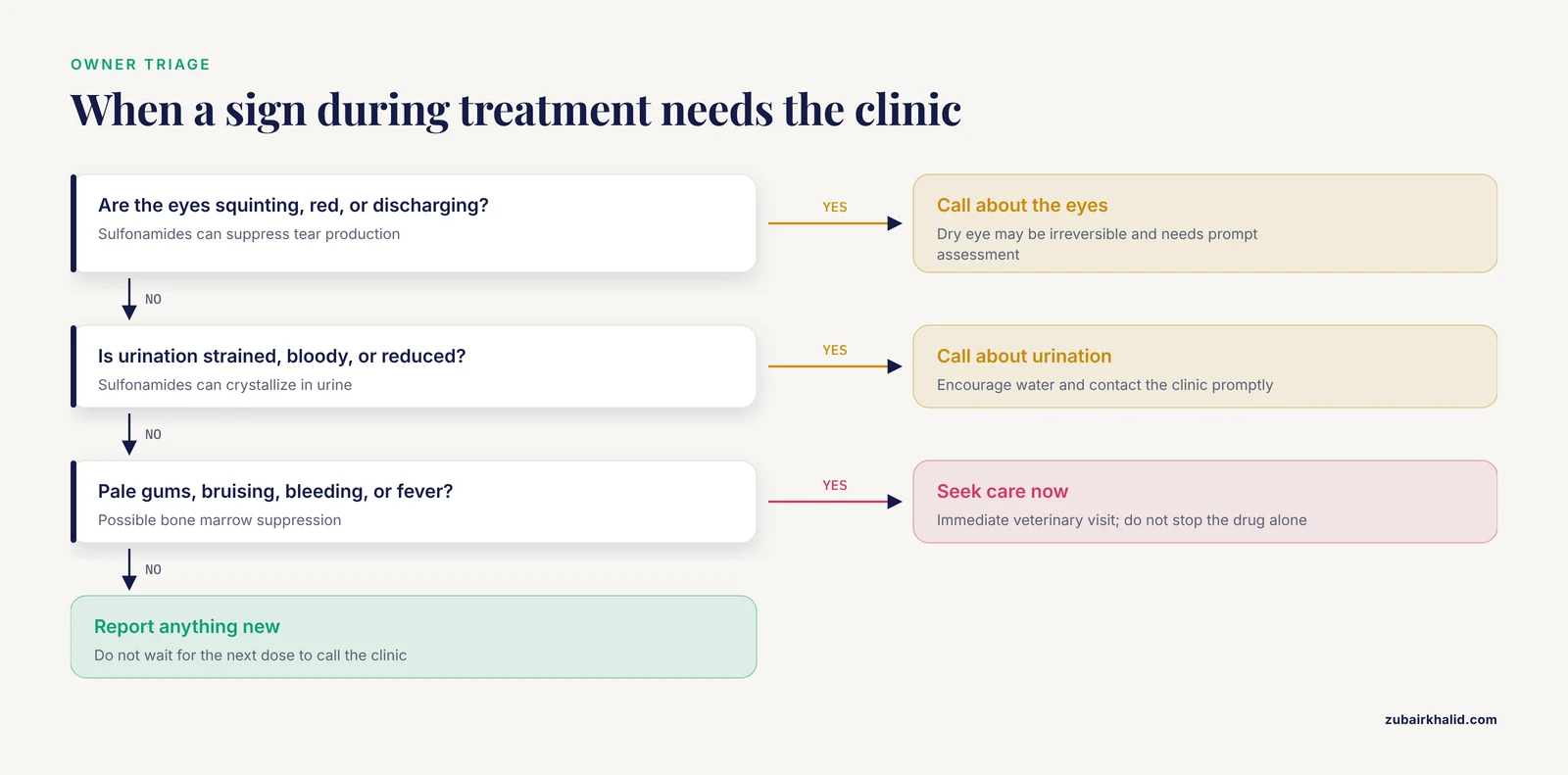
Three sulfonamide reactions require special attention because they can cause lasting harm if missed.
Dry eye (keratoconjunctivitis sicca)
Sulfonamides can suppress tear production. Signs include squinting, red or dull eyes, thick mucoid discharge, and a dry, cloudy cornea. The condition may be irreversible, and affected dogs often need lifelong tear-stimulating medication and artificial tears. Contact your veterinarian if your pet squints or develops eye discharge during treatment.
Crystalluria
Sulfonamides are excreted in urine and can crystallize, especially when water intake is low. Signs include straining to urinate, passing small amounts, blood in the urine, or reduced urination. Encourage water intake and call your veterinarian promptly if these signs appear.
Blood disorders
Sulfonamides can suppress bone marrow, causing anemia, low white blood cell counts, or low platelets. Watch for pale gums, lethargy, weakness, bruising, bleeding, or fever. Any of these signs warrants an immediate veterinary visit; do not stop the drug without contacting your veterinarian first.
Use in Cats and Other Species
Cats are more sensitive to sulfonamides than dogs. A cat given sulfamethoxazole and trimethoprim may develop dry eye, also called keratoconjunctivitis sicca, because the sulfonamide component can reduce tear production. For this reason the combination is rarely used in cats, and a veterinarian will usually select another antibiotic when a cat needs antibacterial treatment. Eye redness, squinting, or reduced tear production during a course warrants a prompt call to the clinic.
Do not give this drug to rabbits or rodents. It is considered unsafe in these species, and a prescription written for a dog or cat must never be transferred to a small mammal.
Other species, including birds and reptiles, have their own drug handling and toxicity concerns. Use is not routine and requires species-specific veterinary assessment.
Follow veterinary guidance exactly. Do not start, stop, or change the drug based on this article.
Related Guides
- Trimethoprim Sulfa for Birds: Dosage, Uses, and Safety: Same antibiotic family for birds; useful if treating avian patients
- Trimethoprim Sulfa for Guinea Pigs: Dosage, Uses, and Safety: Guinea pig-specific dosing and safety for this antibiotic combination
- Trimethoprim Sulfa for Rabbits: Dosage, Uses, and Safety: Rabbit-specific trimethoprim sulfa guidance for owners and veterinarians
- Trimethoprim Sulfa for Rats: Dosage, Uses, and Safety: Rat-specific dosing and safety for this antibiotic combination
- Trimethoprim Sulfa for Chinchillas: Dosage, Uses, and Safety: Chinchilla-specific dosing and safety for this antibiotic combination
Frequently Asked Questions
What is sulfamethoxazole and trimethoprim used for in pets?
It is used to treat bacterial infections caused by susceptible organisms, most commonly skin infections in dogs. Your veterinarian chooses it based on the suspected or confirmed organism.
Is sulfamethoxazole and trimethoprim the same as Bactrim?
Bactrim is a human brand of the sulfamethoxazole and trimethoprim combination. Veterinary products may pair trimethoprim with a different sulfonamide such as sulfadiazine or sulfadimethoxine, so the two are not interchangeable.
Can I give my pet my own trimethoprim-sulfamethoxazole tablets?
No. Human tablets are formulated and dosed for people, and the strength and ratio are wrong for pets. Only use a prescription written by your veterinarian for that specific animal.
How long does a course of sulfamethoxazole and trimethoprim last?
The duration is set by your veterinarian and depends on the infection, the organism, and your pet's response. Follow the label exactly and attend the recheck.
What should I do if I miss a dose?
Give the missed dose if it is not yet close to the next scheduled dose, then resume the normal schedule. Do not double up to make up for a missed dose, and tell your veterinarian at the recheck.
Can bacteria become resistant to sulfamethoxazole and trimethoprim?
Yes. Resistance to this combination is common among canine E. coli and is a growing concern with staphylococcal skin infections. Completing courses as prescribed and using culture results reduce the pressure that drives resistance.
Can puppies or kittens take sulfamethoxazole and trimethoprim?
Only under direct veterinary supervision. Age, weight, and health status all affect whether the combination is appropriate, and the decision belongs to the prescribing veterinarian.
What should I do if my pet vomits after a dose?
Do not repeat the dose automatically. Call your veterinarian, describe the timing and the appearance of the vomit, and follow the instructions you are given.
Sources
- Canine superficial bacterial folliculitis: current understanding of its etiology, diagnosis and treatment.
- Population pharmacokinetic modeling of sulfamethoxazole, sulfadiazine and sulfadimethoxine combined with trimethoprim in calves.
- Quantitative Pharmacodynamic Analysis of Trimethoprim-Sulfonamide Combination Activity Against Staphylococcus pseudintermedius.
- Culturable Opportunistic Bacteria and Antimicrobial Susceptibility Patterns in Canine Periodontal Pockets: A Pilot Study.
- Transferable IncX3-bla(KPC-2) plasmid and chromosomal bla(CTX-M-27) in a commensal Escherichia coli ST7854 isolated from a healthy companion dog.
- Occurrence and potential transmission of extended-spectrum beta-lactamase-producing extraintestinal pathogenic and enteropathogenic Escherichia coli in domestic dog faeces from Minnesota.