Whippet Dog Breed Guide: Temperament, Exercise, and Daily Care
By Dr. Zubair Khalid, DVM, MS, PhD ·
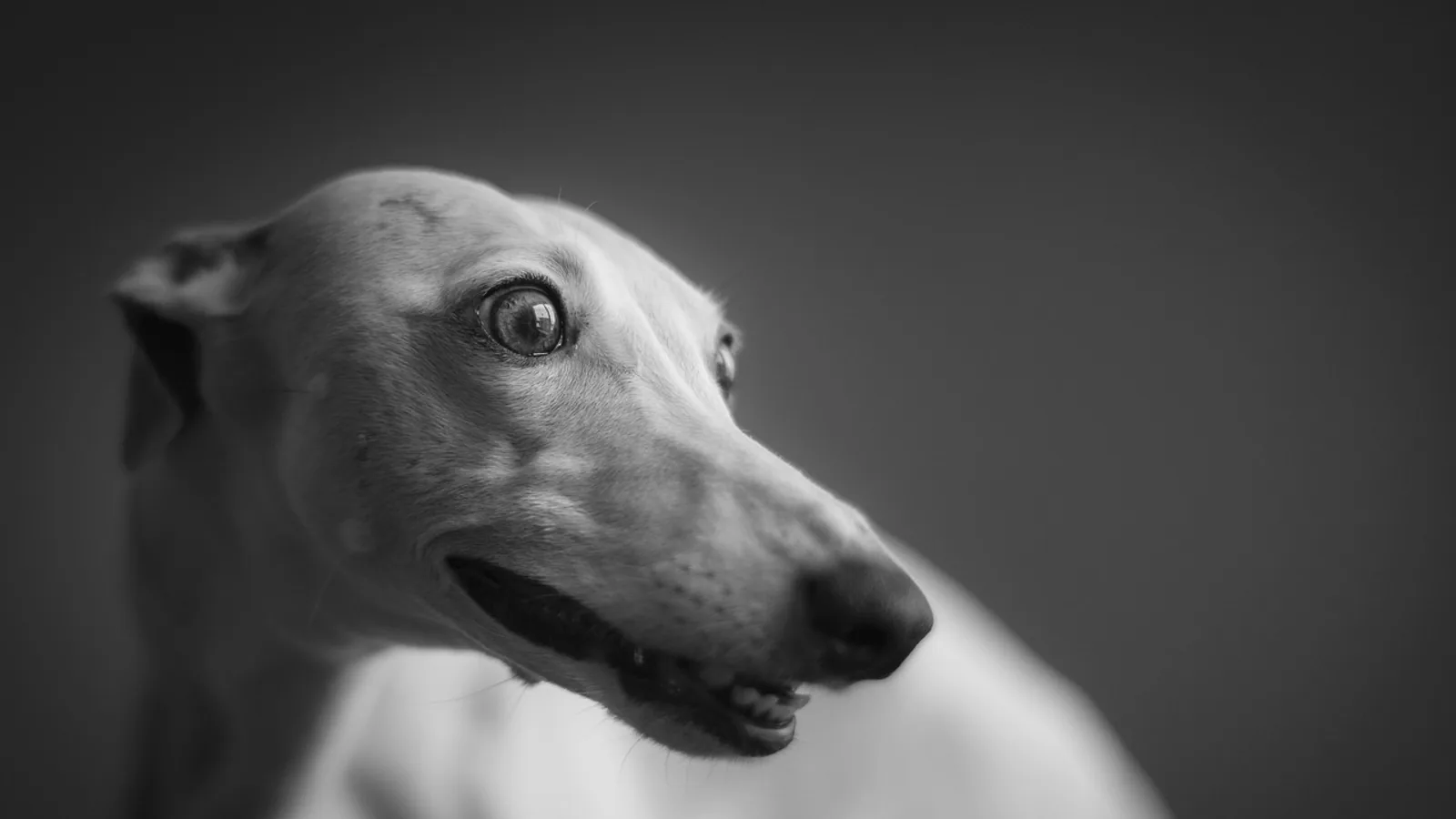
The Whippet is a medium-sized sighthound bred for short bursts of high-speed pursuit. The breed combines a quiet, gentle temperament with genuine athletic capability, and that pairing shapes almost every aspect of daily care. A Whippet dog typically stands 18 to 22 inches at the shoulder and weighs roughly 25 to 40 pounds, with a short, low-maintenance coat and a lifespan that commonly reaches 12 to 15 years [1][2]. The breed suits owners who want a calm companion at home and a fast, driven runner outdoors. It is less suited to homes that want a dog to run loose off-leash in open country, because the same prey drive that makes the Whippet fast also makes recall unreliable around moving animals.
This guide covers origin and purpose, appearance, temperament, apartment suitability, sprint exercise, training, grooming, feeding, cold sensitivity, the myostatin mutation behind the "bully" Whippet, sighthound-specific anesthesia concerns, and a short health summary that points to the site's dedicated Whippet health and feeding guides for detail.
This article is educational and is not a substitute for veterinary diagnosis or treatment.
At a Glance
| Trait | Typical range |
|---|---|
| Height (adult) | 18 to 22 inches at the shoulder [1][2] |
| Weight (adult) | 25 to 40 pounds [1][2] |
| Coat | Short, fine, close-lying [1][3] |
| Lifespan | 12 to 15 years [2] |
| Energy level | High in short bursts, low between runs [4][1] |
| Grooming | Minimal, occasional brushing [1][3] |
| Trainability | Responsive but sensitive, needs gentle handling [4][5] |
| Good with children | Often yes, with supervision and respectful handling [5] |
| Good with other pets | Variable, high prey drive toward small animals [5] |
| Apartment suitability | Often good, provided daily sprint outlets exist [5] |
| Cold tolerance | Low, thin coat and lean body [4][3] |
History and Purpose
The sighthounds are an ancient group of breeds selected over many generations for high-speed pursuit of prey by sight [4]. The Whippet belongs to that lineage and was developed as a smaller, more compact running dog than the Greyhound. The breed's historical role centered on coursing and short-distance racing, and that function still explains its body type and behavior.
Because the Whippet was bred to accelerate quickly and chase by sight rather than scent, it carries a strong visual prey drive. The breed is quiet indoors and explosive outdoors, a pattern that reflects its working history. Modern Whippets compete in lure coursing and straight racing, and many live as family companions with structured running outlets.
Appearance and Size
The Whippet is built for speed. It has a deep chest, a tucked abdomen, a long, slightly arched loin, and a lean, muscular frame. The head is long and narrow, and the ears are small and rose-shaped. The coat is short, fine, and close-lying, which makes grooming simple but leaves little insulation [1][3].
Whippet size separates the breed from the Greyhound. An adult Whippet stands about 18 to 22 inches at the shoulder and weighs roughly 25 to 40 pounds, while a Greyhound is substantially taller and heavier [1][2]. That size difference is the most practical distinction for owners comparing the two breeds.
Coat colors vary widely and include black, blue, fawn, red, brindle, and parti-color patterns. Because the coat is short, the Whippet sheds lightly and does not require clipping.
Whippet Temperament
Whippet temperament is the breed's strongest selling point for many owners. The Whippet is generally gentle, quiet, and affectionate with familiar people. It forms close bonds and often prefers to be near its owner rather than isolated in a yard. The breed is typically calm indoors and saves its energy for short, intense activity.
The sighthound group as a whole is described as having a nervous demeanor that can lead to stress-related complications in clinical settings, including stress-induced hyperthermia [4]. That clinical observation reflects a broader temperament trait. Whippets are sensitive to harsh handling, loud environments, and abrupt change. A calm, predictable household suits them better than a chaotic one.
Sensitivity does not mean fragility. A well-socialized Whippet is confident, playful, and capable of intense focus during running or chasing. The breed's temperament blends softness with athletic drive, and owners should plan for both.
Are Whippets Good Family Dogs?
Whippets are often good family dogs when children are taught to handle them gently. The breed is typically tolerant and affectionate, and its moderate size makes it manageable for many households [5]. The main cautions are the Whippet's thin skin and lean frame, which make rough play and accidental collisions more likely to cause injury, and its sensitivity to being startled or handled roughly. Supervised interaction and clear rules for young children reduce those risks. A Whippet that is chased, grabbed, or cornered may become defensive, so calm, respectful handling matters.
Whippet vs Greyhound
The Whippet and the Greyhound share sighthound ancestry, a lean build, and a strong chase drive. They differ mainly in size and in some practical care points. The Whippet is the smaller of the two, standing 18 to 22 inches and weighing 25 to 40 pounds, while the Greyhound is a large breed [1][2]. Both are quiet indoors and fast outdoors, and both share the sighthound traits that affect anesthesia management, including lean body conformation, a high surface-area-to-volume ratio, and a predisposition to hypothermia under anesthesia [4]. For owners in apartments or smaller homes, the Whippet's size is often the deciding factor.
Apartment Suitability
Whippets can adapt well to apartment living because they are quiet and low-energy indoors. The breed does not need a large yard, but it does need daily opportunities to sprint in a safe, enclosed space [5]. A Whippet that gets its running outlet is often content to sleep for much of the day. A Whippet that does not get that outlet may become restless, destructive, or difficult to manage.
Apartment owners should plan for leashed walks, secure off-leash running sessions, and indoor enrichment. Stairs and hard floors can be awkward for a lean sighthound, and a soft bed in a warm spot matters because the breed tolerates cold poorly.
Exercise and Training Needs
Whippet exercise is best understood as sprint work rather than endurance work. The breed was developed for short bursts of high-speed pursuit, and it thrives on brief, intense running sessions rather than long, slow distance. A fenced yard, a secure dog park, or a designated running area gives the Whippet a safe place to reach full speed.
The sighthound's lean body conformation and high surface-area-to-volume ratio predispose these dogs to hypothermia during anesthesia, and the same body type makes them lose heat quickly during cold-weather activity [4]. Cold-weather running should be brief and paired with a coat. Hot weather carries its own risk, and owners should avoid peak heat because the breed's thin coat offers little protection.
Recall and Prey Drive
Recall is the single most important training challenge with a Whippet. The breed was selected to chase prey by sight, and a moving rabbit, squirrel, or smaller dog can override trained cues [4]. A Whippet that is running at full speed may not hear or choose to respond to a recall cue until the chase ends.
Owners should treat off-leash freedom as a privilege earned through consistent training and should use enclosed spaces for running. Long lines and fenced fields are safer than open parks. Recall training should begin early, use high-value rewards, and continue throughout the dog's life. Even a well-trained Whippet may not be reliable around fleeing animals, and that limitation is part of the breed rather than a training failure.
Training Approach
Whippets respond well to positive reinforcement and gentle, consistent handling. The breed's sensitive temperament means harsh corrections can damage trust and create avoidance [4][5]. Short, frequent sessions work better than long, repetitive ones. Because the breed is quiet and often undemanding, owners sometimes under-train. Basic manners, crate comfort, and recall should be taught deliberately.
Socialization during puppyhood should expose the Whippet to varied people, sounds, surfaces, and calm dogs. Early positive exposure reduces the nervousness that sighthounds can show in unfamiliar or clinical settings [4].
Grooming and Coat Care
Grooming a Whippet is simple. The short, fine coat needs only occasional brushing to remove loose hair, and the breed does not require clipping [1][3]. Nails should be trimmed regularly, ears checked, and teeth brushed as part of routine care. Because the coat is thin, the skin is visible and easily nicked. Owners should inspect for cuts and scrapes after running in brush or rough terrain.
The Whippet's thin skin is a practical concern. Minor injuries that would be trivial in a thick-coated breed can bleed more noticeably in a Whippet. Basic first aid supplies and a habit of checking the dog after outdoor activity are useful.
Cold Sensitivity and Thin Skin
Cold sensitivity is a defining care issue for the Whippet. The breed has a short coat, minimal body fat, and a lean frame, and sighthounds in general have a high surface-area-to-volume ratio that promotes heat loss [4][3]. A Whippet can become uncomfortable or chilled in conditions that a heavier-coated breed tolerates easily.
Owners should use a well-fitted coat or sweater in cold weather, limit outdoor time in low temperatures, and provide warm, draft-free indoor resting spots. A Whippet that shivers, tucks its tail, or lifts its paws is telling you it is cold. Indoor warmth matters too, and a Whippet may seek out blankets, sunny spots, and human laps.
Thin skin and a lean frame also mean the breed is prone to cuts, scrapes, and pressure injuries. Soft bedding and careful handling reduce the risk. Owners should keep a first aid kit and know when a wound needs veterinary attention.
Feeding Considerations
Feeding a Whippet is about matching intake to a body type that is naturally lean and athletic. The breed should carry visible muscle without excess fat, and owners should be able to feel the ribs without pressing hard. Because the Whippet is a sighthound with a deep chest, some owners and veterinarians discuss feeding practices that reduce the risk of bloat, though the breed is not among the highest-risk dogs for the condition. The site's dedicated Whippet feeding guide covers portioning, body condition scoring, and diet selection in detail.
Owners should feed a complete and balanced diet appropriate for the dog's life stage, measure portions, and adjust based on activity. A Whippet in hard training has different needs than a retired companion. Sudden diet changes should be avoided, and any persistent change in appetite, weight, or digestion warrants veterinary evaluation.
The Myostatin Mutation and the "Bully" Whippet
The Whippet carries a well-documented genetic variant that affects muscle mass and racing performance. A mutation in the myostatin (MSTN) gene produces a double-muscled phenotype known as the "bully" Whippet. Dogs with two copies of a two-base-pair deletion in the third exon of MSTN develop the pronounced bully appearance [6].
The same study found that dogs carrying only one copy of the mutation are, on average, more muscular than wild-type dogs and are significantly faster in competitive racing events [6]. A separate review of the finding described it as the first definitive evidence that loss of myostatin function can enhance athletic performance [7]. In other words, the mutation is not simply a cosmetic trait. It is a performance variant with measurable effects on muscle and speed.
For owners, the practical takeaway is that the bully Whippet is a recognized phenotype with a known genetic basis, not a separate breed. The mutation is relevant to breeding decisions and to understanding why some Whippets are unusually muscular. The site's Whippet health guide covers the broader health picture.
Sighthound Anesthesia Notes
Sighthounds have a set of physiological and pharmacological traits that affect anesthetic management, and Whippet owners should know about them before any procedure requiring sedation or general anesthesia. These traits include a nervous demeanor that can lead to stress-related complications such as hyperthermia, lean body conformation with a high surface-area-to-volume ratio that predisposes these dogs to hypothermia during anesthesia, and hematological differences such as a higher packed cell volume and lower serum protein compared with other breeds, which can complicate interpretation of preanesthetic blood work [4].
The most important drug-specific point is that sighthounds have impaired biotransformation of certain drugs by the liver, resulting in prolonged recovery from some intravenous anesthetics, especially thiopental, and an increased risk of drug interactions [4]. Thiopental and other thiobarbiturates should not be used in these dogs. Recommended alternative intravenous anesthetics include propofol, a ketamine and diazepam combination, and methohexital. Coadministration of agents that inhibit drug biotransformation, such as chloramphenicol, should be avoided. Inhalation anesthesia using isoflurane is the preferred approach [4].
Safe anesthetic management of sighthounds should include sedative premedication and appropriate analgesic drugs to minimize perioperative stress [4]. Owners should tell any veterinarian or emergency clinic that their dog is a sighthound and confirm that the team is familiar with sighthound-specific protocols. This is a routine conversation, not a sign of a problem, and it can prevent avoidable complications.
Health Summary
The Whippet is generally a healthy breed, but it has breed-relevant concerns that owners should discuss with a veterinarian. The sighthound hematological profile, including a higher packed cell volume and lower serum protein than other breeds, is a normal breed variation that can complicate interpretation of routine blood work [4]. That is a laboratory consideration rather than a disease.
The myostatin mutation is a genetic trait with performance effects rather than a disease [6][7]. The bully phenotype is recognized and documented, and breeding decisions should account for it.
This guide does not list every condition seen in the breed. The site's dedicated Whippet health problems guide covers inherited and common conditions, recommended screening tests, and what to discuss with a veterinarian. The site's Whippet feeding guide covers diet and body condition in detail. Owners should use those pages for condition-specific information and treat this page as an overview of temperament, exercise, and daily care.
Lifespan and Life Stage Care
The Whippet commonly lives 12 to 15 years [2]. That lifespan means owners should plan for several life stages. Puppies need socialization, controlled exercise, and gentle training. Adults need daily sprint outlets and routine preventive care. Seniors need adjusted exercise, more frequent veterinary checks, and attention to comfort.
Because the breed is lean and thin-skinned, older Whippets may need softer bedding and warmer resting areas. Dental care, nail trimming, and weight monitoring remain important throughout life. Routine wellness visits should follow the schedule your veterinarian recommends, consistent with AAHA wellness guidelines.
Finding a Responsible Breeder or Rescue
A responsible Whippet breeder prioritizes health, temperament, and honest communication. Buyers should ask about the parents' health history, the breeder's approach to the myostatin mutation, and whether the breeder screens for breed-relevant conditions. The site's Whippet health guide lists the specific screening tests to ask about.
Rescue is a strong option for this breed. Whippet rescue organizations place adults and seniors, and many retired racing or coursing dogs adapt well to family life. Adopters should ask about the dog's prey drive, recall history, and comfort with children and other pets.
Owners should meet the dog before committing, ask for a written health record, and avoid breeders who cannot or will not discuss health testing. A responsible breeder will welcome questions and provide documentation.
Who Should Not Get a Whippet
A Whippet is not a good fit for every household. The breed is a poor choice for owners who want a dog that can run reliably off-leash in open, unfenced country, because the visual prey drive is strong and recall is not guaranteed [4][5]. It is also a poor fit for homes that cannot provide secure daily running outlets or that expect a dog to tolerate cold weather without accommodation.
The breed is not ideal for households that rely on harsh training methods, because the Whippet's sensitive temperament responds poorly to rough handling [4]. It is also a poor match for owners who want a thick-coated, cold-tolerant dog or a dog that can be left alone for long periods without companionship.
A Whippet can thrive in an apartment, a suburban home, or a rural property, provided the owner meets the breed's needs for sprint exercise, warmth, gentle training, and secure containment.
Limitations and When to Contact a Veterinarian
This article is educational and is not a substitute for veterinary diagnosis or treatment. Individual Whippets vary, and a veterinarian who examines your dog is the only source of specific medical advice.
Contact a veterinarian promptly if your Whippet has a wound that will not stop bleeding, a cut that exposes deeper tissue, or swelling around an injury. Seek care if the dog shows sudden lameness, reluctance to move, or pain when handled. Contact a veterinarian if your Whippet has a persistent change in appetite, weight, thirst, or urination, or if it vomits repeatedly or has diarrhea lasting more than a day.
Seek emergency care if your Whippet has difficulty breathing, collapses, has a distended abdomen, or shows signs of severe pain. Tell any veterinary team that your dog is a sighthound so they can account for breed-specific anesthesia and drug-handling considerations [4]. If your Whippet is scheduled for a procedure, ask in advance which anesthetic protocol will be used and confirm that thiobarbiturates such as thiopental will be avoided [4].
Reading the Whippet as a Patient, Not Just a Pet
Most breed guides describe the Whippet in terms of personality and exercise, and those are genuinely the two things that dominate day to day life with the breed. What they often leave out is how the same physical and behavioral traits that make a Whippet a Whippet also shape the way a veterinarian examines, diagnoses, and treats one. Understanding that overlap is useful for owners because it changes what you notice at home, what you write down, and what you say when you walk into a clinic.
The Whippet is a sighthound, and sighthound physiology is not simply a smaller version of Greyhound physiology. It is a distinct clinical profile. The lean body conformation, the high surface-area-to-volume ratio, the nervous temperament, and the atypical hematology all interact with routine veterinary care in ways that owners can prepare for [4]. None of this means a Whippet is fragile or difficult to treat. It means the breed rewards owners who pay attention and communicate clearly.
This section expands on the clinical reasoning behind breed-specific care, the diagnostic workflow a veterinarian is likely to follow when something goes wrong, the limits of what current evidence can tell us, and the practical steps owners can take before, during, and after a veterinary visit.
Why Sighthound Temperament Matters in a Clinical Setting
Whippet temperament is usually described in warm terms: gentle, quiet, affectionate, sensitive. In a veterinary context, that same sensitivity has a measurable downside. The sighthound group is described as having a nervous demeanor that can lead to stress-related complications, including stress-induced hyperthermia [4]. A dog that is already prone to nervous arousal can spike a temperature simply from the stress of a car ride, a waiting room, and a stranger in a white coat.
This matters because an elevated temperature reading in a nervous sighthound is not automatically evidence of infection or systemic illness. A veterinarian has to weigh the reading against the dog's behavior, the environment, and whether the temperature normalizes once the dog settles. Owners can help by reporting what the dog's baseline behavior was that morning, whether it has been panting or trembling, and whether the dog has been in a hot car or a warm waiting room.
The practical takeaway is not that Whippets are sickly. It is that stress physiology and body temperature are linked in this breed, and a single number in isolation can mislead. A calm, low-stimulation approach to handling benefits the dog and improves the quality of the data the veterinarian collects.
The Sighthound Blood Panel: What Looks Abnormal but Is Not
One of the most useful things a Whippet owner can understand is that routine blood work in this breed can look unusual without indicating disease. Sighthounds have hematological differences including a higher packed cell volume and lower serum protein compared with other breeds, and these differences can complicate interpretation of preanesthetic blood work [4].
In plain terms, a Whippet may have a red blood cell measurement that would raise concern in a Labrador but is normal for a sighthound. The serum protein value may sit lower than a generic reference range expects. If a veterinarian is not aware that the dog is a sighthound, those numbers can trigger unnecessary worry, repeat testing, or a diagnostic workup that was never needed.
This is why the single most valuable sentence an owner can say at check-in is some version of: this is a Whippet, a sighthound breed, and I understand the breed has its own normal ranges. That one sentence changes how the clinician reads the panel. It also opens the door to a conversation about whether the laboratory's reference intervals account for sighthounds or whether the clinician needs to interpret the results against breed-specific expectations.
Owners should also keep a personal record of their dog's previous blood values. A Whippet with a stable, breed-typical panel across several years is far easier to interpret than a single snapshot. Trends matter more than isolated numbers, and a baseline established when the dog is healthy is worth more than any single result collected during an illness.
Diagnostic Reasoning When a Whippet Presents with a Problem
When a Whippet comes into a clinic with a real complaint, the diagnostic process follows a logical sequence, and owners benefit from understanding it. The first step is almost always a thorough history. Because Whippets are quiet and stoic, they may not display pain the way a more demonstrative breed would. Owners often notice subtle changes first: a reluctance to jump onto the couch, a shorter stride, a hesitation at the top of the stairs, or a loss of interest in the evening run.
Those observations are clinically valuable. A veterinarian uses them to decide whether the problem is musculoskeletal, neurological, or systemic. From there, the physical examination focuses on the areas most likely to be involved. In a lean, thin-skinned breed, the examiner can often palpate muscle, joint, and bone more easily than in a heavily coated dog, which can be an advantage for detecting swelling, asymmetry, or a focal area of pain.
If the history and examination point toward a soft tissue injury, the next step is often a period of rest combined with reassessment. If the problem persists or worsens, imaging becomes relevant. Radiographs can evaluate bone and joint structure, while ultrasound or more advanced imaging may be needed for soft tissue. The choice depends on what the clinician suspects and what the dog will tolerate.
The key point for owners is that diagnosis in a sighthound is a process of narrowing, not a single test. Each step is chosen based on what the previous step revealed. Owners who bring a written timeline of when the problem started, what has changed, and what makes it better or worse give the veterinarian a much stronger starting point.
Preparing for a Veterinary Visit: A Practical Checklist
Preparation is one of the few things an owner fully controls, and it directly improves the quality of care a Whippet receives. The following steps are simple but high yield.
First, write down the reason for the visit in one or two sentences. "She has been limping on the right front leg for four days, worse after running" is far more useful than "she seems off."
Second, note the timeline. When did the first sign appear? Has it changed? Is it better in the morning and worse after activity, or the reverse? A pattern is often more informative than a single observation.
Third, record appetite, water intake, urination, and stool quality for the days leading up to the visit. These are the vital signs of daily life, and changes in them often point toward systemic rather than localized problems.
Fourth, bring a list of everything the dog eats and every supplement or medication it receives, including flea, tick, and heartworm preventives. Owners sometimes forget that a joint supplement or a homemade topper is part of the clinical picture.
Fifth, state clearly that the dog is a sighthound and ask whether the clinic is familiar with sighthound anesthesia and drug handling [4]. This is not an unusual request. It is a normal part of breed-aware care.
Sixth, if the dog is anxious, ask about a low-stress handling approach or a quiet exam room. Reducing stress improves the examination and reduces the chance of a stress-related temperature spike [4].
Finally, bring a written list of your questions. It is easy to forget them in the moment, and a written list ensures the conversation covers what matters to you.
Understanding Anesthesia Risk in Plain Language
The anesthesia notes for sighthounds are among the most important breed-specific facts an owner can carry. The core issues are threefold: a predisposition to hypothermia under anesthesia because of lean body conformation and a high surface-area-to-volume ratio, impaired liver biotransformation of certain drugs leading to prolonged recovery, and an increased risk of drug interactions [4].
The drug-specific concern centers on thiobarbiturates such as thiopental, which should not be used in these dogs. Recommended alternatives include propofol, a ketamine and diazepam combination, and methohexital. Agents that inhibit drug biotransformation, such as chloramphenicol, should be avoided. Inhalation anesthesia using isoflurane is the preferred approach, and safe management should include sedative premedication and appropriate analgesia to minimize perioperative stress [4].
For owners, the practical translation is straightforward. Before any procedure requiring sedation or general anesthesia, confirm that the team knows the dog is a sighthound. Ask which protocol will be used. Ask how the dog will be kept warm during and after the procedure. Ask who will monitor recovery. These are reasonable questions, and a well-prepared clinic will answer them without hesitation.
It also helps to understand why recovery can look different in a sighthound. A dog that takes longer than expected to fully wake up is not necessarily in trouble, but the team should be aware of the breed's slower clearance of certain drugs so they can plan accordingly [4]. Owners who know this in advance are less likely to be alarmed and better able to ask informed questions.
Pain, Stoicism, and the Owner's Role in Detection
Whippets are not dramatic dogs. Many will tolerate discomfort quietly, which means the burden of detection often falls on the owner. The signs are usually behavioral rather than vocal. A dog that stops greeting you at the door, that no longer stretches out on the couch, that avoids a particular turn on the walk, or that sleeps more than usual may be telling you something.
Because the breed is lean and thin-skinned, injuries can also be visible in ways that are easy to miss. A small cut on a leg, a scuff on the chest, or a tender spot along a muscle may only show up when you run your hands over the dog after a run. A brief post-activity check is a habit worth building. It takes a minute and can catch problems early.
Owners should also be alert to changes in gait. A Whippet that is reluctant to extend fully at a gallop, that short-strides on one side, or that refuses to turn tightly may have a soft tissue or joint issue. Early detection usually means simpler management.
Prevention: What Owners Can Actually Control
Prevention in a Whippet is less about exotic interventions and more about consistent, sensible care. Several areas matter most.
Weight management is foundational. A Whippet should carry visible muscle without excess fat, and owners should be able to feel the ribs without pressing hard. Excess weight increases load on joints and reduces exercise tolerance. Because the breed is naturally lean, a gradual weight gain can be easy to overlook until it is significant.
Exercise design matters too. The breed is built for short bursts, not long endurance work, and matching activity to that design reduces the risk of overuse injury. Warm-up and cool-down periods, avoiding hard sprinting on slippery surfaces, and choosing safe footing all reduce strain.
Environmental protection is another lever. Cold sensitivity is a defining trait, and a well-fitted coat, limited time outdoors in low temperatures, and warm indoor resting spots all reduce heat loss and discomfort [4][3]. Soft bedding protects thin skin and bony prominences from pressure injury.
Routine preventive care, including dental care, nail trimming, parasite prevention, and wellness visits on the schedule your veterinarian recommends, catches problems before they become expensive or painful. Owners should treat these as non-negotiable rather than optional.
Finally, secure containment is a form of prevention. A Whippet that gets loose in an unfenced area is at risk from vehicles, other animals, and terrain. Because the visual prey drive is strong and recall is not guaranteed, prevention here means physical containment rather than relying on training alone [4][5].
Prognosis and the Value of Early Presentation
Prognosis in any individual Whippet depends on the specific problem, its severity, and how early it is identified. What can be said generally is that early presentation tends to widen the range of options. A soft tissue injury caught early may respond to rest and controlled return to activity, while the same injury allowed to progress may require more involved management. A wound treated promptly is less likely to become infected. A change in appetite or weight investigated early is easier to interpret than one that has been present for months.
Owners sometimes delay a visit because they are unsure whether a sign is serious. A useful rule is that any change lasting more than a day or two, any sign of pain, and any wound that will not stop bleeding all justify a call or a visit. The cost of an unnecessary visit is usually far lower than the cost of a delayed diagnosis.
It is also worth remembering that the Whippet's long lifespan, commonly 12 to 15 years, means owners will likely navigate multiple life stages with the same dog [2]. Building a relationship with a veterinary team over years, and keeping records of baseline values and past problems, pays dividends as the dog ages.
Special Populations: Puppies, Seniors, and Athletes
Different Whippets have different needs, and three groups deserve specific attention.
Whippet puppies are growing, and their joints and growth plates are still developing. Controlled exercise, appropriate socialization, and gentle training are the priorities. Because the breed is sensitive, early positive exposure to handling, sounds, and clinical environments reduces the nervousness that can complicate veterinary visits later [4]. Puppy visits should be low stress and frequent enough that the dog learns a clinic is not a frightening place.
Senior Whippets face the ordinary changes of aging plus the breed's specific vulnerabilities. Lean muscle mass may decline, thin skin becomes more prone to injury, and cold tolerance may worsen. Older Whippets often benefit from softer bedding, warmer resting areas, shorter and gentler exercise, and more frequent veterinary checks. Dental disease, which is common in older dogs generally, deserves attention because it affects comfort and nutrition.
Athletic Whippets, including those in lure coursing or racing, have their own considerations. The myostatin variant is directly relevant here, since dogs with one copy of the mutation are on average more muscular and significantly faster in competitive racing events, and dogs with two copies show the double-muscled bully phenotype [6][7]. Owners of performance Whippets should understand that this is a genetic trait with measurable effects, not a cosmetic curiosity. It is also relevant to breeding decisions, and the site's dedicated health guide covers the broader picture.
The Limits of What We Know
Honest veterinary writing has to acknowledge uncertainty, and the Whippet is no exception. Much of what is known about sighthound anesthesia comes from the broader sighthound literature rather than from Whippet-specific studies, and the recommendations are extrapolated across the group [4]. That does not make them wrong, but it does mean individual variation exists and clinical judgment still matters.
The myostatin findings are well documented, but the practical implications for health beyond muscle mass and racing performance are still an area of active interest rather than settled fact [6][7]. Owners should be cautious about anyone who presents these findings as a complete explanation of the breed's health.
Breed-specific reference ranges for laboratory values are not universally standardized, which means interpretation can vary between clinics and laboratories. This is another reason a documented baseline for your own dog is valuable.
Finally, this article is educational and is not a substitute for veterinary diagnosis or treatment. Individual Whippets vary, and a veterinarian who examines your dog is the only source of specific medical advice. The goal here is to help you observe carefully, prepare well, and ask better questions, not to replace the clinician who knows your dog.
Putting It Together: Daily Care as Preventive Medicine
The threads running through this guide connect more than they might first appear. Whippet temperament, size, exercise needs, cold sensitivity, and sighthound physiology are not separate topics. They are one integrated picture, and daily care is where that picture becomes practical.
A Whippet that gets appropriate sprint exercise is easier to manage at home and less likely to injure itself through frustrated, uncontrolled activity. A Whippet kept warm and comfortable is less stressed and easier to examine. A Whippet trained with gentle, consistent methods is more cooperative at the clinic and less prone to stress-related complications [4][5]. A Whippet whose owner keeps records and communicates clearly receives better, faster, and more accurate care.
Owners who internalize this tend to find that caring for a Whippet is not complicated. It is consistent. Feed to condition, run in secure spaces, protect from cold, train gently, check the skin after activity, keep preventive care current, and speak up about the breed at every veterinary visit. Do those things, and the breed's remarkable combination of calm companionship and athletic capability tends to take care of itself.
Frequently Asked Questions
How big does a Whippet get?
An adult Whippet stands about 18 to 22 inches at the shoulder and weighs roughly 25 to 40 pounds [1][2]. The breed is smaller than the Greyhound but larger than most toy sighthounds.
What is Whippet temperament like?
Whippets are typically gentle, quiet, affectionate, and sensitive. They are calm indoors and intense during running, and they respond best to gentle, consistent handling [4][5].
Are Whippets good family dogs?
Often yes, with supervision and respectful handling. Their moderate size and affectionate nature suit many families, but their thin skin and sensitivity mean rough play should be avoided [5].
Do Whippets need a lot of exercise?
They need daily sprint outlets rather than long endurance work. Short, intense running sessions in a secure area suit the breed's athletic design [4][1].
Can a Whippet live in an apartment?
Yes, often. Whippets are quiet indoors and adapt well to smaller homes if they get regular opportunities to run in a safe, enclosed space [5].
Are Whippets hard to train?
They are responsive but sensitive. Positive reinforcement and short sessions work well, and harsh corrections can damage trust [4][5].
What is a bully Whippet?
A bully Whippet carries two copies of a myostatin gene mutation that produces a double-muscled appearance [6]. Dogs with one copy are often more muscular and faster than wild-type dogs [6][7].
Why do Whippets need special anesthesia precautions?
Sighthounds have lean body conformation, a predisposition to hypothermia under anesthesia, and impaired liver biotransformation of certain drugs, so thiobarbiturates such as thiopental should be avoided [4]. Tell your veterinarian your dog is a sighthound.
Related Articles
- Bernese Mountain Dog Care, Health, Temperament, Size and Lifespan
- Choosing the Right Dog Breed for Your Lifestyle: Apartments and Families
- Newfoundland Dog: Gentle Giant Breed Guide, Temperament & Care
- Pitbull Dog Breed Guide: Temperament, Care, and Common Myths Debunked
- Bernese Mountain Dog: Complete Breed Guide, Temperament, and Care Tips
- Boxer Dog Breed: History, Temperament, Health Records, Care, and Home Fit
- Teddy Bear Dogs: Breeds, Size, Temperament, and Health
- Kangal Dog: Size, Temperament, Bite Force Claims, and Care
- Chow Chow Dog Breed Guide: Temperament, Grooming, and Care
Sources
- Whippet Dog Breed Information (akc.org)
- Whippet - Breeds A to Z (thekennelclub.org.uk)
- Whippet (pdsa.org.uk)
- Anesthesia of the sighthound.
- Is the Whippet a Good Fit for You? (akc.org)
- A mutation in the myostatin gene increases muscle mass and enhances racing performance in heterozygote dogs.
- Sprinting without myostatin: a genetic determinant of athletic prowess.