Scottish Terrier (Scottie Dog): Temperament, Care, and Health
By Dr. Zubair Khalid, DVM, MS, PhD ·
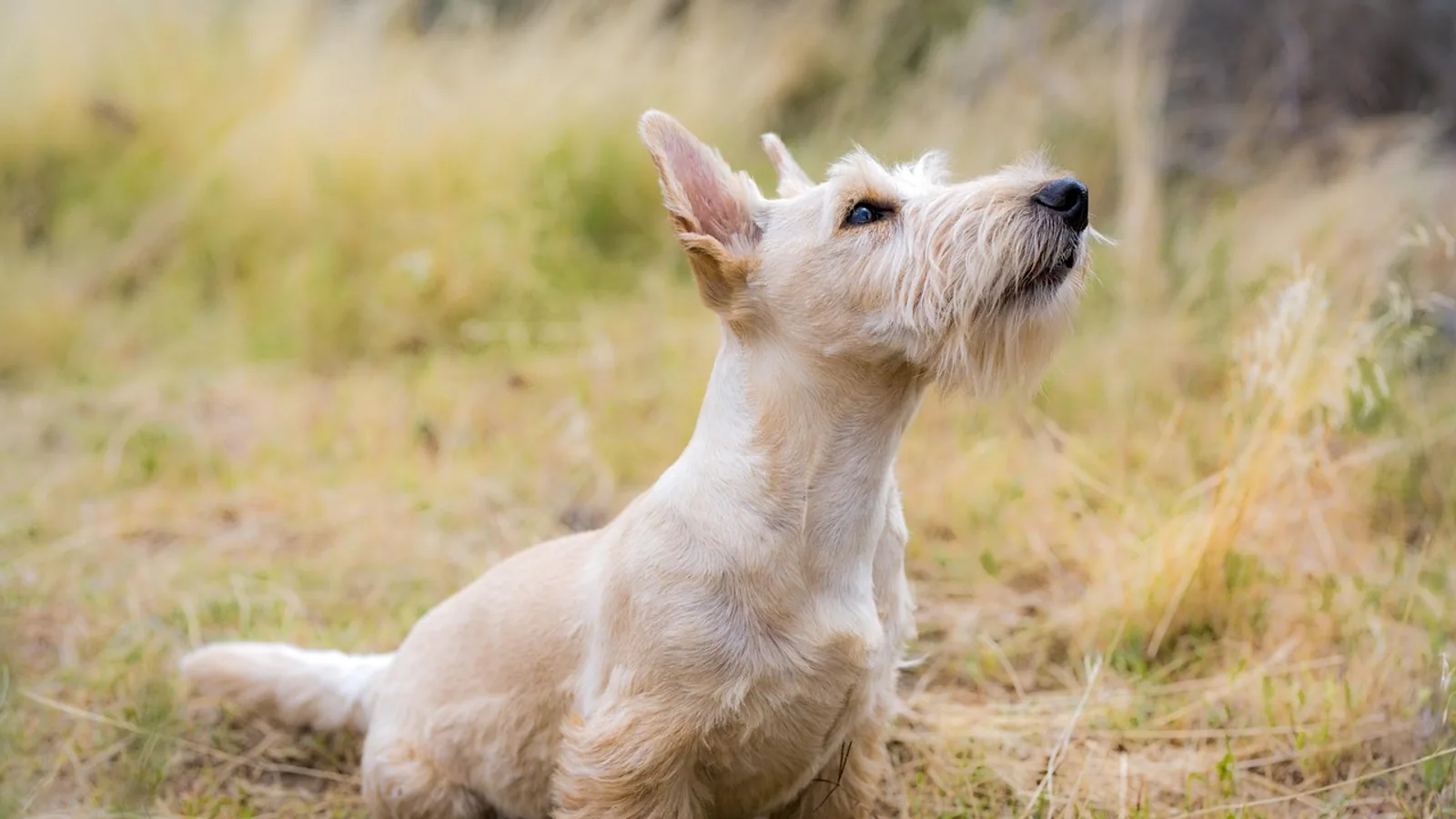
The Scottish Terrier, known to most people as the Scottie dog, is a small, sturdy, independent terrier with a hard wiry coat, erect ears, and a distinctive bearded muzzle. The breed was developed in the Scottish Highlands to hunt vermin on rugged ground, and that working history still shapes the modern dog. A Scottie is confident, territorial, and often deeply attached to one person or family, but it is rarely a pushover. It suits an owner who wants a compact, low-shedding companion with real personality and who is willing to accept a stubborn streak and a serious list of breed-associated health risks.
This guide covers the Scottish Terrier temperament, daily care, and the health problems that matter most. The most important of these is bladder cancer, specifically urothelial carcinoma, which occurs at a markedly higher rate in this breed than in most others. Scottie owners should understand that risk before they bring a puppy home, because it changes how the dog should be managed for its entire life.
This article is educational and is not a substitute for veterinary diagnosis or treatment.
At a Glance
| Trait | Scottish Terrier |
|---|---|
| Origin | Scottish Highlands, bred as a working vermin hunter |
| Size | Small, compact, low-set |
| Height | Approximately 10 inches at the shoulder (breed standard) |
| Weight | Roughly 18 to 22 pounds for males, 18 to 21 pounds for females (breed standard) |
| Coat | Hard, wiry outer coat with a soft undercoat |
| Color | Black, wheaten, or brindle |
| Lifespan | Commonly reported as about 11 to 13 years |
| Energy level | Moderate, but terrier-busy and alert |
| Grooming | High. Regular brushing plus hand-stripping or clipping |
| Trainability | Independent. Responds to consistency and food, not force |
| Good with children | Best with respectful older children |
| Good with other pets | Variable. High prey drive toward small animals |
The height, weight, and color figures above reflect the breed standard as published by the Scottish Terrier Club of America and the American Kennel Club [1]. Lifespan figures for the breed are commonly cited in the 11 to 13 year range, and owners should treat any single number as an average rather than a promise.
History and Purpose of the Scottish Terrier
The Scottish Terrier is one of several terrier breeds that developed in Scotland, and its early history is tied to the practical work of controlling rodents and other small pests on farms, crofts, and rough Highland terrain. The breed's short legs, heavy bone, and determined attitude were useful for an earth dog that needed to follow quarry into tight spaces and stand its ground.
The breed was refined in the nineteenth century and became a recognizable show and companion dog. It has since become one of the most recognizable terriers in the world, partly through its association with popular culture and partly through its distinctive silhouette. The Scottie is a small dog with the confidence of a much larger one, and that combination is central to its appeal.
Understanding the working background explains much of the modern temperament. A dog bred to work independently, make decisions, and pursue prey is unlikely to be a soft, eager-to-please companion. The Scottish Terrier temperament reflects that heritage directly.
Appearance and Coat
The Scottie is a small, cobby dog with a long head, erect ears, and a short, upright tail. The coat is the breed's signature feature. It consists of a hard, wiry outer coat and a softer undercoat, which together protect the dog from weather and rough ground. Acceptable colors are black, wheaten, and brindle [1].
The beard and eyebrows give the face its characteristic expression. The coat is not designed to shed heavily, which is one reason the breed is sometimes described as a lower-shedding option. That does not mean the coat is low maintenance. A wiry coat that is not maintained will mat, and the undercoat will shed into the home if it is not removed.
Scottish Terrier Temperament
The Scottish Terrier temperament is best described as independent, confident, and often reserved with strangers. A well-socialized Scottie is affectionate with its own family and can be a loyal, funny, and engaging companion. It is also territorial, alert, and quick to announce visitors. That makes it a useful watchdog for its size.
Independence and Stubbornness
Scotties were bred to work alone. They are not typically eager to follow a stream of commands just to please an owner. Training a Scottie requires patience, consistency, and rewards that the dog actually values. Harsh handling tends to produce resistance rather than cooperation. Owners who enjoy a dog with opinions tend to do well with the breed. Owners who want a dog that hangs on every word often do not.
Prey Drive and Other Animals
The breed's history as a vermin hunter means a strong prey drive is common. Small pets such as hamsters, guinea pigs, rabbits, and birds can be at risk, and even cats that are not part of the household may be chased. Early, careful introductions help, but prey drive is not something an owner can train away entirely. A Scottie should not be left unsupervised with small pets.
Children and Strangers
Scotties can do well with children who are old enough to respect a dog's space and to handle a small, sturdy dog gently. The breed is not a natural rough-and-tumble playmate for toddlers. Because the Scottie is reserved with people it does not know, socialization from puppyhood matters. Puppy classes, controlled introductions, and positive exposure to different people and environments help produce a more relaxed adult dog.
Vocalization and Alertness
The breed is alert and often vocal. Barking at the doorbell, at passing animals, or at unfamiliar sounds is common. Some of this can be managed with training and by meeting the dog's exercise and mental needs, but a completely silent Scottie is not a realistic expectation.
Exercise and Training Needs
A Scottish Terrier is a small dog, but it is not a lap ornament. It needs daily activity to stay physically and mentally sound. Moderate daily walks, play sessions, and opportunities to sniff and explore suit the breed well. Because Scotties are prone to spinal problems, owners should manage jumping from heights and rough, high-impact play, and should keep the dog at a healthy weight.
Training should start early and stay positive. Short sessions work better than long ones. Food rewards, praise, and consistent rules are more effective than punishment. Because the breed is independent, an owner should expect to repeat lessons and to be more interesting than whatever the dog would rather be doing.
Mental work matters as much as physical exercise. Puzzle feeders, scent games, and simple obedience practice give the Scottie a job and reduce boredom-driven barking and digging.
Grooming
Grooming is one of the more demanding parts of Scottie ownership. The breed has a double coat with a hard outer layer. Regular brushing removes loose undercoat and prevents mats, especially behind the ears, under the legs, and around the beard. The beard also collects food and moisture, so it needs routine cleaning to prevent skin irritation.
Show dogs are typically hand-stripped, a process that removes dead outer coat hairs and preserves the harsh texture. Pet Scotties are often clipped instead. Clipping is easier and more comfortable for many owners, but it softens the coat texture over time. Either way, the coat needs professional or skilled attention on a regular schedule.
Owners should also keep nails trimmed, check ears, and brush teeth routinely. Dental disease is common in small breeds, and home dental care plus professional cleaning supports overall health.
Feeding Considerations
Feeding a Scottie is mostly about portion control and body condition. The breed is prone to obesity, and excess weight puts extra strain on the spine and joints. An owner should be able to feel the ribs without pressing hard and should see a waist from above.
There is one feeding-related finding that is specific to this breed and worth knowing. In a case-control study of Scottish Terriers, dogs that ate vegetables at least three times per week had a lower risk of developing transitional cell carcinoma of the urinary bladder, with an odds ratio of 0.30 and a 95 percent confidence interval of 0.15 to 0.62, after adjustment for age, weight, neuter status, and coat color [2]. The same study found that the risk was lower with green leafy vegetables (odds ratio 0.12) and yellow-orange vegetables (odds ratio 0.31) [2]. Cruciferous vegetables showed a similar direction of effect that did not reach statistical significance [2]. This is an association, not proof that vegetables prevent cancer, and owners should discuss any diet change with their veterinarian. It is reasonable, however, to include safe vegetables as part of a balanced diet for a breed with this level of bladder cancer risk.
Scottish Terrier Health Problems
The Scottish Terrier is a hardy breed in many ways, but it carries a heavier burden of specific inherited and breed-associated diseases than most small dogs. The most serious is bladder cancer. Others include Scottie cramp, von Willebrand disease, craniomandibular osteopathy, and cerebellar abiotrophy. Owners should know the signs of each and should work with a veterinarian on screening and early detection.
Bladder Cancer (Urothelial Carcinoma)
Urothelial carcinoma, also called transitional cell carcinoma, is the cancer that defines Scottish Terrier health risk. The breed has a well-documented, markedly elevated risk. One cohort study describes the breed-associated risk for urothelial carcinoma as roughly 20-fold higher in Scottish Terriers [3]. This is not a rare condition in the breed. It is a central health concern.
Canine urothelial carcinoma is the most common cancer of the lower urinary tract in dogs, and it has a high predisposition for Scottish Terriers [4]. The disease tends to affect older dogs, and it often presents with signs that owners may mistake for a urinary tract infection. These include straining to urinate, frequent urination, blood in the urine, and accidents in the house. Any Scottie with these signs needs prompt veterinary evaluation, because urothelial carcinoma can be mistaken for a simple infection and treated with antibiotics while the cancer progresses.
Environmental Risk Factors
Research in Scottish Terriers has identified several environmental exposures associated with higher risk of urothelial carcinoma.
Herbicide exposure is the best known. In a case-control study of 83 Scottish Terriers with transitional cell carcinoma and 83 controls, the risk of the cancer was significantly increased among dogs exposed to lawns or gardens treated with both herbicides and insecticides (odds ratio 7.19) or with herbicides alone (odds ratio 3.62) [6]. Dogs exposed to insecticides alone did not show a significant increase (odds ratio 1.62) [6]. Exposure to phenoxy herbicides was associated with increased risk (odds ratio 4.42), while nonphenoxy herbicides were not significantly associated with risk in that analysis [6]. The authors noted that the results suggest an association and that further work is needed before a cause-and-effect relationship can be confirmed [6]. For owners, the practical message is to limit a Scottie's access to recently treated lawns and gardens and to follow label directions carefully.
Cigarette smoke exposure is another identified factor. In a cohort study of 120 Scottish Terriers aged six years and older, biopsy-confirmed urothelial carcinoma was found in 32 dogs and was significantly associated with living in a household with cigarette smokers (odds ratio 6.34) [3]. The same study found an association with living within a mile of a marsh or wetland (odds ratio 21.23) [3]. Urine cotinine testing was used to investigate smoke exposure further [3]. Owners who smoke should consider the dog's exposure, and keeping the home smoke-free is a sensible step.
Topical flea and tick products have been studied in this breed as well. A case-control study found that Scottish Terriers treated with topical spot-on products containing fipronil or imidacloprid did not have an increased risk of transitional cell carcinoma compared with dogs never exposed to any flea and tick product [7]. Older product types such as shampoos, dips, powders, sprays, and collars could not be evaluated because too few owners in the study had used them [7]. This is reassuring for owners using modern spot-on preventives, and it supports continuing parasite prevention under veterinary guidance.
Genetic factors also appear to matter. Scottish Terriers have a higher frequency of certain glutathione S-transferase theta variants compared with lower-risk breeds, and these genes are involved in how the body handles environmental chemicals [8]. The same study found that dogs with transitional cell carcinoma did not differ from unaffected geriatric controls across the three loci investigated, so the picture is not simple [8]. The takeaway is that breed risk likely reflects a combination of inherited susceptibility and environmental exposure rather than one single cause.
Screening and Early Detection
Because the breed risk is so high, screening programs have been developed for Scottish Terriers. In one screening study, 120 Scottish Terriers aged six years or older with no outward signs of urinary disease were evaluated with urinalysis, urinary tract ultrasonography, follow-up cystoscopic biopsy, and necropsy when possible [9]. Biopsy-confirmed urothelial carcinoma was found in 41 of those dogs, including 31 high-grade cancers, six low-grade cancers, one carcinoma in situ, and three dysplasias that progressed to high-grade cancer [9]. The BRAF V595E mutation was detected in the urine of most dogs with high-grade cancer and in some dogs with no cancer detected over a median of 14 months of follow-up [9]. This work shows that a meaningful number of older Scotties have cancer before owners notice signs, which is the argument for screening.
A separate finding from screening is the urinary bladder apex nodule. In a study of 134 Scottish Terriers aged six years or older with no evidence of urinary tract disease, an apex nodule was found in eight dogs, or six percent [10]. These nodules were single, triangular to oval, smooth, well-defined, and small, and in five dogs followed over time they did not change for up to three and a half years [10]. Cystoscopy showed a column of tissue covered by normal mucosa, and histology did not show features of a neoplastic growth [10]. Five dogs remained free of bladder disease [10]. This is important because an owner or veterinarian who finds such a nodule should not assume it is cancer, but it does warrant monitoring.
Any Scottie over the age of about six should have regular veterinary checkups that include a urinary tract assessment. Owners should ask their veterinarian whether urinary ultrasound or other screening is appropriate for their dog. Early detection gives the best chance of managing the disease.
Scottie Cramp
Scottie cramp is a movement disorder that is well known in the breed. It is a neurologic condition that produces episodes of abnormal gait and muscle stiffness, often triggered by exercise, excitement, or stress. Affected dogs may develop a stiff, stilted, or hopping gait, and in some cases the limbs may cross or the dog may have difficulty moving normally during an episode. The signs typically improve with rest or when the trigger is removed.
Scottie cramp is not a seizure disorder and it is not painful in the way an injury is, but it can be distressing to watch and it can affect a dog's ability to exercise normally. The condition is considered inherited in the breed. There is no cure, and management focuses on avoiding triggers, adjusting exercise, and in some cases using medication under veterinary direction. Owners should report any episodes of abnormal gait to their veterinarian so that other causes, including spinal disease and orthopedic problems, can be ruled out.
Von Willebrand Disease
Von Willebrand disease is an inherited bleeding disorder that affects the blood's ability to clot. It occurs in several breeds, including the Scottish Terrier. Dogs with the condition may bruise easily, bleed excessively from small cuts, have nosebleeds, or bleed abnormally after surgery or dental procedures. Some affected dogs show no obvious signs until they experience a bleeding challenge.
Because the condition is inherited, responsible breeders screen breeding dogs. A veterinarian can assess a dog's clotting status with specific tests when a bleeding disorder is suspected or before surgery. Owners of affected dogs should inform every veterinarian and groomer who handles the dog, and they should be cautious about activities that could cause injury. Any unexplained bleeding, especially after a procedure, needs prompt veterinary attention.
Craniomandibular Osteopathy
Craniomandibular osteopathy is a proliferative, self-limiting, non-neoplastic disease of growing dogs. It is characterized by excessive new bone formation on the skull and mandible [11]. The condition is painful during its active phase and can cause difficulty eating, swelling of the jaw, and reluctance to chew. It typically appears in young dogs and then stabilizes or improves as the dog matures, which is why it is described as self-limiting.
The breed association is strong. In a study of 20 dogs with craniomandibular osteopathy, Scottish Terriers were overrepresented at 65 percent of cases, and terrier breeds as a group made up 80 percent of the cohort [11]. Age at presentation ranged from six weeks to 12 months, with no sex predisposition [11]. Mandibular osteoproliferation was present in all dogs and was marked in most, affecting the body and ramus of the mandible most often [11]. Tympanic bulla involvement was present in 60 percent of dogs, and cranial osteoproliferation was present in 90 percent [11]. Nasopharyngeal narrowing was seen in all 12 dogs with tympanic bulla involvement [11].
For owners, the practical points are that a young Scottie with jaw swelling, pain, or difficulty eating needs veterinary evaluation, and that imaging such as computed tomography can characterize the disease. Treatment is supportive and focuses on pain control and nutrition during the active phase.
Cerebellar Abiotrophy
Cerebellar abiotrophy is a degenerative neurologic condition in which cells in the cerebellum, the part of the brain that coordinates movement, gradually deteriorate. Affected dogs develop progressive problems with balance and coordination, including a wide-based stance, unsteady gait, head tremors, and difficulty with fine movements. Signs often appear in young adulthood and worsen over time.
There is no cure for cerebellar abiotrophy. Management is supportive and focuses on safety, mobility, and quality of life. Owners should work with their veterinarian to confirm the diagnosis and to rule out other causes of incoordination. Because the condition is inherited in affected breeds, breeding dogs should be selected carefully.
Other Health Concerns
Scotties, like many small breeds, are prone to dental disease, and home dental care plus professional cleaning is important. They can also develop skin problems, including irritation in the beard and folds, and they are sensitive to flea and tick infestations. Obesity is a common and preventable problem. Owners should keep the dog lean and active, and should raise any new or changing sign with a veterinarian.
Scottish Terrier Lifespan
The Scottish Terrier lifespan is commonly reported as about 11 to 13 years [1]. Individual dogs may live longer or shorter, and the presence of serious disease such as urothelial carcinoma can shorten life substantially. Because the breed has a high risk of bladder cancer, routine veterinary care and screening in middle age and beyond have a real effect on how long and how well a Scottie lives. Owners who monitor for early signs and who keep up with preventive care give their dog the best chance at a full lifespan.
Finding a Responsible Breeder or Rescue
A responsible breeder for this breed should be able to discuss health testing and the breed's known risks openly. Because Scottish Terriers carry a high risk of bladder cancer, a breeder should be willing to talk about the condition and about any screening the breeder's dogs have had. The same applies to von Willebrand disease, Scottie cramp, craniomandibular osteopathy, and cerebellar abiotrophy. A breeder who dismisses these concerns or who cannot describe the health history of the breeding dogs is a poor choice.
Owners should ask to meet the dam, see where the puppies are raised, and get written health information. Puppies should be raised in a clean environment and should be socialized. Breed clubs and national kennel club resources can help identify breeders, and breed-specific rescue organizations place adult Scotties in need of homes. Rescue is a strong option for owners who want an adult dog with a known temperament.
Who Should Not Get a Scottish Terrier
A Scottie is not the right dog for everyone. People who want an obedient, eager-to-please companion that follows commands without question will likely be frustrated. People who cannot commit to regular grooming, including professional coat care, should choose a lower-maintenance breed. People with small pets such as rodents or birds should think carefully about prey drive. People who smoke or who use herbicides heavily on their property should understand the bladder cancer associations before choosing this breed. People who cannot manage the cost and emotional weight of a breed with a serious cancer risk should consider a different dog.
Limitations and When to Contact a Veterinarian
This article provides general information about the breed and is not a substitute for veterinary diagnosis or treatment. Every dog is an individual, and only a veterinarian who examines your dog can assess its health.
Contact a veterinarian promptly if your Scottie shows any of the following:
- Straining to urinate, urinating frequently, blood in the urine, or accidents in a house-trained dog
- Difficulty eating, jaw swelling, or reluctance to chew, especially in a young dog
- Episodes of stiff, stilted, or abnormal gait, especially after exercise or excitement
- Unexplained bruising, nosebleeds, or bleeding that does not stop
- Progressive wobbliness, head tremors, or difficulty with coordination
- Vomiting, diarrhea, weight loss, or a sudden change in appetite or energy
- Any new lump, swelling, or change in behavior
For a breed with this level of cancer risk, do not wait to see if urinary signs resolve on their own. Early evaluation matters.
Frequently Asked Questions
What is the Scottish Terrier temperament like?
The Scottish Terrier temperament is independent, confident, and often reserved with strangers. Scotties are loyal to their families but are not typically eager to please, and they can be stubborn. They have a strong prey drive and are often vocal and territorial. They do best with owners who are consistent, patient, and willing to use positive training methods.
What health problems are Scottish Terriers prone to?
Scottish Terriers have a markedly elevated risk of bladder cancer, specifically urothelial carcinoma, with one study describing a roughly 20-fold higher breed-associated risk [3]. They are also prone to Scottie cramp, von Willebrand disease, craniomandibular osteopathy, and cerebellar abiotrophy. Dental disease and obesity are common in the breed as well.
What is Scottie cramp?
Scottie cramp is an inherited movement disorder in Scottish Terriers that causes episodes of stiff, stilted, or abnormal gait, often triggered by exercise, excitement, or stress. It is not a seizure disorder, and there is no cure. Management focuses on avoiding triggers and, in some cases, medication under veterinary direction.
How long do Scottish Terriers live?
The Scottish Terrier lifespan is commonly reported as about 11 to 13 years [1]. Individual dogs may live longer or shorter. Serious diseases such as urothelial carcinoma can shorten lifespan, which is why routine veterinary care and screening in middle age and beyond are important for the breed.
Do Scottish Terriers get bladder cancer?
Yes. Scottish Terriers have a well-documented, markedly elevated risk of urothelial carcinoma, also called transitional cell carcinoma, of the urinary bladder. One cohort study describes the breed-associated risk as roughly 20-fold higher than in other dogs [3]. Owners should watch for urinary signs and discuss screening with a veterinarian, especially after age six.
What environmental factors increase bladder cancer risk in Scotties?
Research in Scottish Terriers has linked higher bladder cancer risk to exposure to lawns or gardens treated with herbicides, especially when both herbicides and insecticides are used [6]. Living in a household with cigarette smokers and living within a mile of a marsh or wetland were also associated with higher risk in a cohort study [3]. Modern topical spot-on flea and tick products containing fipronil or imidacloprid were not associated with increased risk [7].
Can vegetables reduce bladder cancer risk in Scottish Terriers?
A case-control study found that Scottish Terriers that ate vegetables at least three times per week had a lower risk of developing transitional cell carcinoma, with an odds ratio of 0.30 [2]. Green leafy and yellow-orange vegetables were associated with lower risk in the same study [2]. This is an association rather than proof of prevention, so owners should discuss diet changes with their veterinarian.
What is craniomandibular osteopathy in Scotties?
Craniomandibular osteopathy is a proliferative, self-limiting bone disease of growing dogs that causes excessive new bone formation on the skull and mandible [11]. Scottish Terriers are strongly overrepresented, making up 65 percent of cases in one study [11]. It causes jaw pain and difficulty eating during its active phase and then typically stabilizes as the dog matures. Treatment is supportive.
Related Articles
- Bernese Mountain Dog Care, Health, Temperament, Size and Lifespan
- Maltese Dog: Complete Guide to Care, Grooming, and Temperament
- Newfoundland Dog: Gentle Giant Breed Guide, Temperament & Care
- Pitbull Dog Breed Guide: Temperament, Care, and Common Myths Debunked
- Bernese Mountain Dog: Complete Breed Guide, Temperament, and Care Tips
- Boxer Dog Breed: History, Temperament, Health Records, Care, and Home Fit
- Borzoi: Temperament, Exercise, Care, and Health Problems
- Wolf Dog Hybrids: Temperament, Health, and Legal Reality
- Whippet Dog Breed Guide: Temperament, Exercise, and Daily Care
Sources
- Scottish Terrier Dog Breed Information (akc.org)
- Evaluation of the effect of dietary vegetable consumption on reducing risk of transitional cell carcinoma of the urinary bladder in Scottish Terriers.
- Association between cigarette smoke exposure and urinary bladder cancer in Scottish terriers in a cohort study.
- A Fibromyxoid Stromal Response is Associated with Muscle Invasion in Canine Urothelial Carcinoma.
- Naturally-Occurring Invasive Urothelial Carcinoma in Dogs, a Unique Model to Drive Advances in Managing Muscle Invasive Bladder Cancer in Humans.
- Herbicide exposure and the risk of transitional cell carcinoma of the urinary bladder in Scottish Terriers.
- Topical flea and tick pesticides and the risk of transitional cell carcinoma of the urinary bladder in Scottish Terriers.
- Glutathione S-transferase theta genotypes and environmental exposures in the risk of canine transitional cell carcinoma.
- BRAFV595E mutation detected across the disease spectrum from non-neoplastic urothelium to invasive urothelial carcinoma in dogs.
- Ultrasonographic detection of apex nodules in the urinary bladder of Scottish Terriers.
- Computed tomographic characteristics of craniomandibular osteopathy in 20 dogs.