Borzoi: Temperament, Exercise, Care, and Health Problems
By Dr. Zubair Khalid, DVM, MS, PhD ·
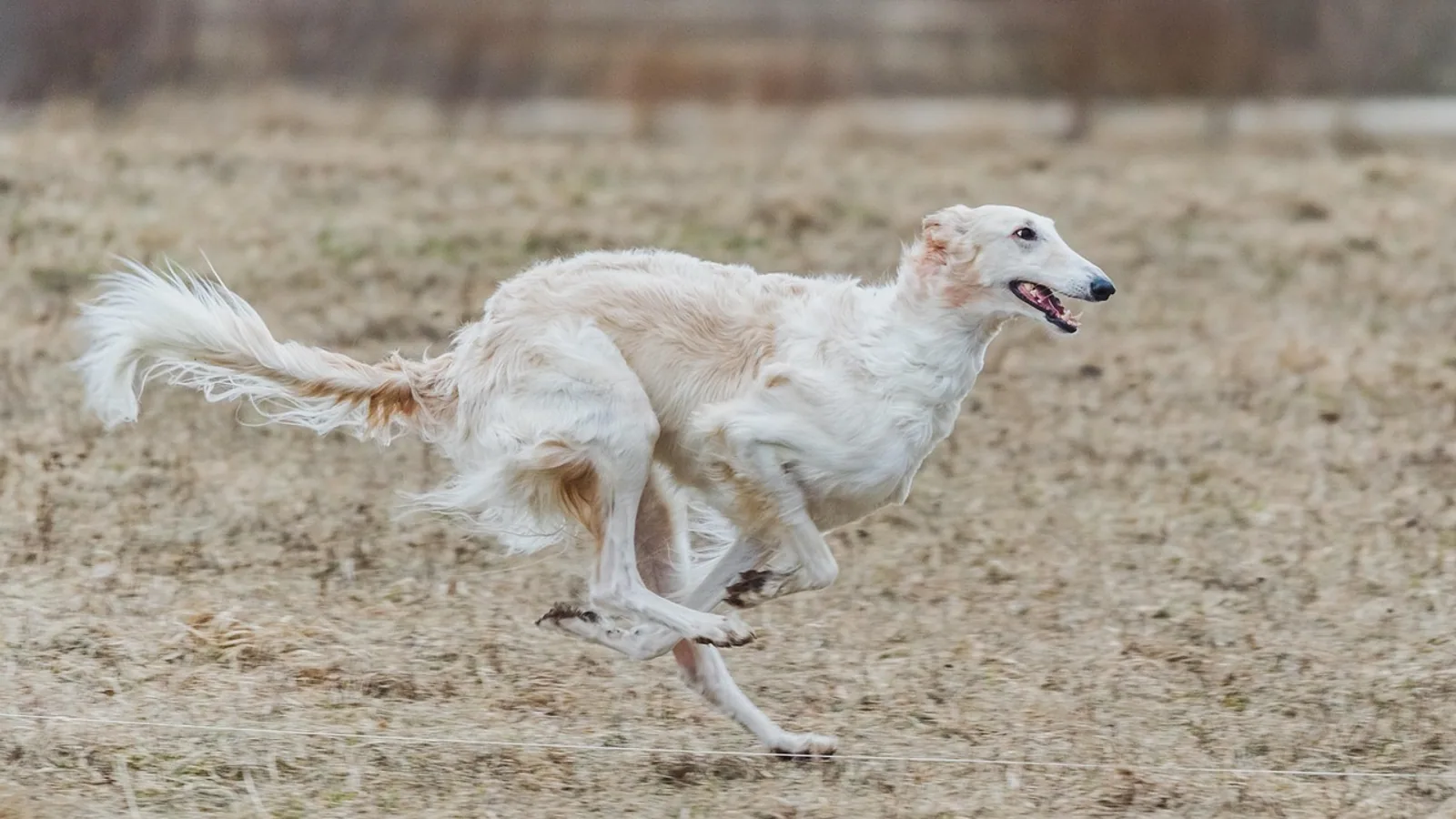
The Borzoi is a large Russian sighthound built for short bursts of extreme speed, yet most of them spend the majority of the day asleep on a sofa. Adults typically stand 26 to 30 inches at the shoulder, weigh roughly 30 to 38 kg (about 66 to 84 pounds), and live into their early teens with good care [1][2]. The breed is gentle, quiet indoors, sensitive to harsh handling, and driven by a prey instinct that makes off-leash running in open country a serious risk. Owners who understand sighthound physiology, respect the fence line, and plan for breed-specific health screening tend to do well with this breed. Owners who want an obedience competitor or a dog that can safely jog beside a bicycle on a public road usually do not.
This article covers the Borzoi's history and purpose, its temperament, its exercise and training needs, grooming, feeding, and the health problems that matter most in this breed, including bloat, heart disease, drug sensitivities, and the ways sighthound laboratory values differ from those of other dogs.
This article is educational and is not a substitute for veterinary diagnosis or treatment.
At a Glance
| Trait | Borzoi |
|---|---|
| Height | 26 to 30 inches at the shoulder (breed standard range for adults) [2] |
| Weight | Females around 30.4 kg (67 lb), males around 38.3 kg (84 lb) in a healthy adult study population [1] |
| Coat | Long, silky, flat or wavy, with a thick undercoat in cold climates [2] |
| Lifespan | Commonly into the early teens, though large-breed longevity varies with individual health |
| Energy | Explosive sprints, calm and sedentary indoors |
| Grooming | Moderate, requires regular brushing, heavier during seasonal shedding |
| Trainability | Cooperative but sensitive, responds to reward-based methods and calm handling |
| Good with children | Generally gentle, best with older children who respect a large dog's space |
| Good with other pets | Risky with cats and small animals because of strong prey drive |
History and Purpose of the Borzoi
The Borzoi is an ancient sighthound type refined by Russian nobility for coursing wolves and other game across open country. The breed was selected for two things that still define it today: the ability to accelerate to high speed in a straight line, and the temperament to live closely with people between hunts. The name reflects that Russian heritage, and the breed is still sometimes called the Russian wolfhound.
The Borzoi's genetic footprint reaches beyond Russia. When researchers analyzed the genomes of Alaskan sprint racing sled dogs, they found that the sled dog population was shaped by contributions from four non-admixed breeds, one of which was the Borzoi [3]. That is a useful reminder that the breed's speed and structure have been borrowed by other athletic dog populations.
Modern Borzoi are almost entirely companions and show dogs. Coursing and lure sports remain popular outlets for their speed, and the breed's parent clubs maintain DNA-based parentage testing programs. One study of 19 microsatellite markers in Polish Borzoi found that incorrect pedigrees could be excluded with 99.9998 percent accuracy using DNA analysis, which is why reputable breeders use such testing to document lineage [4].
Appearance and Size
The Borzoi is instantly recognizable by its long, narrow head, deep chest, tucked abdomen, and arched loin. The silhouette is aerodynamic rather than bulky, and the breed's body mass index is measurably lower than that of other large breeds. In a force-plate study comparing seven breeds, Borzoi had significantly lower body mass index than the other dogs tested [5].
That study also showed how the Borzoi skeleton distributes weight differently. Borzoi had a lower forelimb vertical impulse and a higher hindlimb peak vertical force than the other breeds, producing a lower ratio of forelimb impulse to total impulse. The authors interpreted this as a more caudally located center of gravity, meaning the breed carries proportionally more weight over the hindquarters than other dogs do [5]. This matters clinically because gait and lameness assessments calibrated to other breeds may not fit a Borzoi.
Body weight differs by sex. In a study of 146 clinically healthy adult Borzoi, females weighed significantly less than males, averaging 30.4 kg versus 38.3 kg [1]. Breed-specific echocardiographic reference values were therefore generated separately for each sex [1].
The long nose has become a running internet joke, with Borzoi photographed at angles that make the muzzle look comically extended. The humor is harmless, but the anatomy behind it is real. The elongated nasal cavity is part of the sighthound aerodynamic package.
Borzoi Temperament
The Borzoi temperament is often described as cat-like. These dogs are calm and quiet in the home, affectionate with their people, and largely uninterested in strangers. They are not typically boisterous or demanding. Many will greet a visitor politely and then return to the couch.
Sighthound temperament has a documented downside. A clinical review of anesthesia in sighthounds noted that these breeds can have a nervous demeanor, and that stress in a nervous sighthound can trigger complications such as hyperthermia [6]. That does not mean every Borzoi is anxious. It means the breed tends to be sensitive, and stressful handling, chaotic environments, and rough training methods can produce real physiological consequences.
Prey drive is the trait owners most often underestimate. The Borzoi was bred to chase and catch fast-moving animals by sight. A running deer, a fleeing cat, or a squirrel crossing a trail can override training in an instant. This is not disobedience. It is a hardwired motor pattern that has been selected for over centuries.
Indoors, the same dog that will not recall off a rabbit is often perfectly content to sleep for eighteen hours. The contrast between the couch Borzoi and the coursing Borzoi is extreme, and it is the single most important thing for a prospective owner to understand.
Exercise, Fenced Running, and Training
Exercise Needs
Borzoi need real exercise, but not the kind most people imagine. They are sprinters, not endurance athletes. A short, intense run in a secure area does more for a Borzoi than a long slow jog. Free running in a safely fenced field, lure coursing, and structured play with another sighthound are ideal outlets.
Because the breed has a more caudally located center of gravity than other dogs, its gait mechanics differ, and its movement should be assessed on its own terms rather than compared directly to a Labrador or a Rottweiler [5]. Owners who notice a change in gait should mention the breed to their veterinarian so that assessment accounts for normal Borzoi conformation.
The Fence Rule
The single non-negotiable rule for Borzoi ownership is that the dog runs only inside a securely fenced area. A Borzoi that spots prey and leaves a yard can reach a road in seconds, and the breed's speed makes traffic accidents a leading cause of preventable death in young adults. Fence height and footing should be appropriate for a dog of this size and acceleration. Visual barriers help because the breed hunts by sight.
Off-leash hiking, dog parks with open gates, and running beside a bicycle on public roads are poor fits for this breed. The prey drive is not reliably trained out, and the consequences of a single failure are severe.
Training Approach
Borzoi respond best to short, positive sessions. They are sensitive to harsh corrections and tend to shut down rather than comply under pressure. Recall training is worth doing, but it should be treated as a backup cue rather than a guarantee in the presence of prey.
Crate training and calm handling from puppyhood pay off later, because sighthounds benefit from low-stress veterinary visits. A dog that has been conditioned to accept restraint and handling is easier to anesthetize safely, and the anesthesia literature specifically recommends sedative premedication to minimize perioperative stress in these breeds [6].
Grooming and Coat Care
The Borzoi coat is long, silky, and either flat or wavy, with a thick undercoat that develops in cold climates [2]. Grooming needs are moderate but not trivial. Weekly brushing with a pin brush or slicker removes loose hair and prevents mats behind the ears, under the front legs, and along the flanks.
Seasonal shedding is the main grooming event of the year. When the undercoat blows, daily brushing for a week or two keeps the coat from matting and keeps the house from disappearing under fur. Bathing frequency depends on lifestyle. Show dogs are bathed more often, while pet Borzoi often do well with a bath every few months or when they get into something unpleasant.
The feathering on the ears, tail, and hindquarters collects burrs, mud, and ice. Owners who run their dogs in fields should check these areas after every outing. Nails, ears, and teeth need the same routine care as in any large breed. Ear cleaning matters more in a breed with heavy ear feathering because moisture and debris can be trapped.
Feeding and Nutrition Considerations
Borzoi are deep-chested, and deep-chested dogs are at risk for gastric dilatation and volvulus, commonly called bloat or GDV. Feeding practices are one of the few variables owners can control. Splitting daily food into two or more smaller meals, avoiding vigorous exercise immediately after eating, and using a raised or lowered bowl based on veterinary advice are common strategies. The evidence on bowl height is mixed, so this is a conversation to have with your veterinarian rather than a rule to apply blindly.
Because Borzoi carry a lower body mass index than other large breeds, body condition should be judged by feel, not by weight alone [5]. A Borzoi that looks thin to someone used to Labradors may be perfectly conditioned. Conversely, a Borzoi carrying extra weight loses the athletic silhouette and adds load to joints that are already managing an unusual weight distribution.
Any diet change should be made gradually. Some cases of dilated cardiomyopathy in dogs have been linked to diet, and in a Borzoi cardiac study, two dogs originally diagnosed with DCM normalized after a diet change [1]. That finding does not mean diet causes all Borzoi heart disease, but it does mean diet history belongs in the conversation when a Borzoi is diagnosed with a cardiac problem.
Borzoi Health Problems
Gastric Dilatation and Volvulus (Bloat)
Bloat is the emergency every deep-chested dog owner should be able to recognize. The stomach fills with gas and can twist on its axis, cutting off blood supply and trapping gas. Signs include a distended abdomen, unproductive retching, restlessness, drooling, and rapid deterioration. This is a surgical emergency, and minutes matter.
Borzoi are a deep-chested sighthound breed and are therefore in the risk category for GDV. Owners should know the location and hours of the nearest 24-hour veterinary hospital before they ever need it. Preventive gastropexy, in which the stomach is surgically tacked to the body wall during another procedure such as a spay or neuter, is a common risk-reduction option. The decision depends on the individual dog, the owner's risk tolerance, and veterinary assessment.
Sighthound Anesthesia and Drug Sensitivities
Sighthound anesthesia is a distinct clinical topic, and Borzoi owners should make sure any veterinarian treating their dog knows the breed. A review of sighthound anesthesia identified several breed-specific issues: a nervous demeanor that can lead to stress-related complications such as hyperthermia, a lean body conformation with a high surface-area-to-volume ratio that predisposes these dogs to hypothermia under anesthesia, and impaired hepatic biotransformation of certain drugs that prolongs recovery [6].
The same review made specific drug recommendations. Thiopental and other thiobarbiturates should not be used in sighthounds. Propofol, a ketamine and diazepam combination, and methohexital are recommended alternatives for intravenous induction. Coadministration of drugs that inhibit drug metabolism, such as chloramphenicol, should be avoided. Inhalation anesthesia with isoflurane is the preferred maintenance technique, and safe management includes sedative premedication and appropriate analgesia to reduce perioperative stress [6].
This is not a reason to avoid necessary anesthesia. It is a reason to use a veterinarian who is comfortable with sighthound protocols and to say the word "Borzoi" clearly at every visit.
One drug sensitivity that Borzoi owners sometimes worry about is the MDR1 mutation, which causes multiple drug sensitivity in several herding breeds. In a German screening study of 7,378 dogs, the MDR1 mutation was not detected in any Borzoi tested, while it was found at varying frequencies in Collies, Longhaired Whippets, Shetland Sheepdogs, Miniature Australian Shepherds, Australian Shepherds, Wällers, White Swiss Shepherds, Old English Sheepdogs, and Border Collies [7]. The MDR1 mutation is therefore not a recognized Borzoi problem, though any dog can have an idiosyncratic drug reaction.
Sighthound Bloodwork Differences
Sighthound laboratory values do not match general canine reference intervals. A study comparing hematology and biochemistry across eight sighthound breeds, including the Borzoi, found significant differences among the breeds, and the authors explicitly recommended against applying Greyhound reference intervals to other sighthounds because of frequent differences in hematologic and biochemical values [8]. A separate study of Scottish Deerhounds confirmed that sighthounds share some unique laboratory traits but that others may be breed-specific [9]. Work in Greyhounds and Lurchers has similarly shown higher red cell mass and lower white cell and platelet counts than in non-sighthound dogs [10].
The practical takeaway is straightforward. A Borzoi's bloodwork should be interpreted against sighthound-appropriate reference intervals, not against the general dog population. A packed cell volume or serum protein that looks abnormal in a Labrador may be normal in a Borzoi, and the anesthesia review specifically noted that higher packed cell volume and lower serum protein in sighthounds can complicate interpretation of preanesthetic blood work [6]. If your veterinarian is not familiar with sighthound values, ask whether the laboratory offers breed-specific reference intervals.
Heart Disease
Cardiac disease is a real concern in the Borzoi, and the breed has been anecdotally linked to sudden death. A multicenter retrospective study reviewed 152 client-owned Borzoi presenting to veterinary cardiologists across 14 centers over up to 20 years. Most dogs presented for pre-breeding screening (52 percent), followed by evaluation of an arrhythmia (18 percent) [11].
Of the 131 dogs that had an echocardiogram, 65 percent were structurally normal, and 47 percent of those normal dogs had trace or mild atrioventricular valve regurgitation. Tricuspid valve dysplasia was the most common congenital cardiac disease, diagnosed in 6 dogs. Myxomatous mitral valve disease and dilated cardiomyopathy were diagnosed at similar frequencies, though 92 percent of the valve disease cases were mild [11].
Arrhythmia screening was underused. Only 32 percent of the Borzoi in that study had a diagnostic electrocardiogram or Holter monitor, yet ventricular arrhythmias were identified in 19 percent of the 131 dogs with an echocardiographic diagnosis, and 76 percent of those dogs had ventricular arrhythmias [11].
A follow-up study of 146 clinically healthy adult Borzoi found that 81.5 percent were structurally normal. Physiologic heart murmurs were identified in 53.8 percent of normal dogs, and trace or mild mitral and tricuspid regurgitation were common. Structural cardiac disease was identified in 14.4 percent, including 6.2 percent with dilated cardiomyopathy, 6.2 percent with stage B1 myxomatous mitral valve disease, and 2.1 percent with congenital abnormalities. During follow-up, additional dogs were diagnosed with occult DCM, equivocal DCM, and stage B1 MMVD, and two dogs originally diagnosed with DCM normalized after a diet change [1].
The clinical message is that heart murmurs and mild valve regurgitation are common and often benign in this breed, but that dilated cardiomyopathy and arrhythmias occur and can be silent. Pre-breeding cardiac screening with echocardiography and arrhythmia monitoring is the standard approach in this breed, and any Borzoi with a murmur, exercise intolerance, collapse, or unexplained fainting should be evaluated by a cardiologist.
Breed-specific radiographic heart measurements matter too. A study of 240 sighthounds, including 47 Borzoi, established breed-specific reference intervals for vertebral heart size and vertebral left atrial size. For Borzoi, the reference interval was 8.8 to 10.9 vertebrae for vertebral heart size and 1.7 to 2.3 vertebrae for vertebral left atrial size [12]. Using general canine cutoffs on a Borzoi radiograph can produce a false impression of cardiomegaly, because the breed's deep narrow chest changes the normal silhouette.
Osteosarcoma and Other Cancers
Osteosarcoma is the most common primary bone tumor in large and giant breed dogs, and the Borzoi's size places it in the elevated-risk category. The classic presentation is a middle-aged to older large dog with progressive lameness and a painful swelling over a long bone, most often near the shoulder, wrist, or knee. Any Borzoi with a persistent limp that does not resolve with rest deserves radiographs, and a suspicious lesion should be evaluated by an oncologist.
Borzoi owners should also be alert to the general cancer warning signs that apply to any breed: unexplained weight loss, new lumps, changes in appetite or energy, and non-healing wounds. Early detection changes outcomes in many canine cancers.
Liver Lobe Torsion
Liver lobe torsion is rare in dogs but has been reported in a Borzoi. A case report described a 12-year-old spayed female Borzoi referred for suspected heart failure who was found to have pleural and peritoneal effusion secondary to caudate liver lobe torsion. The dog was taken to surgery, diagnosed, and treated with liver lobectomy, and at the two-week recheck the pleural effusion had completely resolved [13].
The case is a reminder that not every Borzoi with fluid around the lungs has heart disease. Liver lobe torsion should be on the differential list when a dog presents with bicavitary effusion, and imaging plus surgical evaluation may be needed to reach the diagnosis [13].
Idiopathic Chylothorax
Chylothorax is the accumulation of lymphatic fluid in the chest cavity, and idiopathic cases can be difficult to manage. One Borzoi was among 11 dogs treated with a triple-combination surgical approach combining thoracic duct ligation, partial pericardiectomy, and cisterna chyli ablation. Nine of the 11 dogs had no pleural effusion after surgery without medical management, and the overall mortality rate at the conclusion of the study was 9.1 percent [14]. This is a complex procedure reserved for referral centers, and it is mentioned here because Borzoi appear among the sighthound breeds affected by this condition.
Urolithiasis
Calcium oxalate bladder stones are a recognized problem in dogs, and breed predispositions exist. A large retrospective study of 22,456 uroliths submitted between 1979 and 2015 found that the proportion of calcium oxalate stones rose from 4 percent to 46 percent over the study period. Within calcium oxalate stones, the Borzoi had one of the five highest odds ratios for calcium oxalate dihydrate (Weddellite) stones [15].
This means Borzoi owners should take signs of urinary disease seriously. Straining to urinate, blood in the urine, frequent small urinations, and accidents in a previously reliable dog warrant a veterinary visit and urinalysis. Stone prevention depends on the specific stone type, so analysis of any passed or removed stone is important.
Eye and Parasite Concerns
Lens luxation, in which the lens of the eye displaces from its normal position, has been reported in the Borzoi. A retrospective study from the University of Zurich evaluated 134 dogs with lens luxation and found that Borzoi suffered significantly more often from secondary lens luxation, meaning luxation caused by another eye condition such as glaucoma, cataract, or trauma, rather than primary inherited luxation [16]. Any Borzoi with a suddenly painful, cloudy, or squinting eye needs same-day veterinary care.
Ocular parasites are a travel-related concern. A male Borzoi racing dog with regular visits to racing tracks in different countries presented with ocular mucous discharge, and two live Thelazia callipaeda nematodes were removed from the eye. The dog was treated successfully with milbemycin oxime and praziquantel given twice, one week apart [17]. Borzoi that travel internationally for racing or coursing should have eye examinations and parasite prevention discussed with a veterinarian.
Pneumomediastinum and Pulmonary Interstitial Emphysema
Sighthounds appear to develop air leakage into the chest more often than other breeds. A retrospective study of 256 dogs, including 127 sighthounds, compared the prevalence of pulmonary interstitial emphysema and spontaneous pneumomediastinum on thoracic CT. The prevalence was statistically higher in sighthounds (14.2 percent) than in other purebred dogs (2.2 percent), and these findings were often incidental [18]. There was no statistical association with age, weight, or sex [18]. A Borzoi that has a CT scan for an unrelated reason may therefore have an incidental finding that does not require treatment, but the interpretation belongs to the radiologist and the attending veterinarian.
Fungal Disease
Disseminated fungal infection is uncommon but has been reported in a Borzoi. A 4-year-old neutered male Borzoi presented for spinal pain and was initially treated for discospondylitis. When signs recurred despite antibiotics, further testing identified a disseminated Rasamsonia argillacea infection involving the spine, kidneys, spleen, and lymph nodes, and the dog was euthanized after deterioration [19]. This is a rare case, but it illustrates why a Borzoi with back pain that does not respond to standard treatment needs a broader diagnostic workup.
Recommended Health Screening for Borzoi
Responsible breeders screen breeding stock, and buyers should ask for documentation. Based on the conditions documented in this breed, the relevant screening conversations include:
- Cardiac evaluation, including echocardiography and arrhythmia screening with ECG or Holter monitoring, given the frequency of DCM and ventricular arrhythmias in the breed [11][1]
- Breed-appropriate interpretation of bloodwork, with sighthound reference intervals requested from the laboratory [8][9]
- Orthopedic evaluation for lameness, with awareness that Borzoi gait mechanics differ from other breeds [5]
- Urinalysis and stone analysis if urinary signs occur, given the breed's association with calcium oxalate dihydrate stones [15]
- Eye examination, particularly in dogs with a history of international travel or racing [17][16]
Pre-breeding cardiac screening is the most important of these in this breed. The cardiac studies show that murmurs and mild regurgitation are common in normal Borzoi, so screening requires a cardiologist who understands breed-specific norms rather than auscultation alone [11][1].
Borzoi Lifespan and Aging
Borzoi lifespan is generally measured in the low double digits, with many dogs remaining active into their senior years. As with all large breeds, the last third of life is when cardiac disease, orthopedic problems, and cancer become more likely. Senior Borzoi benefit from twice-yearly veterinary visits, baseline bloodwork interpreted with sighthound reference intervals, and periodic cardiac evaluation.
Owners of aging Borzoi should watch for subtle changes: slower rises from rest, reluctance on stairs, reduced sprint distance, new coughing, and changes in sleep or appetite. Because the breed is stoic and quiet, early signs of pain or heart failure can be easy to miss.
Finding a Responsible Breeder or Rescue
A responsible Borzoi breeder will provide proof of cardiac screening on both parents, will be transparent about the breed's health issues, and will not place puppies before they are old enough to leave the dam. DNA-based parentage verification is standard in this breed, and a breeder who uses it is documenting lineage rather than guessing at it [4].
Buyers should ask specifically about dilated cardiomyopathy and arrhythmias in the lines, about any history of bloat in close relatives, and about the breeder's protocol for anesthesia should the puppy ever need surgery. A breeder who dismisses sighthound anesthesia concerns is a red flag.
Rescue is a strong option for this breed. Borzoi are surrendered for predictable reasons: prey drive incidents, fencing failures, and owners who did not anticipate the exercise needs of a large sighthound. Breed-specific rescue organizations place adults that are often already house-trained and past the destructive puppy stage.
Who Should Not Get a Borzoi
A Borzoi is a poor fit for households without a securely fenced yard. It is a poor fit for owners who want a dog that can be trusted off-leash in open country. It is a poor fit for homes with free-roaming cats, rabbits, or small pets unless the individual dog has been carefully evaluated. It is a poor fit for people who want an obedience or agility competitor that thrives on repetitive drills. It is also a poor fit for anyone who cannot commit to the financial and logistical demands of a giant sighthound, including emergency surgery for bloat and cardiac referral care.
A Borzoi is an excellent fit for calm households with older children, a fenced yard, an appreciation for a quiet indoor companion, and a willingness to let the dog sprint on its own terms.
Limitations and When to Contact a Veterinarian
Individual Borzoi vary, and no breed guide replaces an examination by a veterinarian who knows your dog. Contact a veterinarian promptly if your Borzoi shows any of the following:
- A distended abdomen, unproductive retching, drooling, or restlessness, which may indicate bloat and requires emergency care
- Collapse, fainting, exercise intolerance, or a new cough, which may indicate a cardiac problem
- A limp that persists beyond a few days, or any firm swelling over a bone
- Straining to urinate, blood in the urine, or accidents in a previously reliable dog
- A suddenly painful, cloudy, or squinting eye
- Back pain that does not improve with rest or standard treatment
- Any planned anesthesia, at which point you should confirm that the veterinarian is aware your dog is a sighthound
Call ahead before any elective procedure to discuss sighthound-specific anesthetic protocols. If your regular veterinarian is not familiar with the breed, ask for a referral to a clinician who is.
Frequently Asked Questions
What is the Borzoi temperament like?
Borzoi are calm, quiet, gentle indoors and sensitive to harsh handling, with a strong prey drive outdoors. They are affectionate with their families but often aloof with strangers.
How big does a Borzoi get?
Adults typically stand 26 to 30 inches at the shoulder, with females averaging around 30 kg and males around 38 kg in a healthy study population.
What is the Borzoi lifespan?
Many Borzoi live into their early teens. Longevity depends heavily on cardiac health, cancer avoidance, and bloat prevention.
Do Borzoi need a lot of exercise?
They need short bursts of intense running in a securely fenced area rather than long endurance exercise. Indoors they are notably sedentary.
Can a Borzoi be trusted off-leash?
Generally no. The breed's prey drive is strong and a running animal can override recall training in seconds.
Are Borzoi prone to bloat?
Yes. As a deep-chested breed they are at risk for gastric dilatation and volvulus, which is a surgical emergency.
Do Borzoi have special anesthesia needs?
Yes. Sighthounds have documented differences in drug metabolism, body conformation, and stress response that require modified anesthetic protocols.
Are Borzoi blood test results different from other dogs?
Yes. Sighthound hematology and biochemistry values differ from general canine reference intervals, and Borzoi results should be interpreted with sighthound-appropriate ranges.
Related Articles
- Bernese Mountain Dog Care, Health, Temperament, Size and Lifespan
- Dog Treadmill Exercise Program
- Australian Cattle Dog: Health, Exercise, and Care Guide
- Maltese Dog: Complete Guide to Care, Grooming, and Temperament
- How To Choose Dog Collar Size
- How To Choose Dog Harness Size
- Whippet Dog Breed Guide: Temperament, Exercise, and Daily Care
- Teddy Bear Dogs: Breeds, Size, Temperament, and Health
- Kangal Dog: Size, Temperament, Bite Force Claims, and Care
Sources
- Echocardiographic values and prevalence of cardiac abnormalities in clinically healthy adult Borzoi dogs.
- Borzoi Dog Breed Information (akc.org)
- Breed-specific ancestry studies and genome-wide association analysis highlight an association between the MYH9 gene and heat tolerance in Alaskan sprint racing sled dogs.
- Application of 19 microsatellite DNA markers for parentage control in Borzoi dogs.
- Effect of dog breed and body conformation on vertical ground reaction forces, impulses, and stance times.
- Anesthesia of the sighthound.
- Breed distribution of the nt230(del4) MDR1 mutation in dogs.
- Haematological and biochemical variations among eight sighthound breeds.
- Haematological and biochemical values in North American Scottish deerhounds.
- Reference intervals for Greyhounds and Lurchers using the Sysmex XT-2000iV hematology analyzer.
- A multicenter, retrospective study of cardiac disease in Borzoi dogs.
- Rhodesian Ridgebacks, Borzois, Afghan Hounds, Salukis, and Basenjis have breed-specific reference ranges for vertebral heart size and vertebral left atrial size.
- Bicavitary effusion secondary to liver lobe torsion in a dog.
- Triple-combination surgery with thoracic duct ligation, partial pericardiectomy, and cisterna chyli ablation for treatment of canine idiopathic chylothorax.
- Canine calcium oxalate urolithiasis: Frequency of Whewellite and Weddellite stones from 1979 to 2015.
- [[Lens luxation in dogs: a retrospective study of 134 dogs (2000-2011)].](https://pubmed.ncbi.nlm.nih.gov/24568806/)
- Ophthalmic Thelazia callipaeda infections: first feline and new canine imported cases in Germany.
- Pulmonary interstitial emphysema and spontaneous pneumomediastinum are more prevalent in sighthounds than other dog breeds undergoing thoracic CT.
- Disseminated Rasamsonia argillacea infection in a dog.