Schnoodle Breed Guide and Health Care
By Dr. Zubair Khalid, DVM, MS, PhD ·
The Schnoodle breed is a designer crossbreed created by crossing a Schnauzer with a Poodle. Many owners choose this cross because they expect a small, intelligent, low-shedding dog that is easy to train and gentle with children. Research on Poodle crosses suggests those expectations deserve a closer look. This guide summarizes what the veterinary literature says about Schnoodle temperament, grooming, nutrition, and the health conditions that matter most in a dog built from Schnauzer and Poodle genetics. Use it as a starting point for conversations with your veterinarian, not as a substitute for professional care.
At a Glance
| Topic | What Schnoodle owners should know |
|---|---|
| Breed type | Designer crossbreed, Schnauzer crossed with Poodle [1] |
| Common reason for choice | Perceived hypoallergenicity [2] |
| Size | Small to medium, depends on the parent breeds |
| Temperament | Variable, not guaranteed by the cross [1] |
| Key health watch | Airway collapse [3], spinal disc extrusion [4], calcium oxalate stones [5] |
| Weight target | Lean body condition, because higher body condition scores worsen airway risks [3] and add load on the spine |
| Puppy sourcing | See the puppy in person before purchase [2] |
A practical Schnoodle care checklist:
- Schedule a wellness examination within the first week of bringing your puppy home.
- Keep your dog lean and have body condition scored at every veterinary visit [3].
- Watch for coughing, neck pain, straining to urinate, and lameness.
- Ask your veterinarian about airway protection, including whether a harness is a good choice for your dog.
- Choose a puppy only after meeting it in person and seeing the environment it came from [2].
What Is the Schnoodle Breed?
A Schnoodle is a deliberate cross between a Schnauzer and a Poodle. It belongs to the category of designer crossbreeds, which are produced by intentionally breeding two or more purebred dogs together [1]. The most common pairing is a Miniature Schnauzer with a Miniature or Toy Poodle, although Standard Schnauzer crosses exist. Because the Schnoodle is not a recognized pure breed, there is no fixed breed standard. Individual puppies vary in size, coat, color, and temperament depending on which parent they take after.
Designer crosses have exploded in popularity, often driven by beliefs that they will be easy to train, good with children, and healthier than purebreds, despite minimal supporting evidence [1]. A 2022 study of more than 6,000 UK puppy owners found that 47.1% of designer crossbreed owners chose their dog because they believed it would be hypoallergenic, a rate six times higher than among purebred owners [2]. The same study found that designer crossbreed owners were more likely than purebred owners to buy through general selling websites and were less likely to see their puppy in person before purchase [2].
First-generation crosses are genetically variable by design. That variability is part of the appeal for some owners, but it also means that health and behavior screening of the parents matters more, not less.
Temperament and Behavior
The largest study to date on Poodle-cross behavior compared Canine Behavioural Assessment and Research Questionnaire (C-BARQ) scores for Cockapoos, Labradoodles, and Cavapoos against their purebred progenitor breeds. The C-BARQ is a standardized owner questionnaire that measures 12 behavioral sub-scales. The dataset included 9,402 dogs. Across 72 behavioral comparisons, the designer crosses exhibited more undesirable behaviors than one of their progenitor breeds in 44.4% of comparisons, fewer undesirable behaviors in 9.7%, and no difference in 45.8% [1].
What does this mean for a Schnoodle owner? First, crossing a Schnauzer with a Poodle does not guarantee a calm or perfectly trainable dog. Second, behavior is highly individual. Third, the Cockapoo, the cross with the most undesirable behaviors, differed from its progenitors in 16 of 24 comparisons and scored worse in all 16 [1]. The pattern is a warning against assuming that a Poodle cross will automatically be easier than a purebred.
Training and socialization should start early and continue for life. Consistent, reward-based methods, clear household rules, and controlled exposure to new people, dogs, and environments matter more than the breed label. If your Schnoodle shows fear, aggression, or persistent anxiety, ask your veterinarian for a referral to a qualified behavior professional. Do not wait for problems to become habits.
Grooming and the Hypoallergenic Question
The main reason people buy Poodle crosses is the belief that they are hypoallergenic [2]. The reality is more complicated. Coat type in a first-generation Schnoodle is unpredictable. Some puppies inherit the Poodle's curly, low-shedding coat. Others inherit the Schnauzer's wiry double coat. Many land somewhere in between. No research confirms that any crossbreed is truly allergen-free, and allergen production depends on more than shedding alone.
What owners can do: brush regularly, bathe on a schedule your veterinarian or groomer recommends, and keep the hair around the eyes, ears, and paws trimmed. Mats can form behind the ears, under the collar, and between the toes, so regular brushing is important. Ask your veterinarian or groomer how often to check and clean your dog's ears, especially if the ears are floppy or hairy. If someone in the household has allergies, spend time with adult Schnoodles before committing. Puppy coats change as the dog matures, so a puppy that seems tolerable may grow into a dog that is not.
Nutrition, Weight, and the Gut Microbiome
The gut microbiome influences the health and well-being of dogs [6]. Breed itself shapes the microbiome. In a study of three breeds fed and housed under identical conditions, the relative abundance of major bacterial groups differed significantly by breed. Miniature Schnauzers and Poodles were both included in that study [6]. At the genus level, Streptococcus, Fusobacterium, Turicibacter, Succinivibrio, and Anaerobiospirillum differed among the three breeds, with no correlation to age, diet, sex, body weight, vaccination history, or parasite protection history [6].
The study found wide variation in bacterial composition even among healthy adult dogs. Firmicutes made up 32.3% to 97.3% of total sequences, Bacteroidetes 0.1% to 62.6%, Actinobacteria 0.2% to 14.7%, Fusobacteria 0.0% to 5.7%, and Proteobacteria 0.0% to 5.1% [6]. For owners, the lesson is that a healthy gut is not defined by a single bacterial profile.
The practical implications for a Schnoodle owner: gut bacteria reflect both Schnauzer and Poodle influences, and no single diet is right for every dog. Feed a complete, balanced diet appropriate for the dog's life stage, and avoid frequent diet changes unless your veterinarian recommends them. Weight control is the single most useful nutritional intervention. In small breed dogs, a higher body condition score is associated with worse airway collapse and worse bronchomalacia scores [3]. Ask your veterinarian to assess your Schnoodle's body condition at every visit and to adjust feeding amounts as the dog ages.
Health Conditions to Watch
Because a Schnoodle combines two small pure breeds, it can inherit health risks from both sides. The conditions below are the ones most strongly supported by current research.
Airway and Respiratory Health
Small breed dogs are overrepresented among dogs with lower airway collapse. In a study of 150 small breed dogs with chronic cough, three factors were associated with more severe bronchial collapse: a decreasing thoracic height to width ratio (a deeper, narrower chest), a higher body condition score, and the presence of left atrial enlargement [3]. Older age and a higher body condition score were also associated with more severe bronchomalacia [3].
For Schnoodle owners, the practical message is weight control. A lean Schnoodle has a lower risk of progressive airway collapse. If your Schnoodle coughs, especially with exercise, excitement, or pulling on a leash, ask your veterinarian about airway evaluation. Ask whether a harness is a good choice for your dog, since it can reduce pressure on the neck and airways compared with a collar.
Spinal Health
Hydrated nucleus pulposus extrusion (HNPE) is a distinct type of acute disc herniation that typically affects the cervical spine of small breed dogs [4]. Unlike classic Hansen type I or II disc disease, HNPE involves extrusion of gelatinous, minimally degenerate nuclear material that forms a well-marginated mass on MRI, sometimes called the "seagull sign" [4]. Spinal hyperaesthesia is often mild or absent, which makes the condition easy to miss.
The good news is that most dogs with HNPE recover functionally whether treated surgically or conservatively, and recovery time relates more to the degree of spinal cord change on MRI than to the treatment chosen [4]. For an ambulatory dog with compressive HNPE and normal to mild hyperaesthesia, conservative management is a reasonable first option. Surgical decompression remains an option for dogs that do not improve or that have significant pain [4].
If your Schnoodle suddenly refuses to jump, cries when picked up, or develops neck pain or weakness, seek veterinary care promptly. Early imaging makes a difference in diagnosis and in setting realistic expectations for recovery.
Urinary Health: Calcium Oxalate Stones
Calcium oxalate (CaOx) is a common type of urinary stone in dogs [5]. A 2026 study compared 20 dogs with CaOx stones to 20 matched controls and found that stone formers had reduced gut microbial diversity, including deficiencies in bacteria linked to short-chain fatty acid and bile acid metabolism, such as Peptacetobacter hiranonis [5]. Urinary microbiota and metabolomic profiles also differed significantly between the groups [5].
For a Schnoodle, the practical points are hydration and surveillance. Encourage water intake, provide frequent opportunities to urinate, and do not ignore blood in the urine, straining, or accidents in a previously house-trained dog. If your veterinarian diagnoses a stone, ask about stone analysis, because prevention differs for calcium oxalate versus struvite stones. Dietary protein and fiber intake were similar between stone formers and controls in the study, which suggests that stone risk is not simply a matter of what the dog eats [5].
Orthopedic Health
Hip and elbow dysplasia are common orthopedic conditions with significant effects on dog welfare [7]. They are more prevalent in large breeds, including the Poodle lines used as guide dogs, and genetic evaluation can reduce their prevalence over time [7]. A Schnoodle is a small to medium dog, so the absolute risk of hip and elbow dysplasia is lower than in a Labrador or Golden Retriever. Still, any dog with Poodle ancestry can inherit orthopedic problems. Watch for lameness, stiffness after rest, and reluctance to jump. Ask a breeder whether the parents have been screened for hip and elbow dysplasia, and discuss patellar luxation screening with your veterinarian, because small breeds are prone to it.
Preventive Care and Wellness
Preventive care for a Schnoodle follows the same framework as for any dog, with extra attention to the breed-related risks above.
Vaccination. Ask your veterinarian about the core vaccine schedule for your puppy or adult dog, and discuss non-core vaccines such as leptospirosis. Leptospirosis is a globally important zoonotic disease, and dogs can be exposed through contact with infected wildlife or contaminated water [8]. Your veterinarian can advise on local risk and the right vaccine schedule for your dog.
Parasite control. Follow your veterinarian's recommendations for heartworm, flea, and tick prevention.
Body condition. Have your veterinarian assess body condition score at every visit. Higher body condition scores are linked to worse airway and spinal outcomes in small breed dogs [3].
Dental care. Ask your veterinarian about dental examinations and cleanings. Early intervention protects overall health.
Choosing a Puppy Responsibly
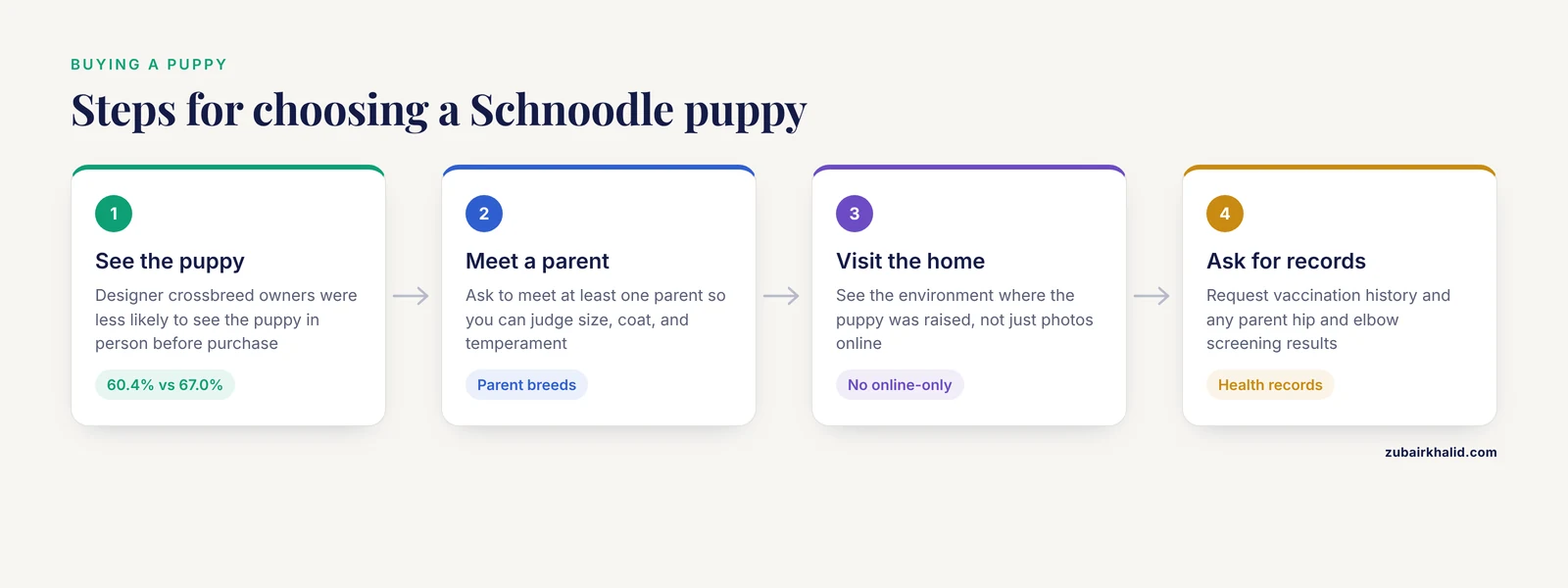
The way people buy designer crossbreeds matters for animal welfare. In a UK study of puppies purchased in 2019 and 2020, designer crossbreed owners were more likely than purebred owners to buy through general selling websites (13.8% vs 7.67%) or animal-specific selling websites (55.7% vs 37.4%) [2]. They were also less likely to see the puppy in person before purchase (60.4% vs 67.0%) [2].
For a prospective Schnoodle owner, the message is clear. See the puppy in person, meet at least one parent, and visit the environment where the puppy was raised. Online-only purchases from unknown sellers carry higher risks of poor health, poor socialization, and behavioral problems. Ask the seller for health records, vaccination history, and any available parent health screening. If a seller will not allow a visit, treat that as a red flag.
Limitations and When to Contact a Veterinarian
This article is educational and is not a substitute for veterinary diagnosis or treatment. Breed-level information describes patterns in populations, not any individual dog. Your Schnoodle is an individual, and its health and behavior depend on genetics, environment, training, and care.
Contact your veterinarian promptly if your Schnoodle shows any of the following:
- Coughing that persists, worsens with exercise, or is accompanied by gagging or breathing difficulty
- Neck pain, reluctance to move, crying when picked up, or sudden weakness
- Blood in the urine, straining to urinate, or accidents in a house-trained dog [5]
- Lameness, stiffness, or reluctance to jump that lasts more than a day
- Any sudden change in behavior, appetite, or energy level
When in doubt, call your veterinary clinic. Early evaluation is less stressful and less expensive than emergency treatment.
Exercise, Enrichment, and Daily Routine
Exercise needs are not fixed by the breed label. Size, age, and individual temperament all matter. A Toy Poodle cross differs from a Standard Schnauzer cross in energy and stamina, so match activity to the dog and adjust as it ages.
Puppy Activity
Puppies need frequent, short sessions of play and exploration rather than long forced walks. A conservative starting point is five minutes of structured walking per month of age, twice daily, but this is a guideline, not a rule. Free play in a safe, enclosed space avoids the repetitive impact of pavement. Avoid forced jumping and stair climbing while joints develop, and build rest into the day.
Adult Activity
Most adult Schnoodles do well with 30 to 60 minutes of total daily activity, split into at least two sessions. Include both physical exercise and mental work. A brisk walk, fetch, or off-lead running in a secure area covers the physical side. Training sessions, puzzle feeders, and nose work cover the mental side. Schnauzer and Poodle ancestry both include intelligent working-type dogs, and Poodle crosses can show unwanted behaviors when their needs are not met [1].
Senior Activity
Exercise continues to matter for joint health and weight control as dogs age, but intensity and duration should drop. Senior Schnoodles often prefer shorter, gentler walks with time to sniff. Swimming can be a good low-impact option if the dog enjoys it. Watch for stiffness after exercise, lagging on walks, or reluctance to jump.
Leash and Harness Use
Use a well-fitted harness rather than a collar for walks. Small breed dogs are overrepresented among dogs with lower airway collapse, and pressure on the neck can worsen coughing [3]. A harness that crosses the chest and clips at the front or back distributes force away from the trachea. Avoid retractable leashes for dogs that pull.
Heat and Cold Precautions
A clipped or short-coated Schnoodle has less insulation and sun protection. In hot weather, walk in the early morning or late evening, carry water, and watch for excessive panting. Pavement can burn paw pads; test it with the back of your hand before walking. In cold weather, a short-coated or closely clipped Schnoodle may need a coat or sweater. Keep your dog lean, because a higher body condition score is associated with worse airway collapse in small breed dogs [3].
When to Seek Veterinary Advice
Coughing during or after exercise, exercise intolerance, or a sudden drop in willingness to walk warrants a veterinary visit. Coughing that worsens with activity is one of the signs associated with airway collapse in small breed dogs [3]. Lameness or stiffness lasting more than a day also deserves attention.
Dental Care and Home Oral Health
Small-breed dogs such as the Schnauzer and Poodle parents of a Schnoodle are at high risk for periodontal disease. Their teeth are crowded into small jaws, which allows plaque to mineralize into tartar quickly along the gumline. Periodontal disease is the most common oral condition in dogs, and it can lead to pain, tooth loss, and infection that spreads to the heart, liver, or kidneys.
Daily Brushing
Daily tooth brushing is the single most effective home measure. Use a soft-bristled toothbrush or finger brush designed for dogs, and use only pet-safe toothpaste. Human toothpaste contains ingredients such as xylitol or fluoride that can be toxic to dogs. Start slowly, lifting the lip and brushing at a 45-degree angle to the gumline. Focus on the outer surfaces of the back teeth, where tartar forms first. A few strokes per tooth is enough. If your dog resists, begin with a few seconds per day and reward with praise or a treat. Brushing several times a week is still beneficial if daily brushing is not possible.
Chews and Dental Diets
Look for dental chews and diets that carry the Veterinary Oral Health Council (VOHC) seal, which means they have evidence for reducing plaque or tartar. Choose chews sized for a small dog to reduce choking risk. Avoid hard objects such as antlers, bones, and ice cubes, which can fracture teeth. Rawhide should be used only under supervision.
Recognizing Pain or Infection
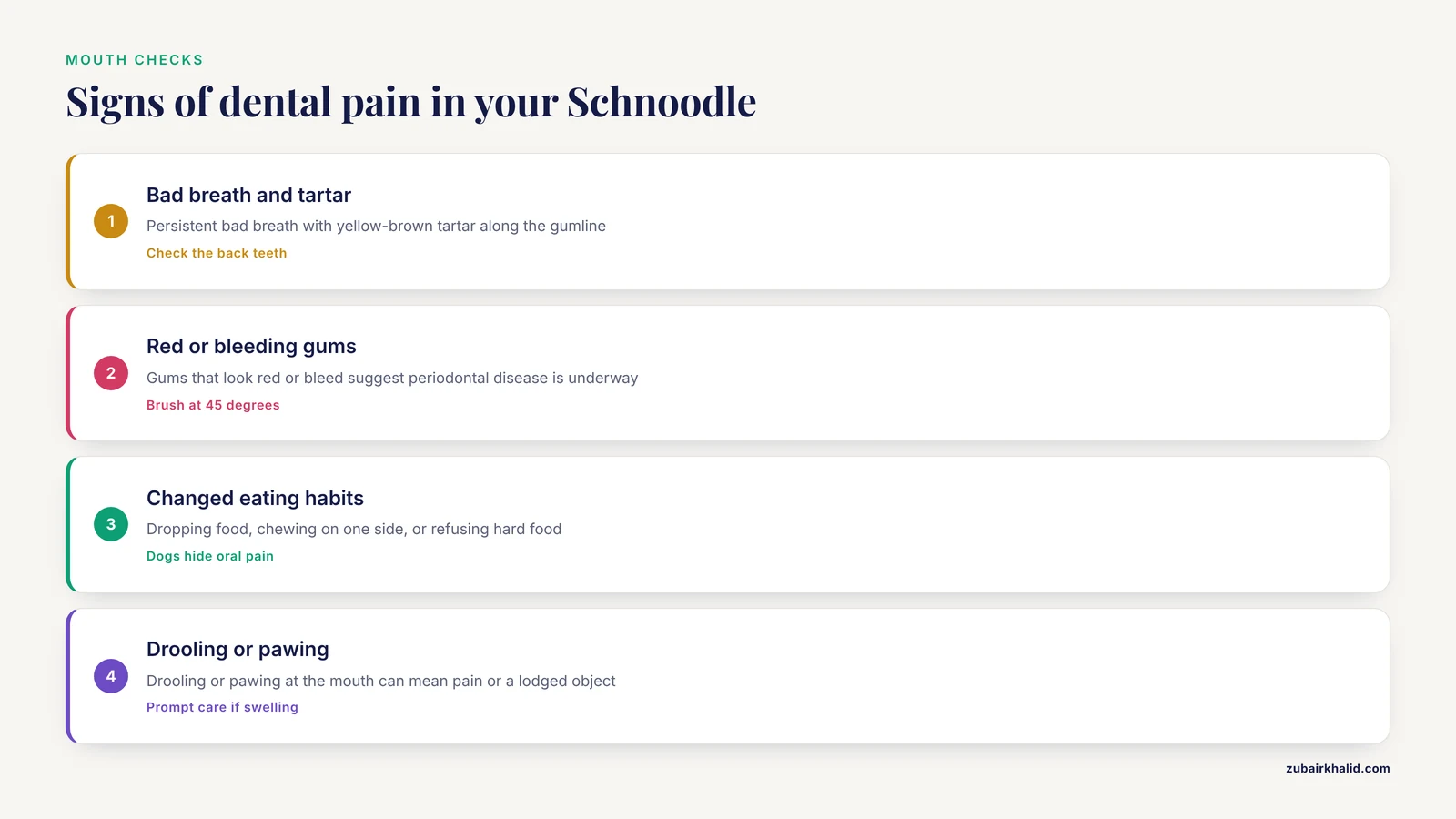
Signs of dental disease include persistent bad breath, red or bleeding gums, yellow-brown tartar, drooling, pawing at the mouth, dropping food, chewing on one side, and reluctance to eat hard food. Dogs often hide oral pain, so a change in eating behavior is a meaningful clue.
Professional Cleaning
Professional dental cleaning requires general anesthesia. This allows your veterinarian to probe each tooth, take dental radiographs to assess bone loss below the gumline, and remove tartar above and below the gums. Anesthesia is safer when your dog has had a pre-anesthetic examination and bloodwork. Do not attempt at-home scaling. It removes visible tartar but misses disease below the gumline and can scratch the enamel.
When to Seek Prompt Care
Contact your veterinarian promptly if your Schnoodle has oral bleeding, facial swelling, or reluctance to eat. These signs can indicate a fractured tooth, a tooth root abscess, or a foreign object lodged in the mouth. Early treatment is less painful and less expensive than waiting until the infection spreads.
Caring for the Senior Schnoodle
A Schnoodle is generally considered senior around age 8 to 10, though smaller dogs often live longer than larger ones. Aging brings gradual changes in body composition, organ function, and behavior. Some changes are normal, such as slower movement, graying around the muzzle, and reduced stamina. Others, including sudden weakness, new coughing, or a change in appetite, are not normal aging and should be evaluated.
Mobility and Pain
Monitor how your senior Schnoodle rises from lying down, climbs stairs, and jumps onto furniture. Stiffness after rest, reluctance to use stairs, or a changed posture can indicate osteoarthritis or other orthopedic pain. Small breed dogs are also at risk for acute disc problems such as hydrated nucleus pulposus extrusion, which typically affects the neck [4]. If your dog cries when picked up, holds the head low, or refuses to move, seek veterinary care promptly.
Weight and Airway Signs
Keep your senior Schnoodle lean. Higher body condition scores are associated with more severe airway collapse and bronchomalacia in small breed dogs, and older age is linked to worse bronchomalacia [3]. Weigh your dog monthly and have body condition scored at every veterinary visit. Watch for coughing, gagging, noisy breathing, or exercise intolerance. A cough that worsens with excitement or leash pulling warrants an airway evaluation [3].
Cognition and Dental Health
Some older dogs show cognitive changes such as pacing, staring at walls, getting lost in familiar rooms, or disrupted sleep cycles. These signs are not simply "getting old" and should be discussed with your veterinarian. Dental disease is common in senior small breed dogs. Bad breath, drooling, pawing at the mouth, or difficulty chewing should prompt a dental examination.
Senior Wellness Exams
Senior Schnoodles should be examined at least every six months. Blood and urine testing can detect early kidney disease, diabetes, and other conditions before clinical signs appear. Urinary signs such as blood in the urine, straining, or accidents in a house-trained dog should never be dismissed as old age, because calcium oxalate stones are a recognized risk in this cross [5].
Home Modifications and Quality of Life
Small changes can keep a senior dog comfortable. Use ramps or steps for furniture, place non-slip rugs over slippery floors, raise food and water bowls if your dog has neck pain, and provide a soft, warm bed away from drafts. Keep a consistent daily routine to reduce anxiety.
Assess quality of life honestly and regularly. Track good days versus bad days over a month. Consider whether your dog still enjoys food, social contact, and favorite activities. When pain cannot be controlled, appetite fails, or the dog no longer engages with the family, discuss palliative options and humane euthanasia with your veterinarian.
Contact your veterinarian if your senior Schnoodle shows any new symptom, including limping, coughing, vomiting, diarrhea, weight loss, increased thirst, difficulty urinating, or a sudden behavior change. Early evaluation is kinder and often more effective than waiting.
Household Toxins and Medication Safety
A Schnoodle's small size changes toxin risk. A dose that barely affects a large dog can be serious in a ten-pound dog. Assume any human medicine, supplement, or nicotine product is hazardous until your veterinarian says otherwise.
Human medications
Common risks include pain relievers such as ibuprofen and acetaminophen, antidepressants, sleep aids, ADHD stimulants, heart medicines, thyroid pills, and vitamin D or iron supplements. Keep all medicines in closed child-resistant containers inside a cabinet the dog cannot reach. Do not leave pills on counters, nightstands, in purses, or on the floor. Never give a human drug to your dog without explicit veterinary instruction, and never assume a child's dose is safe.
Foods and plants
Keep chocolate, xylitol-sweetened gum or baked goods, grapes and raisins, onions and garlic, alcohol, caffeine, macadamia nuts, and moldy food out of reach. Xylitol is especially dangerous because small amounts can cause low blood sugar and liver injury. Common toxic plants include sago palm, azalea, oleander, lily of the valley, and tulip bulbs. Place plants where the dog cannot chew leaves, stems, or bulbs, and clean up fallen leaves.
Pesticides and nicotine
Store rodenticides, insecticides, slug bait, and lawn chemicals in locked cabinets or on high shelves. Keep pets away during and after application, and follow label directions. Nicotine is also a toxin: cigarettes, e-cigarette liquid, gum, and pouches can cause vomiting, tremors, and heart problems. Keep them out of reach and clean up ash and butts.
Flea products
Use only species-appropriate flea and tick products labeled for dogs, and match the product to your Schnoodle's weight. Never use a dog product on a cat or a cat product on a dog. Some dog flea products contain permethrin, which is highly toxic to cats. Ask your veterinarian before combining products or using sprays, shampoos, and spot-ons together.
Poison control and urgent signs
Post your veterinarian's number, the nearest emergency clinic, and a poison control service where everyone can find them. Call immediately after suspected exposure, even if the dog seems normal. Do not wait for symptoms. Urgent signs include vomiting, diarrhea, drooling, tremors, seizures, collapse, weakness, pale gums, breathing difficulty, or an irregular heartbeat. Bring the packaging or a photo of the product and estimate how much the dog may have eaten. Do not induce vomiting unless a veterinarian tells you to.
Related Guides
- Pug Dog Breed Guide: Temperament, Size, Lifespan, Health Problems and Care: Small breed with airway concerns relevant to breathing care
- Jack Russell Terrier Dog Breed Guide: Temperament, Size, Lifespan, Health Problems and Care: Small breed with high exercise and enrichment needs
- Boston Terrier Dog Breed Guide: Temperament, Size, Lifespan, Health Problems and Care: Small companion breed guide for daily care and health
Frequently Asked Questions
Are Schnoodles hypoallergenic?
No breed or crossbreed is guaranteed to be allergen-free. Perceived hypoallergenicity is the most common reason people choose designer crosses like the Schnoodle, but coat type varies from puppy to puppy [2].
How big do Schnoodles get?
Size depends on the parent breeds. A Miniature Schnauzer crossed with a Miniature or Toy Poodle is typically small, while Standard Schnauzer crosses can be larger. Ask the breeder for the size and weight of both parents.
Are Schnoodles easy to train?
Not automatically. Research on Poodle crosses shows that designer crosses often display more undesirable behaviors than one of their purebred progenitors, and they rarely display fewer [1]. Individual training and socialization matter more than the breed label.
Do Schnoodles shed?
Coat type is unpredictable in a first-generation cross. Some puppies have a curly, low-shedding coat like a Poodle, while others have a wiry coat like a Schnauzer. Spend time with adult dogs from the same cross before committing.
What health problems are Schnoodles prone to?
The conditions most relevant to Schnauzer-Poodle crosses include airway collapse [3], acute disc extrusion known as HNPE [4], and calcium oxalate urinary stones [5]. Keeping your dog lean reduces the risk of the first two.
How much exercise does a Schnoodle need?
Exercise needs depend on the individual dog, its size, and its energy level. Rather than following a fixed rule, watch your dog's behavior and ask your veterinarian for guidance tailored to your dog.
When should I neuter or spay my Schnoodle?
Neutering decisions involve a balance between health, behavior, performance, and management goals [9]. Discuss timing with your veterinarian, because the right answer depends on your dog's age, health, and lifestyle.
How often should my Schnoodle see the veterinarian?
Ask your veterinarian for a schedule tailored to your dog's age and health. Most adult dogs benefit from an annual wellness examination, with more frequent visits for puppies and senior dogs. Your veterinarian can assess body condition, vaccination status, and early signs of the breed-related conditions discussed above.
Sources
- Comparing undesirable behaviours between ‘designer’ Poodle-cross dogs and their purebred progenitor breeds
- How much is that doodle in the window? Exploring motivations and behaviours of UK owners acquiring designer crossbreed dogs (2019-2020)
- Airway collapse in small breed dogs and its association with clinical and anatomic variables.
- Hydrated Nucleus Pulposus Extrusion in Dogs: A Narrative Review of Pathophysiology, Diagnosis, and Clinical Management.
- Alterations along the gut-urinary axis in dogs with calcium oxalate urolithiasis.
- Impact of breed on the fecal microbiome of dogs under the same dietary condition.
- PSXI-6 Genetic analysis of hip and elbow dysplasia in guide dogs.
- Seroprevalence of anti-Leptospira antibodies in unvaccinated hunting and guard dogs from Tiaret, northwestern Algeria: a cross-sectional study.
- Neutering Practices, Reproductive Management, and Clinical Findings in European Endurance Sled Dogs: A Field Study from the Lekkarod(®) Event.