Nova Scotia Duck Tolling Retriever: Temperament, Care, Health
By Dr. Zubair Khalid, DVM, MS, PhD ·
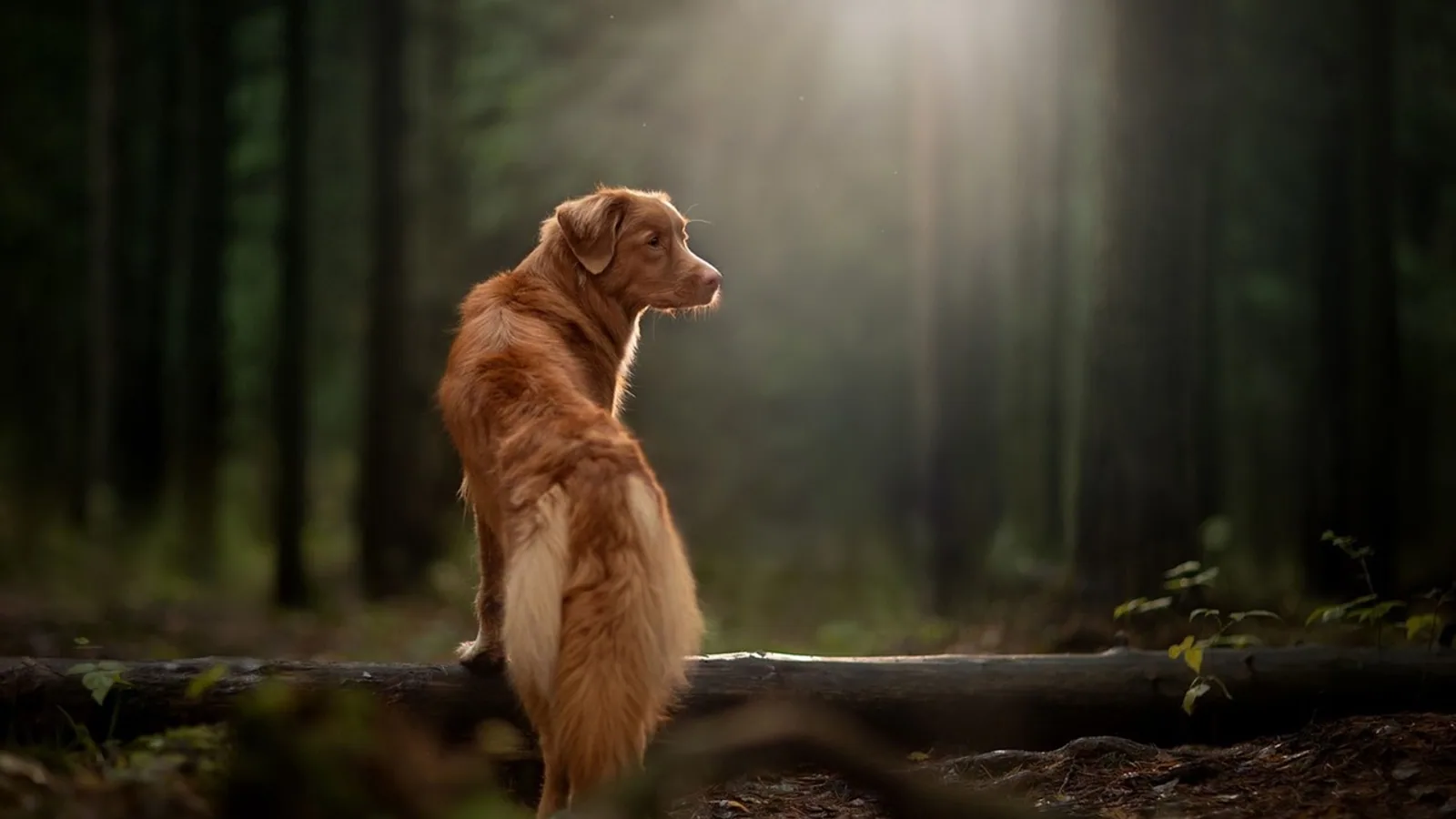
The Nova Scotia Duck Tolling Retriever is the smallest of the retriever breeds, a compact, athletic gundog developed in Canada to lure and retrieve waterfowl. It is bright, busy, and intensely bonded to its people, and it carries a set of inherited autoimmune diseases that make health screening and honest breeder communication more important than in most breeds.
This article covers what tolling actually is, what living with a Toller looks like day to day, and the specific conditions that veterinarians watch for in the breed. It is written for owners and prospective owners in the United States.
This article is educational and is not a substitute for veterinary diagnosis or treatment.
At a Glance
| Trait | Detail |
|---|---|
| Breed group | Sporting / gundog (retriever) |
| Height | Medium, smallest of the retriever breeds [1] |
| Weight | Medium, athletic build [1] |
| Coat | Dense double coat, water resistant, with a distinctive reddish-gold tone [1] |
| Lifespan | Long-lived for its size class relative to many breeds, but autoimmune disease can shorten life dramatically in affected dogs [2] |
| Energy level | High, working-dog energy in a medium package [3] |
| Grooming | Moderate, double coat sheds seasonally |
| Trainability | High, eager to work, sensitive to harsh handling [3] |
| Good with children | Generally yes with supervision and appropriate training |
| Good with other pets | Often yes, but prey drive and herding-style chase behavior need management |
Where the Breed Came From
The breed was developed in Nova Scotia, Canada, in the nineteenth century, from retriever, spaniel, and collie-type stock. Hunters wanted a dog that could work the shoreline, draw curious waterfowl within gun range, and then retrieve downed birds from cold water. That dual job, luring and retrieving, is the origin of the name.
The American Kennel Club recognized the breed in the 2000s, and it remains a relatively uncommon breed in the United States [1]. Because the founding population was small, the modern breed is genetically narrow. That narrow gene pool is directly relevant to the health section below.
What Tolling Actually Is
Tolling is the behavior that gave the breed its name, and it is worth understanding because it explains much of the Toller's personality.
Foxes along the Nova Scotia coast would play and cavort at the water's edge. Curious ducks and geese would swim closer to investigate the activity. Hunters noticed this and bred dogs that would reproduce the effect deliberately.
A tolling dog works the shore in a distinctive pattern. The dog runs, jumps, spins, and plays with a stick or object at the water's edge, in view of rafted waterfowl. The movement and the flash of the reddish coat draw the birds in. Once the birds are within range, the hunter calls or signals the dog, the dog flushes the birds into flight, and the shot is taken. The dog then retrieves.
This is why duck tolling dogs are described as high-drive, visually busy animals. The breed was selected for a dog willing to work at a distance from the handler, in cold water, with enough self-direction to keep performing a lure behavior without constant instruction. That selection pressure produced a dog that is clever, persistent, and often more independent in the field than a Labrador.
Modern Tollers rarely toll for a living. But the behavior persists. Owners frequently describe a dog that carries objects, spins, bounces, and "works" anything that moves. That same drive is what makes the breed excel in dog sports and what makes it difficult to live with in a low-activity household.
Temperament
Toller temperament is best described as alert, intelligent, and intensely people-oriented, with a strong work ethic and a real sensitivity to the handler's mood.
The breed is generally affectionate with its family and often described as a "velcro dog" that wants to be in the same room as its owner. It tends to be reserved or cautious with strangers rather than overtly friendly, and early socialization matters. Many Tollers are good with children they know and less comfortable with chaotic or unfamiliar handling.
The breed is not a low-maintenance companion. It needs a job, and it needs mental work as much as physical exercise. A bored Toller will invent its own entertainment, which usually means barking, digging, counter-surfing, or herding the household.
The Toller Scream
The Toller scream is the breed's most famous and most misunderstood trait. It is a high-pitched, piercing vocalization, somewhere between a shriek and a bark, that Tollers produce when they are highly aroused. It shows up most often at the start of a retrieve, at the sight of a toy or bird, at the door before a walk, or in any situation where the dog is intensely excited and cannot act immediately.
The scream is not aggression and it is not pain. It is an arousal vocalization tied to the breed's working drive. It is also loud, and it is the single most common reason prospective owners reconsider the breed. In a Toller that is well exercised and has an outlet for its drive, the scream is usually manageable. In an under-exercised Toller, it can become a daily event.
If a Toller screams constantly, the first step is not punishment. It is a veterinary and behavioral review, because chronic high arousal can also reflect pain, anxiety, or an inadequate exercise and enrichment routine.
Trainability
Tollers are highly trainable and often excel in obedience, agility, rally, dock diving, and field work. They are also sensitive. Harsh corrections tend to produce a dog that shuts down or becomes defensive. Positive, reward-based training with clear structure works best [3].
The breed's intelligence cuts both ways. A Toller learns quickly, including things you did not intend to teach it.
Exercise and Enrichment Needs
This is a working retriever. Plan on substantial daily activity.
A realistic baseline for an adult Toller includes vigorous aerobic exercise most days, plus structured mental work. Fetch, swimming, hiking, and off-leash running are the natural outlets. Because the breed was built for cold water, many Tollers are strong swimmers and will happily work in water year-round with appropriate safety supervision.
Mental work is not optional. Puzzle feeders, scent games, trick training, and formal dog sports all serve the same purpose. A Toller that gets only a leash walk will usually develop behavior problems.
Puppies and adolescents need controlled exercise that protects growing joints. Discuss a safe exercise plan with your veterinarian based on your dog's age and body condition.
Enrichment for a Working Breed
- Structured retrieve games with clear start and end cues
- Swimming or dock diving where safe water access exists
- Nose work and scent games
- Trick training and obedience titles
- Agility or rally as a formal outlet
- Rotating puzzle toys to prevent habituation
Grooming and Coat Care
The Toller has a dense double coat with a water-resistant outer layer and a soft undercoat. The breed's coat is a defining feature and requires regular attention.
Brush two to three times weekly to remove loose undercoat and prevent matting, especially behind the ears, under the collar area, and around the tail. During seasonal shedding, daily brushing is reasonable.
Bathe only as needed. Over-bathing strips natural oils from the coat and can cause skin irritation. Use a dog-specific shampoo and dry the undercoat thoroughly, because a damp undercoat close to the skin can contribute to skin problems.
Check ears weekly. Tollers are water dogs, and water in the ear canal plus a heavy ear flap is a setup for otitis externa. Trim nails every few weeks, and brush teeth regularly. Dental disease is common in dogs generally and is preventable with routine home care.
Feeding Considerations
Feed a complete and balanced diet appropriate for your dog's life stage, body condition, and activity level. Working Tollers and pet Tollers have very different caloric needs, and the bag recommendation is only a starting point.
Because the breed is predisposed to immune-mediated disease, some owners ask about specialized diets or supplements. There is no diet that prevents autoimmune disease. Any supplement or dietary change should be discussed with your veterinarian, because some supplements interact with medications, and some "immune-boosting" products are actively counterproductive in a dog with an overactive immune system.
Keep your Toller lean. Obesity worsens joint disease and complicates nearly every other condition.
Health Problems in the Breed
This is the section that matters most for anyone considering a Toller. The breed carries an unusually heavy burden of immune-mediated disease, and the Swedish insurance and survey data are the clearest picture available.
A large Swedish insurance study covering 2,890 Tollers found that overall morbidity was higher in Tollers than in all other breeds combined, though similar to other retriever breeds. The most common reasons for veterinary visits were injuries, gastrointestinal disease, and locomotor disorders. Critically, the incidence of immune-mediated rheumatic disease, steroid-responsive meningitis-arteritis, and lymphoma was significantly higher in Tollers than in all other breeds and all other retriever breeds [4].
A more recent Swedish owner survey of 935 living Tollers found that 3% of living dogs were reported to have an immune-mediated disease [5]. That number reflects living dogs only. Lifetime risk is higher.
Immune-Mediated Rheumatic Disease (IMRD)
IMRD is the breed's signature autoimmune condition. It is a chronic inflammatory disorder that closely resembles systemic lupus erythematosus in humans, and it is characterized by stiffness and joint pain.
The first clinical description in the breed followed 33 Tollers with musculoskeletal signs for up to four years. Every affected dog showed stiffness and lameness lasting at least 14 days, with pain on manipulation of multiple joints of the limbs. Twenty-seven percent also had muscle pain, and 18% had skin symptoms. Seventy percent of the affected dogs tested positive for antinuclear antibodies (ANA), the same autoantibody pattern seen in human lupus [6].
Most of those dogs were treated with corticosteroids, and the majority responded [6]. Treatment is typically long-term and requires monitoring. Relapses are common when medication is tapered too quickly.
A follow-up study measured C-reactive protein, a general inflammation marker, in 18 IMRD-affected Tollers and 19 healthy controls. Dogs with IMRD and positive ANA had higher CRP than controls, but most values stayed below the threshold used to flag systemic inflammation [7]. The practical takeaway for owners: a normal CRP does not rule out IMRD. Diagnosis rests on clinical signs, joint examination, and ANA testing.
Steroid-Responsive Meningitis-Arteritis (SRMA)
SRMA is a non-infectious inflammation of the meninges and the leptomeningeal blood vessels [5]. It typically affects young dogs and presents with high fever, neck stiffness, and severe pain. It is treatable with corticosteroids, and many dogs respond well, but relapses occur and treatment courses are often months long [8].
SRMA and IMRD are not separate problems in this breed. Genetic studies have shown that the same risk loci underlie a combined SLE-related disease complex that includes both ANA-positive IMRD and SRMA [9]. A Toller that develops one of these conditions is at elevated risk for the other.
Addison's Disease (Hypoadrenocorticism)
Addison's disease results from immune-mediated destruction of the adrenal cortex, causing deficiency of both glucocorticoids and mineralocorticoids [10]. It is uncommon in dogs generally but clearly overrepresented in the Toller.
The genetics are well studied. A dog leukocyte antigen (DLA) class II haplotype, DLA-DRB1*01502/DQA*00601/DQB1*02301, is significantly more prevalent in affected Tollers, and affected dogs were far more likely to be homozygous across the DLA class II region than controls. Homozygous dogs also tended to develop disease earlier [10].
A newer and more concerning finding: a 2026 study of 24 juvenile-onset Addison's cases in Tollers found that at least 10 dogs (41.7%) had concurrent autoimmune conditions, suggesting that early-onset Addison's in this breed is part of a broader multiple autoimmune syndrome. Affected dogs had severely decreased lifespans, with a median survival of only 2 years despite appropriate treatment. Genome-wide association identified a recessive missense variant in the RESF1 gene with 76% penetrance for early-onset disease [2].
This is a serious finding for breeders and owners. A Toller that develops Addison's disease before adulthood should be evaluated for additional autoimmune conditions, and the prognosis is guarded.
Lymphoma and Other Cancers
The Swedish insurance data identified significantly elevated lymphoma incidence in Tollers compared with other breeds [4]. A separate study found that Tollers with lymphoma had elevated levels of IL-12/IL-23p40, a pro-inflammatory cytokine, compared with healthy Tollers, and the same elevation was seen in Tollers with autoimmune disease [11]. This supports the broader concept that dysregulated immune function in this breed links autoimmune disease and certain cancers.
Low Serum IgA
Immunoglobulin A protects mucosal surfaces. A large screening study of 1,267 dogs across 22 breeds identified the Toller as one of six breeds in which 10% or more of tested dogs had very low serum IgA concentrations (below 0.07 g/L) [12]. Low IgA in dogs is associated with recurrent mucosal infections and immune-mediated disease. This is a predisposing factor, not a diagnosis, and it is not a routine screening test for pet owners.
Progressive Retinal Atrophy (PRA)
PRA is a group of inherited retinal degenerations that cause progressive vision loss and eventual blindness. The Toller is among the breeds in which PRA has been reported, and DNA testing is available through commercial laboratories and breed health organizations. Because PRA is inherited, breeding dogs should be tested before being bred. Ask any breeder for PRA test results on both parents.
Collie Eye Anomaly (CEA)
Collie eye anomaly is a congenital defect of the choroid and retina that can range from mild (with no vision impact) to severe (with retinal detachment and blindness). It is best known in herding breeds, and the Toller's collie ancestry is relevant. CEA is present in the breed at low frequency, and DNA testing is available. Breeders should screen breeding stock and report results.
Cleft Palate Variants
Cleft palate is a congenital defect in which the palate fails to close during development, causing difficulty nursing and a risk of aspiration in puppies. The Toller carries genetic variants associated with cleft palate, and affected puppies typically require humane euthanasia or extensive surgical correction. Breeders should be aware of the variant and avoid breeding known carriers to each other.
The Narrow Gene Pool
Every health problem above is amplified by the breed's limited genetic diversity. A review of autoimmune disease in dog breeding specifically identified breeds with a narrow genetic base, including the Toller, as predisposed to SLE, IMRD, SRMA, and juvenile Addison's disease. The same review noted that only a few DNA tests are available for detecting carriers of autoimmune predisposition genes, and that responsible breeding with exclusion of high-risk animals is the main tool available [13].
Genetic studies of the breed have identified multiple risk loci for the SLE-related disease complex, and homozygosity for the risk haplotype is disadvantageous [9][8]. MHC class II is one of several genetic risk factors, and it is not the whole story. Breeders cannot select away autoimmune disease using DLA typing alone, and no responsible organization recommends breeding decisions based solely on DLA genotype [14].
The practical consequence for buyers: ask about the breeder's health testing, ask about the health of the parents' siblings and prior litters, and be skeptical of any breeder who claims their lines are free of autoimmune disease.
Screening Tests to Ask About
When evaluating a breeder or planning to breed a Toller, the following are the tests most relevant to the breed's known problems.
- PRA DNA test on both parents
- Collie eye anomaly DNA test on both parents
- Cleft palate variant testing where available
- Hip and elbow evaluation through a recognized registry
- Cardiac evaluation by a veterinary cardiologist
- Eye examination by a veterinary ophthalmologist
- Documentation of any autoimmune disease in the pedigree
There is no DNA test that reliably predicts IMRD, SRMA, or adult-onset Addison's disease in this breed. ANA testing is a diagnostic tool, not a screening tool for healthy dogs, and a positive ANA in a healthy dog does not mean the dog will develop disease.
Lifespan and Long-Term Outlook
A well-bred, well-managed Toller can live a long life. The breed's serious risk is not old age. It is autoimmune disease, and specifically juvenile-onset Addison's, which carries a median survival of only 2 years despite treatment [2].
For a Toller that reaches adulthood without autoimmune disease, the outlook is generally good with appropriate exercise, weight management, dental care, and routine veterinary visits. For a Toller that develops one autoimmune condition, the risk of a second is real, and monitoring should be lifelong.
Finding a Responsible Breeder or Rescue
Because the breed is uncommon, buyers often have to wait for a litter. That wait is an opportunity to do the diligence the breed requires.
Ask the breeder directly:
- What health tests have been performed on both parents, and can you see the results?
- Has any dog in the parents' lines been diagnosed with IMRD, SRMA, Addison's disease, or lymphoma?
- How old were those dogs when diagnosed?
- What is the breeder's policy if the puppy develops a serious inherited condition?
- Can you speak with owners of prior puppies from these lines?
A breeder who is evasive about autoimmune disease in the lines is a red flag. The breed's problems are well documented, and honest breeders talk about them openly.
Rescue is a legitimate route. Breed-specific rescue organizations place adult Tollers, including dogs surrendered because owners underestimated the breed's exercise needs. Adult dogs have the advantage of known temperament and, often, known health history.
Who Should Not Get This Breed
The Toller is a poor fit for several households.
- People who want a calm, low-energy companion
- Owners who are away from home for long stretches
- First-time owners who are not committed to structured training
- Households that cannot tolerate a loud, high-arousal dog (the Toller scream is real)
- Families who want a dog that is universally friendly with strangers
- Anyone unwilling to budget for lifelong veterinary care and potential autoimmune disease management
- Anyone unwilling to research the breeder's health testing
The breed rewards an engaged, active owner. It punishes an unprepared one.
Limitations and When to Contact a Veterinarian
This article is educational. Individual dogs need individual veterinary assessment, and no breed guide can substitute for examining your dog.
Contact a veterinarian promptly if your Toller shows any of the following:
- Lameness or stiffness lasting more than a few days, especially stiffness that is worse after rest
- Pain when you touch multiple joints or limbs
- Fever combined with neck stiffness, reluctance to move the head, or severe pain
- Vomiting, diarrhea, weakness, or collapse, which can indicate an Addisonian crisis
- Sudden lethargy, poor appetite, or weight loss
- Any change in vision, including bumping into objects or reluctance to move in dim light
- Persistent high-arousal vocalization that interferes with daily life
- Any new lump, swelling, or unexplained weight change
Addisonian crisis is a medical emergency. A Toller that collapses or becomes severely weak should be seen immediately.
If your Toller has been diagnosed with IMRD, SRMA, or Addison's disease, follow your veterinarian's monitoring schedule closely. These conditions require ongoing bloodwork, medication adjustment, and rechecks, and relapses are common when treatment is tapered too quickly.
Frequently Asked Questions
What is tolling in Nova Scotia Duck Tolling Retrievers?
Tolling is a lure behavior in which the dog plays and cavorts at the water's edge to draw curious waterfowl within range of a hunter. The dog then flushes the birds and retrieves downed game. The behavior was selected over generations and is the origin of the breed's name.
What is the Toller scream?
The Toller scream is a high-pitched, piercing vocalization the breed produces during high arousal, especially before a retrieve or when excited and unable to act. It is not aggression or pain. It is an arousal behavior tied to the breed's working drive, and it is the trait most likely to surprise new owners.
Are Nova Scotia Duck Tolling Retrievers good family dogs?
Tollers are affectionate with their families and often good with children they know, but they are high-energy working dogs that need substantial exercise, mental work, and training. They are not a good fit for sedentary households or owners who want a low-maintenance companion.
What health problems are Tollers prone to?
The breed is predisposed to immune-mediated rheumatic disease, steroid-responsive meningitis-arteritis, Addison's disease, lymphoma, low serum IgA, progressive retinal atrophy, collie eye anomaly, and cleft palate variants. Swedish insurance data show significantly higher incidence of IMRD, SRMA, and lymphoma in Tollers than in other breeds [4].
How much exercise does a Toller need?
Tollers are working retrievers and need vigorous daily aerobic exercise plus structured mental work. Fetch, swimming, hiking, and dog sports are appropriate outlets. A leash walk alone is not enough, and under-exercised Tollers commonly develop behavior problems.
Is Addison's disease common in Nova Scotia Duck Tolling Retrievers?
Addison's disease is uncommon in dogs generally but clearly overrepresented in the Toller. A 2026 study found that juvenile-onset cases in the breed often involve concurrent autoimmune conditions and carry a median survival of only 2 years despite treatment [2]. Adult-onset cases have a more variable course.
Do Tollers shed a lot?
Yes. The breed has a dense double coat with a soft undercoat that sheds heavily during seasonal coat blows. Brush two to three times weekly year-round and daily during shedding periods.
Should I get a Toller as a first dog?
Only if you are committed to structured training, daily vigorous exercise, and significant mental enrichment. The breed is sensitive to harsh handling and needs an owner who enjoys working with a high-drive dog. First-time owners who want a calm companion should look at other breeds.
Related Articles
- Maltese Dog: Complete Guide to Care, Grooming, and Temperament
- Bernese Mountain Dog Care, Health, Temperament, Size and Lifespan
- Newfoundland Dog: Gentle Giant Breed Guide, Temperament & Care
- Can Dogs Eat Duck? Fat Content and Rendering Safety
- Pitbull Dog Breed Guide: Temperament, Care, and Common Myths Debunked
- Bernese Mountain Dog: Complete Breed Guide, Temperament, and Care Tips
- Borzoi: Temperament, Exercise, Care, and Health Problems
- Wolf Dog Hybrids: Temperament, Health, and Legal Reality
- Whippet Dog Breed Guide: Temperament, Exercise, and Daily Care
Sources
- Nova Scotia Duck Tolling Retriever Dog Breed Information (akc.org)
- A variant in RESF1 is associated with Addison's disease and multiple autoimmune syndrome in young Nova Scotia Duck Tolling Retrievers.
- Is the Nova Scotia Duck Tolling Retriever Right for You? (akc.org)
- Disease patterns and incidence of immune-mediated disease in insured Swedish Nova Scotia Duck Tolling Retrievers.
- In sickness and health - a questionnaire based study regarding immune mediated diseases and neoplasia in Swedish Nova Scotia Duck Tolling Retrievers.
- A possible systemic rheumatic disorder in the Nova Scotia duck tolling retriever.
- Serum C-reactive protein concentrations in Nova Scotia Duck Tolling Retrievers with immune-mediated rheumatic disease.
- MHC class II polymorphism is associated with a canine SLE-related disease complex.
- Genome-wide association mapping identifies multiple loci for a canine SLE-related disease complex.
- Association of a dog leukocyte antigen class II haplotype with hypoadrenocorticism in Nova Scotia Duck Tolling Retrievers.
- Elevated levels of IL-12/IL-23p40 in Nova Scotia Duck Tolling Retrievers with autoimmune disease and lymphoma.
- The dog as a genetic model for immunoglobulin A (IgA) deficiency: identification of several breeds with low serum IgA concentrations.
- [[Autoimmune diseases in dogs and their impact for breeding programs with special reference of the Nova Scotia Duck Tolling Retriever].](https://pubmed.ncbi.nlm.nih.gov/30516473/)
- MHC class II is an important genetic risk factor for canine systemic lupus erythematosus (SLE)-related disease: implications for reproductive success.