Malshi Dog Breed: Maltese Shih Tzu Guide
By Dr. Zubair Khalid, DVM, MS, PhD ·
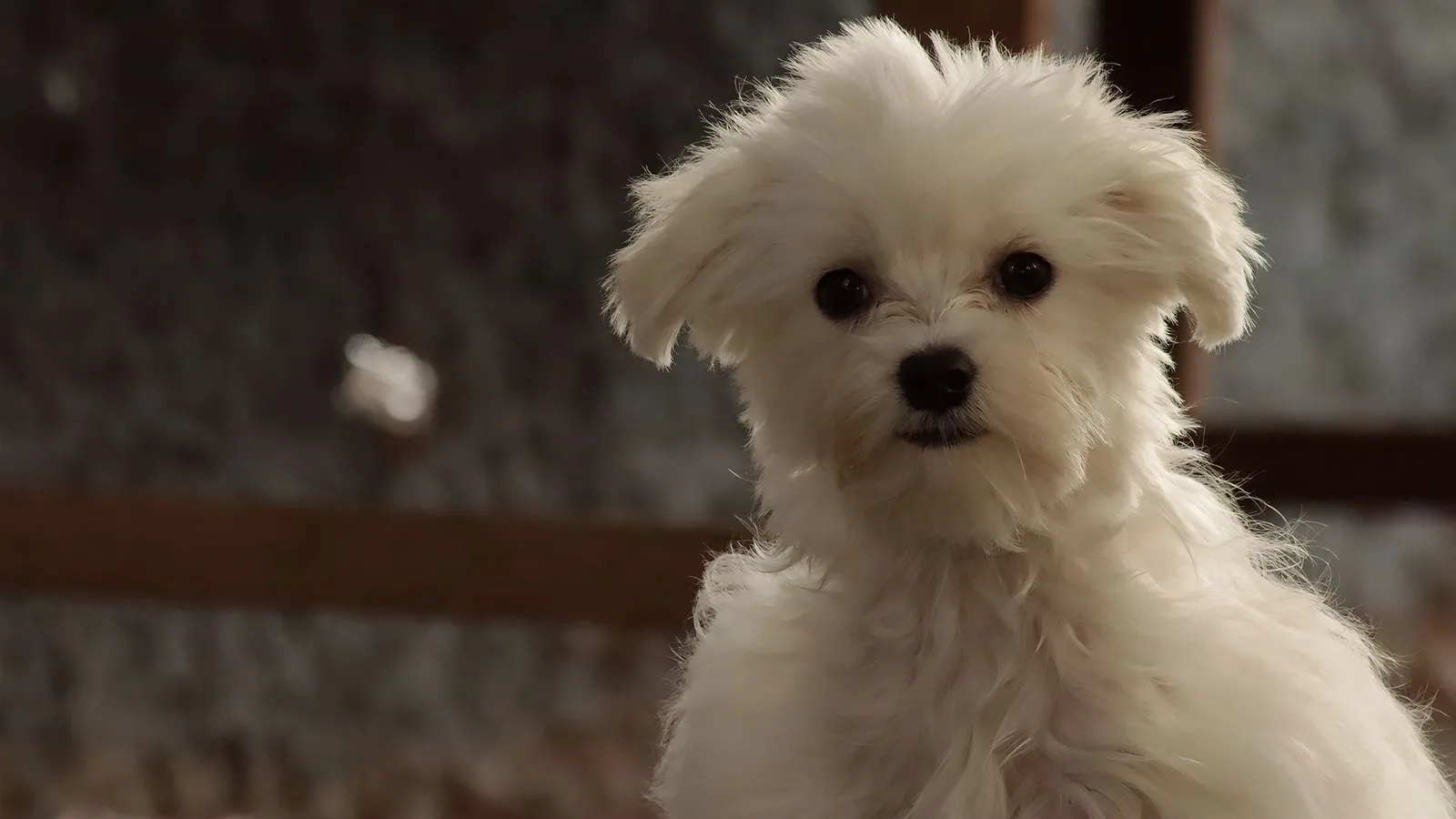
A Malshi is a cross between a Maltese and a Shih Tzu, produced as a small companion dog with a soft coat, a people-focused temperament, and a strong preference for being near its owner. The Malshi dog is not a recognized pure breed, so there is no breed standard and no fixed size, coat type, or health profile. That single fact shapes almost every practical decision an owner makes, from grooming frequency to which screenings to request from a breeder.
People looking for a Malshi breed profile usually want three answers: how big the dog gets, how much coat care it needs, and which health problems to watch for. The truthful answer to all three is that it depends on the individual dog and its parents. A Malshi that inherits a shorter muzzle from the Shih Tzu side has different exercise and heat tolerance than one with a longer muzzle. A Malshi that inherits the Maltese tear staining pattern needs different eye-area care than one that does not.
This article is educational and is not a substitute for veterinary diagnosis or treatment.
At a Glance
| Item | What to Expect | Owner Action |
|---|---|---|
| Breed status | Crossbreed, not a pure breed | Evaluate the individual dog, not the label |
| Size | Toy to small, wide individual variation | Ask to see both parents and litter records |
| Coat | Soft, long, prone to matting | Brush several times per week, plan professional grooming |
| Shedding | Low to moderate, not zero | Expect coat on furniture and in brushes |
| Temperament | Affectionate, alert, companion-oriented | Plan for companionship and early socialization |
| Airway | Shortened muzzle possible from Shih Tzu line | Avoid heat, hard exercise, and tight collars |
| Dental | High risk of periodontal disease | Start tooth brushing in puppyhood |
| Eyes | Watering, staining, and corneal risk | Check eyes daily, keep hair trimmed away |
| Joints | Patellar luxation possible | Keep lean, avoid repetitive jumping |
| Preventive care | Exam schedule based on age and lifestyle | Follow AAHA-aligned wellness planning |
What Is a Malshi Dog?
The Malshi is a deliberate cross between two small companion breeds. The Maltese contributes a fine, silky, single-layer coat and a gentle, lap-oriented temperament. The Shih Tzu contributes a denser double coat, a shorter muzzle, and a more assertive, sometimes stubborn personality. The combination produces a dog that is usually affectionate, alert, and highly attached to its household.
A Malshi can be a first-generation cross (one Maltese parent and one Shih Tzu parent) or a later-generation cross between two Malshis. These are not the same dog. A first-generation cross often lands somewhere between the two parents in coat density and muzzle length. Later generations can drift toward either parent type, and littermates from the same litter can look and behave quite differently.
Because no major registry recognizes the Malshi as a breed, there is no official standard for weight, height, coat, or color. Breeders may describe their lines as "teacup," "toy," or "standard," but those labels are marketing terms rather than regulated classifications. Ask for weights of the parents and, where available, weights of previous litters. That gives you a far better estimate than any label.
Size, Coat, and Appearance
Most Malshis land in the toy to small range, roughly 5 to 15 pounds as adults, with height usually under a foot at the shoulder. This is descriptive rather than fixed. Individual dogs outside that range are common, and a large Shih Tzu parent can push a litter well above the typical weight.
Coat type is the biggest visual variable. Some Malshis carry a soft, relatively flat coat closer to the Maltese. Others have a thicker, denser coat with more undercoat from the Shih Tzu. Colors vary widely, including white, cream, gold, parti-color, and black masks. Eye color and nose pigment change as puppies mature.
No dog is hypoallergenic. The AVMA and veterinary dermatologists consistently note that allergens come from skin proteins, saliva, and urine rather than from hair alone, so a low-shedding coat reduces visible hair in the home but does not eliminate allergic reactions in a sensitive person. If someone in the household has confirmed dog allergy, arrange exposure to the individual dog before committing.
The Malshi coat does shed, though usually less dramatically than a heavy double-coated working breed. The shed hair tends to catch in the coat rather than fall to the floor, which is exactly why matting becomes a problem when brushing lapses.
Malshi Temperament and Behavior
The Malshi is a companion breed in the truest sense. These dogs want contact. They follow owners between rooms, prefer to be on the couch rather than in the yard, and often develop strong attachments to one person in the household. That trait makes them excellent for retirees, apartment dwellers, and single-adult homes. It also makes them vulnerable to separation-related distress when left alone for long stretches.
Most Malshis are alert and will announce visitors. Some are vocal. Early, reward-based socialization during the puppy window reduces fear-based barking, resource guarding, and shyness. The American Animal Hospital Association behavior management guidance supports addressing behavior early, within the first months of life where possible, because canine behavior problems are a leading reason for relinquishment.
Shih Tzu ancestry shows up as a stubborn streak. Malshis are often cooperative but not blindly obedient. Short, frequent training sessions with food or toy rewards work better than long drills. Housetraining can be slow in this crossbreed, particularly in cold or wet weather, and small-breed puppies have limited bladder capacity for their age.
The typical Malshi is friendly with familiar people and reserved with strangers. Supervision around toddlers is standard practice for any small dog, because a 10-pound dog can be seriously injured by a fall, a dropped toy, or an clumsy hug. Teach children to sit on the floor to interact and to leave the dog alone while it eats or sleeps.
The Malshi Breed Health Profile
Both parent breeds carry known inherited conditions. A Malshi can inherit any of them, and the crossbreed status offers no protection against a condition that runs in both lines. The practical approach is to know the list, screen for what is screenable, and monitor for early signs.
Brachycephalic Airway Concerns
Shih Tzus are a brachycephalic (short-muzzled) breed, and the Merck Veterinary Manual describes brachycephalic airway syndrome as a set of anatomic changes, including narrowed nostrils and an elongated soft palate, that increase resistance to airflow. A Malshi with a short muzzle and flat face can inherit that anatomy. Signs include noisy breathing, snoring, snorting, exercise intolerance, and rapid fatigue.
Dogs with these features overheat faster than long-muzzled dogs. They should not be walked hard in warm weather, should never be left in a parked car, and should be watched closely on airplanes and during boarding. A harness distributes pressure across the chest and avoids the tracheal pressure a collar can create in a small dog.
Periodontal Disease and Dental Care
Small and toy breeds concentrate dental disease risk. Crowded teeth, shallow roots, and a long lifespan mean that without home care, most of these dogs develop periodontal disease. The AAHA dental care guidelines emphasize that home brushing and professional assessment are the core of oral health, not annual scaling alone.
Signs of trouble include bad breath, brown accumulation along the gumline, reluctance to chew hard food, dropping food, pawing at the mouth, and blood on chew toys. Untreated periodontal disease affects the whole body, and extraction of diseased teeth is often the most humane option once roots are involved.
Patellar Luxation and Orthopedic Issues
Patellar luxation, where the kneecap slips out of its groove, is common in both small parent breeds. A dog may skip for a few steps, hold up a hind leg briefly, or bunny-hop while running. Mild cases are often managed with weight control and controlled exercise. More severe cases can require surgery.
Small breeds also develop Legg-Calve-Perthes disease, a hip condition in which the femoral head loses blood supply and degenerates. It typically appears in young dogs, often before one year of age, and presents as lameness that worsens over weeks. Any young Malshi with a persistent limp needs veterinary assessment rather than a wait-and-see approach.
Eye Disease
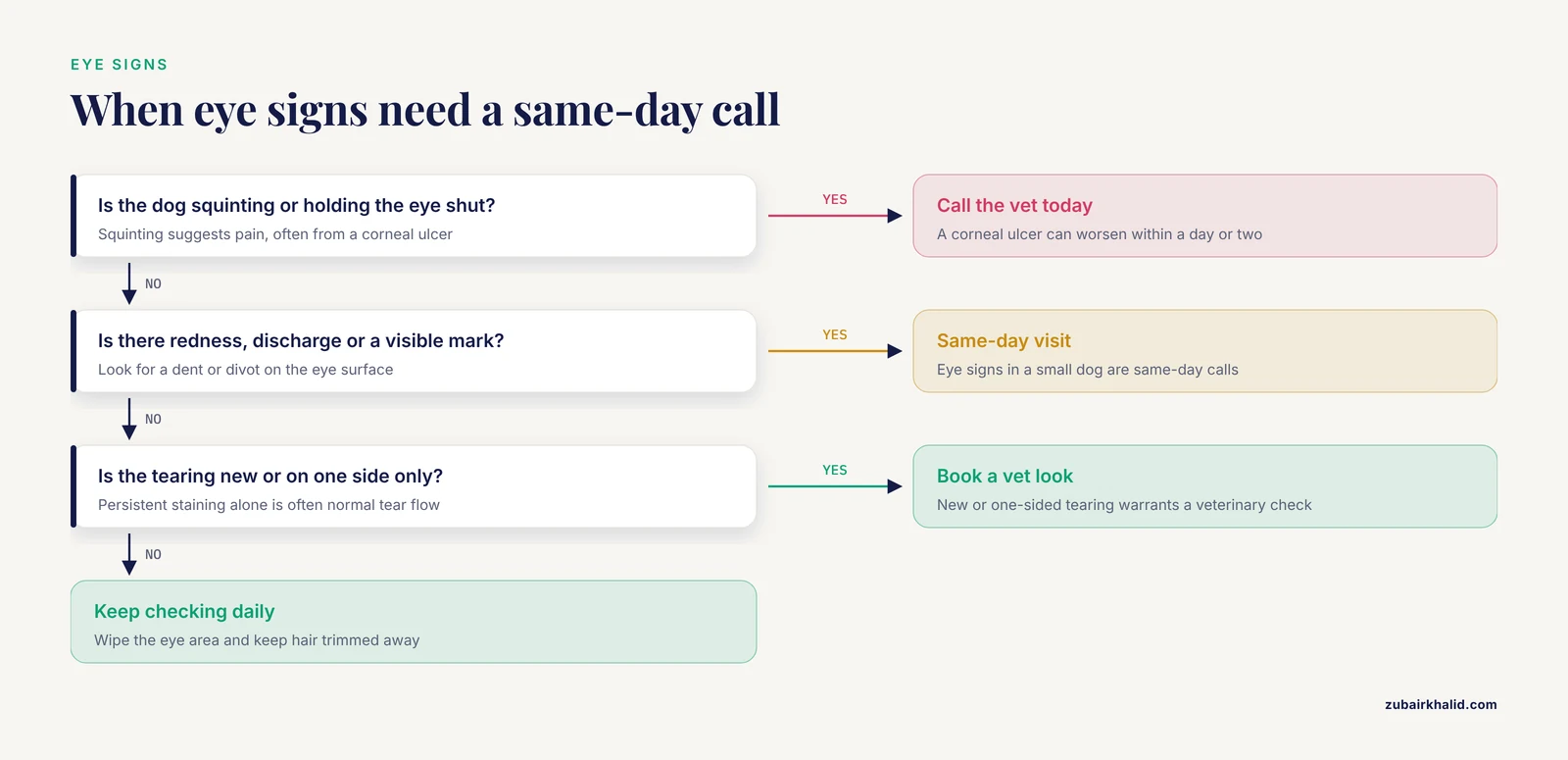
The Malshi eye is exposed and prominent. That anatomy increases the risk of corneal ulcers from scratches, foreign bodies, and drying. Keratoconjunctivitis sicca, or dry eye, is well documented in both parent breeds and requires lifelong management once diagnosed.
Watch for redness, squinting, excessive tearing, discharge, cloudiness, or a visible dent or divot on the eye surface. A corneal ulcer is painful and can progress to a serious problem within a day or two. Eye signs in a small dog are same-day veterinary calls, not next-week appointments.
Entropion (inward-rolling eyelid) and distichiasis (extra eyelashes rubbing the cornea) also appear in these lines. Both cause chronic tearing and irritation. Both are correctable, usually surgically.
Skin and Ear Disease
Allergies are common in both parent breeds. Environmental allergies typically show as itching around the face, paws, armpits, and groin, often starting between one and three years of age. Food allergies can produce similar signs, plus gastrointestinal upset.
Floppy ears trap moisture and wax, so routine ear checks matter. Signs of otitis externa include head shaking, scratching at the ear, redness, odor, and discharge. Repeated ear infections in a young dog often reflect underlying allergy rather than a series of unrelated infections.
Liver Shunts and Other Internal Conditions
Portosystemic shunts, abnormal vessels that bypass the liver, are reported in small companion breeds. Puppies with a shunt may be small for their age, eat poorly, show neurological signs after meals, or develop urinary tract infections and stones. Some are diagnosed only on routine blood work.
Hypoglycemia is a real risk in very small puppies, especially during the first weeks in a new home. Signs include wobbliness, weakness, drooling, and collapse. A puppy that goes limp needs immediate veterinary care.
Tracheal Collapse and Small-Breed Fragility
Small dogs can develop tracheal collapse, a weakening of the windpipe cartilage that produces a characteristic honking cough, worse with excitement, drinking, or collar pressure. A harness and weight management are standard first steps. Any persistent cough in a Malshi should be investigated rather than assumed to be a harmless "reverse sneeze."
Grooming a Malshi: Step by Step
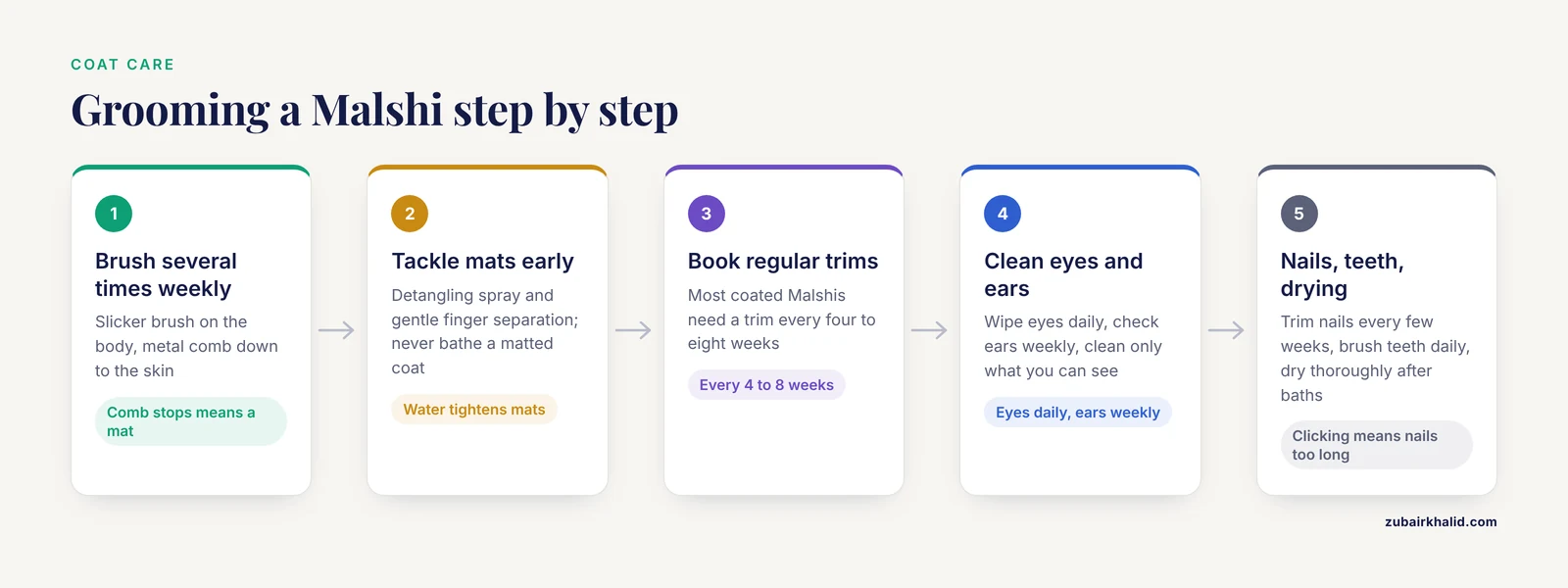
Coat care is the largest recurring owner task with this crossbreed. The plan below works for most Malshis.
- Brush several times per week. Use a slicker brush for the body and a metal comb to check down to the skin. If the comb stops, there is a mat.
- Tackle mats early. Small mats loosen with detangling spray and gentle finger separation. Do not bathe a matted coat, because water tightens mats against the skin.
- Schedule professional grooming on a regular cycle. Most coated Malshis need a trim every four to eight weeks to stay comfortable and mat-free. Ask the groomer to show you the pattern they use.
- Clean the eye area daily. Wipe with a soft damp cloth and keep hair trimmed away from the eyes. Persistent staining is often normal tear flow, but new or one-sided tearing warrants a veterinary look.
- Check ears weekly. Look and smell. Clean only what you can see with a veterinary-recommended ear cleaner.
- Trim nails every few weeks. If you hear clicking on hard flooring, nails are too long.
- Brush teeth daily. Daily brushing is the single most effective home dental measure and the AAHA dental guidelines identify it as foundational.
- Dry thoroughly after baths. Moisture trapped in a dense coat creates skin problems. Pay attention to the armpits, groin, and ear canals.
Feeding and Body Condition
The World Small Animal Veterinary Association global nutrition guidelines provide the most useful framework for choosing a diet. Look for a complete and balanced nutritional adequacy statement, a manufacturer that employs qualified nutritionists and conducts feeding trials, and a product formulated for the dog's life stage. Puppies need growth-formulated food. Adults need maintenance food. Senior dogs often benefit from reassessment of protein, calorie density, and dental suitability.
Body condition scoring is more useful than the number on the bag. You should be able to feel the ribs under a light cover of fat and see a waist from above. Treats should be small and counted in daily calories. A Malshi that gains weight gains it fast, and excess weight worsens patellar luxation, tracheal collapse, and airway strain.
Free-feeding a small companion dog is a common cause of obesity. Measure portions and feed on a schedule. If a dog refuses food, guards food, or develops diarrhea, that is a veterinary conversation rather than a reason to switch diets repeatedly.
Exercise, Heat, and Airway Safety
Malshis need daily activity, but the right dose looks different from a working breed. Two or three short walks, indoor play, puzzle feeders, and scent games cover most of the requirement. A short-muzzled Malshi will set the pace, and the owner should respect it.
Heat is the main safety limit. Walk in the early morning or evening during warm months, test pavement with the back of your hand, and carry water. A dog that starts panting heavily, lagging, or producing harsh breathing sounds needs to stop and cool down immediately. Brachycephalic dogs can deteriorate quickly in heat.
Use a harness rather than a collar for leash walking. Never leave a Malshi unattended outdoors. Small dogs are targets for larger dogs and birds of prey, and fences are only as reliable as their gates.
Preventive Care Schedule
The American Animal Hospital Association recommends veterinary care planned around the individual dog's age, lifestyle, and risk factors rather than a fixed template. For a Malshi, that usually means:
- Puppy visits for vaccine series, fecal testing, deworming, and a baseline physical.
- A discussion about spay or neuter timing, since the AVMA supports personalized decision-making with a veterinarian rather than a single universal age.
- Yearly wellness exams through adulthood, with dental assessment at each visit.
- Twice-yearly exams from around age seven, when heart, kidney, dental, and eye changes become more likely.
- Core vaccines per the AAHA lifestyle-based vaccine guidance, plus any non-core vaccines your veterinarian recommends based on exposure.
- Year-round parasite prevention following Companion Animal Parasite Council recommendations, which favor continuous protection in most US climates.
- Microchip identification and current registration.
Ask your veterinarian to document a baseline patellar exam and an eye exam at wellness visits. Early findings are easier to manage than late ones.
Common Mistakes and Troubleshooting
| Mistake | What Happens | Fix |
|---|---|---|
| Skipping brushing for a week | Mats form close to the skin | Brush several times weekly, comb to the skin |
| Bathing a matted dog | Mats tighten and trap moisture | Detangle first or have a groomer dematt |
| Using a collar for walks | Tracheal pressure, coughing | Switch to a fitted harness |
| Exercising in midday heat | Overheating in a short-muzzled dog | Walk early or late, carry water |
| Free-feeding | Gradual obesity | Measure meals, scheduled feeding |
| Waiting on eye squinting | Corneal ulcer worsens | Call the vet the same day |
| Assuming bad breath is normal | Advanced periodontal disease | Daily brushing plus professional care |
| Buying on appearance alone | Inherited disease from untested parents | Ask for parent health records |
Choosing a Malshi Puppy
The AVMA emphasizes responsible breeding practices, including health screening of breeding animals and honest disclosure of known conditions. For a Malshi, ask for documentation that both parents were evaluated for eye disease, patellar stability, and cardiac disease, since those are the areas where both parent breeds carry risk.
Visit the litter where it was raised. Puppies should be reared indoors with household noise, handling, and early socialization. A breeder who will not allow a visit, who offers multiple crossbreeds with no health records, or who sells puppies before eight weeks is a poor risk. Puppy mills and high-volume brokers produce dogs with higher rates of behavioral and medical problems.
Ask what the breeder does if the dog develops a hereditary condition. A written health agreement is normal. A refusal to provide one is information in itself.
Adoption is a reasonable route. Malshi-type dogs appear in breed-specific and general rescues, and an adult dog gives you a known size, coat, and temperament from day one.
Limitations and When to Contact a Veterinarian
Every dog is an individual. A crossbreed label cannot tell you what your specific Malshi will develop, and only a veterinarian who examines the dog can make a diagnosis. Use the criteria below as escalation triggers.
- Difficulty breathing, blue-tinged gums, or collapse at any time.
- Squinting, eye discharge, redness, or a visible mark on the eye surface. Same-day visit.
- A limp that lasts more than a few days, or any lameness in a puppy.
- A cough that persists, worsens with excitement, or sounds like a honk.
- Bad breath with visible tartar, drooling, dropping food, or pawing at the mouth.
- Repeated ear scratching, head shaking, or odor from the ear canal.
- Itching that disrupts sleep or covers several body areas.
- Vomiting, diarrhea, or appetite loss lasting more than a day in an adult or any length of time in a puppy.
- Weakness, wobbliness, or collapse in a puppy under four months.
- Any new lump, weight loss, or change in water intake and urination.
Call ahead for advice if you are unsure. Small dogs compensate well and then decline quickly, so a phone call is cheap insurance.
Malshi Lifespan and Senior Care: What to Expect as Your Dog Ages
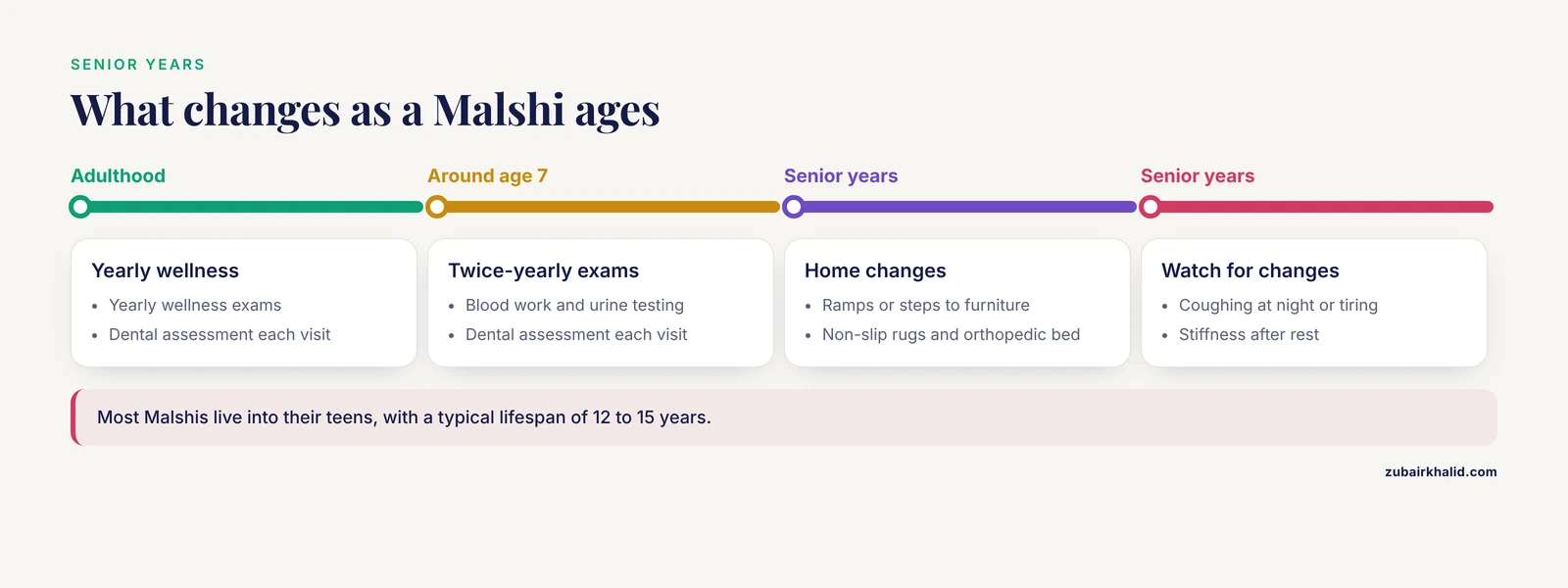
A Malshi is a small dog, and small dogs generally outlive large ones. Most Malshis live into their teens, with a typical lifespan of 12 to 15 years. Individual dogs vary, and preventive care, dental health, and weight control influence how those years feel.
Age-Related Changes
Teeth. Dental disease is the most predictable age-related problem in small breeds. By the senior years, many Malshis have lost teeth, receding gums, or need professional cleanings under anesthesia. Bad breath, dropping food, and pawing at the mouth are warning signs.
Eyes. Cataracts, dry eye, and corneal changes become more common. A gray haze in the pupil, increased tearing, or squinting warrants a veterinary look.
Heart. Small dogs frequently develop heart murmurs, most often from mitral valve disease. A senior Malshi that coughs at night, tires quickly, or breathes faster at rest needs a cardiac evaluation.
Joints. Arthritis and worsening patellar luxation cause stiffness, especially after rest. Hesitation before jumping, slow stair climbing, and bunny-hopping are signs of joint pain.
Cognition. Canine cognitive dysfunction resembles early dementia. Pacing, staring at walls, getting stuck in corners, sleeping poorly at night, and forgetting housetraining are medical changes, not deliberate misbehavior.
Adapting Care
Switch to twice-yearly veterinary exams around age seven, with blood work, urine testing, and dental assessment at each visit. At home, add ramps or steps to furniture, place non-slip rugs over smooth floors, and provide an orthopedic bed. Keep walks shorter and more frequent, and maintain a lean body condition, since excess weight worsens arthritis and heart strain.
When to See the Veterinarian
See the veterinarian for weight loss without a diet change, because it can signal dental pain, kidney disease, diabetes, or cancer. Seek help for stiffness that limits movement or causes crying out, and for behavior changes such as disorientation, night waking, or house soiling. These signs are treatable or manageable, but only if they are investigated rather than dismissed as normal aging.
Malshi Socialization and Behavior Problem Prevention
The main socialization window closes around 12 to 14 weeks of age. Between roughly 3 and 16 weeks, puppies are most receptive to new people, sounds, surfaces, handling, and other dogs. A Malshi that misses this period is more likely to become wary, vocal, or defensive later. Because vaccination is often incomplete during this window, use safe exposure rather than waiting entirely. Carry the puppy in public, invite healthy vaccinated adults and calm children to visit, and introduce household noises, crates, cars, stairs, and grooming tools in short sessions. Avoid dog parks, unknown adult dogs, and crowded events until the vaccine series is complete.
Safe Exposure Rules
- One new experience at a time, kept brief and paired with food.
- Let the puppy approach. Do not pass the puppy around or force handling.
- Watch for freezing, lip licking, yawning, tucked tail, or attempts to leave. Stop and retreat.
- Choose calm, vaccinated, known dogs for early play.
Preventing Separation Anxiety
Malshis are companion-oriented, so practice independence from the first week. Use a crate or pen with a chew toy for short absences while you are home. Leave and return quietly. Build alone time from seconds to minutes, and vary departure cues so keys and shoes do not predict panic. Do not punish crying or destruction. If the dog cannot eat or settles into panic when alone, stop graduated practice and seek veterinary help.
Barking and Resource Guarding
Identify the trigger before changing the response. Reward quiet behavior and teach an alternative such as going to a mat. Do not shout, spray, or use shock collars. For guarding, avoid taking items away by force. Teach a trade: offer a better food item, then return the original. Feed dogs separately and keep high-value chews out of reach. Growling is information, not defiance. Punishing it can remove the warning and increase biting risk.
When to Call the Veterinarian
Seek help for panic lasting more than a few minutes, self-injury, house soiling in a previously trained dog, appetite loss, aggression with snapping, or anxiety that disrupts sleep. Your veterinarian can rule out pain and medical causes, discuss behavior modification, and refer to a certified veterinary behaviorist when needed.
Malshi Travel, Boarding, and Emergency Preparedness
Car and Air Travel
Secure the dog in a crash-tested crate or a vehicle restraint harness. A loose dog becomes a projectile in a collision. Secure the crate with a seatbelt or tie-down so it does not slide during turns. Stop every two hours for water, a short walk, and a bathroom break. Feed a light meal several hours before departure to reduce motion sickness.
For air travel, book the dog in the cabin whenever possible. A Malshi small enough to fit under the seat is safer there than in the cargo hold. Airlines require a health certificate within a set window before departure, so confirm requirements with the airline and your veterinarian. Do not give sedatives without veterinary advice; sedation can suppress breathing in a brachycephalic dog.
Boarding and Pet Sitters
A pet sitter who stays in the home is often less stressful than a kennel for this companion-oriented breed. If you choose a boarding facility, tour it first. Ask how dogs are supervised, whether dogs are separated by size, what vaccinations are required, and how the facility handles a medical emergency. Bring the dog's regular food to avoid an abrupt diet change, since sudden switches can cause diarrhea. Provide written feeding instructions, your veterinarian's contact details, and a signed authorization for emergency treatment.
Emergency Kit
Assemble a kit that stays with the dog's carrier:
- Two days of food and bottled water
- Medications with written dosing instructions
- Vaccination records and microchip number
- Leash, harness, and collapsible bowl
- Gauze, bandage tape, and antiseptic wipes
- A familiar toy or blanket
- A recent photo in case the dog is lost
Check food and medication expiration dates twice a year.
When to Call a Veterinarian
Travel stress can cause a single episode of vomiting or soft stool. Call your veterinarian if vomiting or diarrhea continues beyond one episode, contains blood, or comes with lethargy or refusal to drink. Puppies dehydrate quickly, so any vomiting or diarrhea in a puppy under six months warrants a same-day call.
Respiratory distress is an emergency. Noisy breathing, rapid panting that does not settle, blue-tinged gums, or collapse during or after travel requires immediate veterinary care. A short-muzzled Malshi needs faster evaluation than a long-muzzled dog.
Related Guides
- Shih Tzu Poodle Mix: Breed and Care Guide: Another Shih Tzu cross; useful for comparing hybrid breed traits
- Boston Terrier Dog Breed Guide: Temperament, Size, Lifespan, Health Problems and Care: Small companion breed with similar apartment-friendly size and temperament
- Chihuahua Dog Breed Guide: Temperament, Size, Lifespan, Health Problems and Care: Toy breed guide for owners considering other small companion dogs
- French Bulldog Dog Breed Guide: Temperament, Size, Lifespan, Health Problems and Care: Brachycephalic breed; relevant to airway and heat sensitivity concerns
- Chinese Crested Dog Breed Guide: Temperament, Size, Lifespan, Health Problems and Care: Low-shedding toy breed; useful for grooming and allergy comparisons
- Pug Dog Breed Guide: Temperament, Size, Lifespan, Health Problems and Care: Brachycephalic small breed; parallels Malshi airway and eye care needs
- Miniature Schnauzer Dog Breed Guide: Temperament, Size, Lifespan, Health Problems and Care: Small breed with comparable size, training, and preventive care needs
- Poodle Dog Breed: Varieties, History, Temperament, Health Records, Grooming, and Home Fit: Poodle varieties inform coat care and crossbreed health considerations
Frequently Asked Questions
Is a Malshi a purebred dog?
No. A Malshi is a cross between a Maltese and a Shih Tzu and is not recognized as a pure breed by major registries. That means there is no breed standard for size, coat, or color.
How big does a Malshi get?
Most Malshis are small dogs, roughly 5 to 15 pounds as adults, but this varies widely. Parent weights are the best predictor. Ask to see both parents before you decide.
Do Malshis shed?
Yes, though usually less than heavy double-coated breeds. Loose hair tends to catch in the coat instead of falling out, which is why brushing several times a week matters so much.
Are Malshis good with children?
Most are affectionate and gentle with children they know. Supervision is still required because a small dog is easily injured. Teach children to sit on the floor and to leave the dog alone while it eats.
How often does a Malshi need grooming?
Plan on brushing several times a week at home and a professional trim every four to eight weeks. Matted coats need a groomer rather than a bath, because water tightens mats against the skin.
Are Malshis prone to health problems?
They can inherit conditions from either parent breed, including airway problems, dental disease, patellar luxation, and eye disease. Parent health screening and regular veterinary exams reduce the risk of surprises.
Do Malshis need a lot of exercise?
No. Short walks, indoor play, and puzzle toys are usually enough. Avoid intense exercise in heat, and watch for heavy panting or noisy breathing in dogs with a short muzzle.
Are Malshis hypoallergenic?
No dog is truly hypoallergenic. Malshis shed less than many breeds, but allergens come from skin, saliva, and urine as well as hair. Arrange a visit with the individual dog if allergies are a concern.