Cavapoochon Dog: Breed Traits and Care Guide
By Dr. Zubair Khalid, DVM, MS, PhD ·
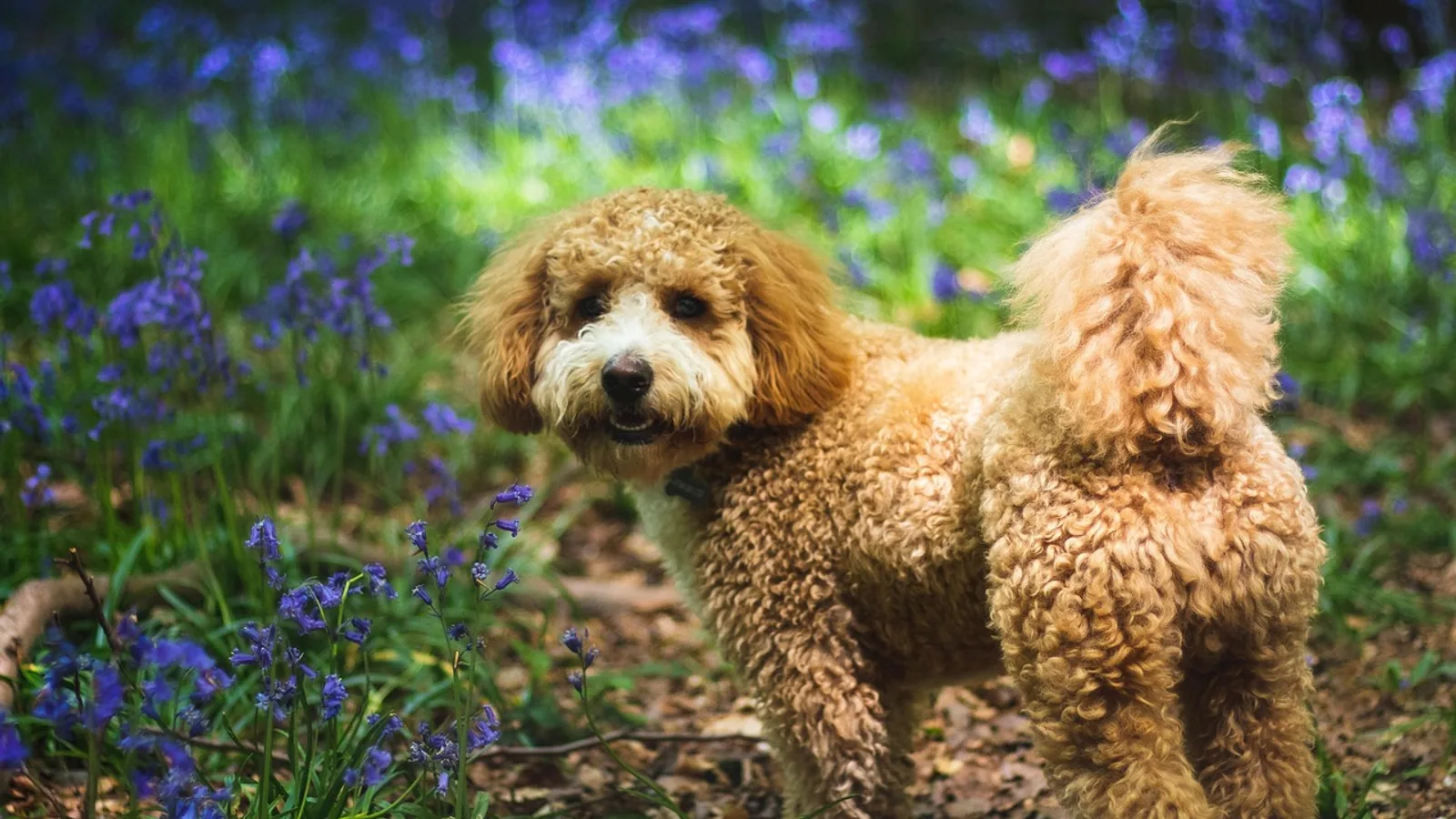
The cavapoochon is a multigenerational crossbreed that combines the Cavalier King Charles Spaniel, the Poodle, and the Bichon Frise. It is not a recognized breed with a closed studbook, and no major kennel club registers it as a pure breed. Because of that, cavapoochon dogs vary widely in size, coat, and temperament depending on which parent lines were used and how many generations of crossing produced the dog in front of you. Most adults land somewhere between 5 and 11 kg (roughly 11 to 24 lb), reach their full grown size by about 12 months, and carry a soft, low-shedding coat that needs routine grooming. They are generally social, companion-oriented dogs suited to owners who want a small, people-focused pet and who accept that the health profile comes partly from the Cavalier and partly from the Poodle and Bichon lines behind them.
This article explains what the cavapoochon is, how it compares with parent breeds, what care it needs, and which inherited conditions deserve screening and monitoring. It also separates what is documented in the veterinary literature from what is simply breeder marketing. The honest picture is that a cavapoochon is a mixed-breed dog with predictable care needs and an unpredictable health profile, and that the individual dog matters more than the label.
This article is educational and is not a substitute for veterinary diagnosis or treatment.
At a Glance
| Trait | Typical range or description |
|---|---|
| Breed status | Multigenerational Cavalier King Charles Spaniel, Poodle, and Bichon Frise crossbreed. Not a closed-studbook breed. |
| Adult weight | Roughly 5 to 11 kg (11 to 24 lb), highly variable |
| Adult height | Roughly 23 to 38 cm (9 to 15 inches) at the shoulder, highly variable |
| Full grown age | Usually by about 12 months |
| Coat | Soft, wavy to curly, low-shedding, often described as hypoallergenic (a claim that does not guarantee a reaction-free home) |
| Grooming | Daily to every-other-day brushing, professional trimming every 6 to 8 weeks is common |
| Lifespan | Most small companion crosses live into the 10 to 15 year range, with individual variation |
| Energy | Moderate. Short daily walks plus indoor play. |
| Trainability | Generally responsive, food-motivated, best with reward-based training |
| Good with children | Often yes, with supervision and appropriate child behavior |
| Good with other pets | Often yes, with gradual introductions |
| Common inherited risks | Mitral valve disease and syringomyelia (Cavalier lines), patellar luxation and sebaceous adenitis (Poodle lines), allergies and patellar luxation (Bichon lines) |
What the Cavapoochon Actually Is
A cavapoochon is a deliberate crossbreed. Breeders typically set out to combine three companion breeds with soft coats and friendly temperaments. The result is a small dog marketed as a low-shedding family pet. What the label does not tell you is the genetic recipe, and that matters for health.
There are three broad ways a cavapoochon may be produced. A first-generation cross might pair a Cavalier King Charles Spaniel with a Poodle and then cross that dog with a Bichon Frise, or pair a Cavalier with a Bichon-Poodle cross. A multigenerational cavapoochon comes from parents that are themselves cavapoochons, which means the dog may inherit any mixture of the three founder breeds. Because each founder breed contributes its own health tendencies, and because the exact proportions differ from litter to litter, two cavapoochons can look and behave quite differently. Siblings from the same litter can still differ in size, coat, and health risk.
This variability is not a defect. It is the predictable consequence of breeding outside a closed registry, where breeding stock is chosen by individual breeders rather than by a breed club standard. Prospective owners should ask detailed questions about the individual dog and its parents rather than relying on the cavapoochon name alone.
Why the Name Does Not Guarantee a Size or Coat
Search interest in "cavapoo dog full grown" reflects a real problem: owners want to know what their puppy will become. No one can promise a cavapoochon's adult weight, height, or coat type. A dog with more Poodle influence may be taller and curlier. A dog with more Bichon influence may be rounder and softer-coated. A dog with more Cavalier influence may be smaller and silky-coated. The practical approach is to look at both parents and the surrounding family lines, accept a range of roughly 5 to 11 kg, and plan for a dog that may finish growing anywhere between about 9 and 15 months.
History and Purpose
The cavapoochon does not have a century of documented history. It emerged as part of the designer-crossbreed trend that produced Cockapoos, Labradoodles, and Cavapoos. These dogs were created to supply companions, not working dogs, and their popularity grew alongside owner interest in low-shedding, family-friendly pets. A recent scientific review of strategies for improving companion dogs notes that many original breed functions no longer match modern household expectations, and that new "urban companion" types are being developed in response [1]. The cavapoochon fits squarely within that trend.
The important point for owners is that the cavapoochon is a companion animal by design, with no working role that shapes its structure or temperament. That means temperament depends heavily on early socialization and on the individual lines used.
Appearance
Cavapoochons are small, sturdy-looking companion dogs. Common features include a rounded head, dark eyes, floppy ears from the spaniel and Bichon influence, and a coat that ranges from wavy to loosely curled. Colors vary widely and may include cream, apricot, tan, black, and parti-color patterns.
Coat and Shedding
The low-shedding reputation comes from the Poodle and Bichon lines, both of which have continuously growing curly coats. A cavapoochon usually inherits some of that. In practice, low-shedding does not mean no grooming. Curly and wavy coats trap loose hair, which can mat against the skin if it is not brushed out. Matting is uncomfortable and can hide skin problems underneath.
The term hypoallergenic is widely used in advertising but should be treated with caution. No coat type reliably prevents allergic reactions in people. What matters is that a low-shedding dog produces less loose hair in the home, which reduces one source of exposure but not the proteins in saliva and skin that trigger many allergies.
Temperament and Behavior
Owners usually describe cavapoochons as affectionate, social, and eager to be near their people. That reputation is plausible given the parent breeds, but it should be balanced against real behavioral data.
A large owner survey compared three common designer Poodle-crosses with their purebred parent breeds using the C-BARQ behavioral questionnaire [2]. The study found that designer-crossbreeds overall showed more undesirable behaviors than a parent breed in 44.4 percent of comparisons and fewer in 9.7 percent, with no difference in the remaining 45.8 percent. The authors specifically noted that Cockapoos displayed the most undesirable behaviors of the three crossbreeds studied. This does not mean every cavapoochon has behavioral problems. It does mean the common assumption that crossing breeds automatically produces a calmer, easier dog is not supported.
In practical terms, a cavapoochon benefits from:
- Early socialization to people, other dogs, sounds, and handling
- Reward-based training started in puppyhood
- Consistent routines for toileting, feeding, and rest
- Daily mental engagement through short training sessions and food puzzles
Separation-related distress is a common concern in companion-oriented small dogs, though it is not specific to this crossbreed. Gradual, low-stress alone training is a reasonable preventive step.
Are Cavapoochons Good With Children and Other Pets?
Often yes, with supervision. These are small dogs, and young children can hurt them accidentally during play. Teach children to sit on the floor to interact and to avoid picking the dog up without support. Introductions to other pets should be gradual and supervised.
Exercise and Training Needs
Cavapoochons are moderate-energy companion dogs. Two short walks per day plus indoor play and chew time is a reasonable baseline for most adults. Puppies need shorter, more frequent activity and should avoid repetitive high-impact jumping while their growth plates are open.
Training should be positive and short. These dogs are generally responsive, and food rewards work well. Focus on:
- Name recognition and recall
- Sit, down, stay, and loose-leash walking
- Handling tolerance for grooming, nail trims, and veterinary exams
- Crate or pen comfort for rest and travel
A cavapoochon that learns to accept grooming and veterinary handling calmly is easier to care for over a lifetime that may include regular monitoring for heart and neurologic conditions.
Grooming
Grooming is the single most predictable care commitment with this crossbreed.
Daily and Weekly Routines
- Brush the coat every one to two days, working down to the skin and paying close attention to the ears, armpits, groin, and tail base.
- Check and clean the ears weekly, since floppy ears trap moisture.
- Brush the teeth regularly. Small dogs are prone to dental disease.
- Trim nails every three to four weeks, or more often if you hear them clicking on the floor.
- Bathe as needed, typically every four to six weeks, with a dog-specific shampoo.
Professional Grooming
Most cavapoochons need a professional trim every six to eight weeks to keep the coat manageable and to prevent matting. Between visits, matting can develop quickly in areas where the coat rubs against harnesses or collars. If you find a mat that will not brush out, do not cut it with scissors close to the skin. Seek professional help or veterinary guidance.
Feeding Considerations
Feed a complete and balanced diet formulated for your dog's life stage. Small-breed puppy food supports growth until the dog is roughly 12 months old. After that, transition to an adult small-breed formula. Portion size should be based on the dog's weight, body condition, and activity level, with a veterinarian able to confirm whether the dog is at a healthy weight.
Body condition matters in this crossbreed. A dog carrying extra weight puts more load on knees and hips, which is relevant given the risk of patellar luxation. Use treats sparingly and measure them into the daily calorie total rather than adding them on top.
Foods and Chews
Choose chews appropriate for small dogs and supervise them. Hard chews that are too dense for a small jaw can fracture teeth. Avoid giving bones that can splinter.
Inherited and Common Health Problems
The most important thing to understand about cavapoochon health is that the risks come from the parent breeds. A large study of designer-crossbreed dogs compared Cavapoos, Cockapoos, and Labradoodles with their purebred parent breeds across 57 common disorders [3]. The key finding was that the odds did not differ significantly between designer-crossbreeds and their parent breeds in 86.6 percent of comparisons. Designer-crossbreeds had higher odds for 7.0 percent of disorders and lower odds for the remainder.
That result is central to this breed guide. The popular belief that a crossbreed escapes the health problems of its parent breeds is not strongly supported. Owners should therefore plan as though the cavapoochon may inherit conditions from the Cavalier, the Poodle, or the Bichon, and should use screening and monitoring rather than optimism.
Mitral Valve Disease (Cavalier Line)
Mitral valve disease, formally myxomatous mitral valve disease, is the classic Cavalier King Charles Spaniel cardiac problem. A 2026 genetic study identified a strong association between specific genetic variants in the Cavalier and early-onset mitral valve disease [4]. The study found that Cavaliers carrying a particular combination of risk alleles in the LMOD2 gene and a long noncoding RNA had an odds ratio for mitral valve disease of 52.5 compared with dogs homozygous for the non-risk alleles.
For owners, the practical implications are:
- Cavalier ancestry raises the risk of mitral valve disease.
- The condition can develop at a young age in high-risk lines.
- A veterinarian can detect a heart murmur during routine auscultation, often before symptoms appear.
- Confirmation usually involves echocardiography performed by a veterinarian or cardiologist.
Early detection allows monitoring and timely treatment decisions. Owners of cavapoochons with known Cavalier lines should discuss a cardiac screening schedule with their veterinarian, especially in the first four years of life.
Syringomyelia (Cavalier Line)
Syringomyelia is a condition in which fluid-filled cavities form within the spinal cord, often associated with a malformation at the base of the skull. It is well documented in Cavalier King Charles Spaniels and can cause signs such as neck scratching, vocalization, sensitivity around the head and neck, and changes in behavior. The presence of Cavalier ancestry in a cavapoochon means this condition should be on the differential list if such signs appear.
There is no routine screening test for syringomyelia in mixed-breed dogs the way there is for some other conditions. Diagnosis generally relies on advanced imaging, such as magnetic resonance imaging, ordered by a veterinarian after a clinical examination. Any cavapoochon showing persistent neck scratching without skin disease, unexplained pain, or neurologic changes should be evaluated promptly.
Patellar Luxation (Poodle and Bichon Lines)
Patellar luxation is a common orthopedic problem in small breeds. The kneecap slips out of its normal groove, which can cause intermittent skipping, lameness, or reluctance to bear weight on a hind leg. Both Poodle and Bichon ancestry raise the risk.
Severity is graded by a veterinarian on physical examination. Some dogs live comfortably with a low-grade luxation and never need surgery. Others develop worsening lameness and arthritis and may benefit from surgery. Screening consists of a veterinary orthopedic examination, and diagnosis may be supported by radiographs.
Because patellar luxation is one of the conditions affecting small-breed dogs treated surgically alongside cruciate ligament disease, it is worth noting that cranial cruciate ligament deficiency and patellar luxation can occur together [5]. A study of small-breed dogs with concurrent cruciate rupture and medial patellar luxation found that a modified surgical approach using a precontoured plate achieved correction in a single stage with favorable outcomes [5]. Owners should understand that both conditions can coexist and that a thorough orthopedic evaluation is worthwhile if a dog shows hind-limb lameness.
Sebaceous Adenitis (Poodle Line)
Sebaceous adenitis is a skin condition in which the sebaceous glands become inflamed and are eventually destroyed. It is recognized in Poodles and is characterized by dry, scaly, dull coat, patchy hair loss, and sometimes a distinctive odor. Diagnosis in veterinary dermatology typically involves a skin biopsy, since the condition can resemble other skin diseases. Treatment is long-term and managed by a veterinarian, often with medicated shampoos and topical or systemic therapy.
Owners should watch for persistent scaling, coat change, or hair loss that does not respond to routine grooming and bathing.
Allergies (Bichon and Other Lines)
Allergies are common in small companion breeds, including the Bichon Frise. Signs include itching, redness, recurrent ear infections, paw licking, and skin infections. Allergy management is typically lifelong and may include avoidance of triggers, medicated baths, and veterinary-prescribed medications. No single test resolves allergies permanently, and management is individualized.
A Table of Parent-Breed Conditions and Screening Tests
| Parent breed | Condition passed on | Risk level in cavapoochons | Screening or detection test |
|---|---|---|---|
| Cavalier King Charles Spaniel | Mitral valve disease (myxomatous mitral valve disease) | Elevated. Genetic studies show a strong inherited component in Cavaliers [4] | Veterinary auscultation for murmur. Echocardiography for confirmation and monitoring. |
| Cavalier King Charles Spaniel | Syringomyelia | Elevated | Neurologic examination. Advanced imaging, such as MRI, when signs are present. |
| Poodle | Patellar luxation | Moderate to elevated | Veterinary orthopedic examination. Radiographs as needed. |
| Poodle | Sebaceous adenitis | Moderate | Skin biopsy performed by a veterinarian. |
| Bichon Frise | Allergies | Moderate to elevated | History and clinical examination. Allergy workup as directed by a veterinarian. |
| Bichon Frise | Patellar luxation | Moderate to elevated | Veterinary orthopedic examination. |
| Multi-line | Cruciate ligament disease | Monitor, especially if hind-limb lameness appears | Veterinary examination and imaging [5] |
Health Monitoring Throughout Life
- Puppy visits: Full physical examination, vaccination according to your veterinarian's schedule, parasite prevention, and baseline weight tracking.
- Adult visits: Annual wellness examination with cardiac auscultation, orthopedic assessment, dental check, and skin evaluation.
- Senior visits: Twice-yearly examinations in many cases, with attention to heart, joints, teeth, and behavior changes.
Any change in breathing, exercise tolerance, coughing, or nighttime restlessness warrants veterinary assessment, since these can be early signs of cardiac disease.
Lifespan
Small companion dogs of this type commonly live into the 10 to 15 year range. Lifespan is influenced by body size, body condition, dental care, and the presence or absence of serious inherited disease. Regular veterinary care and early detection of cardiac and orthopedic problems can meaningfully change a dog's comfort in later years.
Finding a Responsible Breeder or Rescue
Because the cavapoochon is not a closed-studbook breed, the quality of a breeder varies. Focus on health and transparency rather than on brand names.
Questions to Ask
- Can I see the mother and, if relevant, the father?
- What health conditions have been documented in the parent dogs and their relatives?
- Have the parent dogs had any cardiac evaluation, and were any genetic tests performed, particularly for the Cavalier or Poodle lines?
- Can you provide veterinary records for the puppies, including vaccination and deworming history?
- What do you do to socialize puppies before they go home?
- Will you take the dog back if I can no longer care for it?
Why Health Testing of Parent Dogs Matters
The 2026 mitral valve disease study showed that a combination of genetic risk alleles in Cavaliers was strongly associated with the disease, and the authors noted that this could support targeted breeding to reduce its prevalence [4]. Testing parent dogs is one of the few concrete steps a breeder can take to reduce risk in offspring. A breeder who cannot provide any health information is a poor choice regardless of how appealing the puppy is.
Rescue and Rehoming
Cavapoochons and similar small crosses do appear in breed-specific and general rescue networks. Rescue dogs often come with limited health history, so budget for a wellness examination soon after adoption.
Who Should Not Get a Cavapoochon
A cavapoochon is a poor fit for some households.
- People who want a guaranteed small adult size. The breed varies widely and no responsible person can promise a specific adult weight.
- People unwilling to groom regularly. This coat mats quickly and requires attention.
- People with a tight budget for veterinary care. Screening for cardiac, orthopedic, and skin conditions can add up.
- People who need a dog that can be left alone for very long days. These are companion-oriented dogs that generally prefer company.
- People with severe dog allergies who require a truly allergen-free dog. No breed guarantees that.
If those constraints matter to you, a different type of dog may be a better match.
Limitations and When to Contact a Veterinarian
This guide summarizes breed-level information. Individual cavapoochons differ, and only a veterinarian who examines your dog can evaluate its specific health status.
Contact a veterinarian promptly if you notice:
- A new heart murmur, coughing, or reduced exercise tolerance
- Difficulty breathing or breathing that worsens at night
- Persistent scratching at the neck or shoulder area, especially without skin disease
- Neck pain, reluctance to move the head, or unusual vocalization
- Intermittent skipping or lameness in a hind leg
- Coat scaling, hair loss, or odor that does not improve with bathing
- Persistent itching, recurrent ear infections, or skin infections
- Any sudden change in behavior, appetite, or activity
For emergencies such as collapse, severe difficulty breathing, or inability to bear weight, seek immediate veterinary care.
Frequently Asked Questions
What is a cavapoochon?
A cavapoochon is a deliberate crossbreed of the Cavalier King Charles Spaniel, the Poodle, and the Bichon Frise. It is not a recognized breed with a closed studbook, so size, coat, and health risk vary from dog to dog.
How big does a cavapoochon get?
Most adults fall between about 5 and 11 kg (11 to 24 lb) and roughly 23 to 38 cm (9 to 15 inches) tall, but the range is wide because the crossbreed is not standardized.
When is a cavapoochon full grown?
Most cavapoochons reach their adult size by about 12 months. Some may continue filling out slightly for a few more months.
Do cavapoochons shed?
They usually shed less than double-coated breeds because of Poodle and Bichon influence, but they still require regular brushing and professional grooming to prevent matting.
Are cavapoochons hypoallergenic?
No dog is guaranteed hypoallergenic. Low shedding may reduce some exposure, but allergy is a reaction to proteins in saliva and skin, not just to shed hair.
What health problems are cavapoochons prone to?
The main risks are mitral valve disease and syringomyelia from Cavalier lines, patellar luxation and sebaceous adenitis from Poodle lines, and allergies and patellar luxation from Bichon lines.
Do cavapoochons have fewer health problems than purebred dogs?
Not reliably. A large study of designer-crossbreed dogs found no significant difference from parent breeds in about 86.6 percent of health comparisons [3].
Are cavapoochons easy to train?
They are generally responsive to reward-based training, but a major behavioral study found that designer-crossbreeds are not automatically easier than parent breeds, with more undesirable behaviors reported in a substantial share of comparisons [2].
Related Articles
- Pygmy Goat Size and Growth: What to Expect
- Calico Cat: Fascinating Facts, Personality Traits & Complete Care Guide
- Best Dog Food For Sensitive Stomach Cavapoo
- trait biology definition
- Trait Biology
- trait in biology
- Bully Pit Mix: Breed Traits, Health, and Care
- ISA Brown Chicken: Breed Traits and Egg Yield
- Golden Shepherd: Breed Traits, Care, and Health
Further Reading
Sources
- Dog Breeds for the Future: Theoretical Assessment of Strategies for Enhancing the Behavioural Reliability of Existing Dog Breeds, or Developing New Ideal Urban Companion Dogs.
- Comparing undesirable behaviours between 'designer' Poodle-cross dogs and their purebred progenitor breeds.
- The doodle dilemma: How the physical health of 'Designer-crossbreed' Cockapoo, Labradoodle and Cavapoo dogs' compares to their purebred progenitor breeds.
- A Combination of Alleles in LMOD2 and a lncRNA is Strongly Associated With Myxomatous Mitral Valve Disease in Cavalier King Charles Spaniels.
- Modified tibial plateau-leveling osteotomy using a precontoured plate achieves single-stage correction with favorable clinical outcomes in small-breed dogs.