American Bobtail Cat: Traits and Health Guide
By Dr. Zubair Khalid, DVM, MS, PhD ·
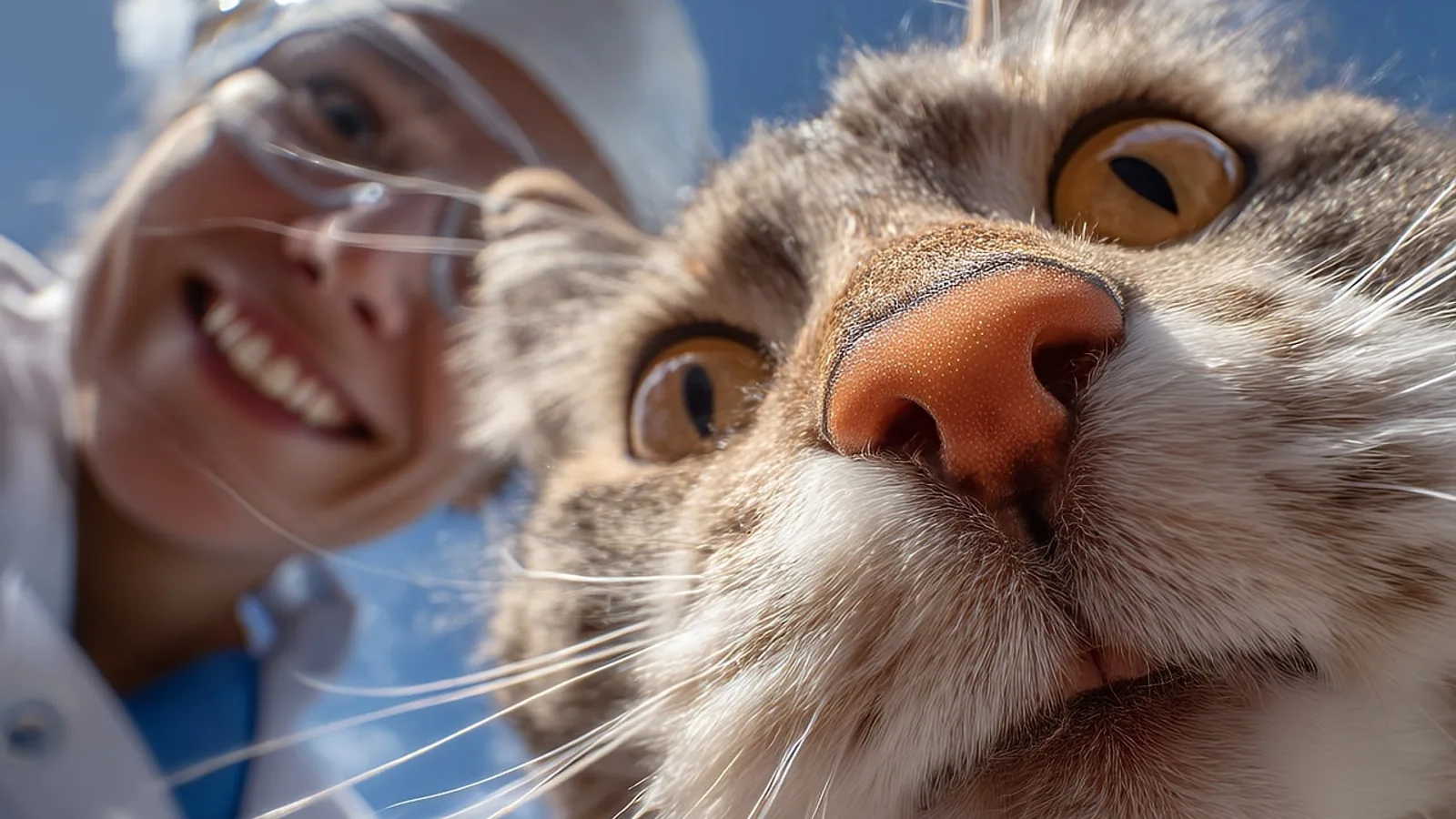
The American Bobtail is a naturally occurring short-tailed cat that arose in the United States rather than being engineered from an established foreign breed. It stands out for a short, expressive tail that varies in length and shape, a broad athletic body, and a dog-like social temperament. Most American Bobtails are medium to large cats with a shaggy or semi-long coat, strong bones, and a willingness to follow their owners from room to room. The breed suits households that want an interactive, trainable cat and that accept the possibility of a vertebral variation passed down with the tail trait.
The tail is the defining feature and the defining genetic question. The shortened tail of the American Bobtail comes from a mutation in the T gene, which encodes the Brachyury protein [1]. One mutant allele found in Manx cats is shared with American Bobtails and Pixie-Bobs, and both of those American breeds developed more recently [1]. That gene relationship separates the American Bobtail from the Japanese Bobtail, whose short, kinked tail is inherited through a different mechanism and is not caused by a T gene mutation [2][1].
This article covers history, appearance, temperament, exercise, grooming, feeding, inherited and common health problems, screening, lifespan, and how to choose a cat responsibly. It also includes a care checklist and a comparison table of the American Bobtail, Japanese Bobtail, and Manx.
This article is educational and is not a substitute for veterinary diagnosis or treatment.
At a Glance
The table below summarizes the breed's core physical and behavioral traits. Coat colors and patterns vary widely, and the American Bobtail is not restricted to a single color, so the coat row describes type rather than color.
| Trait | Summary |
|---|---|
| Typical height | Medium to large build, taller and more substantial than the average domestic shorthair |
| Typical adult weight | 7 to 16 pounds, with males generally larger than females |
| Coat | Shaggy, dense, weather-resistant. Can be short or medium-long, with a soft undercoat |
| Eye color | Often gold, green, or copper, sometimes blue or odd-eyed in cats with white markings |
| Lifespan | 13 to 15 years typical for a healthy indoor cat |
| Energy level | Moderate to high. Athletic and playful into adulthood |
| Grooming | Weekly brushing. More frequent during seasonal shedding |
| Trainability | High for a cat. Many learn leash walking, fetch, and simple cues |
| Good with children | Yes, with respectful handling |
| Good with other pets | Often yes. Usually social with cats and cat-friendly dogs |
| Tail | Short and expressive, variable in length, shape, and kink placement |
Origins and Purpose
The American Bobtail is a New World breed rather than an ancient one. The trait that defines it, a shortened tail, appeared in cats in the United States, and breeders later developed pedigreed lines from naturally bobtailed cats. The breed is one of five recognized cat breeds with abnormal tail length phenotypes, alongside the Manx, Pixie-Bob, Kurilian Bobtail, and Japanese Bobtail [1]. That grouping is useful because it shows that short tails in cats are not one condition. They are several conditions that converge on a similar outward appearance.
Genetic work has clarified how these breeds relate. A study of over 1,100 cats from 22 breeds and 17 random-bred populations traced the dispersal of the domestic cat with microsatellite markers [3]. Most breeds were derived from indigenous cats of their purported regions of origin. The Japanese Bobtail was an exception. It clustered more closely with European and American cats than with Asian or Mediterranean populations [3]. The American Bobtail, as a breed developed from cats already in the United States, fits the broader pattern in which recognized breeds trace back to local free-ranging cats rather than to a distinct wild ancestor.
Pure breeding reduces genetic diversity in cats, and that loss did not correlate with breed popularity or breed age in the same dataset [3]. This matters for owners because genetic diversity affects the pool of recessive conditions a breed can accumulate. A newer American breed with a small foundation still warrants attention to inherited disease, even if the ancestor cats were hardy.
The American Bobtail was never selected for a working role. It exists because people valued its appearance and personality. That means the breed's health profile is shaped by the tail mutation and by the ordinary orthopedic and cardiac conditions seen across cats, not by a functional purpose that would have selected for a specific body type.
Appearance and the Tail
The tail is the breed's signature and its most variable feature. In the Japanese Bobtail, detailed radiographic study of the entire vertebral column showed variation from the normal feline formula of C7, T13, L7, S3, and 20 to 24 caudal vertebrae [2]. Many affected cats had a single reduction in thoracic vertebrae, and the average number of caudal vertebrae was 15.8. Most of those cats had hemivertebrae, usually within the tail kink, and one cat had a bifid vertebra in the tail [2]. Transitional vertebrae and anomalous ribs also appeared [2]. This describes the Japanese Bobtail specifically, but it illustrates a principle that applies to short-tailed cats generally. A shortened tail is a vertebral column difference, not just a cosmetic trim.
The American Bobtail's tail is typically short and can be straight, curved, or kinked, and its length varies from cat to cat. The tail is expressive in the sense that the cat uses it in communication, but its movement range depends on how many caudal vertebrae are present and how they are shaped. Owners often describe the tail as a natural extension of the cat's mood, rising when the cat is confident and flicking when the cat is irritated.
The body is medium to large, muscular, and broad-chested, with substantial boning. The hindquarters are slightly higher than the shoulders in many cats, which gives the breed a stalking, slightly rolling gait. The head is broad and wedge-shaped with a strong muzzle and prominent whisker pads. The eyes are large and alert. The coat is dense and resilient, giving the cat a slightly wild appearance without the extreme features of a hybrid breed.
Because the breed permits a wide range of colors and patterns, there is no single correct look beyond the tail, body type, and coat texture. That variation is a strength for owners who want a distinctive cat without a narrow aesthetic standard.
Genetics of the Bobtail Trait
Understanding the genetics helps owners ask better questions and understand why the tail trait deserves attention.
The T Gene and Brachyury
The Manx short tail is caused by mutations in the T gene, also called the Brachyury gene. Researchers sequenced the T gene in Manx cats from the United States and the Isle of Man and found three single base pair deletions and one duplication-deletion, each predicted to shift the reading frame and truncate the Brachyury protein [1]. About 95 percent of Manx cats with short-tail phenotypes were heterozygous for a T mutation, meaning they carried one mutant copy and one normal copy [1].
Critically for American Bobtail owners, one mutant T allele was shared with American Bobtails and Pixie-Bobs [1]. The American Bobtail is therefore not genetically separate from the Manx story in the way some breed descriptions suggest. It carries a Brachyury-related tail variant, and that places it in the same gene family as the Manx.
Autosomal Dominant Inheritance and Variable Expression
Short-tail inheritance in bobtail cats is generally dominant, which means a cat needs only one copy of the variant to show a shortened tail. In pedigreed Japanese Bobtails, segregation analysis demonstrated a simple autosomal dominant mode of inheritance with variable expression of tail length and kink placement [2]. A study of a Russian population with a new taillessness mutation concluded the trait was controlled by a dominant gene with a probable recessive lethal effect at an early embryogenetic stage [4]. That lethal effect is the reason breeding two short-tailed cats together can reduce litter size or produce fewer surviving kittens. It is one of the strongest practical arguments for not breeding two affected cats to each other.
Variable expression explains why two American Bobtails from the same litter can have tails of very different lengths. The gene sets the trait in motion, and other developmental factors determine the final anatomy.
Why the American Bobtail Is Not a Japanese Bobtail
The Japanese Bobtail was once assumed to share the Manx mechanism. It does not. The discovery of the Manx T gene mutation demonstrated that the Japanese Bobtail does not carry a causative mutation in the same gene [2]. Whole genome sequencing in a Persian and Japanese Bobtail pedigree identified a variant in HES7, a somite segmentation gene, and genotyping supported that variant as private to the Japanese bobtail breed [5]. HES7 is involved in the segmentation of the embryo into somites, the blocks of tissue that eventually form vertebrae. This is a fundamentally different developmental pathway from Brachyury.
So the American Bobtail and the Japanese Bobtail arrive at a short tail through different genes, different inheritance routes, and different developmental biology. The convergence is superficial. Owners and veterinarians should not assume that health risks carry over from one breed to the other.
What the Shared Allele Means for Health Screening
Because the American Bobtail shares a mutant T allele with the Manx and Pixie-Bob [1], spinal and sacral abnormalities deserve attention even though they appear to be less common in American Bobtails than in Manx cats. The American Bobtail foundation cats were naturally occurring and often carried longer tails than typical Manx cats. That milder expression may reduce, but does not eliminate, the risk of vertebral malformation.
Temperament and Behavior
The American Bobtail is often described as dog-like, and the comparison is fair in several respects. These cats tend to be social, confident, and involved in household activity. They follow owners, greet visitors, and often play fetch. Many tolerate handling well and accept leash training. They are not a decorator breed that hides under furniture when guests arrive.
Social temperament has practical consequences. A bored American Bobtail will find its own entertainment, and that can mean opening cabinets, knocking objects off shelves, or learning to operate a treat container. Owners who provide puzzle feeders, vertical climbing space, and interactive play sessions typically see fewer of these behaviors.
The breed generally gets along with other cats and with cat-friendly dogs, particularly when introductions are gradual. Because the cats are athletic and playful, they can be a good match for households that already have active pets. They are usually good with children who handle them gently, though no cat should be left unsupervised with a toddler.
Temperament varies with individual genetics and early socialization. A kitten raised in a quiet home with limited handling may be more reserved than the breed description implies. Adoption from a foster home that can describe the cat's actual behavior is often more reliable than a blanket breed generalization.
Exercise and Training Needs
American Bobtails are active cats that benefit from structured play. Two or more short play sessions a day using wand toys, balls, or chase games support physical condition and mental engagement. Because the breed is highly trainable, owners can teach name recognition, target touching, stationing on a mat, and carrier comfort.
Leash training is realistic for many American Bobtails. Start indoors with a well-fitted harness, reward calm walking, and progress to a quiet outdoor area. Cats that learn to walk on a harness get outdoor enrichment without the risks of free roaming, including vehicle trauma, infectious disease, and parasites.
Environmental enrichment should include vertical space, scratching surfaces, and a rotation of toys. Puzzle feeders mimic the problem-solving that keeps this breed occupied. Owners who work long hours should consider a second social cat or a midday visit from a pet sitter.
Aggression is uncommon in this breed, but understimulation can produce destructive play. Redirecting a cat that ambushes ankles toward a toy is more effective than punishment. Punishment tends to increase fear and does not teach an alternative behavior.
Grooming and Coat Care
The American Bobtail coat is dense and weather-resistant, which means it holds shed hair. Brush the cat once or twice a week with a slicker brush or a stainless steel comb. During spring and fall shedding, increase to several sessions a week. A rubber curry brush helps lift loose undercoat.
Bathing is rarely necessary for a healthy indoor cat. Spot cleaning with a damp cloth handles most messes. Cats that learn to accept handling as kittens tolerate nail trims, ear checks, and tooth brushing far better as adults.
Dental care deserves specific attention. Periodontal disease is one of the most common conditions in adult cats, and daily or every-other-day tooth brushing with pet-safe toothpaste slows plaque accumulation. Dental treats and water additives can supplement brushing but do not replace it. Your veterinarian can assess the mouth at each wellness visit and recommend professional cleaning when tartar and gingivitis appear.
Ear cleaning should be done only when the ears look dirty, and only with a product labeled for cats. Cotton swabs should not be inserted into the ear canal.
Feeding Considerations
The American Bobtail is a medium to large cat with a muscular frame. Adult cats should be fed a complete and balanced commercial diet formulated for their life stage, with the amount adjusted to body condition rather than to the bag's printed recommendation alone. Body condition scoring at home, using the ribs and waist as landmarks, helps owners detect gradual weight gain.
Obesity increases stress on the hips and knees, which matters because this breed can develop orthopedic conditions. Keeping the cat lean is one of the most effective ways to protect joint health. Treats should account for no more than about ten percent of daily calories, and they should be subtracted from the main meal rather than added on top.
Growing kittens should be fed a growth diet until they reach adult size, which typically occurs around one year of age. Large-breed cat formulas are not a standard commercial category, but portion control from the start prevents excessive weight gain in a breed that trends large.
Fresh water should be available at all times. Some cats prefer running water, and a fountain can increase intake. Increased thirst in a cat is a clinical sign, not a preference. Report any sudden change in water consumption to your veterinarian.
Inherited and Common Health Problems
The American Bobtail is a generally healthy breed, but it carries breed-linked risks that deserve screening and monitoring. The most relevant categories are vertebral and spinal abnormalities, orthopedic conditions of the hip and knee, and the routine infectious and dental conditions that affect all cats.
Spinal and Sacral Abnormalities
Short-tailed cats have altered vertebral anatomy by definition. In the Japanese Bobtail, radiographic study of the full vertebral column showed reduced thoracic vertebra counts, an average of 15.8 caudal vertebrae, hemivertebrae within the tail kink, transitional vertebrae, anomalous ribs, and in one case a bifid vertebra [2]. That degree of variation is documented for the Japanese Bobtail, not the American Bobtail, but the American Bobtail shares a Brachyury-related variant with the Manx [1], and Brachyury affects the development of the axial skeleton.
The practical implication is that American Bobtails can develop spinal and sacral malformations, but these appear to be less common and generally less severe than in Manx cats. Manx cats carry a well-known association with sacral agenesis and the resulting "Manx syndrome," a condition involving hind limb and bowel or bladder dysfunction. American Bobtails with longer, less extreme tails are less likely to show that severe picture, but screening is still worthwhile.
Signs to watch for include an unusual gait in the hind limbs, difficulty jumping, reluctance to use the litter box, fecal or urinary incontinence, constipation, or a change in tail mobility. Any of these warrants a veterinary examination. Diagnosis typically involves a neurologic examination, radiographs of the spine and pelvis, and sometimes advanced imaging. Treatment depends on the specific defect and ranges from conservative management to surgical referral for severe cases.
Hip Dysplasia
Hip dysplasia is a developmental condition in which the hip joint does not form properly, leading to laxity, osteoarthritis, and pain. It is best known in dogs, but it occurs in cats, including larger, heavier breeds like the American Bobtail. Cats hide pain well, so owners often notice reduced jumping before they notice limping.
Screening is available through radiographic evaluation of the hips. Many breeding programs use hip scoring to reduce the frequency of the condition in their lines. For pet owners, the value of screening lies in early detection. A cat with mild dysplasia can often be managed with weight control, joint-supportive nutrition, and environmental changes such as ramps and low-sided litter boxes. More advanced cases may benefit from pain management prescribed by a veterinarian or referral to an orthopedic specialist.
Patellar Luxation
Patellar luxation is a condition in which the kneecap slips out of its normal groove in the femur. It can be congenital or acquired, and it ranges from mild to severe. Affected cats may show a skipping gait, intermittent lameness, or reluctance to jump. In some cats the kneecap returns to place on its own and the cat shows no obvious sign.
Diagnosis is made by physical examination, with the veterinarian grading the degree of luxation. Radiographs help assess the underlying bony anatomy and any secondary arthritis. Mild cases are often managed conservatively with weight control and monitored activity. Surgical correction is considered for higher-grade luxation or when lameness is persistent.
Aortic Thromboembolism and Other Acquired Risks
Any cat can develop heart disease, and any cat with heart disease can throw a clot. Aortic thromboembolism is the event that occurs when a clot lodges at the end of the aorta, cutting off blood flow to the hind limbs. It presents as sudden hind limb paralysis, vocalization from pain, and cold rear paws. This is a true emergency, and immediate veterinary care is essential. The American Bobtail is not uniquely predisposed compared with breeds that have documented hypertrophic cardiomyopathy, but owners should know the signs.
Dental Disease
Periodontal disease is extremely common in cats. Signs include bad breath, tartar accumulation, red or bleeding gums, drooling, and reluctance to eat hard food. Regular home brushing and professional dental cleanings under anesthesia, as recommended by your veterinarian, reduce progression. Untreated periodontal disease can lead to tooth loss and may contribute to systemic inflammation.
Parasites and Preventive Care
All cats, including indoor cats, face parasite risk. Fleas can enter on clothing or via other pets. Ticks are less common on indoor cats but can attach during supervised outdoor time. Intestinal parasites can be acquired from hunting, from the environment, or from a queen before birth. The Companion Animal Parasite Council publishes guidelines on year-round prevention, and your veterinarian can match a product to your cat's lifestyle.
Core vaccines protect against feline viral rhinotracheitis, calicivirus, and panleukopenia, with rabies vaccination required by law in many US jurisdictions. The American Veterinary Medical Association and the American Animal Hospital Association publish vaccination and wellness guidance, and your veterinarian will tailor a schedule to your cat's age, health, and risk factors.
Recommended Screening and Monitoring
Screening for the American Bobtail focuses on the axial skeleton and the limbs. The table below outlines what to ask your veterinarian about at each life stage.
| Life stage | Focus areas | Screening to discuss |
|---|---|---|
| Kitten | Growth, vaccination, parasite prevention, socialization | Physical examination including tail and spine palpation |
| Young adult, 1 to 6 years | Dental health, weight, joint health | Annual examination, body condition scoring, oral examination |
| Mature adult, 7 to 10 years | Arthritis, dental disease, early organ changes | Biannual examination, baseline bloodwork and urinalysis |
| Senior, 11 years and older | Mobility, kidney and thyroid function, blood pressure | Biannual examination with expanded lab work and blood pressure |
For cats used in breeding, hip and patellar evaluation before mating reduces the odds of passing orthopedic problems to offspring. Breeding two short-tailed cats to each other is not advised because the dominant tail gene appears to carry a recessive lethal effect at an early embryonic stage in at least one bobtail population [4].
Lifespan and Long-Term Outlook
American Bobtails are long-lived cats, and many reach their early to mid teens with routine preventive care. The breed's outlook is favorable because it is a natural breed without the extreme conformational features that shorten life in some pedigreed cats. The main threats to longevity are the same ones that affect all cats: obesity, dental disease, chronic kidney disease, hyperthyroidism, and cardiac disease. Owners who keep their cat lean, brush the teeth, attend wellness visits, and monitor for subtle behavior changes give their cat the best chance of a long life.
Comparison: American Bobtail, Japanese Bobtail, and Manx
The three breeds are often confused because all three have short tails. The table below separates them by genetics, geography, and health focus.
| Feature | American Bobtail | Japanese Bobtail | Manx |
|---|---|---|---|
| Gene or pathway | Shares a mutant T gene allele with Manx and Pixie-Bobs [1] | No mutation in the T gene [2]. A HES7 variant is private to the breed [5] | Mutations in the T gene, multiple independent alleles [1] |
| Inheritance | Dominant with variable expression | Autosomal dominant with variable expression [2] | Dominant, with mutant alleles largely lineage-specific [1] |
| Tail appearance | Short, variable length, straight or kinked | Short and kinked, described as a rabbit-like pom | Ranging from a short stump to a full tail |
| Region of origin | United States | Japan | Isle of Man |
| Vertebral findings | Not the focus of the cited radiographic study | Reduced thoracic vertebrae, average 15.8 caudal vertebrae, hemivertebrae in the kink [2] | Associated with sacral agenesis and severe tail shortening |
| Health focus | Tail-related vertebral variation, hip dysplasia, patellar luxation | Tail kink anatomy, general feline health | Sacral agenesis and associated neurologic and bowel or bladder dysfunction |
| Genetic diversity | Newer American breed | Clusters genetically with European and American cats rather than Asian populations [3] | Lineage-specific mutant alleles [1] |
The key takeaway is that the Japanese Bobtail is not a T gene breed [2][1], while the American Bobtail shares a T gene allele with the Manx [1]. Owners and veterinarians who treat all three as one group will miss important genetic and clinical differences.
Choosing a Responsible Breeder or Rescue
Adoption and responsible purchase both serve the breed. Many American Bobtails enter rescue and foster networks, and adult cats often come with known temperament and health histories, which is an advantage over a kitten.
When evaluating a breeder, ask about health testing of the parents, particularly hip and patellar evaluation. Ask whether the breeder ever pairs two short-tailed cats, and be skeptical of programs that do. Ask to see the living conditions and to meet the mother cat if possible. A responsible breeder will discuss the recessive lethal effect associated with dominant tail genes [4] and will explain how they avoid high-risk pairings.
Ask for veterinary records and a written health history. Kittens should be examined by a veterinarian, vaccinated according to age, dewormed, and tested for feline leukemia virus and feline immunodeficiency virus, or their status should be documented. Verify that the kitten was raised in a home environment with regular handling, because early socialization strongly influences adult temperament.
Red flags include refusal to provide health records, reluctance to discuss genetic testing, kittens sold before eight weeks of age, and multiple litters produced without a plan for the cats' long-term welfare.
Who Should Not Get an American Bobtail
The breed is not a good fit for every household. Consider a different cat if any of the following applies to you.
- You want a low-interaction pet. American Bobtails seek attention and follow their people.
- You cannot provide daily play and enrichment. Understimulated cats can become destructive.
- You are unwilling to budget for preventive veterinary care. Wellness visits, vaccines, parasite prevention, and dental care are ongoing costs.
- You need a guaranteed predictable adult size. Tail length and body size vary within the breed.
- You are not prepared to monitor for orthopedic or spinal signs. Early detection supports better outcomes.
- You have very young children who cannot handle a cat gently. Supervision is required regardless of breed.
- You want a cat that stays indoors without enrichment. This breed benefits from harness walks, climbing structures, and interactive play.
Limitations and When to Contact a Veterinarian
Breed information can guide expectations but cannot replace an individual examination. Every cat has its own genetic makeup, medical history, and environment. Your veterinarian is the right person to interpret your cat's specific findings.
Contact a veterinarian if you notice any of the following.
- Sudden hind limb weakness, paralysis, or vocalization. This can indicate aortic thromboembolism and requires emergency care.
- Difficulty jumping, reluctance to climb stairs, or a new limp lasting more than 24 hours.
- Fecal or urinary incontinence, straining to defecate, or a change in litter box habits.
- Constant licking or chewing at the hips or knees.
- Weight loss or gain of more than a few percent of body weight without a deliberate diet change.
- Bad breath, drooling, or dropping food while eating.
- Increased thirst or urination lasting more than a day or two.
- A new lump, a non-healing sore, or a change in an existing skin lesion.
- Vomiting or diarrhea lasting more than 24 hours, or any vomiting with lethargy.
Frequently Asked Questions
What is an American Bobtail cat?
An American Bobtail is a medium to large cat with a naturally short, variable tail that originated in the United States. It is known for a shaggy coat, an athletic build, and a social, dog-like temperament.
Are American Bobtails related to Japanese Bobtails?
No, not in the way the shared name suggests. The American Bobtail shares a mutant T gene allele with the Manx and Pixie-Bob, while the Japanese Bobtail does not carry a T gene mutation and instead has a HES7 variant private to its breed.
Do American Bobtails have health problems?
The breed is generally healthy, but it can develop spinal or sacral abnormalities related to its tail genetics, hip dysplasia, patellar luxation, and the dental and parasitic conditions common to all cats.
Are American Bobtails good with children and dogs?
Most are. They are social cats that often adapt well to respectful children and to cat-friendly dogs when introductions are gradual.
How much exercise does an American Bobtail need?
The breed is active and benefits from two or more structured play sessions daily. Many learn leash walking and enjoy climbing structures and puzzle feeders.
How long do American Bobtails live?
Healthy American Bobtails commonly live into their early to mid teens with routine preventive care and weight management.
Do American Bobtails need special grooming?
They need brushing once or twice a week, more often during seasonal shedding. Dental care with regular tooth brushing matters more than coat care for long-term health.
Should American Bobtails be screened for hip dysplasia?
Yes. Hip and patellar evaluation is reasonable for any American Bobtail, and it is especially important for cats used in breeding programs.
Related Articles
- Goat Genetics and Breeding: Selection for Production and Health Traits
- American Foulbrood Recognition and Response
- trait biology definition
- Trait Biology
- trait in biology
- traits biology definition
- American Paint Horse: Breed Traits and Care
- Bully Pit Mix: Breed Traits, Health, and Care
- Golden Shepherd: Breed Traits, Care, and Health
Further Reading
Sources
- Multiple mutant T alleles cause haploinsufficiency of Brachyury and short tails in Manx cats.
- Japanese Bobtail: vertebral morphology and genetic characterization of an established cat breed.
- The ascent of cat breeds: genetic evaluations of breeds and worldwide random-bred populations.
- [[Analysis of the inheritance of taillessness in the Baikuzino population of cats from Udmurtia].](https://pubmed.ncbi.nlm.nih.gov/12391885/)
- Whole genome sequencing in cats, identifies new models for blindness in AIPL1 and somite segmentation in HES7.