Why Is My Cat Purring So Much? What Purring Means
By Dr. Zubair Khalid, DVM, MS, PhD ·
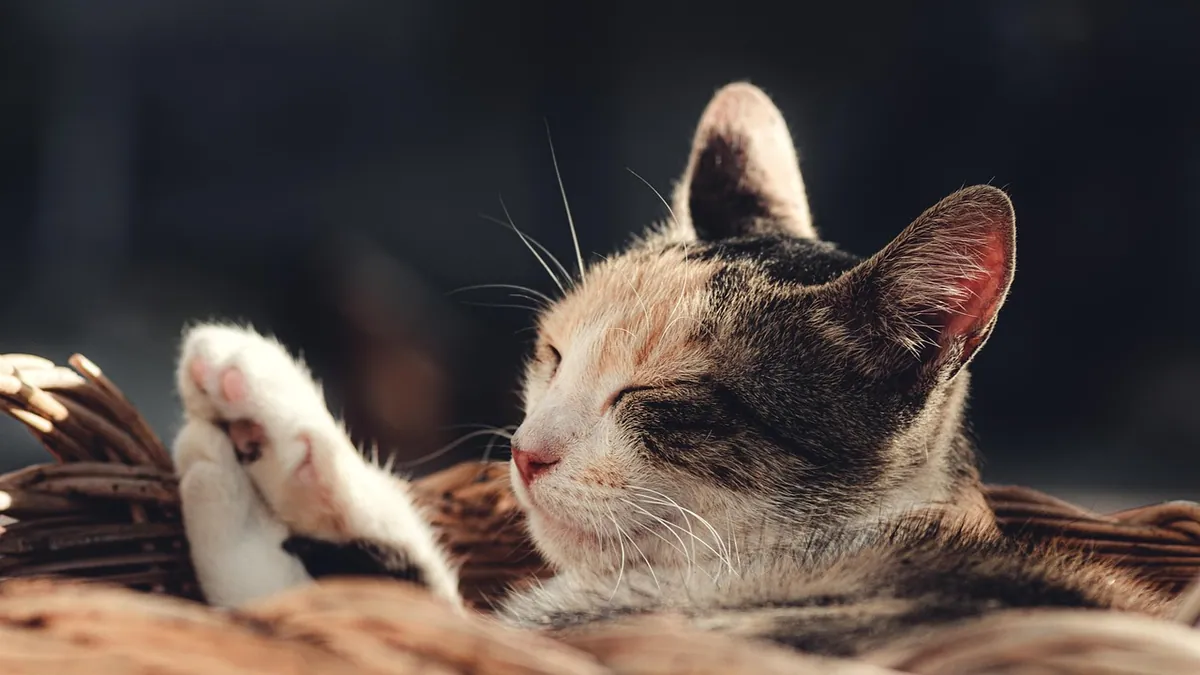
If your cat is purring more than usual, the most likely reason is comfort or contentment, especially if she is relaxed, kneading, and seeking your lap [1]. But purring is also a self-soothing behavior, and cats often purr when they are stressed, painful, or sick. So the real question is not how much your cat purrs, it is what the rest of her body language and daily habits are telling you.
This article is educational and is not a substitute for veterinary diagnosis or treatment.
Quick Answer
- Purring is produced by rapid vibration of tissues in the larynx, and a cat's larynx can keep producing purring frequencies even without nerve input from the brain [2].
- Contentment purring usually comes with relaxed ears, soft eyes, kneading, and a loose body [1].
- Purring during stress, pain, or illness often comes with hiding, a hunched posture, a poor appetite, or unusual vocalizing.
- A sudden increase in purring in an older cat deserves a veterinary exam, because cats hide pain well.
- Never punish a cat for purring or for any vocal behavior. Address the cause instead.
What Causes Cat Purring?
Purring starts in the larynx, the voice box. For years, the common explanation was that cats actively contract their laryngeal muscles many times per second to drive the sound. A 2023 study challenged that idea. Researchers removed larynges from eight domestic cats and found that all eight produced self-sustained oscillations at typical purring rates, without any muscle or nerve activity at all [2]. In other words, the structure of the cat's larynx is built to vibrate at purring frequencies on its own.
That finding matters for owners because it explains why purring is so easy for cats to produce and why it shows up in so many situations. Purring is not a single emotional message. It is a sound a cat can make whenever her body is in the right position and air is moving across the larynx.
Purring for contentment
The classic version of purring is the relaxed one. A content cat often purrs while kneading, sitting in a lap, or lying stretched out with soft eyes and ears pointed forward. Cats with easygoing, people-oriented personalities tend to do this the most [1]. If your cat purrs every evening on your lap and otherwise eats, plays, and uses the litter box normally, that is a healthy pattern.
Purring for self-soothing
Cats also purr when they are uneasy. A cat at the veterinary clinic, a cat riding in a carrier, or a cat hearing a loud noise may purr steadily. In one study of 582 cats seen at a veterinary teaching hospital and a cat-friendly private practice, 8.8% were purring during their physical exam [3]. Some of those cats were surely happy, but many were purring in a strange, stressful place. Purring appears to help cats calm themselves, which is one reason it shows up during anxious moments.
Purring and social bonding
Purring is also a communication tool. Cats use it to ask for contact, food, or attention. Some cats have a specific "solicitation purr" that sounds more urgent and mixes in a higher-pitched cry. If your cat's purring increases at mealtimes or when you sit down, she has likely learned that purring gets a response from you.
Why is my kitten purring?
Kittens often start purring within the first few days of life, and they purr while nursing and while being handled. A kitten who purrs constantly is usually just young, social, and easily soothed. Watch her appetite, energy, and stool instead of the purring itself. A kitten who purrs but will not eat, feels cool, or seems limp needs to be seen right away.
Medical Causes to Rule Out
Purring can be a sign that something is wrong. Cats are good at masking illness, and purring may be one of the few signals they show.
Pain
Cats with dental disease, arthritis, abdominal pain, or a urinary blockage may purr while sitting in a hunched position or hiding. The purring is a coping behavior, not a sign of comfort. If your cat purrs while pressing her head into a corner, refusing to move, or crying when picked up, treat that as pain until a veterinarian says otherwise.
Stress and chronic anxiety
Stress shows up in behavior before it shows up in most lab work. In a study of 34 cats, those showing isolation and excessive vocalization had higher hair cortisol levels, a marker of longer-term stress [4]. Purring can be part of that same stress picture. A cat who hides more, vocalizes more, and purrs almost constantly may be telling you her environment is not working for her.
Hormonal and reproductive causes
Occasionally a physical problem drives new vocal and behavioral changes. One case report described a 2.5-year-old spayed female cat with cyclical estrus-like behavior, including vocalization, rolling, and lordosis, caused by a small piece of ovarian tissue left behind after spay surgery [5]. That cat's signs were not purring, but the case is a reminder that a sudden behavior change in a spayed cat can have a medical cause. If your cat's new purring comes with yowling, restlessness, or rolling, call your veterinarian.
Illness and discomfort
Cats with nausea, fever, heart disease, or respiratory disease may purr more or less than usual. Purring can also interfere with a veterinarian's ability to listen to the heart, because the purr noise can be louder than heart sounds and murmurs [3]. That is why your vet may use a gentle, fear-free technique to briefly stop the purring during an exam [3]. It is not a sign your cat is doing something wrong.
If your cat's purring comes with sneezing, coughing, or itchiness, those symptoms need their own evaluation. You can read more about why is my cat sneezing so much and coughing and why is my cat so itchy for related guidance.
When Purring Becomes a Problem
Purring is rarely a problem by itself. It becomes a problem when it is paired with changes you can measure.
Ask yourself these questions:
- Has her appetite changed in the last week?
- Is she hiding more than usual?
- Has her weight changed?
- Is she grooming more, or less, than normal?
- Is she vocalizing at night or in new ways?
- Does she avoid being touched in certain spots?
- Has her litter box use changed?
If you answered yes to any of these, the purring is a clue, not the main issue. A cat who purrs constantly and also stopped jumping onto the bed may have arthritis. A cat who purrs and also overgrooms may have a skin or pain problem. Overgrooming has many causes, and you can read more in why is my cat grooming so much.
Excessive vocalization is another pattern worth watching. If your cat's purring has turned into loud, repeated meowing, especially at night, that change deserves attention. See cat excessive meowing: what is your cat trying to say for a closer look at that behavior.
What to Do Step by Step
1. Keep a simple log
For three to five days, write down when your cat purrs, what she is doing, and what else is happening. Note meals, litter box use, play, and sleep. This log is one of the most useful things you can bring to a veterinary visit.
2. Check her body language
A relaxed cat has soft eyes, ears that point forward or slightly sideways, and a body that moves easily. A tense cat has flattened ears, a tucked tail, dilated pupils, and a body that freezes. Purring with a tense body is a stress signal.
3. Offer choice and control
Cats do better when they can choose where to be. Provide hiding places, vertical spaces, and quiet spots away from foot traffic. Enriched indoor environments with litter boxes, hiding places, vertical space, and predatory play are linked to lower stress in indoor cats [4].
4. Use passive, low-pressure interaction
How you interact matters. In a study of 20 pet cats, passive interactions were linked to increased oxytocin and decreased cortisol, while forced interactions showed the opposite pattern [6]. Let your cat come to you. Pet her briefly, then pause and see if she asks for more. Cats with secure attachment styles responded best to human interaction, while insecure cats showed higher cortisol or limited hormonal response [6].
5. Keep routines steady
Feed at the same times, keep the litter box clean, and protect her daily play session. Predictability lowers stress. If you are bringing home a new pet or moving furniture, add extra hiding spots and give her time.
6. Schedule a veterinary exam
If the purring is new, constant, or paired with any change in eating, drinking, activity, or bathroom habits, book an exam. Your veterinarian will calculate any needed medication dose from your cat's weight and health, so never give human pain relievers or leftover pet medications on your own.
What Not to Do
Do not punish your cat for purring or for any vocal behavior. Punishment increases stress and can make the underlying problem worse. It also damages the trust your cat has in you.
Do not assume purring always means happiness. That is the most common myth about purring, and it causes owners to miss pain and illness.
Do not use a spray bottle, a loud noise, or a shock collar to stop vocalizing. These tools do not teach your cat what you want, and they add fear to an already stressful situation.
Do not skip the veterinary exam because your cat "seems fine." Cats purr through pain, and a normal-looking cat can have significant disease.
Do not give any medication, including over-the-counter pain relievers, without veterinary guidance. Many human medications are toxic to cats.
When to Involve a Veterinarian or Behavior Professional
Call your veterinarian if the purring is new, has increased steadily over days or weeks, or comes with any change in appetite, weight, thirst, urination, stool, grooming, or activity.
Ask for a referral to a veterinary behaviorist or a certified behavior professional if your cat's purring and vocalizing are tied to anxiety, conflict with another pet, or a pattern that has not improved after you have made environmental changes.
Limitations and When to Contact a Veterinarian
This article gives general guidance. Your cat's situation is specific to her age, health history, and home, and individual cases need a veterinarian who can examine her.
Contact your veterinarian the same day if your cat:
- Stops eating or drinking
- Vomits repeatedly or has diarrhea for more than a day
- Is straining to urinate, especially a male cat
- Is hiding and will not come out
- Yelps or cries when touched
- Has a sudden change in behavior or personality
Go to an emergency clinic now if your cat:
- Is having trouble breathing, with open-mouth breathing or blue gums
- Is collapsed, weak, or unresponsive
- Has had a seizure
- Is bleeding heavily
- Has swallowed a toxin or medication
- Is a male cat straining to urinate with no urine produced
If you suspect poisoning, call the Pet Poison Helpline or the ASPCA Animal Poison Control Center right away. Keep the product container with you when you call.
Frequently Asked Questions
Why is my cat purring so much all of a sudden?
A sudden increase in purring usually means something changed in your cat's body or environment. It could be stress from a new person, pet, or schedule, or it could be pain or illness. If the change lasts more than a day or two, or comes with any change in eating or activity, see your veterinarian.
Can purring mean my cat is in pain?
Yes. Cats often purr when they are uncomfortable, and the purring seems to help them cope. Signs that point to pain include hiding, a hunched posture, a poor appetite, and flinching when touched. If you see these signs, call your veterinarian.
Do all cats purr?
Most domestic cats purr, but not every cat purrs often, and some purr very little. Purring frequency varies with personality, age, and situation. A cat who rarely purrs is not necessarily unhappy, and a cat who purrs constantly is not necessarily content.
Is it normal for my cat to purr while at the vet?
Yes, it is common. In one study, 8.8% of cats were purring during their physical exam [3]. Purring at the clinic can be a self-soothing response to a strange place. It can also make it harder for your vet to hear the heart, which is why they may use a gentle technique to pause the purring [3].
Should I worry if my older cat purrs more than she used to?
Yes, a new increase in purring in an older cat is worth a veterinary visit. Older cats commonly have dental disease, arthritis, kidney disease, and other conditions that they hide well. A physical exam and basic lab work can sort out whether the purring is contentment or a sign of something treatable.
Related Articles
- Why Is My Cat Sneezing So Much And Coughing
- Why Is My Cat Grooming So Much?
- Why Is My Cat So Itchy?
- Why Is Cat Sneezing So Much
- Cat Excessive Meowing: What Is Your Cat Trying to Say?
- Why Is My Cat Sneezing So Much And Has A Runny Nose
- How and Why Cats Purr: What the Science Says
- Do Kittens Purr? Why and How Cats Purr
- Why Does My Cat Not Purr? Is It Normal?
References
- Cat Personalities. Pet Poison Helpline.
- Domestic cat larynges can produce purring frequencies without neural input. Current biology : CB, 2023.
- A New, Easy-to-Learn, Fear-Free Method to Stop Purring During Cardiac Auscultation in Cats. Animals : an open access journal from MDPI, 2025.
- Stress in Indoor and Outdoor Cats: Association between Hair Cortisol Levels, Housing Style, and Guardians' Perceptions of Behavior. Journal of applied animal welfare science : JAAWS, 2026.
- Ovarian remnant syndrome in a 2-year-old cat with inconclusive diagnostics. JFMS open reports, 2026.
- EXPRESS: The hormonal effects of owner-cat interactions on pet cats of different potential attachment styles. Journal of feline medicine and surgery, 2026.