Why Horses Bite: Causes and Training Fixes
By Dr. Zubair Khalid, DVM, MS, PhD ·
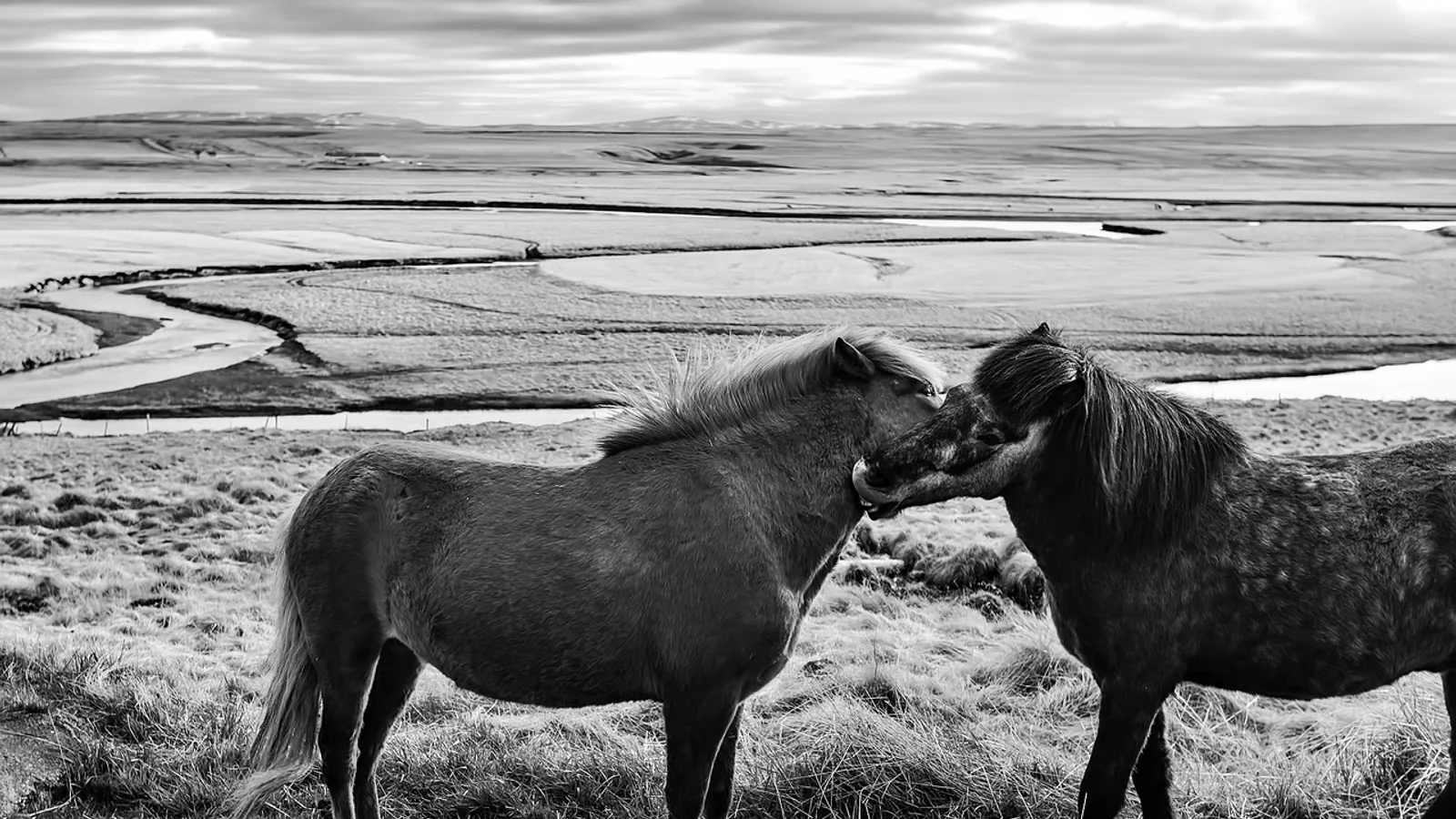
Biting is one of the most common reasons owners seek help with a horse's behavior, and it is also one of the most misunderstood. The single most likely cause of a sudden change in biting behavior is pain or physical discomfort, not a sudden loss of respect. Before you reach for a training fix, the first thing to check is whether the horse is hurting. Research in riding horses has shown that chronic discomfort, including vertebral problems, is strongly linked to aggression toward humans [1]. A horse that has started biting, pinning its ears, or threatening to bite is often telling you something is wrong with its body rather than its attitude.
This article separates pain-based biting from fear, play, dominance, and learned behavior. It gives you a diagnostic sequence to follow, a stepwise training plan built on negative reinforcement and reward, and clear escalation criteria for calling a veterinarian. Biting is a normal equine communication signal. The goal is never to punish the signal out of existence, because punishment increases fear-based aggression and hides the underlying problem.
This article is educational and is not a substitute for veterinary diagnosis or treatment.
Why Horses Bite: The Short Answer
Horses bite for five broad reasons: pain, fear, play, dominance or resource guarding, and learned behavior. Pain and fear are the two that most often get mislabeled as dominance. A horse in chronic discomfort may react aggressively to handling that would otherwise be tolerated [1]. A frightened horse may bite as a defensive last resort when it cannot flee. A young horse may bite during play because it has not learned bite inhibition. A horse that has learned that biting makes a person back off will keep biting because it works.
The practical consequence is that the same behavior, a bite, can have five different causes and five different fixes. Treating a pain-based bite with punishment makes the horse worse. Treating a fear-based bite with punishment confirms the fear. Treating a play bite with punishment may be appropriate in form but is often misapplied in timing. The diagnostic sequence matters more than the correction.
Pain-Based Biting: The Most Common Medical Cause
Pain is the first thing to rule out, and it is the cause owners most often miss. Horses cannot say "my back hurts" or "my tooth aches." They show it through behavior, and biting is one of the clearest signals available to them.
Vertebral and Musculoskeletal Pain
The strongest evidence linking chronic pain to aggression in horses comes from a study of riding horses with vertebral problems. Researchers examined the spines of 59 horses and ran standardized behavioral tests independently. Most horses severely affected by vertebral problems were prone to react aggressively toward humans, 33 of 43 horses, while unaffected or slightly affected horses were not, 9 of 16 horses [1]. The more affected the horses were, the fewer positive reactions they showed [1]. This is direct experimental evidence that chronic discomfort or potential pain increases aggression toward people.
The mechanism is straightforward. A horse with a painful back, neck, or pelvis associates handling, grooming, saddling, and riding with pain. When a person presses on the painful area or tightens a girth, the horse's defensive response escalates. Biting is one of the few tools the horse has to make the pressure stop. The behavior is not random. It is often directed at the person or the part of the body causing the discomfort.
Gastric Ulcers and Gastrointestinal Pain
Gastric ulcers are common in performance horses and can produce irritability, resentment of grooming, and biting. Ulcers are also linked to a broader pattern of gastrointestinal disease. In a study of 152 horses examined for equine inflammatory bowel disease, the most common signs were poor performance at 68 percent, nonspecific pain at 43 percent, and irritation or aggression at 41 percent. Gastric ulcers were found in 37 percent of those horses [2]. That means roughly four in ten horses with this gastrointestinal condition showed irritation or aggression as a presenting sign.
Crib-biting, a stereotyped oral behavior, is also associated with gastrointestinal disease. One survey of 367 horses that displayed crib-biting or windsucking found that 35.4 percent had experienced at least one episode of colic, and 20.2 percent had colic within the previous 12 months [3]. A separate study found that horses displaying crib-biting or windsucking had a tenfold increased risk of recurrent colic [4]. These numbers do not prove that crib-biting causes ulcers or colic, but they show that oral and gastrointestinal problems travel together. A horse that bites, cribs, or windsucks deserves a gastrointestinal workup.
Dental Disease
Dental pain is a direct and well-documented cause of biting and bit evasion. A study of 47 horses whose cheek teeth were removed because of periapical infection found that owners commonly reported avoidance behaviors before surgery, including evading the bit, difficulty eating, and asocial or aggressive behavior. Removing the infected tooth significantly reduced these behaviors, with P less than .001 for each group of behaviors [5]. Half of the cases had been diagnosed during a routine dental examination, meaning many owners did not realize their horse's undesirable behavior was dental pain [5].
The takeaway is that bit evasion, head tossing, quidding, dropping feed, and new biting under saddle can all point to a tooth root infection. A horse that bites when the bit is introduced, or that bites during bridling, should have its mouth examined before any training correction is attempted.
Ill-Fitting Tack
Tack that pinches, rubs, or presses on a painful area produces the same defensive biting as an underlying injury. A saddle that bridges or rocks, a girth that pinches, a bit that is the wrong size or shape, and a bridle that presses on a sore poll can all provoke biting. The telltale sign is that the behavior appears only when specific equipment is used or during specific phases of tacking up. If a horse is calm on the ground but bites when the girth is tightened, the tack or the back is the problem, not the horse's temperament.
Laminitis and Other Painful Conditions
Laminitis is an extremely painful condition involving damage to the soft tissues that anchor the third phalanx to the hoof [6]. Any horse in significant hoof pain may become irritable, resent handling, and bite. The same principle applies to any condition producing chronic pain. Pain management is a core principle of treating laminitis, precisely because the pain is severe [6].
Fear-Based Biting
Fear-based biting happens when a horse perceives a threat and cannot escape. It is a defensive behavior, not a dominance display. Common triggers include sudden movements, unfamiliar handlers, restraint that traps the horse, clipping, needle sticks, and being cornered in a stall or trailer.
The mechanism is flight-or-fight. When flight is blocked, fight remains. A horse that bites out of fear is usually also showing other signs: wide eyes, flared nostrils, sweating, trembling, backing away, or a raised head. The bite is often fast and accompanied by a rapid retreat.
Punishment is the worst possible response to fear-based biting. Hitting, yelling, or chasing a frightened horse confirms that people are dangerous. The behavior intensifies because the horse's fear is now justified. The correct approach is to remove the threat, slow the handling, and rebuild positive associations with the trigger.
Play and Investigative Biting
Young horses explore the world with their mouths. Foals and yearlings nip during play, and they nip to test boundaries. This is normal developmental behavior, not aggression. The problem arises when a young horse is not taught bite inhibition, either by its dam and herdmates or by consistent human handling.
Play biting is usually accompanied by a relaxed or playful body posture. The ears may be forward or loosely to the side. The horse may mouth, nuzzle, and then nip. It is rarely accompanied by the pinned ears, wrinkled nose, and rigid posture of a serious bite.
The fix for play biting is consistent, immediate, low-intensity correction combined with teaching the horse what to do instead. Timing matters more than force. A correction delivered three seconds after the bite teaches nothing. A correction delivered at the moment of the bite, followed by redirection to an acceptable behavior, teaches the horse that mouths stay off people.
Dominance and Resource-Guarding Biting
True dominance biting in horses is less common than owners believe, but it does exist. It typically occurs around resources: feed, hay, water, stall space, or a preferred handler. A horse that bites when another horse approaches its feed, or that bites a person who enters its stall at feeding time, is guarding a resource.
Dominance biting is usually preceded by clear warnings. The horse pins its ears, snakes its head, swings its hindquarters, or charges. The bite is the escalation after the warning was ignored. Handlers who miss or dismiss the warning get bitten.
The fix for resource guarding is management first and training second. Feed in a way that reduces competition, avoid entering the stall during feeding, and establish clear handling rules. Training then focuses on the horse yielding space on request and accepting the handler's presence near resources without aggression.
Learned Behavior: When Biting Works
Learned biting is the most straightforward category and often the most stubborn. A horse bites because biting has produced a reward. The reward might be that the handler backs off, stops grooming a painful spot, removes the bit, or gives the horse food. Once the horse learns that biting ends an unpleasant experience or produces a pleasant one, the behavior is reinforced.
Learned biting is often layered on top of one of the other causes. A horse with a painful back bites when groomed, the handler backs off, and the horse learns that biting works. The pain may later resolve, but the learned behavior remains. This is why treating only the medical cause is sometimes not enough, and treating only the behavior without addressing the pain is almost never enough.
The Troubleshooting Table
Use this table to match what you are seeing to the most likely cause and the first action to take. The first action is always to gather information and involve a veterinarian when pain is possible.
| Cause | Telltale sign | How to confirm | First action |
|---|---|---|---|
| Vertebral or musculoskeletal pain | Bites during grooming, saddling, or riding, especially over the back or neck | Veterinary examination of the spine and musculoskeletal system | Stop riding, call a veterinarian for a pain workup |
| Gastric ulcers or GI disease | Irritability, poor performance, resentment of grooming, crib-biting or windsucking | Veterinary examination, consideration of gastric and intestinal diagnostics | Call a veterinarian before any training change |
| Dental disease | Bit evasion, head tossing, quidding, dropping feed, biting during bridling | Veterinary oral examination, including cheek teeth | Schedule a dental examination |
| Ill-fitting tack | Bites only when specific equipment is used or during tacking up | Systematic tack check, one piece at a time | Remove the suspect tack and have it fitted |
| Fear | Wide eyes, sweating, trembling, fast bite followed by retreat | Observation of body posture and triggers | Remove the threat, slow handling, stop punishment |
| Play | Young horse, relaxed posture, mouthing and nipping | Age and context | Consistent immediate correction, teach acceptable behavior |
| Dominance or resource guarding | Pinned ears, head snaking, biting near feed or stall | Observation around resources | Change feeding management, establish handling rules |
| Learned behavior | Biting reliably produces a reward or ends an unpleasant task | Behavior diary tracking what happens before and after | Address any underlying cause, then retrain with reward |
The Diagnostic Sequence: What to Do First
Follow this sequence in order. Do not skip to training until the medical causes are addressed.
flowchart TD
    A[Horse bites] --> B{Pain possible}
    B -->|Yes| C[Veterinary examination]
    B -->|No| D{Fear or play}
    C --> E[Address medical cause]
    D -->|Fear| F[Remove threat]
    D -->|Play| G[Teach bite inhibition]
    E --> H[Handler safety review]
    F --> H
    G --> H
    H --> I[Reward based training]
    I --> J[Monitor and adjust]
Step 1: Veterinary Examination First
The first step is a veterinary examination, not a training correction. This is especially true if the biting is new, if it is directed at a specific body area, if it appears only under saddle, or if it is accompanied by any other sign of discomfort. The examination should cover the mouth, the back and neck, the limbs, the gastrointestinal system, and the tack fit.
A veterinarian can assess for the conditions described above: vertebral pain, dental disease, gastric ulcers, inflammatory bowel disease, laminitis, and other painful conditions. The evidence linking chronic discomfort to aggression in horses is strong enough that pain should be the default assumption until proven otherwise [1].
Step 2: Handler Safety Review
Once medical causes are being addressed, review handler safety. A horse that bites is dangerous, and the handler's safety comes before any training goal. This means:
- Never put your face, hands, or body within biting range of a horse that is threatening.
- Approach from the shoulder, not the head.
- Use a halter and lead rope for control during handling.
- Avoid punishing the horse, because punishment increases fear-based aggression.
- Have a second person present for any procedure that might provoke a bite.
- Consider a muzzle for procedures that require close contact with the head, after veterinary clearance.
Safety review is not about dominating the horse. It is about removing the opportunity for a bite while the underlying cause is treated.
Step 3: Negative Reinforcement and Reward-Based Training
Training comes third, after pain and safety are addressed. The most effective approach combines negative reinforcement, which is the removal of pressure when the horse responds correctly, with reward-based training, which adds a positive consequence for the desired behavior.
Negative reinforcement in horse training is the principle that pressure is released the moment the horse gives the correct response. A horse that yields its head away from the handler's space when asked, and then has the pressure released, learns that moving away is correct. This is the foundation of safe handling.
Reward-based training adds something the horse wants, usually food, scratching, or rest, when the horse performs the desired behavior. Reward-based training is particularly useful for rebuilding a horse's willingness to be handled after a painful or frightening experience.
The combination works because it gives the horse a clear answer to two questions: what should I do, and what happens when I do it. Punishment answers neither question. It only adds fear.
Training Fixes by Cause
Fixing Pain-Based Biting
The fix is medical, not behavioral. Work with a veterinarian to identify and treat the underlying condition. In the vertebral study, the horses with severe spinal problems were the ones reacting aggressively, and the more affected they were, the fewer positive reactions they showed [1]. Treating the pain is the only way to resolve the behavior at its source.
During treatment, reduce or stop the activities that provoke the bite. If grooming the back triggers biting, groom around the painful area and use a softer approach. If saddling triggers biting, do not saddle until the veterinarian clears the horse. Pushing through pain teaches the horse that handling is painful and confirms the biting behavior.
Fixing Fear-Based Biting
The fix is systematic desensitization and counter-conditioning. Desensitization means exposing the horse to the feared stimulus at a low enough intensity that it does not react. Counter-conditioning means pairing the stimulus with something pleasant, usually food.
Start below the horse's threshold. If clipping the muzzle triggers a bite, start by holding the clippers near the shoulder and rewarding relaxation. Move closer only when the horse stays relaxed. If the horse reacts, you have moved too fast. Back up and proceed more slowly.
Never punish a fear-based bite. Punishment confirms the fear and makes the next exposure worse. If you cannot get below the threshold safely, get professional help.
Fixing Play Biting
The fix is consistent, immediate correction plus teaching an acceptable alternative. When a young horse nips, correct at the moment of the nip with a sharp voice or a quick physical block, then redirect to an acceptable behavior such as standing quietly or targeting a hand or object.
The correction must be immediate and must not escalate. A single sharp "no" or a quick block with the elbow is enough. Chasing, hitting, or prolonged punishment teaches fear, not manners. Consistency across all handlers is essential. If one person allows nipping and another corrects it, the horse learns that nipping works with some people.
Fixing Dominance and Resource-Guarding Biting
The fix is management plus training. Change the feeding setup so the horse does not feel the need to guard. Feed in a stall with the door closed, separate horses at feeding time, and avoid entering the stall while the horse is eating.
Training focuses on yielding space. Teach the horse to step back from the stall door on request, to move its hindquarters away when asked, and to accept the handler's presence near feed without aggression. Use negative reinforcement, releasing pressure the moment the horse yields. Reward calm behavior with a small food reward or a scratch.
Fixing Learned Biting
The fix is to remove the reward and replace the behavior. Identify what the horse gets from biting. If biting makes the handler back off, stop backing off. If biting ends grooming, change how you groom so the horse does not need to bite to get relief.
Then teach an alternative behavior. If the horse bites when the girth is tightened, teach it to stand quietly for a gradual girth tightening sequence, with a reward for each calm step. If the horse bites when the bit is introduced, teach it to accept the bit with reward-based training, after a dental examination has ruled out pain.
Prevention Practices
Prevention is easier than correction. The following practices reduce the risk of biting behavior developing in the first place.
- Address pain early. Do not dismiss irritability, girthiness, or bit evasion as attitude. These are common early signs of discomfort.
- Schedule regular dental examinations. Dental pain is a well-documented cause of bit evasion and aggressive behavior, and half of the dental cases in one study were found on routine examination [5].
- Monitor gastrointestinal health. Crib-biting and windsucking are associated with increased colic risk, and gastric ulcers are common in performance horses [3][4].
- Fit tack properly. Check saddle, girth, bridle, and bit fit regularly, especially after a change in the horse's weight or workload.
- Teach bite inhibition early. Foals and young horses should learn that mouths stay off people, with consistent, low-intensity correction.
- Avoid punishment. Punishment increases fear-based aggression and suppresses the warning signs that precede a bite.
- Use negative reinforcement correctly. Release pressure the moment the horse responds. Poorly timed pressure teaches the horse that pressure never ends.
- Use reward-based training for new or frightening experiences. Food rewards and scratching build positive associations.
- Be consistent across handlers. Every person who handles the horse should use the same rules and the same responses.
- Watch for changes. A new biting behavior in an adult horse is a medical question first and a training question second.
Limitations and When to Contact a Veterinarian
Individual cases need a veterinarian. The information here is a framework, not a diagnosis.
Contact a veterinarian promptly if any of the following apply:
- The biting is new or has increased in frequency or intensity.
- The horse bites when a specific body area is touched, groomed, or saddled.
- The horse shows other signs of pain, including poor performance, reluctance to move, or changes in eating or drinking.
- The horse shows signs of colic, including pawing, rolling, flank watching, or reduced manure output.
- The horse has difficulty eating, drops feed, quids, or shows bit evasion.
- The horse has lost weight or has a change in body condition.
- The horse shows aggression that is escalating despite removing obvious triggers.
- The horse has bitten a person and broken the skin.
- The horse is showing signs of laminitis, including reluctance to walk, a rocked-back stance, or heat in the hooves.
- You are unable to handle the horse safely.
Do not attempt to train through a medical problem. Do not punish a horse that is biting out of pain or fear. If you are unsure whether the cause is medical or behavioral, treat it as medical until a veterinarian says otherwise.
Frequently Asked Questions
Why does my horse bite me suddenly?
A sudden onset of biting usually points to pain or a new stressor. Chronic discomfort, including vertebral problems, is strongly linked to aggression toward humans in horses [1]. Have a veterinarian examine the horse before assuming it is a training problem.
Is biting a sign of dominance in horses?
Sometimes, but less often than owners think. Dominance biting usually happens around resources like feed or stall space and is preceded by warnings such as pinned ears and head snaking. Pain and fear are more common causes.
Should I punish my horse for biting?
No. Punishment increases fear-based aggression and suppresses the warning signs that come before a bite. It also does not address the underlying cause. Address pain and fear first, then use negative reinforcement and reward-based training.
Can gastric ulcers cause biting in horses?
Gastric ulcers and gastrointestinal disease can cause irritability and aggression. In one study of horses with inflammatory bowel disease, 41 percent showed irritation or aggression, and 37 percent had gastric ulcers [2]. A veterinarian can assess for these conditions.
How do I stop a young horse from nipping?
Correct immediately and consistently at the moment of the nip, then redirect to an acceptable behavior. Keep the correction low intensity. Do not chase or hit the horse. Consistency across all handlers is essential.
Can dental problems make a horse bite?
Yes. Dental pain is a documented cause of bit evasion and aggressive behavior. In one study, removing infected cheek teeth significantly reduced avoidance and aggressive behaviors [5]. Schedule a dental examination if biting occurs during bridling or under saddle.
What is the first thing I should do if my horse bites?
Rule out pain with a veterinary examination, then review handler safety, then start training. The order matters. Training a horse that is biting from pain will make the problem worse.
Can crib-biting and windsucking be related to my horse's biting?
Crib-biting and windsucking are associated with increased colic risk, and gastrointestinal disease can present with irritation and aggression [2][3][4]. If your horse shows these behaviors, discuss a gastrointestinal workup with your veterinarian.
Related Articles
- Ferret Biting Training
- Puppy Training Tips Biting
- Dog Vomiting Bile in the Morning: Causes and Feeding Fixes
- Colic in Horses: Signs, Causes, and Prevention
- Conure Biting Behavior
- Hamster Biting Hand
- Cat Door: Installation and Training Guide
- Pit Bull Training: Obedience, Socialization, and Tips
- Dog and Flies: Fly Strike and Bite Relief
Sources
- Partners with bad temper: reject or cure? A study of chronic pain and aggression in horses.
- Clinical features, diagnostic findings, and treatment response in Finnish horses examined for equine inflammatory bowel disease.
- Prevalence of and risk factors for colic in horses that display crib-biting behaviour.
- Management and horse-level risk factors for recurrent colic in the UK general equine practice population.
- Behavioral Signs Associated With Equine Periapical Infection in Cheek Teeth.
- The management of equine acute laminitis.