Why Is My Senior Cat Crying at Night? Causes and Help
By Dr. Zubair Khalid, DVM, MS, PhD ·
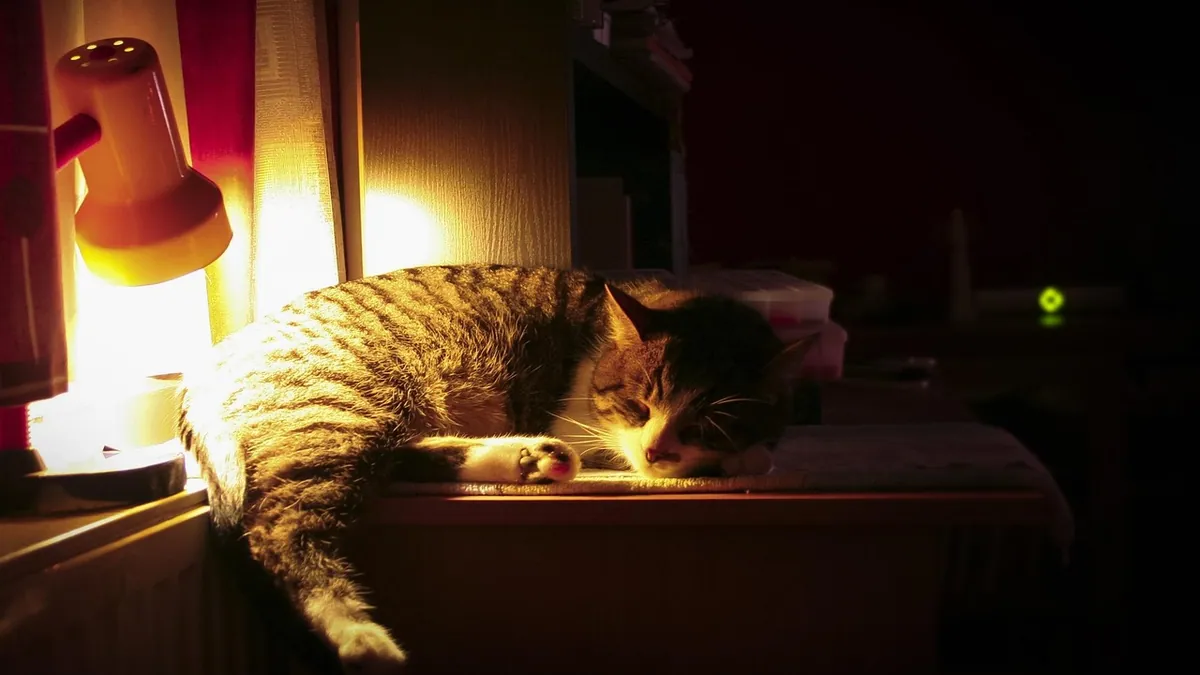
If your senior cat has started crying, yowling, or howling at night, you are not imagining it and you are not alone. Nighttime vocalization is one of the most common behavior changes in older cats, and it usually has a physical or cognitive cause instead of a simple habit. This article explains why senior cat crying at night happens and gives you a practical plan to help your cat and your household sleep again.
This article is educational and is not a substitute for veterinary diagnosis or treatment.
Quick Answer
- Feline cognitive dysfunction (FCD) affects more than 55% of cats aged 11 to 15 years and more than 80% of cats aged 16 to 20 years, and it commonly disrupts sleep patterns and causes vocalization [1].
- Pain, high blood pressure, hyperthyroidism, kidney disease, arthritis, dental disease, and vision or hearing loss can all cause nighttime yowling, and many of these are treatable [1][2].
- A veterinary visit with blood work and a blood pressure check should come before any behavior plan.
- Keep the nighttime environment predictable: lights on a timer, a litter box and water on the same floor, and a consistent bedtime routine.
- Never punish the crying. Punishment increases anxiety and makes vocalization worse.
Why Senior Cats Cry at Night: Normal Reasons First
Not every nighttime meow is a medical problem. Some causes are ordinary and easy to fix.
Your cat's sleep-wake cycle has shifted
Cats are naturally crepuscular, meaning they are most active at dawn and dusk. Older cats often sleep more during the day and then wake in the quiet hours with energy to burn. If your cat naps all afternoon on a sunny windowsill, midnight can feel like morning.
Hunger, thirst, or a schedule change
An empty bowl at 3 a.m. is a classic trigger. So is a change in your own routine, such as a new work shift, a move, a new baby, or a guest in the house. Cats notice these shifts and may call out for reassurance or food.
Sensory decline
Vision and hearing often worsen with age, and both can make a cat feel vulnerable in the dark [1]. A cat who cannot hear you breathing in the next room may cry out simply to locate you.
Boredom and understimulation
If your cat no longer plays the way she did at five, she may still need mental activity. A long, quiet day with no hunting, chasing, or problem solving can produce a restless night.
Medical Causes to Rule Out
This is where most owners find the answer. A behavior change in a senior cat should be treated as a medical symptom until proven otherwise. Do not assume your cat is "just getting old" and that nothing can be done [1].
Feline cognitive dysfunction (FCD)
FCD is the cat version of age-related cognitive decline. Memory, learning, awareness, and sensory perception can all deteriorate [1]. The result is often exactly what you are seeing: nighttime vocalization, wandering, disorientation, and a cat who seems to forget where the litter box or food bowl is [1]. Age-related behavioral changes consistent with cognitive dysfunction appear in some cats as early as 10 years of age and become more common in older cats [3]. In one clinical picture, wandering, vocalization, and night-time activity occur in older cats without any other identifiable medical problem, which is why the diagnosis requires a veterinarian to first exclude other conditions [3].
Pain
Arthritis is extremely common in senior cats and often underrecognized. A cat in pain may pace at night because lying still hurts, or cry when shifting position. Pain from dental disease, the spine, or the abdomen can look like restlessness and vocalization. Pain behavior in cats is subtle and includes changes in posture, activity, and social interaction [4].
Hyperthyroidism
Hyperthyroidism is a common endocrine disorder in elderly cats [2]. An overactive thyroid raises metabolism and often produces restlessness, increased appetite, weight loss, and loud nighttime vocalization. It can also cause heart changes such as an enlarged heart and left atrial dilation, though these often improve once thyroid hormone levels are normalized with treatment [2].
High blood pressure and kidney disease
Hypertension can cause disorientation, sudden blindness, and nighttime crying. Kidney disease causes increased thirst and urination, which means more nighttime trips and more chances for a cat to become distressed. Feeding difficulties in older cats often come from a mix of sensory decline, chronic pain, cognitive decline, mobility problems, and environmental stress, especially when conditions like chronic kidney disease are also present [5].
Other treatable problems
Diabetes, urinary tract infection, constipation, nausea, and cancer can all change nighttime behavior. So can medication side effects. Bring a complete list of everything your cat takes to the appointment.
When Nighttime Crying Becomes a Problem
A single yowl at 4 a.m. is not a crisis. The behavior becomes a problem when it happens most nights, when it wakes the household, when your cat seems distressed instead of simply chatty, or when it comes with other changes.
Watch for these companion signs:
- Pacing, circling, or staring at walls
- Getting stuck in corners or behind furniture
- Missing the litter box or eliminating outside it
- Eating less, or crying at the bowl without eating
- Weight loss despite a good appetite
- Hiding more, or seeking you out constantly
- New aggression when picked up or handled
Any of these together with nighttime crying points toward a medical workup. The earlier you start, the more options you have.
What to Do Step by Step
Step 1: Book the veterinary visit first
Schedule an exam with blood work, a thyroid panel, a blood pressure check, and a urine test. Ask specifically about pain, dental health, and vision. Many causes of senior cat yelling at night are treatable, and some improve quickly once treatment starts [1].
Step 2: Build a daytime activity plan
A tired cat sleeps better. Two or three short play sessions during the day, plus a longer one in the early evening, can help reset the clock. Food puzzles, treat balls, and hiding kibble around the house give your cat something to do. For more on daily care for older cats, see Caring For Senior Cats.
Step 3: Feed on a schedule that works for sleep
Offer the largest meal of the day in the evening. If your veterinarian approves, a timed feeder that releases a small portion around 2 or 3 a.m. can break the "wake me and I will feed you" loop. Feeding strategies for older cats need to account for sensory decline, mobility, and stress, not just the food itself [5].
Step 4: Make the night environment predictable and safe
- Leave a night light on in the hallway and near the litter box.
- Keep a litter box, water, and a soft bed on every floor your cat uses.
- Use motion-activated or timer lights so your cat is never in total darkness.
- Keep furniture in the same place so a cat with failing vision does not bump into surprises.
- Consider a heated bed for a cat with arthritis.
Step 5: Respond calmly and consistently
When your cat cries, go to her quietly. A soft word, a hand on her back, and a guide back to bed is enough. Do not turn on all the lights, do not start a play session, and do not offer a full meal. You want to teach her that night is for resting, not for a party.
Step 6: Ask about cognitive support
If FCD is suspected, your veterinarian may discuss specific diets, supplements, or medications. Treatment options for cognitive dysfunction in cats are still limited compared with dogs, and research is ongoing [3]. Your veterinarian will set any dose based on your cat's weight and health. Do not start over-the-counter products without asking, because some interact with other drugs.
Step 7: Track what happens
Keep a simple log for two weeks. Note the time of crying, what happened just before, whether your cat ate, and whether she used the litter box. This record is one of the most useful things you can bring to a follow-up visit.
What Not to Do
Do not punish the crying
Yelling, spraying water, or shutting your cat in another room does not teach her to be quiet. It teaches her that nighttime is scary and that you are unpredictable. Punishment raises anxiety, and anxiety raises vocalization [1].
Do not assume it is "just old age"
This is the most common and most costly myth. Many changes in behavior are signs of treatable medical disorders, and there are therapies that can comfort your cat and ease her symptoms, including pain [1]. A diagnosis of cognitive dysfunction also requires ruling out other medical problems first [3].
Do not give human medications or leftover pet medications
Never give a painkiller, sedative, or supplement meant for a person or another pet. Some are toxic to cats. Ask your veterinarian before anything goes in the bowl.
Do not ignore sudden changes
A cat who was quiet last week and is now howling every night needs to be seen. Sudden onset is more likely to signal a new medical problem than a slow behavior drift.
Do not assume a new diet will fix it alone
Feeding problems in older cats rarely come from the diet composition alone. They usually reflect a mix of sensory, cognitive, mobility, and environmental factors [5]. Food is one part of the plan, not the whole plan.
When to Involve a Veterinarian or Behavior Professional
Start with your veterinarian. If the exam and lab work are normal and the crying continues, ask for a referral to a veterinarian who specializes in behavior. A board-certified veterinary behaviorist can assess cognitive dysfunction, anxiety, and environmental triggers, and can prescribe medication if it is appropriate.
Behavior modification and drug therapy may both be needed for older pets, with adjustments made for their specific needs [6]. This is not a failure on your part. It is the standard approach for geriatric behavior problems.
If your cat's crying is part of a broader pattern of nighttime distress, these articles may help you sort out what you are seeing: Why Is My Cat Crying at Night? and Cat Crying At Night. If your cat also vomits at night, see Cat Vomiting at Night: Causes and When to Worry.
Limitations and When to Contact a Veterinarian
No article can diagnose your cat. Individual cases need a veterinarian who can examine your cat, run tests, and see how she responds to treatment.
Contact an emergency clinic now if your cat:
- Is crying out while straining to urinate, especially a male cat
- Is having trouble breathing, open-mouth breathing, or blue gums
- Collapses, has a seizure, or cannot stand
- Is bleeding heavily or has been hit by a car
- Ate something toxic, such as a human medication, lily, or antifreeze
Call your veterinarian the same day if your cat:
- Cries out and seems painful when touched or moved
- Suddenly cannot see, is bumping into walls, or has unequal pupils
- Has not eaten for 24 hours
- Is vomiting repeatedly or has diarrhea with blood
- Is crying constantly and cannot be settled at all
Schedule a routine visit within a week or two if your cat:
- Has new nighttime crying that is getting more frequent
- Is losing weight or has a changed appetite
- Is missing the litter box or having accidents
- Seems confused, disoriented, or stuck in corners
- Has become more clingy or more withdrawn
Frequently Asked Questions
Is it normal for a senior cat to cry at night?
It is common, but common does not mean normal or untreatable. Nighttime vocalization in older cats is often linked to cognitive decline, pain, or an endocrine or organ problem. A veterinary exam is the right first step.
Can feline cognitive dysfunction be treated?
There is no cure, but there are ways to support a cat with cognitive decline. Treatment options in cats are more limited than in dogs and research is ongoing. Your veterinarian can discuss diet, supplements, medication, and environmental changes that may help.
Should I get another cat to keep my senior cat company?
Not as a first move. A new cat can add stress for an older cat who is already confused or in pain. Address medical causes and environment first, then ask your veterinarian whether a companion would help your specific cat.
Will a night light really help?
It can help a cat with failing vision or hearing feel more secure in the dark. Pair it with a consistent bedtime routine and a litter box on the same floor. If crying continues after these changes, the cause is likely medical.
How long does it take for a new nighttime routine to work?
Give any plan at least two to four weeks of consistent effort before judging it. Medical treatment may work faster, sometimes within days. If nothing improves, go back to your veterinarian with your log.
Can I give my cat something to sleep at night?
Only with veterinary guidance. Sedatives and sleep aids are prescription decisions based on your cat's weight, lab work, and other medications. Your veterinarian calculates the dose for your pet. Never use a human sleep aid, which can be dangerous for cats.
Related Articles
- Why Is My Cat Crying at Night?
- Cat Crying At Night
- Cat Vomiting at Night: Causes and When to Worry
- Caring For Senior Cats
- Why Is My Senior Cat Throwing Up White Foam
- How To Care For Senior Cats
- Senior Cat Meowing at Night: Causes and Calming Tips
- Why Is My Cat Yowling? Nighttime and Daytime Causes
- Why Is My Senior Cat Meowing Constantly?
References
- Older Cats with Behavior Problems. ASPCA Animal Poison Control Center.
- Cardiac Abnormalities in Feline Hyperthyroidism. Veterinary sciences, 2025.
- Cognitive dysfunction in cats: a syndrome we used to dismiss as 'old age'. Journal of feline medicine and surgery, 2010.
- Keeping an eye on pain: Characterization of pain behaviours in cats undergoing ophthalmic surgery. Veterinary journal (London, England : 1997), 2026.
- EXPRESS: Beyond the bowl: behavioural, sensory and environmental strategies to support healthy ageing in cats. Journal of feline medicine and surgery, 2026.
- Geriatric behavioral problems. The Veterinary clinics of North America. Small animal practice, 1997.