Why Does My Kitten Get the Zoomies at Night?
By Dr. Zubair Khalid, DVM, MS, PhD ·
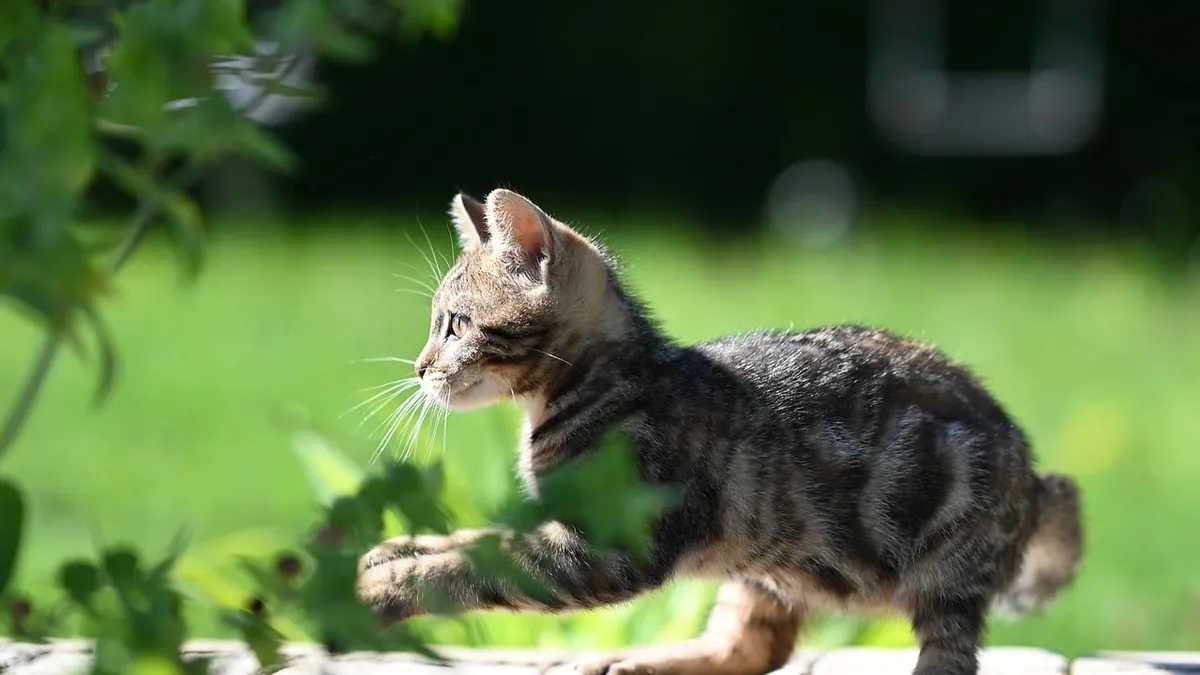
Kittens often race around at night because cats are naturally most active around dawn and dusk, and a young cat with stored energy will burn it off whenever the house is quiet. If your kitten sleeps all evening and then explodes at 2 a.m., the behavior is usually normal play drive, not a medical problem. This article is educational and is not a substitute for veterinary diagnosis or treatment.
Quick Answer
- Nighttime zoomies are common and usually normal in kittens and young cats.
- Cats are crepuscular, meaning their natural activity peaks near sunrise and sunset[1].
- A bored, under-exercised kitten will often save its energy for the middle of the night.
- Two or three active play sessions during the day and a meal before bed can shift the burst earlier.
- Sudden night activity in an older cat, or a kitten who also cries, paces, or stops eating, needs a veterinary visit.
Why Does My Kitten Get the Zoomies at Night?
Kittens get the zoomies at night for reasons that are built into cat biology. Domestic cats descend from a solitary hunter that evolved to be most active in low light, when prey is moving and the cat has an advantage. That crepuscular rhythm survived domestication, and feeding studies in healthy cats confirm a natural pattern of small, frequent meals with activity peaks around dawn and dusk [1]. Your kitten is not being spiteful. It is following an internal schedule that says "this is when we hunt."
Normal reasons for nighttime zoomies
The most common cause is simple stored energy. A kitten that naps through the afternoon and gets only a few minutes of play will have a full tank by bedtime. When the household settles and the lights go down, there is nothing left to distract it, so the energy comes out as sprinting, pouncing, and climbing.
Cats also stay more active in dim light. Camera studies of domestic cats in the Houston area found that cats were primarily nocturnal at sites where no larger predators were present, and they shifted toward more daytime activity when bobcats shared the area [2]. That flexibility shows how strongly environment shapes when a cat moves. In your home, the "environment" is you. If the house is quiet and dark at night, your kitten reads that as prime hunting time.
Young cats also have a developmental reason to play hard. Play is how kittens practice stalking, chasing, and grabbing. The burst is exercise and skill-building at the same time. It tends to fade as cats mature, though some cats keep a nightly sprint for life.
What causes cat zoomies at night besides energy?
Temperature and light can nudge activity timing too. Research on wild goats found that animals increased nighttime activity after warmer days and during brighter nights, apparently to avoid daytime heat [3]. Your indoor kitten is not a wild goat, but the general principle holds: animals shift activity toward cooler, darker hours when conditions favor it. A warm room or a bright window at night can keep a kitten stirred up.
Hunger is another trigger. If your kitten eats its last meal at 5 p.m., by midnight it may be genuinely hungry. Cats are designed to eat many small meals across the day, not one or two large ones [1]. A long overnight fast can produce both a hungry stomach and a restless cat.
Medical Causes to Rule Out
Most kitten zoomies are behavioral. Still, some medical problems can look like nighttime restlessness, and they matter more in an older cat than in a healthy kitten.
Pain is a common reason a cat cannot settle at night. Dental disease, an injury, or joint discomfort can make a cat pace and vocalize instead of sleeping. If your cat is older and the night activity is new, pain and other conditions move up the list.
Hormone and organ disease can also change nighttime behavior. An overactive thyroid, kidney disease, and cognitive decline are well-known causes of nighttime yowling and restlessness in senior cats. These conditions are covered in more detail in this guide to why a cat yowls at night.
Stress and poor adaptation to a new home can raise nighttime activity as well. Research in shelter dogs found that nocturnal activity was higher in a new, unfamiliar environment and dropped as the animal settled in [4]. Cats are different animals, but the pattern of restlessness during adjustment is familiar to anyone who has brought home a new pet. A kitten in its first weeks in a new house may simply be unsettled.
If your cat cries at night without much running, that is a different pattern and worth reading about separately in why is my cat crying at night.
When Night Activity Becomes a Problem
Night zoomies become a problem when they disrupt your sleep, when they come with other symptoms, or when they are new in an adult or senior cat.
Ask yourself a few questions. Is the behavior only at night, or is your cat restless all day too? Is your kitten still eating, drinking, using the litter box, and playing normally during the day? Has the night activity started suddenly after months of quiet nights? A healthy kitten with a predictable nightly sprint and a normal appetite is a very different picture from a cat who paces, cries, and eats less.
A kitten that wakes you every night is also a problem for your household, even if the cat is healthy. Sleep loss affects your patience, and a tired owner is more likely to respond in ways that accidentally reward the behavior. Fixing the schedule is good for both of you.
What to Do When Your Cat Has Zoomies at Night
The goal is to move the energy burst earlier in the evening, then teach your kitten that night is for resting. This takes a week or two of consistency.
Step 1: Add active play during the day
Set aside two or three play sessions of 10 to 15 minutes each. Use a wand toy, a laser pointer used carefully, or a toy your kitten can chase and catch. Let your kitten actually catch the toy at the end so the hunt feels complete. A kitten that has hunted during the day has less drive to hunt at 2 a.m.
Step 2: Build an evening wind-down routine
About an hour before your bedtime, run a solid play session. Follow it with a meal. Cats naturally rest after eating, so play then feed then quiet time is a sequence that works with feline biology [1]. Keep the last hour calm. Dim the lights, lower the noise, and avoid exciting games right before you get into bed.
Step 3: Feed on a schedule that covers the night
If your kitten is hungry at midnight, a single evening meal may not be enough. Cats eat small, frequent meals across the day [1]. Talk with your veterinarian about splitting the daily food into several portions, with one portion placed close to your bedtime. Some owners use a timed feeder to offer a small meal in the early morning hours. Your veterinarian can help you set the right amount and timing for your kitten's age and weight.
Step 4: Make the environment work for sleep
Give your kitten a comfortable bed, a perch near a window, and a few quiet toys. Rotate toys so they stay interesting. If your kitten wakes you by scratching at the door or meowing, avoid responding with attention, because attention is a reward. Keep the bedroom boring at night.
Step 5: Keep the daytime environment enriched
A bored cat is a nighttime cat. Scratching posts, climbing shelves, puzzle feeders, and window views all give a kitten something to do while you are away or busy. Enrichment spreads activity across the day instead of saving it all for night.
What Not to Do About Nighttime Zoomies
Do not punish your kitten. Yelling, spraying water, or shutting the cat in a small room does not teach a cat to sleep. It teaches fear and can make night behavior worse by adding stress.
Do not lock your kitten in a crate or a tiny bathroom all night as a fix. Cats need room to move, scratch, and use the litter box. Confinement without enrichment increases frustration.
Do not assume the behavior is "just a phase" if other signs are present. A kitten that stops eating, hides, or cries in pain is not having normal zoomies. Those signs point to a medical problem.
Do not rely on myths. A common one is that a cat is "getting back at you" for leaving during the day. Cats do not plan revenge. Another is that you should never play with a cat before bed because it will wake them up. In fact, a good play session followed by a meal is one of the most reliable ways to settle a cat for the night.
Do not give any sedative, supplement, or over-the-counter product to make your cat sleep. Doses and safety for these products are not established for home use, and your veterinarian must calculate any medication based on your cat's weight and health.
When to Involve a Veterinarian or Behavior Professional
Call your veterinarian if the night activity is new in an adult or senior cat, if your cat is losing weight, if appetite or litter box habits have changed, or if your cat seems painful or disoriented. These signs can point to thyroid disease, kidney disease, dental pain, or cognitive decline, and they need a proper exam and testing.
A certified behavior professional can help if your kitten's night activity continues despite a solid play, feeding, and enrichment routine. Behavior consultants can assess the home setup and build a plan for sleep, separation, and enrichment. Ask your veterinarian for a referral to someone with behavior credentials.
Limitations and When to Contact a Veterinarian
This article covers common patterns, not your individual cat. Every case needs a veterinarian who can examine your pet, ask about the full history, and decide what testing, if any, is needed.
Contact your veterinarian the same day if your kitten stops eating, vomits repeatedly, has diarrhea, strains to urinate, or seems painful when touched. Urinary blockage in a male cat is an emergency, so go to an emergency clinic right away if your cat is crying in the litter box, producing little or no urine, or hiding and pacing.
Seek emergency care now for collapse, trouble breathing, a seizure, sudden weakness in the back legs, or a suspected poisoning. For poison questions in the United States, call the ASPCA Animal Poison Control Center at (888) 426-4435 or the Pet Poison Helpline at (855) 764-7661. These lines may charge a consultation fee.
Schedule a routine visit if the night activity is new, if your cat is older than seven, or if the behavior has lasted more than a few weeks despite your best efforts at play and routine.
Frequently Asked Questions
Is it normal for kittens to have zoomies at night?
Yes, nighttime zoomies are normal in kittens. Cats are crepuscular, with natural activity peaks around dawn and dusk, and a young cat with extra energy will often run at night[1]. The behavior usually settles as your kitten matures and as you build a predictable daytime routine.
Do kittens get zoomies at night because they are bored?
Often, yes. A kitten that naps all day and gets little play will store energy and release it when the house is quiet. Adding active play sessions and enrichment during the day usually reduces the nighttime burst.
Why is my cat zoomies at night all of a sudden?
A sudden change in an adult or senior cat deserves a veterinary visit. New nighttime restlessness can be linked to pain, thyroid disease, kidney disease, or cognitive decline. In a young cat, a sudden burst often follows a change in routine, a new home, or a day with less play.
What to do when your cat has zoomies at night?
Play with your cat actively in the evening, then feed a meal, then keep the house calm and dark. Split food into several small meals across the day so your cat is not hungry overnight [1]. If the behavior continues, talk with your veterinarian about a plan.
Can I just ignore my kitten's nighttime zoomies?
Ignoring the running itself is fine, and it is better than yelling or chasing. What you should not ignore is a kitten that also cries, paces, stops eating, or seems uncomfortable. Those signs need a veterinary exam.
Related Articles
- Why Is My Cat Crying at Night?
- Why Is My Cat yowling at night? Hyperthyroidism CKD and Cognitive Decline
- Cat Coughing at Night: When It's More Than a Hairball
- Cat Vomiting at Night: Causes and When to Worry
- Can Cats See in the Dark? Feline Vision Explained
- Why Is My Cat Hiding?
- Kitten Zoomies: Why They Happen and When They Stop
- Cat Zoomies at Night: Why and How to Manage
- Why Is My Kitten Up All Night? Causes and Fixes
References
- Twenty-Four-Hour Feeding Patterns of In-Home Healthy Aging Cats Fed Wet, Dry, or a Combination of Wet and Dry Diets Ad Libitum. Animals : an open access journal from MDPI, 2025.
- Diel Activity Patterns of Bobcats and Domestic Cats in the Houston Metropolitan Area. microPublication biology, 2026.
- Seeking temporal refugia to heat stress: increasing nocturnal activity despite predation risk. Proceedings. Biological sciences, 2024.
- Nocturnal activity as a useful indicator of adaptability of dogs in an animal shelter and after subsequent adoption. Scientific reports, 2023.