Cat Zoomies at Night: Why and How to Manage
By Dr. Zubair Khalid, DVM, MS, PhD ·
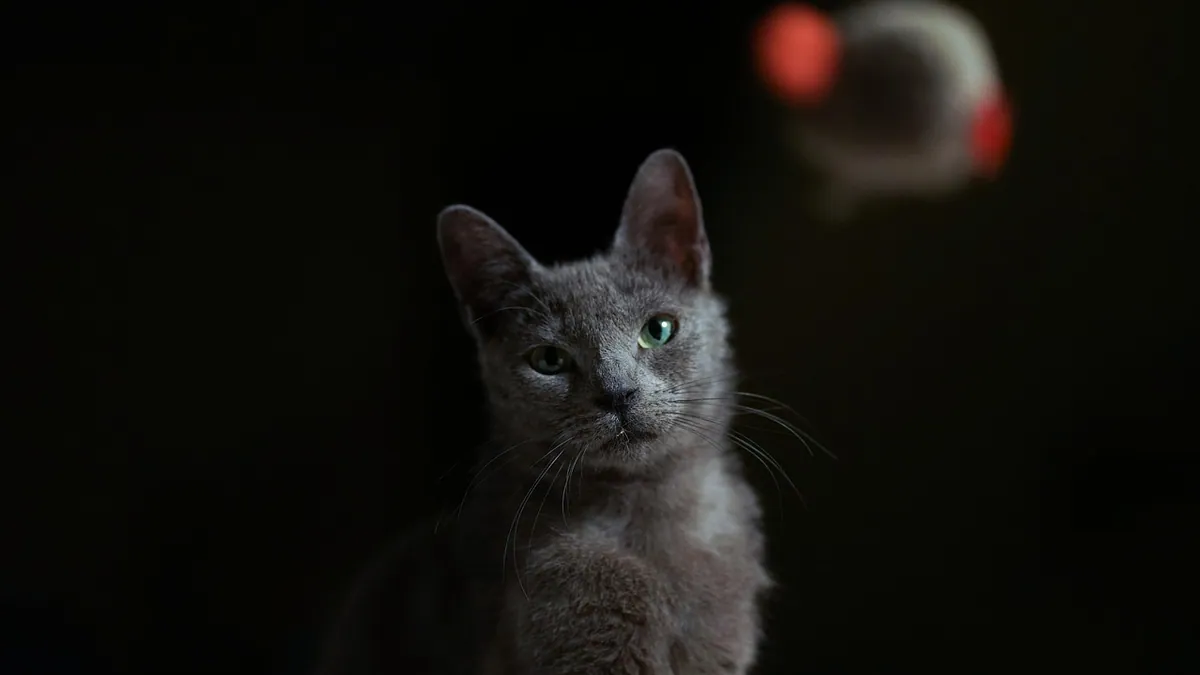
Cats zoom at night because their natural activity peaks around dawn and dusk, and a long, boring evening gives that energy nowhere to go. The burst is usually normal hunting behavior, not spite or revenge for a day alone. A play-and-feed routine in the evening can move most of that energy earlier so you can sleep.
This article is educational and is not a substitute for veterinary diagnosis or treatment.
Quick Answer
- Night zoomies are normal for a crepuscular hunter. Wild felids such as bobcats show peak movement around sunrise and sunset [1], and domestic cats often stay most active after dark [2].
- The fix is timing, not punishment. A vigorous play session followed by a meal mimics the natural hunt-eat-groom-sleep cycle and helps your cat settle.
- Kitten zoomies at night are usually the highest-energy version of this pattern and often fade somewhat with age, but the routine still helps now.
- Sudden new zoomies in an older cat, especially with yowling, pacing, or appetite changes, need a veterinary visit instead of a behavior plan.
- Never punish the behavior. Chasing, spraying, or yelling can increase arousal and damage your relationship with your cat.
Why Do Cats Zoom at Night?
Cats are crepuscular, not strictly nocturnal
Crepuscular means most active around dawn and dusk. Camera data from the Houston area found that domestic cats were primarily nocturnal at sites where no bobcats were present, and they shifted toward more daytime activity where bobcats overlapped [2]. Bobcats themselves show peak movement around sunrise and sunset [1]. Your indoor cat carries the same wiring, but without a hunt, a territory patrol, or a predator to avoid.
The hunt-eat-groom-sleep cycle
A cat's natural sequence is stalk, pounce, catch, eat, groom, then sleep. When that sequence gets compressed into a bowl of food at 6 p.m. and a long nap on the couch, the "hunt" part has to happen somewhere. For many cats it happens at 2 a.m. on your hallway floor.
Boredom and stored energy
Indoor life removes most of the physical work a cat would otherwise do. If your cat sleeps most of the day while you are at work, the evening and night become the only window for activity. This is the single most common reason owners search for how to deal with cat zoomies at night.
Light and season
Light exposure shapes feline reproductive cycling and melatonin, and long photoperiods increase ovarian activity compared with short ones [3]. Light also influences when animals move. In one wild ungulate, activity shifted toward night after warmer days and during brighter nights [4]. Your indoor lighting, screen glow, and seasonal daylight changes can all nudge your cat's active window.
Kittens and young cats
Kitten zoomies at night are the same behavior with less impulse control and more energy. Young cats are also still learning household rhythms. Expect more intensity and less predictability until your cat matures.
Medical Causes to Rule Out Before You Blame Behavior
Most night zoomies are normal. Some are not. A cat that is suddenly active at night when it never was, or that shows other changes, may have an underlying problem.
- Pain. Arthritis, dental disease, or abdominal pain can make a cat restless and unable to settle. Cats often pace instead of limping.
- Hyperthyroidism. Increased appetite, weight loss, vocalizing, and nighttime restlessness are classic signs. This is common in middle-aged and older cats.
- Cognitive dysfunction. Older cats can develop night waking, disorientation, and loud vocalizing. This is a medical issue, not stubbornness.
- Vision or hearing loss. A cat that cannot see or hear well may become more vocal and active when the house is dark and quiet.
- Urinary or gastrointestinal discomfort. Frequent trips to the box, straining, or nausea can all look like nighttime restlessness.
- Hunger from a medical cause. Diabetes, parasites, and malabsorption can drive food-seeking behavior at night.
If your cat's nighttime activity is new, sudden, or paired with any of these signs, book a veterinary visit before starting a training plan. Related reading: Cat Lethargy: When to Worry and What to Do and Why Is My Cat Crying at Night?.
When Night Zoomies Become a Problem
The behavior itself is not a disorder. It becomes a problem when it disrupts your sleep, when it comes with destructive behavior, or when it signals distress.
Watch for these patterns:
- Your cat wakes you every night at the same time and will not settle.
- Zoomies include knocking over furniture, breaking items, or injuring your cat.
- Your cat vocalizes loudly, paces, or seems unable to rest even when alone.
- The behavior started suddenly in an adult or senior cat.
- Your cat also shows aggression toward people or other cats during the burst. See Cat Aggression Towards Other Cats: How to Manage Multi-Cat Households.
- Your cat overgrooms, pulls hair, or chews at the body during or after activity. See Cat Overgrooming: Why It Happens and What to Do.
If two or more of these apply, treat it as a behavior and health concern, not a quirk.
How to Deal With Cat Zoomies at Night: Step by Step
Step 1: Build an evening play block
Set aside 10 to 15 minutes, ideally two sessions, in the hour or two before your bedtime. Use a wand toy and move it like prey: dart, pause, hide, then let your cat catch it. Let your cat win. The catch is what tells the brain the hunt is over.
Step 2: Feed right after play
Follow the play session with a meal or a substantial portion of the daily food. The sequence of hunt, catch, eat, groom, sleep is built into your cat. Feeding after play uses that wiring instead of fighting it.
Step 3: Keep the last meal close to your bedtime
If you free-feed, switch to scheduled meals so the biggest meal lands after the last play session. If you cannot change the schedule, use a timed feeder that opens near your bedtime.
Step 4: Add daytime enrichment
A tired cat at 9 p.m. is a quiet cat at 2 a.m. Try:
- Puzzle feeders and food-dispensing toys.
- Window perches with a view of birds or a busy street.
- Rotating toys so novelty stays high.
- Short play sessions during the day if someone is home.
- Cat trees and vertical space for climbing and watching.
Step 5: Reset the environment at night
- Close blinds or use blackout curtains to reduce outside stimulation.
- Keep a consistent lights-out time.
- Provide a warm, quiet sleeping spot near you if your cat settles better with company.
- Consider a white noise machine if outside sounds trigger activity.
- Make sure the litter box is clean and easy to reach.
Step 6: Do not reward the 3 a.m. wake-up
If your cat wakes you and you get up to feed, play, or talk, the behavior gets reinforced. If your cat is healthy and safe, ignore the burst as much as possible. This is hard for a few nights and usually improves.
Step 7: Track what changes
Keep a simple log of play time, meal time, and night activity for one to two weeks. Patterns show up fast. If nothing changes, that information helps your veterinarian.
What Not to Do
- Do not punish. Yelling, spraying water, or chasing raises arousal and can make the behavior worse. It also teaches your cat that you are unpredictable at night.
- Do not lock your cat in a small room as a first move. Confinement without enrichment often increases distress and vocalizing.
- Do not withhold food to tire your cat out. Hunger drives more nighttime activity, not less.
- Do not assume it is just a phase in an older cat. New night activity in a senior cat is a medical red flag until proven otherwise.
- Do not use sedatives or supplements without veterinary guidance. Doses depend on your cat's weight and health, and your veterinarian calculates them.
- Do not rely on laser pointers alone. A chase with no catch can increase frustration in some cats. Always finish with a physical toy your cat can grab.
When to Involve a Veterinarian or Behavior Professional
Call your veterinarian if:
- The behavior is new in an adult or senior cat.
- Your cat is losing weight, eating more, or vocalizing more.
- Your cat seems painful, stiff, or reluctant to jump.
- Your cat is straining to urinate, especially a male cat. This is an emergency.
- Your cat is injuring itself or destroying the home.
- You have tried a consistent play-and-feed routine for two to three weeks with no improvement.
Ask for a referral to a veterinary behaviorist or a certified applied animal behaviorist if the behavior is severe, if there is aggression, or if your cat shows signs of anxiety that do not respond to routine changes. Your veterinarian can also check for pain, thyroid disease, and other medical causes first.
Limitations and When to Contact a Veterinarian
This article covers the common, normal version of nighttime activity. It cannot tell you whether your individual cat has a medical problem, and individual cases need a veterinarian who can examine your cat and review its history.
Contact a veterinarian the same day if your cat:
- Stops eating or drinking.
- Vomits repeatedly or has diarrhea.
- Cries out in pain or cannot settle at all.
- Shows sudden weakness, wobbling, or collapse.
Go to an emergency clinic now if your cat:
- Strains to urinate with little or no urine, especially a male cat.
- Breathes with an open mouth or struggles to breathe.
- Has a seizure or loses consciousness.
- Collapses or cannot use the back legs.
- Eats something toxic. Call the ASPCA Animal Poison Control Center at (888) 426-4435.
Schedule a routine visit within a few weeks if your cat:
- Has new night activity without other signs.
- Is an older cat with any change in sleep or vocalizing.
- Has not improved after a consistent routine.
- Shows overgrooming, coughing, or other new symptoms. See Cat Coughing at Night: When It's More Than a Hairball.
Frequently Asked Questions
Are zoomies in cats at night normal?
Yes, for most cats. Night activity fits the crepuscular pattern seen in wild felids, with peak movement around sunrise and sunset [1]. Domestic cats also tend to be most active after dark in many settings [2]. Normal does not mean you have to accept lost sleep, though. A play-and-feed routine usually shifts the burst earlier.
Why does my cat zoom right after I go to bed?
Your bedtime is often the first quiet moment of the day, and quiet triggers activity in a cat that has been resting. The behavior is also reinforced if you respond. Try a vigorous play session 30 to 60 minutes before bed, then feed. If you have been getting up to interact, expect a few louder nights before the pattern fades.
Do kitten zoomies at night ever stop?
They usually become less intense as your kitten matures, but the underlying pattern stays. Kittens have more energy and less self-control, so the bursts can be dramatic. Start the play-and-feed routine early. It teaches a rhythm your cat can keep for life.
Can I just close the bedroom door and ignore it?
You can, and for many owners it works. Your cat may vocalize or scratch at the door for several nights. If your cat is healthy and safe, ignoring the behavior consistently is the fastest path to change. If your cat panics, injures itself, or the behavior escalates, talk to your veterinarian about a behavior plan.
Should I use a calming supplement or medication?
Only with veterinary guidance. Some cats need behavior support, but the dose depends on your cat's weight and health, and your veterinarian calculates it. Supplements are not risk-free, and they do not replace a play-and-feed routine or a medical workup. Start with the routine and a veterinary exam.
Related Articles
- Cat Overgrooming: Why It Happens and What to Do
- Why Is My Cat Crying at Night?
- Cat Aggression Towards Other Cats: How to Manage Multi-Cat Households
- Cat Lethargy: When to Worry and What to Do
- Cat Coughing at Night: When It's More Than a Hairball
- Dog Anxiety at Night: Why It Happens and How to Help
- Why Is My Cat Zooming Around? Zoomies Explained
- Why Do Cats Get the Zoomies? Normal vs Problematic
- How to Stop Your Cat Meowing and Yowling at Night
References
- Effects of sun angle, lunar illumination, and diurnal temperature on temporal movement rates of sympatric ocelots and bobcats in South Texas. PloS one, 2020.
- Diel Activity Patterns of Bobcats and Domestic Cats in the Houston Metropolitan Area. microPublication biology, 2026.
- Comparison of Different Lighting Protocols on Female Cat Reproduction. Reproduction in domestic animals = Zuchthygiene, 2026.
- Seeking temporal refugia to heat stress: increasing nocturnal activity despite predation risk. Proceedings. Biological sciences, 2024.