Why Does My Kitten Meow When I Pick Her Up?
By Dr. Zubair Khalid, DVM, MS, PhD ·
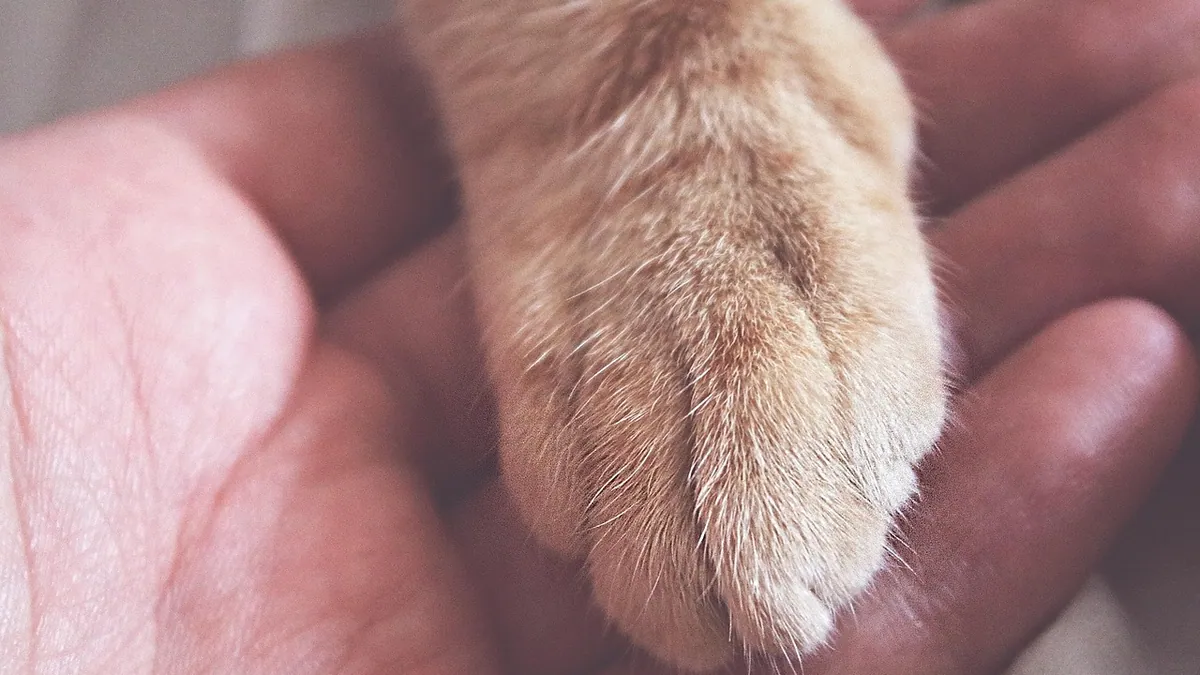
A kitten who meows when you pick her up is usually talking to you, not complaining. Meowing is a vocal signal cats use mainly with people, and it can mean anything from "hello" to "put me down" [1]. The trick is reading the rest of her body along with the sound. This article is educational and is not a substitute for veterinary diagnosis or treatment.
Quick Answer
- Meowing during handling is normal communication, and adult cats direct meows at people, not at other cats [1].
- A relaxed kitten usually stays loose, keeps her ears forward, and may purr or knead. A tense kitten stiffens, flattens her ears, or tries to squirm away.
- Kittens who were handled gently by several people during early social development tend to be more comfortable with human contact later [2].
- Meowing that starts suddenly with hiding, appetite loss, or limping needs a veterinary visit, because pain and illness can change vocal behavior [3].
- Support the chest and hindquarters, keep the kitten close to your body, and put her down the moment she struggles.
Why Does My Kitten Meow When I Pick Her Up?
Meowing is a social sound. Kittens meow to their mother when they are cold or hungry, but once they mature, cats stop meowing at each other and save it for humans [1]. That is why your kitten's meow is aimed at you. She has learned that you respond.
Normal reasons for meowing during handling
- Greeting. Many kittens meow the moment you reach for them because pickup time means attention. This is often a short, soft chirp instead of a long cry.
- Hunger or a request. Meowing is a request signal, and cats use it to get people to do things [1]. If you usually pick her up before meals, she may be asking for food.
- Wanting to be close. Kittens raised with plenty of gentle handling by different people are generally more at ease with contact [2]. A confident kitten may meow while climbing into your arms.
- Protest. Some kittens simply prefer their feet on the floor. A single meow as you lift, followed by squirming, is a clear "I would rather not."
- Excitement or overstimulation. Petting and holding can build arousal. A kitten who meows while you pet her may be enjoying it, or she may be nearing her limit. Watch the tail and ears for the answer.
How meowing fits into cat communication
Meows carry emotional information and change with the situation. In one study of meowing during feeding and play, cats meowed significantly more when they could see and smell a food reward but could not reach it [4]. That tells you something useful. Meowing often signals motivation, which means the sound alone does not tell you whether your kitten is happy or frustrated. Context does.
This is also true when you pet her. A kitten who meows when you pet her may be asking for more, asking you to stop, or simply chatting. The body language decides which one it is.
How to Tell Contentment From Discomfort
Kittens do not hide their feelings well once you know what to look for. Compare these two pictures.
Signs your kitten is comfortable
- Body stays soft and loose in your hands
- Ears point forward or slightly to the side
- Tail is relaxed, held level or gently curved
- Purring, kneading, or slow blinking
- She leans into you or stays put when you pause
Signs your kitten is uncomfortable
- Body stiffens or feels rigid
- Ears flatten sideways or press back
- Tail tucks, lashes, or puffs
- She pushes away with her paws or twists her body
- Meowing gets louder, longer, or more repeated
- She freezes completely, which is a common fear response in cats [3]
Fear, anxiety, and stress are among the most common behavioral problems in cats, and cats show these emotions in ways that are easy to misread [3]. A frozen kitten is not a calm kitten. She is shut down.
Medical Causes to Rule Out
Most meowing during handling is behavioral, but a sudden change deserves a closer look.
Pain is the big one. A kitten with a sore leg, an injured tail, a bellyache, or a dental problem may meow when you lift her because handling puts pressure on the tender area. Cats are good at hiding illness, so a new meow during pickup can be the first visible sign.
Other medical possibilities include:
- Gastrointestinal discomfort. Gas, constipation, or intestinal parasites can make a kitten uncomfortable when her belly is compressed. If you also notice bloating or passing gas, see Why Does My Cat Have Gas?.
- Respiratory or nasal issues. A kitten with a stuffy nose may vocalize differently or more often.
- Hunger from a health problem. Weight loss with increased meowing and appetite changes needs a veterinary exam. See Why Is My Cat Gaining Weight? for the opposite pattern.
- Neurologic or hormonal conditions. These are less common in kittens but are on the list your veterinarian will consider.
A kitten who was previously quiet during handling and now meows every time, especially with any change in appetite, energy, or litter box habits, should be examined.
When Meowing During Handling Becomes a Problem
Meowing itself is normal communication, and how much is too much is a personal call [1]. Some cats simply talk more than others, and certain breeds, including the Siamese, are known for heavy meowing and yowling [1].
It becomes a problem when:
- You cannot pick her up at all without a struggle
- She hides from you or avoids contact she used to accept
- Meowing continues after you put her down and seems distressed
- Handling has become unsafe for either of you
- The behavior is new and came on quickly
If your kitten is also withdrawing, read Why Is My Cat Hiding?. If she seems specifically afraid of you, see Why Is My Cat Suddenly Afraid of Me?. And if the meowing has spread to other times of day, Cat Excessive Meowing: What Is Your Cat Trying to Say? covers the bigger picture.
What to Do Step by Step
1. Let her come to you first
Sit on the floor and let the kitten approach. Offer a hand at her nose level. If she rubs against it, she is inviting contact. If she backs away, wait. Forced handling teaches a kitten that hands are unpredictable.
2. Practice short, positive pickups
Lift her for two or three seconds, then set her down and offer a treat or a gentle pet. Repeat a few times a day. This builds a history of good things happening during handling.
3. Use proper support
Slide one hand under her chest behind the front legs and the other under her hindquarters. Bring her close to your body so she feels supported on all sides. Never lift a kitten by the scruff alone or hold her dangling with legs unsupported.
4. Watch her signals and respond
The moment she stiffens, flattens her ears, or pushes away, put her down. Ending the interaction on her terms teaches her that meowing works and that you listen. That builds trust faster than holding on.
5. Socialize with more than one person
Breeders in one survey said handling by multiple people mattered, yet fewer did it in practice than said it was important [2]. Invite calm visitors to offer treats and gentle pets. Variety in handling helps kittens become flexible adults.
6. Add enrichment so handling is not the only interaction
Play with wand toys, offer climbing spots, and use food puzzles. A kitten with plenty to do is less likely to see pickup as her only source of attention. Cats from familiar homes show more exploration and play after reuniting with their caregiver, which suggests a secure base matters [5].
7. Keep sessions short and predictable
Pick her up at similar times, in similar ways, and pair it with something she likes. Predictability lowers arousal.
What Not to Do
- Do not punish meowing. Never yell, spray, or tap your kitten for vocalizing. Punishment does not teach her what you want, and it can increase fear and stress [3].
- Do not scruff-lift. Scruffing an older kitten or adult cat is uncomfortable and can damage trust. Support the body instead.
- Do not ignore clear distress signals. If she is struggling, holding on teaches her that you will not stop when she asks.
- Do not assume purring means happy. Cats can purr when stressed or in pain, and shelter cats in one study purred more often after reunion with their caregiver [5]. Read the whole body.
- Do not believe the myth that a meowing kitten is always complaining. Meowing is a request and greeting signal too [1].
- Do not wait on sudden changes. A new meow with new symptoms is a medical question, not a training question.
When to Involve a Veterinarian or Behavior Professional
Call your veterinarian if the meowing during handling is new, if your kitten shows pain signals like limping or flinching, or if she stops eating or using the litter box normally. Fear, anxiety, and stress are common in cats and are treatable, so there is no reason to wait it out [3].
Ask for a referral to a veterinary behaviorist or certified behavior professional if:
- Your kitten panics or bites and scratches during gentle handling
- Handling has become impossible despite weeks of slow practice
- Meowing and distress continue after a clean bill of health
- You feel overwhelmed or unsafe
A behavior professional can build a plan that fits your kitten's specific triggers. Your veterinarian can also discuss whether medication is appropriate, and any dose would be calculated from your kitten's weight and health status.
Limitations and When to Contact a Veterinarian
This article cannot tell you what your individual kitten is feeling. Only a veterinarian who examines her can do that. Individual cases need a veterinarian, and the guidance here is general.
Contact a veterinarian the same day if:
- Your kitten meows in pain when lifted or touched
- She stops eating or drinking
- She vomits, has diarrhea, or strains in the litter box
- She is limping, dragging a limb, or holding her tail oddly
- She hides constantly and will not come out for food
Go to an emergency clinic now if:
- She cries out sharply and cannot bear weight
- She is breathing hard, open-mouth breathing, or panting
- She collapses, has a seizure, or seems unresponsive
- She has been hit, dropped, or stepped on
- You suspect she swallowed something toxic or a foreign object
Schedule a routine visit if:
- The meowing pattern changed gradually over days to weeks
- She seems uncomfortable but is still eating and playing
- You want help with handling and socialization
Frequently Asked Questions
Is it normal for my kitten to meow every time I pick her up?
Yes, it can be completely normal. Meowing is how cats communicate with people, and many kittens meow as a greeting or a request [1]. If her body stays relaxed and she settles in your arms, the meow is likely just conversation.
Does meowing when I pet her mean she wants me to stop?
Sometimes, and her body language tells you which. A kitten who leans in, purrs, and keeps her ears forward usually wants more. A kitten who stiffens, flicks her tail, or pulls away is asking you to stop, and you should respect that signal.
Could my kitten be in pain if she meows when lifted?
Yes, this is possible. Pain is a common reason a kitten vocalizes during handling, and cats often hide discomfort until it becomes obvious [3]. If the meowing is new or comes with limping, flinching, or appetite changes, book a veterinary exam.
Will my kitten outgrow meowing during handling?
Many kittens become more comfortable with handling as they gain positive experience, but meowing itself does not disappear with age. Adult cats keep meowing at people throughout their lives because it works [1]. Consistent, gentle handling is what shapes how she feels about being picked up.
Should I stop picking up my kitten if she meows?
Not necessarily. If she is relaxed and settles, keep picking her up with proper support. If she struggles, shorten the sessions, pair them with treats, and let her choose to approach you first. Never force handling on a frightened kitten.
Related Articles
- Why Is My Cat Gaining Weight?
- Why Is My Cat Hiding?
- Why Does My Cat Have Gas?
- Why Is My Cat Suddenly Afraid of Me?
- Cat Excessive Meowing: What Is Your Cat Trying to Say?
- Why Is My Cat Scratching Its Ears?
- Why Do Kittens Meow? Normal Meowing and Silent Meows
- Why Does My Kitten Meow When I Leave the Room?
- Why Does My Kitten Want to Be Held All the Time?
References
- Meowing and Yowling. ASPCA Animal Poison Control Center.
- Exploring kitten socialisation practices and welfare implications within a Swedish breeding association. Animal welfare (South Mimms, England), 2026.
- Tools for the Approach of Fear, Anxiety, and Stress in the Domestic Feline: An Update. Veterinary medicine international, 2025.
- Vocal signals produced by the domestic cat (Felis silvestris catus) in highly motivating contexts. Journal of comparative psychology (Washington, D.C. : 1983), 2026.
- Impact of Living Environment on Attachment Behaviour in Domestic Cats from Private Homes and Shelters. Animals : an open access journal from MDPI, 2025.