Why Does My Dog Use Me or a Pillow as a Pillow?
By Dr. Zubair Khalid, DVM, MS, PhD ·
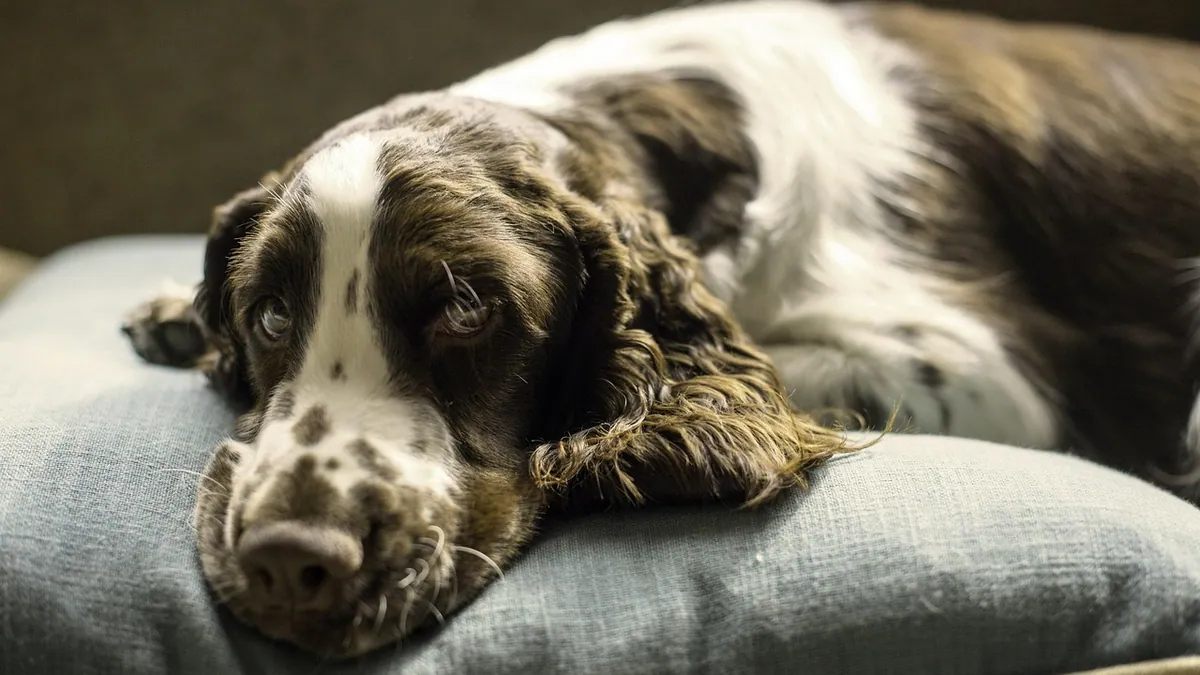
Dogs lean and rest on people and pillows because bodies and soft bedding hold warmth, carry a familiar scent, and offer contact with a trusted caregiver. For most dogs this is normal, affectionate, comfort-seeking behavior. It becomes a concern when it starts suddenly, comes with other symptoms, or your dog cannot settle without touching you.
This article is educational and is not a substitute for veterinary diagnosis or treatment.
Quick Answer
- Resting on you or a pillow is usually about warmth, scent, softness, and social contact, not a medical problem.
- Dogs form attachment bonds with their owners early, and puppies under 6 months already show attachment behavior toward the people who care for them [1].
- The quality of that bond affects stress physiology. Dogs that readily maintain contact with their caregiver show lower heart rate and lower long-term cortisol levels, which suggests secure attachment buffers chronic stress [2].
- A sudden increase in clinginess, especially with pacing, panting, or restlessness, can point to pain, anxiety, or illness and deserves a veterinary check.
- You can shape the habit with a comfortable dog bed, a consistent routine, and reward-based training without punishing your dog for seeking contact.
Why Does My Dog Use a Pillow, You, or Your Leg?
Warmth and Body Heat
Dogs run warmer than people, and they lose heat through their paws, belly, and other thinly furred areas. Your lap, your leg, or the crook of your arm is a warm, insulated surface. A pillow traps heat too. When your dog curls against you on a cold evening or presses a foot against your calf, warmth is often the simplest explanation.
Scent and Familiarity
Your scent is everywhere on your clothing, your bedding, and your skin. Dogs rely heavily on smell to decide what is safe. A pillow that smells like you, or your actual body, reads as familiar territory. This is one reason many dogs choose a worn sweatshirt over a brand-new orthopedic bed.
Softness and Joint Comfort
Pillows and human bodies are soft and contoured. Dogs with stiff joints, older dogs, and dogs recovering from activity often seek out the softest available surface. If your dog has started choosing your legs over the floor more often, consider whether comfort or joint soreness could be part of the picture.
Social Contact and Attachment
Dogs are a social species, and contact with a caregiver is rewarding on its own. Attachment behavior appears early. Puppies younger than 6 months already show attachment behavior toward their owners, and in senior dogs, attachment scores increase with age [1]. That means leaning on you is often a sign of a secure bond, not a bad habit.
The bond also has measurable effects on stress. Dogs that willingly maintain contact with their caregiver had lower heart rates and lower hair cortisol concentrations, a marker of long-term stress [2]. In other words, resting against you may genuinely calm your dog.
Breed, Size, and Personality
Small dogs lose body heat faster and often seek warm spots. Velcro-type breeds and dogs bred for close work with people tend to want more contact. Individual personality matters too. Some dogs settle a foot away, others need full contact.
Sleep and Rest Habits
Dogs sleep a large part of the day, and where they sleep is a preference. Some dogs pick a pillow because it is elevated and lets them keep an eye on the room. Others pick your leg because it is the closest warm object when they get sleepy.
Is It Normal for Dogs to Use Pillows and People as Pillows?
Yes, in most cases. Resting against a person or a pillow is a normal comfort behavior. It is not a sign of weakness, dominance, or a spoiled dog.
Co-sleeping research adds some nuance. In adults, dog co-sleepers reported significantly higher well-being scores than non-owners [3]. That does not mean every dog should sleep in your bed, but it does suggest the habit is often positive for people who choose it.
There is a tradeoff for some households. Youth who slept with a pet on the bed had shorter sleep duration, lower sleep efficiency, and longer time to fall asleep compared with youth who had no pet in the bedroom [4]. If your dog shares a child's bed, watch how well that child actually sleeps.
Why Does My Dog Use Me as a Pillow More Than Anyone Else?
Dogs often pick one person. That person may feed them, walk them, or spend the most quiet time nearby. Attachment is not evenly distributed, and it can shift with routine changes.
If your dog suddenly prefers you over another family member, ask what changed. Did you start working from home? Did someone else's schedule shift? Did your dog have a stressful event? A change in preference is worth noting, but it is rarely a problem by itself.
Why Does My Dog Use My Leg or Foot as a Pillow?
Legs and feet are convenient. They are at floor level, warm, and often still while you sit or stand. A dog lying across your feet may be claiming a comfortable spot, staying close to you, or blocking a draft.
Some dogs also use foot contact as a way to monitor you. If you move, they know. That is normal social behavior. It only becomes an issue if your dog panics when you step away.
Medical Causes to Rule Out
Most pillow-leaning is behavioral, but a sudden change can be medical.
Pain and Discomfort
Dogs in pain often seek soft surfaces and stay close to their people. Watch for stiffness when rising, reluctance to climb stairs, yelping, licking one area, or a change in how they lie down. Joint disease, back pain, and dental pain can all change resting habits. If your dog is drooling more than usual or has trouble eating, see our guide on why is my dog drooling.
Anxiety and Stress
Anxious attachment in dogs is linked to stronger acute stress responses, including higher heart rate, higher rectal temperature, and higher salivary cortisol [2]. A dog that cannot relax unless touching you, follows you room to room, or panics at separation may be anxious, not just affectionate.
Illness and Discomfort That Changes Sleep
Dogs that are unwell often sleep more, sleep in odd positions, or wake frequently. If your dog is restless at night, check for other signs such as coughing, house soiling, or changes in appetite. A honking cough can point to airway problems, and our article on why does my dog have a honking cough explains what to watch for. Accidents during sleep are covered in why is my dog peeing in sleep.
Skin and Parasite Irritation
A dog that is itchy and uncomfortable may seek contact for reassurance. If your dog is scratching, chewing, or losing hair, start with why is my dog so itchy.
Chronic Conditions and Caregiver Stress
Dogs with long-term digestive disease can affect the whole household. Owners of dogs with chronic enteropathies reported substantial psychological burden and lower quality of life for themselves compared with owners of healthy dogs [5]. If your dog has a chronic condition and the clinginess is wearing you down, that is a real concern worth raising with your veterinarian.
When Does Pillow Behavior Become a Problem?
The behavior itself is rarely the issue. The problem is usually one of these:
- Your dog cannot settle or sleep without physical contact, even when tired.
- Your dog panics, vocalizes, or destroys things when you leave.
- Your sleep or your child's sleep is suffering. Youth sleeping with a pet on the bed had shorter sleep duration and lower sleep efficiency [4].
- Your dog shows pain signs, appetite changes, or new restlessness.
- The behavior started suddenly in an adult or senior dog with no routine change.
If any of these apply, treat it as a signal to investigate, not a habit to break.
What to Do: Step by Step
1. Rule Out Medical Causes First
Book a veterinary exam before starting any training plan for a sudden behavior change. Your veterinarian will decide what testing is needed. There is no at-home test that replaces this step.
2. Give Your Dog a Great Bed
A supportive bed in the room where you spend time gives your dog a legitimate place to rest. Place it near you at first so contact is still possible. Our article on dog bed covers what to look for.
3. Build a Settle Cue
Reward your dog for lying on the bed instead of on you. Start with the bed right beside your chair. Toss a treat when your dog chooses it. Gradually move the bed a foot farther away over days or weeks. Keep sessions short and calm.
4. Add Enrichment During the Day
A bored dog seeks contact. Sniff walks, food puzzles, chew items, and short training sessions can reduce clingy behavior. Mental work tires dogs in a way that physical exercise alone does not.
5. Keep Departures and Returns Low Key
If your dog follows you constantly, practice brief separations. Step into another room for a few seconds, return calmly, and build up. Do not make a big deal of leaving or coming back.
6. Protect Sleep for Everyone
If your dog in the bed is wrecking your sleep or your child's sleep, move the dog to a bed in the same room. Youth with a pet in the room but not on the bed did not show the same sleep disruption as those with a pet on the bed [4]. That is a reasonable middle ground.
7. Set a Consistent Household Rule
Decide where the dog sleeps and stick with it. Mixed messages (on the bed some nights, off other nights) make the habit harder to change.
What Not to Do
Do Not Punish Contact-Seeking
Yelling, pushing your dog away, or scolding does not teach a new behavior. It can increase anxiety, and anxious dogs often cling harder. Punishment also damages the trust that makes training work.
Do Not Assume It Is Dominance
Dogs are not trying to take over your household by resting on your feet. That framing has no basis in how dogs behave and leads to bad advice.
Do Not Ignore Sudden Changes
A dog that has always slept at the foot of the bed and suddenly needs to be pressed against you may be telling you something. Sudden changes in behavior are a common early sign of discomfort.
Do Not Rely on Supplements or Aids Without Guidance
Over-the-counter calming products vary widely. Ask your veterinarian before starting anything, especially if your dog takes other medication. Your veterinarian will calculate any dose from your dog's weight and health status.
Do Not Skip the Vet Because the Behavior Seems Cute
Clinginess that looks sweet can be the first visible sign of pain or anxiety. A checkup is cheap compared with months of untreated discomfort.
When to Involve a Veterinarian or Behavior Professional
Contact your veterinarian if the behavior changes suddenly, if your dog shows pain signs, or if clinginess is affecting sleep, work, or family life. A certified behavior professional can help if your dog has separation-related distress, panic when you leave, or destructive behavior. Ask your veterinarian for a referral in your area.
Limitations and When to Contact a Veterinarian
This article cannot tell you what is happening with your individual dog. Behavior changes always need a veterinarian who can examine your dog in person.
Contact your veterinarian the same day if your dog:
- Yelps, cries, or guards a body area when touched
- Refuses food or stops drinking
- Cannot settle at all, even when exhausted
- Shows new weakness, wobbling, or trouble standing
- Has a sudden change in breathing
Go to an emergency clinic now if your dog:
- Collapses or cannot stand
- Breathes with obvious effort or gums look blue, white, or gray
- Has a swollen, painful abdomen with retching
- Has a seizure or loses consciousness
- Cannot urinate or is straining with no urine produced
Schedule a routine visit if your dog:
- Gradually becomes more clingy over weeks
- Sleeps more or less than usual
- Has new stiffness, especially after rest
- Has changes in appetite, weight, or thirst
- Has accidents during sleep or seems disoriented at night
Frequently Asked Questions
Is it normal for dogs to use pillows?
Yes, it is normal. Pillows are soft, warm, and often carry your scent, which makes them appealing resting spots. Most dogs choose them for comfort, not because anything is wrong.
Why does my dog use me as a pillow instead of the dog bed?
Your body is warmer and smells like you, and contact with a caregiver is rewarding for a social animal. Some dogs simply prefer the closest warm surface. If you want your dog to use the bed, place it beside you and reward your dog for settling there.
Why does my dog use my leg or foot as a pillow?
Legs and feet are warm, still, and at floor level, which makes them easy targets. It can also be a way for your dog to stay close and track your movement. This is common and usually harmless.
Does clingy behavior mean my dog is in pain?
Sometimes. Pain and anxiety can both increase contact-seeking, especially when the change is sudden. If your dog also shows stiffness, restlessness, appetite changes, or reluctance to move, book a veterinary exam.
Should I let my dog sleep in my bed?
That depends on how well everyone sleeps. Adult dog co-sleepers reported higher well-being than non-owners [3], but youth with a pet on the bed had shorter sleep duration and lower sleep efficiency [4]. If sleep quality drops, try a bed in the same room instead.
Related Articles
- Why Is My Dog So Itchy?
- Why Is My Dog Drooling?
- Dog Bed
- Why Is My Dog peeing in sleep? Urinary Incontinence and Hormone Deficiency
- Why Does My Dog Have A Honking Cough
- Why Is My Dog Panting So Much?
- Why Does My Dog Always Lay on Me?
- Why Does My Puppy Want to Sleep on Me? Meaning and Tips
- Are Dogs Light Sleepers? Why Your Dog Wakes So Easily
References
- Human-analogue age-related dynamics of dog-human attachment. GeroScience, 2026.
- Attachment patterns toward the caregiver modulate canine physiological indicators of acute and chronic stress. Scientific reports, 2026.
- Pet Co-Sleeping and Well-Being: Evidence from Two Cross-Sectional Online Surveys of Youths and Adults. Clocks & sleep, 2026.
- Co-Sleeping with a pet: exploring the impact on youth sleep. Journal of pediatric psychology, 2025.
- Caregiver burden in owners of dogs with chronic enteropathies-a survey-based assessment. Journal of veterinary internal medicine, 2026.