How to Help Your Dog Use Stairs Again
By Dr. Zubair Khalid, DVM, MS, PhD ·
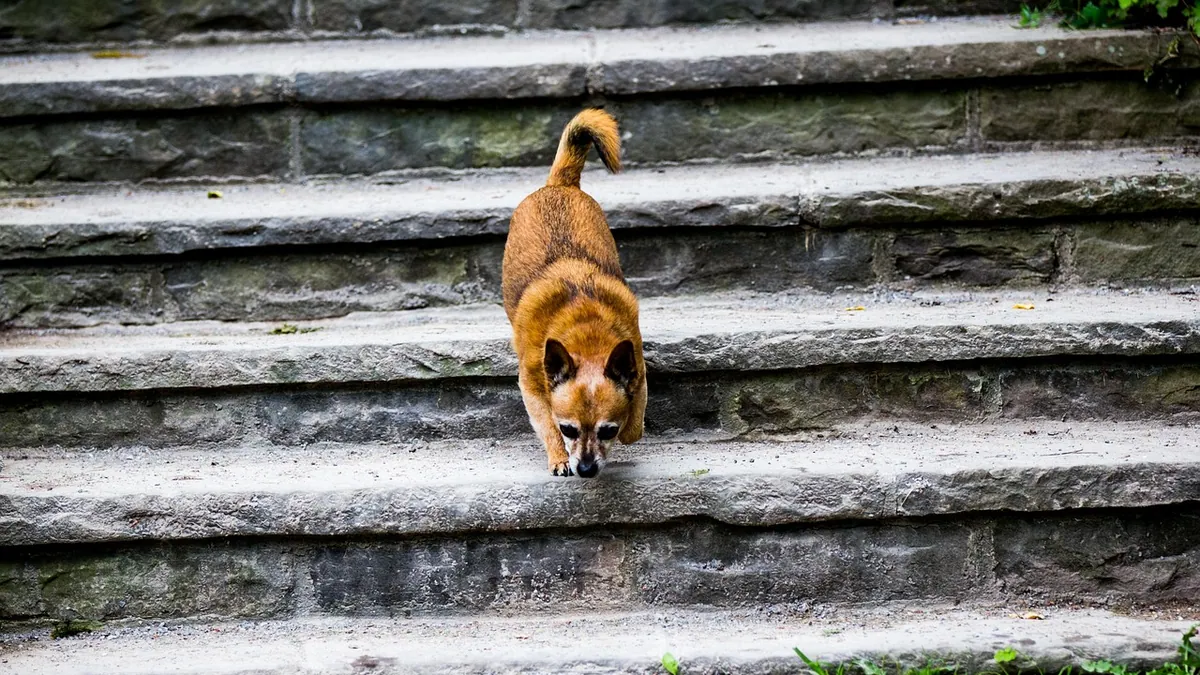
If your dog has stopped using the stairs, the fix depends on why. Most dogs avoid stairs because of fear, a past slip, or a medical problem like joint pain or vision loss. This guide shows you how to get my dog to use bed stairs and full staircases again with a gradual plan that respects your dog's comfort and safety.
This article is educational and is not a substitute for veterinary diagnosis or treatment.
Quick Answer
- Rule out pain and vision problems first. A dog who was fine on stairs last month and refuses now often has a medical reason, not a training problem.
- Never drag, push, or carry a scared dog onto stairs. Forced exposure usually makes the fear worse.
- Break the task into pieces. Reward standing near the stairs, then one paw on the first step, then two, and build from there.
- Use treats, a favorite toy, and a non-slip surface. Slippery stairs are a common reason dogs quit using them.
- For seniors and dogs with arthritis, a ramp or a low set of pet stairs next to the bed is often safer than a full staircase.
Why Your Dog Stopped Using the Stairs
Normal reasons dogs avoid stairs
Fear is the most common non-medical cause. A single bad experience, such as a slip, a loud noise, or a paw caught on a step, can teach a dog that stairs are dangerous. Dogs learn fast from one scary event.
Puppies and young dogs may simply lack coordination. Stairs require timing, balance, and confidence that some dogs do not have until they are older. Small breeds with short legs and long backs often struggle with full-size steps.
Some dogs develop a repetitive behavior pattern around stairs, such as pacing at the top or bottom, that owners mistake for stubbornness. Repetitive behaviors in dogs can be overlooked because they often appear alongside other behavior problems and may be seen as amusing quirks [1]. If your dog circles, barks, or freezes at the stairs in a fixed pattern, that is worth mentioning to your veterinarian.
Medical causes to rule out
Pain is the reason many dogs quit stairs, and it is easy to miss. Dogs hide discomfort well. A dog with osteoarthritis may still run in the yard but refuse stairs because the motion hurts more.
Osteoarthritis is a degenerative joint disease linked to impaired mobility and pain, and it is common in older dogs [2]. Stairs load the hips, knees, and elbows through a large range of motion, which is exactly what arthritic joints tolerate poorly.
Knee problems matter too. Medial patellar luxation is one of the most common orthopedic disorders in small-breed dogs and is tied to joint degeneration, gait abnormalities, and long-term loss of function [3]. A dog with a slipping kneecap may avoid stairs because the joint pops out of place during the climb.
Stairs can even cause injury. In one study of French Bulldogs with humeral condylar fractures, a fall was the cause in about 46 percent of elbows, and stairs were implicated in about 20 percent [4]. That does not mean stairs are dangerous for every dog. It means a dog who falls or jumps off stairs can get hurt, and a dog who has been hurt will avoid them.
Vision problems are another cause. A dog losing sight in dim light may handle the hallway fine but freeze at a staircase with poor contrast. Watch whether your dog struggles more at night or on stairs with patterned carpet.
When Stair Avoidance Becomes a Problem
It becomes a problem when it changes your dog's daily life or yours. Signs include:
- Your dog will not go up or down to reach food, water, the yard, or you.
- Your dog eliminates in the house because it will not go down to the door.
- Your dog cries, trembles, drools, or snaps when near the stairs.
- Your dog has started falling, sliding, or catching a paw.
- You are carrying a dog that is too heavy for you to carry safely.
Any of these point to a real problem, not a training quirk. If your dog is soiling indoors because stairs block the way out, review a house training plan alongside the stair work. You can read more in Potty Training Your Dog and How To Potty Train A Dog.
How to Get My Dog to Use Bed Stairs: Step by Step
Bed stairs are a good starting point because they are short, low, and easy to control. The same plan works for a full staircase, just slower.
Step 1: Make the surface safe
Before any training, check the stairs themselves.
- Add non-slip treads or a runner if the steps are slick.
- Check that pet stairs are stable and do not wobble when your dog steps on them.
- Put the stairs in a spot with good lighting.
- Trim the nails and the hair between the paw pads so your dog gets traction.
A dog that slips once may refuse for weeks. Traction is the cheapest fix you can make.
Step 2: Start away from the stairs
Do not begin at the bottom step. Begin a few feet away.
- Toss a treat near the stairs. Let your dog take it and walk away.
- Repeat until your dog approaches the stairs without hesitation.
- Move the treat onto the first step. Reward any paw that touches it.
- Never block your dog from retreating. The choice to leave is what makes the choice to approach safe.
This can take one session or two weeks. Go at your dog's pace.
Step 3: Build one step at a time
Once your dog will put a paw on the first step, ask for two, then three. Reward at each new level. Keep sessions short, around two to five minutes, and stop while your dog is still succeeding.
For bed stairs, the goal is often just getting onto the bed. Place a treat on the top step and let your dog figure out the last part. Do not lift your dog onto the stairs unless your veterinarian has told you to.
Step 4: Practice going down
Going down is harder than going up for most dogs. They cannot see their back feet well, and the drop looks bigger than it is.
- Start with the lowest step and work down.
- Stand to the side, not in front, so your dog has room.
- Use a treat at nose level to guide the head down slowly.
- Let your dog pause. Rushing the descent is how slips happen.
If your dog will go up but not down, that is a common pattern and often points to fear of falling or pain in the front limbs. If your dog is suddenly scared of the stairs after being fine before, see Why Is My Dog Suddenly Scared of the Stairs?.
Step 5: Add distance and difficulty slowly
Once your dog handles bed stairs, move to a short flight with a landing. Then a full staircase. Keep the same rules: treats, short sessions, and no forcing.
Some dogs do better with a ramp than stairs. A ramp removes the step-over motion, which is easier on arthritic joints. If your dog has arthritis, a ramp plus a supportive bed setup may work better than stair training. See How to Help Your Dog with Arthritis at Home: Ramps, Beds, and More.
Safety Tips for Senior Dogs and Dogs with Arthritis
Senior dogs need a different plan. Training can help, but the goal shifts from "use the stairs" to "move safely and without pain."
- Use a ramp or low pet stairs for the bed and couch.
- Add carpet runners to hard floors and stairs.
- Keep the path lit at night.
- Support the belly or use a sling if your veterinarian recommends it.
- Ask your veterinarian about pain management before you push training.
Rehabilitation matters here. Canine rehabilitation is used to improve recovery and quality of life in dogs with musculoskeletal conditions or after surgery, and range of motion is a core part of that work [5]. A rehabilitation plan can include manual therapy, controlled exercise, and assistive devices. A continuous passive motion device has been studied in dogs after stifle surgery, and results showed it could reproduce extension angles close to manual goniometer measurements, though flexion was less complete [5]. That kind of tool is used under veterinary guidance, not at home on your own.
If your dog is a senior who has never liked stairs, forcing the issue is not the answer. Read How to Help Your Senior Dog with Stairs: Safe Alternatives and Training for alternatives that keep your dog included without risking a fall.
What Not to Do
Do not punish fear
Yelling, tugging a leash, or pushing a scared dog onto stairs teaches one lesson: stairs predict scary things. Punishment can turn mild hesitation into a lasting fear.
Do not use the "flooding" method
Flooding means putting your dog on the stairs and waiting until it moves. This is not a training technique for pet owners. It risks injury and can make the problem permanent.
Do not assume it is stubbornness
A dog that refuses stairs is not being defiant. It is either scared, in pain, or unable to see well enough to feel safe. Treat the cause, not the behavior.
Do not skip the veterinary exam
If your dog is middle-aged or older and the refusal is new, book an exam before you start training. Pain is common and treatable. Osteoarthritis treatments are an active area of veterinary research, and options are limited but growing [2]. Your veterinarian can discuss what fits your dog.
Do not rely on treats alone for a painful dog
Treats do not fix arthritis. If your dog is painful, training will stall until the pain is managed.
When to Get Professional Help
Call your veterinarian if:
- The refusal started suddenly in a dog that used stairs fine before.
- Your dog limps, bunny-hops, or is stiff after rest.
- Your dog has fallen on the stairs.
- Your dog shows signs of pain such as panting, pacing, or reluctance to be touched.
Ask for a referral to a certified veterinary behaviorist or a certified professional dog trainer if:
- Your dog panics at the sight of stairs despite weeks of gentle training.
- Your dog has injured itself or you during stair attempts.
- Your dog shows repetitive behavior patterns around stairs, such as circling or freezing in a fixed way [1].
- You have tried the steps above and seen no progress.
A rehabilitation specialist can also help if your dog is recovering from surgery or has a chronic joint condition [5][3].
Limitations and When to Contact a Veterinarian
No article can tell you whether your dog's stair refusal is fear, pain, or something else. That requires an exam. Individual cases need a veterinarian.
Contact your veterinarian the same day if your dog:
- Yelps or cries when moving.
- Refuses to bear weight on a limb.
- Has swelling, heat, or a visible deformity in a leg.
- Cannot get up after a fall on the stairs.
Go to an emergency clinic now if your dog:
- Has a suspected fracture or open wound.
- Is dragging a limb or has lost feeling in a leg.
- Is in severe pain that does not improve.
- Collapses or cannot stand.
Schedule a routine visit if your dog:
- Has slowly become more reluctant over weeks or months.
- Is stiff after sleeping or resting.
- Hesitates on stairs only at night or in low light.
- Has a known joint condition and the stairs have gotten harder.
Your veterinarian will set any treatment plan, including medication doses, based on your dog's weight, health, and exam findings. Do not give human pain relievers to a dog. Some are toxic.
Frequently Asked Questions
Why does my dog go up the stairs but not down?
Going down is harder because dogs cannot see their back feet well and the drop looks larger. This pattern often points to fear of falling or discomfort in the front limbs. Have your veterinarian check for pain before you focus on training.
Can I train an older dog to use stairs again?
Yes, if the reason is fear or lost confidence and your dog is not in significant pain. Progress is usually slower in seniors, and a ramp may be a better long-term answer. Ask your veterinarian whether your dog's joints can handle stair practice.
Should I carry my dog up and down the stairs?
Carrying is fine as a short-term solution, but it does not teach your dog anything and it can hurt your back. For a large dog, use a ramp or a sling instead. If you must carry, support the chest and hind end together.
Do pet stairs work for small dogs?
Pet stairs work well for small dogs if the steps are low, wide, and stable. Small breeds with knee problems may do better with a ramp because it avoids the step-over motion. Check with your veterinarian if your dog has a known knee issue.
How long does stair training take?
It varies widely. Some dogs improve in a few short sessions, and others need weeks of gradual work. If you see no progress after a few weeks of consistent, gentle training, or if your dog seems painful, stop and call your veterinarian.
Related Articles
- How to Help Your Senior Dog with Stairs: Safe Alternatives and Training
- Why Is My Dog Suddenly Scared of the Stairs?
- How to Help Your Dog with Arthritis at Home: Ramps, Beds, and More
- Potty Training Your Dog
- How To Potty Train A Dog
- How To Help My Dog Poop At Home
- How to Help a Dog in Pain at Home: Safe Steps Before the Vet
- How to Get Your Dog to Focus on You During Walks
- How to Get Your Dog to Follow and Listen to You
References
- Repetitive Behaviors in Dogs. The Veterinary clinics of North America. Small animal practice, 2024.
- Piclidenoson, an A3 adenosine receptor agonist, demonstrates clinical benefit in canine osteoarthritis: a pilot study. Frontiers in veterinary science, 2026.
- Translational rehabilitation strategies for canine medial patellar luxation: insights from human patellofemoral pain syndrome. Frontiers in veterinary science, 2026.
- Humeral Condylar Fractures in French Bulldogs-Inciting Cause and Factors Influencing Complications of Internal Fixation in 136 Dogs. Veterinary and comparative orthopaedics and traumatology : V.C.O.T, 2024.
- Assessment of a continuous passive motion assistive device in dogs following stifle surgery. Veterinary journal (London, England : 1997), 2024.