Why Does My Dog Roll in the Grass? Normal or Not?
By Dr. Zubair Khalid, DVM, MS, PhD ·
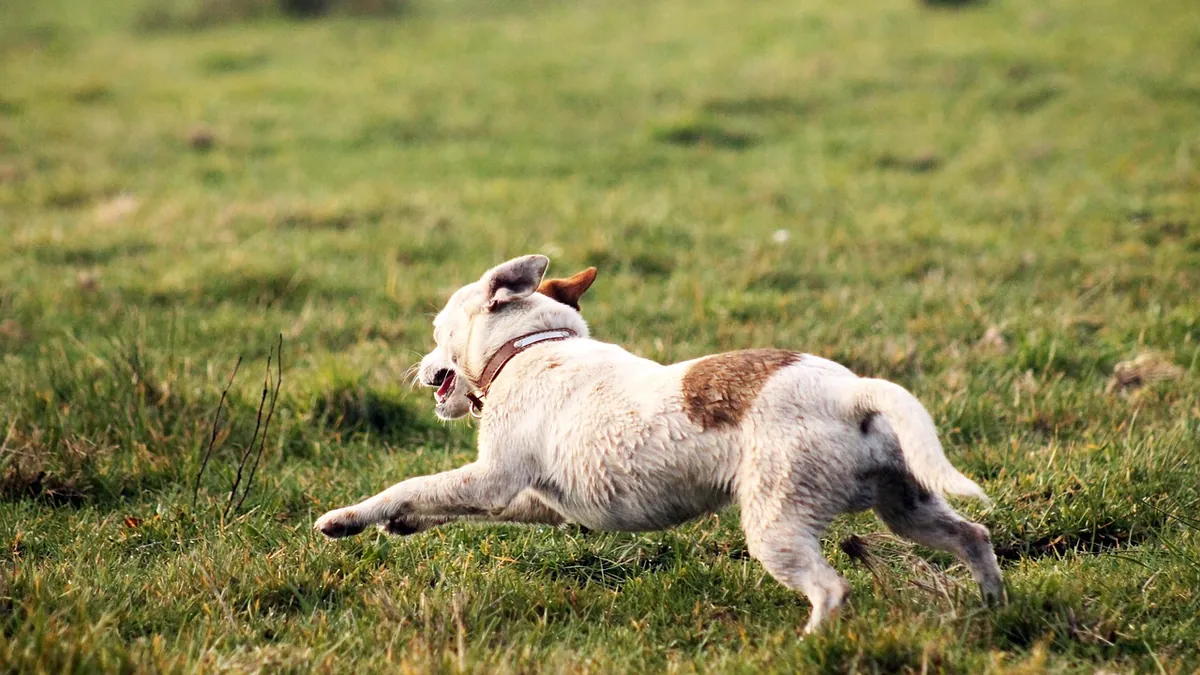
Why does my dog roll in the grass? Most of the time this is normal dog behavior. Dogs roll to coat themselves in interesting smells, to scratch an itch, or simply because the grass feels good. The trick is telling a happy roll apart from a roll driven by irritated skin.
This article is educational and is not a substitute for veterinary diagnosis or treatment.
Quick Answer
- Scent rolling is the most common reason. Dogs rub their head, neck, shoulders, and back into a smell they find interesting, a behavior also seen in wolves [1].
- Rolling can be pure enjoyment. Cool grass, a good stretch, and a pleasant texture all give dogs a reason to flop over and wiggle.
- Itching is the main thing to rule out. If your dog rolls, then scratches, chews, or bites at the same spots, allergies or skin irritation may be the cause.
- Watch the pattern. A few relaxed rolls after a walk are normal. Frequent, frantic rolling with redness, hair loss, or odor is not.
- Never punish the behavior. Punishment does not stop the underlying drive and can make anxiety worse. Address the cause instead.
Why Does My Dog Roll in the Grass? The Normal Reasons
Most grass rolling falls into three normal categories. Knowing which one you are seeing helps you decide whether anything needs to change.
Scent Rolling
Scent rolling is the classic explanation. The dog lowers the chin and neck toward a scent, then rubs the head, neck, shoulders, and back into it [1]. In a study of captive wolves, this behavior appeared across many different odors, and the wolves showed the strongest interest in smells like curry, rosemary, deer or mouflon feces, and rat feces [1]. Female wolves in that group rolled more than males, and in the second year of the study scent rolling was seen only in females [1].
Your dog is doing the same thing on a smaller scale. A dead worm, fox droppings, a spot where another animal marked, or a strong plant scent can all trigger it. The exact purpose is still not fully settled in veterinary research. Common theories include carrying a scent back to the group or masking the dog's own odor. Either way, the behavior itself is normal canine communication.
Itch Relief and Sensory Comfort
Grass can also be a tool for scratching a hard-to-reach spot. The ground gives a dog leverage that paws cannot. A dog with a mild itch on the back, shoulders, or neck may roll, twist, and rub to reach it.
Texture and temperature matter too. In a study of dogs given free access to natural grass, stabilized grass, and artificial turf, artificial turf reached a higher average temperature (25.2 °C) than natural grass (19.4 °C) [2]. Natural grass stays cooler, which makes it more appealing on a warm day. A cool, soft surface against the back is a genuine comfort.
Joy and Play
Some rolls are simply fun. Dogs roll during play, after a bath, when they are excited, or when they want attention. Puppies often roll more because everything is new and worth investigating. If your dog rolls, pauses, looks at you, and rolls again, that is often a social bid for play or praise.
Is It Normal for Dogs to Roll Around in Grass? How to Tell Normal From Not
Normal rolling has a relaxed look. The body is loose, the tail may wag, and the dog gets up easily and moves on. There is no frantic quality to it.
Problem rolling looks different. The dog rolls hard and fast, then immediately scratches, bites, or chews the same area. The skin may be red, warm, greasy, or smelly. You may see thinning hair, scabs, or dark thickened patches. The dog may roll on carpet, furniture, and grass with equal urgency, which points to the skin instead of the surface.
A simple test helps. After a roll, part the hair and look at the skin. If it is clean, pale, and intact, the roll was likely normal. If it is red, bumpy, or moist, keep reading.
Medical Causes to Rule Out
Several medical problems can make a dog roll and rub against grass far more than usual.
Allergies and Atopic Dermatitis
Environmental allergies are a leading cause of itching in dogs. Pollens, molds, and grasses can trigger itching on the paws, belly, groin, armpits, and face. Rolling and rubbing are early signs. So is licking the paws, which owners sometimes mistake for grooming.
Food allergies can cause similar itching, often along with digestive signs. Your veterinarian sorts out which type is involved through history, examination, and sometimes diet trials or skin testing.
Parasites
Fleas, mites, and lice cause intense itching. A dog with fleas often rolls and bites at the lower back and tail base. Mange mites can cause hair loss and crusting. These are diagnosed with skin scrapings, tape preparations, or flea combing, and they are treatable.
Skin Infections
Bacterial and yeast infections often follow an allergy. They add odor, redness, and greasy discharge. A dog with a yeast infection may roll and rub because the skin is uncomfortable. These infections need specific treatment, and the dose is calculated by your veterinarian based on your dog's weight and health.
Pain or Discomfort
A dog with back pain, anal gland discomfort, or joint pain may roll and rub as a way to self-soothe. If your dog is also scooting, see Why Is My Dog Scooting? and Why Does My Dog Scoot On The Carpet. Scooting and rolling together often point to the rear end instead of the skin.
Grass Awns and Foreign Bodies
Foxtail-type grass awns can burrow into skin, ears, nose, and even deeper tissues. In one reported case, a migrating grass awn caused an esophageal perforation and damage to the carotid artery in a dog [3]. In another, a grass awn that migrated into the chest caused a pulmonary artery pseudoaneurysm [4]. These are rare events, but they show why you should check your dog after rolling in tall dry grass, especially in the ears, between the toes, and under the collar.
When Grass Rolling Becomes a Problem
Rolling becomes a concern when it changes in frequency, intensity, or outcome. Watch for these patterns.
- The dog rolls many times per walk and cannot seem to settle.
- Rolling is followed by scratching, chewing, or biting at the skin.
- The skin is red, broken, scabby, or has a bad smell.
- Hair is thinning or falling out in the areas your dog rubs.
- The dog seems uncomfortable, restless, or is losing sleep.
- Rolling happens indoors on carpet and furniture too, not only outside.
- Your dog rolls in the same spot on the body every time.
Any of these shifts means the behavior is likely driven by itch or pain, not by scent or joy.
What to Do: A Step by Step Plan
Step 1: Observe and Record
For three to five days, note when your dog rolls, where on the body, how long it lasts, and what happens right after. Take photos of the skin in good light. This record is genuinely useful at your veterinary visit.
Step 2: Check the Skin and Coat
Part the hair over the back, flanks, belly, and tail base. Look for redness, dandruff, bumps, scabs, and parasites. Check the ears and between the toes after any roll in tall grass.
Step 3: Manage the Environment
Rinse or wipe your dog's paws and belly after walks during pollen season. Keep grass mowed and remove foxtail-type weeds from your yard. Provide shade, since natural grass stays cooler than artificial turf on hot days [2]. If your dog rolls mainly on hot turf, offer a cooler surface instead.
Step 4: Support Normal Rolling
Give your dog safe outlets for scent behavior. Let them sniff on walks. Offer a snuffle mat, a scatter feed in clean grass, or a supervised roll in a known clean area. Scent enrichment is a real need for many dogs, and the wolf data show that strong odors draw intense interest [1].
Step 5: Address Itching Early
If itching is mild and recent, a veterinarian-guided bath with a pet-safe shampoo may help. Do not use human shampoos, essential oils, or over-the-counter steroid creams without veterinary advice. If itching lasts more than a few days or keeps your dog awake, book an exam.
Step 6: Keep Parasite Prevention Current
Use flea, tick, and mite prevention as directed by your veterinarian. Prevention products are dosed by weight, and your veterinarian sets the right product and schedule for your dog.
Step 7: Add Training Only Where It Helps
You cannot train away an itch. You can, however, teach a reliable "come" and "leave it" so you can interrupt rolling in something unsafe, like a dead animal or a chemical-treated lawn. Reward your dog for coming away, then offer a sniff walk or a treat scatter as a substitute.
What Not to Do
- Do not punish rolling. Yelling or jerking the leash does not remove the scent drive or the itch, and it can damage trust.
- Do not assume every roll is harmless. Repeated rolling with skin changes needs a veterinary look.
- Do not treat the skin with human medications. Many are toxic to dogs or make the skin worse.
- Do not skip parasite prevention because you do not see fleas. Fleas are often invisible on an itchy dog.
- Do not believe the myth that rolling means your dog is trying to dominate you. It does not.
- Do not let your dog roll in lawns you know were recently treated with chemicals, or in areas with foxtail grasses.
- Do not confuse rolling with eating grass. They are different behaviors with different causes. For the eating version, see Why Does My Dog Eat Grass?.
When to Involve a Veterinarian or Behavior Professional
Contact your veterinarian if itching lasts more than a few days, if the skin is red or broken, if you see hair loss, or if your dog is losing sleep. A certified behavior professional can help if the rolling is tied to anxiety, compulsive behavior, or if your dog cannot be safely interrupted outdoors.
If scooting is part of the picture, two more articles may help: Why Does My Dog Keep Scooting On The Carpet and Why My Dog Scooting On Carpet.
Limitations and When to Contact a Veterinarian
This article cannot tell you what is happening with your individual dog. Only a veterinarian who examines your dog can do that. Use the guidance below to decide how fast to act.
Call your veterinarian the same day if:
- Your dog rolls and scratches constantly and cannot settle.
- The skin is red, raw, oozing, or has a new bad smell.
- You see hair loss, scabs, or thickened dark skin.
- Your dog is licking or chewing the paws or rear end nonstop.
- Your dog seems painful when touched on the back or hind end.
Go to an emergency clinic now if:
- You find a grass awn or foreign object in the eye, ear, nose, or a wound.
- Your dog has sudden swelling of the neck or face, trouble breathing, or trouble swallowing.
- Your dog is coughing up blood, collapsing, or has a rapidly growing lump.
- Your dog rolled in a substance you suspect is toxic, such as a pesticide, antifreeze, or bait. Call your veterinarian or a pet poison hotline right away.
Book a routine visit if:
- Itching comes and goes but keeps returning.
- Your dog rolls more than usual but seems otherwise well.
- You want a skin and parasite check before the problem gets worse.
Frequently Asked Questions
Why does my dog roll around in the grass after a bath?
Many dogs roll right after a bath to replace the shampoo smell with something more interesting. This is scent rolling, the same behavior seen in wolves rubbing into strong odors [1]. It is normal and usually harmless.
Why is my dog rolling in the grass and then scratching?
Rolling followed by scratching usually points to itchy skin instead of a scent. Allergies, fleas, mites, and skin infections are common causes. If it happens often, have your veterinarian examine the skin.
Why does my puppy roll around in the grass?
Puppies roll for the same reasons adult dogs do, plus simple curiosity. New smells and textures are exciting, and rolling is part of exploration and play. Watch for itching, since puppies can develop allergies and parasites too.
Is it normal for dogs to roll around in grass every single walk?
Rolling on most walks can be normal if your dog is relaxed and the skin looks healthy. It becomes a concern when the rolling is frantic, happens in the same body spot, or comes with scratching, redness, or hair loss.
Can rolling in grass make my dog sick?
Rolling itself is not dangerous, but the grass can be. Grass awns can migrate into tissue and have caused serious internal damage in reported cases [3][4]. Check your dog's ears, eyes, nose, and toes after rolling in tall dry grass, and remove anything you find.
Do dogs prefer natural grass over artificial turf?
The evidence is limited, but surface temperature is one clear difference. In one study, artificial turf reached a higher average temperature than natural grass [2]. If your dog avoids rolling on hot turf, that may be why.
Related Articles
- Why Is My Dog Scooting?
- Why Does My Dog Scoot On The Carpet
- Why Does My Dog Keep Scooting On The Carpet
- Why My Dog Scooting On Carpet
- Why Does My Dog Eat Grass?
- Why's My Dog Limping On His Front Leg
- Why Does My Dog Roll in Poop? Causes and How to Stop It
- Why Is My Dog Acting Weird or Not Acting Normal?
- Why Is My Dog Dragging His Butt on the Floor?
References
- Preliminary Study of Scent Rolling in Captive Wolves (Canis lupus L. 1758) in Response to Olfactory Enrichment. Biology, 2024.
- Evaluating Dog Preference Between Artificial and Natural Turf Grasses. Animals : an open access journal from MDPI, 2026.
- Computed Tomography Findings of Migrating Grass Awn Leading to Esophageal Perforation and Carotid Artery Erosion in a Dog. Veterinary radiology & ultrasound : the official journal of the American College of Veterinary Radiology and the International Veterinary Radiology Association, 2026.
- Ultrasonographic features of a pulmonary artery pseudoaneurysm secondary to a migrating intrathoracic grass awn in a dog: a case report. BMC veterinary research, 2026.