Dog Muzzle Guide: Types, Fitting, and Safe Use
By Dr. Zubair Khalid, DVM, MS, PhD ·
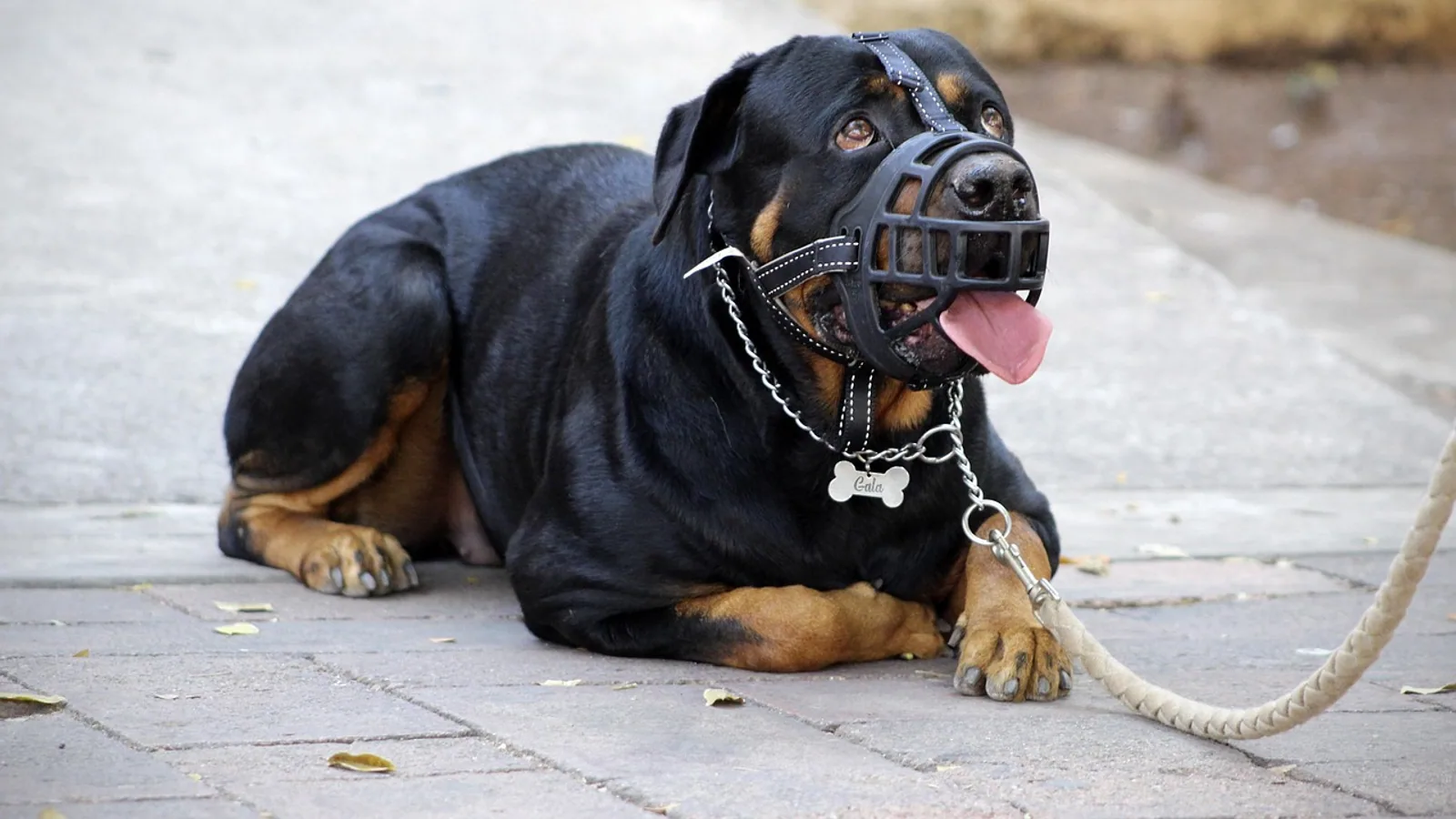
A read this first summary: the only muzzle style that lets a dog breathe normally, pant, drink, and take treats is a basket muzzle with enough internal space. Every other common style (sleeve, soft nylon, and most wire or leather designs that clamp the mouth shut) restricts the mouth in ways that affect welfare and heat loss. A well-fitted basket muzzle should extend at least one-third of its length beyond the tip of the dog's snout, should not touch the eyes, should sit with straps behind the ears rather than across the throat, and should allow two fingers under every strap. Introduction takes weeks, not minutes. A dog in muzzle for the first time needs a gradual desensitization plan, and no muzzled dog should ever be left alone.
This guide covers the main muzzle types, how to measure and fit them, a 4 to 6 week desensitization sequence, common mistakes, and the welfare and safety points that matter most.
At a Glance: Muzzle Types and What They Allow
| Muzzle type | Allows panting? | Allows drinking? | Allows treat delivery? | Bite-proof? | Best use |
|---|---|---|---|---|---|
| Basket (plastic, wire, or coated) | Yes, if sized with room | Yes, with a bowl | Yes, through the gaps | Yes, when properly fitted | Daily walks, vet visits, public transport, grooming, any situation needing both safety and normal breathing |
| Sleeve or fabric wrap | No | No | No | Partially, depends on design and fit | Very short, low-stress handling tasks under supervision |
| Soft nylon (fabric) | Usually no | No | No | No for a determined dog | Brief, controlled handling only, never as a walking muzzle |
| Wire (non-basket styles) | Usually no | No | No | Yes, if rigid and fitted | Short veterinary or grooming procedures under supervision |
| Leather (basket style) | Yes, if sized with room | Yes, with a bowl | Yes, through the gaps | Yes, when properly fitted | Daily use, durable option for frequent muzzle wearers |
| Leather (closed style) | No | No | No | Yes | Brief, controlled handling, not for walks |
Basket-style muzzles are made in plastic, wire, and leather. The defining feature is the open cage that keeps the mouth unobstructed. Non-basket designs in the same materials clamp or cover the mouth and do not allow the same freedom.
Why Use a Muzzle at All
Owners often picture a muzzle as punishment or as a sign of a dangerous dog. In practice, muzzles are a safety and welfare tool used across many situations, including veterinary visits, grooming, public transport, crowded events, and legal requirements in some jurisdictions. A 2020 online survey of 1,862 dog owners found that only 21.6% said their dog never wears a muzzle [1]. Roughly half of owners said their dog wears a muzzle only when required by law, and just under half said they use one to prevent a bite [1]. Public transport and crowded public places were the most common situations for muzzle use [1].
Muzzles also appear in clinical settings. A survey of intake practices at animal shelters in Texas found that staff commonly reported using muzzles in cases of aggression during intake examinations [2]. In a veterinary case report, a tape muzzle was used temporarily to support healing after maxillofacial trauma in a 9-week-old puppy, and it was removed once fracture healing was sufficient at the 2-week recheck [3]. That example is specific to a surgical recovery plan supervised by a veterinarian, and the muzzle was never left on unsupervised.
The takeaway is that muzzling sits on a spectrum. A dog in muzzle can be a dog in a basket muzzle who is panting, drinking, and taking treats while everyone stays safe. Or it can be a dog in a tight fabric muzzle who cannot cool down and is becoming more anxious by the minute. The difference is almost entirely in the type chosen and how it is fitted.
Behavioral changes matter too. A dog who resists muzzle handling, rubs the face, or avoids touch may be communicating discomfort. One veterinary case report described a dog with chronic nasal pain whose early signs included sneezing, rubbing the face with the front legs, and head shaking before nasal adenocarcinoma was diagnosed [4]. New behavior during muzzle use deserves attention rather than dismissal.
The Main Muzzle Types
Basket Muzzles
A basket muzzle is a rigid or semi-rigid cage that fits over the snout with openings on the sides and front. Materials include plastic, coated wire, and leather. This is the only category that reliably supports normal mouth function, which is why it appears most often in survey data. Among the owners surveyed, basket-type muzzles in materials such as BioThane, plastic, and wire were used most often [1].
Basket muzzles matter for three reasons.
Panting and heat dissipation. Dogs cool themselves mainly by panting. A muzzle that prevents the mouth from opening fully interferes with that. Research on brachycephalic (short-muzzled) dogs shows that impaired breathing and thermoregulation are real welfare problems in those breeds, with associations to daytime sleepiness and altered sleep physiology [5]. Any device that further restricts air movement and panting deserves scrutiny.
Drinking. In a basket muzzle, a dog can drink from a normal bowl because the mouth and tongue can reach through the front opening. In a fabric or sleeve muzzle, drinking is not possible.
Treat delivery. Training depends on reinforcement. A basket muzzle lets you feed small treats through the gaps, which is exactly how desensitization works. Without that, you cannot build a positive association.
An additional benefit emerged from a controlled study comparing nasal ultraviolet (UV) guards. In that study, a basket muzzle combined with UPF 50+ fabric blocked 94.2% of UV radiation to the dorsal nose and 94.3% to the anterior nose [6]. For dogs with UV-sensitive dermatologic conditions, a fabric-lined basket muzzle can serve double duty. This is not a reason to muzzle a healthy dog, but it is a legitimate clinical application.
Sleeve and Fabric Wrap Muzzles
A sleeve muzzle is a tube of fabric or similar material that slips over the snout and typically closes the mouth. It is quick to apply and easy to carry. It is also the least compatible with normal behavior. The dog cannot pant fully, cannot drink, and cannot take treats. Bite protection depends on the material and fit, and a determined dog can often work the muzzle off.
These muzzles belong in brief, supervised handling contexts. A veterinary procedure that lasts a few minutes under direct supervision is a reasonable example. A 45-minute walk is not.
Soft Nylon Muzzles
Soft nylon muzzles are usually the ones sold in pet stores as "grooming" or "anti-bark" muzzles. They are lightweight, inexpensive, and often marketed as comfortable. Functionally, they are a sleeve muzzle with straps. They generally prevent panting, drinking, and treat delivery, and they rarely stop a motivated bite.
The 2020 survey data are sobering here. Although basket muzzles were used most often, only 71.3% of owners reported a fit that did not clearly impair welfare [1]. That means roughly three in ten muzzle-wearing dogs in that sample were in a setup that the owner themselves judged to be harmful. Soft nylon muzzles with tight straps are a common contributor to that number.
Wire Muzzles
Wire muzzles come in two very different designs. Basket-style wire muzzles are open cages, and they behave like other basket muzzles. Non-basket wire designs, sometimes called greyhound-style muzzles, are formed from wire that may close over the front of the mouth while leaving gaps. These are stronger and more bite-proof than fabric, but they still restrict panting in many fits.
Wire basket muzzles are durable and provide good airflow when sized correctly. Wire that presses against the nose bridge causes rubs. Wire that is too small prevents full panting. Wire that is too large slips and can be pawed off. Fit matters more than material.
Leather Muzzles
Leather muzzles are made in both basket and closed styles. Leather basket muzzles are durable, quiet against the face, and acceptable for daily use when fitted with enough internal space. Leather closed muzzles behave like sleeve muzzles. They look traditional but they clamp the mouth shut.
Leather stretches slightly with use, and it can hold moisture and odor. Inspect stitching and straps regularly. A stretched leather muzzle can suddenly become too loose and slip at the worst moment.
How to Measure for a Muzzle
Accurate measurement prevents almost every fit problem. Use a soft tape measure or a strip of paper and a ruler. Take three measurements and write them down.
- Snout length. Measure from just below the eyes to the tip of the nose, along the top of the snout. This is the length the muzzle must cover plus additional clearance.
- Snout circumference. Measure around the widest part of the snout, usually just behind the nose and around the muzzle. This determines the internal width.
- Neck or head strap position. Measure the distance around the head where the strap will sit. For most designs this is behind the ears, not around the throat.
Manufacturers publish sizing charts based on these measurements. Match the closest size and then verify at home. If your dog sits between sizes, choose the larger one and adjust with the padding or straps.
Do not measure only by weight or breed. Breed groups vary widely in skull and muzzle shape, and even within a breed, individual variation is large. Research on brachycephalic dogs has shown measurable differences in skull and muzzle proportions linked to cephalic index, including associations with sleep and breathing [5]. A muzzle that fits one Boxer may not fit another.
Step-by-Step Fitting Guide
Fitting is a five-minute job when done correctly. Do it calmly, with treats, and without rushing.
Step 1: Check the length
The front of the basket should extend at least one-third of its length beyond the tip of the dog's snout. If the muzzle is 15 cm long, at least 5 cm should sit beyond the nose. Less clearance means the nose contacts the front wall, which reduces airflow and causes rubbing.
Step 2: Check the eye line
The top rim of the basket should sit on or just above the top of the snout and should not touch the eyes or eyelid margins. No part of the muzzle should contact the eyeball. A rim that rides into the eye area causes corneal injury and will make the dog refuse the muzzle immediately.
Step 3: Check strap position
Straps should sit behind the ears, not across the throat. A throat strap tightens when the dog pulls or lowers the head, and it can compress the airway. A head strap behind the ears distributes pressure against the skull.
Step 4: Check the two-finger gap
Slip two fingers under every strap: the head strap and any additional neck strap. You should be able to slide them in with light resistance. If you cannot fit two fingers, the strap is too tight. If four fingers fit easily, it is too loose.
Step 5: Check mouth function
With the muzzle on, offer a treat through the front. The dog should be able to open the mouth enough to take food. Offer a bowl of water. The dog should be able to drink without the muzzle tipping into the water or trapping the tongue. Watch for a full pant after a short walk. If the dog cannot pant with an open mouth and a visible tongue, the muzzle is too restrictive.
Step 6: Test the escape resistance
Gently try to pull the muzzle forward and upward off the dog's head, using steady, moderate pressure. It should not come off. Then let the dog shake the head and paw at the face. It should stay in place without rotating. If the muzzle rotates onto the eyes or slips off the nose, refit or exchange the size.
Fitting Checklist
- Snout clearance at least one-third of muzzle length beyond the nose
- No contact with eyes or eyelid margins
- Straps behind the ears, never over the throat
- Two fingers fit under every strap
- Treats pass through the front opening
- Water is reachable from a bowl
- Full pant is possible after exercise
- Muzzle stays put during head shakes and pawing
The 4 to 6 Week Desensitization Sequence
Muzzles should never be forced on. The 2020 survey found that the muzzle introduction technique used significantly affected adverse behaviors observed when wearing a muzzle for the first time [1]. Owners who used habituation or short training sessions saw fewer problems than owners who used no preparation. The plan below follows that principle.
Twenty training sessions spread over 4 to 6 weeks is a reasonable pace. Short daily sessions work better than long weekly ones. Each session should end while the dog is still comfortable.
Weeks 1 to 2: Show and Treat
Goal: the muzzle predicts food.
Session structure: 10 to 15 treats per session, sessions of 1 to 2 minutes, three to five sessions per day if the dog is willing.
- Place the muzzle on the floor near the dog. Reward any look toward it.
- Hold the muzzle in your hand. Reward the dog for sniffing it.
- Touch the muzzle to the dog's snout for half a second. Reward immediately. Remove.
- Repeat until the dog leans toward the muzzle when you pick it up.
Do not put the muzzle on yet. The goal is a positive conditioned response to the object.
Weeks 2 to 3: Touch and Rest
Goal: the muzzle touches the face without fear.
- Rest the muzzle lightly on the snout for one second. Reward. Remove.
- Build to three seconds. Reward. Remove.
- Slide the strap behind the ears but do not buckle it. Reward. Remove.
- Buckle the strap loosely and immediately unbuckle. Reward.
If the dog pulls away or freezes, you moved too fast. Go back one step.
Weeks 3 to 4: Wear for 5 Seconds
Goal: brief wear with no distress.
- Buckle the muzzle and count to five. Feed treats through the front opening while it is on.
- Unbuckle. Reward. Give a short break.
- Repeat three to five times per session.
- Add a single step of walking while the muzzle is on, still under five seconds.
Watch for lip licking, yawning, pawing at the face, freezing, and attempts to rub the muzzle off. These are signs of stress, not stubbornness. Slow down if you see them.
Weeks 4 to 6: Build to 30 Minutes
Goal: normal function with the muzzle on.
- Extend wear from 5 seconds to 30 seconds to 2 minutes, always with treats available.
- Add easy movement around the house. Then a short walk in the yard.
- Introduce the leash. Then a quiet street.
- Extend to 10 minutes, then 20 minutes, then 30 minutes.
- Practice with water bowls and treat delivery during wear.
Pair every wear session with something the dog enjoys, such as a walk, a training game, or a chew. By the end of this sequence, the dog in muzzle should be able to pant, drink, and take treats without distress.
What to Do if Progress Stalls
- If the dog freezes at the sight of the muzzle, return to week 1 for three days.
- If the dog paws at the face during wear, check the fit first. Rubbing usually means pressure, not attitude.
- If the dog will not take treats while wearing the muzzle, the stress level is too high. Shorten the wear time.
- If the dog cannot be comfortably introduced after 6 to 8 weeks of daily sessions, ask your veterinarian about a referral to a veterinary behaviorist. A dog who bites or panics during handling may need a different plan.
Common Muzzle Fitting Mistakes
Over-tightening
The most common mistake is cinching the straps so the muzzle cannot move at all. Owners do this to prevent escape. The result is pressure on the nasal bridge, restricted breathing, and a dog who fights the muzzle. Two fingers under every strap is the rule.
Rubbing at the Nasal Bridge
Friction between the muzzle rim and the top of the snout causes hair loss, redness, and eventually open sores. Causes include a rim that is too small, a rim that sits too low on the nose, and a muzzle that rotates during wear. Check the nose after every session. A small red spot is an early warning.
Muzzle That Rides into the Eyes
If the head strap is too loose or the muzzle is too long, the basket slides forward and the top rim presses on the eyes. This is painful and dangerous. It can also cause corneal abrasions. Stop using the muzzle until it is refitted.
Wrong Strap Placement
Straps across the throat are a welfare problem. They can tighten during pulling and press against the trachea. Move the strap behind the ears.
Muzzle Too Short
A basket that barely covers the nose does not allow panting and forces the nose against the front wall. Apply the one-third rule.
Skipping the Introduction
Putting a muzzle on for the first time right before a vet visit is a reliable way to create a muzzle-averse dog. Use the 4 to 6 week plan even if you do not have an immediate need.
Leaving the Muzzle On
This is the most serious safety mistake and is covered in its own section below.
Welfare, Heat, and Safety
Panting and Heat Dissipation
Dogs cool by panting. A muzzle that blocks panting is a heat risk, particularly in warm weather or during exercise. Only basket-style muzzles with proper clearance allow full panting. In the 2020 survey, basket muzzles were the dominant type used, but only 71.3% of owners reported a fit that did not clearly impair welfare [1]. That gap is where most heat-related risk sits.
Hot-weather guidance follows directly. Use the shortest necessary duration, offer water frequently, choose shade and cool times of day, and watch for heavy panting, wide eyes, and slowing down. If your dog cannot pant normally in the muzzle, the muzzle is not appropriate for that activity.
Brachycephalic Dogs
Brachycephalic dogs already have compromised breathing and thermoregulation. Research on sleep physiology in brachycephalic dogs found associations between high cephalic index and markers of white matter changes, more time sleeping, and breathing-related disruption [5]. Another study found that shorter-muzzled breeds have exaggerated infant-like facial features, which likely contributes to their popularity despite welfare costs [7]. For these dogs, the margin for error with any breathing-restricting device is smaller. Basket muzzles with generous internal space are the only reasonable option, and even then, duration should be short and monitored.
Supervision Is Non-Negotiable
Never leave a muzzled dog unsupervised. The reasons are practical. A strap can catch on a fence, crate, or furniture. A basket can wedge against something and trap the head. A dog can vomit, and a muzzle can interfere with clearing the airway. A dog can also work the muzzle off and chew it, creating a choking hazard. Muzzles are management tools used while a person is present.
Bite-Proof vs Bite-Resistant
Basket muzzles in rigid materials provide the most reliable bite barrier. Fabric and soft nylon muzzles are easily defeated. If the reason for the muzzle is a genuine bite risk, choose a basket design and have it fitted before the high-risk situation occurs.
Other Uses
A fabric-lined basket muzzle also provides UV protection for dogs with sun-sensitive nasal conditions. In a controlled comparison, a basket muzzle with UPF 50+ fabric blocked 94.2% of UV radiation to the dorsal nose and 94.3% to the anterior nose, while a separate fabric nose protector blocked 99.2% dorsally and 82.9% anteriorly [6]. These numbers show that a properly designed basket muzzle can serve as a medical device for dermatology patients, in consultation with a veterinarian.
Muzzles and Training
Muzzles are not a substitute for behavior modification. They manage risk while training proceeds. Skills such as coming when called and responding to cues are the foundation of safe public behavior, and research comparing dogs and wolves has shown that dogs generally comply with human directions, though individual variation exists [8]. Use the muzzle to keep everyone safe while you build those skills.
Troubleshooting
| Problem | Likely cause | Fix |
|---|---|---|
| Dog paws at the face | Muzzle too tight or rim rubbing | Check the two-finger gap and nasal bridge |
| Muzzle slips off | Too large or strap too loose | Downsize or tighten straps, check behind-ear placement |
| Muzzle rotates onto the eyes | Muzzle too long or strap too loose | Re-measure length and adjust the head strap |
| Dog refuses treats while wearing | Stress too high or no treat access | Shorten wear time, use high-value treats through the front |
| Redness on the nose bridge | Pressure from rim or friction | Add padding or resize, rest the area before next wear |
| Dog cannot pant fully | Muzzle too short or too narrow | Switch to a larger basket style |
| Excessive drooling | Stress or a very tight muzzle | Reduce wear time and check the fit |
| Dog bites through the muzzle | Fabric or worn material | Move to a rigid basket muzzle |
Choosing the Right Muzzle for Your Dog
Start with the purpose. If the dog needs to wear the muzzle for more than a few minutes, or if the situation involves heat, exercise, or training, a basket muzzle is the only appropriate choice. If the purpose is a brief veterinary procedure under supervision, a sleeve or soft muzzle may be used by trained staff, but it should not become the dog's everyday muzzle.
Then consider material. Plastic and coated wire are lightweight, easy to clean, and affordable. Leather is durable, quiet, and comfortable for frequent wearers, but it needs checking and conditioning. Wire basket muzzles offer excellent airflow. Consider a fabric or padded liner if the dog has sensitive skin or a sun-sensitive nasal condition.
Finally, consider the dog's anatomy. Flat-faced dogs need deep, wide baskets with extra front clearance. Long-nosed dogs need longer baskets so the one-third rule can be met. Dogs with thin skin over the nasal bridge may need padding. Dogs with a history of slipping out of harnesses or collars often need a muzzle with an additional head strap or a design with multiple adjustment points.
Muzzle Care and Maintenance
Inspect the muzzle before every use. Check the straps for fraying, the stitching for separation, and the frame for cracks. Replace rather than repair. Clean the muzzle regularly with warm water and mild soap, then dry it fully. Leather needs conditioning and should not be soaked. Store the muzzle so straps do not curl.
Also inspect the dog's face after every wear. Look at the nasal bridge, the area behind the ears, and the corners of the mouth. Early redness is easier to fix than an open sore. If you find skin damage, stop using the muzzle until it heals and refit before resuming.
When to Use a Muzzle and When Not To
Good situations for a basket muzzle include:
- Veterinary visits and handling that stress the dog
- Grooming appointments
- Public transport and crowded public spaces
- Legal requirements in some jurisdictions
- Post-surgical or post-injury plans designed by a veterinarian, such as the temporary tape muzzle used in the puppy case described above [3]
Poor situations include:
- Extended wear in hot weather or during strenuous exercise in a non-basket muzzle
- Any unsupervised wear
- Use instead of behavior treatment for a bite history
- Use in a dog who cannot pant or drink in the muzzle
Limitations and When to Contact a Veterinarian
This article is educational and is not a substitute for veterinary diagnosis or treatment.
Contact a veterinarian or a veterinary behaviorist if any of the following occur:
- Your dog develops redness, swelling, hair loss, or an open sore on the nasal bridge or behind the ears.
- Your dog cannot be comfortably introduced to the muzzle after 6 to 8 weeks of daily training.
- Your dog shows severe stress signs during muzzle wear, such as freezing, trembling, drooling, or attempts to bite.
- Your dog has a bite history. Muzzle use is management, and it does not replace a behavior plan.
- Your dog is brachycephalic and struggles to breathe, pant, or sleep normally even without a muzzle.
- Your dog has a sun-sensitive nasal condition and you want to use a protective basket muzzle as part of treatment. The UV data support this use, but the plan should be set by your veterinarian [6].
- Your dog has a medical condition affecting the muzzle, nose, or face, such as chronic pain, nasal disease, or a mass. Behavioral changes such as sneezing, face rubbing, or avoiding touch can signal pain and need veterinary evaluation [4].
A veterinarian can assess fit on your dog's specific anatomy, evaluate breathing and skin condition, and refer you to a behavior specialist when needed. Individual dogs vary widely, so a plan built for your dog is worth the visit.
Frequently Asked Questions
What is the safest type of muzzle for a dog?
A basket muzzle is the safest everyday choice. It allows panting, drinking, and treat delivery, and it provides a reliable bite barrier when properly fitted. Fabric and sleeve muzzles restrict the mouth and are best limited to brief supervised handling.
Can a dog drink water while wearing a muzzle?
Yes, if the muzzle is a basket style with enough front clearance. The dog drinks from a normal bowl through the open front. A soft nylon or sleeve muzzle prevents drinking.
How often should a dog wear a muzzle?
Use it for the situations that require it and no longer than necessary. Around half of owners in a large survey said their dog wears a muzzle only when required by law, and just under half use it to prevent a bite [1]. Daily use is appropriate for dogs who need daily management, as long as the muzzle is a well-fitted basket style.
How do I know if my dog's muzzle is too tight?
Two fingers should fit under every strap. The dog should be able to open the mouth, pant, and take treats. The rim should not touch the eyes, and there should be no redness on the nose bridge after wear.
How long does muzzle training take?
Plan on 4 to 6 weeks of short daily sessions. The sequence moves from showing the muzzle, to treating, to touching, to wearing for 5 seconds, and then building to 30 minutes. Rushing this process is the main reason dogs learn to hate muzzles.
Should I leave my dog alone with a muzzle on?
No. Never leave a muzzled dog unsupervised. Straps can catch, the muzzle can interfere with vomiting or breathing, and the dog can damage the muzzle and injure the mouth.
Can a dog pant while wearing a muzzle?
Only in a basket muzzle with sufficient internal space. A muzzle that is too short, too narrow, or made of fabric prevents full panting and increases heat risk. The front of the basket should extend at least one-third of its length beyond the nose.
Do muzzles make dogs more aggressive?
Muzzles do not create aggression. Poorly fitted muzzles, forced introduction, and the stress of restraint can increase anxiety and defensive behavior. A gradual introduction and a comfortable basket muzzle reduce that risk.
Related Articles
- Hamster Medicine: Safe Use and Common Treatments
- Can Cats Eat Catnip? Nepetalactone and Safe Use Guide
- Humane Rat Traps: Types, Placement, and Safe Release
- Polymerase Chain Reaction: Steps, Types, and Uses
- Cat Prednisolone for Allergies: Side Effects and Safe Use
- Cat Ear Cleaning Wipes: Safe Use and Limitations
- Antibacterial for Dogs: Types, Uses and Safety
- Aspirin for Dogs: Dosage, Risks, and Safe Use
- Can Dogs Eat Fish? Safe Types, Benefits, and Risks
Sources
- Owner reports on the use of muzzles and their effects on dogs: an online survey
- Cross-sectional survey exploring current intake practices for dogs admitted to animal shelters in Texas: a descriptive study
- Management and Outcome of Maxillofacial Trauma in a 9-Week-Old Dog.
- Importance of behavioral changes in identification of chronic pain and its causes in dogs - case report
- Sleep-physiological correlates of brachycephaly in dogs
- Comparison of three canine nose guards for reduction of ultraviolet (UVA and UVB) solar radiation.
- That brachycephalic look: Infant-like facial appearance in short-muzzled dog breeds.
- Trainability, persuasion, or coercion: a study of human-dog and human-wolf interactions in early life