Do Dogs Like Being Pet? How to Tell
By Dr. Zubair Khalid, DVM, MS, PhD ·
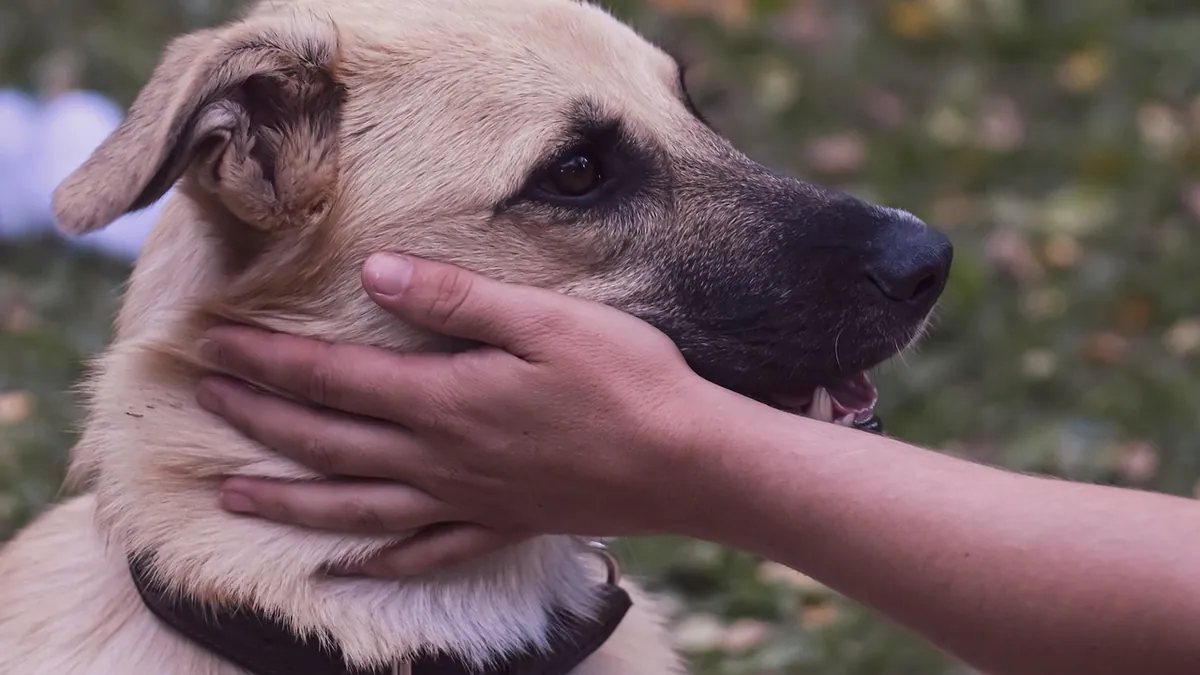
Most dogs do enjoy being pet, but the enjoyment depends on where you touch, how you touch, and whether the dog chose to come to you. Dogs are a gregarious species with a flexible social structure, and many seek out close contact with their people [1]. The trick is learning to read your individual dog instead of assuming all petting feels good.
This article is educational and is not a substitute for veterinary diagnosis or treatment.
Quick Answer
- Most dogs like gentle petting on the chest, shoulders, and base of the ears, and many lean in or nudge your hand for more.
- A dog who likes being pet usually stays loose, softens the eyes, leans toward you, or holds still and leans in.
- A dog who dislikes it often stiffens, turns the head away, lip licks, yawns, or shifts weight away from your hand.
- Stop petting when the dog moves away or gives a subtle signal, and let the dog come back to you for more.
- Puppies often accept handling more easily during early social development, but they still need to learn that petting is safe and predictable [1].
Why Dogs Like Being Pet
Petting is a form of social contact, and dogs are wired for social contact. Domestic dogs form loose associations with unrelated dogs and readily bond with people, so touch can be a normal part of how they connect [1]. Many dogs seek out physical contact with their owners and appear to relax when it happens.
There is also a human side to this. In a study using ecological momentary assessment, pet interaction was linked to higher positive affect and lower negative affect for owners, and this held for both dog and cat owners [2]. Another study using electroencephalography found that petting a dog and making eye contact produced higher brain activity in beta and gamma frequency bands compared with touching a stuffed toy dog, which suggests real interaction engages attention and concentration in people [3]. So petting tends to feel good on both ends of the leash, at least when the dog is on board.
That said, dogs are individuals. Breed, age, past experience, pain, and current mood all shape how much touch a dog wants. A dog who loved belly rubs last year may pull away this month if something hurts.
How Do Dogs Like to Be Pet?
Most dogs prefer a calm, slow approach from the side or front, not a hand coming down over the top of the head. Good default spots include:
- The chest and front of the neck
- The shoulders and upper back
- The base of the ears, if the dog leans into it
- The sides of the body with light, slow strokes
Use the back of your hand or an open palm, keep your movements slow, and pause every few seconds. A pause gives the dog a chance to ask for more or to walk away. If the dog leans in, nudges you, or paws at you when you stop, that is a green light. If the dog freezes or looks away, that is your cue to stop.
Some dogs enjoy a scratch at the base of the tail. Others hate it. Some love a chest rub but dislike having their paws touched. There is no universal map, so treat each dog as an experiment you run gently.
How to Tell If My Dog Likes Being Pet
Watch the whole body, not just the tail. Signs a dog is enjoying petting include:
- Soft, relaxed muscles and a slightly open mouth
- Leaning into your hand or stepping closer
- A slow tail wag with a loose, sweeping motion
- Soft eyes, blinking, or a relaxed face
- Holding still and staying near you after you stop
Signs a dog wants you to stop include:
- Stiffening or freezing
- Turning the head or body away
- Lip licking, yawning, or a quick nose lick when no food is around
- Tucking the tail or lowering the head
- Walking away, hiding, or growling
Growling is information, not defiance. It means the dog is uncomfortable and asking for space. Punishing a growl can remove the warning and leave a bite as the next signal.
Medical Causes to Rule Out
Sometimes a dog who used to love petting stops wanting it because something hurts. Pain is a common reason a dog pulls away from touch, especially on the ears, mouth, back, hips, or belly.
Ear infections are a frequent culprit. If your dog flinches when you touch the head or ears, or if you notice head shaking, odor, or discharge, that is worth a veterinary visit. You can read more about what ear discomfort involves in What Does An Ear Infection Feel Like For A Dog.
Skin problems, arthritis, dental disease, and internal pain can all change how a dog responds to handling. Parasites are another possibility, particularly if your dog is itchy, losing hair, or has digestive changes. See How To Tell If Dog Has Parasite Infection for signs to track.
If your dog's tolerance for touch changed suddenly, start with a veterinary exam. Behavior changes often have a physical cause, and treating the pain or infection often restores the dog's usual affection.
When Petting Becomes a Problem
Petting is one of the human-dog interactions linked to bite and scratch injuries. A survey of dog owners found that close physical contact, including petting, hugging, and kissing, was among the interactions associated with increased injury occurrence [4]. That does not mean petting is dangerous. It means petting without reading the dog's signals is.
Problems tend to show up in a few patterns:
- The dog tolerates petting but shows stress signals the whole time
- The dog seeks petting, then snaps when you stop or when you touch a sore spot
- The dog guards a person or a resting spot and reacts when approached
- The dog only accepts petting from certain family members
If your dog shows growling, snapping, or biting during petting, treat it as a safety issue and a welfare issue at the same time. A dog who feels forced to accept touch is not enjoying it, and the risk of injury rises for everyone in the home. For help sorting normal from abnormal, see How Do I Know If My Dog Has Behavior Problems.
What to Do Step by Step
Run a simple consent test
Pet your dog for about three seconds, then stop and pull your hands back. Watch what happens next.
- If the dog leans in, nudges you, or paws at you, the dog is asking for more. Continue.
- If the dog stays still, looks away, or turns the head, the dog is done. Let it be.
- If the dog walks away, respect that and do not follow.
Repeat this test in different spots and at different times. You will quickly learn your dog's preferences.
Build positive associations with touch
Pair gentle handling with things your dog likes. Touch a shoulder, then give a treat. Touch a paw briefly, then give a treat. Keep sessions short, maybe one to two minutes, and end while your dog still wants more.
Give your dog choice
Let your dog come to you for petting instead of cornering it on the couch. Sit on the floor and wait. A dog who chooses contact is far more likely to enjoy it.
Watch the environment
Noise, unfamiliar people, and crowded spaces raise arousal and lower tolerance for touch. Pet your dog in a quiet spot when you want a calm interaction.
Keep nails, coats, and skin comfortable
Matted fur, hot spots, and long nails can make touch unpleasant. Routine grooming and veterinary care keep the body ready for affection.
Track changes over time
Note when your dog's tolerance shifts. A sudden change in how your dog accepts petting is a reason to call your veterinarian, not a reason to push harder.
What Not to Do
Do not punish a growl, a lip lick, or a head turn. Those are early warnings. If you suppress them, your dog may skip straight to a bite.
Do not hug or kiss a dog who is showing stress signals. Close contact like hugging and kissing is among the interactions linked to bite and scratch injuries [4].
Do not assume a wagging tail means yes. A high, fast, stiff wag can mean arousal or tension. Look at the whole body.
Do not force petting on a dog that is eating, sleeping, chewing a toy, or resting in a crate. Interrupting a dog around resources raises the risk of a defensive reaction.
Do not rely on the myth that a dog who shows its belly always wants a belly rub. A belly-up posture can be a sign of fear or appeasement, especially if the body is stiff and the head is turned away.
Do not use petting as a reward for a dog that is over threshold. If your dog is barking, lunging, or panicking, touch may add fuel instead of calm.
When to Involve a Veterinarian or Behavior Professional
Call your veterinarian if your dog's willingness to be pet changes, especially if the change is sudden. Pain, ear disease, skin disease, and dental problems are common and treatable causes.
Ask for a behavior referral if your dog growls, snaps, or bites during petting, or if you feel you have to manage your dog's reactions every day. A board-certified veterinary behaviorist or a certified applied animal behaviorist can build a plan that keeps everyone safe.
If your dog has a known bite history or has injured a person, seek help promptly. Injuries from dog bites can lead to infection and other complications, and the risk grows with repeated incidents [4].
Limitations and When to Contact a Veterinarian
This article gives general guidance, not a diagnosis. Every dog needs an individual assessment by a veterinarian who can examine the dog and ask about the full history.
Contact your veterinarian the same day if your dog:
- Yelps, snaps, or pulls away when a specific body area is touched
- Stops eating or drinking
- Has swelling, discharge, or a bad smell from the ears, mouth, or skin
- Seems painful when rising, walking, or lying down
Go to an emergency clinic now if your dog:
- Bites a person hard enough to break skin
- Collapses, has trouble breathing, or has a swollen, painful abdomen
- Shows sudden severe pain when handled
- Has a seizure or a sudden change in awareness
Schedule a routine visit if your dog:
- Gradually accepts less petting over weeks or months
- Shows stress signals during normal handling
- Has become more withdrawn or avoids family members
Frequently Asked Questions
Do dogs actually like being pet?
Many dogs do enjoy petting, and dogs are a social species that readily bonds with people [1]. The key is that the dog gets to choose the contact and the spot. A dog who leans in and stays relaxed is enjoying it, and a dog who stiffens or moves away is not.
Do puppies like to be pet?
Puppies often accept handling well during early social development, and that window is a good time to build positive associations with touch [1]. Even so, puppies have short attention spans and get tired quickly. Keep sessions brief, pair touch with treats, and let the puppy walk away when it wants to.
Where do most dogs not like to be pet?
Many dogs dislike having the top of the head, muzzle, paws, tail, and belly touched by someone they do not trust. These areas are either sensitive or hard for the dog to see. Start with the chest and shoulders, and only move to other spots if the dog stays relaxed and leans in.
Why does my dog pull away when I pet it?
Pulling away usually means the dog is uncomfortable, and pain is a common reason, especially if the change is new. Ear infections, dental disease, arthritis, and skin problems can all make touch hurt. Have your veterinarian examine your dog before assuming it is a behavior problem.
Can petting my dog help me too?
Yes. Pet interaction has been linked to higher positive affect and lower negative affect in owners, and petting a dog with eye contact has been associated with changes in human brain activity [2][3]. That does not mean petting fixes stress on its own, but the interaction appears to be meaningful for people as well as dogs.
Related Articles
- How Long Do Dogs Live For
- How Long Do Dogs Live
- How Do I Know If My Dog Has Behavior Problems
- What Does An Ear Infection Feel Like For A Dog
- How To Tell If Dog Has Parasite Infection
- How To Tell If Dog Has A Worm
- How Do Dogs Show Affection? Real Signs of Love
- Do Dogs Understand Kisses? How Dogs Read Human Affection
- Does My Dog Love Me? Real Signs of Bonding
References
- Social Behavior of Dogs - Behavior. Merck Veterinary Manual.
- Human-animal interaction: understanding the role of dog and cat interactions in emotional wellbeing. Frontiers in psychology, 2026.
- Effects of human-dog interactions on brain activation. Scientific reports, 2026.
- When Affection Becomes Risk: Human-Dog Interactions Associated with Bite and Scratch Injuries in a Survey of Dog Owners' Knowledge, Attitudes, and Practices in Thailand. Animals : an open access journal from MDPI, 2026.