Are Dogs Wolves? How Domestication Changed Your Dog
By Dr. Zubair Khalid, DVM, MS, PhD ·
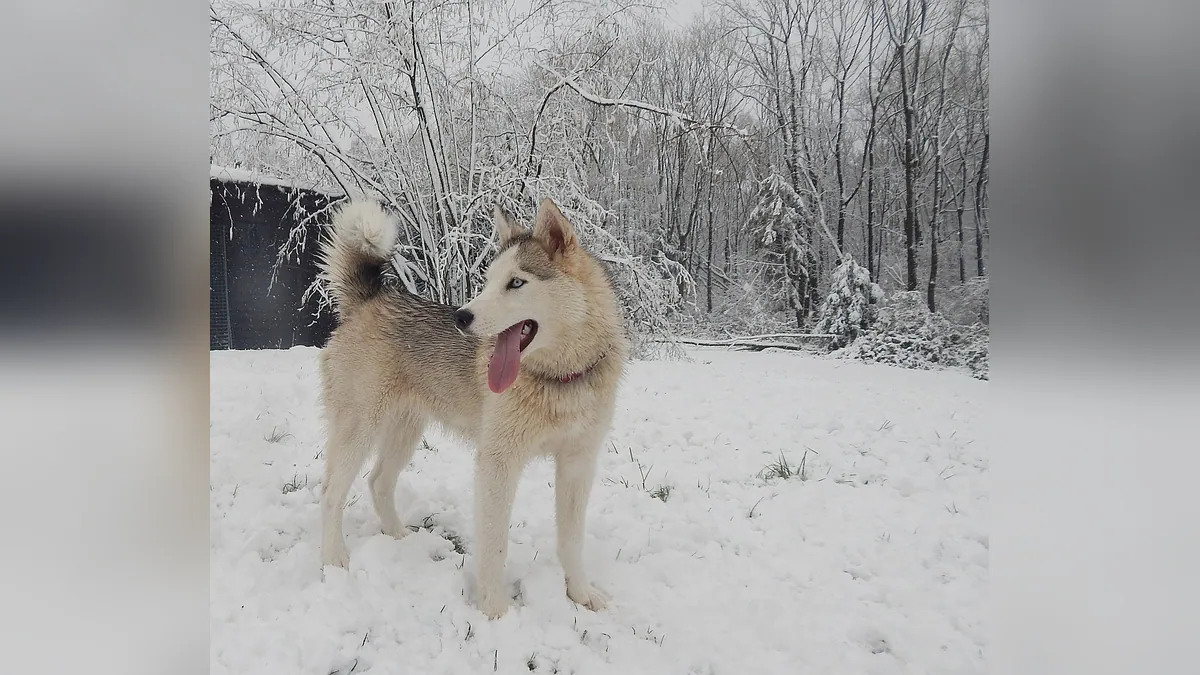
Are dogs wolves? No. Dogs and gray wolves share a common ancestor, but thousands of years of domestication reshaped the dog's body, brain, and social behavior into something distinct. Your dog is related to wolves, descended from them, and still carries a small amount of wolf DNA, yet it is not a wolf and does not think like one.
This article is educational and is not a substitute for veterinary diagnosis or treatment.
Quick Answer
- Dogs descend from gray wolves, but they are a separate domesticated form, and the scientific name for the domestic dog is Canis lupus familiaris [1].
- Dogs and wolves split decisively at the nuclear DNA level, meaning they are not the same species in any practical sense [2].
- About 64.1% of modern breed dogs carry trace wolf ancestry from ancient interbreeding, but it covers only around 0.14% of an individual dog's genome [2].
- A dog that looks wolf-like is usually a husky, malamute, or other spitz breed, not a wolf or a wolf hybrid.
- Treat your dog as a dog. Training, enrichment, and veterinary care should be built around dog behavior, not wolf behavior.
Are Dogs Related to Wolves? What the Genetics Actually Show
Yes, dogs are related to wolves, and the gray wolf is the dog's closest living relative. The gray wolf (Canis lupus) is a direct ancestor of the domestic dog (Canis lupus familiaris) [1]. That shared ancestry is real, and it shows up in anatomy, scent detection, and social behavior.
The relationship is more tangled than a simple family tree. A 2025 analysis of 2,693 published dog and wolf genomes found that dogs and wolves separate decisively at the nuclear level, but no single nuclear gene tree supports dogs as a clean, single-origin group [2]. In other words, the split happened, but it happened with some back-and-forth mixing along the way.
That mixing left a mark. The same analysis found that 64.1% of modern breed dogs carry wolf ancestry from admixture that occurred nearly a thousand generations ago on average, and that ancestry now covers about 0.14% of an individual dog's genome [2]. So the answer to "are dogs part wolf" is technically yes for most breeds, but the wolf portion is tiny and ancient.
Are Dogs the Same Species as Wolves?
This is where the wording gets confusing. Dogs and wolves can interbreed and produce fertile offspring, which is why some scientists group them under the same species name. But dogs and wolves are not the same animal. They have different mating systems, different activity patterns, and different brains.
Free-ranging domestic dogs are polygamous, while gray wolves and all other wild canids are typically socially monogamous [3]. That is a fundamental difference in how they live and reproduce, and it likely began early, when dogs shifted from apex predator to human commensal [3].
Dogs also shifted their daily rhythm. Gray wolves are crepuscular, most active at dawn and dusk, while dogs are predominantly diurnal and synchronized with human daily cycles [4]. A gene called NOCT has been identified as a candidate domestication gene tied to this circadian remodeling, and reduced NOCT expression was associated with disrupted circadian rhythmicity and increased myelin sheath formation in the prefrontal cortex [4].
How Domestication Changed Your Dog's Brain and Behavior
Domestication did not just change how dogs look. It changed how they think.
A 2026 study measured brain shape in 203 domestic dogs across 111 breeds and 40 wolves. Dogs showed a three-fold increase in brain shape variation compared to wolves, along with expanded frontal lobes and areas linked to social interaction behavior [5]. Those same regions are larger in cooperative breeds than in independent breeds [5]. Ancient dog breeds retain more wolf-like neuroanatomy [5].
This matters for you as an owner. Your dog's brain is built for life with humans, and that includes reading our faces, voices, and moods. A study comparing human-socialized dogs and wolves found that both species reacted to human fear odor by spending less time near the targets and looking more at the handler, but dogs were more likely to end the session early when the fear scent was present [6]. Dogs are tuned in to human emotional signals in ways that wolves are not, even when wolves are raised by people.
Here is a finding that surprises many owners. In a touchscreen task where animals could provide food to others, wolves behaved more prosocially toward their pack members than pack dogs did [7]. The common assumption that domestication made dogs more cooperative than wolves does not hold up in that test [7]. Dogs cooperate with humans extremely well, but that does not mean they are more generous with other dogs than wolves are with other wolves.
If you want to understand how deep the human-dog bond runs, see Is Your Dog Human? Understanding Canine Behavior and Bonding. If your dog's personality seems to be shifting, read What Does It Mean When Your Dog's Behavior Changes.
A Practical Checklist for Owners Who Wonder About the Wolf Connection
Use this checklist to turn the science into everyday decisions.
| Question | What to do | Why it matters |
|---|---|---|
| Does my dog need wolf-style training? | No. Use reward-based dog training. | Dogs evolved to cooperate with humans, not to live in a wild pack hierarchy [5]. |
| Is my dog part wolf? | Ask your vet or a reputable lab before assuming. | Only about 0.14% of a typical dog's genome is ancient wolf ancestry [2]. |
| Should I feed a raw wolf-like diet? | Talk to your vet first. | Diet needs vary by age, size, and health. Your vet calculates what your dog needs. |
| Is my dog more aggressive because of wolf genes? | Focus on breed, history, and training. | Behavior comes from many factors, not a trace of ancient DNA. |
| Should I get a wolf-dog hybrid? | Think carefully and check local laws. | Hybrids have complex needs and legal restrictions in many areas. |
Step-by-Step: What to Do If You Think Your Dog Is Part Wolf
- Look at the evidence, not the look. Wolf-like appearance usually means spitz breed ancestry, not wolf ancestry.
- Ask your veterinarian about DNA testing. A vet can help you choose a test that reports wolf content accurately.
- Check your state and local laws. Many places restrict or ban wolf-dog hybrids.
- Adjust training to the dog in front of you. Use positive reinforcement and consistent routines.
- Watch for behavior changes and get help early. Sudden shifts in behavior can signal pain or illness, not wolf instincts.
Signs Something Is Wrong With Your Dog
Behavior problems and medical problems can look alike. Watch for these signs and act on them.
- Sudden aggression or fearfulness in a dog that was previously calm.
- Pacing, circling, staring at walls, or getting stuck in corners, which can suggest cognitive decline.
- House soiling in a previously reliable adult dog.
- Loss of appetite, weight loss, or vomiting.
- Limping, stiffness, or reluctance to climb stairs.
- Excessive panting, restlessness, or trouble settling at night.
- Confusion about familiar people or places.
Cognitive decline in dogs is a real concern. Canine cognitive dysfunction is a spontaneous model of neurodegeneration that shares clinical features, neuropathological characteristics, and risk factors with human Alzheimer's disease [1]. The role of domestication in increasing susceptibility to cognitive decline is still poorly understood, and information on wolf neuropathology and aging behavior is very limited [1].
A commentary in the journal Animals describes how domestication and self-domestication in dogs and humans led to parallel changes, including a reduction in limbic system volume and expansion of the prefrontal cortex, which is critical for executive control and social cognition [8]. Those shared changes may also explain why dogs and humans develop similar age-related cognitive problems [8].
If your older dog seems disoriented or forgetful, that is a veterinary conversation, not a training problem. Early evaluation gives you more options.
Common Mistakes Owners Make About Dogs and Wolves
Mistake 1: Treating your dog like a wolf. Your dog is not running a wolf pack in your living room. Dogs evolved to live alongside humans, and their brains reflect that [5].
Mistake 2: Assuming "part wolf" explains bad behavior. A trace of ancient wolf DNA does not cause aggression, destructiveness, or disobedience. Look at breed, age, health, and training history instead.
Mistake 3: Buying a wolf-dog hybrid without research. Hybrids are not simply bigger, tougher dogs. They have complex social and enrichment needs, and many jurisdictions regulate them.
Mistake 4: Skipping veterinary care because the dog "seems wild." Every dog needs routine exams, vaccines, parasite prevention, and dental care. Your vet calculates vaccine and medication doses based on your dog's weight and health.
Mistake 5: Ignoring sudden behavior changes. A dog that snaps, hides, or stops eating is telling you something. Pain, dental disease, and cognitive decline are common causes.
Mistake 6: Assuming cuteness equals harmlessness. Even the most adorable dog has real needs. For more on that, see Cute Dogs: The Science of Cuteness and Its Impact.
Mistake 7: Letting resource guarding go unaddressed. Food and toy aggression between dogs is common and manageable. Read Resource Guarding in Multi-Dog Homes: Managing Food and Toy Aggression.
Supplies and Setup That Matter for Your Dog's Health
You do not need wolf-specific gear. You need the basics done well.
- A sturdy collar or harness with current ID tags and a microchip registered to you.
- A crate or safe space that your dog can retreat to without being disturbed.
- Food and water bowls that are cleaned daily.
- A toothbrush and dog-safe toothpaste for regular dental care.
- A leash for every walk, even short ones.
- Puzzle toys and chew items for mental enrichment.
- A written record of vaccines, parasite prevention, and vet visits.
- A pet first aid kit with gauze, tape, and a digital thermometer.
- Emergency numbers posted where you can find them fast.
Enrichment matters more than most owners realize. Dogs with expanded frontal lobes and social brain regions need interaction, not just exercise [5]. Training sessions, sniff walks, and problem-solving toys keep your dog's brain engaged.
Limitations and When to Contact a Veterinarian
No article can evaluate your individual dog. Individual cases need a veterinarian who can examine your dog, ask questions, and run tests.
Contact your veterinarian the same day if your dog:
- Refuses food for more than 24 hours.
- Vomits repeatedly or has diarrhea with blood.
- Shows sudden weakness, wobbling, or trouble standing.
- Has a swollen, painful, or distended abdomen.
- Seems disoriented or does not recognize you.
Go to an emergency clinic now if your dog:
- Has a seizure lasting more than a few minutes or repeated seizures.
- Collapses or has trouble breathing.
- Eats something toxic, such as chocolate, grapes, raisins, xylitol, or human medications.
- Is hit by a car or has a major fall.
- Has uncontrolled bleeding or a deep wound.
- Strains to urinate with no urine produced, especially a male dog.
For poison emergencies in the United States, call the ASPCA Animal Poison Control Center at (888) 426-4435 or the Pet Poison Helpline at (855) 764-7661. Fees may apply.
Schedule a routine visit if your dog:
- Is due for vaccines, parasite prevention, or a dental check.
- Shows gradual behavior changes, such as increased anxiety or less interest in play.
- Is a senior dog showing signs of confusion or house soiling.
- Has new lumps, bumps, or changes in appetite or weight.
Frequently Asked Questions
Are dogs from wolves?
Yes, dogs descend from gray wolves, and the gray wolf is the dog's direct ancestor. Domestication happened over thousands of years, and the two lines separated into distinct forms. Your dog carries that ancestry but is a domesticated animal, not a wolf.
Are dogs the same species as wolves?
They are closely related enough to interbreed, but they are not the same animal in any practical sense. Dogs and wolves differ in mating systems, daily activity patterns, and brain structure. Dogs are polygamous and mostly diurnal, while wolves are typically monogamous and crepuscular.
Are dogs part wolf?
Most modern breed dogs carry a small amount of ancient wolf ancestry, but it is tiny. It covers roughly 0.14% of an individual dog's genome on average. That trace does not make your dog a wolf or explain behavior problems.
Do dogs behave like wolves?
Not really. Dogs are tuned in to human emotions and cues in ways wolves are not, even when wolves are raised around people. In one test, wolves were actually more generous toward their pack members than dogs were, which challenges the idea that domestication made dogs more cooperative.
Should I get a wolf-dog hybrid?
Think carefully before you do. Hybrids have complex social and enrichment needs, and many states and cities restrict or ban them. Check your local laws and talk to your veterinarian about whether you can meet the animal's needs for its whole life.
Do wolves get dementia like dogs?
Information on wolf aging and neuropathology is very limited. Dogs develop canine cognitive dysfunction, which shares features with human Alzheimer's disease. Whether domestication increased that risk is still an open question that researchers are working on.
Related Articles
- Is Your Dog Human? Understanding Canine Behavior and Bonding
- What Does It Mean When Your Dog's Behavior Changes
- Cute Dogs: The Science of Cuteness and Its Impact
- Resource Guarding in Multi-Dog Homes: Managing Food and Toy Aggression
- What Is a 'Dog Man'? Understanding the Bond Between Men and Their Dogs
- The Smile Dog: Separating Myth from Reality in Canine Behavior
- Are Dogs Just Domesticated Wolves? What the Science Says
- Are Dogs Descended From Wolves? What Science Says
- Are Dogs Predators or Prey? Understanding Dog Instincts
References
- Unveiling the significance of dog domestication in cognitive dysfunction: Are wolves protected?. Open veterinary journal, 2025.
- A legacy of genetic entanglement with wolves shapes modern dogs. Proceedings of the National Academy of Sciences of the United States of America, 2025.
- Mating system of free-ranging domestic dogs and its consequences for dog evolution. Proceedings of the National Academy of Sciences of the United States of America, 2025.
- NOCT, a potential domestication gene impacting circadian regulation and behavioral adaptation during dog domestication. Zoological research, 2026.
- Mosaic evolution and increased integration underpin the evolvability of the dog brain. Evolution; international journal of organic evolution, 2026.
- Human-socialized dogs and wolves show similar behavioural reactions to human fear odour. Animal cognition, 2026.
- Wolves vs. dogs: Prosocial behavior study. Cornell University College of Veterinary Medicine.
- One Health, Two Species: Linking Domestication to Cognitive Aging in Dogs and Humans. Animals : an open access journal from MDPI, 2025.