Do Dogs Have a Sense of Time? How Dogs Perceive It
By Dr. Zubair Khalid, DVM, MS, PhD ·
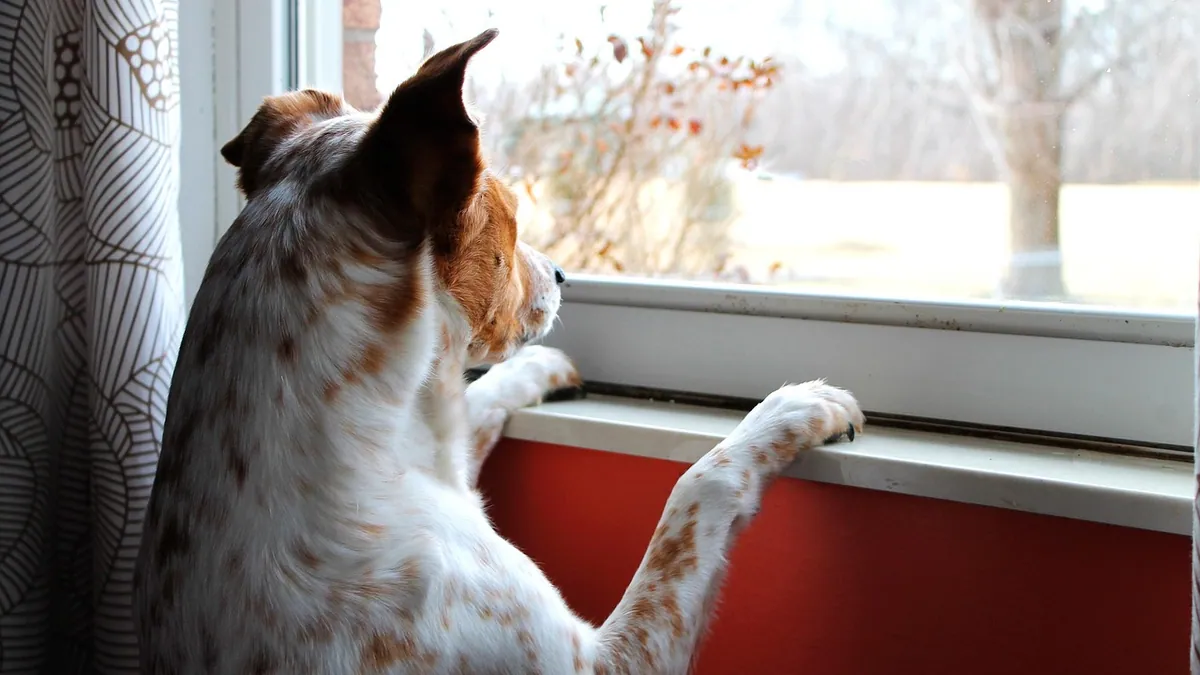
Do dogs have a sense of time? Yes, but not in the way people do. Dogs cannot read a clock or count minutes, yet they clearly notice how long you have been gone and when dinner usually happens. Their sense of time is built from body rhythms, routines, and memory, and it shapes how they handle being alone, training, and daily life.
This article is educational and is not a substitute for veterinary diagnosis or treatment.
Quick Answer
- Dogs do not understand clock time or abstract concepts like "an hour." They track time through internal body rhythms, daily routines, and the order in which events happen.
- Dogs have episodic-like memory, which means they can recall specific past events and use those memories in ways that serve a purpose, such as remembering where food was hidden [1].
- Emotional events feel longer to dogs, just as they do to people. Negative or threatening experiences can stretch a dog's perception of how long something lasted[2].
- Dogs adapt to the timing of what happens around them. Their estimate of a duration shifts based on the durations they have recently experienced [3].
- A predictable routine helps most dogs feel secure. Sudden schedule changes can trigger whining, pacing, house soiling, or destructive behavior.
How Do Dogs Perceive Time?
Dogs live in the present, but they remember the past
A dog does not sit by the door thinking, "My owner has been gone for three hours and twelve minutes." Dogs lack the language and abstract reasoning to measure time that way. What they do have is memory for events. Research on animal cognition suggests that episodic memory may serve different functions in different species, and in dogs it likely helps them recall what happened, where it happened, and how it felt [1].
That memory is why your dog may get excited when you pick up the leash, even before you reach the door. The leash is not a clock. It is a cue linked to a remembered event.
Body rhythms act like an internal clock
Dogs have circadian rhythms, which are daily cycles of sleep, hunger, activity, and hormone release. These rhythms help a dog anticipate when meals, walks, and bedtime usually occur. This is why a dog may start pacing near the food bowl at about the same time each evening.
The internal sense of duration is not perfectly fixed. Research in time perception shows that animals and humans alike adapt their estimates based on the durations they have recently experienced [3]. If your schedule has been consistent, your dog's internal estimate of "when you come home" becomes more accurate. If your schedule changes often, that estimate drifts.
Emotions stretch or shrink time
Time perception is not neutral. In people, high-arousing negative events are perceived as lasting longer than positive events of the same length [4]. Threatening images, such as animals poised to attack, are overestimated in duration, and the effect grows with how fearful the person is [2].
Dogs show a similar emotional pull on time. One experiment found that dogs can modulate the effect of emotion on time perception, and in some situations dogs led people to underestimate time when faced with negative facial expressions [5]. The practical point for owners is simple. A scary event, such as a thunderstorm or a trip to the vet, can feel much longer to your dog than the clock says.
Dogs learn the order of events, not the numbers
Dogs are masters of sequence. They learn that shoes go on before a walk, that the car ride comes before the park, and that the lights go off before sleep. This event-based timing is sometimes called ordinal time. It does not require counting. It requires memory and pattern recognition, and dogs are very good at both.
Why Your Dog Seems to Know When You Come Home
Owners often swear their dog knows exactly when they will return. Several things are happening at once.
First, your dog's circadian rhythm shifts with your routine. If you come home at 5:30 most days, your dog's body starts to anticipate activity around that time. Second, your dog picks up on cues you may not notice, such as the sound of your car, the time your neighbor walks their dog, or the light changing in the room. Third, your dog's memory of past returns builds an expectation.
This is also why some dogs seem to "tell time" better on weekdays than weekends. The routine is the clock.
Medical Causes to Rule Out
Sometimes a behavior that looks like a time problem is actually a health problem. Before you assume your dog is acting out or anxious about your schedule, rule out medical causes.
- House soiling. This can stem from a urinary tract infection, bladder stones, kidney disease, diabetes, or arthritis that makes it painful to get to the door in time. It can also be a sign of cognitive dysfunction in older dogs.
- Pacing, whining, or restlessness at night. Pain, dental disease, and cognitive decline are common causes in senior dogs. A dog that used to sleep through the night and now wanders may be uncomfortable or disoriented.
- Increased appetite or food guarding. This can be normal, but sudden changes in hunger or thirst can point to endocrine disease or diabetes.
- Sudden clinginess or distress when you leave. This can be separation-related behavior, but it can also be triggered by pain, vision loss, or hearing loss that makes being alone scarier.
A veterinarian can sort out which behaviors are medical and which are behavioral. If your dog's sleep has changed, it may help to read How Long Do Dogs Sleep so you know what is typical for the species.
When Time Perception Becomes a Problem
A dog's sense of time is not a problem by itself. It becomes a problem when your dog cannot cope with the gaps between events.
Signs that your dog is struggling include:
- Destructive chewing, digging, or scratching that happens only when you are away
- Excessive barking, howling, or whining that starts soon after you leave
- House soiling in a dog that is otherwise house trained
- Pacing, drooling, or trying to escape when left alone
- Loss of appetite or refusal to eat when you are gone
- Extreme excitement that does not settle after you return
These signs point to separation-related distress, not a broken internal clock. The distress is about being apart, not about the number of minutes.
What to Do Step by Step
Build a predictable routine
Dogs thrive on consistency. Feed, walk, play, and settle at roughly the same times each day. Predictability reduces uncertainty and helps your dog's internal rhythms line up with yours. It also makes departures and returns less dramatic.
Practice short absences
If your dog panics when you leave, start with very short departures. Step out for a few seconds, return calmly, and repeat. Gradually increase the time. Keep arrivals and departures low key. A calm hello is better than a big celebration, because big emotions can make the next departure harder.
Use enrichment to fill alone time
A tired, mentally engaged dog handles alone time better. Food puzzles, snuffle mats, frozen stuffed toys, and safe chew items give your dog something to do. Rotate the toys so they stay interesting. A long walk before you leave can also help.
Create a safe space
Set up a comfortable area with a bed, water, and a familiar scent. Some dogs do better in a crate, and some do better with free access to a room. Watch your dog to see which one lowers anxiety.
Keep departures and returns boring
Do not make a production of leaving. Pick up your keys and bag at random times during the day so those cues lose their power. When you return, wait until your dog is calm before you greet them.
Track what actually happens
Keep a simple log of when you leave, when you return, and what your dog did. Patterns will show up. You may find that your dog does fine for the first 30 minutes and then struggles, or that certain days are harder. This information is useful for your veterinarian or a behavior professional.
What Not to Do
Do not punish separation behavior
Scolding a dog for something that happened hours ago does not work. Dogs connect punishment to what is happening right now, not to a chewed couch from this morning. Punishment adds fear and can make the anxiety worse.
Do not assume your dog is being spiteful
Dogs do not plan revenge. A dog that destroys a pillow while you are gone is not getting even. The behavior is distress, boredom, or both.
Do not rely on myths about dog time
You may hear that one dog year equals seven human years. That is a rough myth, not a rule. Aging varies a lot by breed and body size. If you are curious about how long your dog may live, see How Long Do Dogs Live For. You may also hear that dogs have no memory at all. That is false. Dogs remember events, people, and places, and they use those memories to predict what comes next.
Do not ignore sudden changes
A dog that suddenly cannot handle being alone, or that starts pacing at night, needs a veterinary check. Sudden changes are a signal, not a phase.
When to Involve a Veterinarian or Behavior Professional
Call your veterinarian if your dog's behavior changes suddenly, if your dog stops eating or sleeping normally, or if you see signs of pain such as limping, stiffness, or reluctance to move. Your veterinarian can rule out medical causes and discuss whether medication might help.
Ask for a referral to a certified behavior professional if your dog has severe separation distress, if you have tried the steps above for several weeks without improvement, or if your dog is injuring themselves trying to escape. A board-certified veterinary behaviorist can build a full treatment plan.
Limitations and When to Contact a Veterinarian
No article can tell you what is happening with your individual dog. Your dog's age, breed, health history, and home environment all matter, and individual cases need a veterinarian who can examine your dog in person.
Contact your veterinarian the same day if your dog:
- Stops eating or drinking
- Vomits repeatedly or has diarrhea with blood
- Seems disoriented, presses their head against walls, or gets stuck in corners
- Cries out when moving or being touched
- Has a sudden change in behavior, especially in a senior dog
Go to an emergency clinic now if your dog:
- Collapses, has a seizure, or has trouble breathing
- Cannot urinate or strains with no urine produced
- Shows signs of severe pain such as panting, trembling, or refusing to stand
- Has been hit by a car or had another major trauma
Schedule a routine visit if your dog:
- Has gradual changes in sleep, appetite, or activity
- Seems more anxious than before
- Is aging and you want to check for cognitive dysfunction
- Has new house soiling after being reliably house trained
If your dog is female and you are tracking a heat cycle, note that cycle length varies. You can read more at How Long Does A Dog Period Last to understand what is typical.
Frequently Asked Questions
Do dogs have a concept of time?
Dogs have a functional sense of time, not a conceptual one. They cannot think about minutes or hours as ideas, but they can track routines, anticipate events, and remember how long something seemed to last. Their sense of time is tied to body rhythms, memory, and emotion.
How do dogs tell time?
Dogs use circadian rhythms, learned routines, and environmental cues to tell time. They notice when meals, walks, and bedtime usually happen, and they pick up on sounds and sights that signal your return. Their estimate of a duration also shifts based on recent experiences [3].
Do dogs know how long you have been gone?
Dogs do not measure the exact length of your absence. They notice that you are gone, and their distress tends to grow with uncertainty and with how long the separation feels to them. Emotional events can feel longer than they are, which is one reason a short absence can seem huge to an anxious dog [5][4].
Can dogs get depressed when you leave?
Dogs can show signs that look like depression when separated from their people, including whining, pacing, refusing food, and losing interest in toys. These signs are part of separation-related distress. If they are severe or last beyond the first few minutes, talk to your veterinarian.
Do dogs remember how long something lasted?
Dogs remember events and the feelings attached to them more than exact durations. Their memory of an event can influence how they respond the next time, which is why a single frightening experience can change their behavior for a long time [1]. Threatening or negative events also tend to feel longer, which can make the memory stronger [2].
Related Articles
- How Long Do Dogs Sleep
- How Long Do Dogs Live For
- How Long Do Dogs Live
- How Long Does A Dog Period Last
- How Long Do Dog Periods Last
- How Do I Know If My Dog Has Behavior Problems
- How Long Can a Dog Remember? Memory Explained
- Do Dogs Think? What Science Says About the Canine Mind
- What Do Dogs Remember? Puppyhood, Old Owners, and Siblings
References
- Why might animals remember? A functional framework for episodic memory research in comparative psychology. Learning & behavior, 2025.
- Increased temporal sensitivity for threat: A Bayesian generalized linear mixed modeling approach. Attention, perception & psychophysics, 2019.
- A unitary mechanism underlies adaptation to both local and global environmental statistics in time perception. PLoS computational biology, 2023.
- Perceiving control over aversive and fearful events can alter how we experience those events: an investigation of time perception in spider-fearful individuals. Frontiers in psychology, 2012.
- When Dogs Shrink the Typical Lengthening Effect Caused by Negative Emotions. Experimental psychology, 2021.