Does My Cat See Me as Its Mom? Bonding Signs Explained
By Dr. Zubair Khalid, DVM, MS, PhD ·
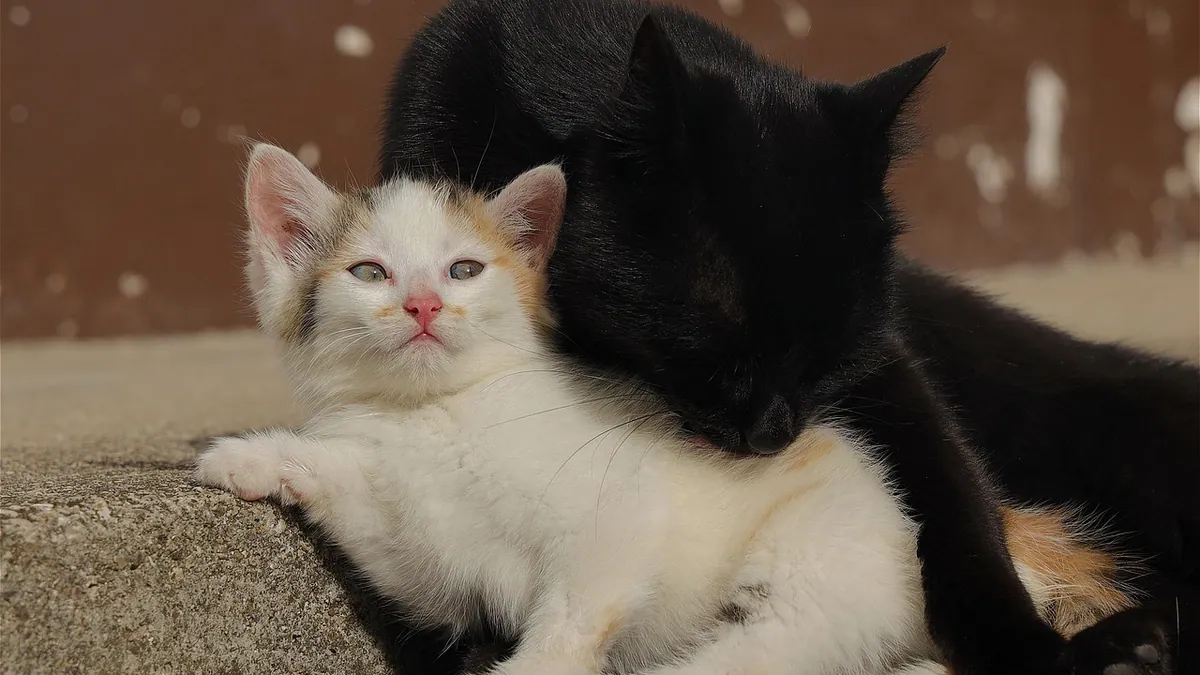
Cats do form real, measurable bonds with their owners, and many of the behaviors people read as "mothering" are genuine signs of secure attachment. To answer the question directly, you can learn how to tell if my cat sees me as his mom by watching for a small set of consistent behaviors: following you, seeking you out when stressed, kneading, slow blinking, and greeting you at the door. This article is educational and is not a substitute for veterinary diagnosis or treatment.
Quick Answer
- Cats form attachment styles similar to those seen in other social animals, and secure cats show more positive hormonal responses to friendly human contact than insecure cats do [1].
- Passive, low-pressure interactions (sitting nearby, letting the cat choose contact) tend to raise oxytocin and lower cortisol, while forced handling does the opposite [1].
- Slow blinks, relaxed facial signals, and soft eye contact are affiliative signals cats use to build and maintain social bonds [2].
- A cat that follows you, vocalizes at you, and seeks you out after a scare is showing a secure base pattern, not a maternal imprint in the human sense.
- Attachment strength varies by owner and household, and cat owners as a group tend to score lower on attachment scales than dog owners, which does not mean cats do not bond [3].
What "Seeing You as Mom" Actually Means in Cats
Cats do not have a human concept of "mom." What they have is an attachment system. In mammals, attachment is the set of behaviors that keeps a young animal close to a caregiver for safety. Kittens imprint on their mother and littermates during a sensitive early period, and that early learning shapes how comfortable they are with touch, handling, and other cats later. When a kitten imprints on its owner, the owner often becomes the safe base the cat returns to.
Researchers classify adult pet cats into attachment styles using a test that briefly separates the cat from the owner and then reunites them. The three common categories are secure, insecure-anxious, and insecure-avoidant. Secure cats greet the owner, stay calm, and go back to exploring. Insecure-anxious cats cling or fuss. Insecure-avoidant cats act aloof but still show stress responses internally.
A 2026 study measured salivary cortisol and oxytocin in 20 pet cats before and after four types of owner interactions [1]. Secure cats had more positive hormonal responses to human interaction. Insecure cats either showed rising cortisol or a blunted hormonal response [1]. That is the closest thing to a scientific answer to "does my cat see me as mom." The bond is real. It is just built on safety and predictability, not on a human-style parent label.
Signs Your Cat Views You as Their Mom
Signs cat views you as their mom
These are the behaviors owners most often describe, and most of them line up with secure attachment:
- Your cat follows you from room to room without a food motive.
- Your cat seeks you out after a loud noise, a stranger, or a vet visit.
- Your cat kneads your lap or a blanket while purring. Kneading is a leftover nursing behavior, and it usually signals comfort.
- Your cat slow blinks at you from across the room. Slow blinking is an affiliative facial signal, and cats use affiliative signals to maintain social bonds [2].
- Your cat head-bumps your face or rubs against your legs. This is scent marking that mixes your smell with theirs.
- Your cat greets you at the door or talks to you in a specific meow.
- Your cat sleeps near you or on you, especially on your chest or head.
- Your cat brings you toys or "gifts."
How to tell if my cat recognises me
Recognition is separate from attachment. Cats recognize owners by scent, voice, and routine. A cat that perks up at your footsteps, responds to your voice across a room, or relaxes when you enter is showing recognition. Some cats also respond differently to your voice than to a stranger's voice, even when the words are the same.
If your cat suddenly stops recognizing you or acts confused, that is a medical issue, not a bonding issue. Sudden behavior change in a cat is a reason to call your veterinarian.
What is not a maternal sign
Purring is not proof of happiness. Cats purr when content, but also when stressed or in pain. A cat that purrs during a vet exam is not necessarily relaxed. Slow blinking is a better signal of comfort than purring alone.
Bringing you dead prey is not a gift of love in the human sense. It reflects hunting behavior and, in some cases, a cat treating you as a social partner in a household group.
Why the Behavior Happens: Normal Reasons First
Cats are social animals, but their social style is flexible. Free-living cats often live in colonies with related females, and they use facial signals and scent to manage those relationships [2]. Domestication pushed cats toward more affiliative (friendly) signals because those signals help them live with people and with each other [2].
The hormonal side matters too. In the 2026 study, passive interactions were linked to higher oxytocin and lower cortisol, while forced interactions showed the opposite pattern [1]. Oxytocin is involved in bonding and social calm. Cortisol is a stress hormone. So the "mom" feeling your cat shows is partly a physiology story: calm contact with a familiar person lowers stress chemistry and supports bonding chemistry.
Attachment style also shapes the response. Secure cats handle human contact well. Insecure cats may show rising cortisol or limited hormonal response even when the owner means well [1]. That is why two cats in the same house can react completely differently to the same cuddle.
One more factor is owner side. Attachment to pets varies with owner traits. In one study of 202 participants, attachment was generally stronger with dogs than cats, and stronger among owners who were female, younger, not living with children, and who spent more weekend time with their pets [3]. A large international survey of 19,187 cat and dog owners found distinct owner "types," with three separate clusters among cat owners [4]. In other words, the bond is a two-way pattern, not a fixed cat trait.
Medical Causes to Rule Out
Some behaviors that look like clinginess or "mom" behavior are actually medical.
- Sudden clinginess in an older cat can signal pain, vision loss, hearing loss, or cognitive changes. Cats hide pain well, so a cat that suddenly wants to be on you constantly may be seeking comfort. See Cat Arthritis: How to Tell If Your Cat Is in Pain.
- Hiding, especially new hiding, is often a stress or pain sign. See Why Is My Cat Hiding?.
- Increased vocalization, pacing, or restlessness can point to pain, thyroid disease, or anxiety.
- Overgrooming, hair loss, or changes in appetite can be stress-related or medical.
- A cat that stops greeting you, stops following you, or seems to not recognize you needs a vet visit.
Any sudden change in a cat's social behavior deserves a call to your veterinarian. Cats are good at masking illness, and behavior is often the first clue.
When Bonding Behavior Becomes a Problem
Most maternal-style bonding is harmless. It becomes a problem in a few situations.
Separation distress is one. Some cats panic when you leave, vocalize for long periods, urinate outside the box, or destroy items near the door. This is not spite. It is distress.
Over-attachment with aggression is another. A cat that demands contact and then bites or scratches when you stop is showing a conflict pattern, not affection.
Resource guarding, such as a cat that blocks doorways or guards you from other pets, can create tension in a multi-cat home. If you are adding a cat, plan the introduction carefully. See How Do You Introduce A New Cat To Your Cats and Introducing A New Cat To A Cat.
Stress-related illness is the last one. Chronic stress can show up as cystitis, diarrhea, or appetite changes. If your cat's stress signs are frequent, see Cat Stress Signs: How to Recognize and Reduce Stress in Your Cat.
What to Do Step by Step
1. Let your cat choose contact
Passive interaction is the safest way to build the bond. Sit on the floor, read or scroll your phone, and let the cat come to you. Passive interactions were linked to higher oxytocin and lower cortisol in pet cats [1]. Forced handling did the reverse [1]. If your cat walks away, let them go. The choice is the point.
2. Use slow blinks
Look at your cat with soft eyes, blink slowly, and wait. If your cat blinks back, you have a small social exchange. Cats use affiliative facial signals to maintain bonds, and slow blinking fits that pattern [2]. Do this daily for a few weeks.
3. Build a predictable routine
Feed, play, and groom at similar times. Predictability supports secure attachment. Secure cats in the 2026 study showed healthier hormonal responses to human contact than insecure cats [1].
4. Add daily play
Two short play sessions with a wand toy, morning and evening, give your cat a safe outlet for hunting behavior. End each session with a small treat or meal so the sequence feels complete.
5. Enrich the environment
Add vertical space (cat trees, shelves), scratching posts, window perches, and hiding spots. A cat with options is less likely to become clingy out of stress. If you have multiple cats, provide separate resources: litter boxes, food stations, water, and resting spots.
6. Respect touch limits
Many cats prefer brief contact over long holds. Watch the tail, ears, and pupils. A flicking tail, flattened ears, or dilated pupils mean stop. Forced interaction raises cortisol [1], so pushing contact backfires.
7. Track changes
Keep a simple note of new behaviors, when they started, and what changed in the home. This helps your veterinarian sort medical from behavioral causes.
What Not to Do
Do not punish your cat for clingy behavior, vocalizing, or following you. Punishment increases stress and can damage the bond. It also does not teach the cat what you want.
Do not force cuddles. Forced interaction is linked to rising cortisol and lower oxytocin in cats [1]. If you want more affection, offer less pressure, not more.
Do not assume purring means all is well. Purring can occur with pain or stress.
Do not believe the myth that cats are solitary and do not bond. Cats use affiliative facial signals and form attachment styles, and secure cats show positive hormonal responses to their owners [1][2].
Do not assume a cat that hides hates you. Hiding is often a stress or pain response, not a rejection. See Why Is My Cat Hiding?.
Do not compare your cat to a dog. Attachment scores tend to be higher for dog owners than cat owners in some surveys [3], but that reflects owner reporting and species differences in social style, not a lack of feline love.
When to Involve a Veterinarian or Behavior Professional
Call your veterinarian if your cat shows sudden clinginess, sudden aloofness, new hiding, appetite changes, litter box changes, overgrooming, or vocalizing that is new or intense. These can be medical.
Ask for a referral to a veterinary behaviorist or a certified cat behavior consultant if:
- Your cat injures you or another pet.
- Your cat shows separation distress that does not improve with routine changes.
- Your cat's stress signs continue despite environmental changes.
- You have tried passive bonding and enrichment for several weeks with no progress.
- Your cat's behavior is affecting their eating, sleeping, or litter box use.
A veterinarian can also check for pain, dental disease, thyroid problems, and other conditions that change behavior. Your vet will calculate any medication dose from your cat's weight and health, so never use human medications or leftover pet medications on your own.
Limitations and When to Contact a Veterinarian
This article covers general bonding behavior. Individual cases need a veterinarian who can examine your cat and review the full history.
Contact your veterinarian the same day if your cat:
- Stops eating or drinking.
- Has vomiting, diarrhea, or straining to urinate.
- Shows sudden weakness, wobbling, or trouble jumping.
- Becomes suddenly aggressive or fearful.
- Hides and will not come out for food.
Go to an emergency clinic now if your cat:
- Breathes with an open mouth or struggles to breathe.
- Collapses or cannot stand.
- Has a seizure.
- Is a male cat straining to urinate with no urine produced. This is a life-threatening emergency.
- Has known or suspected access to a toxin. Call your veterinarian or a pet poison hotline right away.
Schedule a routine visit if your cat's behavior changes slowly over weeks, if your cat is a senior and seems less social, or if you want help with a behavior plan. Behavior changes in cats are often the first sign of a medical problem, so it is always reasonable to ask.
Frequently Asked Questions
Does my cat think I am its mother?
Your cat likely treats you as a secure base, which is the functional role a mother plays for a kitten. Cats form attachment styles, and secure cats show calmer hormonal responses to their owners than insecure cats [1]. The label "mom" is human, but the safety bond is real.
Why does my cat knead me?
Kneading is a leftover nursing behavior that cats often keep into adulthood. It usually happens when a cat feels safe and relaxed. If kneading comes with tense body language or sudden biting, that is a different pattern and worth mentioning to your vet.
Do cats recognize their owners?
Yes, cats recognize owners by scent, voice, and routine. Many cats respond differently to their owner's voice than to a stranger's. If recognition suddenly drops, treat it as a medical concern and call your veterinarian.
Can a cat imprint on its owner?
Kittens have an early sensitive period for social learning, and that shapes how comfortable they are with people later. Adult cats can still build strong bonds through repeated calm, predictable contact. Imprinting is strongest in early life, but bonding continues for years.
Is it bad if my cat follows me everywhere?
Following you is usually a secure attachment sign, not a problem. It becomes a concern if it comes with panic when you leave, house soiling, or constant vocalizing. Those signs point to separation distress, and a veterinarian or behavior professional can help.
Related Articles
- Cat Arthritis: How to Tell If Your Cat Is in Pain
- How Do You Introduce A New Cat To Your Cats
- Cat Stress Signs: How to Recognize and Reduce Stress in Your Cat
- Why Is My Cat Hiding?
- Introducing A New Cat To A Cat
- How To Introduce New Cat To Cat
- Do Kittens Think You Are Their Mom? Bonding Explained
- How to Tell If Your Cat Loves You: Real Signs of Bonding
- Do Cats Love Their Owners? The Science of Feline Bonding
References
- EXPRESS: The hormonal effects of owner-cat interactions on pet cats of different potential attachment styles. Journal of feline medicine and surgery, 2026.
- Feline faces: Unraveling the social function of domestic cat facial signals. Behavioural processes, 2023.
- A Study on the Attachment to Pets Among Owners of Cats and Dogs Using the Lexington Attachment to Pets Scale (LAPS) in the Basque Country. Animals : an open access journal from MDPI, 2025.
- Companion animal owner "types" identified using a large-scale international assessment of the human-animal bond. Frontiers in veterinary science, 2026.