Cat Not Adjusting to a New Kitten: Steps That Work
By Dr. Zubair Khalid, DVM, MS, PhD ·
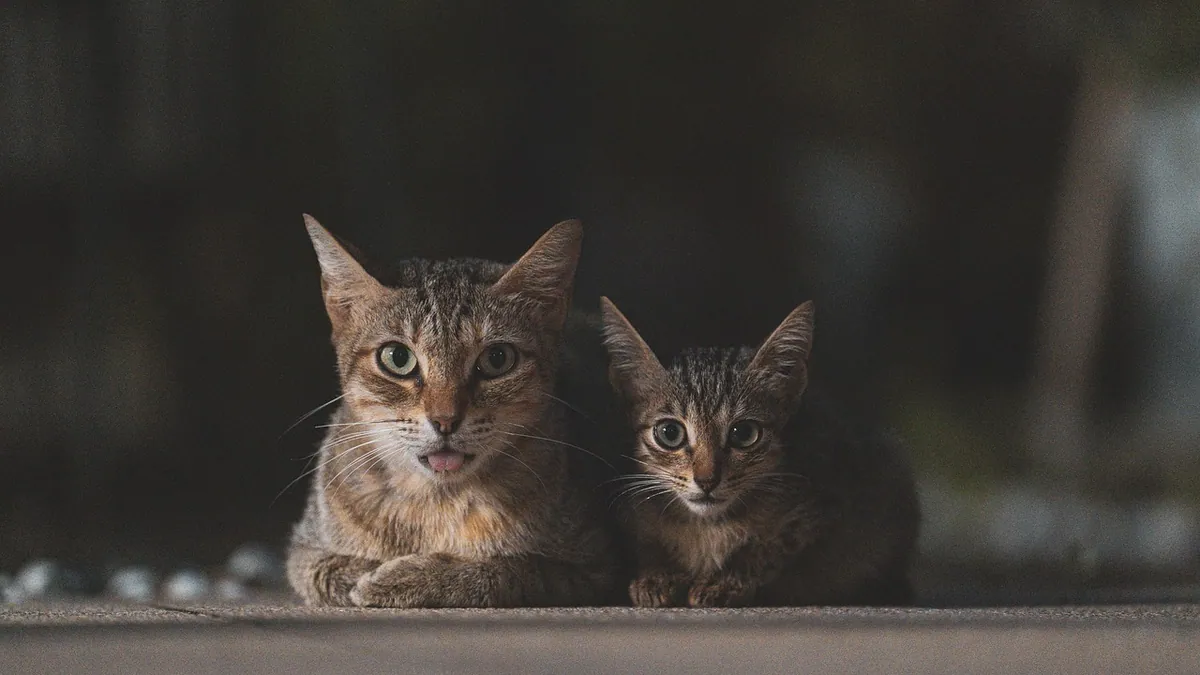
A cat not adjusting to a new kitten is common, and most resident cats need weeks, not days, to accept a newcomer. The fix is a slow, structured reintroduction that lets the cats smell and hear each other before they ever see each other. Rushing the first face-to-face meeting can set the tone for their whole relationship.
This article is educational and is not a substitute for veterinary diagnosis or treatment.
Quick Answer
- Separate the cats into different rooms with the door closed so they can smell and hear each other but not see or touch each other [1].
- Expect the process to take a long time. A gradual introduction gives the relationship the best chance to grow [1].
- Do not let your resident cat charge the new kitten in the carrier. That first encounter can be frightening and hard to undo [1].
- Swap bedding and scent before any visual contact, then move to brief, supervised visual contact through a barrier.
- If you see real fighting, injury, or a cat who stops eating or hiding for days, stop and get veterinary or behavior help.
Why Your Cat May Not Like the New Kitten
Normal reasons cats reject a newcomer
Cats are territorial and routine-driven. A new kitten brings new smells, sounds, and movement into a space your resident cat considers hers. That alone can trigger hissing, growling, hiding, and avoidance.
Avoidance is actually a normal conflict-reduction strategy for cats. In one study of cats living in groups, cat-to-cat interactions were infrequent and mostly friendly, and cats used avoidance to keep the peace [2]. So if your resident cat mostly stays away from the kitten, that is not necessarily a crisis. It may be her way of managing stress.
Your cat's history matters too. If she has lived peacefully with other cats before, the odds are good she will adjust to a newcomer. If she gets aggressive when she sees cats outside your home, the introduction will likely be harder [1]. It is generally not possible to predict whether any two individual cats will get along [1].
The kitten's side of the story
A kitten's early experiences shape adult behavior and welfare. Socialization during the early months has lasting effects, and breeders and owners play a role in how comfortable a kitten becomes with new animals and new situations [3]. A kitten who was well socialized is often more resilient, but that does not guarantee your adult cat will welcome her.
When it becomes a problem
It becomes a problem when the conflict is unsafe or when stress is harming a cat's health. Watch for:
- Real fights with biting, scratching, or fur flying
- One cat blocking the other from food, water, or the litter box
- A cat who stops eating, stops grooming, or hides constantly
- Urine marking or litter box avoidance that starts after the kitten arrives
- The kitten getting cornered or pinned repeatedly
These signs mean you need to slow down and get help. Do not push the cats together to "work it out."
Medical Causes to Rule Out First
Before you assume this is purely behavioral, have both cats examined by a veterinarian. Pain, dental disease, thyroid problems, and other medical issues can make a cat irritable, withdrawn, or aggressive. A cat who suddenly hisses, swats, or hides may be sick, not just annoyed.
The new kitten also needs a full checkup, parasite testing, and vaccinations before mixing with your resident cat. Your veterinarian will set the schedule based on the kitten's age and health. Keep the kitten separated until your vet clears her for contact.
If your resident cat has a sudden change in behavior, appetite, or litter box habits, that is a medical question first. Call your vet.
How to Get My Cat to Adjust to a New Kitten: Step by Step
This is a reintroduction plan. If the cats have already met and it went badly, start over at step one. Go slower than you think you need to.
Step 1: Set up separate rooms
Just before you bring the new kitten home, confine your resident cat to one room so the cats cannot see each other. Do not give your resident cat a chance to approach the kitten in her carrier, because that can be extremely frightening for the kitten [1].
Bring the kitten directly into her own quiet room and keep that door closed. This lets the two cats smell and hear each other without seeing or touching each other. It reduces stress by not overwhelming either cat with too much change too quickly [1].
Each room needs its own food, water, litter box, scratching post, and resting spots. Feed them on opposite sides of the closed door so they associate each other's smell with something good.
Step 2: Swap scents
Rub a cloth on one cat's cheeks and base of the tail, then let the other cat sniff it. Swap bedding between rooms. Do this daily.
Scent is how cats gather information about each other without a confrontation. Synthetic pheromone products that copy naturally occurring feline pheromones can produce species-specific responses and may help manage problem behavior [4]. Ask your veterinarian whether a pheromone diffuser or spray fits your situation.
For more on the full introduction process, see How To Introduce New Cat To Cat.
Step 3: Feed and play on opposite sides of the door
Once both cats eat calmly with the door closed, crack the door an inch or use a baby gate or screen. Let them see each other briefly while eating or playing. End the session while both are still calm.
If either cat hisses, growls, or stops eating, go back a step. Distance and time are your tools.
Step 4: Supervised visual contact
Move to short, supervised sessions in the same room with a barrier between them. Keep sessions to a few minutes at first. Reward calm behavior with treats and praise.
Never hold one cat up to the other or force a nose-to-nose meeting. That is how bites happen.
Step 5: Supervised time together
When both cats stay relaxed with visual contact, allow short supervised time in the same room. Provide escape routes, high perches, and multiple resources so neither cat feels trapped.
Elevated structures matter to cats. In one study, cats preferred vertical levels and cat-only rooms, especially when the space was busy [2]. Cat trees, shelves, and covered beds give your resident cat a way to be in the room without being close to the kitten.
Step 6: Build the kitten's confidence
A confident kitten is easier to integrate. Handle her gently, expose her to normal household sounds, and let her meet calm, friendly people. Early socialization experiences have lasting effects on adult behavior [3].
For a broader look at introductions, see Introducing A New Cat To Existing Cat.
Enrichment and Environment Changes That Help
- Add litter boxes. The rule of thumb is one box per cat plus one, placed in different locations.
- Add feeding stations. Feed cats in separate spots so no one guards the bowl.
- Add vertical space. Cat trees, window perches, and shelves let cats separate without leaving the room.
- Add hiding spots. Covered beds and boxes give a stressed cat a place to retreat.
- Keep a routine. Feed, play, and clean at the same times each day.
- Use play to burn energy. A tired cat is often a calmer cat.
- Give the resident cat one-on-one time. She still needs your attention.
If your resident cat is hiding more than usual, read Cat Hiding After Moving: How to Help Your Cat Adjust for practical steps that also apply to a new kitten in the home.
What Not to Do
- Do not punish either cat. Yelling, spraying water, or swatting adds fear and can make aggression worse.
- Do not force them together. Holding them close or locking them in a room to "sort it out" risks injury and sets back progress.
- Do not assume they will never get along. Some cats take months. Patience is the single most important factor [1].
- Do not skip the separation phase. The first impression matters, and a bad first meeting can shape their future relationship [1].
- Do not ignore the kitten's needs. She needs her own safe space, food, and litter box.
- Do not rely on punishment-based gadgets. They do not teach cats what you want them to do.
When to Get Professional Help
Call your veterinarian if either cat has wounds, stops eating, or shows signs of illness or extreme stress. Your vet can check for medical causes and may prescribe medication or refer you to a veterinary behaviorist.
A certified behavior professional can build a customized reintroduction plan if:
- Fights continue after weeks of slow introductions
- One cat is injured or terrified
- You cannot safely separate the cats
- A cat is marking, over-grooming, or not using the litter box
- You feel overwhelmed or unsafe managing the situation
Pheromone therapy is one tool a veterinarian or behavior professional may recommend as part of a broader plan [4]. It works best alongside environment changes and a structured introduction, not as a stand-alone fix.
Limitations and When to Contact a Veterinarian
This article gives general guidance. Individual cases need a veterinarian who can examine your cats and see your home situation.
Contact a veterinarian the same day if:
- A cat has a bite wound, even a small one. Cat bites can become infected quickly.
- A cat stops eating or drinking for more than 24 hours.
- A cat is straining to urinate or cannot urinate. This is an emergency, especially in male cats.
- A cat is vomiting, has diarrhea, or seems painful.
Go to an emergency clinic now if:
- A cat is having trouble breathing
- A cat collapses or has a seizure
- A cat has heavy bleeding or a deep wound
- A cat is repeatedly vomiting and cannot keep water down
If you think a cat ate something toxic, call the ASPCA Animal Poison Control Center at (888) 426-4435. For pet first aid guidance, the RECOVER guidelines cover evidence-based first aid recommendations for dogs and cats [5].
Schedule a routine visit if:
- The conflict has lasted more than a few weeks with no improvement
- You see ongoing hiding, appetite changes, or litter box problems
- You want help deciding whether medication or a behavior referral is right
Frequently Asked Questions
How long does it take for a cat to adjust to a new kitten?
It can take weeks to months, and there is no fixed timeline. The introduction must be gradual, and a relationship can take a long time to grow [1]. Some cats accept a kitten in days, others need many weeks of separation and scent work.
Should I let my cat and new kitten fight it out?
No. Real fighting risks injury and can damage their relationship for good. Aggression during a first meeting may set the mood for their future relationship [1]. Separate them and restart the introduction more slowly.
Why does my cat hiss at the new kitten?
Hissing is a normal warning, not proof your cat will never accept the kitten. Cats use avoidance and distance to reduce conflict, and cat-to-cat interactions in group settings are often infrequent [2]. Give your cat space and keep sessions short.
Can pheromone products help my cat accept the kitten?
They may help reduce stress as part of a full plan. Synthetic pheromones copy naturally occurring feline pheromones and can trigger species-specific behavioral responses [4]. Ask your veterinarian which product and format fits your home.
Will my cat ever like the new kitten?
Many cats do adjust, especially if they have lived peacefully with other cats before [1]. It is not possible to predict how any two cats will get along, so focus on a slow, structured process and watch for signs of unsafe conflict [1].
Related Articles
- Cat Hiding After Moving: How to Help Your Cat Adjust
- How To Introduce New Cat To Cat
- Introducing A New Cat To Existing Cat
- How to Introduce a New Dog to Your Cat: Step-by-Step Guide
- Introducing A New Cat To A Cat
- How To Introduce A New Kitten To A Resident Cat
- Kitten Not Respecting Other Cats' Boundaries: How to Help
- Cat's First Day Home: Helping a New Cat Settle In
- Cat Not Adjusting to a New Home: How to Help
References
- Introducing Your Cat to a New Cat. ASPCA Animal Poison Control Center.
- Cats in a Cat Café: Individual Cat Behavior and Interactions with Humans. Animals : an open access journal from MDPI, 2025.
- Exploring kitten socialisation practices and welfare implications within a Swedish breeding association. Animal welfare (South Mimms, England), 2026.
- Tools for Managing Feline Problem Behaviors: Pheromone therapy. Journal of feline medicine and surgery, 2018.
- RECOVER Guidelines: First Aid in Dogs and Cats. Evidence and Knowledge Gap Analysis With Treatment Recommendations. Journal of veterinary emergency and critical care (San Antonio, Tex. : 2001), 2026.