Cat Ear Language: What Ear Position Says About Mood
By Dr. Zubair Khalid, DVM, MS, PhD ·
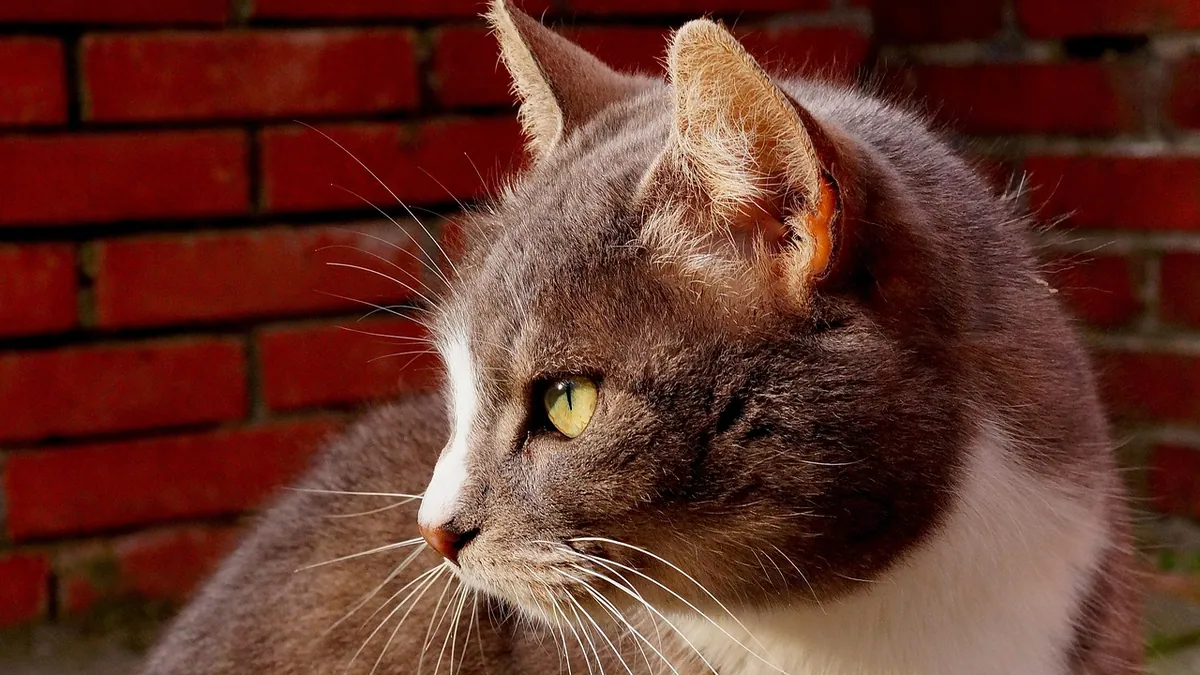
Cat ear language is one of the clearest signals your cat gives you. Ears that point forward usually mean a cat is relaxed, curious, or ready to play, while ears that flatten or rotate sideways often signal fear, irritation, or pain. Reading these positions in context helps you predict what comes next and avoid a bite or scratch.
This article is educational and is not a substitute for veterinary diagnosis or treatment.
Quick Answer
- Forward, relaxed ears mean your cat is calm, alert, or interested in what is happening around it.
- Ears rotated sideways or swiveled independently often mean your cat is listening hard, feeling uncertain, or getting annoyed.
- Flattened ears pressed back against the head (often called airplane ears) are a strong warning of fear, defensiveness, or pain.
- Ears that flick or twitch repeatedly can mean irritation, itchiness, or an ear problem that needs a veterinary exam.
- Never punish a cat for ear signals. Move away, give space, and let the cat choose whether to approach.
What Cat Ear Position Meaning Looks Like in Real Life
A cat's ears are built for far more than hearing. The pinna, the visible flap of cartilage covered in skin and fur, collects sound and funnels it down the ear canal to the eardrum [1]. The left and right pinnae can move independently, which is how cats pinpoint the exact location of a sound [1]. That independence is why you sometimes see one ear forward and the other rotated back.
Because the ears are so mobile, they broadcast a running commentary on your cat's internal state. A calm cat holds its ears up and slightly forward. An alert cat points them straight ahead. A worried cat pulls them back or to the sides. A frightened cat pins them flat.
Cats also read our signals. In one study of cat-human interactions, cats approached a human faster when the person used visual or combined visual and vocal communication compared with no communication at all [2]. Your cat is watching your body, including your face and hands, just as you are watching its ears. Communication runs both ways.
Forward Ears
Forward ears with a relaxed face mean your cat is comfortable and engaged. The eyes may be soft or half closed, the whiskers are neutral, and the body is loose. This is the posture you will see when your cat watches a bird through the window or walks toward you at dinner time.
Forward ears can also appear during play. A cat stalking a toy often has ears up and forward, with pupils slightly dilated and the tail low and twitching. That is a hunting posture, not aggression.
Sideways Ears
Ears that rotate to the side, sometimes called airplane ears, are a middle ground. Your cat is not fully relaxed and not yet defensive. It may be listening to something behind it, feeling unsure about a noise, or starting to get irritated by handling.
Watch the rest of the body. If the tail is lashing, the skin on the back is rippling, or the pupils are wide, sideways ears are a step toward a swat. Give your cat an exit route.
Flattened Cat Ears
Flattened ears pressed back and down against the head are one of the most reliable warning signs in cat body language. This position protects the ears during a fight, and it shows up when a cat feels threatened, cornered, or afraid.
Flattened ears also appear with pain. The Feline Grimace Scale, a pain assessment tool used by veterinarians, scores ear position as one of its five action units, along with orbital tightening, muzzle tension, whisker change, and head position [3][4]. In a large survey of cat caregivers across 66 countries, caregivers scored ear position similarly to veterinarians, which suggests owners can read this signal well when they know what to look for [4].
If your cat holds its ears flat and also squints, tenses its muzzle, or holds its head low, consider pain as a cause, not just mood.
Cat Ear Twitching Meaning
A single flick or a quick swivel is normal. Cats rotate their ears toward sounds all day long [1]. Repeated twitching, head shaking, or pawing at an ear is different. That pattern points to itchiness, irritation, or discomfort inside the ear.
The ear canal in cats is deeper than a human's and funnels sound well, but it can trap dirt and wax, which can lead to inflammation and infection [1]. If your cat is twitching one ear, shaking its head, or scratching at the ear, see Cat Shaking Head And Scratching Ear and Cat Head Shaking and Ear Problems: What to Know. Ongoing twitching with head shaking is covered further in Cats Ears Twitching And Shaking Head.
Why Cats Move Their Ears This Way
Ear position is a communication channel, and it works alongside vocal sounds, tail movement, and body posture. Cats are sensitive to the channel a signal comes through, and they adjust their behavior based on what they perceive [2].
Normal reasons for ear movement include:
- Hearing and locating sound. Independent pinnae help cats find the source of a noise [1].
- Balance and body awareness. The inner ear contains the balance system, including fluid-filled semicircular canals that support a cat's agility [1].
- Social signaling. Ears tell other cats and people whether a cat wants to interact, wants space, or is ready to defend itself.
- Play and hunting. Forward ears during a stalk are part of a normal predatory sequence.
- Discomfort or pain. Ear position is one of the facial features used to score pain in cats [3][4].
Medical Causes to Rule Out
Not every ear signal is behavioral. Some ear positions come from physical problems.
Ear Infections and Inflammation
Wax, dirt, or debris trapped in the deep canal can cause inflammation and infection [1]. Signs include head shaking, ear scratching, redness, discharge, and odor. A cat with an infected ear may hold it lower or flick it constantly.
Ear Mites and Allergies
These cause intense itchiness. A cat with itchy ears will scratch, rub its face on furniture, and twitch its ears repeatedly. You may see dark debris in the canal.
Pain Anywhere in the Body
Ear position is part of the Feline Grimace Scale, which veterinarians use to assess acute pain [3][4]. A cat in pain from dental disease, arthritis, or an injury may hold its ears back or flat even when the ears themselves are healthy. Research on automated pain assessment in cats with ocular pain also uses ear position as one of the scored facial features [5].
Neurologic Problems
The inner ear controls balance [1]. A cat with a neurologic issue may tilt its head, lose balance, or hold its ears in an unusual position. These signs need prompt veterinary attention.
When Ear Language Becomes a Problem
Ear signals are normal. They become a problem when they predict injury or when they reflect ongoing distress.
Warning signs that a bite or scratch is close:
- Ears flat against the head
- Ears flat plus a lashing tail, dilated pupils, or a hunched body
- Ears sideways with a growl, hiss, or swat
- Ears flat while you are holding or restraining your cat
A cat that flattens its ears during petting is telling you to stop. If you keep going, you are likely to get scratched. Cats often give several signals before they bite, and ears are usually the first one.
Ear signals also become a problem when they are constant. A cat that holds its ears back all day, hides, or stops eating is not just moody. That cat needs a veterinary exam.
What to Do Step by Step
1. Read the Whole Cat
Ears are one piece of the picture. Look at the tail, pupils, whiskers, body posture, and breathing. A relaxed cat has soft eyes, neutral whiskers, and a loose body. A tense cat has a stiff body, wide pupils, and a tight face.
2. Respond to the Signal, Not the Behavior
If your cat flattens its ears while you pet it, stop petting and let it walk away. If your cat swivels its ears sideways when you pick it up, set it down. Respecting the early signal prevents the bite that comes later.
3. Give Your Cat Control
Cats do better when they can choose when to interact. Offer a hand and let your cat approach. If it walks away, let it go. This builds trust and reduces defensive ear postures over time.
4. Build a Cat-Friendly Environment
Provide vertical space, hiding spots, scratching posts, and separate feeding and litter areas. Multiple resources reduce the tension that shows up as flattened ears and swatting in multi-cat homes.
5. Use Play to Redirect Energy
Two short play sessions a day with a wand toy can drain hunting drive that might otherwise turn into overstimulation. End each session with a treat or a meal so your cat winds down.
6. Check the Ears Themselves
Look inside the ear flap for redness, discharge, debris, or swelling. Do not push anything into the canal. If you see a problem, call your veterinarian. For scratching and head shaking, see Cat Scratching Ear A Lot And Shaking Head and Cat Scratching Their Ears.
7. Track the Pattern
Note when the ears go back. Is it during handling, around another cat, at mealtime, or all day? A written log helps your veterinarian tell a behavior problem from a medical one.
What Not to Do
- Do not punish your cat for flattening its ears. Punishment increases fear and makes bites more likely.
- Do not force interaction. Picking up a cat with flattened ears is a common cause of scratches.
- Do not assume flattened ears always mean aggression. Fear and pain look similar, and pain needs medical care.
- Do not clean deep inside the ear canal on your own. The canal is deep and easy to irritate [1].
- Do not rely on ear position alone. Use the full body and the situation.
- Do not ignore a cat that hides with its ears back. That is a welfare problem, not a personality quirk.
When to Involve a Veterinarian or Behavior Professional
Call your veterinarian if your cat has ear discharge, odor, redness, swelling, head tilt, balance problems, or repeated head shaking. These signs point to a medical cause that behavior training cannot fix.
Contact a veterinarian or a certified behavior professional if your cat:
- Bites or scratches family members repeatedly
- Flattens its ears whenever a specific person enters the room
- Cannot be handled for basic care
- Shows fear that does not improve with space and patience
A veterinarian can rule out pain and infection first. Pain assessment in cats uses facial features including ear position, and caregivers can score these features reliably when given clear guidance [4]. That means your observations are useful data for your veterinarian.
Limitations and When to Contact a Veterinarian
Ear position is a clue, not a diagnosis. The same ear posture can mean fear, irritation, play, or pain, and only a full exam can sort that out. Individual cases need a veterinarian who can examine your cat in person.
Contact a veterinarian the same day if your cat has a sudden head tilt, loses balance, holds one ear down constantly, or has discharge or a bad smell from the ear.
Seek emergency care now if your cat is unable to stand, has severe wobbling with vomiting, has a swollen ear flap that filled with fluid suddenly, or has a bite wound near the head or ear.
Schedule a routine visit if your cat has been twitching or scratching its ears for more than a day or two, or if ear signals have changed without an obvious cause.
Frequently Asked Questions
What does it mean when a cat's ears are back?
Ears pulled back usually mean fear, defensiveness, or pain. A cat in this state is warning you to give space. If the ears stay back for no clear reason, have your veterinarian check for a medical cause.
Are flattened ears always a sign of aggression?
No. Flattened ears can mean fear, pain, or feeling cornered. Aggression is only one possibility. Look at the tail, pupils, and body posture, and consider a veterinary exam if the posture is constant.
Why does my cat's ear twitch when I touch it?
A quick twitch when you touch the ear can be a normal reflex. Repeated twitching, head shaking, or pawing at the ear suggests itchiness or irritation inside the canal. That pattern deserves a veterinary look.
Can ear position tell me if my cat is in pain?
Ear position is one of the facial features veterinarians use to score pain in cats. It works best when combined with eye squinting, muzzle tension, whisker changes, and head position. If several of these appear together, call your veterinarian.
Should I punish my cat for putting its ears back?
No. Punishment does not teach a cat to relax, and it can make fear and aggression worse. Give your cat space instead, and address the underlying cause with your veterinarian or a behavior professional.
Related Articles
- Cat Shaking Head And Scratching Ear
- Cat Head Shaking and Ear Problems: What to Know
- Cats Ears Twitching And Shaking Head
- Cat Scratching Ear A Lot And Shaking Head
- Cat Scratching Their Ears
- Dog Shaking Head Because Of Ear
- Cat Ear Anatomy: What Owners Should Know
- Cat Ear Notch: What It Means and Why It Matters
- Cat Ears Look Dirty: Normal Wax or Ear Problem?
- Tympanic Ear: Eardrum, Ear Bones, and How Hearing Works
References
- Ear Structure and Function in Cats - Cat Owners. Merck Veterinary Manual.
- Multimodal Communication in the Human-Cat Relationship: A Pilot Study. Animals : an open access journal from MDPI, 2023.
- Agreement of Feline Grimace Scale scores between chatbots and an expert rater. Scientific reports, 2025.
- Can cat caregivers reliably assess acute pain in cats using the Feline Grimace Scale? A large bilingual global survey. Journal of feline medicine and surgery, 2023.
- Automated acute pain assessment in brachycephalic cats with ocular pain using the Feline Grimace Scale. Journal of the American Veterinary Medical Association, 2026.