Why Is My Cat Chewing Its Nails? When to Worry
By Dr. Zubair Khalid, DVM, MS, PhD ·
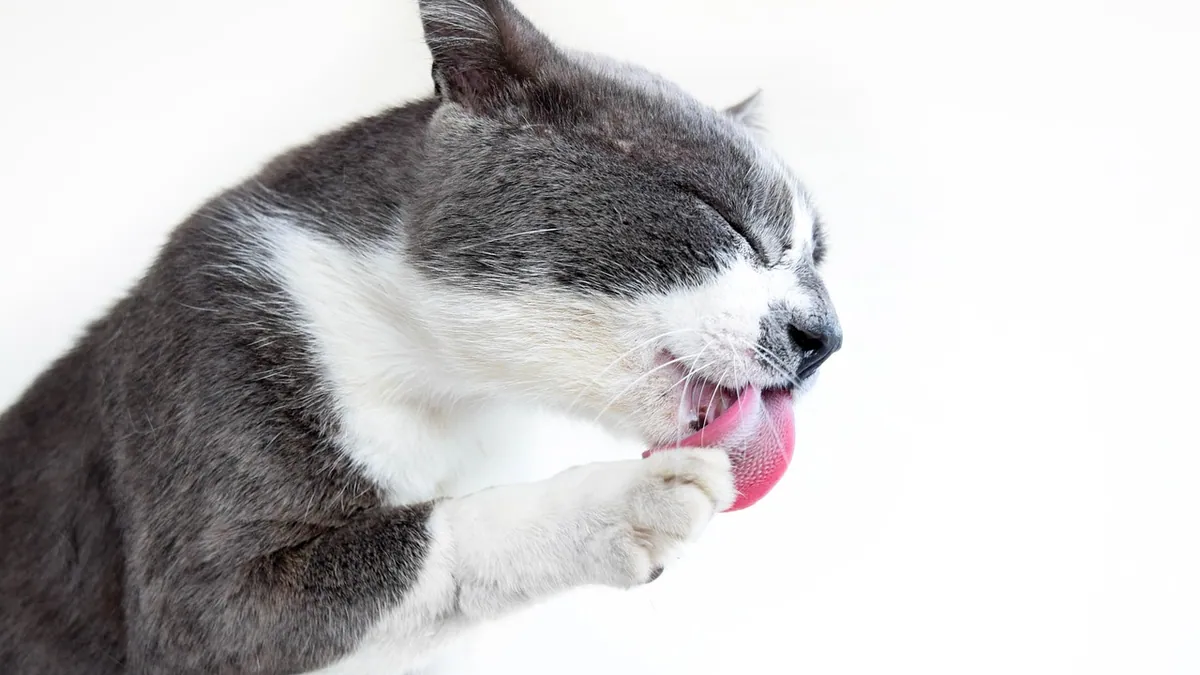
Is it normal for cats to chew their nails? In most cases, yes. Cats groom their claws as part of routine maintenance, and a quick nibble or pull at a nail is often nothing to worry about. The behavior becomes a concern when it is frequent, when nails look damaged or bloody, or when your cat also over-grooms the skin around the paws.
This article is educational and is not a substitute for veterinary diagnosis or treatment.
Quick Answer
- Occasional chewing or pulling at the nails is normal grooming, especially on the front paws.
- Cats scratch to remove frayed, worn outer claw layers and expose sharper claws, so some nail nibbling serves the same purpose [1][2].
- Frequent, intense, or focused chewing on one nail or paw is not normal and points to pain, infection, or skin disease.
- Over-grooming tied to itching can be severe. In one reported case, excessive grooming linked to pruritic skin disease caused a bleeding ulcer in a cat's mouth that required blood transfusions and surgery [3].
- If you see blood, swelling, a torn nail, limping, or bare irritated skin, book a veterinary visit.
Why Cats Chew Their Nails: Normal Reasons
Claw maintenance
A cat's claws grow in layers. The outer shell becomes frayed and dull over time. Scratching and chewing help remove that worn outer layer so a sharper claw underneath is exposed [1][2]. This is why your cat may bite at a nail tip for a few seconds, then stop and walk away.
Grooming routines
Grooming is a normal maintenance behavior. It takes up a small share of a cat's day and happens in short bouts instead of one long session [4]. Nail chewing is usually folded into that routine, along with licking the paws, face, and coat.
Boredom or stress
Some cats chew their nails more when they are under-stimulated or anxious. This is a behavior issue, not a nail disease, but it can still cause damage over time if it becomes a habit.
Is It Normal for Cats to Chew on Things?
Owners often search "is it normal for cats to chew on things" after catching their cat nibbling more than nails. Chewing on plants, cords, plastic, or fabric is a different behavior from nail grooming. It can be normal exploration in kittens, but in adult cats it often signals boredom, stress, or a medical problem such as dental pain or nausea.
If your cat is chewing objects and also scratching or licking more than usual, look at the skin and coat. Itching is a common driver of both behaviors. Our guide on why your cat is so itchy covers the common causes.
Medical Causes to Rule Out
Nail and paw disease
Torn nails, ingrown nails, fungal infections, and bacterial infections all cause pain. A cat with an infected nail may chew at it constantly, hold the paw up, or limp. Long nails that curl into the pad are especially painful and often trigger chewing.
Skin allergies and parasites
Itchy skin is one of the most common reasons a cat over-grooms. Fleas, harvest mites, and food allergies can all set off intense licking and chewing. In a series of 21 cats with harvest mite infestation, 16 had inflammatory skin lesions and itching, and lesions were mostly on the head and neck [5]. Adverse food reactions are another frequent cause of chronic itching in cats, and diagnosis requires an elimination diet trial instead of a blood or saliva test [6].
Pain elsewhere in the body
Cats sometimes chew at their nails or paws when they hurt somewhere else. Dental pain, arthritis, and urinary pain can all change grooming habits. A cat that stops grooming normally may be in pain too. See why your cat is grooming less than normal for that pattern.
Over-grooming and psychogenic causes
Some cats develop compulsive grooming. A study of grooming behavior found that cats with psychogenic alopecia groomed fewer body parts per bout than healthy cats, which suggests the pattern of grooming changes when the behavior is abnormal [4]. Stress, changes in the home, and confinement can all contribute.
Is It Normal for Cats to Rip Their Nails Off?
No. A cat may pull off a loose, dead outer claw sheath during normal grooming. That is different from ripping off a live nail. If you find a nail on the floor with a bloody or raw tip, or if your cat's nail bed is bleeding, that is an injury, not grooming. It needs a veterinary exam.
When Nail Chewing Becomes a Problem
Watch for these signs that the behavior has crossed from normal into a problem:
- Chewing that lasts minutes at a time, many times a day
- Focus on one nail or one paw
- Bleeding, swelling, redness, or discharge at the nail bed
- A nail that is split, torn, or missing
- Bald patches or red, irritated skin around the paws
- Limping, reluctance to jump, or hiding
- Chewing that continues even when you distract your cat
Severe over-grooming can cause real harm. One case report described an 11-year-old cat with a bleeding ulcer on the roof of the mouth. The ulcer was caused by trauma from excessive grooming tied to itchy skin disease, and the cat needed multiple blood transfusions and surgery to close the wound [3]. That is an extreme example, but it shows why long-standing over-grooming deserves a vet visit.
What to Do: Step by Step
1. Look at the nails and paws
Check each nail in good light. Look for cracks, blood, swelling, or nails curling into the pad. Gently press the paw pads to see if your cat pulls away. If you find an injury, stop and call your vet.
2. Start a simple nail care routine
Trim your cat's nails about once a week. Keep it low stress by cutting only one or two nails at a time and offering a treat or play right after [1]. If trimming is a struggle, our step-by-step guide on how to safely trim a cat's nails at home can help.
3. Offer better scratching options
Cats need to scratch, and a good scratcher reduces the urge to work on their own claws. Run a wand toy over the scratcher during play to build interest, or sprinkle catnip on it [1]. Keep the post even when it looks shredded. Cats prefer torn, familiar posts because they can sink their claws into the material [1][2].
4. Add enrichment
Boredom drives lots of repetitive behavior. Add daily interactive play, puzzle feeders, window perches, and a predictable routine. Rotate toys so they stay interesting.
5. Reduce stress
If something changed recently (a new pet, a move, a new baby), give your cat quiet spaces, extra hiding spots, and slow introductions. Pheromone products and consistent schedules can help some cats settle.
6. Consider nail caps
Soft plastic caps cover the claws and last four to six weeks. Your cat can still scratch, but the caps protect furniture and can reduce damage from chewing [1]. A vet or groomer can show you how to apply them.
7. Track the behavior
Note how often your cat chews, which nails are involved, and whether the skin looks irritated. This record helps your vet sort out grooming from itching or pain.
What Not to Do
- Do not punish your cat. Yelling, spraying, or tapping the nose adds stress and can make compulsive grooming worse.
- Do not hold your cat by the scratching post or force the claws into it. This frightens cats and teaches them to avoid the post entirely [1].
- Do not pull off a nail yourself. You can tear the nail bed and cause bleeding or infection.
- Do not assume it is "just grooming" if the skin is red, bald, or bleeding.
- Do not rely on at-home allergy tests. Serum, saliva, and hair tests for food allergy lack reliability, and an elimination diet trial is the standard approach [6].
When to Involve a Veterinarian or Behavior Professional
Book a veterinary visit if the chewing is frequent, if you see nail or skin damage, or if your cat seems uncomfortable. Your vet will examine the nails, paws, skin, and mouth, and may check for parasites, infection, or allergies. If a food allergy is suspected, your vet will set up an elimination diet trial [6]. If parasites are found, treatment is straightforward. In the harvest mite case series, all cats improved after treatment, with complete resolution by day 7 or day 14 [5].
If your vet finds no medical cause, ask about a certified behavior professional. Compulsive grooming often needs a behavior plan along with home changes.
Limitations and When to Contact a Veterinarian
This article cannot tell you what is causing your cat's behavior. Only an exam can do that. Individual cases need a veterinarian.
Contact a vet the same day if you see:
- A bleeding or torn nail
- Swelling, pus, or a bad smell at the nail bed
- Limping or refusal to put weight on a paw
- A nail growing into the pad
Go to an emergency clinic now if:
- Bleeding will not stop after a few minutes of gentle pressure
- Your cat is bleeding from the mouth or you see blood in the saliva
- Your cat is weak, pale, or collapsing
- Your cat is straining to urinate or crying in the litter box
Schedule a routine visit if:
- Nail chewing has increased over weeks
- You see bald patches or red skin
- Your cat is itching, scratching, or licking more overall
- The behavior continues despite enrichment and nail trims
Frequently Asked Questions
Should I stop my cat from chewing its nails?
No, you do not need to stop normal nail grooming. A few seconds of nibbling at a claw tip is fine. Step in only if the chewing is frequent, focused on one nail, or causing damage.
Can long nails make my cat chew more?
Yes. Nails that curl into the pad cause pain, and cats often chew at painful nails. Weekly trims keep nails short and reduce that risk [1].
Could allergies be the reason my cat chews its nails?
Possibly. Itchy skin from fleas, mites, or food reactions often leads to licking and chewing at the paws and nails. Your vet can check for parasites and set up a diet trial if a food allergy is suspected [6].
Does over-grooming mean my cat is stressed?
Sometimes. Stress and anxiety can trigger compulsive grooming, but medical causes like itching and pain must be ruled out first. A study of cats with psychogenic alopecia found their grooming pattern differed from healthy cats, which supports a behavior component in some cases [4].
Are nail caps safe for a cat that chews its nails?
Nail caps are a temporary option that covers the claws and lasts four to six weeks [1]. They can reduce damage from scratching and chewing, but they do not treat the underlying reason for the behavior. Ask your vet if they are right for your cat.
Related Articles
- How to Safely Trim a Cat's Nails at Home: Tips for a Stress-Free Experience
- Cat Coughing: When Should You Worry?
- Why Is My Cat So Itchy?
- Why Is My Cat sleeping in litter box? FLUTD Pain and Anxiety Response
- Why Is My Cat grooming less than normal? Obesity Dental Pain and Depression
- How To Know If Your Cats Choking
- Torn or Broken Nail in Cats: What to Do and When to Vet
- Cat Losing Claws or Nails: Causes and What to Do
- How Often Should Cats' Nails Be Trimmed?
References
- Scratching Behavior in Cats. ASPCA Animal Poison Control Center.
- Destructive Scratching. ASPCA Animal Poison Control Center.
- Menrath ulcer resulting in life-threatening anaemia in a cat. JFMS open reports, 2026.
- Exploring Normal to Abnormal Variations of Grooming Behaviours in Cats. Veterinary dermatology, 2026.
- Oral lotilaner in 21 cats with naturally acquired harvest mite infestation. Journal of feline medicine and surgery, 2026.
- Adverse Food Reactions in Dogs and Cats. The Veterinary clinics of North America. Small animal practice, 2026.