Are Dogs Just Domesticated Wolves? What the Science Says
By Dr. Zubair Khalid, DVM, MS, PhD ·
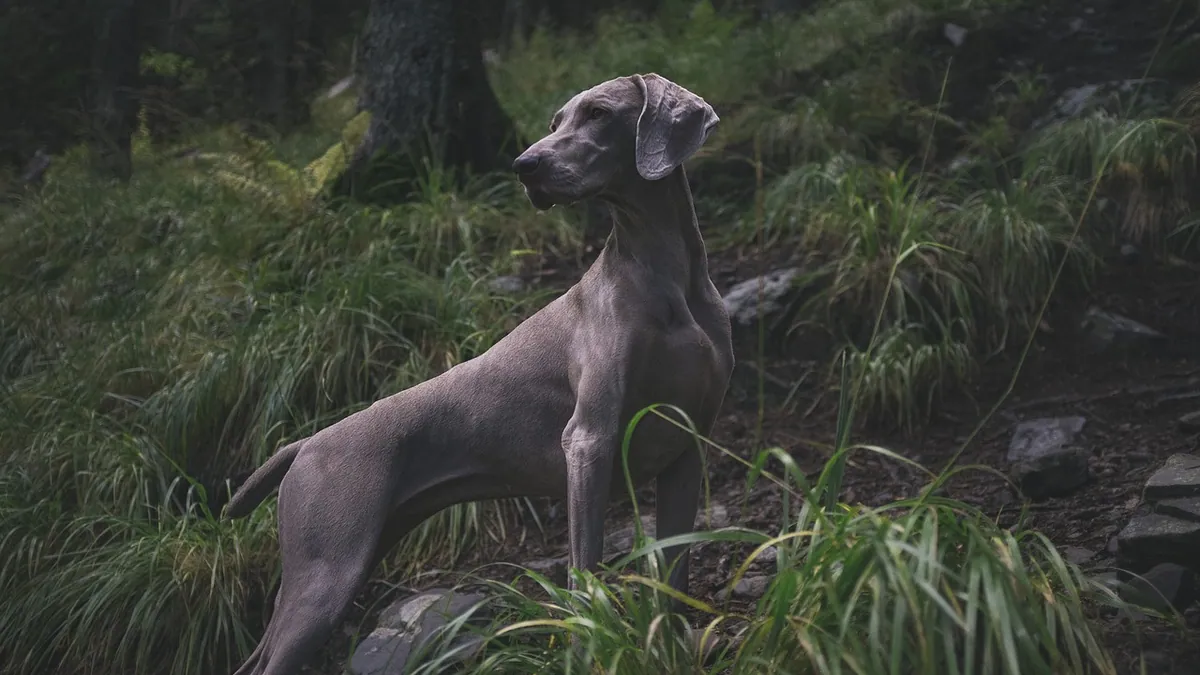
Are dogs domesticated wolves? No, not in any practical sense. Dogs descend from an ancient gray wolf lineage, but thousands of years of living alongside people reshaped their bodies, brains, and social behavior into something distinct. Your dog is a domestic animal with its own needs, and treating it like a captive wolf usually backfires.
This article is educational and is not a substitute for veterinary diagnosis or treatment.
Quick Answer
- Dogs and gray wolves share a common ancestor, but they are not the same animal and do not behave the same way.
- Modern dogs carry only a small amount of wolf ancestry, about 0.14% on average in one large genomic analysis [1].
- Domestication changed the dog brain, and dogs show roughly three times more brain shape variation than wolves do [2].
- Wolves and human-socialized dogs can react similarly to some human smells, so not every behavior difference comes from domestication [3].
- Training plans built on wolf pack hierarchy ideas fail because pet dogs are not wolves and do not live in wild wolf packs.
Are Dogs Just Domesticated Wolves? The Short Answer
The gray wolf (Canis lupus) is the direct ancestor of the domestic dog (Canis lupus familiaris) [4]. That shared ancestry is real. Dogs evolved through interactions between people and gray wolves during the Late Pleistocene, and they have been part of human societies ever since [1].
But ancestry is not identity. Dogs and wolves separate clearly at the level of nuclear DNA, and no single nuclear gene tree supports dogs as a simple subgroup of wolves [1]. In other words, the family tree is tangled at the edges, yet dogs are still their own thing.
That matters for you as an owner. A dog is not a wolf waiting to be "unlocked." It is a domestic animal shaped by thousands of generations of living with humans.
Why Dogs and Wolves Behave Differently
Domestication changed the dog brain
Domestication and selective breeding restructured brain form in dogs. Researchers compared brain shape in 203 dogs across 111 breeds and 40 wolves. Dogs had about three times more brain shape variation than wolves, along with expanded frontal lobes and regions linked to social interaction [2].
Those social brain regions are larger in cooperative breeds than in more independent breeds [2]. Ancient dog breeds also keep more wolf-like neuroanatomy than modern breeds do [2]. So breed and lineage both leave marks on how a dog thinks and responds to people.
Some reactions are ancient, not learned
It would be easy to assume every dog behavior comes from domestication. The science is more interesting than that. In one study, human-socialized dogs and wolves were exposed to human fear odor versus a neutral odor. Neither species preferred the fear smell, but both spent less time near the targets, looked at their handler more, and refused a choice more often when fear odor was present [3].
Dogs, but not wolves, were more likely to end the session early when fear odor was present [3]. That tells you two things. Some responses to human emotion are old, shared traits. Others, like a dog choosing to walk away from a stressful situation, may reflect domestication.
Mating and social systems diverged
Gray wolves and other wild canids are typically socially monogamous. Free-ranging domestic dogs are polygamous, with frequent half-siblings on both the maternal and paternal side [5]. Researchers suggest this shift may have started when dogs moved from apex predator to human commensal during early domestication [5].
Reproductive success in free-ranging dogs correlates with the strength of social interactions and the number of connections with opposite-sex individuals, which points to a preference for familiar mates [5]. Your pet dog is not living that life, but the underlying social flexibility is part of what makes dogs adaptable to human homes.
Why "alpha wolf" training fails
The alpha wolf model came from captive wolf packs that were not family groups. Wild wolf packs are typically family units, and free-ranging dogs do not organize the same way [5]. When you try to dominate your dog to prove you are the alpha, you are applying a model that does not fit the species in front of you.
Dogs respond to clear, consistent, reward-based training. They do not need to be "put in their place." If you want to understand how deep the dog-human bond runs, see Is Your Dog Human? Understanding Canine Behavior and Bonding.
Medical Causes to Rule Out Before Assuming It Is "Wolf Instinct"
Sudden behavior changes in a dog are often medical, not ancestral. Before you build a training plan around a new problem, have your veterinarian check for pain and illness.
Common medical causes of behavior change include:
- Dental pain, arthritis, or an injury that makes a dog snap when touched
- Ear infections or skin infections that cause irritability
- Thyroid disease, which can affect energy and mood
- Gastrointestinal upset that leads to house soiling
- Vision or hearing loss, which can cause startle responses
- Cognitive dysfunction in older dogs, a spontaneous model of neurodegeneration that shares features with human Alzheimer's disease [4]
That last point deserves attention. Canine cognitive dysfunction is a real condition in aging dogs, and researchers are still working out how domestication may have shaped susceptibility to it [4]. If your older dog seems confused, restless at night, or forgetful, that is a veterinary conversation, not a training problem.
Pain is the most common reason a friendly dog becomes irritable. A dog with a sore hip may growl when a child climbs on it. That is not wolf behavior. That is a dog saying "this hurts."
When Wolf-Like Assumptions Become a Problem
The trouble starts when owners interpret normal dog behavior through a wolf lens.
Common examples:
- Growling at a food bowl gets labeled dominance and punished. Punishing growling removes the warning without fixing the underlying fear or pain, and it raises the risk of a bite with no warning.
- A dog who pulls on leash gets labeled a pack leader. Leash pulling is usually about reinforcement history and equipment, not rank.
- A dog who guards a couch gets labeled territorial like a wolf. Resource guarding is a common canine behavior with well-studied treatment plans.
- A puppy who mouths gets labeled predatory. Puppy mouthing is normal development and responds to redirection.
These labels lead to punishment, and punishment leads to fear, suppression, and sometimes injury. The dog does not learn what you want. It learns that you are unpredictable.
What to Do Instead: A Step-by-Step Plan
Step 1: Get a veterinary baseline
Schedule an exam for any new or worsening behavior. Ask about pain, dental disease, thyroid testing, and, for older dogs, cognitive screening. If your dog is a senior, How Long Do Dogs Live can help you put age-related changes in context.
Step 2: Identify the trigger and the function
Write down what happens right before the behavior, what the behavior looks like, and what happens right after. A dog who barks at the window may be practicing a behavior that feels rewarding. A dog who hides under the bed may be avoiding something scary. The function drives the fix.
Step 3: Train with positive reinforcement
Reward the behavior you want and remove the reward for behavior you do not want, when it is safe to do so. Teach a solid "come," "sit," "leave it," and a relaxed settle on a mat. Keep sessions short, end on success, and use food your dog actually likes. If you are wondering what treats are safe, Can Dogs Have Cheese covers that.
Step 4: Meet the dog's real needs
Dogs need exercise, mental work, social contact, and predictability. A tired, enriched dog has less fuel for problem behavior.
- Physical activity matched to age, breed, and health status
- Food puzzles, snuffle mats, and chew items
- Training games that let the dog solve problems
- Rotating toys to keep novelty high
- Quiet rest spaces the dog can choose
Step 5: Change the environment
Management prevents rehearsal. If your dog counter-surfs, block the kitchen. If your dog bolts the door, use a baby gate. If your dog guards toys from another dog, feed and play them separately. Every prevented repetition makes training easier.
Step 6: Go at the dog's pace
For fear and anxiety, keep the trigger far enough away that your dog can still eat and think. Move closer only when your dog stays relaxed. This is the core of desensitization and counterconditioning, and it works for many dogs when done consistently.
What Not to Do
- Do not use alpha rolls, scruff shakes, or pinning. These methods raise fear and bite risk.
- Do not punish growling. Address the reason for the growl instead.
- Do not assume your dog needs a "pack leader." Your dog needs clear communication and consistent rewards.
- Do not rely on wolf documentaries to explain your dog's behavior. Dogs have their own evolutionary path [1][2].
- Do not skip the veterinary exam. Pain and illness mimic behavior problems.
- Do not expect breed stereotypes to predict your individual dog. Brain shape varies widely across dogs and breeds [2].
If you are curious about what genetic testing can and cannot tell you about your dog's ancestry, read Dog and Cat DNA Tests: What They Actually Tell You.
When to Involve a Veterinarian or Certified Behavior Professional
Call your veterinarian first for any sudden behavior change, especially in a dog over seven years old. Your vet can rule out medical causes and discuss whether a behavior-modification plan or medication is appropriate.
Ask for a referral to a veterinarian who specializes in behavior, or a certified applied animal behaviorist, when:
- Your dog has bitten a person or another animal
- Growling, snapping, or lunging is increasing
- Your dog cannot settle even with exercise and enrichment
- Fear or anxiety is affecting eating, sleeping, or daily life
- You feel unsafe or overwhelmed managing your dog
- A training plan has not improved things after several weeks of consistent work
A qualified professional can build a plan for your specific dog. That plan will look different from a wolf management plan, because your dog is not a wolf.
Limitations and When to Contact a Veterinarian
This article gives general information. Individual cases need a veterinarian who can examine your dog, ask about the full history, and account for age, breed, health, and home environment.
Contact a veterinarian the same day if your dog:
- Has a sudden change in behavior, appetite, or thirst
- Is pacing, panting, or unable to settle for hours
- Is limping, yelping, or guarding a body part
- Has vomiting, diarrhea, or straining to urinate along with behavior changes
- Seems disoriented, stares at walls, or gets stuck in corners
Go to an emergency clinic now if your dog:
- Has a seizure, collapses, or cannot stand
- Is having trouble breathing
- Has a swollen, painful abdomen
- Ate something toxic or unknown
- Bit a person hard enough to break skin, or was bitten by another animal
- Is bleeding heavily or has pale gums
For suspected poisoning, call the ASPCA Animal Poison Control Center at (888) 426-4435 or the Pet Poison Helpline at (855) 764-7661. Have your dog's weight, the product name, and the amount ingested ready.
Frequently Asked Questions
Are dogs domesticated wolves?
Dogs descend from an ancient gray wolf lineage, but they are a separate domestic animal with their own genetics and behavior [4][1]. Calling a dog a domesticated wolf oversimplifies thousands of years of change. Treat your dog as a dog.
Do dogs have wolf DNA?
Yes, but usually very little. One large analysis found that about 64.1% of modern breed dogs carry wolf ancestry from admixture that happened nearly a thousand generations ago, and that ancestry now covers roughly 0.14% of their genome [1]. Ancient breeds tend to keep more wolf-like brain anatomy than modern breeds [2].
Is my dog trying to dominate me?
No. Dominance is not a useful framework for living with a pet dog. Free-ranging dogs do not form the same social structure as wild wolf packs, and their mating system is polygamous instead of monogamous [5]. Your dog is more likely responding to reinforcement, fear, or pain than trying to take over.
Why does my dog act like a wolf sometimes?
Some behaviors are shared with wolves because they are ancient traits. In one study, human-socialized dogs and wolves both reacted to human fear odor by staying farther from the target and looking at their handler more [3]. Other wolf-like behaviors, such as digging or chasing, are normal dog behaviors with their own rewards.
Can I train my dog the way trainers work with wolves?
No. Wolf handling relies on distance, barriers, and species-specific social rules that do not apply to pet dogs. Dogs learn well through reward-based training, environmental management, and meeting their exercise and enrichment needs. If you want to understand why dogs bond with people the way they do, see Cute Dogs: The Science of Cuteness and Its Impact.
Related Articles
- Cute Dogs: The Science of Cuteness and Its Impact
- Can Dogs Have Cheese
- Dog and Cat DNA Tests: What They Actually Tell You
- How Long Do Dogs Live
- Is Your Dog Human? Understanding Canine Behavior and Bonding
- Do Dogs Control Their Shedding
- Are Dogs Descended From Wolves? What Science Says
- Are Dogs Wolves? How Domestication Changed Your Dog
- Do Dogs Think? What Science Says About the Canine Mind
References
- A legacy of genetic entanglement with wolves shapes modern dogs. Proceedings of the National Academy of Sciences of the United States of America, 2025.
- Mosaic evolution and increased integration underpin the evolvability of the dog brain. Evolution; international journal of organic evolution, 2026.
- Human-socialized dogs and wolves show similar behavioural reactions to human fear odour. Animal cognition, 2026.
- Unveiling the significance of dog domestication in cognitive dysfunction: Are wolves protected?. Open veterinary journal, 2025.
- Mating system of free-ranging domestic dogs and its consequences for dog evolution. Proceedings of the National Academy of Sciences of the United States of America, 2025.