Are Dogs Left or Right Pawed? The Science of Dog Laterality
By Dr. Zubair Khalid, DVM, MS, PhD ·
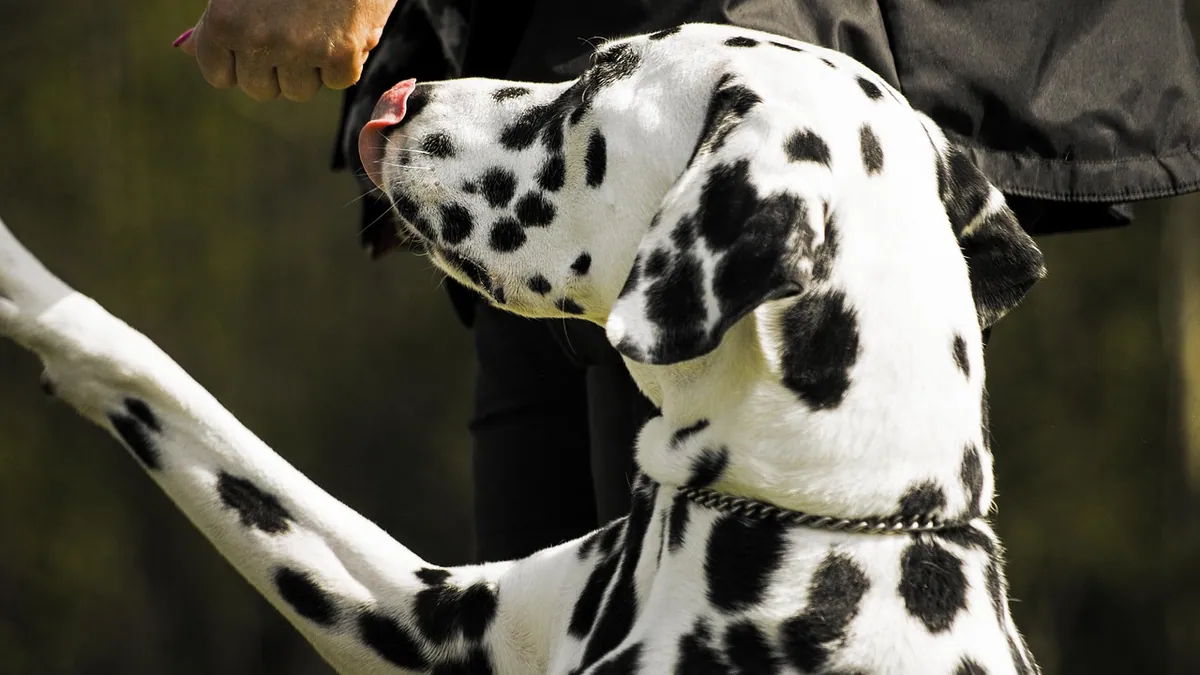
Are dogs left or right handed? Most dogs do show a paw preference, but it is usually mild, and many dogs are close to ambidextrous. In other words, your dog probably has a favorite paw for some tasks, yet still uses both paws freely. Researchers measure this with paw preference tests, and the results can shift with stress, age, sex, and even your own handedness.
This article is educational and is not a substitute for veterinary diagnosis or treatment.
Quick Answer
- Most dogs have a paw preference, but it is often weak. A dog may favor one paw for one task and switch for another.
- Population studies lean toward a right paw bias overall, though individual dogs vary widely [1].
- Stress changes paw use. Acutely stressed dogs tend to shift toward using both paws equally, and chronically stressed dogs show weaker paw preference overall [2].
- Your own handedness may matter. Left-handed owners were more likely to have left-pawed dogs, and right-handed owners more likely to have right-pawed dogs [3].
- You can test your dog at home with a simple food-reach or toy-reach task, repeated over several days for a clearer picture [3][1].
What Paw Preference Actually Means in Dogs
Paw preference is one form of behavioral lateralization. That means the dog's brain favors one side of the body for certain actions. In people, we call this handedness. In dogs, we call it pawedness or paw preference.
Dogs are not strongly one-pawed the way most people are strongly one-handed. A dog that lifts the left paw to ask for a treat may still lead with the right paw when stepping off a curb. That inconsistency is normal.
Researchers use motor tasks to measure this. Common ones include a food-reaching test, where the dog reaches into a bowl or tube, and a paw task, where the dog lifts a paw toward a person's hand [3][2]. These tests are simple on purpose. They need to work for different body sizes and ages, which is a real challenge in comparative research [4].
One more layer: lateralization shows up in dogs beyond the paws. Dogs can read another dog's emotional state by watching which way the tail wags, with right-sided wagging and left-sided wagging producing different responses [5]. Dogs also show left-brain or right-brain visual biases depending on whether they are anticipating a reward or feeling frustrated [6]. Paw preference is just the easiest piece for owners to observe.
Are Dogs Left or Right Pawed? What the Research Shows
There is no single answer for all dogs. Both left-pawed and right-pawed dogs exist, and plenty of dogs sit in the middle.
In one study of 272 dogs and 137 cats, dogs showed an overall preference for the right paw in both a food-reaching task and a toy-reaching task [1]. That is a group average, not a rule for your dog.
Sex and age seem to play a role. In one study, females showed a right paw bias at all age groups, while males had a left paw bias in puppyhood and a right paw bias in older age groups [3]. That is an interesting pattern, but it does not mean you can predict your individual dog's paw from sex or age alone.
Owner handedness is another factor. Dogs tested at home over 10 days were more likely to match their owner's handedness, with left-handed owners more likely to have left-pawed dogs [3]. This does not prove that owners train the preference into their dogs. It may reflect shared environment, how the dog is handled, or something else researchers have not pinned down.
Neuter status has been studied too. In dogs, life stage and the interaction between neuter status and life stage tended to influence how strongly a dog preferred one paw, though the findings were not clear-cut [1]. This area is not well established in veterinary research.
Why Does My Dog Use One Paw More?
Normal reasons come first. Most paw preference is simply how your dog's brain is wired. Cerebral asymmetries, meaning differences between the left and right sides of the brain, are normal and widespread across species [2][7].
Genetics and early experience also shape behavior. Behavior can be inherited to some degree, and maternal influence, litter mates, human handling, and early exposure to new experiences all play a part [8]. Brain chemistry and hormones influence temperament and behavior as well [8].
Task matters. A dog may use one paw for a steady reach into a Kong toy and the other for batting at a toy on the floor. The first paw used in a food-reaching test tends to predict general paw preference reasonably well, but it is not a perfect predictor [2].
Stress matters too. In one study, dogs shifted toward ambilaterality (using both sides about equally) after an acute stressor, and chronically stressed dogs had significantly lower absolute laterality scores [2]. A weaker paw preference is not proof of stress by itself, but it is a signal worth understanding.
Medical Causes to Rule Out Before You Blame "Pawedness"
If your dog suddenly changes which paw it uses, or stops using one paw, that is a medical question, not a personality trait.
Pain is the most common reason a dog avoids a limb. A dog with a sore shoulder, elbow, or wrist may hold that leg up, limp, or refuse to place the paw. Your veterinarian will examine the limb, check joint range of motion, and may recommend imaging.
Neurologic problems can also change limb use. A dog with a spinal issue or nerve problem may drag a paw, knuckle over, or scuff the top of the foot. These signs need prompt evaluation.
Nail injuries, paw pad cuts, foreign objects, and skin infections between the toes can all make a dog reluctant to bear weight on one paw. Your veterinarian can examine the paw closely and treat the underlying issue.
For a closer look at normal paw structure and function, see Dog Paw. If your dog's limb use changes after an injury or surgery, your veterinarian can explain what is expected during recovery.
Does Paw Preference Matter for Training or Sports?
For most pet dogs, paw preference is a fun detail, not a training problem. It does not usually affect obedience, walking, or daily life.
In some activities, it may matter more. Agility, dock diving, and other sports involve repeated one-sided takeoffs and landings. A dog with a strong side bias may load one limb more often. That does not mean the dog will get injured, but it is one reason to keep your dog lean, fit, and well-conditioned.
If your dog competes or works, ask your veterinarian or a certified canine rehabilitation professional about conditioning. They can assess gait, muscle symmetry, and strength. For background on forelimb structure, see Canine Forelimb Musculature: Topography and Innervation.
For everyday owners, the practical value is awareness. If you know your dog favors the left paw, you will notice sooner if it suddenly starts avoiding that leg.
How to Do a Paw Preference Test for Dogs at Home
A paw preference test for dogs is easy to set up. Keep it low-key and fun.
Step 1: Pick a simple task
Use a food-reaching task or a toy-reaching task. Put a small treat or a favorite toy just inside a narrow container, like a low bowl with a slight lip, so your dog has to reach in with one paw. A food-reaching test and a toy-reaching test are both used in published research [1].
Step 2: Set a baseline
Do 10 to 20 trials per session. Offer the item in the center, not off to one side. Record which paw your dog uses first each time.
Step 3: Repeat over several days
One session is not enough. In one study, owners tested their dogs at home over 10 days [3]. More trials give you a more reliable picture.
Step 4: Score it
Count left-paw uses and right-paw uses. If your dog uses one paw for roughly 70 percent or more of trials, that is a noticeable preference. If it is close to 50/50, your dog is closer to ambilateral.
Step 5: Note the context
Test in a calm place first. Then, if you want, test again in a busier setting. Stress can shift paw use toward both paws equally, so context matters [2].
Do not force the test. If your dog loses interest, stop and try another day. This is a game, not a medical procedure.
What Not to Do
Do not punish a dog for using a certain paw. There is no evidence that paw preference is a behavior problem, and punishment can create real behavior problems.
Do not assume a left-pawed dog is "creative" or a right-pawed dog is "logical." Those claims come from human pop psychology, not from dog research.
Do not use paw preference to diagnose stress or illness on its own. A weaker paw preference has been linked to chronic stress in a study setting [2], but that is a group finding. Your dog's full behavior, health history, and environment matter far more.
Do not ignore a sudden change in paw use. A dog that starts limping, licking one paw constantly, or refusing to put a paw down needs a veterinary visit.
Do not read too much into a single test session. Paw preference can vary by task and by day [3][1].
When Paw Preference Becomes a Problem
Paw preference itself is not a problem. The problem is usually something else that shows up as a change in paw use.
Watch for these patterns:
- Sudden avoidance of one paw or leg
- Limping that comes and goes, or gets worse after rest
- Licking, chewing, or biting at one paw
- Swelling, heat, or a visible wound on a limb
- Dragging a paw or scuffing the nails on one side
- Reluctance to jump, climb stairs, or rise from lying down
- Whining or pulling away when you touch a limb
Any of these deserves a veterinary exam. Your veterinarian will check the limb, the paw, and the neurologic system as needed. If your dog needs a blood draw during the visit, techniques like Lateral Saphenous Venipuncture in Dogs: Technique and Troubleshooting are routine and low stress for most dogs.
If your dog's behavior changes in other ways, such as new fear, aggression, or house soiling, that is a separate issue. Behavior is shaped by genetics, experience, environment, and physiology [8]. A veterinarian or certified behavior professional can help you sort out what is medical and what is behavioral. For a related read on reading dog body language, see The Smile Dog: Separating Myth from Reality in Canine Behavior.
Limitations and When to Contact a Veterinarian
Paw preference research in dogs is still growing. There is no single standard test that works across all dogs, ages, and body sizes, which makes comparisons between studies tricky [4]. Findings about sex, neuter status, and owner handedness are interesting but not settled [3][1]. Do not treat any of this as a diagnostic tool for your individual dog.
Contact your veterinarian the same day if your dog:
- Suddenly stops using one paw or leg
- Starts limping and the limp is getting worse
- Has swelling, heat, or an open wound on a limb
- Is licking or chewing one paw to the point of redness or hair loss
Go to an emergency clinic now if your dog:
- Cannot bear weight on a limb at all
- Has a limb that looks deformed or is dangling
- Is dragging a limb and seems confused or wobbly
- Has heavy bleeding from a paw or leg
- Yelps when the limb is touched and will not let you near it
Schedule a routine visit if your dog:
- Has a mild, intermittent limp that has lasted more than a few days
- Seems stiff after rest but loosens up with activity
- Has gradually changed how it uses one paw over weeks
Individual cases need a veterinarian who can examine your dog in person. No article can replace that.
Frequently Asked Questions
Can you tell if a dog is left or right pawed without a test?
Not reliably. Most dogs show only a mild preference, so casual observation often misses it. A structured paw preference test with repeated trials gives you a much clearer answer.
Do dogs have a dominant paw like people have a dominant hand?
Usually not to the same degree. People are often strongly one-handed, while dogs tend to be more flexible and may switch paws depending on the task. Some dogs do show a strong, consistent bias, but that is less common.
Does paw preference change as a dog gets older?
It can. Age and life stage have been linked to differences in paw preference patterns, and males in one study shifted from a left paw bias in puppyhood to a right paw bias in older age groups [3]. Stress and environment can also shift paw use over time [2].
Can stress really change which paw my dog uses?
Yes. In one study, dogs shifted toward using both paws more equally after an acute stressor, and chronically stressed dogs showed weaker paw preference overall [2]. That does not mean a weak preference proves stress, but it is one reason to look at your dog's whole situation.
Is paw preference linked to temperament or personality?
Researchers are still working on this. Lateralization has been connected to emotional processing in dogs, including how they respond to left-sided versus right-sided tail wagging [5] and how their visual attention shifts with positive versus negative emotional states [6]. A direct, reliable link between paw preference and everyday personality is not well established.
Related Articles
- Surgical Approaches to the Canine Stifle: Medial and Lateral
- Dog Paw
- Lateral Saphenous Venipuncture in Dogs: Technique and Troubleshooting
- Canine Forelimb Musculature: Topography and Innervation
- The Smile Dog: Separating Myth from Reality in Canine Behavior
- Dog Limping Front Right Paw
- Are Cats Left or Right Pawed? Feline Handedness
- Why Does My Dog Cross Her Paws or Legs?
- Do Dogs Walk on Their Toes? Dog Feet and Toe Anatomy
References
- Investigating the influence of neuter status on paw preference in dogs and cats. Laterality, 2022.
- Acute and chronic stress alter behavioral laterality in dogs. Scientific reports, 2023.
- Does owner handedness influence paw preference in dogs?. Animal cognition, 2023.
- Measuring paw preferences in dogs, cats and rats: Design requirements and innovations in methodology. Laterality, 2024.
- Social Behavior of Dogs - Behavior. Merck Veterinary Manual.
- Seeing both sides: dogs' eyes reveal valence-sensitive shifts between emotional states. Proceedings. Biological sciences, 2025.
- Limb asymmetry assessment: Aligning human and dog approaches to laterality. Laterality, 2026.
- Introduction to Behavior of Dogs - Dog Owners. Merck Veterinary Manual.