Are Cats Friendly? What Feline Friendliness Really Means
By Dr. Zubair Khalid, DVM, MS, PhD ·
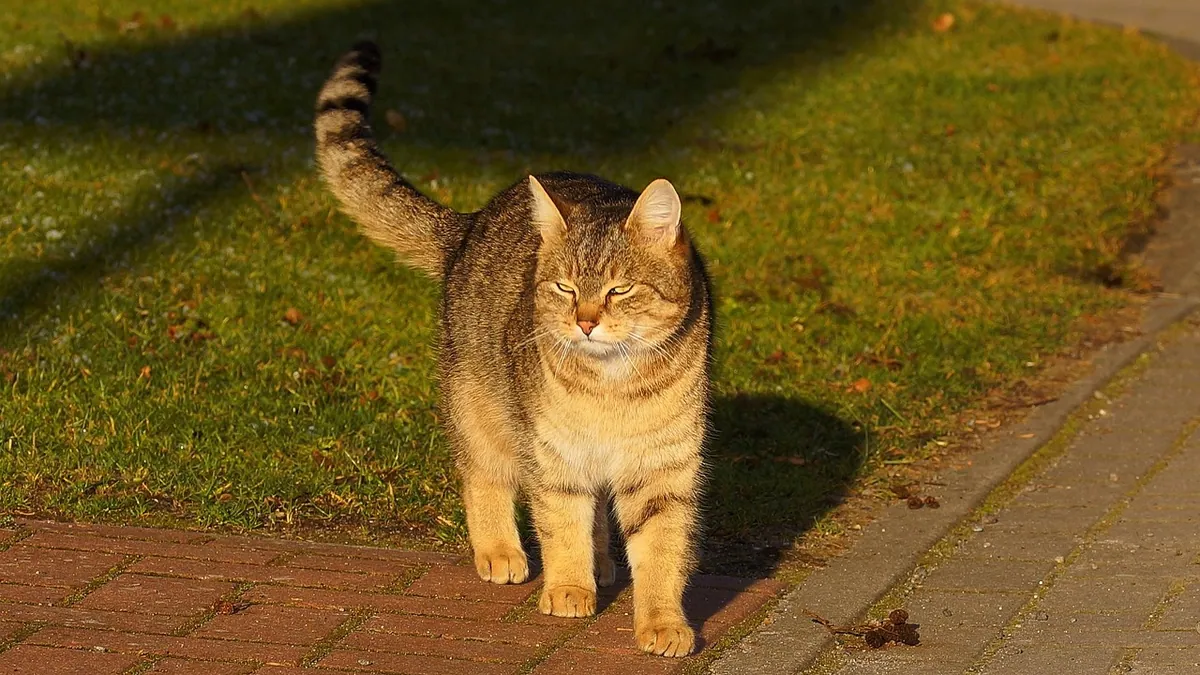
Are cats friendly? Yes, many cats are affectionate and seek out human company, but friendliness in cats is not a fixed trait. It varies by the individual cat, the situation, and how the cat was raised. Understanding normal cat social behavior helps you read your cat correctly and build a stronger bond.
This article is educational and is not a substitute for veterinary diagnosis or treatment.
Quick Answer
- Cats are social animals in the right circumstances, and many enjoy living with people and other cats [1].
- Friendliness is individual. Temperament differences between cats are stable over time and across situations [2].
- Cats show affection through rubbing, grooming, nose touching, and simply staying close, not only through obvious cuddling [3].
- Kittens handled daily by people in their first month tend to be more outgoing and social toward humans [3].
- Cats often prefer to interact on their own terms. Forced or restrained contact can raise stress hormones, while calm, passive contact can lower them [4].
Are Cats Affectionate? What Normal Cat Social Behavior Looks Like
The old idea that cats are solitary is only half true. Cats are very sociable in the right circumstances [1]. Outdoor cats form stable groups when food is available, and indoor cats often get along well in groups [1]. The basic feline social unit is a mother cat and her kittens, and in stable outdoor groups, kittens may stay with their mother or her extended social group for the first 12 to 18 months of life [1].
Cats manage their social lives through three main channels. They use distancing, which means moving away or keeping space. They use affiliative displays, which include rubbing, grooming, and nose touching. They also use antagonistic behaviors, such as hissing, swatting, scratching, and biting [3]. Cats with better relationships spend more time closer together than cats with poor relationships, but in general, cats spend most of their time away from other individuals [3]. The same pattern applies to how cats interact with people [3].
That last point explains a lot. A cat who naps two rooms away from you is not rejecting you. She is behaving like a normal cat. Affection in cats often looks like choice. Your cat sits near you, follows you to the kitchen, slow-blinks at you, or leans into your hand. These are affiliative signals [3].
Cats also communicate with their voices. Meows are context-dependent signals directed mainly at humans, while purrs are low-frequency sounds produced in friendly contexts [5]. In one analysis of cat sounds, purrs carried more individual information than meows, meaning a purr is a more personal signal than a meow [5]. If you want to understand your cat's vocal habits better, see Cat Excessive Meowing: What Is Your Cat Trying to Say?.
Why Are Cats Aloof? The Real Reasons Behind the Stereotype
Several normal factors explain why some cats seem distant.
Early handling matters. Kittens handled daily by people during their first month of life develop more rapidly, are more outgoing, and are more social toward humans, with fewer aggression problems [3]. Kittens isolated from humans during that first month are reluctant to approach people [3]. This early window shapes how friendly a cat is likely to be for life.
Play history matters. Social play, including biting, chasing, and play fighting, starts around 4 weeks of age, peaks at 6 to 9 weeks, and declines at 12 to 14 weeks [3]. Kittens learn social skills from their littermates during this period. A kitten raised alone may direct play behavior at people instead, which can look like friendliness or like nipping, depending on the moment [3].
Breeding history matters. Unlike dogs, cats have not been bred to perform specific tasks. Breeds were created based on factors like hair color or length, not behavior [1]. So there is no breed-wide guarantee of friendliness the way there is for some working dog lines.
Temperament differs between cats. Temperament refers to individual differences in behavior that stay stable over time and across contexts [2]. Some cats are bold and outgoing. Others are cautious. Both are normal.
Context matters. In a study of cats in a cat café, cat-human interactions were absent during 44.4% of observed time, and cats varied from engaging with people to avoiding them [6]. Even in a setting built around human contact, many cats chose not to interact much. Cats also preferred elevated structures and cat-only rooms during busy periods [6]. Height and escape routes help cats feel safe, and safety often comes before socializing.
So when people ask why cats are aloof, the honest answer is often that the cat is being a cat. Distance is a normal social tool, not a sign of dislike [3].
Medical Causes to Rule Out
A sudden change in friendliness is different from a lifelong personality. If your social cat becomes withdrawn, or a calm cat becomes irritable, think health first.
Pain is a common hidden cause of behavior change in cats. Dental disease, arthritis, and urinary problems can all make a cat avoid handling or hide more. Cats are good at masking discomfort, so a behavior shift may be the only visible clue.
Other medical possibilities include thyroid disease, which can cause irritability or restlessness, and cognitive changes in older cats, which can alter social patterns. Sensory decline, including vision and hearing loss, can make a cat startle more easily and pull away from contact.
There is no single test that covers all of this. Your veterinarian will decide which exams and lab work fit your cat's age, history, and signs. If your cat's friendliness changes, a routine veterinary visit is the right first step, before any behavior plan.
When Friendly Behavior Becomes a Problem
Friendliness itself is rarely the problem. The problems usually fall into a few patterns.
Overstimulation. Some cats seek contact, then suddenly bite or swat. This is often a cat whose tolerance for touch ran out before her signals were noticed. Hissing, swatting, scratching, and biting are antagonistic behaviors cats use to end interaction [3]. Treat them as communication, not betrayal.
Conflict in a multi-cat home. Cats with poor relationships spend less time close together [3]. If your cats avoid each other, block doorways, or guard resources, the household social structure needs work.
Stress from forced contact. In a study of owner-cat interactions, forced interactions were linked to rising cortisol and falling oxytocin, the opposite of what happened with passive contact [4]. Cats with secure attachment styles showed more positive hormonal responses to human interaction, while insecure cats showed higher cortisol or limited hormonal benefits [4]. Pushing contact on a cat who is not ready can make the relationship worse, not better.
Aggression toward people. This deserves a veterinary conversation. Pain, fear, and unmet needs can all drive it, and the plan depends on the cause.
How to Build a Friendlier Relationship With Your Cat
Let your cat choose the contact
Passive interactions, where you are present but not demanding attention, were associated with increased oxytocin and decreased cortisol in pet cats [4]. Sit on the floor, read, and let your cat approach. Pet briefly, then pause. If your cat stays or leans in, continue. If she walks away, let her go. This teaches her that contact is safe and optional.
Read the signals
Watch for affiliative behaviors: rubbing against you, grooming you, nose touching, slow blinking, kneading, and tail-up greetings [3]. Watch for early stress signals too: flattened ears, a twitching tail, dilated pupils, and skin ripples along the back. Respond to the early signals so your cat never has to escalate to a swat.
Give height and hiding places
Cats in a busy shared space preferred elevated structures and cat-only rooms when occupancy was high [6]. Add cat trees, shelves, and quiet rooms at home. Vertical space lets your cat observe without being cornered.
Respect the social budget
Cats spend most of their time away from others, including people [3]. A cat who leaves after ten minutes of cuddling is normal. Short, frequent, positive interactions beat long sessions that end in a bite.
Use play to build trust
Social play peaks in kittens at 6 to 9 weeks and declines by 12 to 14 weeks, but adult cats still play [3]. Daily wand-toy sessions let your cat practice chasing and pouncing with you as a safe partner. End with a treat or a meal so the session closes on a good note.
Set up a multi-cat home for peace
Provide separate feeding stations, water bowls, litter boxes, and resting spots. Cats with better relationships choose to be closer, but they need the option to separate [3]. If you are adding a cat, plan a slow introduction. See Introducing A New Cat To A Cat.
Match your expectations to your cat
Temperament is stable over time and across contexts [2]. A cautious cat may never become a lap cat, and that is fine. Meeting your cat where she is builds more trust than trying to change her core personality. If you are choosing a cat, temperament matters as much as looks. See Cat Adoption: Complete Guide to Finding Your Perfect Feline Friend.
What Not to Do
Do not punish. Yelling, spraying water, or tapping a cat's nose teaches fear, not friendliness. Punishment also damages the trust you are trying to build. Cats respond to predictable, positive routines.
Do not force contact. Picking up a cat who is pulling away, or holding her through a struggle, mimics the forced interactions linked to higher cortisol and lower oxytocin [4]. Let her come to you.
Do not assume a cat is unfriendly because she is quiet. A cat who sits nearby without touching is still choosing your company. That is affiliative behavior in feline terms [3].
Do not believe the lone wolf myth. Cats form stable social groups outdoors and often live well together indoors [1]. Solitude is a preference for some cats, not a rule for the species.
Do not skip the veterinary visit. A sudden personality change is a medical question until proven otherwise.
Do not compare your cat to a dog. Cats were not bred for specific behaviors the way dogs were [1]. A cat's affection looks different, and that difference is normal.
When to Involve a Veterinarian or Behavior Professional
Contact your veterinarian if your cat's social behavior changes, especially if a friendly cat becomes withdrawn or a calm cat becomes aggressive. Also call if you see new hiding, appetite changes, litter box changes, or resistance to being touched.
Ask your veterinarian for a referral to a veterinary behaviorist or a certified behavior professional if aggression toward people or other cats is present, if someone in the home has been bitten badly enough to break skin, or if home changes have not helped after several weeks. Behavior problems have medical and environmental layers, and a professional can sort them out.
Limitations and When to Contact a Veterinarian
This article describes general feline social behavior. Every cat is an individual, and individual cases need a veterinarian who can examine your cat and review her history.
Contact your veterinarian the same day if your cat stops eating, hides constantly, vocalizes in a new way, or suddenly avoids all handling. These can signal pain or illness.
Go to an emergency clinic now if your cat has trouble breathing, cannot urinate, is straining in the litter box with no urine produced, collapses, or has a seizure. Also seek emergency care for a deep bite wound or heavy bleeding.
Schedule a routine visit if your cat's friendliness changes gradually, if she seems stiff when jumping, if she is grooming less, or if you notice weight change. Older cats deserve a check for pain and cognitive changes when their social habits shift.
Frequently Asked Questions
Are cats friendly to humans by nature?
Cats are social animals in the right circumstances, and many form close bonds with people [1]. How friendly a cat becomes depends on genetics, early handling, and current environment [3][2]. There is no single answer that fits every cat.
Do cats like humans or just the food we provide?
Cats form real social attachments, not only food associations. Owner-cat interactions change oxytocin and cortisol levels in cats, and secure cats show positive hormonal responses to contact with their people [4]. That said, cats also value choice, and many prefer brief contact on their own terms.
Why does my cat sit near me but not want to be held?
Sitting nearby is affiliative behavior, a normal way cats show comfort with another individual [3]. Being held removes your cat's ability to leave, which many cats find stressful. Respecting her preferred style of closeness usually increases how much time she chooses to spend with you.
Can a shy cat become friendly?
Yes, many cautious cats warm up with patience, predictable routines, and passive contact that lets them set the pace [4]. Early handling shapes a cat's baseline sociability, so some cats stay reserved for life [3]. Progress is possible, but the timeline belongs to the cat.
Do cats get jealous or hold grudges?
There is no strong veterinary evidence that cats experience jealousy or hold grudges the way people describe. Cats do react to changes in routine, resources, and attention with stress behaviors. If your cat seems upset after a change, look for a practical cause like a new pet, a moved litter box, or a schedule shift.
How do I know if my cat actually likes me?
Look for affiliative signals: rubbing against you, grooming you, nose touching, following you, slow blinking, and choosing to rest near you [3]. Purring in a relaxed posture is another positive sign [5]. If your cat seeks you out and stays relaxed in your presence, that is feline affection.
Related Articles
- Cat Adoption: Complete Guide to Finding Your Perfect Feline Friend
- Why Are Cats So Cute? The Science Behind Feline Adorableness
- What Your Cat’s Meme-Worthy Behavior Really Means: A Vet’s Perspective
- Cat Excessive Meowing: What Is Your Cat Trying to Say?
- Introducing A New Cat To A Cat
- Cute Cats: Understanding the Health Behind the Adorableness
- Cat Not Affectionate? Understanding Feline Personality
- Are Cats Loyal? How Felines Really Bond With Owners
- Do Cats Like Being Pet? Reading the Signs
References
- Normal Social Behavior in Cats - Cat Owners. Merck Veterinary Manual.
- Temperament in Domestic Cats: A Review of Proximate Mechanisms, Methods of Assessment, Its Effects on Human-Cat Relationships, and One Welfare. Animals : an open access journal from MDPI, 2020.
- Social Behavior of Cats - Behavior. Merck Veterinary Manual.
- EXPRESS: The hormonal effects of owner-cat interactions on pet cats of different potential attachment styles. Journal of feline medicine and surgery, 2026.
- Meows encode less individual information than purrs and show greater variability in domestic than in wild cats. Scientific reports, 2025.
- Cats in a Cat Café: Individual Cat Behavior and Interactions with Humans. Animals : an open access journal from MDPI, 2025.