Are Cats Cleaner Than Dogs? Mouths, Grooming, and Germs
By Dr. Zubair Khalid, DVM, MS, PhD ·
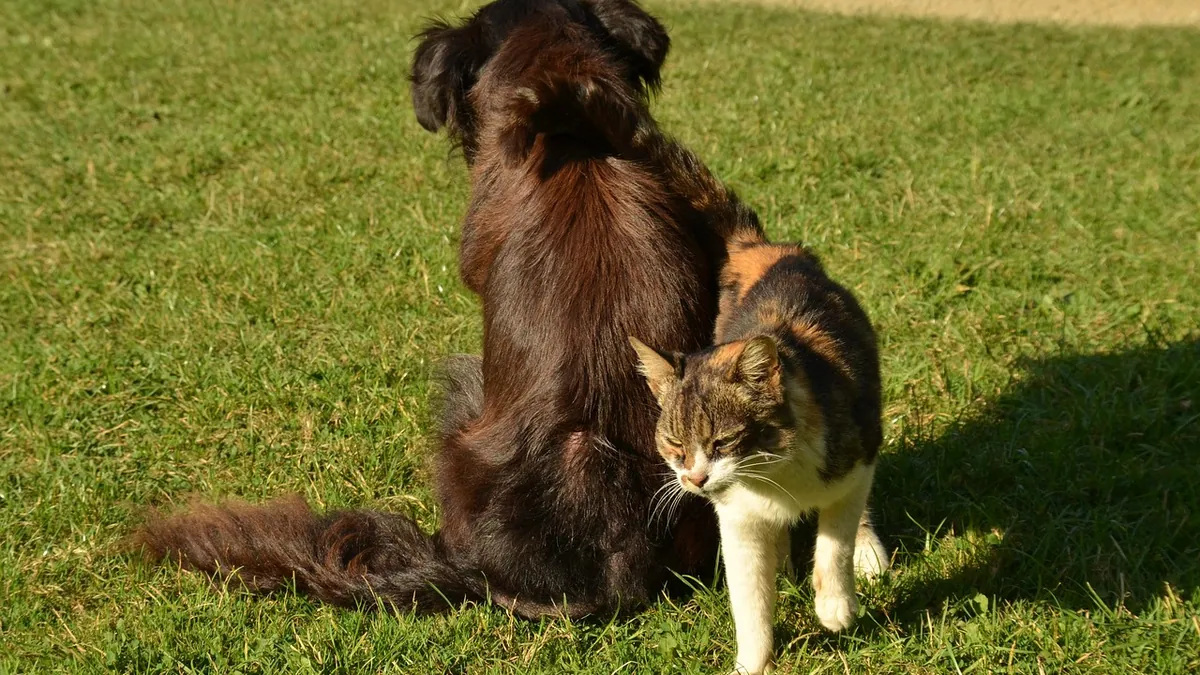
Are cats cleaner than dogs? Not really. Cats groom themselves more often and usually smell less, but "cleaner" depends on what you measure, and the popular claim that a cat's mouth is cleaner than a dog's is a myth. Both species carry dense, diverse oral bacteria, and both can spread germs to people through bites, licks, and feces. This article is educational and is not a substitute for veterinary diagnosis or treatment.
Quick Answer
- A cat's mouth is not cleaner than a dog's. Both mouths are full of bacteria adapted to that species, and neither is safe for wound licking or human bites [1][2].
- Cats spend more time grooming themselves than dogs do, which is why they often look and smell tidier. That behavior is about coat maintenance, not germ control.
- Both cats and dogs can carry zoonotic (people-spreading) bacteria and parasites in their feces, so poop handling matters more than mouth comparisons [3].
- Dental disease is common in both species. Up to 90% of older cats have oral disease, and cats with periodontitis show clear shifts in their oral bacteria [2][1].
- The hygiene habits that protect your household are simple: wash your hands, scoop litter and pick up waste promptly, and brush your pet's teeth.
Are Cats Cleaner Than Dogs? What the Question Really Means
People usually mean one of three things when they ask this. Does the animal smell? Does it keep itself tidy? Is its mouth less germy? The answers differ for each.
Cats are fastidious groomers. They lick their coats, paws, and rear ends many times a day, which removes loose hair, dirt, and some surface debris. Dogs do clean themselves, but usually less thoroughly and less often. A dog may lick its paws or flank, but most dogs rely on you for bathing, brushing, and ear care.
That grooming difference explains the smell gap. Cats generally have less body odor because they remove oils and debris from their coats regularly. Dogs accumulate more of that material between baths, especially in skin folds, ears, and long coats.
None of this makes a cat sterile or a dog filthy. Both are animals that live in homes, shed bacteria, and carry germs on their fur, paws, and mouths.
Are Cats' Mouths Cleaner Than Dogs'? The Myth, Explained
This is the claim that needs the most correcting. A cat's mouth is not cleaner than a dog's mouth. The two mouths simply host different bacterial communities.
The healthy feline mouth is dominated by several bacterial groups, including Proteobacteria, Bacteroidota, Bacillota, Fusobacteria, and Actinobacteria, with common genera such as Porphyromonas, Moraxella, Capnocytophaga, and Fusobacterium [2]. Healthy cats also show a fairly consistent core microbiome that includes Porphyromonas species, Bacteroides, Pasteurellaceae, Helcococcus, and Moraxella [4].
When a cat develops periodontal disease, that community shifts. Cats with periodontitis show changes in the levels of organisms such as Treponema denticola, Porphyromonas macacae, and Odoribacter denticanis, along with altered bacterial function in the mouth [1]. Oral disease is not rare in cats. It affects up to 90% of older cats, and periodontal disease, chronic gingivostomatitis, and tooth resorption are the main conditions seen [2].
Dogs have their own rich oral flora, and dog bites are well known to introduce bacteria deep into tissue. The idea that a dog's mouth is "clean" because dogs lick their wounds is folklore, not microbiology. Saliva contains enzymes and some antibacterial compounds, but it also contains bacteria. Licking a wound can introduce infection instead of prevent it.
So when someone asks whether dog or cat saliva is cleaner, the honest answer is that neither saliva is clean in the way people imagine. Both are body fluids with their own microbial populations.
Do Dogs Clean Themselves Like Cats?
Not in the same way. Dogs groom, but their self-cleaning is limited.
Dogs lick their paws, genitals, and sometimes their flanks. They may nibble at their coats. Some dogs roll, scratch, and rub against surfaces. This spreads oils and removes some loose hair, but it does not replace bathing, brushing, nail trims, or dental care.
Cats have physical advantages for self-grooming. Their tongues have rough papillae that help remove debris, and their flexible spines let them reach most of their bodies. Even so, cats cannot effectively clean their own teeth, and grooming does nothing for periodontal disease.
There is also a downside to feline grooming. When a cat grooms more than usual, it can signal a problem. If your cat is overgrooming, that deserves a look. You can read more in Why Is My Cat Grooming So Much?.
Hair loss in both species is usually a sign of an underlying issue instead of a hygiene failure. In dogs and cats, alopecia more often reflects endocrine, hereditary, infectious, allergic, parasitic, or self-induced causes than simple poor grooming [5]. If your pet is losing coat, that is a veterinary conversation, not a bathing problem.
Germs That Matter More Than Mouth Comparisons
If you want to compare hygiene risk between cats and dogs, feces are a better place to look than saliva.
A study of shelter dogs and cats found parasites in 17.1% of dog fecal samples and 38.5% of cat fecal samples [3]. The most common was Giardia duodenalis in both species, including potentially zoonotic genotypes. Cats also commonly carried Toxocara cati, and other findings included Cryptosporidium, Cystoisospora, hookworms, Trichuris, taeniids, and Capillaria hepatica [3].
Zoonotic bacteria were found in 10.5% of the samples overall. These included Salmonella enterica in dogs and Campylobacter jejuni in both dogs and cats, plus Yersinia enterocolitica in a cat [3]. In cats, parasite infections were significantly associated with bacterial detection [3].
What does this mean for your home? It means litter boxes and yard waste are the real hygiene hotspots. Wash your hands after scooping or picking up waste. Keep young children, pregnant people, and immunocompromised family members away from fresh waste. Clean litter boxes regularly and do not let dogs raid them.
Mouths still matter. A bite from either species can inject bacteria deep into tissue and needs medical attention. Do not let pets lick open wounds, and teach children not to let pets lick their faces or mouths.
Dental Disease in Cats and Dogs
Both species get dental disease, and both need home care plus professional treatment.
In cats, periodontal disease, chronic gingivostomatitis, and tooth resorption are the main oral conditions, and they become more common with age [2]. Cats with periodontitis show measurable changes in their oral bacteria, including expansion of certain disease-associated groups [1]. Cats with oral squamous cell carcinoma also show altered oral bacterial communities compared with healthy cats, with reduced bacterial diversity and different dominant organisms [4].
Dogs get periodontal disease too, and the same principles apply. Plaque hardens into tartar, gums become inflamed, and bacteria spread below the gumline. Daily brushing is the gold standard for both species. If your pet will not tolerate brushing, ask your veterinarian about alternatives.
For a full home care plan, see Dental Care for Dogs and Cats: Home Brushing, Professional Cleaning, and Prevention. If your cat resists brushing, Home Dental Care for Cats: Brushing Alternatives and Dental Treats covers options that work for many cats.
Professional cleanings matter because home care cannot remove tartar below the gumline. To understand the process, read What Is a Dental Cleaning for Dogs and Cats? What to Expect. Cat owners with concerns about anesthesia can review Cat Dental Cleaning Risks.
When Grooming or Hygiene Becomes a Problem
Normal grooming is quiet, spread through the day, and does not damage the coat or skin. Problem grooming looks different.
Watch for these signs:
- Bald patches, broken hairs, or red, irritated skin
- Constant licking of one area, especially paws, belly, or flanks
- Scooting, chewing at the rear, or frequent head shaking
- Bad breath, drooling, dropping food, or chewing on one side
- Greasy, matted, or foul-smelling coat that does not improve with normal care
- Litter box avoidance or accidents in the house
Some of these point to skin or ear disease. Some point to dental pain. Some point to parasites or allergies. A few point to stress or anxiety. Your veterinarian can sort out which is which.
What to Do: A Step-by-Step Plan
1. Start with a veterinary exam. Before you change routines, rule out medical causes. Skin, ear, dental, and parasite problems all need diagnosis and treatment.
2. Brush teeth daily or as often as your pet allows. Use pet-safe toothpaste and a soft brush. Start slowly and reward cooperation. Your veterinarian can show you the technique.
3. Bathe and brush according to species and coat. Most cats do not need frequent baths. Dogs vary widely by coat type and lifestyle. Ask your veterinarian how often is right for your pet.
4. Keep waste management clean. Scoop litter boxes daily. Pick up dog waste promptly. Wash hands after handling waste. Clean and disinfect boxes and scoops regularly.
5. Manage the environment. Provide scratching posts, puzzle feeders, and quiet resting spots for cats. Give dogs daily exercise, chew outlets, and training time. Boredom and stress drive many grooming and licking behaviors.
6. Check ears, eyes, and skin weekly. Early problems are easier to treat. Note any discharge, redness, swelling, or odor.
7. Keep parasite prevention current. Fleas, ticks, and internal parasites cause itching, skin damage, and sometimes human illness. Your veterinarian will choose the right product and dose for your pet's weight and health.
What Not to Do
Do not punish grooming or licking. Punishment adds stress and can make the behavior worse. It also hides the real problem.
Do not assume a cat's mouth is safe because it is "cleaner." Do not let pets lick wounds, faces, or mouths.
Do not use human toothpaste, human shampoos, or human medications on pets unless your veterinarian specifically approves them. Some are toxic to cats and dogs.
Do not skip professional dental care because the teeth look okay. Most dental disease is below the gumline where you cannot see it.
Do not rely on grooming alone to prevent dental disease. Cats cannot brush their own teeth, and neither can dogs.
When to Call a Veterinarian or Behavior Professional
Call your veterinarian if grooming, licking, or scratching changes in frequency or intensity. Call if you see bald spots, skin wounds, bad breath, drooling, or difficulty eating.
Ask for a referral to a veterinary behaviorist or certified behavior professional if your pet's grooming or licking appears driven by anxiety, if it causes self-injury, or if it does not improve after medical causes are treated.
Limitations and When to Contact a Veterinarian
This article covers general information. Your pet's situation is specific, and individual cases need a veterinarian who can examine your pet.
Contact a veterinarian the same day if you notice:
- A bite wound from a cat or dog, even a small one
- Sudden swelling, redness, or pain in the mouth or face
- Drooling, dropping food, or refusal to eat
- A hot spot, open sore, or raw skin from licking
- Vomiting, diarrhea, or lethargy with any of the above
Go to an emergency clinic now if your pet has:
- Trouble breathing
- A swollen, distended abdomen
- Collapse or weakness
- Bleeding that will not stop
- Suspected poisoning or toxin exposure
Schedule a routine visit for:
- Bad breath or visible tartar
- Gradual coat changes or increased shedding
- Mild itching or occasional licking
- Questions about parasite prevention or dental care
Frequently Asked Questions
Are cats' mouths cleaner than dogs'?
No. Both mouths host dense bacterial communities, and neither is clean in the way people mean. Cats with periodontal disease show clear shifts in their oral bacteria, and dogs carry their own mix of organisms that can cause infection after a bite [1][2].
Is dog or cat saliva cleaner?
Neither saliva is clean. Saliva contains bacteria along with enzymes and other compounds. Licking a wound can introduce infection, which is why you should keep pets away from open cuts and scrapes.
Do dogs clean themselves like cats?
Dogs groom themselves, but less thoroughly and less often than cats. Most dogs need help with bathing, brushing, ear cleaning, and dental care. Self-grooming does not prevent dental disease in either species.
Are dogs cleaner than cats?
It depends on what you measure. Cats groom more and often smell less. Dogs may shed fewer zoonotic parasites in some populations, but both species can carry germs that affect people, so waste handling and hand washing matter most [3].
Can I get sick from my cat or dog?
Yes, in some situations. Zoonotic bacteria and parasites can pass from pets to people, especially through feces, bites, and scratches [3]. Good hand hygiene, prompt waste cleanup, and parasite prevention lower the risk.
Related Articles
- Dental Care for Dogs and Cats: Home Brushing, Professional Cleaning, and Prevention
- What Is a Dental Cleaning for Dogs and Cats? What to Expect
- Why Is My Cat Grooming So Much?
- Cat Dental Cleaning Risks
- Home Dental Care for Cats: Brushing Alternatives and Dental Treats
- Do Dogs Eat Cat Litter
- Are Dog Mouths Clean? The Truth About Dog Saliva
- Are Cats Clean Animals? Grooming Habits Explained
- Dog Teeth vs Cat Teeth: How They Differ and Why It Matters
- Intestinal Parasites in Dogs and Cats: Zoonotic Potential and Public Health Considerations
References
- Impact of Periodontal Disease on the Oral Microbiome of Cats. Current microbiology, 2025.
- Alterations in the feline oral microbiome in common oral diseases - A comprehensive review. European journal of microbiology & immunology, 2026.
- Parasites and zoonotic bacteria in the feces of cats and dogs from animal shelters in Carinthia, Austria. Research in veterinary science, 2023.
- First Description of Oral Microbiota in Domestic Cats Affected by Oral Squamous Cell Carcinoma. Pathogens (Basel, Switzerland), 2026.
- Alopecia management from a comparative perspective: pharmacological and pharmaceutical insights in humans, dogs, and cats. Frontiers in veterinary science, 2026.